


Bottom Stay Rollers are the critical mechanical constraint preventing the dangerous pendulum effect in sliding stall systems. Failing to secure the door at floor level transforms a heavy Q235B steel frame into a swinging lever that twists overhead tracks and creates immediate liability risks. We examine why omitting this simple component compromises the structural integrity of the entire stable front.
This installation protocol details how to anchor the guide into high-density concrete using 304 Stainless Steel hardware. We focus on aligning the roller to enforce the Cast-Proof Design standard, maintaining a strict 50mm safety gap that prevents hoof entrapment while protecting the hot-dip galvanized finish from abrasion.

Why Sliding Horse Stall Doors Need a Bottom Guide
Bottom guides prevent heavy doors from acting as levers that twist overhead tracks and enforce the critical 50mm safety gap to prevent leg entrapment.
Stabilizing Vertical Alignment and Track Longevity
A sliding stall door is essentially a heavy steel sheet hanging from a top rail. Without a bottom anchor, the door functions as a pendulum. When a horse leans or kicks against the bottom of an unguided door, the door acts as a giant lever. This lateral force transfers directly upward, applying massive torque to the overhead rollers and track system.
We engineer our frames using substantial Q235B or Q345B structural steel. While this ensures the door itself can withstand impact, the weight of these materials requires precise management. A bottom guide (or stay roller) absorbs lateral pressure at the floor level, isolating the overhead track from twisting forces. This mechanical separation is the primary reason our sliding systems maintain their smooth operation over a 10+ year lifespan. Without it, the upper rollers would grind against the track housing, leading to premature failure and derailed doors.
Maintaining the 50mm “Cast-Proof” Safety Gap
Safety in a stable is defined by gaps. A cast horse—one that rolls and gets stuck against a wall—is a nightmare scenario for any facility manager. DB Stable strictly adheres to a “Cast-Proof Design” standard, which mandates a bottom clearance of approximately 50mm between the door and the floor. This gap is small enough to prevent a hoof from sliding underneath but large enough to allow for drainage and bedding.
The bottom guide acts as the enforcer of this standard. If a horse rolls into the door, the guide rigidly holds the frame in place, preventing the door from swinging outward. Without this constraint, the pressure from the horse would push the door away from the wall, instantly widening the bottom gap into a dangerous trap where a leg could slip through and twist. The guide ensures that the 50mm tolerance remains constant, regardless of the pressure applied from inside the stall.
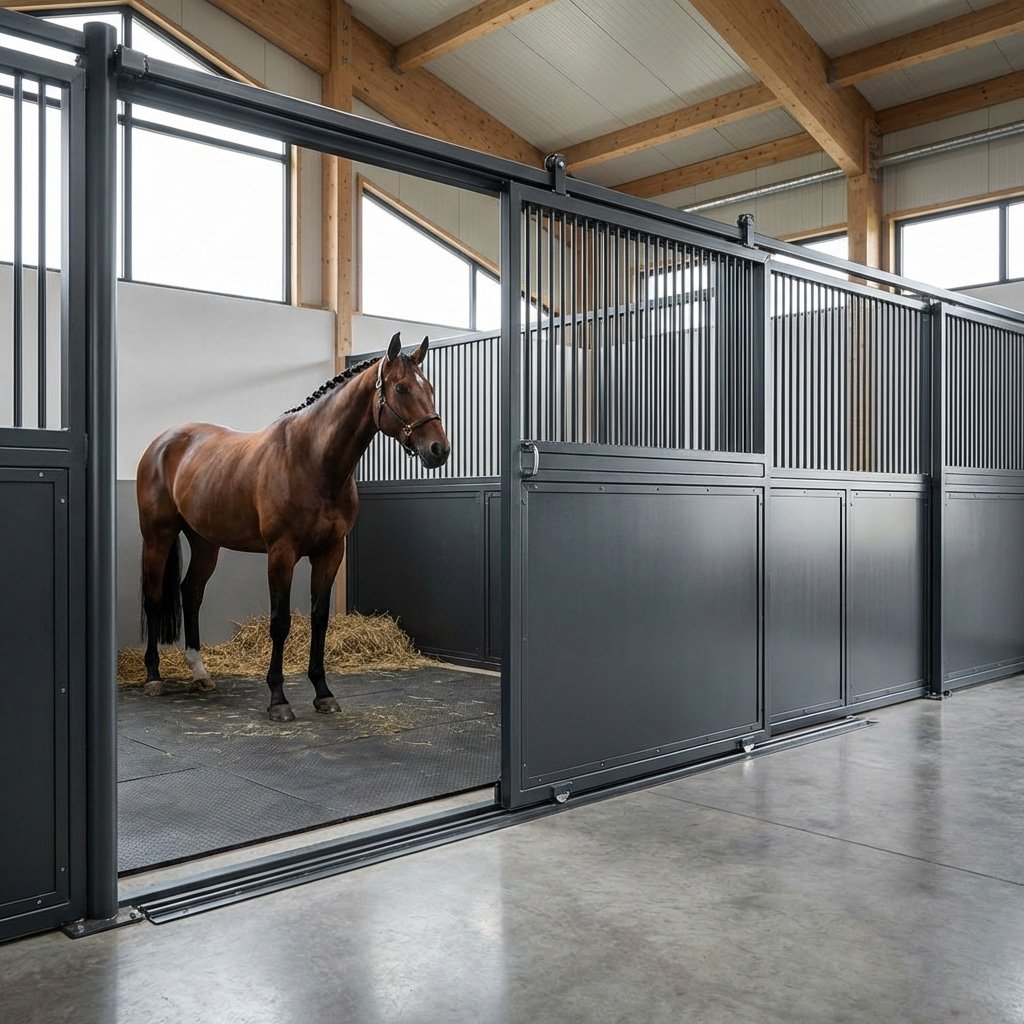

The Danger of a “Pendulum” Stall Door
A “pendulum” door lacks bottom guidance, causing uncontrolled outward swinging. This mechanical failure creates severe collision risks for handlers and entrapment hazards for horses, violating professional safety standards.
The Mechanics of Unconstrained Lateral Swing
A top-hung sliding door relies entirely on gravity to hang plumb. Without a bottom guide to restrict movement, the entire panel functions as a heavy, suspended weight. When force is applied from the side—whether by a horse kicking or a handler leaning—the door creates a dangerous arc of movement known as the “pendulum effect.”
This lack of stabilization introduces three critical failure points in a working stable:
- Collision Hazards: A 100kg+ steel door swinging outward creates immediate impact risk for handlers walking past the stall or equipment stored in the aisle.
- Track Derailment: Top tracks are engineered to support vertical loads, not horizontal torque. Lateral displacement forces the rollers against the side of the track, often causing the door to jump off the rail entirely.
- Structural Fatigue: Repeated swinging loosens the top mounting brackets, degrading the integrity of the entire stall front over time.
Maintaining “Cast-Proof” Standards Against Impact
At DB Stable, we strictly adhere to a “Cast-Proof Design” philosophy. This standard requires minimal clearance between the floor and the door frame (approximately 50mm) to prevent a horse from getting a hoof or leg trapped if they roll (become cast) against the front.
A pendulum door negates this safety feature. If a horse strikes an unguided door while rolling, the panel swings outward, instantly widening the gap at the bottom. This opening allows a leg to slip underneath the door, trapping the animal as the door swings back under its own weight.
Proper bottom guidance is non-negotiable for our “Kick-Proof Guarantee.” For the heavy-duty Q235B or cold-climate Q345B steel frames to function correctly, they must remain rigid upon impact. The guide forces the frame to absorb the energy of a kick rather than yielding to it. If the door swings away, it fails as a barrier.
Premium Galvanized Stables Built To Last
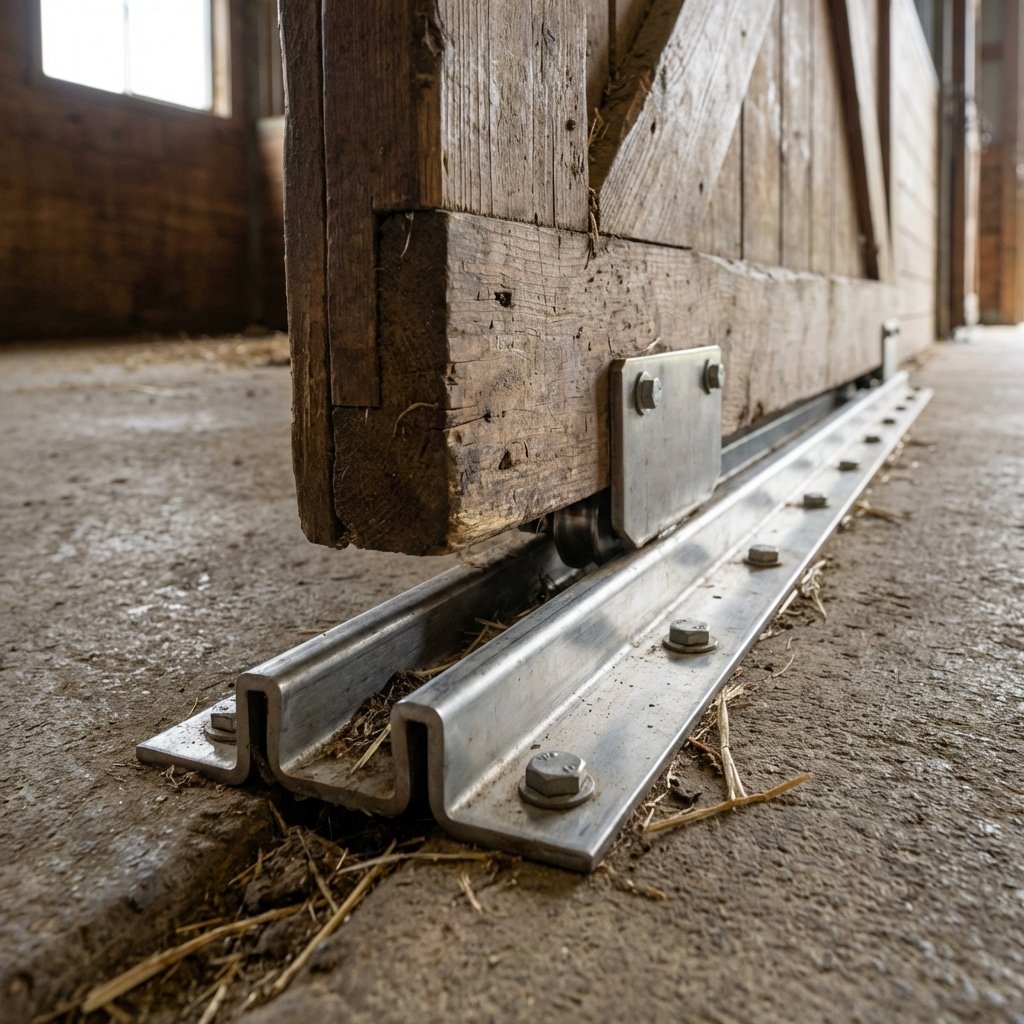

Hammer-Drilling the 304 SS Stay Roller into Concrete
Use an SDS+ hammer drill and the included 304 stainless steel anchor kit to secure the stay roller, creating a permanent fix that prevents door sway and maintains safe bottom gaps.
| Installation Component | Especificación | Función |
|---|---|---|
| Drill Tool | SDS+ Hammer Drill | Provides impact force for high-MPA concrete. |
| Bit Type | Carbide-Tipped Masonry | Ensures clean hole geometry for anchors. |
| Material de anclaje | Acero inoxidable 304 | Resists ammonia and ground moisture corrosion. |
| Safety Standard | “Cast-Proof” Alignment | Maintains strict bottom gap to prevent hoof entrapment. |
Drilling Precision with Carbide-Tipped Bits
Concrete floors in professional stables use high-density mixes to withstand hoof impact. You cannot use a standard rotary drill effectively on this surface. We mandate the use of an SDS+ hammer drill. The mechanism delivers the aggressive impact action necessary to fracture the aggregate without burning out the motor. This creates a clean pilot hole rather than a tapered or shallow depression.
- Bit Selection: Use carbide-tipped masonry bits. Standard steel bits overheat instantly against cured concrete, leading to poor hole geometry.
- Hole Depth: Drill 10mm deeper than the anchor bolt length. This extra space accommodates the concrete dust generated during drilling so the anchor seats flush.
- Dust Removal: Clear the hole with compressed air or a vacuum before inserting the anchor to guarantee maximum grip.
Installing the 304 Stainless Steel Anchor Kit
The DB Stable installation pack includes a dedicated Hardware Kit containing 304 Stainless Steel anchor bolts. We explicitly replace standard zinc-plated hardware with 304 grade steel for this application. Stables produce high levels of ammonia and ground moisture, which corrode inferior metals rapidly. Stainless steel anchors prevent the structural failure that often occurs when rusted bolts shear off at the floor level.
Secure the stay roller to maintain our “Cast-Proof” design standard. This alignment keeps the bottom of the door tight against the guide, maintaining a gap of approximately 50mm. This precision prevents the door from swinging outward and eliminates the risk of a horse getting a leg trapped if they roll near the doorway. Tighten the anchors until the roller plate sits immovable against the concrete surface.


Adjusting the Roller to Prevent Door Scratching
Resumen ejecutivo: Use top trolley screws to center the door in the bottom guide. Proper vertical alignment protects the galvanized finish and maintains the critical 50mm Cast-Proof safety gap.
Calibrating Vertical Lift for Smooth Gliding
Most scratching issues originate at the top of the door, not the bottom. If the door hangs too low, the bottom frame drags against the base of the stay roller or the floor itself. You control this clearance by adjusting the suspension bolts on the top trolley assemblies.
- Locate the Adjustment Screws: Find the vertical adjustment bolts on the top roller carriages. Turning them clockwise raises the door panel; turning them counterclockwise lowers it.
- Target Clearance: Aim for a vertical movement clearance of 1-2mm inside the track. This ensures the door hangs freely without resting its weight on the bottom guide.
- The Listen Test: Slide the door fully open and closed. If you hear grinding or metal-on-metal rubbing, the door is likely sitting too low or biased to one side. Adjust until the movement is silent.
Verifying the Cast-Proof Safety Clearance
At DB Stable, we engineer our systems with a specific “Cast-Proof Design” standard. Once the vertical lift is set, you must verify the bottom gap and lateral alignment to protect both the horse and the hardware’s finish.
- Check the 50mm Safety Gap: The distance between the finished floor and the bottom of the door frame should be approximately 50mm. This gap prevents horses from getting a leg stuck (casting) if they roll near the door.
- Center in the 304 Stainless Steel Roller: The door must “float” in the center of the U-channel. If the door leans hard against the roller, it will eventually wear through the zinc coating on the frame.
- Protect the Q235B Steel Frame: Ensure the bottom frame does not contact the concrete or the mounting hardware during travel. Preserving the Hot-Dip Galvanized layer here is critical, as the bottom of the door is most exposed to urine and moisture.
Reflexiones finales
Ignoring the bottom guide compromises the entire stall structure and invites liability for equine injury. By standardizing on our heavy-duty Q235B frames and 304 Stainless Steel anchors, you ensure every installation meets strict “Cast-Proof” safety regulations. This attention to detail protects your reputation as a supplier of professional-grade equestrian infrastructure.
Do not risk your client relationships on unproven hardware that rusts or fails under impact. Request a hardware sample kit today to evaluate our galvanization thickness and welding quality personally. Our engineering team stands ready to integrate these safety features into your next wholesale container order.

 Spanish
  English
  French
  Arabic
  German
0 comentarios