


Stuck Drop Pins turn a routine teardown into an expensive logistical nightmare. For event organizers and rental companies, fighting seized hardware after a 3-day show drains crew morale and blows labor budgets. When a hollow pin rusts internally and locks into the frame, it jeopardizes your venue departure deadline and risks permanent damage to your rental inventory.
This guide details safe removal techniques that protect your Q235B structural steel frames from deformation. We analyze why standard hollow tubes act as geological core samplers and how switching to solid, chamfered pins with ISO 1461 Galvanización en caliente eliminates the internal corrosion responsible for mechanical seizure.
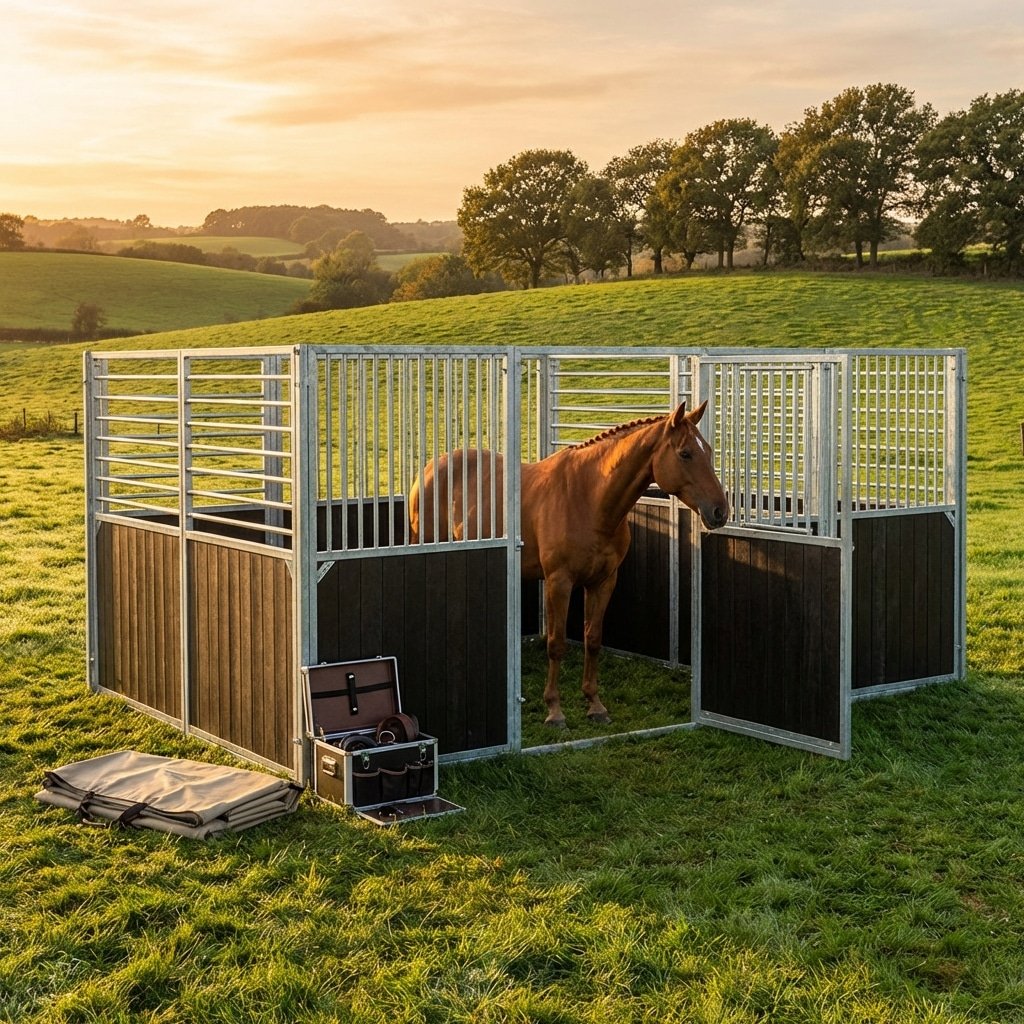
The Teardown Exhaustion After a 3-Day Equestrian Event
Quick Take: Teardown happens when physical reserves are empty. Fatigue turns minor equipment issues—like stuck pins—into major operational hazards and delays.
The Cumulative Physical Toll on Riders and Grooms
By the time the final show jumping round concludes on Sunday, most teams are running on fumes. Competitors and grooms have likely been operating on 4 AM start times for three consecutive days, managing high-stakes performance pressure. The reality of teardown is that it demands a surge of physical labor exactly when human energy reserves are at their absolute lowest.
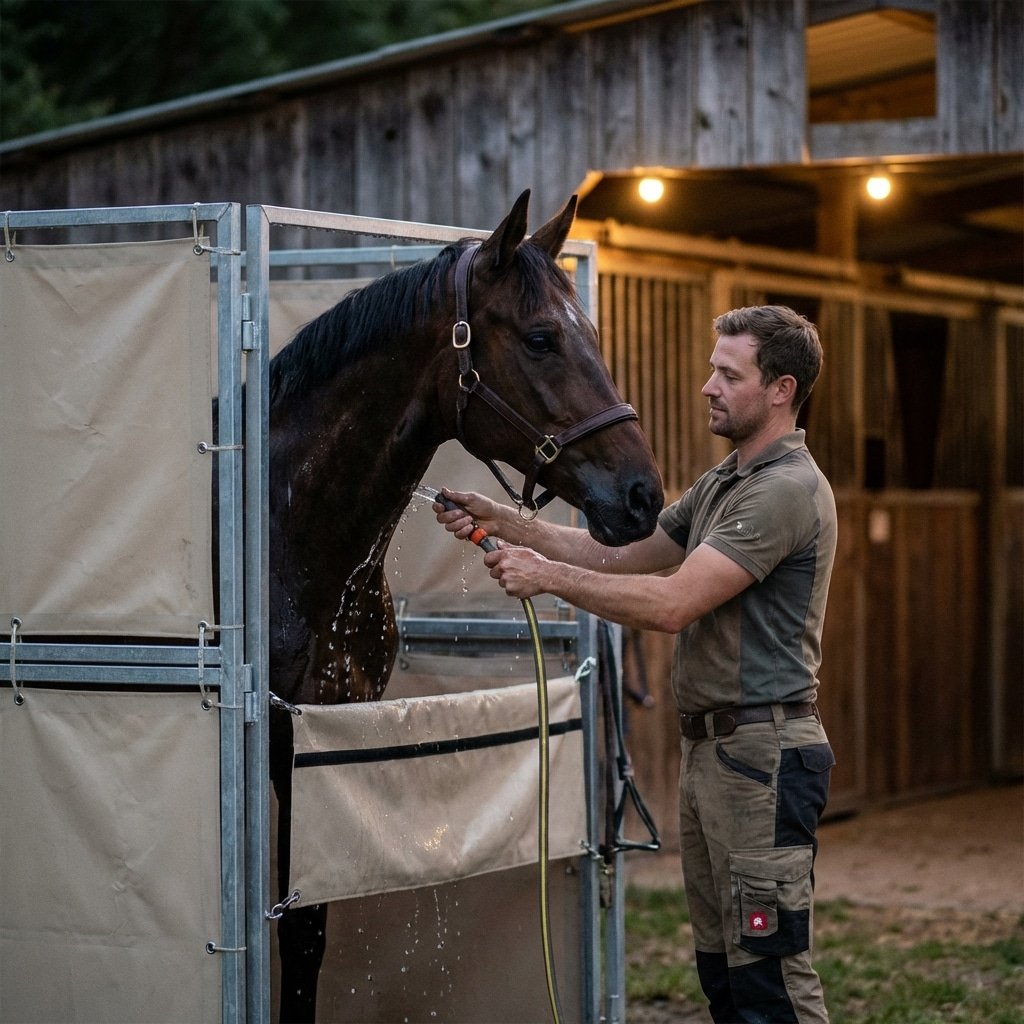
This exhaustion creates a dangerous lag in operations. Before a single wall can be taken down, the horses require immediate, non-negotiable care. Cooling down, bathing, and detailed leg inspections for heat or swelling take priority. This necessary delay means the heavy lifting of dismantling the stable area often starts late, pushing the team into a rush against sunset or venue departure deadlines. Under this mental fog, simple safety protocols get skipped, significantly increasing the risk of injury during heavy lifting.
The Logistics of Dismantling Temporary Infrastructure
Breaking down a campsite and stable block is a multi-front logistical battle. It is not just about loading a trailer; it involves simultaneous, labor-intensive workflows that must happen in a condensed window.
- Parallel Processing: Teams must pack tack trunks, clean leather to prevent mold, remove bedding, and organize feed bins all at once.
- Infrastructure Breakdown: Portable stalls and temporary partitions must be disassembled rapidly to clear the venue.
- The Hardware Failure Point: This is where equipment quality matters. When you are exhausted and rushing, a connector pin that is rusted or seized due to poor galvanization becomes a major frustration.
When fatigue sets in, patience for “sticky” equipment evaporates. A stuck pin on a cheap steel panel isn’t just an annoyance; it becomes a breaking point that leads to hammered fingers, damaged frames, and extended hours on site.
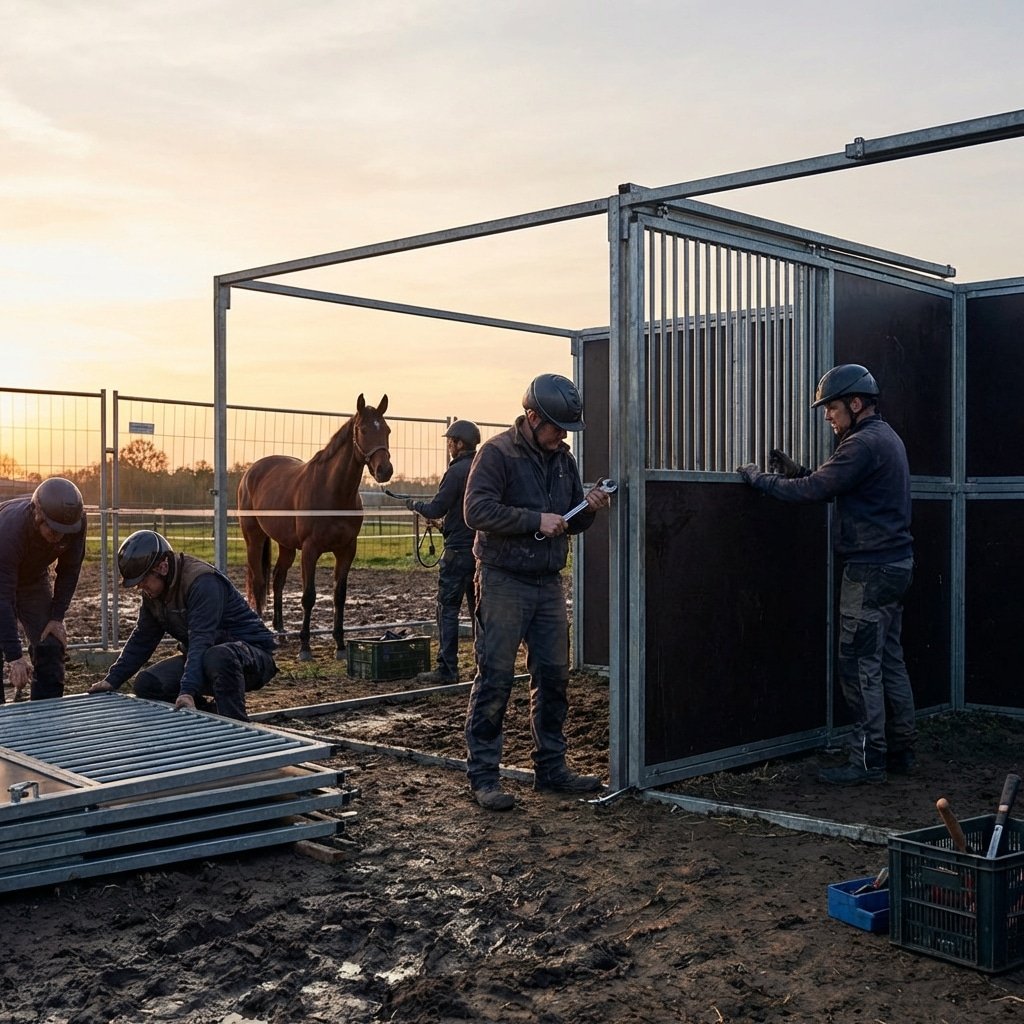
The Rust Trap: Hollow Pins and Muddy Pastures
Standard hollow pins act as geological core samplers in pastures, trapping wet soil internally. This moisture creates unseen rust and swelling, permanently seizing portable connections.
How Hollow Pins Capture Ground Moisture
Most portable stable systems rely on drop-pins to connect panels. Manufacturers often utilize hollow steel tubing for these pins to cut material costs and reduce shipping weight. While this works in a dry warehouse, it creates a significant mechanical failure point when deployed in outdoor pastures.
When a setup crew drives a hollow pin into soft ground, the tube functions exactly like a geological core sampler. The sharp bottom edge slices through the turf and forces a plug of soil up into the shaft. Once the pin is seated, that soil compacts inside the steel tube.
- The Sponge Effect: The compacted earth inside the pin retains moisture indefinitely. Even if the ground outside dries, the mud plug inside stays wet, pressing constantly against the inner steel wall.
- Hydraulic Expansion: En winter climates, this trapped wet soil freezes. Water expands when it turns to ice, exerting outward hydraulic pressure that distorts the round pin into an oval shape, mechanically locking it into the connector lugs.
- Weight Increase: A pin packed with mud becomes significantly heavier, making teardown physically exhausting for crews expecting lightweight components.
The Hidden Decay of Pre-Galvanized Interiors
The moisture trap described above turns fatal for the equipment when combined with inferior galvanization methods. Many competitors use pre-galvanized tubing (black tube welded) for their pins. In this manufacturing process, the steel coil is galvanized before being rolled into a tube. The interior weld seam often remains raw, unprotected steel.
When the “mud sponge” sits against this unprotected interior, corrosion begins immediately. This internal rust exfoliates (flakes off), expanding the volume of the metal and seizing the pin from the inside out. Operators often see a pin that looks clean on the outside but is fused solid to the panel.
We solve this by strictly adhering to BS EN ISO 1461 Hot-Dip Galvanization After Fabrication. We fabricate the pin from raw black steel first, then submerge the entire unit in molten zinc. The liquid zinc flows through the hollow center, coating the interior walls with the same 70+ micron thickness as the exterior. Even if soil enters the pin, the zinc barrier prevents the chemical reaction that causes swelling and seizure.
World-Class Stables Built For 20-Year Durability

The DB Solution: Solid Steel, Chamfered Drop-Pins
We replaced industry-standard hollow tubes with solid steel, chamfered pins to eliminate internal rusting and mechanical binding, ensuring hardware survives years of hammer impacts and heavy loads.
| Engineering Feature | Standard Hollow Pin | DB Solid Chamfered Pin |
|---|---|---|
| Core Material | Hollow Tube (Crimps under impact) | Solid Steel Shaft (Impact resistant) |
| Tip Geometry | Flat Cut (Catches on misalignment) | Chamfered/Tapered (Self-guiding) |
| Shear Resistance | Low (Bends under panel weight) | High (Maintains vertical integrity) |
| Corrosion Protection | External Only (Rots from inside) | Full Hot-Dip Galvanized (>85μm) |
Chamfered Ends for Seamless Insertion
Teardown exhaustion is a real operational risk. After a 3-day event, crews and riders are physically depleted, and fighting with a stuck pin adds unnecessary labor to an already grueling process. We machine a specific chamfer (taper) onto the tip of every drop-pin to solve the friction issues inherent in flat-cut pins.
- Self-Guiding Geometry: The tapered tip acts as a probe. If the connector loops on the panel are slightly misaligned—common on uneven ground—the chamfer guides the pin into the center, correcting the alignment automatically as it drops.
- Jam Prevention: Flat-ended pins often have burrs or sharp edges that catch on the interior of the connector frame or zinc drips. Our chamfered design removes these catch-points, significantly reducing the friction that causes binding during assembly or disassembly.
Solid Steel Resilience Against Deformation
Most manufacturers use hollow tubing for pins to save weight and cost. The problem arises when these pins face shear forces from shifting panels or the inevitable hammer strike during a difficult installation. A hollow pin crimps or bends, creating a “mechanical lock” inside the connector that makes removal nearly impossible without heavy machinery.
- Anti-Bend Construction: We use solid steel shafts that withstand significant shear forces. When a handler strikes the pin with a hammer to seat it, the energy transfers through the solid metal rather than crushing the tube wall.
- Long-Term Alignment: By maintaining a perfectly straight profile under stress, these pins prevent the deformation that locks components together. This ensures the stable system can be disassembled easily, even years after the initial installation.
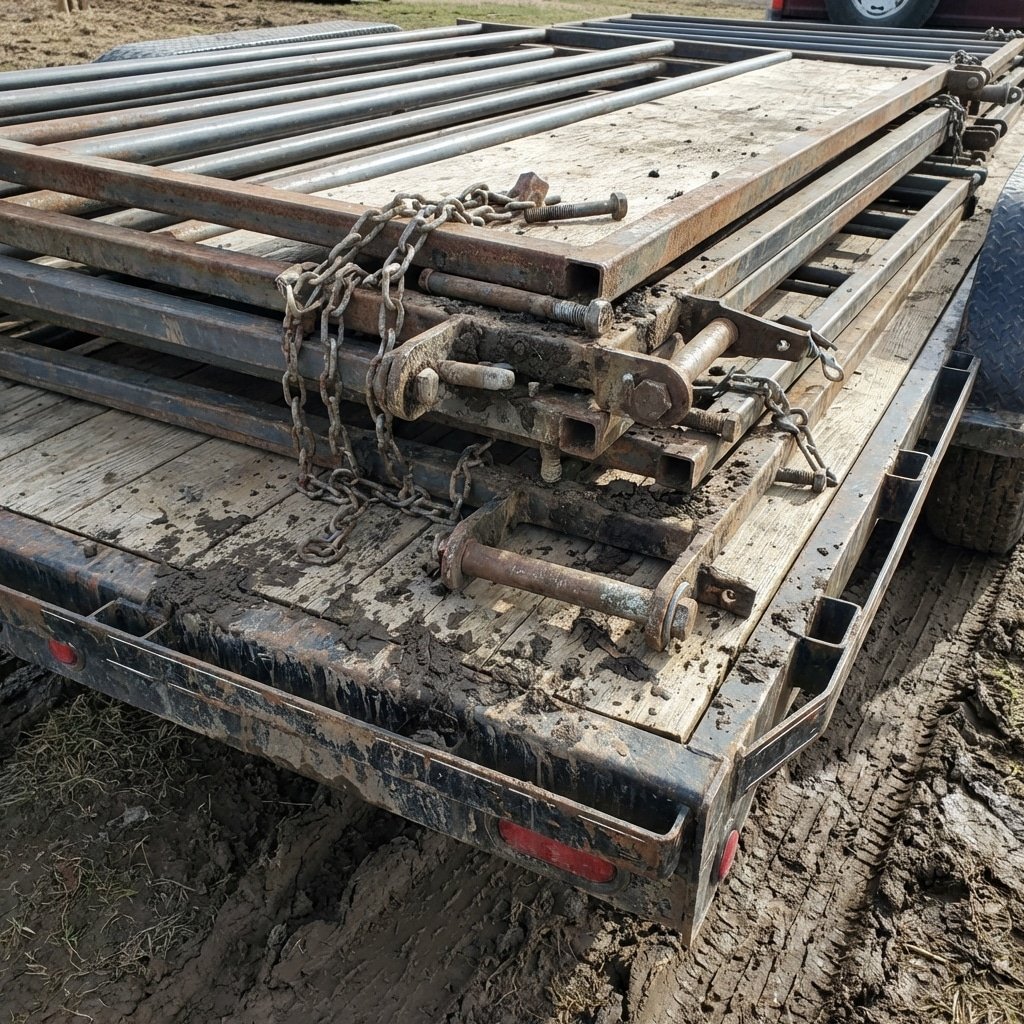
Using a Leverage Bar Safely Without Bending the Frame
Safe leverage requires steady torque on structural steel. Our 2.5mm Q235B frames withstand force that buckles thinner 1.6mm economy tubing.
Correct Positioning and Applied Force
Operating a leverage bar isn’t just about brute strength; it is about mechanical advantage. Improper use quickly destroys even high-grade steel components. You must control the point of contact and the delivery of force to remove stuck pins without compromising the frame’s integrity.
- Secure the Bite: Ensure the leverage bar’s mouth fits snugly against the pin or lifting point. A loose fit leads to slippage, which damages the galvanization and endangers the operator.
- Control the Force: Use two hands with a firm grip. Apply gradual, steady pressure. Sudden jerking motions spike the torque load unpredictably and often cause hardware to snap rather than release.
- Watch the Fulcrum: Never place your fulcrum point directly against the middle of a hollow tube section. Center it on reinforced joints or solid connection points to distribute the load.
- Know the Limit: If the metal begins to deform or crimp, stop immediately. Deformation indicates the frame material lacks the yield strength to handle the applied torque.
The Structural Advantage of Calibre 14 Q235B Steel
The safety of using heavy leverage tools depends entirely on the steel specifications of the stable. Most “economy” stables on the market are built for visual appeal, not structural abuse. We engineer DB Stables to survive the maintenance process, including the high torque required to move shifted panels or stuck pins.
- Material Yield Strength: Utilizamos Acero estructural Q235B (equivalent to ASTM A36). This material offers significantly higher yield strength than standard commercial tubing found in budget alternatives.
- Espesor de pared: Nuestro 50mm x 50mm RHS posts feature a 2.5mm (14-Gauge) wall thickness. This density provides the necessary rigidity to withstand leverage torque without buckling or crimping.
- Surface Durability: Nuestro Galvanización en caliente después de la fabricación process creates a metallurgical bond between the zinc and steel. This resists scratching and flaking far better than pre-galvanized sprays during tool use.
- Resistance to Failure: Economy frames typically use 1.6mm (or thinner) steel. These profiles crumple under leverage, permanently destroying the square shape of the tube. Our profiles maintain their geometry.
Preguntas frecuentes
How do I remove a seized or stuck drop pin without damaging the frame?
Never strike the steel frame directly with a hardened steel hammer. This chips the protective zinc coating (applied to ISO 1461 standards), creating an entry point for rust. Instead, apply penetrating oil and use a brass drift bar to drive the pin out. Brass is softer than the Q235B structural steel we use, so it delivers force without deforming the frame.
For DB Stable systems, our pins feature a chamfered tip to minimize binding, but the most common cause of seizure is dried mud in the connection point. Flushing these points with water before attempting removal significantly reduces friction.
What is the safest sequence to dismantle a temporary stable block?
Reverse the assembly process. Start by removing non-structural elements like roof sheets, waterers, and feeders. Work linearly from one end of the row to the other.
You need a team of at least two people: one to support the panel weight and another to remove the connector pins. If the panel isn’t supported, it will twist, locking the pin in place. Once disconnected, immediately stack the panel onto the steel transport pallet. We designed these flat-packs to protect the frames; loose loading drastically increases the risk of bending the connection tabs during transport.
How should I store the panels between events to prevent rust?
Store panels in a dry, ventilated area, preferably on the original steel pallets to keep them off the ground. Before storage, wash off any manure. Manure is highly acidic and corrosive; if left on the steel, it will eventually eat through even the 85-micron zinc coating.
Allow the frames to dry completely before stacking. Inspect the frames for deep scratches caused during transport and apply the Cold Galvanizing Spray included in your DB Stable installation kit to reseal the surface protection immediately.
Reflexiones finales
Saving on upfront hardware costs inevitably transfers the expense to your labor budget during teardown. Our solid steel, chamfered pins eliminate the “geological core sampler” effect, ensuring your crew clears the venue on time without damaging frames. Investing in hot-dip galvanized components protects your rental fleet’s ROI against the corrosion that seizes standard equipment.
Stop accepting rust and seized hardware as a standard operational hazard. Request our Technical Catalog today to review the engineering specs of our Q235B solid pin system. Contact our OEM team to discuss how our flat-pack logistics can optimize your next bulk inventory upgrade.

 Spanish
  English
  French
  Arabic
  German
0 comentarios