


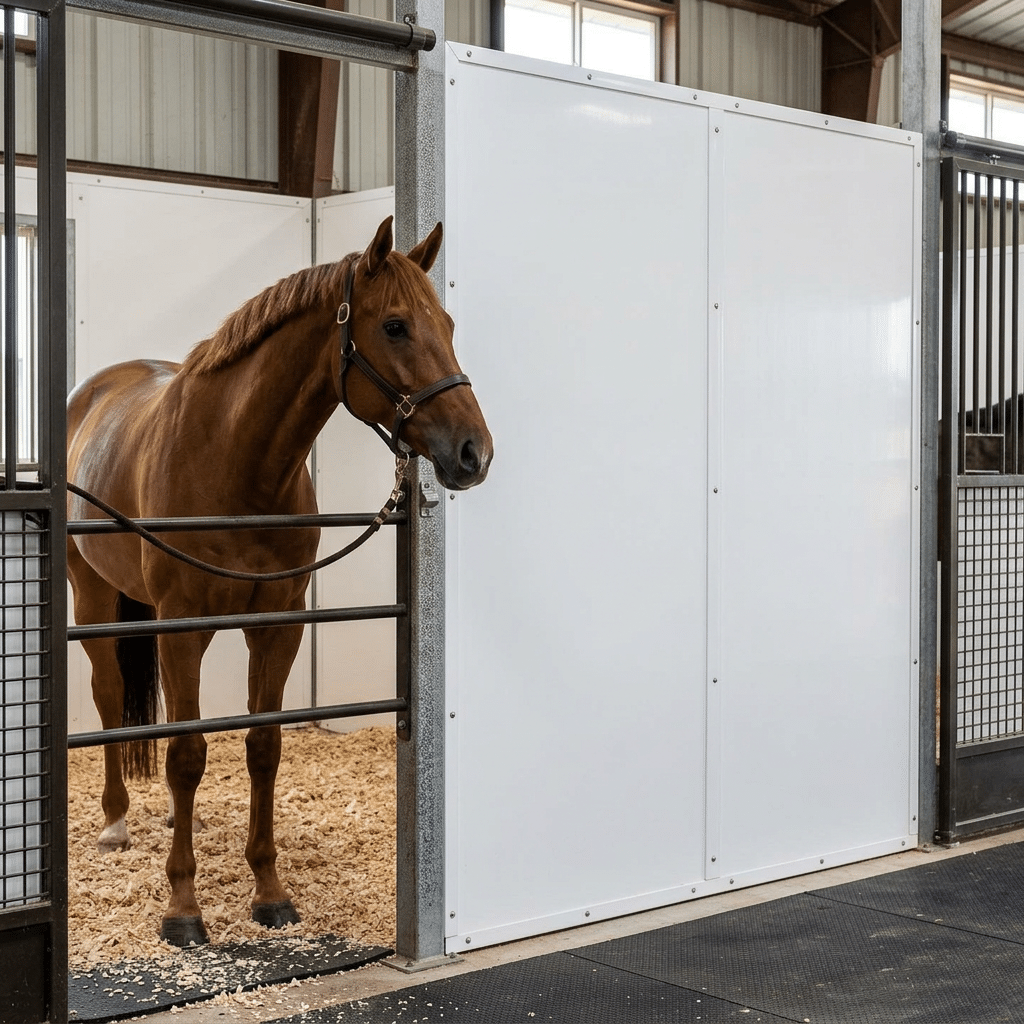
Transport Hubs handling equine cargo face a unique operational risk: biosecurity failure during layover. While timber offers a traditional aesthetic, its porosity traps pathogens, leading to quarantine breaches and massive liability claims. Efficient operations demand infrastructure that withstands rigorous disinfection without degrading.
This analysis benchmarks temporary stabling solutions against Q235B structural steel standards and ISO 1461 hot-dip galvanization requirements. We evaluate how switching to impermeable HDPE infills and optimizing logística de paquetes planos reduces freight costs by 60 percent while ensuring total biosecurity compliance.
El auge de la gobernanza ambiental y social en la construcción
By 2026, ESG compliance is mandatory. Construction firms must track Scope 3 emissions, requiring suppliers to demonstrate carbon-efficient logistics and verified material sustainability to remain eligible for major projects.
The Shift to Mandatory Compliance and Scope 3 Reporting
The days of treating ESG as a voluntary marketing exercise are over. In the 2026 market landscape, regulators and investors enforce mandatory disclosure of carbon metrics across the entire construction sector. This shift moves sustainability from a “nice-to-have” feature to a fundamental requirement for securing project financing and permits.
The primary challenge for developers is Scope 3 emissions. Unlike Scope 1 and 2, which cover a company’s direct energy use, Scope 3 encompasses the entire carbon footprint of the supply chain—from raw material extraction to logistics. Investors now favor suppliers who provide transparent, verified data on material origins and carbon impact. Governance requirements also demand strict adherence to ethical labor practices, meaning suppliers must prove their factories meet international safety and fair wage standards.

Reducing Carbon Footprint with Flat-Pack Logistics and Galvanized Steel
To meet these new ESG targets, we engineered the DB Stable system to directly address the two largest sources of embodied carbon in stable construction: inefficient transport and premature product failure. By optimizing how materials move and how long they last, we help projects lower their Scope 3 emission calculations significantly.
- Eficiencia logística: Traditional welded stables are mostly “air,” allowing only 12-15 sets per 40HQ container. Our flat-pack system fits 30-45 series, reducing freight emissions per unit by over 60%.
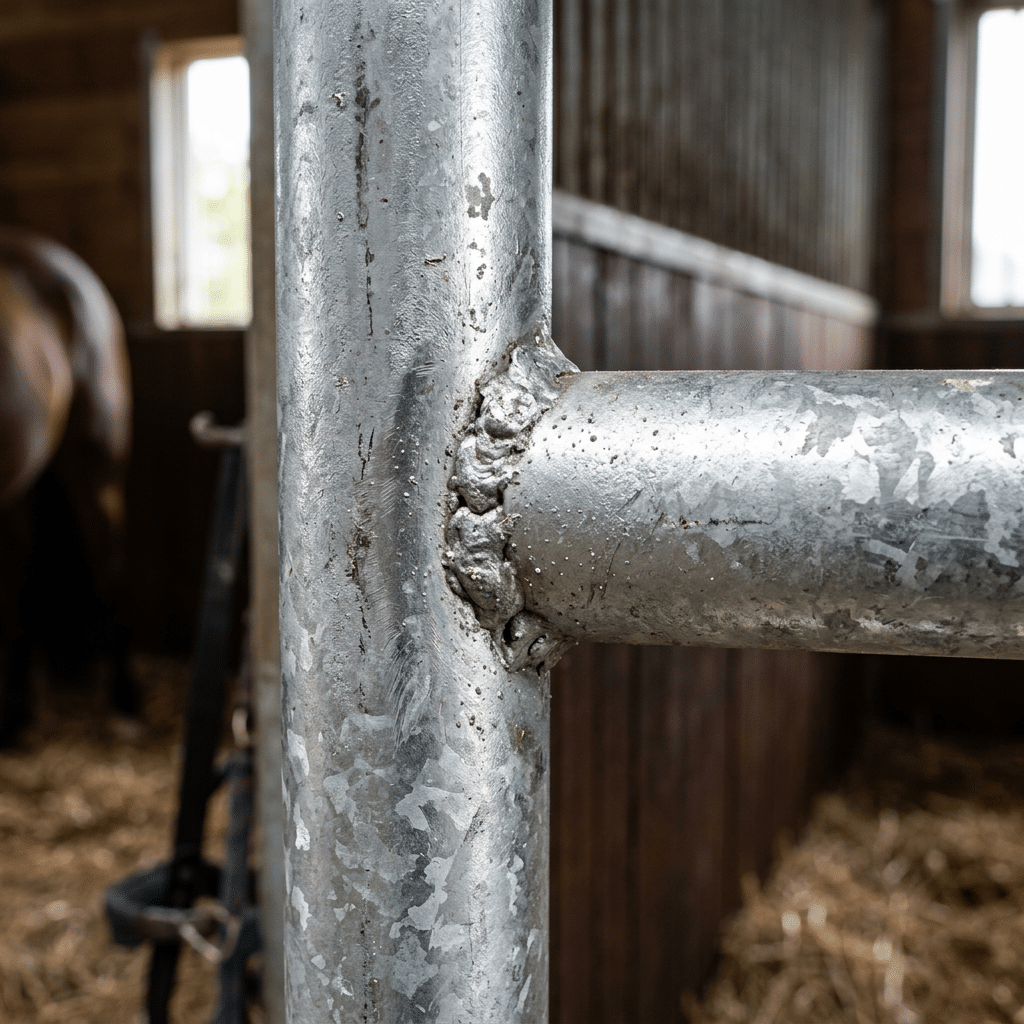
- Extended Lifespan: We utilize Hot-Dip Galvanization to BS EN ISO 1461 standards. This prevents rust-induced replacement, avoiding the carbon cost of manufacturing and shipping new steel every few years.
- Sustainable Infills: Our High Density Strand Woven Bamboo offers a renewable, carbon-sequestering alternative to slow-growing hardwoods like Oak.
- Chemical Reduction: The “Zero Maintenance” HDPE infill requires no toxic varnishes, paints, or chemical treatments throughout its lifecycle, supporting safer site soil and water tables.
Alejarse de la madera antigua (roble/pino)
Resumen ejecutivo: Modern facilities are replacing slow-growing Oak and soft Pine with High-Density Bamboo and HDPE. These engineered materials eliminate cribbing, resist moisture, and offer 3x the hardness of traditional hardwood.
The Ecological and Practical Limits of Hardwood
The equestrian construction sector is rapidly phasing out traditional timbe
r for large-scale projects. While aesthetically classic, old-growth Oak presents significant supply chain bottlenecks. It takes decades to mature, making it unsustainable for the volume required by modern commercial stables. Sourcing genuine hardwoods responsibly is becoming cost-prohibitive and ecologically difficult.
Softwoods like Pine create immediate functional risks inside the stall. Pine lacks the density to withstand the behavior of confined horses. Cribbing (chewing on wood) is a common vice that quickly destroys soft timber, leading to splintering. These splinters cause oral injuries and digestive impactions, while the compromised structural integrity requires frequent, expensive board replacement.
Maintenance determines the long-term ROI of a facility. Stables are harsh environments characterized by high moisture and ammonia from urine. Natural timber creates a breeding ground for rot, mold, and bacteria unless treated with heavy chemicals like creosote, which many owners now avoid due to toxicity concerns. Without constant sealing and painting, wood infills degrade rapidly in this atmosphere.
Strand Woven Bamboo and HDPE Specifications
We engineer our stables using materials that solve the biological weaknesses of wood. Our primary alternative, High-Density Strand Woven Bamboo, is manufactured by compressing bamboo fibers under extreme pressure. This process yields a material with a Janka Hardness rating exceeding 3000 lbf. For context, this is three times harder than Oak. It resists hoof impact and is too dense for horses to crib or chew.
For facilities prioritizing hygiene and longevity, we utilize UV-stabilized HDPE (High-Density Polyethylene). We specify a strict thickness of 28mm to 32mm to ensure impact absorption without brittle fracture. This material offers a true “Zero Maintenance” lifecycle:
- Impervious to Moisture: HDPE cannot rot, swell, or harbor mold spores.
- Absorción de impactos: The material absorbs kick energy rather than shattering, protecting the horse’s legs.
- Sanitization: Surfaces can be pressure washed with industrial disinfectants without degradation.
These engineered infills eliminate the inconsistencies found in natural lumber, such as knots or grain weaknesses, ensuring every board meets a uniform safety standard.
Preguntas frecuentes
¿Cómo construir un centro ecuestre que cumpla la ESG?
Building an ESG-compliant facility requires addressing Environmental, Social, and Governance pillars simultaneously. Environmentally, focus on energy and water independence; leading facilities like Equitom generate 80% of their electricity via on-site solar and use rainwater harvesting for self-sufficiency. Socially, prioritize employee safety and animal welfare. This includes strict safety protocols for machinery and horses, along with mental health support for staff. Gobernanza involves establishing a strict Code of Business Conduct to prevent corruption and ensuring transparent data reporting. You should engage an ESG consultant early in the planning phase to set measurable metrics for carbon reduction and biodiversity from day one.
¿Es el bambú un material de construcción sostenible?
Yes. Bamboo regenerates to maturity in 3-5 years, compared to 30-50 years for hardwoods like Oak. It has a negative carbon footprint, absorbing up to four times more CO2 than many tree species. Crucially, harvesting bamboo does not kill the plant; the root system remains intact to prevent soil erosion and allow immediate regrowth. When processed into High-Density Strand Woven boards, it provides structural strength exceeding steel and concrete by weight, making it a viable, eco-friendly alternative for heavy-duty stable infills.
¿Impacto medioambiental de los graneros de acero frente a los de madera?
Wood has lower embodied carbon during the initial manufacturing phase because trees naturally sequester carbon. However, wood in agricultural settings often requires frequent replacement due to rot and damage, increasing its long-term footprint. Steel, specifically grades like Q235B, is energy-intensive to produce initially but is 100% recyclable. A steel structure can be repurposed indefinitely without losing strength. For long-term assets like stables, the durability and recyclability of steel often outweigh the initial lower carbon cost of wood, which contributes to deforestation and waste when it degrades.
¿Certificaciones ecológicas para establos de caballos?
LEED is the global standard, but it is designed primarily for commercial and residential buildings, making it difficult to apply to agricultural structures. Large public equestrian centers can sometimes apply under commercial categories. A more specific alternative is the CalGreen Code (mandatory in California), which covers water conservation and recycled materials in agricultural buildings. Additionally, facility owners can pursue sustainable agriculture recognitions by conducting energy audits and implementing waste reduction protocols.
¿Fabricantes de establos ecológicos?
Several retail manufacturers focus on sustainability. MD Barnmaster is known for prefab barns using eco-conscious materials. Graneros Coffman offers modular solutions with high recycled content. WYO Custom Builders specializes in metal barns that leverage the recyclability of steel. For timber-framed aesthetics, Estructuras de CC utilizes engineering practices to maximize material efficiency. At the manufacturing level, DB Stable supports distributors by utilizing fully recyclable Q235B steel and renewable bamboo infills, ensuring the supply chain remains as green as the final structure.
Engineered for 20 Years of Rust-Free Performance

Las mejores fábricas adoptan materiales sostenibles
Global manufacturing giants like Siemens and Lego are actively redefining industrial standards by integrating renewable energy and circular economy principles directly into their production lines.
Sustainability in manufacturing has shifted from a corporate social responsibility checklist to a core operational strategy. Major industrial players are proving that environmental responsibility correlates with operational efficiency. By adopting digital twins, renewable energy grids, and zero-waste protocols, these factories set the engineering benchmarks that the rest of the supply chain—including specialized sectors like ours—must eventually follow.
| Fabricante | Key Facility | Primary Sustainable Action |
|---|---|---|
| Siemens | Chengdu, China | Reduced waste by 48% using AI & Digital Twins. |
| Lego | Vietnam | $1B investment for carbon-neutral operations via solar. |
| Nestlé | Serbia & UK | Zero waste to landfill mandate achieved. |
| Schneider Electric | Barcelona, Spain | Zero CO2 status via microgrid integration. |
| Procter & Gamble | Taicang, China | 100% renewable electricity & rainwater harvesting. |
1. Siemens Electronics Works (China)
Siemens has turned its Chengdu facility into a “Sustainability Lighthouse.” Rather than just buying carbon offsets, they re-engineered their production process. By deploying digital twin technology and automated waste classification, they reduced production waste by 48% while simultaneously increasing output by 92%. This proves that precise engineering reduces the material footprint per unit, a principle we mirror by using high-grade steel that requires less frequent replacement.
2. Lego (Vietnam)
Lego is constructing a US$1 billion factory in Vietnam explicitly designed to be carbon neutral. The facility creates its own power through a massive array of rooftop solar panels and a neighboring solar farm. This move signals a shift where manufacturers are no longer just energy consumers but active participants in energy generation.

3. Nestlé (Serbia & UK)
Nestlé focuses heavily on the “end of life” aspect of manufacturing. Their Surčin facility in Serbia achieved a “Zero Waste to Landfill” milestone. This means every scrap of by-product is either recycled or recovered for energy. This approach aligns with the growing B2B demand for fully recyclable materials, such as the 100% recyclable steel used in modern infrastructure.
4. Tesla Gigafactory (China)
Tesla’s Shanghai facility demonstrates how process efficiency drives sustainability. By optimizing the casting and assembly flow, they minimize the energy required per vehicle produced. They also employ advanced waste heat recovery systems, proving that managing thermal energy is as critical as managing raw materials.
Bambú tejido en hebras: Un sumidero de carbono de alto rendimiento
Strand-woven bamboo plantations store 306 tonnes of carbon per hectare—nearly double the capacity of fir forests—transforming rapid-growth biomass into structural carbon vaults.
Rapid Absorption: Sequestration Rates vs. Traditional Hardwood
Biology dictates the speed of returns in carbon sequestration. Traditional hardwood, while effective, operates on a multi-decade timeline that often lags behind immediate construction demands. Bamboo bypasses this bottleneck through aggressive growth cycles, sequestering carbon at rates that outpace standard timber significantly.
- Per-Plant Efficiency: A single bamboo culm sequesters 50–60kg of CO2 over its specific lifespan.
- Hectare Yield: One hectare of bamboo stores 306 tonnes of carbon over 60 years. In contrast, Chinese fir trees store only 178 tonnes in the same footprint.
- Maturity Timeline: Bamboo achieves structural maturity for carbon s
torage in just 7 years, whereas hardwoods require 40 years to reach similar utility.
High-Density Strand Woven: Locking Carbon for Decades
Capturing carbon is only the first half of the equation; keeping it locked away is the second. If a material rots or breaks in five years, that carbon returns to the atmosphere. We utilize a strand-woven manufacturing process specifically to extend this storage duration. By shredding the fiber and compressing it under immense pressure, we create a density profile that acts as a long-term carbon prison.
- Fiber Efficiency: The strand-woven process utilizes nearly the entire culm, minimizing milling waste compared to traditional plank cutting.
- Resistencia al impacto: With a Janka Hardness exceeding 3000 lbf (3x harder than Oak), the material resists the physical damage that typically forces early replacement.
- Decay Prevention: Extreme density prevents moisture intrusion, ensuring carbon remains embedded in stable walls for decades rather than releasing through biological decay.
Preguntas frecuentes
¿Cómo construir un centro ecuestre que cumpla la ESG?
Building for ESG compliance requires a three-pillar strategy rather than just buying “green” materials. Environmentally, focus on energy independence through on-site solar generation and water self-sufficiency via rainwater harvesting. Socially, prioritize safety by installing kick-proof walls (like HDPE or heavy bamboo) and ensuring proper ventilation to protect both staff and animal health. Gobernanza involves strict supply chain auditing—requiring steel suppliers to prove recyclable sourcing and ensuring wood products carry FSC certifications. You must track and report these metrics to satisfy investors and regulatory bodies.
¿Es el bambú un material de construcción sostenible?
Yes, but specifically Bambú trenzado offers the highest utility for industrial use. It acts as a rapid-regeneration resource, reaching maturity in 3-5 years compared to decades for hardwood. A bamboo grove absorbs up to four times more CO2 than an equivalent tree stand. Crucially, because it is grass, harvesting does not kill the plant; the root system remains intact to prevent soil erosion and stimulate immediate regrowth. With a Janka hardness >3000 lbf, it outlasts traditional timber, reducing the frequency of material replacement.
¿Impacto medioambiental de los graneros de acero frente a los de madera?
The trade-off lies between embodied carbon y lifecycle recyclability. Wood typically has lower embodied carbon initially because trees absorb CO2 during growth, and processing requires less energy. However, wood is susceptible to rot, cribbing, and moisture damage, often leading to a shorter lifecycle and release of carbon upon decay. Steel requires more energy to produce initially but is 100% recyclable at the end of its life without degradation. For long-term equestrian facilities, hot-dip galvanized steel (like Q235B) often provides a better 50-year environmental ROI due to zero replacement needs.
¿Certificaciones ecológicas para establos de caballos?
Standard certifications like LEED are often ill-suited for agricultural structures, as they focus heavily on urban commercial systems (HVAC, complex lighting). However, facilities can pursue CalGreen (mandatory in California) which covers water conservation and material efficiency. More practical approaches involve conducting energy audits and sourcing materials with ISO 14001 (Environmental Management) or ISO 1461 (Galvanizing Standards) certifications to prove longevity and responsible manufacturing to stakeholders.
¿Fabricantes de establos ecológicos?
Truly eco-friendly manufacturers are defined by their logistics and material longevity, not just marketing. Look for suppliers who use Flat-Pack Logistics (like DB Stable’s system loading 30-45 sets per container vs. the industry average of 12), which reduces shipping carbon emissions by over 60%. Additionally, prioritize manufacturers using Hot-Dip Galvanization after fabrication (ISO 1461) and renewable infills like high-density bamboo. Avoid “black steel” or pre-galvanized welded options, as these rust quickly and require wasteful replacement within a few years.
Acero Q235B: La estructura reciclable 100%
Q235B steel provides a 100% recyclable structural solution equivalent to ASTM A36, ensuring animal safety through high ductility while minimizing the carbon footprint of temporary equestrian infrastructure.
Circular Economy in Temporary Transit Hubs
Airports and large-scale transit hubs often require temporary infrastructure that can be rapidly deployed and eventually decommissioned. Q235B steel allows facility managers to reconfigure layover stables without generating significant landfill waste. Unlike pressure-treated timber, which becomes hazardous waste at the end of its lifecycle, or composite materials that are difficult to separate, Q235B is fully recyclable. It returns to the furnace to become new steel, maintaining its material properties indefinitely.
This capability aligns directly with Green Building initiatives and circular economy models. By utilizing a material with an established recycling infrastructure, projects significantly reduce their embodied carbon. We prioritize this grade of steel to ensure that even short-term installations contribute to long-term sustainability goals rather than adding to the disposal burden of the logistics sector.
Mechanical Ductility and ASTM A36 Compliance
The primary reason we engineer with Q235B—equivalent to the US standard ASTM A36—is safety. In a high-stress transit environment, animals are prone to panic and kicking. Brittle materials will snap under this impact, creating jagged edges that can cause catastrophic injuries to valuable livestock. Q235B possesses the necessary mechanical ductility to absorb these shock loads, deforming slightly rather than fracturing.
- Amortiguación: The chemical composition allows the frame to withstand sudden, high-velocity impacts without brittle failure.
- Standard Profile: We utilize 50mm x 50mm RHS profiles with a strict minimum 2.0mm wall thickness to ensure structural integrity.
- Eficiencia logística: The high strength-to-weight ratio ensures panels remain robust enough for containment but manageable for ground crews moving portable units.
Preguntas frecuentes
Why is hot-dip galvanized steel preferred for airport layover stables?
Airport facilities demand strict biosecurity and fire safety standards that timber simply cannot meet. Wood is porous, trapping bacteria and viruses, and presents a significant fire load. Steel frames offer superior structural integrity and are non-combustible.
Crucially, the finishing process determines longevity. We utilize Galvanización en caliente después de la fabricación (confirming to BS EN ISO 1461), which bonds a zinc coating averaging over 85 microns to the steel. This allows the stables to withstand daily pressure washing with aggressive chemical disinfectants without corroding, a non-negotiable requirement for international transit hubs.
How does the flat-pack design benefit large-scale facility construction?
The primary advantage is logistics efficiency. Traditional fully welded stables are “air shippers”—you pay to ship empty space, fitting only 12-15 units in a 40HQ container. Our engineered flat-pack design allows us to load 30-45 stable sets in the same container. This reduces freight costs per unit by approximately 60%, protecting distributor margins.
On-site, this modularity speeds up deployment. The components bolt together using standard 304 stainless steel hardware, allowing general contractors to assemble rows of stables rapidly without specialized welding teams.
Are HDPE infill boards suitable for isolation and quarantine units?
Yes, 28mm-32mm HDPE boards are the industry standard for isolation areas because they are chemically inert and impervious to moisture. Unlike wood, which absorbs fluids and can harbor pathogens deep in the grain, HDPE creates a sterile barrier. Staff can pressure-wash these walls daily without risking rot or splintering, ensuring no cross-contamination occurs between horses in transit.
Is bamboo a sustainable material for high-traffic equestrian centers?
Bamboo is highly sustainable due to its rapid regeneration cycle (3-5 years) compared to decades for hardwoods like oak. It absorbs significant CO2 during growth. But for commercial stables, sustainability must be paired with durability.
Utilizamos Bambú tejido en hebras de alta densidad for our Professional Series. This material undergoes a compression process that yields a Janka hardness rating exceeding 3000 lbf—making it three times harder than oak. It withstands heavy kicks and abuse in high-traffic centers while resisting mold and rot better than traditional softwoods.
Reflexiones finales
Meeting 2026 ESG mandates requires supply chain transparency that generic timber and painted steel simply cannot provide. By integrating ISO 1461 Hot-Dip Galvanization with our high-density flat-pack logistics, you significantly reduce Scope 3 emissions while securing an asset built for decades of biosecure transit. Choosing sustainable engineering over low-cost disposability protects your facility from future regulatory penalties and inevitable maintenance deficits.
Verify these efficiency gains directly by requesting our technical data sheets or scheduling a consultation for your specific transit hub layout. We recommend initiating a trial order of 3-5 units to test our assembly speed and material durability against your current infrastructure. Contact our engineering team today to align your expansion plans with a manufacturing partner capable of delivering global compliance.

 Spanish
  English
  French
  Arabic
  German
0 comentarios