


Good ventilation isn’t just a comfort feature—it’s your shield against the chronic vet bills caused by equine asthma. Poorly designed barns trap dust and ammonia right at the horse’s nose level. That stagnant air triggers respiratory inflammation and kills performance.
This breakdown looks at barn components through the lens of airflow engineering. We break down how open-grill partitions drive the ‘Stack Effect’ and separate window choices by function: climate control vs. behavioral management. Clear data for your build.
Equine Asthma (Heaves): The Cost of Bad Air
Equine asthma is a direct result of poor barn ventilation. Trapped dust, allergens, and ammonia inflame a horse’s airways, making air quality the primary factor in managing the condition.
How Airborne Particles Trigger Airway Inflammation
Equine asthma starts with the air inside the stall. Hay dust and bedding allergens irritate the lungs immediately. Without proper airflow, these particles concentrate at breathing height. Ammonia from urine lingers too, causing chronic inflammation and excess mucus. Vet science agrees: fixing the environment is the best non-medical treatment for heaves.

Using Open Grills to Promote ‘Stack Effect Ventilation’
DB Stable’s open-top grill design tackles this head-on using the ‘Stack Effect.’ Horse body heat warms the air, making it rise. The open grill lets that stale, particle-heavy air escape at the top. Cooler, fresh air pulls in from below. This passive cycle cuts airborne irritants without needing expensive mechanical systems.
Natural vs. Mechanical Ventilation
Natural ventilation uses passive forces like wind and temperature for energy-free airflow, but is weather-dependent. Mechanical ventilation uses fans for consistent control but has operational costs.
Understanding Passive vs. Active Air Exchange
Natural ventilation is a passive system. It relies on wind pressure and temperature differences—hot air rising—to move air. No electricity needed. Openings like windows, doors, and vents create the flow.
Mechanical ventilation is active. Powered fans and ductwork force air circulation. You get direct control over exchange rates. Consistent performance and filtration work regardless of outside weather.
How Open-Grill Designs Facilitate Stack Effect Ventilation
Let’s be honest—”Stack Effect Ventilation” sounds like engineering jargon, but it actually works. Our stable fronts and partitions use open-grill tops to let warm, stale air escape upward. That’s not decoration. That’s physics.
Here’s what happens inside the stall: a horse breathes out warm, moist air. That air rises naturally through the open top, which creates a slight vacuum. Cooler, fresh air gets pulled in from lower barn levels. No fans. No vents. No electricity. Just a continuous, silent air exchange cycle that runs 24/7.
Durable, Compliant Stables Built for Any Climate
The Role of the Stall Window: Yoke vs. Shutter
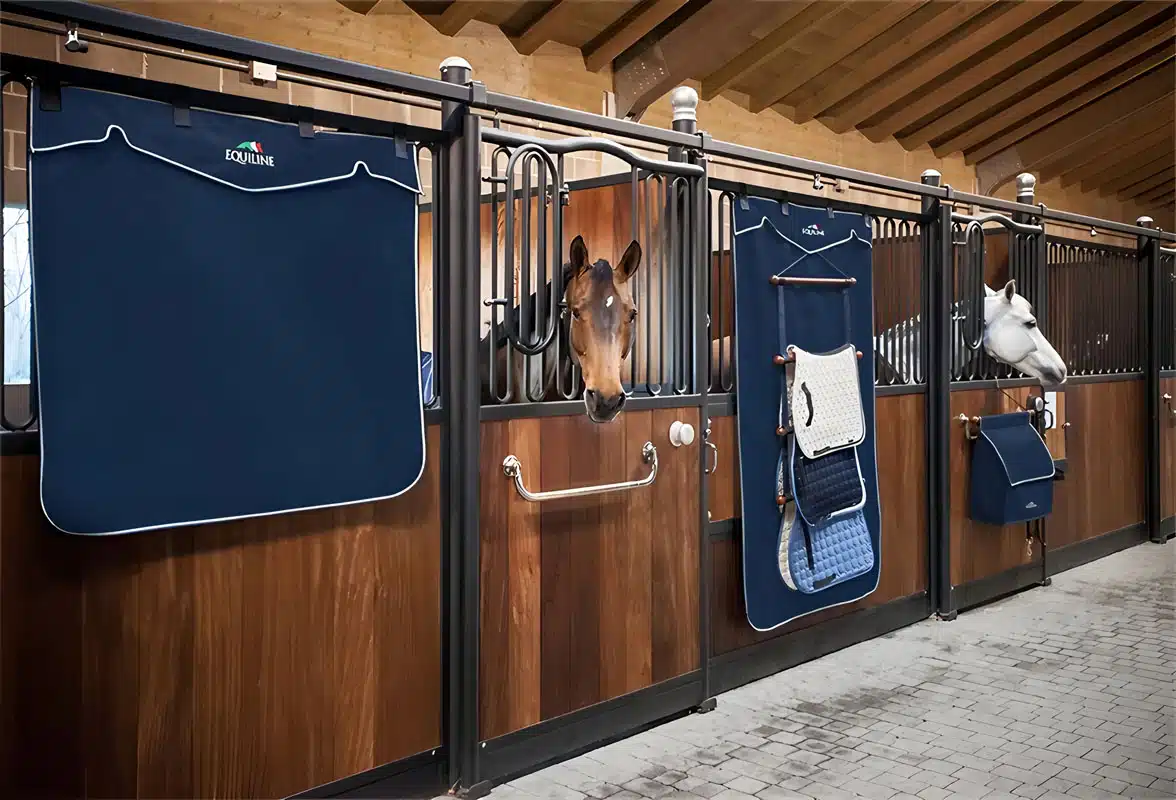
Yoke windows are behavioral tools for safety, letting horses look out while preventing habits like weaving. Shutter windows are for climate control, opening for airflow and closing for weather protection.
Window Yokes for Behavioral Management
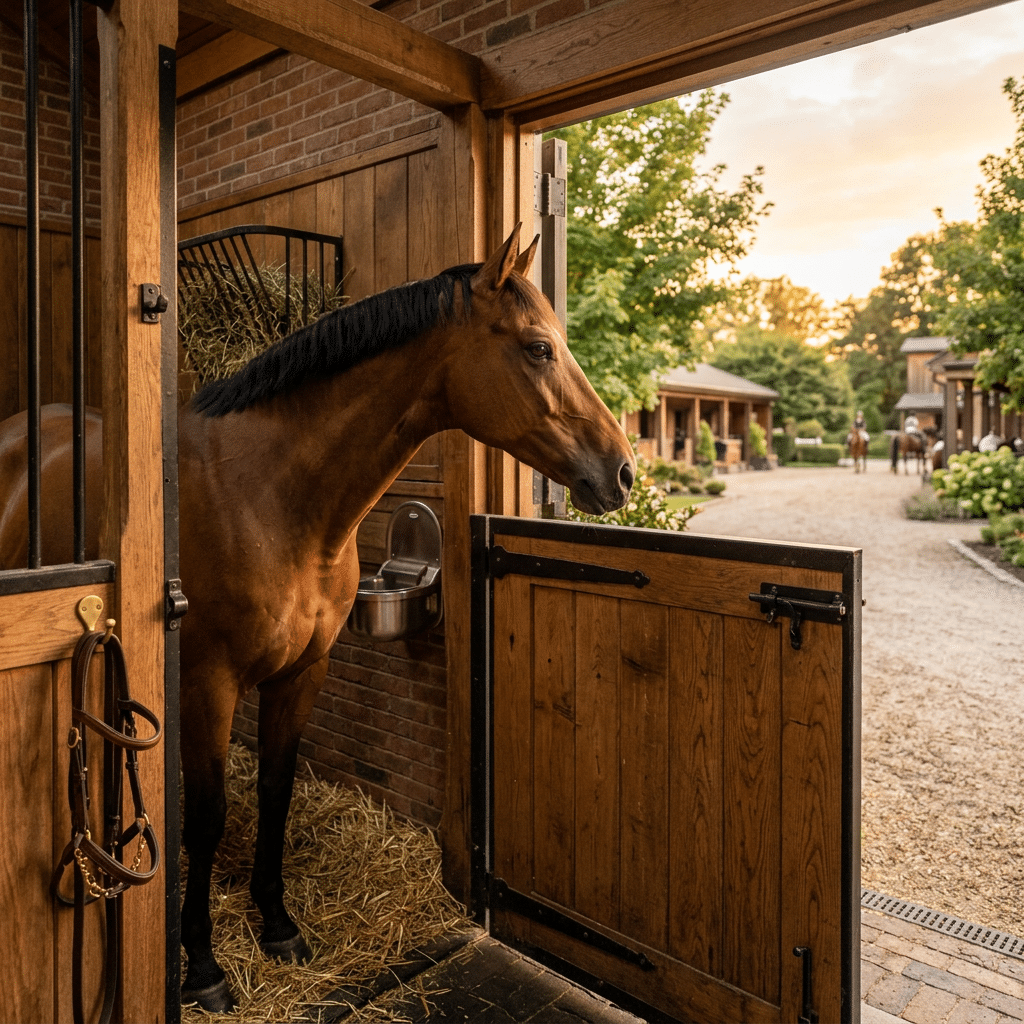
Window yokes serve one real purpose: they let a horse look outside without turning the window into a hazard. The yoke gives the animal visual stimulation and mental enrichment—it can stick its head out, see other horses, and stay engaged with barn activity.
- But here’s the critical part—the physical bars stop the horse from actually climbing out or getting a leg over the sill. It’s enrichment with a safety cage.
- The design also blocks three common stable vices: weaving at the door, crib biting on the window frame, and wind sucking. You can’t do any of those through properly spaced yoke bars.
- Quality yokes have smooth, rounded edges everywhere—no sharp corners to catch a halter or scrape a jaw. And the open design means airflow never stops, even when the window is fully secured.
Shutter Windows for Climate & Airflow Control
Shutter windows do one thing well: they let you control the barn’s environment. Their real job is handling weather shifts — from hot, humid afternoons to cold, rainy nights.
- In warmer regions, you can swing them wide open. That creates serious airflow, which is critical for cutting heat and moisture buildup inside each stall.
- That flexibility matters. Open them for a cooling breeze on hot days. Close them tight when wind or rain rolls in.
- Even when fully closed, shutters still block the weather while letting some passive ventilation happen. You get protection without suffocating the stall.
Internal Airflow: Using Half-Mesh Partitions
Half-mesh partitions use a solid lower panel for safety and an open-grill top for airflow. This design lets air flow between stalls, removing ammonia and preventing respiratory issues.
| Design Principle | Primary Benefit for Air Quality |
|---|---|
| Cross-Stall Ventilation | Allows air and light to move horizontally between stalls, reducing moisture buildup and diluting airborne dust and ammonia concentrations. |
| Efecto pila Ventilación | Uses an open-top grill design to encourage vertical airflow, pulling stale, warm air up and out of the horse’s breathing zone. |
The Principle of Cross-Stall Ventilation
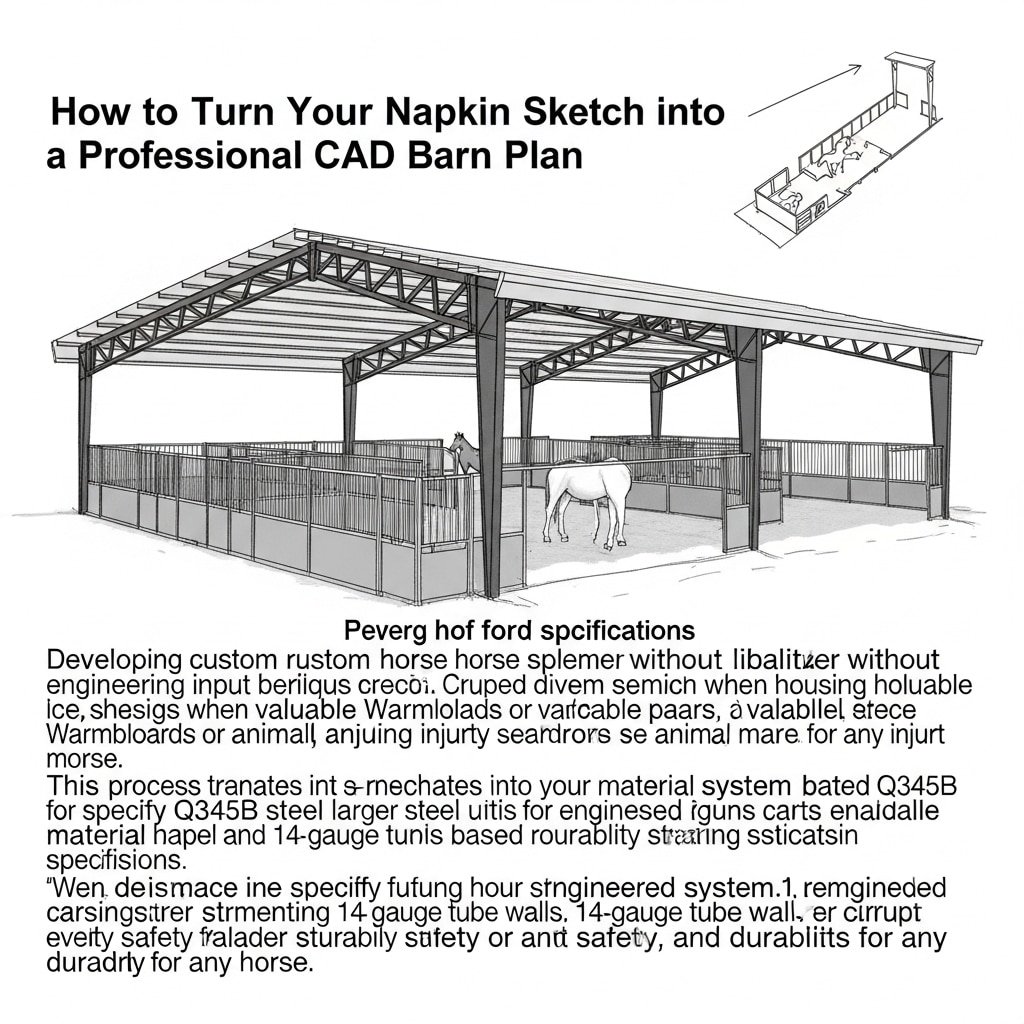
A half-mesh or grilled partition is deceptively simple engineering. The design pairs a solid lower panel with an open top section. That solid barrier gives horses physical separation — prevents the kicking injuries that keep barn managers up at night. The open grill above lets air and light move freely between stalls. This horizontal airflow is the key to preventing stale, damp conditions that cause respiratory issues. It flushes out moisture, ammonia from urine, and airborne dust before they concentrate at horse level.
Open Top Grills and the Stack Effect
We engineer our partitions to create “Ventilación por efecto chimenea.” The open top grill lets warm, moisture-laden air rise and escape naturally. As that stale air leaves, it pulls fresher, cooler air into the stall from below. This continuous passive exchange improves air quality right in the horse’s breathing zone. It comes standard on our Economy Series stables. The whole frame is Q235B structural steel, galvanizado en caliente after fabrication. That process prevents rust and keeps the structure solid for years.
The Roof Pitch: Trapping Heat vs. Venting It
Steep roofs naturally vent hot air via convection, while low-pitch roofs can trap it. The best design depends entirely on your climate and ventilation strategy.
How Roof Angle Governs Airflow Dynamics
A steep roof pitch isn’t just aesthetic—it creates massive attic volume. This volume drives a powerful natural convection current. Hot air rising from the stalls fills this upper void and exits through ridge vents.
That upward pull sucks cooler, fresh air in through lower soffit vents. The result? Effective barn cooling without any mechanical systems running.
Low-pitched or flat roofs kill this vertical advantage. Without enough height difference, hot air stagnates directly above the stalls. Heat and moisture get trapped, rendering passive ventilation useless and straining your mechanical cooling systems.
Utilizing the ‘Stack Effect Ventilation’ Principle
Effective roof vents don’t operate in isolation. They serve as the final exit point for ‘Stack Effect Ventilation.’ This principle demands a continuous, unobstructed channel for air to move from low intake to high exhaust.
This is why well-engineered stable partitions feature open-grill designs. The grills allow fresh air to enter lower barn openings, flow across the stalls, and rise naturally. The roof pitch and vents then expel the warm, ammonia-laden air. Removing this contamination is fundamental to protecting a horse’s long-term respiratory health.
Preguntas frecuentes
How many windows are needed for a horse stall?
Focus on the total open area rather than the number of windows. A good standard is to have at least 1 square foot of permanent opening per stall for basic ventilation. For warm weather, this should increase to 5-10% of the stall’s floor area. One well-placed, operable window per stall is a common and effective solution.
Do mesh partitions really help with airflow?
Yes, significantly. Solid partitions block air movement, creating stagnant pockets. Mesh partitions allow air to circulate freely between stalls, which is essential for removing moisture, reducing ammonia buildup, and maintaining a consistent temperature throughout the barn.
What is the best way to reduce ammonia in horse stalls?
The most effective strategy combines regular management with smart design. This includes daily mucking, using highly absorbent bedding, and ensuring excellent ventilation. Proper stall flooring, like seamless rubber mats over sloped concrete, prevents urine from pooling and seeping, which is a primary cause of high ammonia levels.
How does barn design affect a horse’s respiratory health?
Barn design is critical for preventing conditions like equine asthma. A poor design traps dust, mold spores, and ammonia. An effective design promotes constant air exchange through features like high ceilings, roof ridge vents, and stall fronts with open yokes or grilles. This continuous airflow removes harmful airborne particles from the horse’s breathing zone.
Reflexiones finales
Basic stalls save money upfront but create long-term risk from poor animal health. Our open-grill designs are engineered specifically for ‘Stack Effect Ventilation,’ directly solving the respiratory issues your clients face. This engineering commitment protects your reputation and justifies a premium product in your inventory.
Stop guessing about engineering specs—check the build quality yourself. Place a trial order to inspect the hot-dip galvanized finish and the precision of the sistema de montaje en kit firsthand. Our team will share the full specifications so you can see exactly how we protect your logistics margins.

 Spanish
  English
  French
  Arabic
  German
0 comentarios