


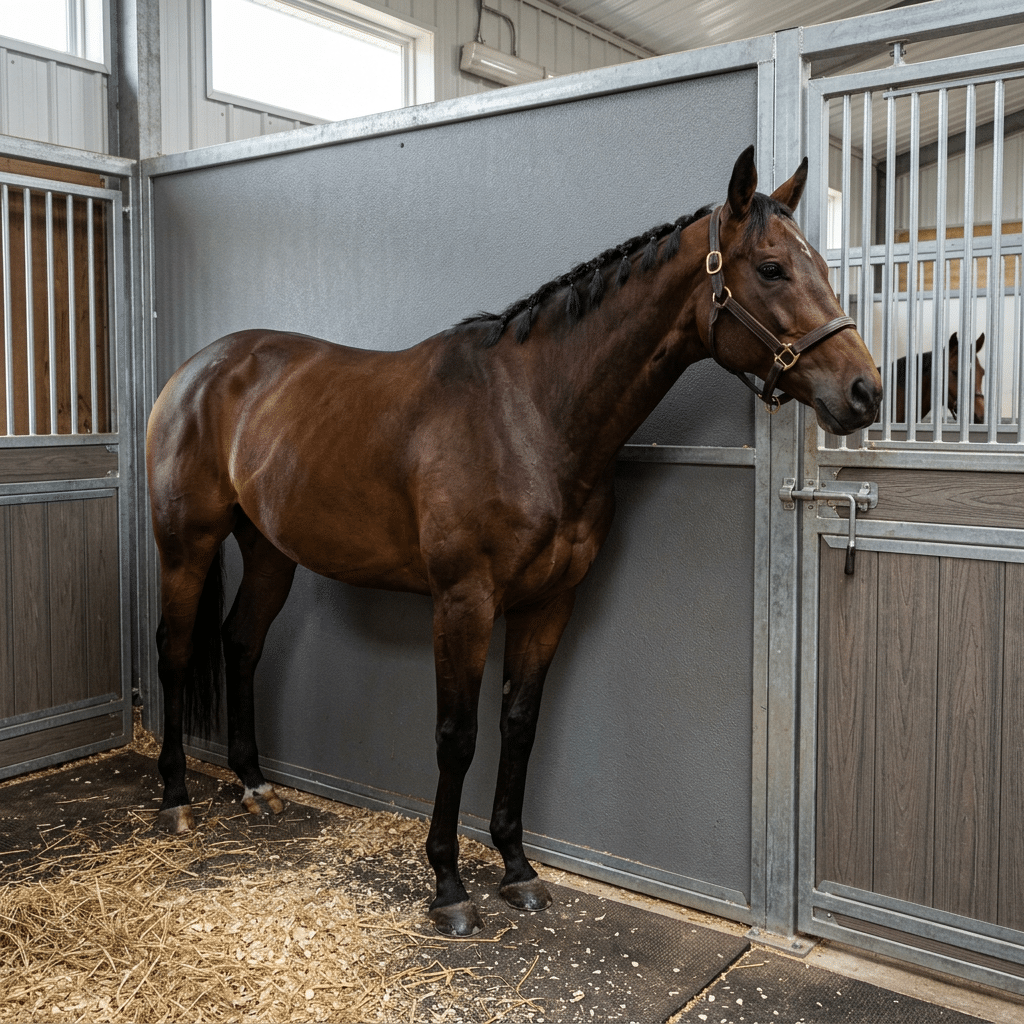
The debate over sliding vs hinged doors is a critical decision that directly impacts barn safety and long-term maintenance costs. A hinged door in a narrow aisle creates a predictable liability risk from obstructions. A poorly engineered sliding door introduces different failures, leading to jammed hardware and security issues with horses skilled at escaping.
This analysis benchmarks both systems on aisle clearance, latch security, and hardware longevity. We evaluate track and hinge durability against the BS EN ISO 1461 hot-dip galvanization standard to identify designs that minimize both physical risk and operational downtime.
5 Critical Red Flags to Watch For
In global sourcing, watch for supplier secrecy, material shortcuts, and suspiciously low prices. Your best defense is verifying manufacturing processes and physical material specs before final payment.
| What It Signals | How to Verify | |
|---|---|---|
| 1. Prices That Seem Too Good to Be True | The supplier is likely using inferior raw materials, cutting corners on critical processes, or planning a simple deposit scam. Quality has a clear cost basis. | Get quotes from at least three verified suppliers. If one is dramatically lower than the others, it’s not a bargain—it’s a warning. |
| 2. The ‘Pre-Galvanized’ Scam | This is a common bait-and-switch where black steel tubes are welded *before* a thin zinc coating is applied. The welds remain unprotected and are the first point of failure for rust. | Specify **Hot-Dip Galvanization After Fabrication** per ISO 1461. This ensures the entire, fully welded panel is submerged in zinc, completely sealing every weld and edge. |
| 3. Weight or Steel Gauge Discrepancies | Suppliers can substitute thinner steel to save costs. Using 16-gauge instead of the specified 14-gauge compromises structural integrity and safety. | Mandate a minimum **14-Gauge (2.0mm) steel wall thickness** in your contract. Use calipers to physically measure the material upon delivery before paying the final balance. |
| 4. Refusal of Factory Visits or Live Video Calls | The company is likely a trading agent posing as a manufacturer, has something to hide about its facilities, or doesn’t actually exist. | A legitimate factory will welcome a live video tour of their workshop. If they refuse, walk away. For large orders, a third-party factory audit is non-negotiable. |
| 5. High-Risk Payment Requests | Demands for a large upfront deposit via an untraceable method like a personal bank account or Western Union are a classic sign of a potential scam. | Use secure payment platforms with escrow services (like Alibaba Trade Assurance) or establish a Letter of Credit (L/C) through your bank for significant orders. |
Future-Proof Your Stables for Decades
Reflexiones finales
While low-cost stables seem tempting, they hide the risk of pre-galvanized steel and thin-gauge tubing. Adhering to the Hot-Dip Galvanization After Fabrication (ISO 1461) standard is the only way to protect your business from rust claims and safety liabilities. Quality inventory is what builds dealer reputation and protects your margin.
Don’t risk an entire container load on a supplier’s promises—verify the engineering yourself. Start with a small trial order to physically inspect our 14-gauge steel framework and weld quality. Contact our team to discuss your market’s specific requirements and get a detailed quote.

 Spanish
  English
  French
  Arabic
  German
0 comentarios