


Validating ESG / Green Factories is the only safeguard against the rising financial risk of carbon compliance litigation. While traditional welded timber options appear cheap, they fail to meet modern Scope 3 emission standards, creating significant liabilities for public companies and developers facing strict investor scrutiny.
We benchmark manufacturers against the Baustahl Q235B and BS EN ISO 1461 galvanization lifecycle standard. By prioritizing 100% recyclable frameworks and flat-pack logistics that increase container capacity to 45 sets, we identify partners that secure your supply chain against environmental audit failures and premature replacement costs.
Top Factories Embracing Sustainable Materials
Sustainability in equestrian manufacturing has evolved beyond simple material choices to encompass total lifecycle engineering. Leading factories now prioritize 100% recyclable structural steel, hot-dip galvanization protocols that eliminate toxic maintenance paints, and modular logistics that reduce transport carbon emissions by over 60%.
Advanced Steel Fabrication and Galvanization Protocols
True sustainability begins with the longevity of the infrastructure. We utilize Q235B and Q345B Structural Steel for our frameworks, materials chosen not only for their high strength-to-weight ratio but for their 100% recyclability at the end of their lifecycle. Unlike timber structures that may degrade or require chemical treatments that render them hazardous, our steel components can be re-smelted indefinitely without losing material properties, aligning with circular economy principles.
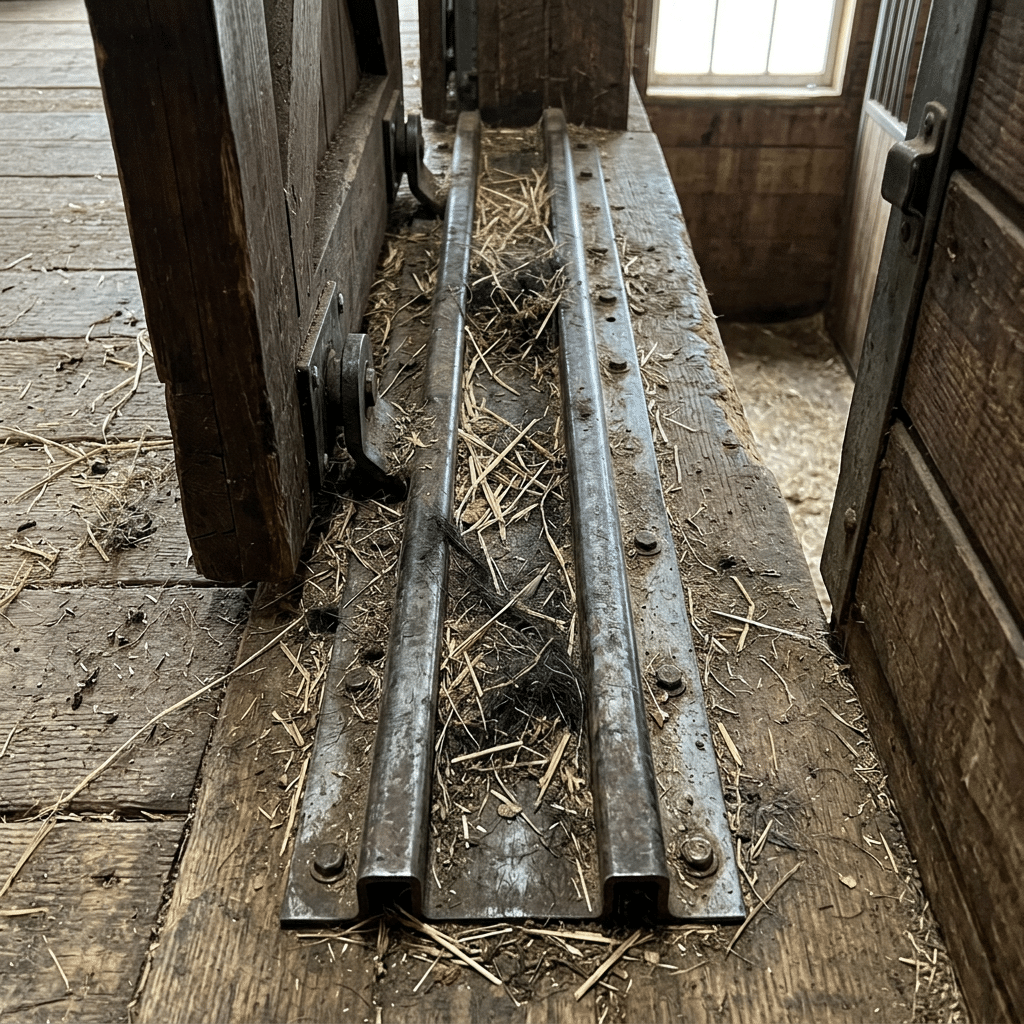
To ensure this framework survives decades of use without replacement, we adhere strictly to BS EN ISO 1461 standards for Feuerverzinkung after fabrication. By dipping the entire door or panel after welding, we achieve a zinc coating averaging over 85 microns. This process is critical for sustainability because it eliminates the need for red-lead primers or toxic maintenance paints often required by “pre-galvanized” (black tube welded) alternatives. Our ASTM B117 salt spray testing confirms that this protection withstands high-ammonia stable environments, preventing early corrosion and the environmental cost of premature replacement.
Transitioning to Modular, Low-Carbon Logistics
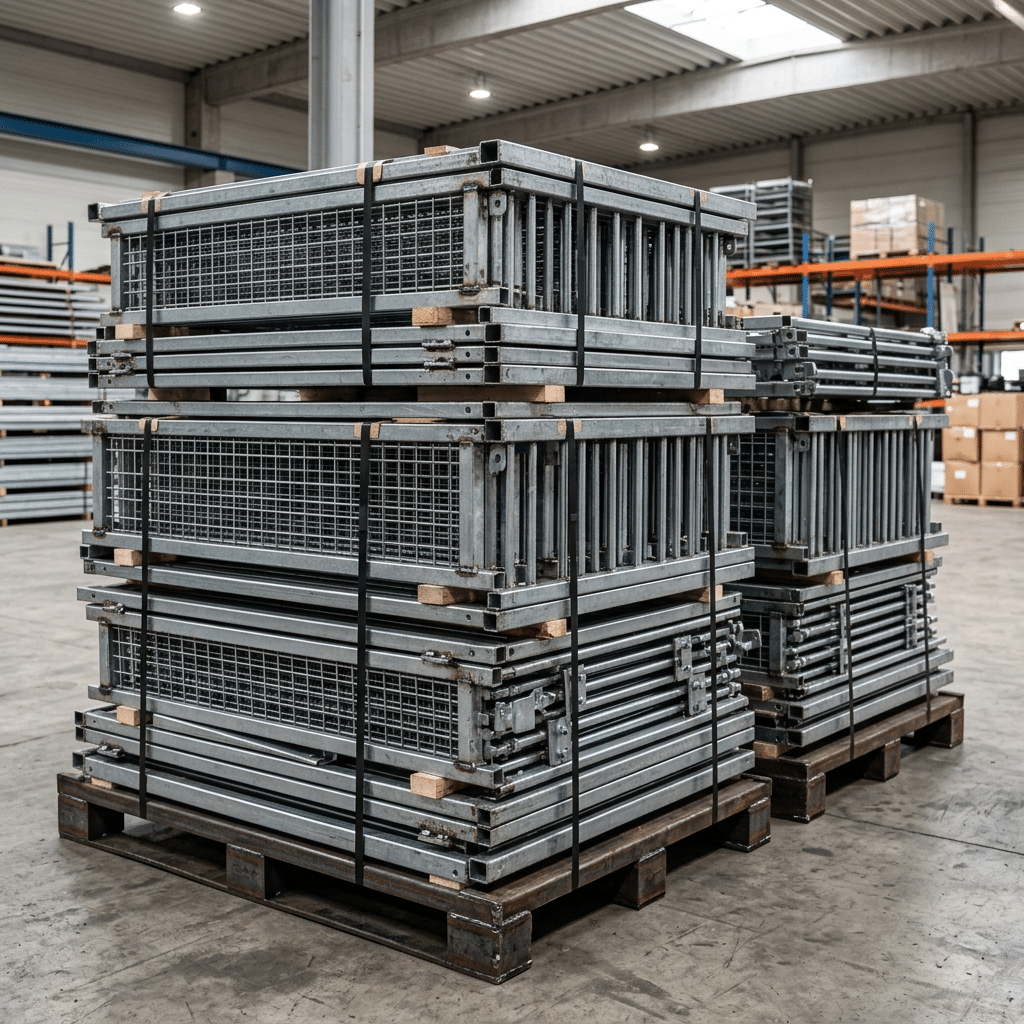
The hidden carbon cost in heavy manufacturing is logistics. Traditional workshops often ship fully welded fronts, which limits container capacity to merely 12-15 sets per 40HQ container—essentially shipping “air” across the ocean. We have revolutionized this with our Steel Pallet Flat-Pack System. By engineering modular connections that allow for flat stacking, we fit 30-45 sets in the same container volume.
This efficiency does more than protect distributor profit margins; it drastically lowers the carbon footprint per installed unit by reducing the number of maritime and road transport legs required. Furthermore, this modularity supports the integration of sustainable infills like our Hochverdichteter Bambus. As a rapid-renewable resource that matures in 3-5 years (compared to decades for oak), our strand-woven bamboo provides a kick-proof, carbon-sequestering alternative to old-growth timber, pre-cut to minimize on-site construction waste.
| Sustainability Metric | Generic / Traditional Mfg. | DB Stable Eco-Standard |
|---|---|---|
| Logistics Efficiency (40HQ) | 12-15 Sets (High Carbon/Unit) | 30-45 Sets (Low Carbon/Unit) |
| Corrosion Protection | Pre-galv/Paint (Requires Repainting) | Hot-Dip ISO 1461 (Lifetime Zero-Maint.) |
| Infill Material | Slow-Growth Hardwood / Soft Pine | Rapid-Renewable Bamboo / Recycled HDPE |
| Lifecycle Waste | High (Early Replacement) | Minimal (100% Recyclable Steel) |
Custom Horse Stables With 20-Year Durability
The Rise of ESG (Environmental, Social, Governance) in Construction
By 2026, regulatory bodies and investors will enforce strict embodied carbon limits on new agricultural and equestrian developments. Compliance is no longer optional; it requires a strategic shift toward circular materials like recyclable steel and rapid-renewable bamboo, combined with logistics that minimize transportation emissions.
Decarbonization Through Material Selection
Material choice is the first line of defense in reducing a project’s carbon footprint. We prioritize Q235B and Q345B structural steel for our frameworks specifically because of
their alignment with circular economy principles. Unlike treated timber or composite materials that often end up in landfills, our steel is 100% recyclable. This ensures that your facility contributes to a closed-loop system, meeting the rigorous demands of modern green building certifications.
For infills, we moved away from slow-growing hardwoods like Oak, which take decades to regenerate. Instead, we utilize High-Density Strand Woven Bamboo. Bamboo matures in just 3-5 years and acts as a significant carbon sink during its growth cycle. With a Janka Hardness rating over 3000 lbf, it offers three times the durability of Oak while remaining mold and rot-resistant, proving that sustainability does not require compromising on safety or longevity.
Reducing Scope 3 Emissions via Smart Logistics
Governance criteria now heavily scrutinize supply chain efficiency, specifically targeting Scope 3 emissions generated during transportation. Traditional fully welded stable panels differ significantly here; they are bulky and inefficient to ship, typically allowing only 12 to 15 sets per 40HQ container. This results in “shipping air” and unnecessarily high fuel consumption per unit.
Unser modular flat-pack system addresses this directly by increasing container loading capacity to between 30 and 45 sets. This efficiency reduces freight-related carbon emissions by over 60% compared to welded alternatives. Furthermore, our commitment to ISO 1461 Hot-Dip Galvanization ensures the infrastructure lasts decades. By preventing premature rust and the need for early replacement, we significantly lower the long-term environmental waste associated with manufacturing and re-installation.
Moving Away from Old-Growth Timber (Oak/Pine)
Modern equestrian projects are systematically transitioning from traditional hardwoods to engineered solutions like High-Density Bamboo and Recycled HDPE. This shift is driven by the urgent need for sustainable sourcing and the operational demand for materials that resist rot, cribbing, and impact without requiring the decades-long regeneration cycles of old-growth oak.
The Sustainability Gap in Traditional Hardwoods
For centuries, oak and pine were the default choices for stable construction, yet their environmental and practical costs have become liabilities in modern facility design. Old-growth hardwoods require decades to reach maturity, creating a significant regeneration deficit that conflicts with current ESG frameworks. Harvesting these mature trees disrupts established ecosystems and carbon sinks, making traditional lumber a challenging choice for projects seeking green certification.
Beyond the ecological impact, standard softwood timber presents operational risks in a stable environment. Pine and lower-grade woods are susceptible to moisture absorption, leading to rot and mold growth in humid stable conditions. Furthermore, softwoods are prone to cribbing damage, where horses chew on the wood, necessitating frequent repairs and chemical treatments that can be harmful to animal health.
High-Performance Substitutes: Bamboo and HDPE
We have aligned our manufacturing standards with materials that offer superior durability and environmental responsibility. High-density strand woven bamboo has emerged as the premier alternative to hardwood. Unlike oak, which takes decades to grow, bamboo matures in just 3 to 5 years. Through our processing, we achieve a Janka Hardness exceeding 3000 lbf, making our bamboo infill (28mm-38mm) three times harder than oak and naturally resistant to mold and rot without heavy chemical preservation.
For facilities prioritizing absolute zero maintenance, our Recycled HDPE planks (28mm-32mm) provide a robust solution. These UV-stabilized boards eliminate the risks of splintering and fracture, ensuring a “Kick-Proof” environment for the horse. By utilizing recycled high-density polyethylene, we help reduce plastic waste while delivering a product that withstands high-impact kicks and requires nothing more than a wash-down to maintain hygiene standards.
Strand-Woven Bamboo: A High-Yield Carbon Sink
Our strand-woven bamboo infill does more than resist impact; it acts as a verified carbon vault. By utilizing Moso bamboo, we leverage a resource that sequesters carbon at nearly four times the rate of traditional timber plantations, locking it into high-density boards that resist the decay cycles typical of softwood.
Comparing Moso Bamboo to Traditional Timber
Traditional timber sourcing often relies on pine plantations, which require decades to mature and frequently involve clear-cutting that disturbs soil carbon. In contrast, the Moso bamboo forests we source from sequester between 20 and 40 tons of carbon per acre annually. This absorption rate is approximately 3.73 times higher than the pine plantations commonly used for standard stable lumber.
Harvesting bamboo functions closer to mowing a lawn than logging a forest. We practice selective harvesting, which leaves the extensive root system intact. This method prevents soil erosion and ensures the bamboo continues to absorb carbon without the “reset” period required by replanting tree forests. For project managers focused on sustainable sourcing, this offers a verifiable reduction in the ecological footprint of large-scale equestrian builds.
Engineering Durability for Long-Term Carbon Storage
This process yields a material with a Janka Hardness exceeding 3000 lbf—three times harder than Oak. By engineering a board that resists the impact, moisture, and rot that destroy lesser materials, we ensure the carbon remains sequestered in the physical structure for decades. This durability transforms our Professional Series stables into a long-term “durable products pool,” protecting both your investment and the environment.
Q235B Steel: The 100% Recyclable Framework
Q235B structural steel acts as a cornerstone for sustainable equestrian infrastructure due to its capability for indefinite recycling without structural degradation. When combined with our Hot-Dip Galvanization After Fabrication process, this material choice minimizes embodied carbon by extending the facility’s lifecycle to 30–50 years, effectively reducing the environmental impact associated with frequent replacement cycles.
Infinite Recyclability in the Circular Economy
We utilize Q235B structural steel (equivalent to ASTM A36) as our primary framework material because it functions as a true green building component. Unlike composite materials or treated lumbers that often end up in landfills at the end of their service life, steel supports a zero-waste lifecycle. It can be collected, re-smelted, and repurposed indefinitely without losing its essential tensile strength or ductility.
By prioritizing recyclable steel, we help B2B distributors and project managers align with modern ESG initiatives. Utilizing recycled steel significantly lowers greenhouse gas emissions compared to virgin steel manufacturing. This ensures that the environmental footprint of your stable decreases over time, as the materials hold intrinsic value for future repurposing rather than becoming waste.
Engineering Longevity with Hot-Dip Galvanization
True sustainability requires extending the service life of assets to reduce the carbon footprint associated with manufacturing and transport. A stable that fails due to rust after five years creates unnecessary waste. We engineer our frameworks to resist this cycle by applying **Hot-Dip Galvanization After Fabrication** to strict BS EN ISO 1461 standards.
This process involves submerging the fully welded Q235B frame into molten zinc, achieving an average coating thickness exceeding 70 microns on tubing and 85 microns on structural parts. This metallurgical bond provides a “Lifetime” standard of protection, preventing corrosion for 30 to 50 years. By eliminating the need for frequent repairs or early replacement, we ensure that the initial carbon investment in the steel structure yields the longest possible utility.
Abschließende Überlegungen
Compliance with modern ESG standards demands a decisive shift from rotting timber to circular materials like Q235B steel and rapid-renewable bamboo. While generic options inflate Scope 3 emissions through inefficient shipping, our modular flat-pack system cuts freight carbon by over 60% while protecting your logistics margins. Investing in ISO 1461 Hot-Dip Galvanization ensures your facility remains a durable asset for decades rather than becoming an environmental liability.
Do not leave your project’s environmental accreditation to chance with untraceable materials. We invite you to request a technical specification comparison or a trial container quote to validate our build quality and carbon-efficient logistics firsthand. Contact our engineering team today to align your next large-scale development with global green building standards.
Häufig gestellte Fragen
How to build an ESG compliant equestrian center?
Focus on the supply chain and material lifecycle. We recommend specifying Q235B or Q345B structural steel frameworks, which are 100% recyclable, rather than chemically treated timber. Incorporate renewable infills like strand-woven bamboo and ensure your manufacturing partners adhere to ISO 1461 standards to minimize replacement waste through long-term durability.
Is bamboo a sustainable building material?
Yes, it acts as a rapid carbon sink. Our high-density strand woven bamboo (28mm-38mm) matures in 3-5 years, unlike hardwoods requiring decades. With a Janka Hardness exceeding 3000 lbf, it provides a durable, rot-resistant solution that reduces the pressure on old-growth forests while withstanding heavy equestrian use.
Environmental impact of steel vs wood barns?
Steel offers a superior circular economy model. While pressure-treated wood often ends up in landfills due to chemical preservatives, our hot-dip galvanized steel systems are fully recyclable. Additionally, the longevity provided by our BS EN ISO 1461 zinc coating (>85 microns) significantly reduces the carbon footprint associated with frequent repairs and replacements.
Green certifications for horse stables?
Look for manufacturers holding ISO 9001 and ISO 1461 certifications to ensure responsible production. For the structures themselves, utilizing materials with verified recycled content and low-VOC finishes supports LEED or BREEAM accreditation goals. We provide full material traceability for projects requiring strict environmental documentation.
Eco-friendly horse barn manufacturers?
We support sustainable development through optimized logistics and material selection. Our flat-pack steel pallet system allows us to load 30-45 sets per 40HQ container, reducing shipping emissions by over 60% compared to traditional welded units. This logistics efficiency, combined with our use of renewable bamboo and recyclable steel, defines our approach to eco-friendly manufacturing.

 German
  English
  Spanish
  French
  Arabic
0 Kommentare