


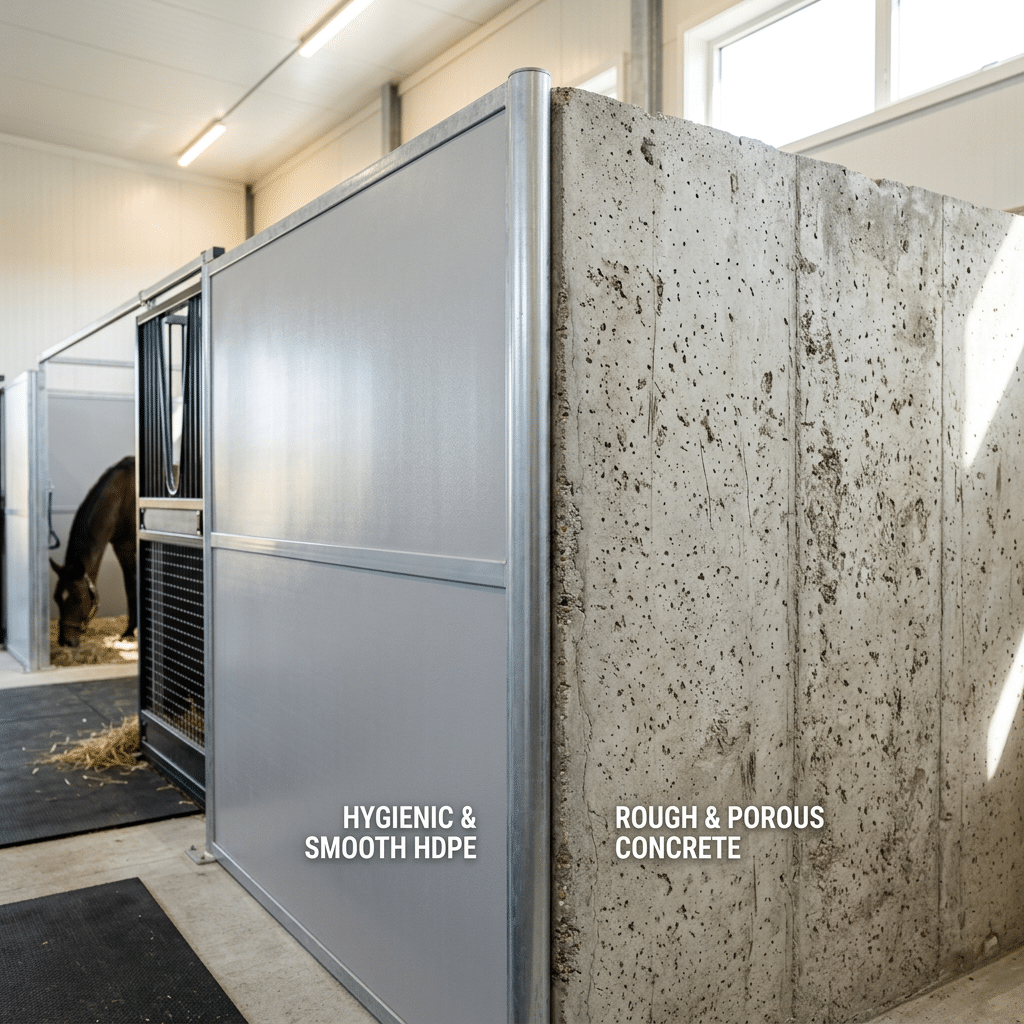
Securing durable temporary stabling for State Fairgrounds dictates the difference between a recurring operational expense and a revenue-generating asset. Relying on external rentals bleeds potential margins, while purchasing substandard fleet inventory invites rapid corrosion and safety liabilities during high-traffic expo seasons.
This analysis benchmarks manufacturers based on the ISO 1461 Feuerverzinkung standard essential for outdoor longevity. We evaluate suppliers on Q235B structural integrity and proprietary flat-pack logistics to maximize container density and protect your procurement budget.
The Economics of Mega-Events: Renting vs. Owning Stalls
Schneller Vergleich
| Topic | Kategorie | Key Outputs | Urteil |
|---|---|---|---|
| Vendor Participation and Revenue Models | Operational Model | Stall Allocation, Rental Revenue | Centralized platform enabling high-traffic vendor access and predictable rental cash flow. |
| Broader Economic Impact of Mega-Event Infrastructure | Macroeconomic Impact | Job Creation, Tax Revenue | Massive multiplier effect sustaining jobs and driving revenue for local hospitality and government. |
| Strategic Implications for Vendors | Vendor Strategy | Market Access, Low-Capital Entry | Low-capital entry point for artisans to access mass markets, balancing opportunity with strict operational compliance. |
Vendor Participation and Revenue Models
A high-efficiency framework that **secures predictable cash flow** while enabling scalable vendor access without permanent infrastructure costs.
Fairgrounds operate as dynamic platforms that grant vendors access to high-traffic environments without the burden of permanent facility ownership. This model has proven exceptionally lucrative, generating up to $196.2 million in secondary economic impact at major events like the State Fair of Texas.
The centralized ownership structure empowers operators to optimize space allocation efficiently across the venue. By retaining control, organizers ensure predictable cash flow through rental fees while maintaining the flexibility to curate vendor variety.
📊 Auf einen Blick:
- 📍 Standort: Operational Model
- 🏭 Kernkraft: Stall Allocation, Rental Revenue
- 🌍 Wichtige Märkte: Event Operators
Warum wir sie ausgewählt haben:
| ✅ Die Siege | ⚠️ Abwägungen |
|---|---|
|
|
Broader Economic Impact of Mega-Event Infrastructure
Fairground infrastructure serves as a **high-yield economic catalyst**, generating $51.9 billion in impact and sustaining 393,000 jobs.
The presence of fairground infrastructure creates a massive multiplier effect, sustaining 393,000 jobs and generating $51.9 billion in total economic impact across US fairs. It acts as a financial anchor that supports employment and regional stability.
This spending extends well beyond the fairgrounds, directly benefiting hotels, restaurants, and local businesses. The resulting activity generates significant tax revenues that support public services long after the events conclude.
📊 Auf einen Blick:
- 📍 Standort: Macroeconomic Impact
- 🏭 Kernkraft: Job Creation, Tax Revenue
- 🌍 Wichtige Märkte: Regional Economy
Warum wir sie ausgewählt haben:
| ✅ Die Siege | ⚠️ Abwägungen |
|---|---|
|
|
Strategic Implications for Vendors
This model lowers entry barriers, granting **immediate market access to millions** without the capital risk of permanent construction.
For exhibitors, the renting model significantly lowers capital barriers. It allows small artisans to access millions of potential customers without investing in permanent buildings.
In exchange for this high-value access, vendors accept temporary rights. They must comply strictly with fair management regulations regarding layout and hours.
📊 Auf einen Blick:
- 📍 Standort: Vendor Strategy
- 🏭 Kernkraft: Market Access, Low-Capital Entry
- 🌍 Wichtige Märkte: Small Businesses, Artisans
Warum wir sie ausgewählt haben:
| ✅ Die Siege | ⚠️ Abwägungen |
|---|---|
|
|
Precision-Engineered Stables Built for Lifetime Durability
The Economics of Mega-Events: Renting vs. Owning Stalls
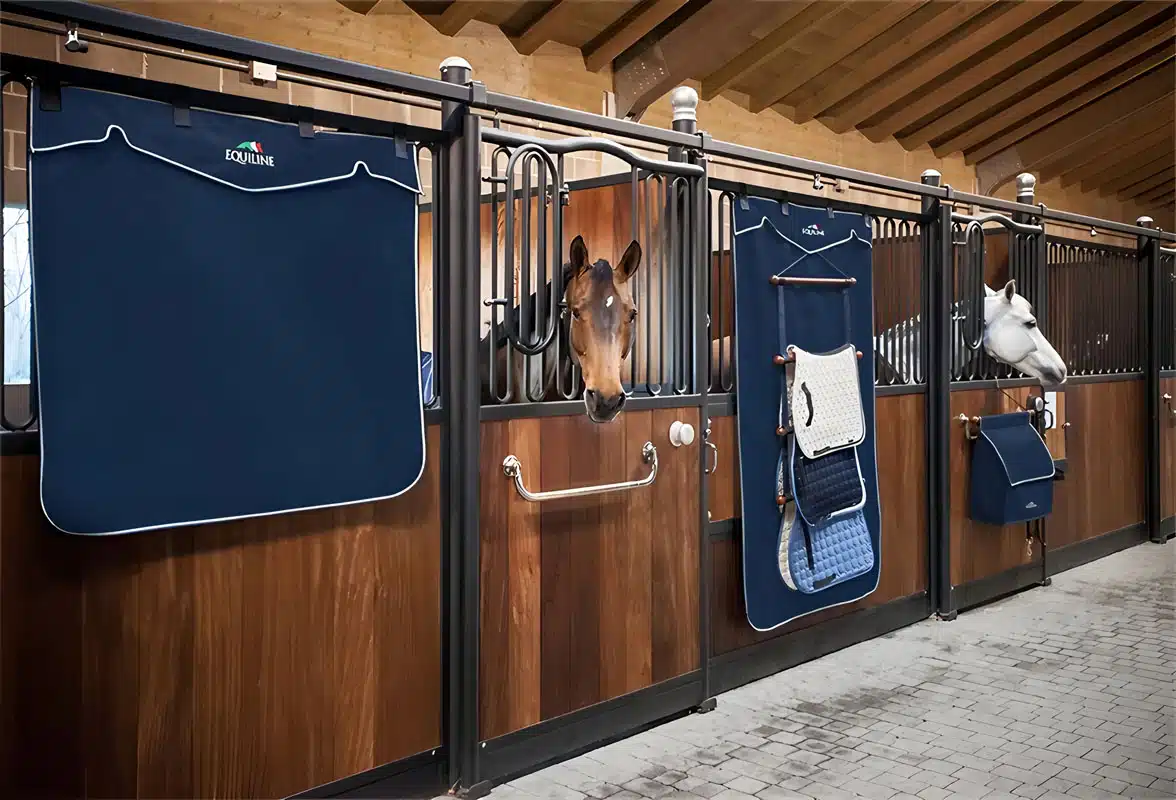
Mega-events operate as economic platforms where organizers generate consistent revenue by renting temporary space to vendors. While this model lowers entry barriers for exhibitors, organizers maximize long-term profitability by owning the underlying infrastructure. Transitioning from renting equipment to owning a fleet of Hot-Dip Galvanized stalls transforms stabling from a recurring operational expense into a permanent, revenue-generating asset.

The Vendor Participation Revenue Model
State fairs and large-scale equestrian events rely on a rental-based revenue stream rather than selling permanent lots. This centralized model allows organizers to maintain strict control over stall allocation, pricing tiers, and layout optimization. Data from the State Fair of Texas illustrates the power of this approach, where centralized management contributed to $80.2 million in operating revenue in 2023.
For vendors and artisans, the rental model eliminates the prohibitive capital cost of building permanent structures. By renting space, small businesses can access high-traffic markets without heavy upfront investment, driving secondary economic impacts that often exceed $196 million. For the organizer, this creates a predictable ecosystem where infrastructure serves as the primary lever for controlling revenue flow.
Optimizing Infrastructure ROI Through Ownership
While vendors rent space, the most profitable event organizers own the steel that defines that space. Sub-renting temporary stalls from third-party suppliers bleeds potential profit margins. To capture the full value of rental fees, organizers must invest in assets durable enough to withstand decades of assembly, use, and teardown. We engineer our **Hot-Dip Galvanized Horse Stable Systems** using **Q235B Structural Steel** (or Q345B for cold climates) specifically to meet this requirement. By adhering to **BS EN ISO 1461** galvanization standards with coating thicknesses exceeding 70 microns, we ensure the fleet resists rust and wear, even in the harsh environments of open fairgrounds.
The acquisition cost of these assets is often inflated by logistics, but our **DB Flat-Pack System** fundamentally changes the math. Traditional fully welded stalls limit shipping capacity to just 12-15 sets per container, driving up freight costs per unit. In contrast, our flat-pack design allows us to load **30-45 sets into a single 40HQ container**, reducing shipping expenses by over 60%. This **Profit Protection** logic allows organizers to acquire a larger fleet for the same budget, turning the initial investment into a high-yield asset that pays for itself through rental fees within just a few event cycles.
Manufacturing Capacity: Who Can Deliver 500 Sets in 60 Days?
Delivering 500 sets in 60 days requires a daily output of approximately 12 units when excluding weekends. The primary bottleneck is not welding speed, but the 35-45 day cycle required for ISO 1461 Hot-Dip Galvanization. Success depends on maintaining Q235B/Q345B steel stock and securing reserved slots at zinc bath facilities to ensure the 85-micron protective coating does not delay the final flat-pack logistics.
Calculating the Real Daily Output Rate
To hit a 60-day deadline for 500 stable sets, simple math suggests a target of 8.33 units per day. This calculation is often misleading. Factory schedules typ
ically exclude weekends, pushing the actual requirement to nearly 12 complete fronts and partitions every working day. This pace demands immediate production start times.
Speed relies heavily on raw material availability. We bypass initial sourcing delays by maintaining significant stock of Q235B and Q345B structural steel. High-volume orders depend on our ability to operate multiple welding stations simultaneously, maintaining the necessary cycle time for stable fronts and partitions without sacrificing weld quality.
The Critical Path: Hot-Dip Galvanization Logistics
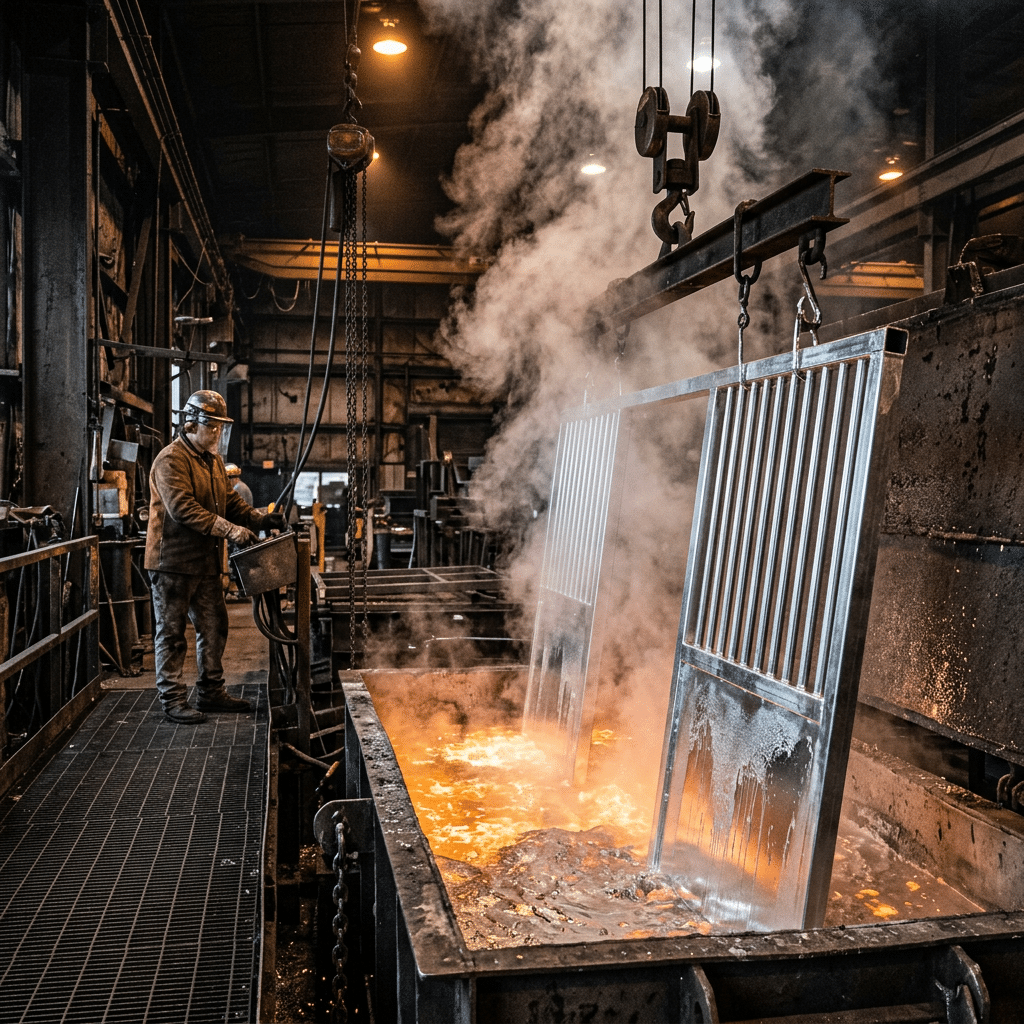
The “Hot-Dip After Fabrication” process serves as the primary production bottleneck, often accounting for 35-45 days of the timeline due to external plant scheduling. Unlike pre-galvanized tubing which is welded and shipped immediately, our process involves transporting fully welded black steel frames to zinc baths. This adds transit and queue time distinct from internal assembly speed.
Reliable delivery depends on strict management of this phase. We coordinate closely with galvanizing plants to ensure frames are dipped, cooled, and inspected for an 85-micron average coating thickness. Once approved, the components are flat-packed for logistics efficiency, ensuring the order is ready for container loading well within the 60-day window.
The Assembly Speed Requirement (Pin Connectors)
For large-scale event organizers, the difference between operational success and logistical failure often lies in the setup window. We engineered our temporary stabling solutions to eliminate the bottleneck of traditional bolting, utilizing a precision drop-pin system that allows a skeleton crew to deploy hundreds of stalls within tight 48-hour deadlines.
Accelerating Event Setup with Drop-Pin Systems
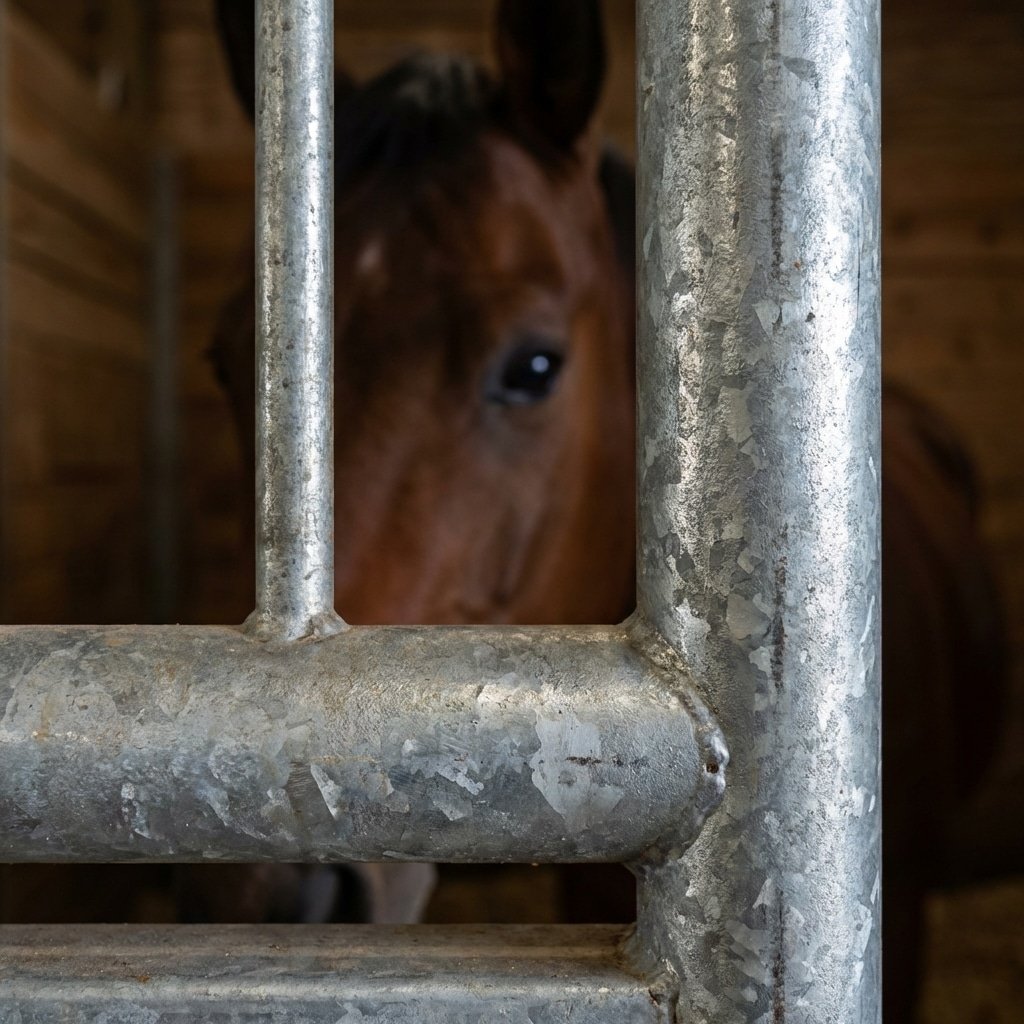
For exhibitions requiring 500+ stalls, time is the primary constraint. Traditional bolt-together systems are operationally unviable for the tight 48-hour setup windows typical of State Fairs or major equestrian festivals. We utilize a specialized drop-pin connector system within our Economy Series that fundamentally changes the installation velocity.
This design allows two panel posts—utilizing our standard 50mm x 50mm RHS profile—to be aligned and locked in seconds without the need for power tools or complex hardware management. This mechanism significantly reduces labor costs, enabling a small crew to assemble an entire aisle of temporary stabling in the time it takes to bolt a single permanent row, securing the event’s timeline and profitability.
Material Precision and Connection Reliability
Speed means nothing if the components seize or misalign during assembly. Our hardware kits feature 304 Stainless Steel connectors, which resist the oxidation and rust that often cause cheaper galvanized pins to stick after seasons of damp storage. This ensures that the system remains modular and functional year after year.
Manufacturing precision plays a critical role in this “plug-and-play” capability. Because we adhere to Hot-Dip Galvanization After Fabrication (BS EN ISO 1461), we ensure that welding slag is completely cleared and the pin loops remain smooth for easy insertion. Furthermore, by using Baustahl Q235B, we prevent the connector loops from deforming during our high-density Flat-Pack transport. This guarantees that when the pallet is opened at the fairground, every pin drops effortlessly into place without the need for hammering or forcing.
DB’s Economy Event Series and Flat-Pack Logistics
We engineered the Economy Series to specifically address the high-turnover demands of state fairs and temporary exhibition centers. By combining ISO 1461 hot-dip galvanized steel with zero-maintenance HDPE-Füllung, we deliver a “Kick-Proof” solution that withstands heavy public use, while our proprietary flat-pack logistics system maximizes shipping density to protect distributor margins.
The Economy Series: Engineered for High-Volume Events
We designed the Economy Series specifically for rental stables, quarantine units, and temporary fairground infrastructure where durability must meet strict budget constraints. Unlike permanent private barns, event stabling faces constant loading, unloading, a
nd exposure to aggressive environments. Our framework utilizes Q235B structural steel, which undergoes hot-dip galvanization to BS EN ISO 1461 standards after fabrication. This process ensures that every weld and joint is sealed against rust, providing longevity even when panels are installed in muddy, outdoor event sites.
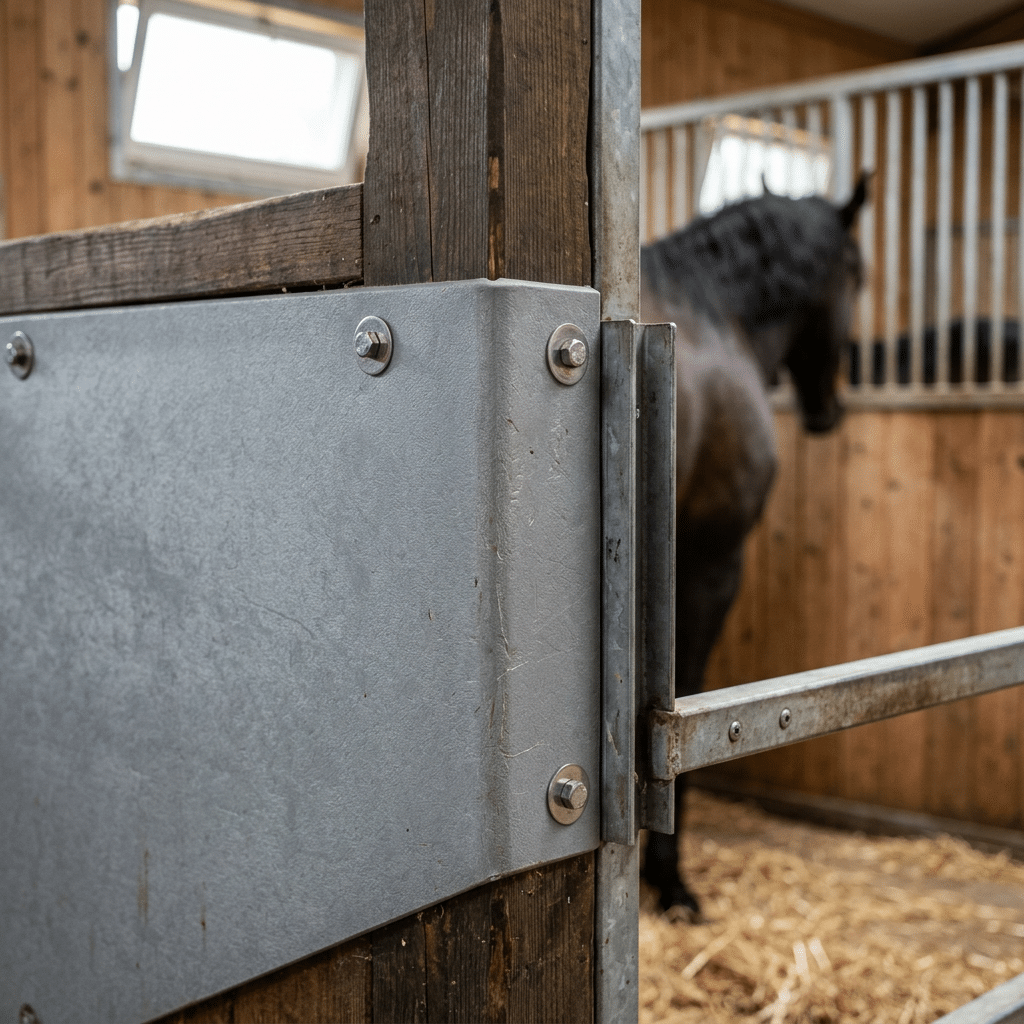
To further reduce operational costs for event organizers, we utilize 28mm-32mm HDPE infill planks. This material provides a “Zero Maintenance” finish that absorbs high-impact kicks without splintering or cracking. For rental operators, this eliminates the annual labor cost of painting or replacing rotted wood between fair seasons, ensuring the equipment remains safe and visually professional for decades.
Flat-Pack Efficiency: Maximizing Container Load for Profit Protection
Logistics often determine the viability of large-scale event projects. Traditional fully welded stalls are bulky, limiting shipping capacity to just 12-15 sets per container, which drives up the landed cost per unit significantly. We solved this bottleneck with our proprietary steel pallet flat-pack system. By modularizing the design, we can load 30-45 sets into a single 40HQ container.
This efficiency effectively reduces freight costs by over 60%, a critical factor for “Profit Protection” in B2B distribution. For distributors managing state fair contracts, this means we can deploy 100+ stalls rapidly with fewer trucks and lower handling fees, bypassing the logistical bottlenecks that plague traditional static welded systems.
Abschließende Überlegungen
Owning infrastructure transforms operational expenses into revenue-generating assets, but only if the steel survives the environment. While local welding shops offer speed, our ISO 1461 Hot-Dip Galvanization ensures your fleet withstands decades of assembly and outdoor storage without corroding. We secure your long-term ROI by combining this industrial durability with a flat-pack design that slashes freight costs by over 60%.
Large-scale events cannot afford setup delays or hardware failures on opening day. We invite you to validate our “Kick-Proof” engineering and rapid drop-pin assembly with a trial order before committing to a full expo upgrade. Contact our project team today to model your layout and lock in your steel rates for the upcoming season.
Häufig gestellte Fragen
Who manufactures temporary stalls for State Fairs?
DB Stable specializes in engineering high-volume temporary stalls specifically for state fairs and mega-events. As a dedicated B2B OEM source factory, we build Q235B structural steel frames with ISO 1461 hot-dip galvanization. This heavy-duty construction handles the high traffic and public exposure typical of large agricultural expos.
How fast can you build 100 horse stalls?
Our standard production lead time runs between 35 and 45 days. This schedule allows for proper hot-dip galvanizing after fabrication. For shipping, our flat-pack system fits 30 to 45 sets in a single 40HQ container, so we can deliver large quantities efficiently to keep your project on schedule.
Best bulk horse stabling suppliers?
Top suppliers prioritize logistics efficiency alongside product quality. We separate ourselves by using flat-pack technology that allows us to load up to 45 sets per container, compared to the industry average of 12 fully welded sets. This approach reduces freight costs by over 60%, protecting your budget on bulk orders.
Cost to outfit an equestrian expo center?
Pricing depends on the series and total volume. For expo centers requiring durability and easy cleaning, we recommend our Economy Series featuring hot-dip galvanized frames and HDPE infill. This setup offers our Kick-Proof Guarantee and Zero Maintenance benefits. We provide custom quotes based on your specific layout and current steel rates.
Storage for portable horse stables?
We design our portable systems for compact storage during the off-season. All panels arrive on steel pallets in a flat-pack format. When the event ends, you can stack the panels back onto these pallets. This method protects the finish and minimizes the warehouse space needed until the next event.

 German
  English
  Spanish
  French
  Arabic
0 Kommentare