
Hinge freezing is a preventable mechanical failure that spikes facility maintenance costs during northern winters. When condensation enters standard welded knuckles, it creates an ice wedge that seizes the door, often requiring invasive grinding to release. Relying on cheap steel-on-steel friction points guarantees seasonal downtime and expensive warranty claims.
This analysis benchmarks failure-prone welded hardware against the DB 3D Bolt-On system featuring self-lubricating brass washers. By eliminating the steel-on-steel interface and applying Hot-Dip Galvanization to ISO 1461 standards, we engineer a solution that withstands sub-zero climates and heavy radial loads.
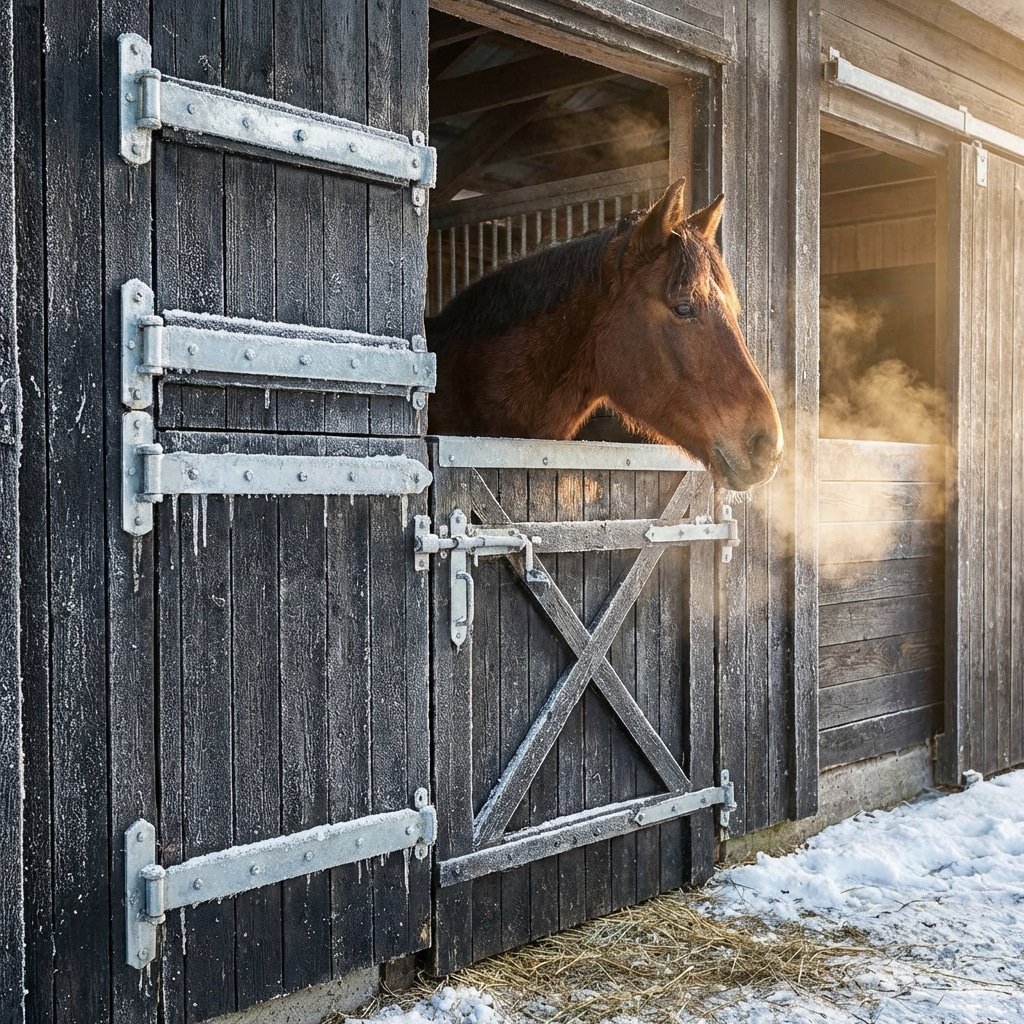
The Metal-on-Metal Friction of Cheap Welded Hinges
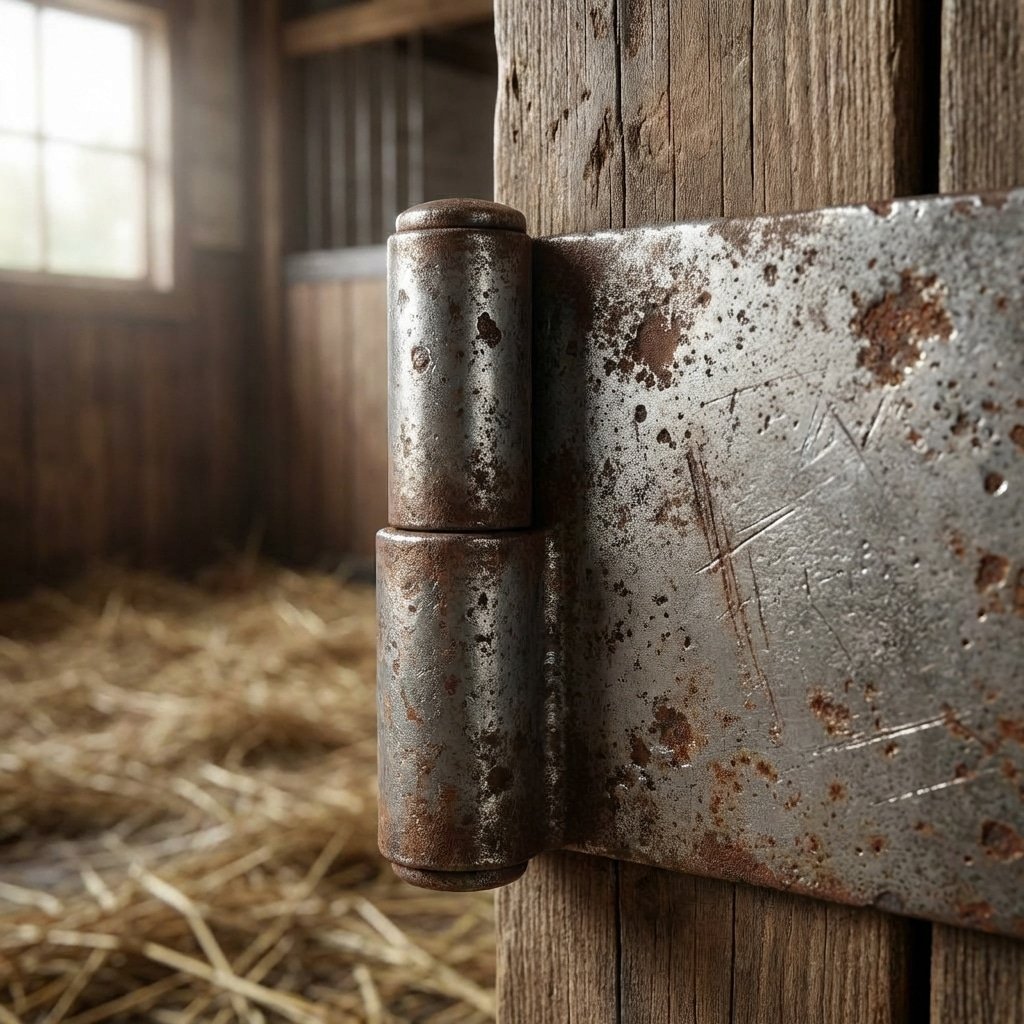
Cheap welded hinges force steel against steel without lubrication. Under heavy radial loads, this causes galling—microscopic cold-welding that makes doors stick, squeak, and eventually seize.
The Physics of Steel-on-Steel Contact
When manufacturers weld a mild steel pin into a mild steel knuckle without a bushing, they ignore basic tribology. Identical metals naturally possess a high coefficient of friction, especially when they lack the precision finishing found in professional hardware. In budget hinge production, the metal surfaces remain rough on a microscopic level. These peaks and valleys interlock when the door is stationary, creating “stiction” (static friction). To open the door, you must apply enough force to physically break this mechanical interlocking, making the initial push unnecessarily difficult.
- Identical Metal Friction: Steel-on-steel contact generates significantly higher resistance than steel-on-brass or steel-on-nylon.
- Stiction Mechanics: The lack of lubrication retention causes the joint to “freeze” briefly before every movement.
- Surface Quality: Cheap mild steel retains surface irregularities that act like microscopic gear teeth, resisting rotation.
Galling and Seizure in High-Load Applications
The failure of cheap hinges is accelerated by the weight of the stable door itself. A standard stable door exerts a radial load of 80kg or more, compressing the pin directly against the barrel wall. In a bushing-less design, this pressure strips away superficial plating and forces the raw metals to grind against each other. This environment triggers “galling,” a destructive form of adhesive wear where material is torn from the pin and cold-welded to the knuckle. It starts as a sticky sensation or a squeak, but as the galling worsens, the welded patches grow larger. Eventually, the hinge seizes completely, often requiring an angle grinder to remove the door.
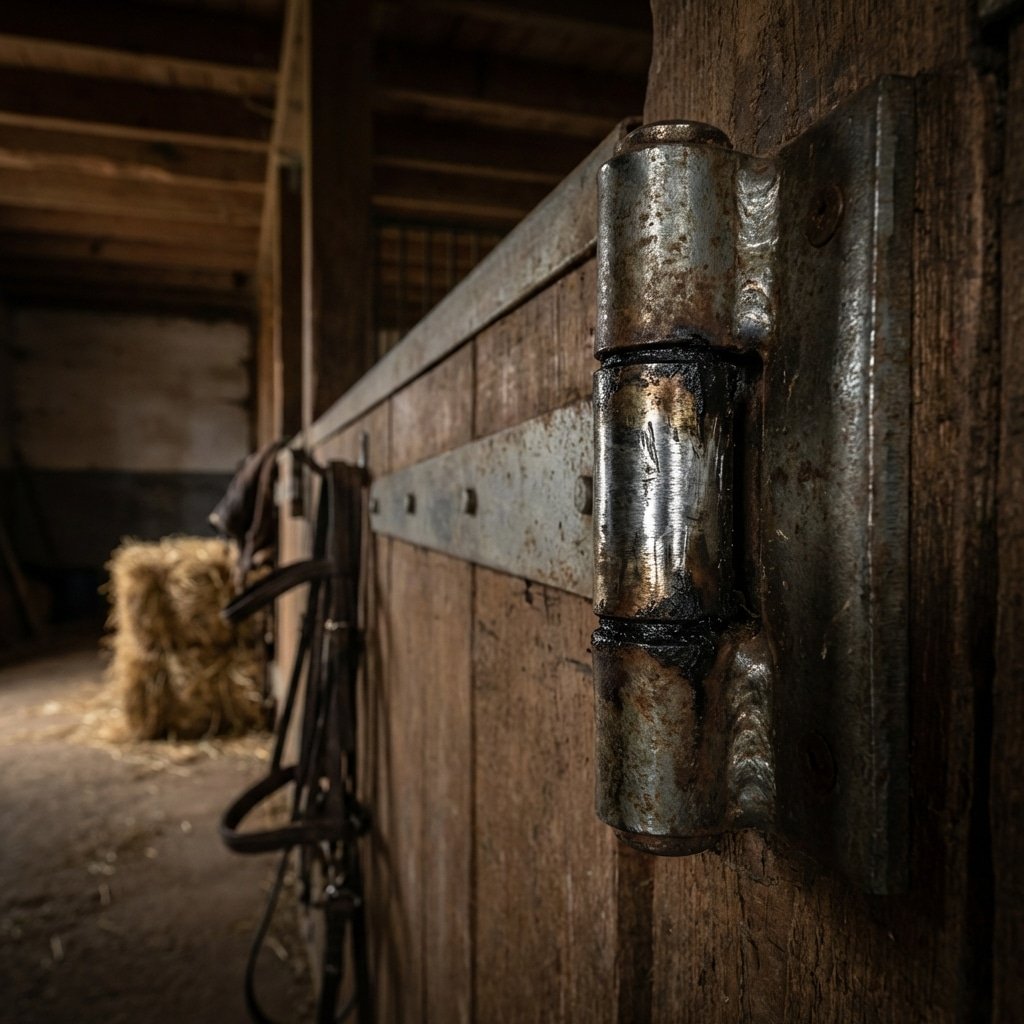
Winter Condensation and Flash Rusting in the Pin
Winter condensation occurs when warm stable air hits cold metal hinge pins, creating a hidden moisture pocket that freezes or flash-rusts, effectively welding the door shut.
The Thermodynamics of Stable Humidity
The environment inside a working stable creates a perfect storm for metal failure. Horses are massive heat and moisture generators. Through respiration and body heat, they maintain a warm, humid micro-climate inside the barn, even when it is freezing outside. This high relative humidity is unavoidable in any active equine facility.
The problem starts when this warm, moist air comes into contact with the hinge assembly. Metal is highly conductive, so the hinge pin mirrors the sub-zero outdoor temperature. When the humid indoor air hits that freezing steel surface, the temperature differential forces rapid condensation. It’s the same physics that causes a cold soda can to sweat on a hot day, but occurring inside the mechanical tolerances of your door hardware.
This isn’t just surface water. Capillary action draws this condensate deep into the micro-gaps between the pin and the barrel. Once the water is trapped inside the hinge mechanism, it cannot easily evaporate due to the lack of airflow. It sits there, waiting for the temperature to drop further.
Flash Rusting and the Vulnerability of Exposed Steel
Once moisture penetrates the barrel, two specific failure modes occur almost simultaneously. The first is flash rusting. On precision-fitted metal surfaces—specifically standard Q235B steel that lacks deep-penetrating hot-dip galvanization—oxidation triggers within hours. The rust expands, eating into the clearance tolerance required for the hinge to rotate.
The second failure mode is mechanical freezing. As the barn temperature cycles overnight, that trapped pocket of water freezes. Water expands by about 9% when it turns to ice. inside a tight hinge barrel, there is no room for this expansion. The ice exerts immense hydrostatic pressure against the steel walls, creating an interference fit that locks the mechanism solid.
- Rapid Oxidation: Unprotected steel surfaces oxidize immediately upon exposure to the condensate, creating friction.
- Hydraulic Locking: Freeze-thaw cycles turn trapped water into an expanding ice wedge that seizes the pin.
- Material Failure: Standard steel without specialized coatings (like hot-dip galvanization) cannot resist this oxidative attack.
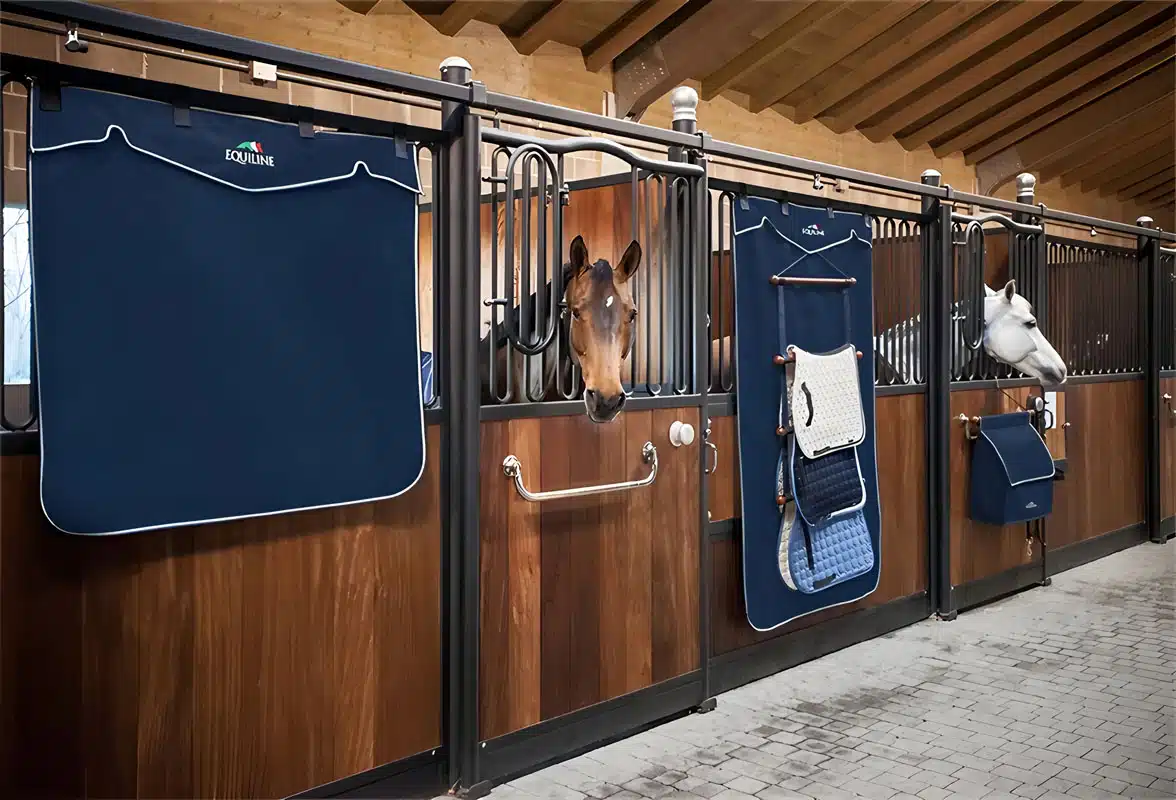
Premium Custom Stables With 20-Year Durability
The DB Solution: 3D Bolt-On Hinges with Brass Washers
Executive Insight: We replaced fixed welded units with a 3D adjustable system to eliminate site-welding costs and prevent winter seizing using self-lubricating brass components.
| Merkmal | Standard Welded Hinge | DB 3D Bolt-On System |
|---|---|---|
| Realignment | Impossible (Requires grinding/cutting) | 3-Axis Wrench Adjustment |
| Friction Interface | Steel-on-Steel (Prone to seizing) | Brass-on-Steel (Self-lubricating) |
| Logistics Impact | Bulky (12-15 Sets per 40HQ) | Flat-Pack (30-45 Sets per 40HQ) |
| Repair Method | Hot Works Permit Required | Simple Hand Tools |
Adjustable 3D Bolt-On Architecture
Traditional welded hinges fail because they assume the ground never moves. When concrete settles or timber posts warp, a welded door drags on the floor. Fixing this requires a contractor to grind off the old hinge and re-weld it, damaging the galvanization and introducing rust points immediately. We engineered the 3D bolt-on system to solve this maintenance headache.
Our system allows facility managers to realign doors vertically and horizontally using standard hand tools. This keeps the latch points precise years after installation, regardless of structural shifting. Beyond mechanical function, this design is the cornerstone of our logistics strategy (“Profit Protection”). By removing protruding welded components, we flat-pack our systems efficiently.
- Vertical Adjustment: Counters natural door sagging over time.
- Horizontal Alignment: Corrects gaps caused by post warping.
- Logistics Efficiency: Enables loading 30-45 sets in a 40HQ container versus the industry average of 12-15 sets for welded units.
The Metallurgy of Brass Washers
We use brass washers explicitly to combat the “galling” effect found in steel-on-steel connections. When two steel surfaces slide against each other under the weight of a heavy stable door, friction generates heat and micro-welds, eventually causing the hinge to seize. This fails catastrophicially in freezing temperatures where moisture acts as a binding agent.
Brass is metallurgically distinct from steel, which prevents these materials from fusing. It acts as a sacrificial, self-lubricating bearing surface. This ensures consistent door movement in wet, ammonia-rich, or sub-zero stable environments without the constant need for heavy grease application.
Why Brass Prevents Seizing in Sub-Zero Barns
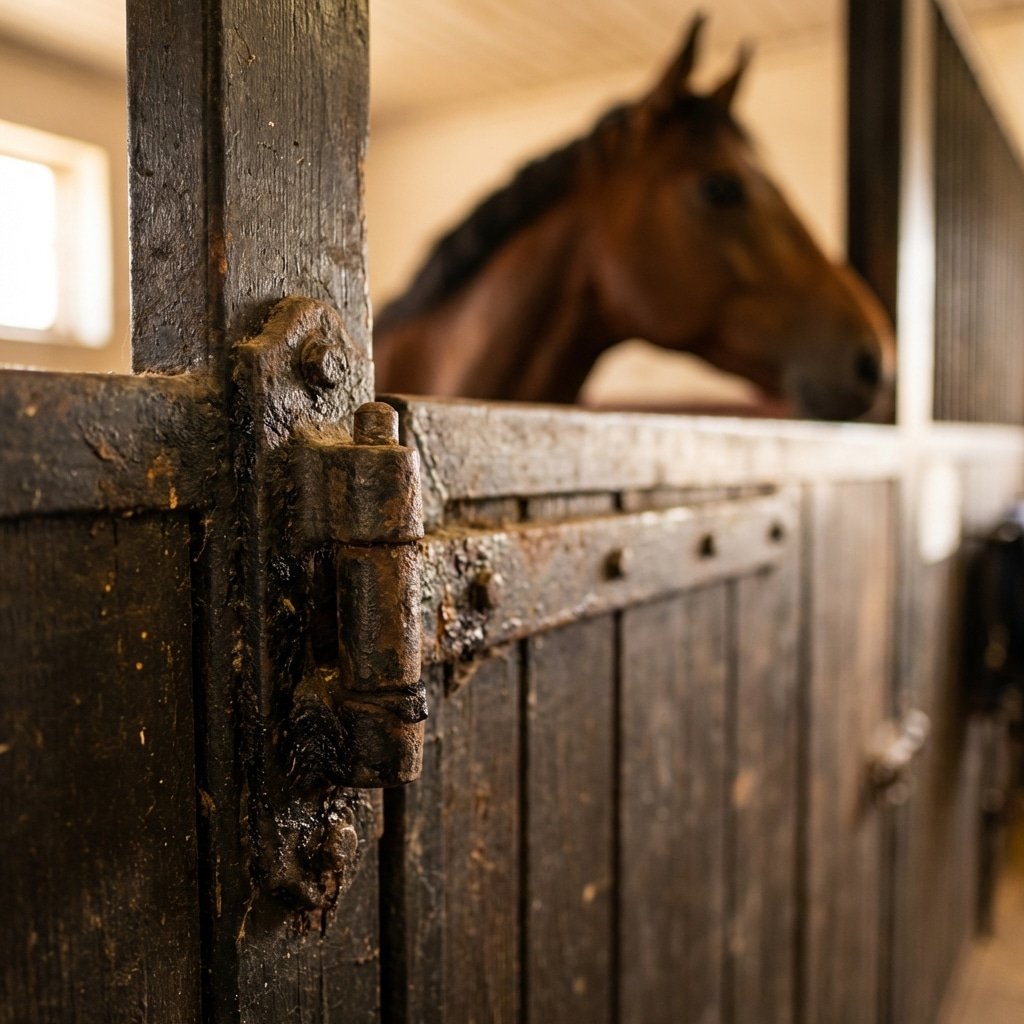
Brass prevents seizing through natural self-lubrication and corrosion resistance, creating a non-ferrous interface that stops steel-on-steel galling and rust-welding in freezing temperatures.
The Self-Lubricating Advantage of Brass
Standard steel hinges fail in winter because friction generates microscopic surface tearing. This leads to “galling,” where two similar metals essentially friction-weld together. Brass functions as a critical buffer in this equation.
- Sacrificial Bearing Material: Brass is softer than the steel pin. It acts as a sacrificial layer that absorbs wear, preventing the structural steel pin from adhering to the barrel.
- Natural Lubricity: The alloy maintains a slick surface even without external lubrication. When grease thickens and hardens in -20°C weather, the brass component keeps the mechanism moving.
- Friction Reduction: By separating steel components, brass prevents the jagged microscopic tearing common in steel-on-steel friction, ensuring consistent movement.
Eliminating Corrosion-Induced Seizing
The “rust-ice” cycle is the primary killer of barn hardware. Steel creates rust, rust creates a rough surface, and that roughness gives water a place to freeze and expand. Brass disrupts this cycle entirely.
- Non-Ferrous Composition: Brass does not contain iron and cannot rust. This physically prevents “rust-welding,” where corrosion bonds the pin to the hinge barrel.
- Surface Integrity: Unlike steel which pits and corrodes, brass surfaces remain smooth. Water cannot find the rough purchase points necessary to freeze and lock the joint.
- Condensation Resistance: Barns generate heavy condensation. Brass ensures the hinge remains operational despite the constant presence of moisture that freezes on contact with steel.
Häufig gestellte Fragen
What is the best lubricant for heavy stable door hinges?
For heavy-duty stable components, white lithium grease is the functional choice. It withstands significant load stress without displacing under the weight of a 250kg+ door. For sliding tracks, use silicone spray; it lubricates without attracting sawdust or dirt. We strictly advise against standard WD-40 for this application, as it collects grime that gums up the mechanism over time.
How do I prevent my stable doors from freezing shut in winter?
Freezing happens when moisture creates a bond between steel surfaces. We solve this by using hinges with brass washers or bushings. Brass is self-lubricating and prevents the steel-on-steel adhesion that leads to seizing. Furthermore, our hinges undergo Hot-Dip Galvanization to ISO 1461 standards. This prevents the flash rust that creates rough surfaces and exacerbates friction in cold, damp climates.
Why are adjustable bolt-on hinges preferred over welded ones?
Structural posts settle over time, especially under the weight of heavy infills like bamboo or hardwood. This settling causes misalignment. Adjustable bolt-on hinges allow you to realign the door vertically and horizontally with a simple wrench turn. Welded hinges offer zero flexibility; if the building shifts, you often have to cut the hinge off and re-weld it. Bolt-on systems save long-term maintenance costs.
Do DB Stable hinges require regular maintenance?
Our systems utilize Q235B or Q345B steel (depending on your climate zone) that is Hot-Dip Galvanized after fabrication. This provides lifetime rust protection without painting. Maintenance is minimal: we recommend a seasonal check of the adjustment bolts and a light application of lithium grease before winter to ensure effortless operation.
Abschließende Überlegungen
Cheap welded hinges are a commercial liability in northern climates, creating rust claims and seized doors that damage your dealership’s reputation. Switching to our 3D bolt-on system with self-lubricating brass washers eliminates these failure points while maximizing your container space through flat-pack logistics. By choosing Hot-Dip Galvanized components over standard mild steel, you secure a “Profit Protection” advantage that generic hardware cannot match.
Stop gambling on hardware that fails when the temperature drops. Request a technical sample of our adjustable hinge system today to verify the machining quality and brass tolerances yourself. Contact our engineering team to integrate these specifications into your next container load.



 German
  English
  Spanish
  French
  Arabic
0 Kommentare