


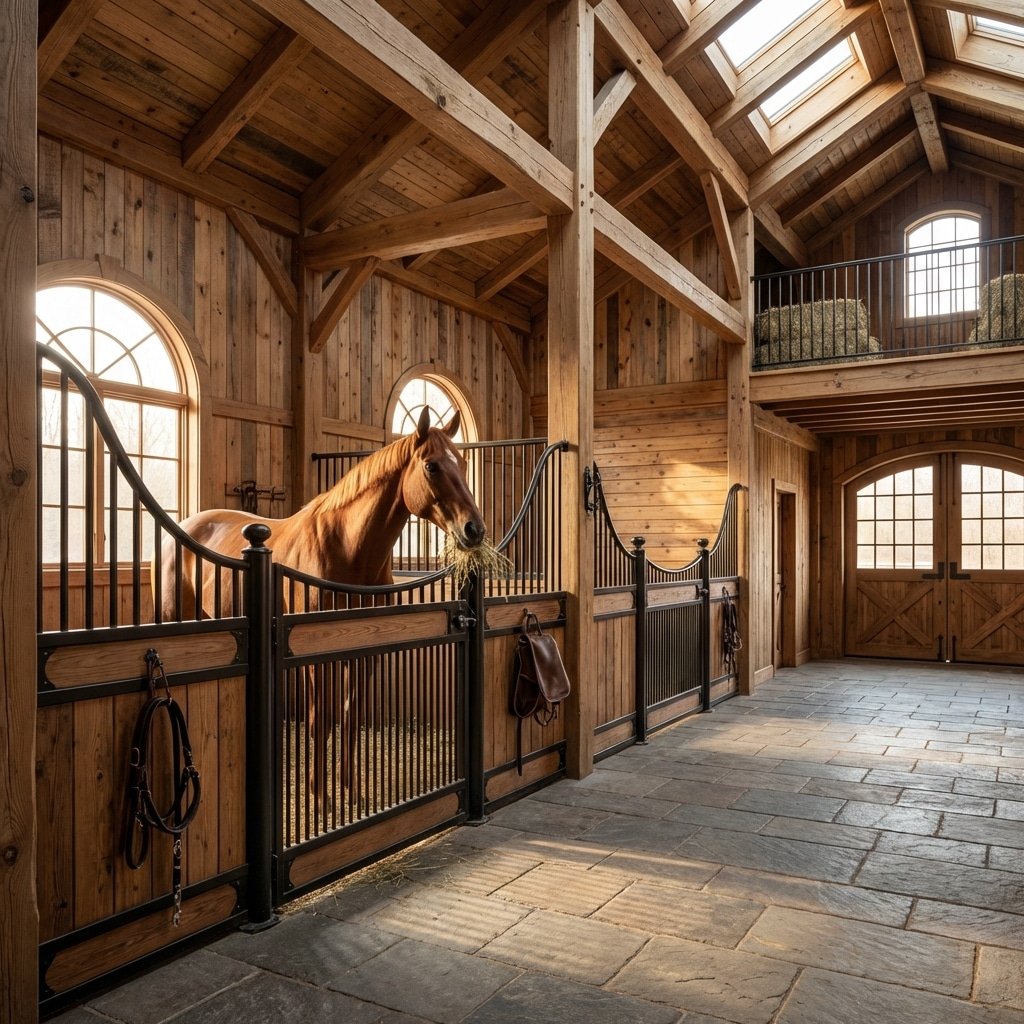
Cleaning grills effectively is the single biggest time-sink in daily stable maintenance. Square tube profiles create horizontal shelves that trap heavy dust layers and cobwebs, requiring constant manual labor to maintain hygiene. This architectural flaw converts a low-cost material into a long-term operational expense, wasting hours of staff time on repetitive dusting.
We examine the geometric advantage of round profiles for minimizing debris retention. By combining aerodynamic shapes with Hot-Dip Galvanization After Fabrication to BS EN ISO 1461, DB Stable eliminates the porous surfaces where grime bonds to steel. This approach ensures a zero-maintenance finish that resists ammonia corrosion and allows staff to sanitize stalls in minutes rather than hours.
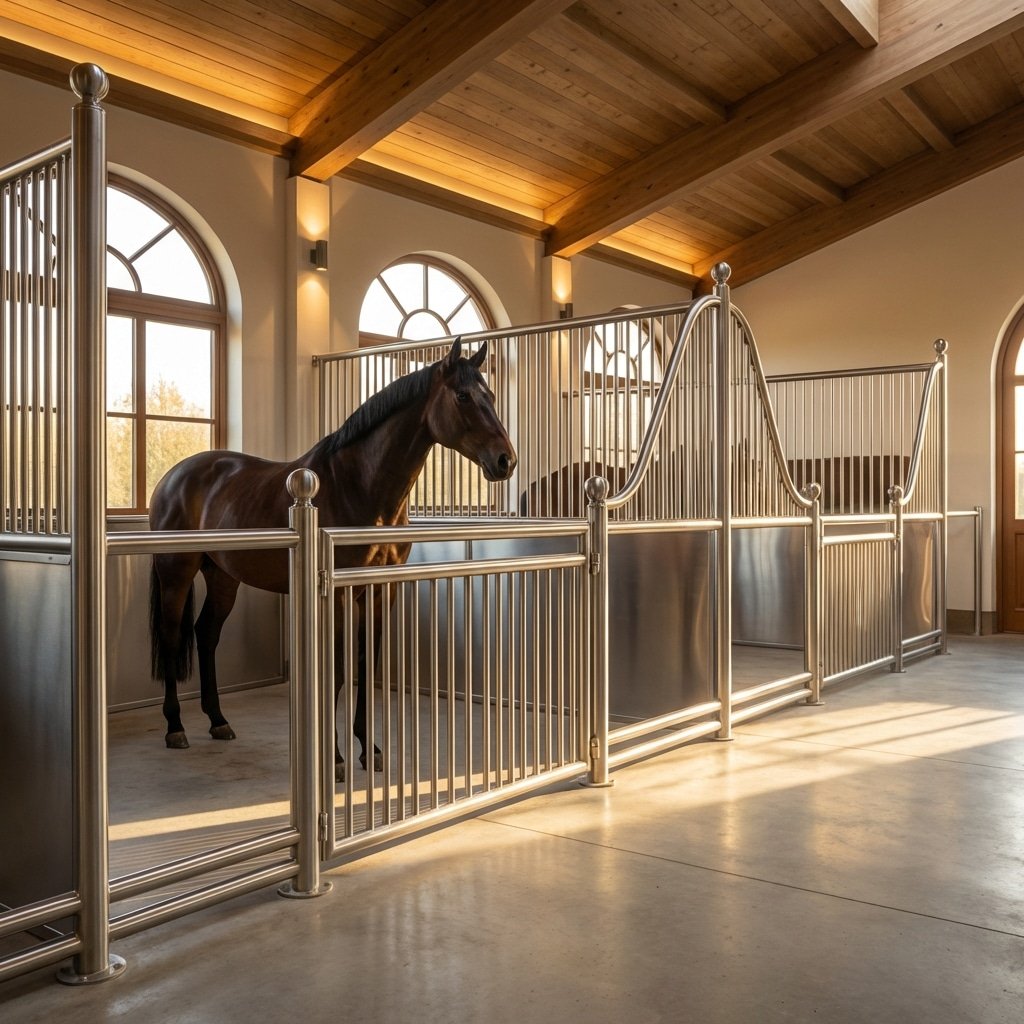
The Dust and Cobweb Magnet: Flat Edges on Square Tubes
Square profiles create flat shelves that collect dust and cobwebs, requiring frequent cleaning. Round tubes naturally shed debris, significantly lowering maintenance labor in busy commercial stables.
The Geometry of Accumulation: Why Flat Surfaces Trap Filth
The physics of a stable environment are simple: gravity pulls dust, bedding particles, and dander downward. On a standard 50mm x 50mm square tube, the top surface acts as a static shelf. Unlike round profiles where debris slides off the curvature, square edges halt the material, allowing it to pile up rapidly. If you run a finger along the top of a square stall front that hasn’t been wiped down in a week, you will find a significant layer of filth.
Spiders also prefer the architecture of square tubing. The right-angled corners provide perfect anchor points for webs, whereas the slick curve of a round tube makes it difficult for webs to adhere. From a hygiene perspective, this accumulation is not just an aesthetic failure. Piles of hay dust and dander at nose-level contribute to respiratory stress for the horse. Facility managers choosing square profiles must factor in the labor cost of weekly wipedowns to maintain air quality.
Mitigating Moisture Traps with Hot-Dip Galvanization
The real danger of the “Dust Magnet” effect is not dirt, but rust. When dust layers sit on steel, they absorb humidity from the air and ammonia from horse urine. This creates a corrosive poultice that sits wet against the metal 24/7. On painted or pre-galvanized steel, this poultice will eat through the coating and cause structural failure within years.
We anticipate this maintenance gap. Because we know stable staff cannot clean every top edge daily, DB Stable mandates Hot-Dip Galvanization After Fabrication to standard BS EN ISO 1461. This process ensures:
- Heavy Coating: We apply a zinc barrier thicker than 70 microns on all tubing.
- Chemical Bonding: The zinc metallurgically bonds to the steel, preventing undersurface creep even if the surface is wet.
- Red Rust Prevention: Even if debris sits on the frame for months, the sacrificial zinc layer prevents the structural steel from corroding.

The Aerodynamics of Round Tube Horse Stall Grills
Round tube grills utilize the Coanda effect to minimize wind resistance, maximizing the effective open area for ventilation while eliminating the turbulence created by flat-faced square tubing.
| Aerodynamic Factor | Round Tube Profile | Square Tube Profile |
|---|---|---|
| Airflow Resistance | Low (Aerodynamic) | High (Blunt Body Drag) |
| Flow Pattern | Laminar (Smooth) | Turbulent (Eddies) |
| Vertical Friction | Minimal | High (Flat Ledges) |
| Effizienz der Belüftung | Optimiert | Restricted |
Reducing Drag for Consistent Air Exchange
Physics dictates how air moves through a stable, and the shape of the steel bars significantly impacts this flow. When air hits a flat, square barrier, it stops abruptly and scatters, creating a high-pressure zone in front of the bar and a low-pressure “dead zone” immediately behind it. This turbulence acts as a virtual wall, reducing the speed and volume of fresh air entering the stall.
Round tubes function differently due to the Coanda effect. Air currents cling to the curved surface, wrapping around the bar rather than bouncing off it. This smooth, laminar flow reduces drag coefficients significantly. In practical stable management, this means air passes through the grill work with minimal resistance, actively scavenging airborne dust and flushing out stagnant pockets of air that square tubes tend to trap.
Facilitating Vertical Circulation (Stack Effect)
Effective ventilation isn’t just about cross-breeze; it relies heavily on vertical air movement to remove heat and gases. DB Stable designs prioritize Stack Effect Ventilation, a principle where hot air and ammonia—which are lighter than cool air—naturally rise toward the ceiling to escape. The profile of the grill bars plays a critical role in how fast this rising column of air can move.
- Minimal Vertical Friction: Round bars offer no flat horizontal ledges to impede rising air. Square tubes create repeated horizontal barriers that slow down the vertical ascent of heat.
- Heat Evacuation: By reducing friction, round profiles prevent heat from banking up at the grill level, ensuring it exhausts through the top vents.
- Ammonia Control: The smooth aerodynamic profile aids in the rapid upward flush of ammonia fumes from the bedding layer without necessitating aggressive mechanical fans.
20-Year Rust-Resistant Modular Horse Stables
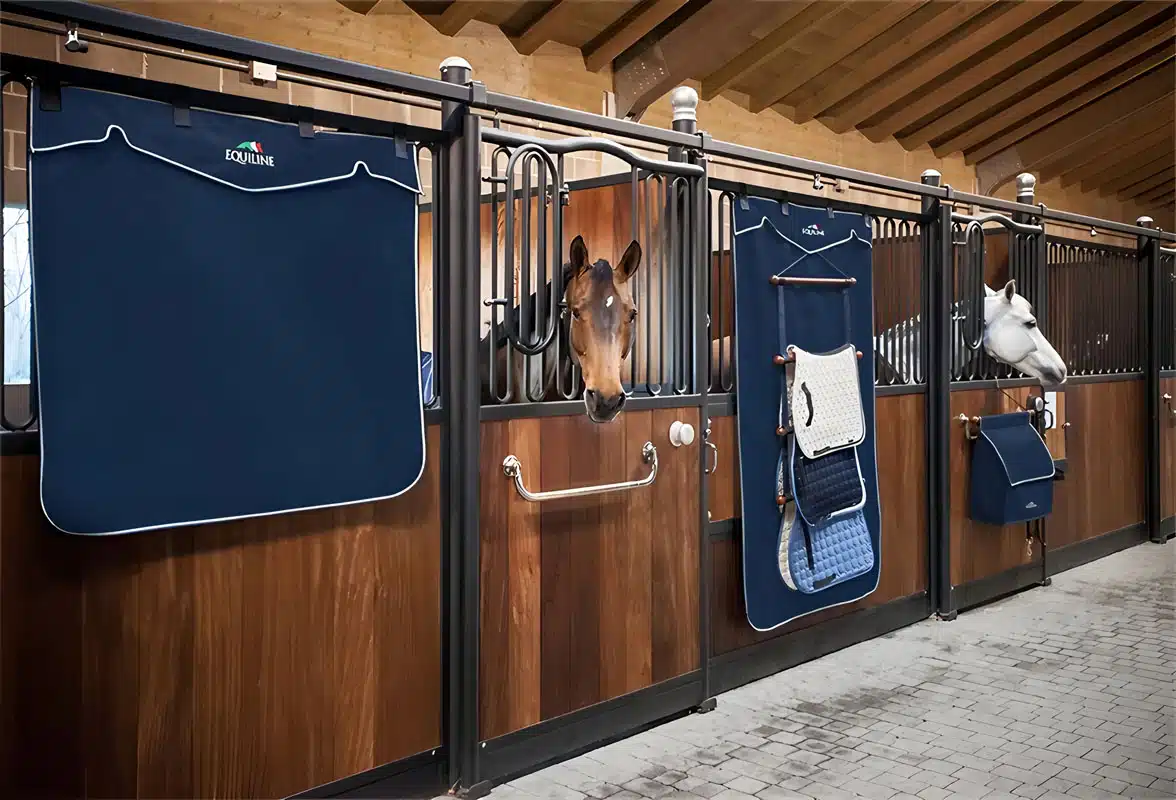

Safety First: Why Round Bars are Safer for Teeth and Hooves
Round profiles deflect hoof impacts to prevent lacerations and eliminate the leverage points horses need to grip with their teeth, effectively stopping cribbing behaviors.
Minimizing Lacerations and Discouraging Cribbing
Standardizing on round profiles for stall fronts and partitions is a calculated engineering decision, not an aesthetic one. Square tubes, while cheaper to manufacture, introduce flat surfaces and distinct corners into the stall environment. When a horse kicks out—whether from aggression, play, or surprise—a square edge acts like a blade against the hide. Round surfaces deflect the energy of the hoof impact, allowing the leg to slide off rather than cutting into the skin.
Behavioral safety is equally critical. Cribbing (windsucking) destroys expensive infrastructure and ruins a horse’s dental health. To crib, a horse requires a flat edge to latch its upper incisors onto for leverage. Round bars remove this leverage point entirely. If the horse cannot grip the surface, the habit becomes physically impossible to perform on the grill work.
- Impact Deflection: Round shapes distribute force across a curve, preventing the severe lacerations common with square tube impacts.
- Cribbing Prevention: The lack of a flat “ledge” eliminates the leverage required for horses to grip and suck wind.
- Cast Safety: If a horse becomes cast (trapped) against the grill, the absence of sharp corners prevents abrasion injuries as they struggle to stand.
Impact Resistance: Q345B Steel and Hot-Dip Finishing
Geometry alone does not guarantee safety; the metallurgy must match the application. Standard construction steel (Q235) often becomes brittle in freezing temperatures. A kick to a frozen Q235 bar can cause a catastrophic fracture, creating jagged steel shrapnel in the stall. We bypass this risk by utilizing Q345B Low Alloy High Strength Steel. This material maintains superior impact toughness even in extreme cold, ensuring that a bar might bend under extreme duress, but it will not snap.
Manufacturing processes further dictate the safety of the final product. Many manufacturers use pre-galvanized tubes welded together, leaving the weld joints raw and rough. We utilize Hot-Dip Galvanization After Fabrication. Submerging the entire welded grill into molten zinc creates a uniform, thick coating that smoothes out weld burrs and eliminates sharp snags that could injure soft tissue.
- Material Spec: Q345B Steel prevents brittle fractures and shrapnel creation during cold-weather impacts.
- Surface Finish: Hot-Dip Galvanization After Fabrication ensures all welds are smooth, burr-free, and safe for contact.
- Wall Thickness: Strict adherence to 14-Gauge (2.0mm-2.5mm) prevents bars from buckling or snapping under the force of a kick.
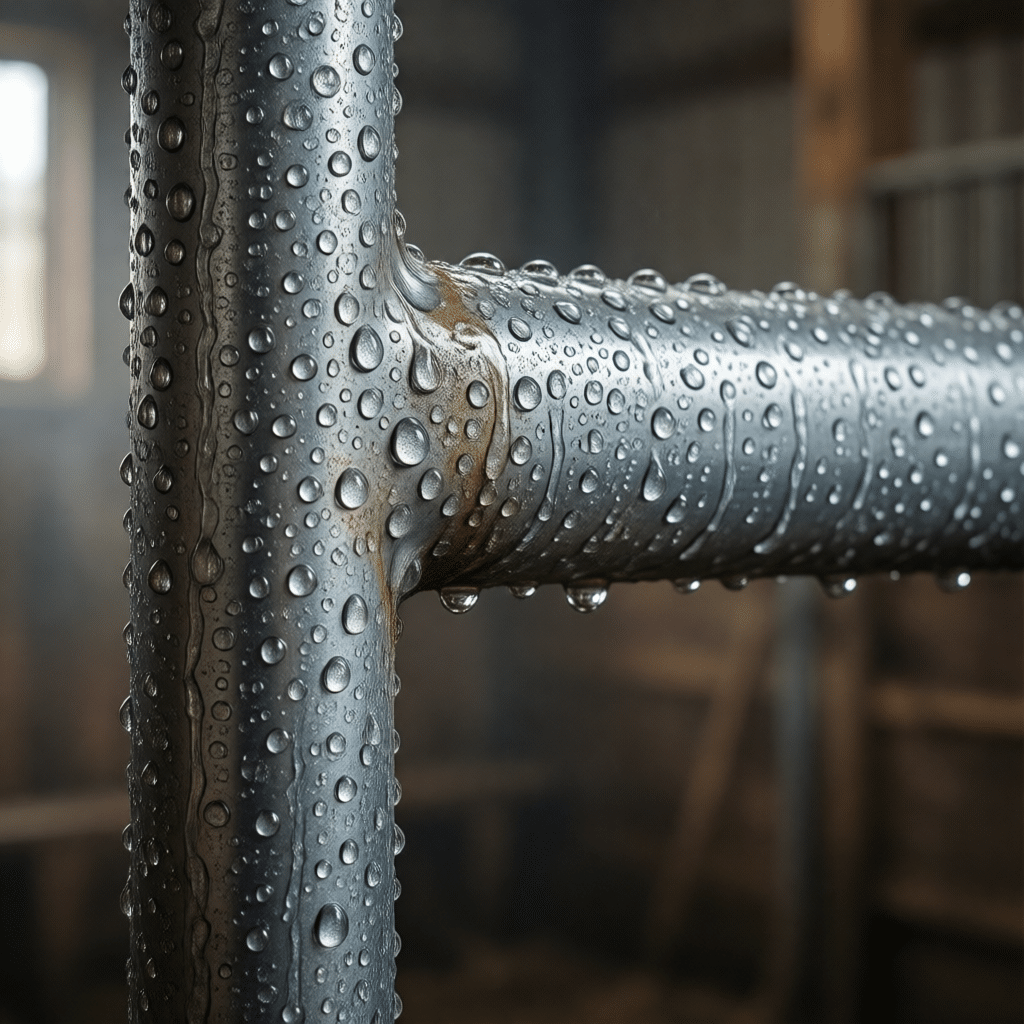
Wiping Down Stalls: The Speed of Maintenance
Rapid stable maintenance relies on non-porous surfaces like HDPE and hot-dip galvanized steel that resist moisture and allow staff to wipe down stalls in minutes.
Sanitization Efficiency: The Porosity Factor
Operational speed in a commercial stable hits a bottleneck when staff encounter porous materials. Untreated softwoods and rough-welded steel act like sponges, trapping equine saliva, dust, and bacteria deep within the grain or metal pores. This turns a simple cleaning task into a labor-intensive project.
Daily maintenance on textured surfaces requires aggressive scrubbing to dislodge trapped organic matter. In contrast, smooth, non-absorbent surfaces prevent grime from bonding in the first place. This allows staff to execute rapid sanitization protocols similar to commercial hygiene standards, replacing heavy scrubbing with a quick wipe-down.
The “Zero Maintenance” Edge: HDPE and Galvanized Steel
We engineer our stalls to eliminate the “scrub time” by utilizing materials that naturally repel moisture and dirt. DB Stable aligns specifically with the “Zero Maintenance” standard through two core specifications:
- HDPE Infill (High-Density Polyethylene): We use 28mm-32mm UV-stabilized boards that are completely impervious to water. Staff can clean these with a damp cloth, as they do not absorb fluids or odors.
- Hot-Dip Galvanization (BS EN ISO 1461): Our steel frameworks undergo galvanization after fabrication. This deposits a zinc coating >70 microns thick, sealing the steel against the rust-pitting where grime typically accumulates.
- Wash-Down Ready: Facilities can pressure wash the entire stall unit without risking the structural integrity of the partition or door.
This combination ensures that the stall essentially cleans itself. A facility manager can schedule a quick pressure wash or wipe-down, knowing the materials will not rot, rust, or degrade under water exposure.
Häufig gestellte Fragen
Is square tubing stronger than round piping for horse stalls?
Yes. Square tubing (RHS) generally offers about 25% higher yield strength than round pipe of the same weight. This geometric advantage provides superior resistance to bending and impact from kicking. We specifically use 50mm x 50mm RHS (Rectangular Hollow Sections) for our main frames to ensure maximum structural integrity and prevent the sagging often seen in lighter round-pipe alternatives.
How should I clean dusty stable bars?
A stiff-bristled brush or damp cloth removes surface dust effectively. For a deeper clean, you can use a pressure washer without worry. Because we use Hot-Dip Galvanization after fabrication (to BS EN ISO 1461 standards with a zinc coating >70 microns), our bars are fully sealed against moisture. Unlike pre-galvanized competitors where welds rust immediately, our “Hot-Dip After” process allows for aggressive cleaning without corrosion risk.
What is the safest bar spacing for stall fronts?
Safety depends on spacing rather than tube shape. We adhere to a “Cast-Proof Design” standard, maintaining a strict gap of approximately 50mm (2 inches) between bars. This specific dimension prevents even small hooves from getting trapped between the bars, which significantly reduces the risk of leg injuries during rolling or rearing.
Does square tubing collect more dust and cobwebs?
Square tubes do have flat top edges where dust settles more easily compared to the curve of a round tube. However, cobwebs present a fire hazard regardless of the tube profile. We recommend regular cleaning with a duster or vacuum for any stall system to maintain safe air quality, making the minor difference in dust accumulation negligible in a well-managed facility.
Abschließende Überlegungen
Square tubing creates “dust shelves” that increase labor costs and accelerate rust, creating a long-term liability for your commercial clients. By stocking round profiles treated with our BS EN ISO 1461 Hot-Dip Galvanization, you offer a superior sanitary solution that naturally sheds debris and resists corrosion for decades. This specific configuration protects your brand reputation by eliminating the most common maintenance complaints before they reach your desk.
Verify the difference between standard welding and our “Hot-Dip After Fabrication” process with a physical inspection. Request a sample section of our Q345B round profile system to test the impact resistance and smooth finish against your current inventory. Contact our engineering team today to discuss OEM parameters and lock in your production lead time.


 German
  English
  Spanish
  French
  Arabic
0 Kommentare