


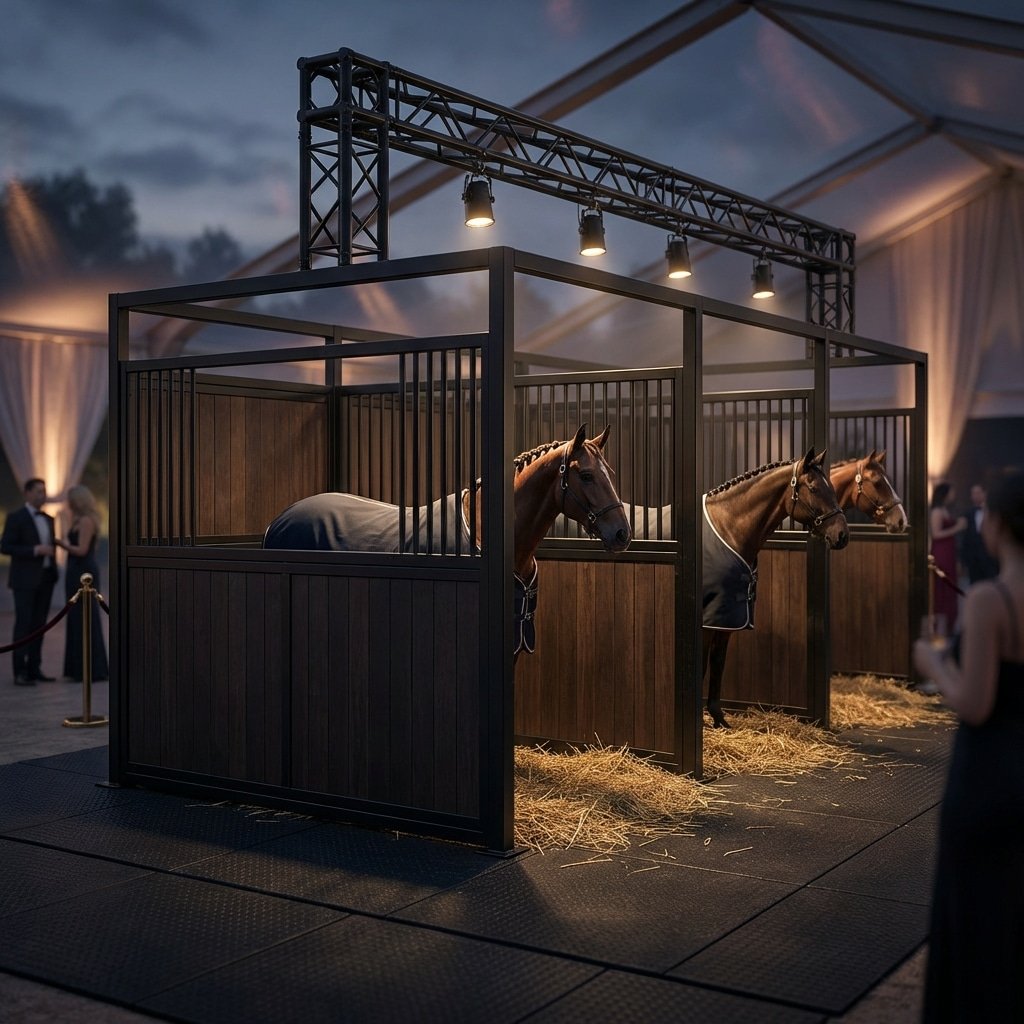
Custom Branding transforms temporary stabling from a logistical expense into a high-value sponsorship asset for elite organizers. While generic galvanized panels serve a basic function, they fail to deliver the visual exclusivity required by FEI-level stakeholders, potentially costing promoters significant revenue in lost advertising surface area.
We analyze how the Royal Series integrates ISO 1461 hot-dip galvanization with architectural-grade powder coating to withstand transport rigor. This benchmark evaluates suppliers on modular flat-pack logistics and Q345B steel resilience to help you secure infrastructure that meets both aesthetic demands and strict safety protocols for high-value horses.
The Rise of ESG (Environmental, Social, Governance) in Construction
By 2026, ESG compliance dictates project financing. Construction generates 34% of global CO2, mandat
ing a shift to strict carbon budgets, circular materials like bamboo, and logistics-efficient designs.
Decarbonization Mandates and Circular Economy Standards
The construction sector creates approximately 34% of global CO2 emissions. This massive footprint has forced regulators and investors to move beyond voluntary “green” labels to strict, mandatory carbon budgets. For B2B projects, this means viability now hinges on proven emissions data. Financing often depends on it.
Governance bodies increasingly prioritize circular economy models. The old “take-make-waste” linear approach is dead. The new standard requires materials that extend asset lifecycles, minimize waste during production, and offer end-of-life recyclability. Project developers must now demonstrate how materials—from structural steel to stall infills—align with these reuse and reduction protocols.

Achieving Sustainability with Bamboo Infills and Flat-Pack Logistics
Meeting ESG goals requires replacing resource-intensive materials with rapidly renewable alternatives. Traditional hardwoods (Oak, Pine) take decades to mature and contribute to deforestation. In contrast, High-Density Strand Woven Bamboo offers a superior ESG profile. It reaches maturity in 3-5 years and, when processed to our standard (Janka Hardness > 3000 lbf), provides a rot-resistant, carbon-sequestering alternative that outperforms hardwood in durability.
Logistics represent the “hidden carbon” in construction. Shipping fully welded frames involves transporting mostly air, which kills carbon efficiency. We engineered the DB Flat-Pack System to solve this. By optimizing packing density, we fit 30-45 sets per 40HQ container, compared to just 12-15 sets for fully welded alternatives. This efficiency reduces freight-related carbon emissions by over 60%, directly supporting Scope 3 emission reduction targets for our distributors.
Häufig gestellte Fragen
How to build an ESG compliant equestrian center?
Building an ESG-compliant facility requires a three-pronged approach. Environmental: Focus on energy and water. Successful projects generate 80%+ of their electricity via on-site solar and utilize closed-loop water systems (rainwater harvesting) for wash bays. Social: Prioritize staff safety and welfare. This includes documented risk assessments, safe machinery training, and providing quality amenities for stable hands. Governance: Establish a formal strategy that tracks data. You need board-level oversight to measure year-over-year reductions in emissions and waste, rather than making vague “green” claims.
Is bamboo a sustainable building material?
Yes, but the grade matters. Bamboo is a grass that regenerates in 3-5 years (vs. 30-50 years for timber) and absorbs significantly more CO2 than trees. It requires no replanting after harvest. However, natural raw bamboo lacks durability. For construction and stabling, you must use High-Density Strand Woven Bamboo (densified to >1.1g/cm³). This processing creates a material with a Janka hardness > 3000 lbf, making it impact-resistant and rot-resistant, ensuring the longevity required for sustainable infrastructure.
Environmental impact of steel vs wood barns?
This is a tradeoff between embodied carbon and lifecycle longevity. Wood has lower initial embodied carbon (production emissions) because trees grow naturally. However, wood is susceptible to rot, cribbing (chewing), and warping, often requiring replacement or chemical treatments. Steel (specifically Q235B/Q345B) involves higher production emissions but is 100% recyclable without loss of strength. When protected by Hot-Dip Galvanization (ISO 1461), steel structures last 30-50+ years with zero maintenance. For long-term ESG asset management, steel’s durability and circular recyclability often outweigh wood’s initial carbon advantage.
Green certifications for horse stables?
There is no dedicated “Green Stable” certification. However, facilities often adapt LEED (Leadership in Energy & Environmental Design) standards used for commercial buildings. You can score credits through natural ventilation (stack effect), stormwater management (green roofs/permeable pavers), and sustainable material sourcing. In regulated regions like California, agricultural structures must comply with CalGreen Code, which mandates specific water conservation and construction waste reduction targets.
Eco-friendly horse barn manufacturers?
Eco-friendly manufacturing is defined by material sourcing and production efficiency, not just marketing. The market splits into two categories: Mass Timber Specialists (like DC Structures) who focus on responsibly sourced heavy timber, and Modular Steel System Manufacturers (like DB Stable) who prioritize circular economy principles. We focus on high-density bamboo (renewable) combined with recyclable steel and optimized flat-pack logistics. When vetting a manufacturer, look for ISO 1461 galvanizing standards (longevity) and evidence of logistics optimization, as shipping “dead air” in welded stalls significantly spikes the project’s carbon footprint.
Moving Away from Old-Growth Timber (Oak/Pine)
Traditional timber is a maintenance liability. The industry is shifting to strand-woven bamboo and HDPE for 3x greater hardness and rapid renewability.
The Environmental and Durability Limitations of Traditional Hardwoods
For decades, oak and pine were the default choices for stable infills, but they are becoming less viable for modern commercial facilities. The primary issue is the disconnect between material performance and the harsh reality of a stable environment. Pine, a softwood, requires aggressive chemical treatments to resist rot. These treatments can be toxic if ingested by horses during cribbing (wood chewing). Even hardwoods like Oak, while stronger, remain porous. Over time, they absorb urine and moisture, creating breeding grounds for bacteria and requiring frequent replacement.
From a supply chain perspective, reliance on old-growth timber is a strategic risk. Oak takes 30 to 50 years to mature. Harvesting these slow-growing forests for stable boards—which will likely be kicked, chewed, and soaked in ammonia—is an inefficient use of natural resources. This scarcity drives up costs and extends lead times, pushing manufacturers toward engineered alternatives that offer consistency without the ecological tax.
High-Density Strand Woven Bamboo: The 3x Harder Alternative
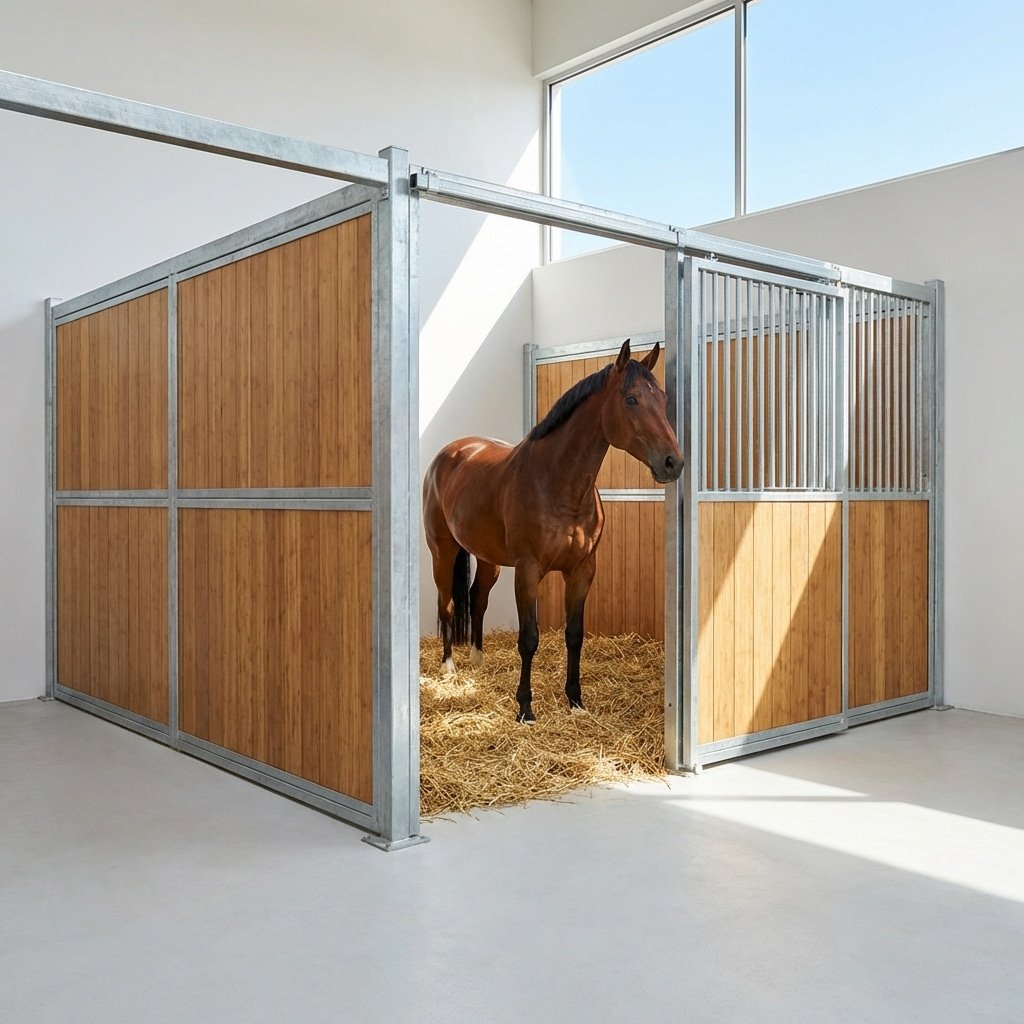
We do not use standard hollow bamboo. DB Stable utilizes High Density Strand Woven Bamboo, an engineered material that outperforms natural timber in almost every metric relevant to equine safety. Unlike timber, which has grain weaknesses, strand woven bamboo is compressed under immense pressure to eliminate voids.
- Rapid Renewability: Bamboo reaches maturity in just 3-5 years, making it a highly scalable and sustainable resource compared to the decades required for hardwood.
- Extreme Hardness: Our bamboo carries a Janka Hardness rating greater than 3000 lbf. This is physically 3x harder than Oak, rendering it virtually immune to horse kicks and cribbing damage.
- Engineered Resistance: The manufacturing process ensures high resistance to mold and rot, a critical advantage in damp stable environments where traditional wood often fails.
- Dimensions: Available in 28mm, 32mm, and 38mm thicknesses to fit standard heavy-duty steel channels.
Engineered For Safety And 20-Year Durability
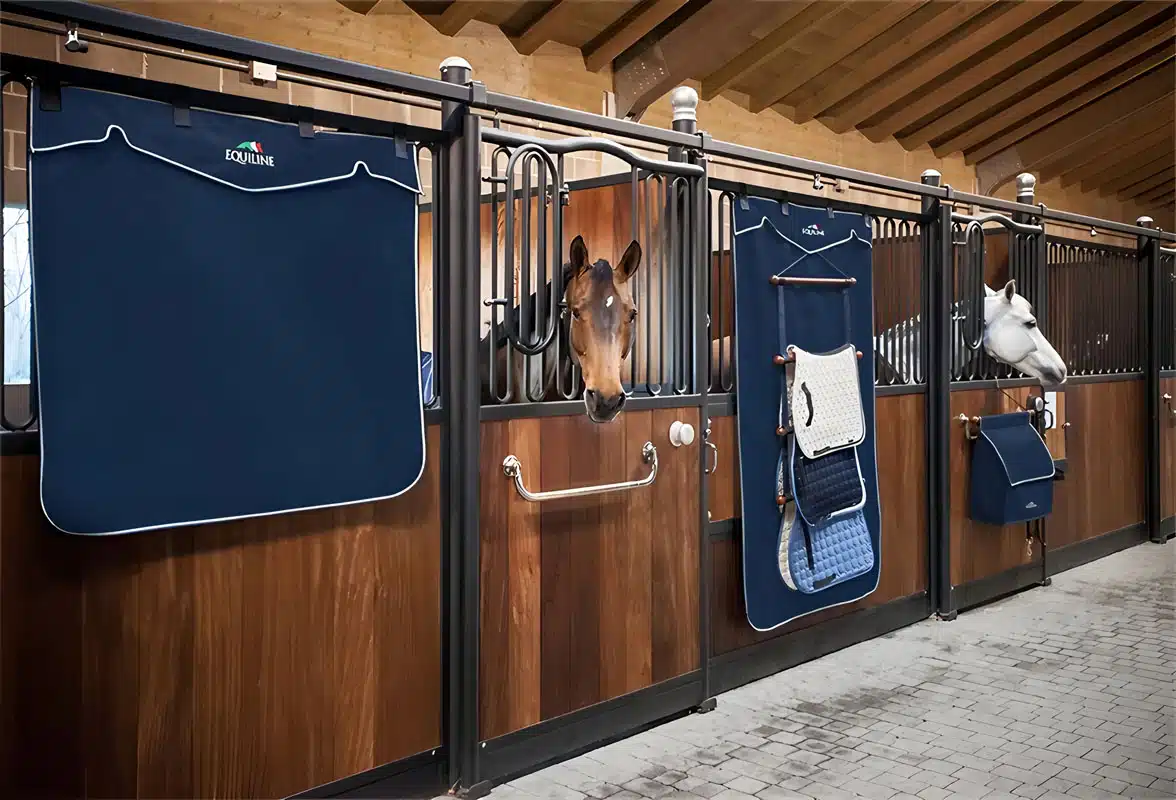
Top Factories Embracing Sustainable Materials
Sustainable manufacturing now relies on material lifecycle, not just energy sourcing. Q235B steel and strand-woven bamboo define the new industrial standard for low-carbon, high-durability infrastructure.
The industrial sector accounts for approximately 34% of global CO₂ emissions, driving a hard pivot from optional compliance to strategic necessity. Top manufacturers in the structural and equestrian sectors are no longer just evaluated on price, but on their ability to integrate circular economy principles. The focus has shifted from “greenwashing” marketing to verifiable material choices that reduce embodied carbon and extend asset lifespans.
| Production Component | Traditional Standard | Sustainable Factory Standard | Effizienzgewinn |
|---|---|---|---|
| Structural Material | Virgin Steel / Concrete | Q235B Recycled Steel | 100% Recyclability w/o strength loss |
| Infill Material | Slow-Growth Hardwoods (Oak) | Strand-Woven Bamboo | 3-5 year maturity vs. 50+ years |
| Longevity Finish | Standard Paint / Pre-Galv | Hot-Dip Galvanization (ISO 1461) | 50+ Year Lifespan (Zero Replacement Waste) |
| Logistik | Fully Welded Bulk | Flat-Pack Modular | 300% Shipping Capacity Increase |
Q235B Steel: The Circular Economy Backbone
Steel is the most recycled material on the planet, but the grade matters. Factories prioritizing sustainability utilize Q235B Structural Steel (equivalent to ASTM A36) because it supports infinite remelting cycles without degrading its mechanical properties. Unlike concrete, which becomes landfill waste at the end of a facility’s life, Q235B components enter a closed-loop system, retaining value and reducing the need for virgin iron ore mining.
To maximize this benefit, we treat Q235B frames with Hot-Dip Galvanization after fabrication (conforming to BS EN ISO 1461). This process creates a metallurgical bond with a zinc coating averaging over 85 microns on structural parts. This extends the product’s usable life to 50+ years, effectively eliminating the carbon footprint associated with manufacturing replacement parts every decade.
Bamboo vs. Hardwood: The Carbon Sink Advantage
We have moved away from old-growth timber like Oak and Pine for our Professional Series, favoring High-Density Strand Woven Bamboo. While a traditional oak tree requires 40 to 60 years to reach maturity, bamboo is harvestable in just 3 to 5 years. This rapid growth cycle allows bamboo forests to sequester significantly more carbon annually than equivalent tree forests.
- Regeneration: Bamboo self-regenerates from the root system, requiring no replanting and leaving soil carbon stocks intact.
- Density & Durability: Our strand-woven processing creates planks with a Janka hardness exceeding 3000 lbf, making them 3x harder than oak and resistant to the hoof impacts that typically destroy softer woods.
- Carbon Storage: Industrial bamboo products act as a durable carbon pool, locking in sequestered CO₂ for the lifespan of the building.
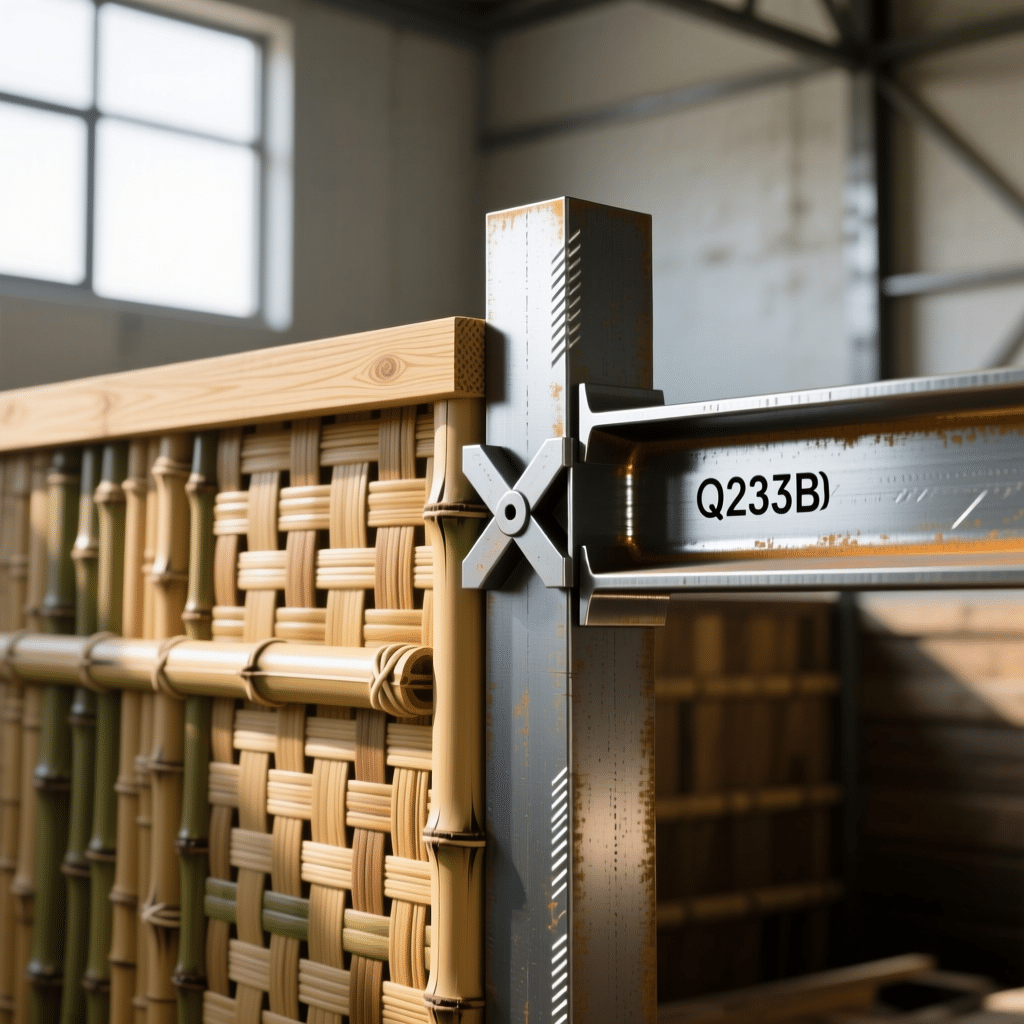
The Logistics of Sustainability: Modular Flat-Packs
True sustainability extends beyond the factory floor to the supply chain. Transport emissions are a major contributor to a project’s carbon footprint. Traditional fully welded stable fronts are bulky, allowing only 12-15 sets per 40HQ container. By engineering a flat-pack modular system, we increase loading capacity to 30-45 sets per container. This design reduces shipping emissions per unit by approximately 60%, aligning economic logistics with environmental responsibility.
Strand-Woven Bamboo: A High-Yield Carbon Sink
Strand-woven bamboo sequesters approximately 12 tons of carbon per hectare annually, locking it into high-density stable partitions that outperform traditional hardwoods and offset concrete emissions.
Sequestration Rates vs. Traditional Timber
Most project managers default to pine or oak for “natural” aesthetics, but these materials lag significantly in carbon efficiency. Standard forestry typically captures between 6 and 8 tons of carbon per hectare each year. Bamboo plantations nearly double this throughput, sequestering approximately 12 tons of carbon per hectare annually. This rapid accumulation stems from bamboo’s aggressive growth cycle, which allows for harvest every 3-5 years without replanting.
The biological mechanics offer a distinct advantage over clear-cut timber. A single bamboo culm captures 50–60 kilograms of CO2 over its lifespan. Crucially, harvesting does not kill the plant. The underground rhizome system remains intact, preventing soil erosion and maintaining soil carbon storage levels that are typically lost during traditional timber logging operations.
Lifecycle Benefits of High-Density Compression
Raw bamboo is not suitable for horses; it requires industrial processing to become a viable structural material. The strand-woven process compresses bamboo fibers to a density of 1,080 kg/m³. This manufacturing step effectively locks the captured carbon into the stable structure for decades, preventing its release back into the atmosphere through decay.
- Material Specifications: DB Stable utilizes 28mm-38mm bamboo boards.
- Impact Resistance: We achieve a Janka hardness rating > 3000 lbf, making it 3x harder than oak and resilient against equine kicks.
- Concrete Offset: Substituting concrete block partitions—which contribute to the 8% of global CO2 output caused by cement—with bamboo creates a measurable negative carbon footprint for the facility.
Q235B Steel: The 100% Recyclable Framework
Q235B is a low-carbon structural steel (ASTM A36 equivalent) featuring indefinite recyclability. Unlike treated timber which ends in landfills, Q235B frameworks support circular economics through magnetic separation and remelting without structural degradation.
Defining Q235B: The Standard for Structural Integrity
We strictly utilize Q235B structural steel for our standard frameworks because it balances tensile strength with necessary ductility. In the B2B sector, consistency defines quality. This material mirrors the global ASTM A36 standard, ensuring it meets rigorous load-bearing requirements for equestrian facilities. Its chemical composition—primarily iron with strictly controlled carbon (<0.2%) and manganese—allows for superior weldability and formability compared to brittle, higher-carbon alternatives.
- Chemical Composition: Iron (Fe), Carbon (<0.2%), and Manganese provide ductility and impact resistance.
- ASTM A36 Equivalence: Meets global structural standards for tensile strength (370–500 MPa) and yield strength (235 MPa).
- Infinite Recyclability: As a ferrous metal, it separates magnetically from waste streams and remelts repeatedly with zero loss of physical properties.
The Lifecycle Advantage Over Treated Timber
Sustainability in construction often ignores the end-of-life phase. Pressure-treated timber (PT) creates a disposal crisis; the chemicals used to prevent rot make the wood hazardous waste, forcing it into lined landfills. Steel reverses this dynamic. A Q235B frame retains scrap value effectively forever. Our flat-pack design further enhances this by enabling modular disassembly. You can dismantle, move, and reassemble the stable system, whereas traditional timber builds usually require demolition.
- Zero Waste Model: Steel frames hold intrinsic scrap value, unlike treated wood which becomes a disposal liability.
- Modular Disassembly: Flat-pack engineering allows non-destructive dismantling for relocation or resale.
- Zinc Recovery: The zinc from our hot-dip galvanizing (ISO 1461) is captured and recycled during the steel remelting process.
Häufig gestellte Fragen
How to build an ESG compliant equestrian center?
Building an ESG-compliant facility requires targeting three specific operational areas: energy, water, and waste. For energy, leading facilities now generate up to 80% of their electricity via on-site solar panels. For water, you must implement closed-loop systems that collect and purify rainwater for wash bays and irrigation. Regarding waste, verify your supply chain. Ensure your steel suppliers use recyclable materials and enforce vendor packaging requirements to minimize single-use plastics.
Is bamboo a sustainable building material?
Yes, but the grade matters. Bamboo is a grass that reaches maturity in 3-5 years, regenerating from its own roots without replanting. It sequesters significantly more carbon than traditional hardwoods like oak. For equestrian use, we specify high-density strand woven bamboo (Janka Hardness > 3000 lbf), which resists hoof impact and rot better than standard timber. This makes it a carbon-negative solution that actually lasts.
Environmental impact of steel vs wood barns?
Wood wins on initial production emissions, but steel wins on lifecycle and circularity. Manufacturing wood products generally emits less carbon initially. However, steel provides superior longevity, resistance to rot, and 100% recyclability without loss of strength. A steel barn can be melted down and reborn as a new beam; a treated wood barn typically ends its life as landfill waste due to chemical contaminants.
Green certifications for horse stables?
There is no dedicated “Green Stable” certification. However, facilities often adapt LEED (Leadership in Energy & Environmental Design) standards or follow regional codes like California’s CalGreen. You achieve these by focusing on site planning (stormwater management), natural ventilation (stack effect), and using materials with verified recycled content like steel and HDPE.
Eco-friendly horse barn manufacturers?
Leading manufacturers integrate sustainability through material choice and prefabrication. Companies like DC Structures and Sustainable Stables focus on responsibly sourced timber and master planning. In the steel sector, manufacturers like MD Barnmaster and DB Stable utilize modular, hot-dip galvanized steel which reduces construction waste and ensures longevity. The shift is moving toward mass timber (CLT) and recyclable steel framing to minimize the carbon footprint.
Häufig gestellte Fragen
Is bamboo a durable option for high-traffic equestrian centers?
Yes. We use High Density Strand Woven Bamboo, which is structurally distinct from standard timber. With a Janka Hardness rating exceeding 3000 lbf, it is three times harder than Oak and significantly denser than traditional softwoods. This material resists the cribbing (chewing) and impact common in busy commercial barns, and unlike pine, it does not rot or mold when exposed to daily stable moisture.
How does hot-dip galvanized steel compare to wood construction environmentally?
Wood has lower initial production emissions, but steel wins on longevity and circularity. Our steel frames are 100% recyclable and treated with ISO 1461 Hot-Dip Galvanization after fabrication. This creates a metallurgical bond that prevents rust for decades, eliminating the need for the frequent repairs and material replacement cycles required by wood structures. In a B2B context, this durability significantly reduces the long-term waste footprint of the facility.
How does the flat-pack system affect shipping costs and sustainability?
Shipping air is expensive and wasteful. Traditional fully welded stables limit a 40HQ container to just 12-15 sets. Our modular flat-pack design allows us to load 30-45 sets into the same space. This logistical efficiency reduces freight costs per unit by approximately 60% and significantly lowers the carbon emissions associated with ocean transport per installed stable.
What maintenance do the Royal Series powder-coated stables require?
The Royal Series utilizes a dual-protection system: a structural base of hot-dip galvanization followed by a cosmetic powder coat. This ensures that even if the paint is scratched, the steel underneath will not rust. For surface maintenance, we provide a specialized touch-up spray kit with every order, allowing facility managers to quickly seal any cosmetic scratches caused by hooves or equipment.
Do the stables comply with safety standards for high-value horses?
Yes. We prioritize injury prevention by using Q345B Low Alloy High Strength Steel (equivalent to ASTM Grade 50) for our frames, which maintains toughness in cold climates to prevent brittle fractures from heavy kicks. Additionally, our designs feature a strict “Cast-Proof” bottom gap of approximately 50mm, ensuring a horse cannot get a leg trapped if they roll against the panel.
Abschließende Überlegungen
Your facility’s reputation now relies on verifiable ESG data, not just aesthetics. Choosing Q235B structural steel and High-Density Strand Woven Bamboo provides the only path to meeting mandatory carbon budgets without sacrificing safety or durability. This investment in circular materials ensures your infrastructure remains a compliant asset, rather than becoming a disposal liability in ten years.
Stop paying to ship “dead air” with welded frames and switch to our Flat-Pack System to cut your logistics carbon footprint by 60%. We invite you to request a specification sheet or schedule a consultation with our engineering team to review your project’s environmental targets. Secure your supply chain today with a partner who understands the new standard of sustainable luxury.

 German
  English
  Spanish
  French
  Arabic
0 Kommentare