


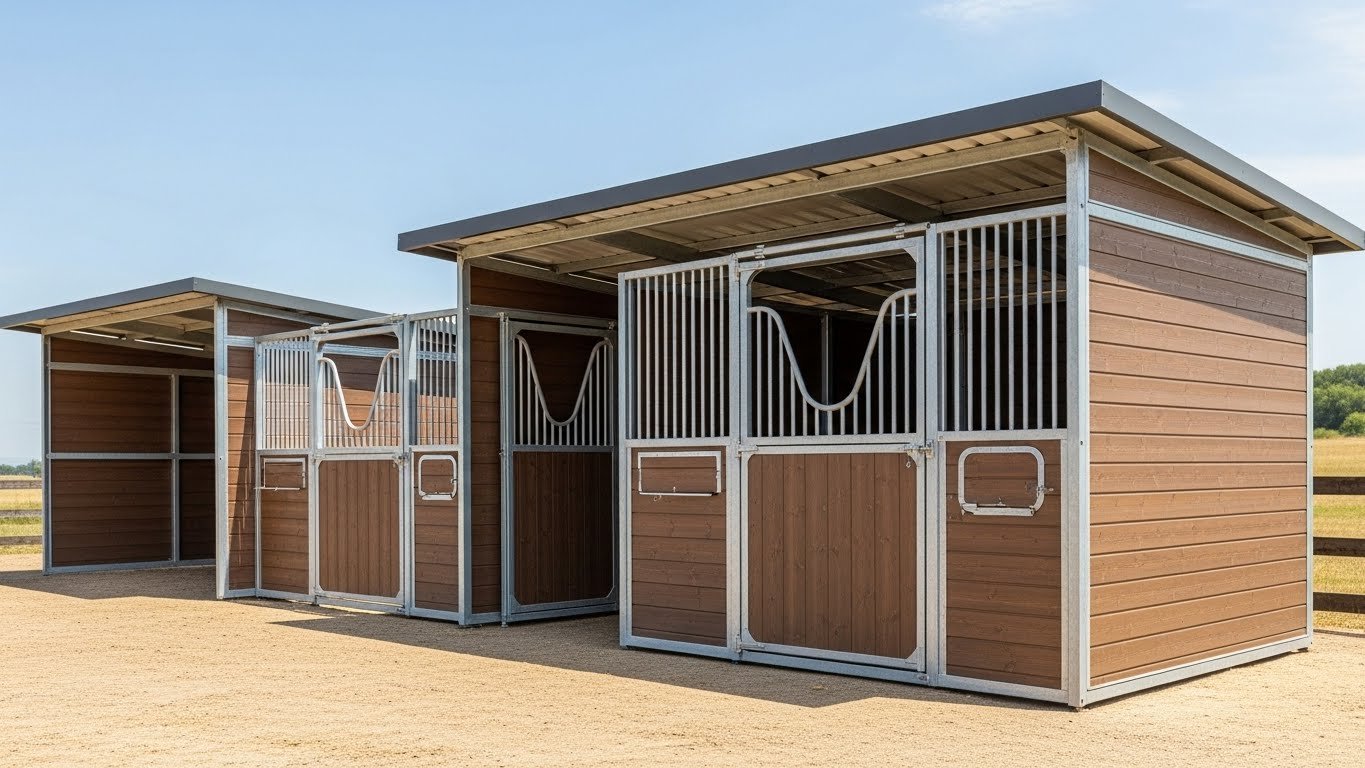
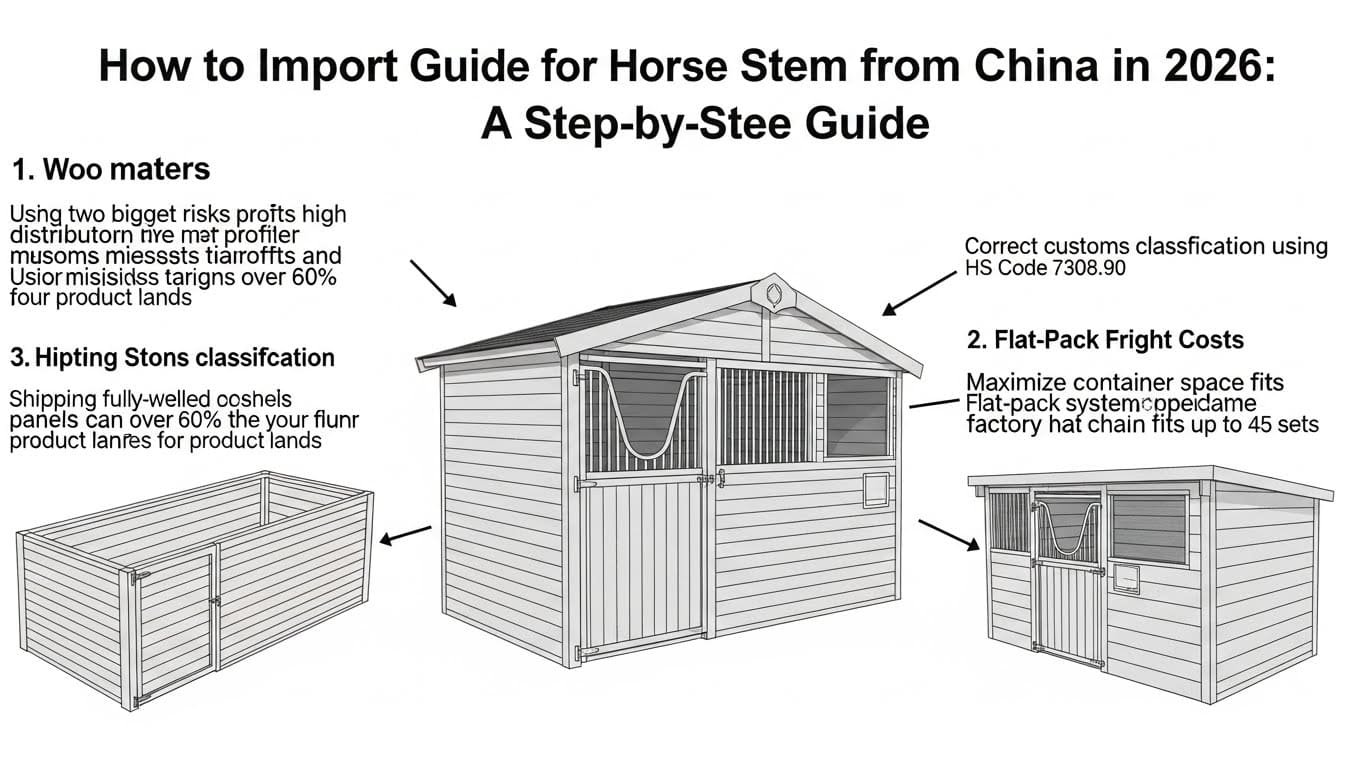
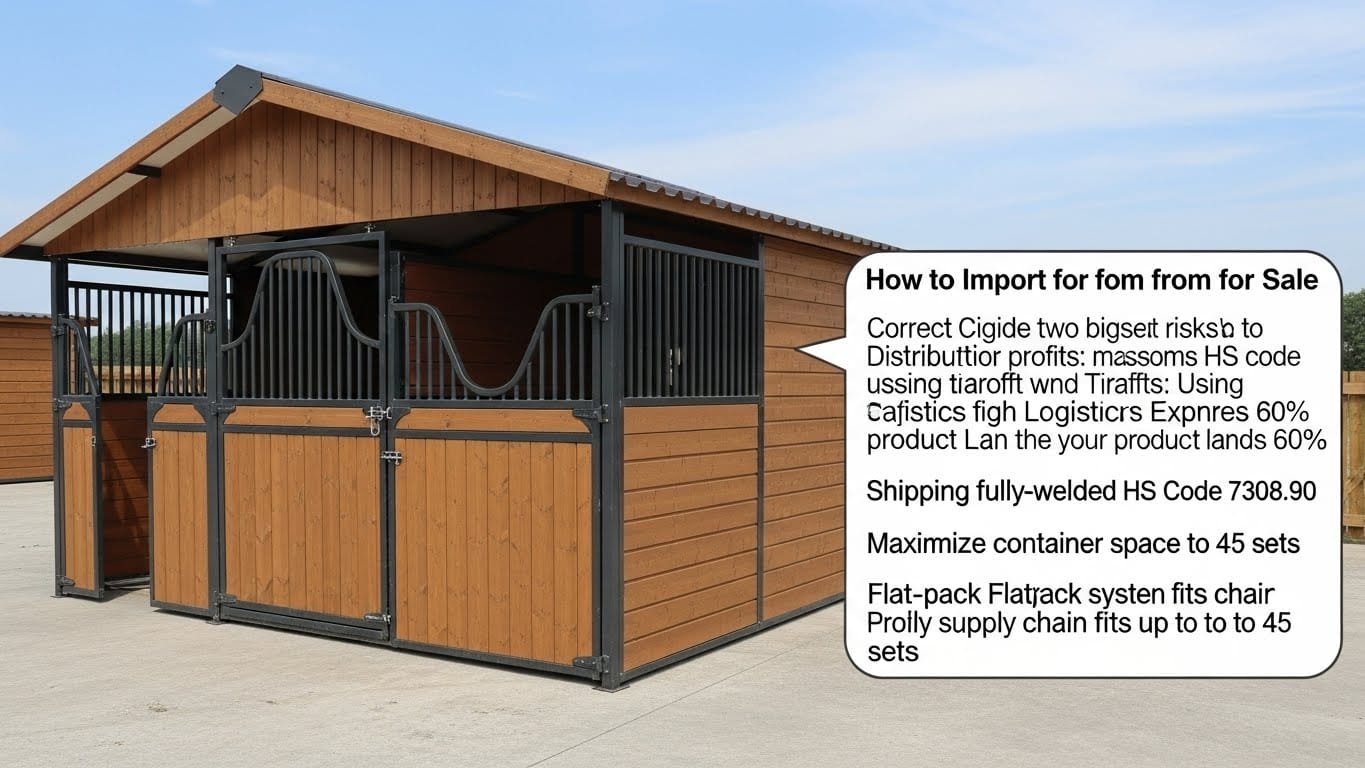
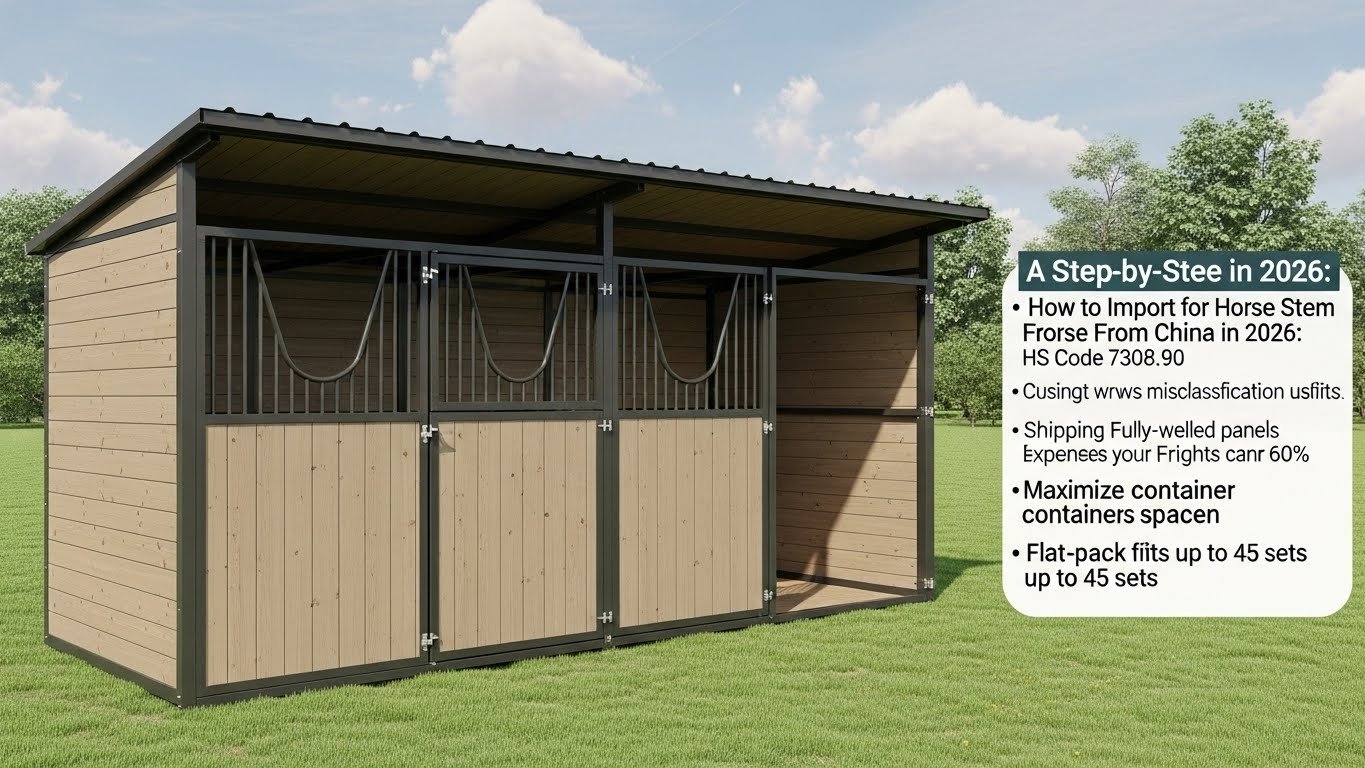
This import guide for horse stables for sale addresses the two biggest risks to distributor profits: customs misclassification and high freight costs. Using the wrong HS code can trigger massive tariffs, while shipping fully-welded panels can inflate logistics expenses by over 60%, erasing your margins before the product even lands.
We provide a step-by-step process focusing on two core metrics: correct customs classification using HS Code 7308.90 and maximizing container space with a flat-pack system that fits up to 45 sets. This framework protects your profit margins and ensures a predictable supply chain from factory to final destination.
What Should You Expect in Terms of Outcome and Time?
Our 35-45 day lead time isn’t a delay. It’s the required schedule for a true Hot-Dip After Fabrication process, guaranteeing decades of rust-proof performance.
The Link Between Manufacturing Time and Product Lifespan
In steel fabrication, the final outcome is directly tied to the process time. Rushing anti-corrosion treatment compromises the product’s lifespan. Many manufacturers cut corners by using pre-galvanized tubes and welding them together, which burns off the protective zinc at every joint. Those exposed welds are the first points to rust, and they fail quickly.
Our 35-45 Day Cycle for Hot-Dip Galvanization
Our 35-45 day production schedule is built around doing this correctly. This timeframe is necessary to send the entire, fully-welded stable panel to the galvanizing plant. This “Hot-Dip After Fabrication” method ensures complete protection because every weld, corner, and surface is submerged in molten zinc.
- Standard Adherence: The process conforms to the BS EN ISO 1461 standard for long-term rust protection.
- Coating Thickness: It achieves a zinc coating greater than 70 microns, a thickness built to last for decades, not just a few seasons.
Which HS Code Saves You Money on Tariffs? (7308.90)
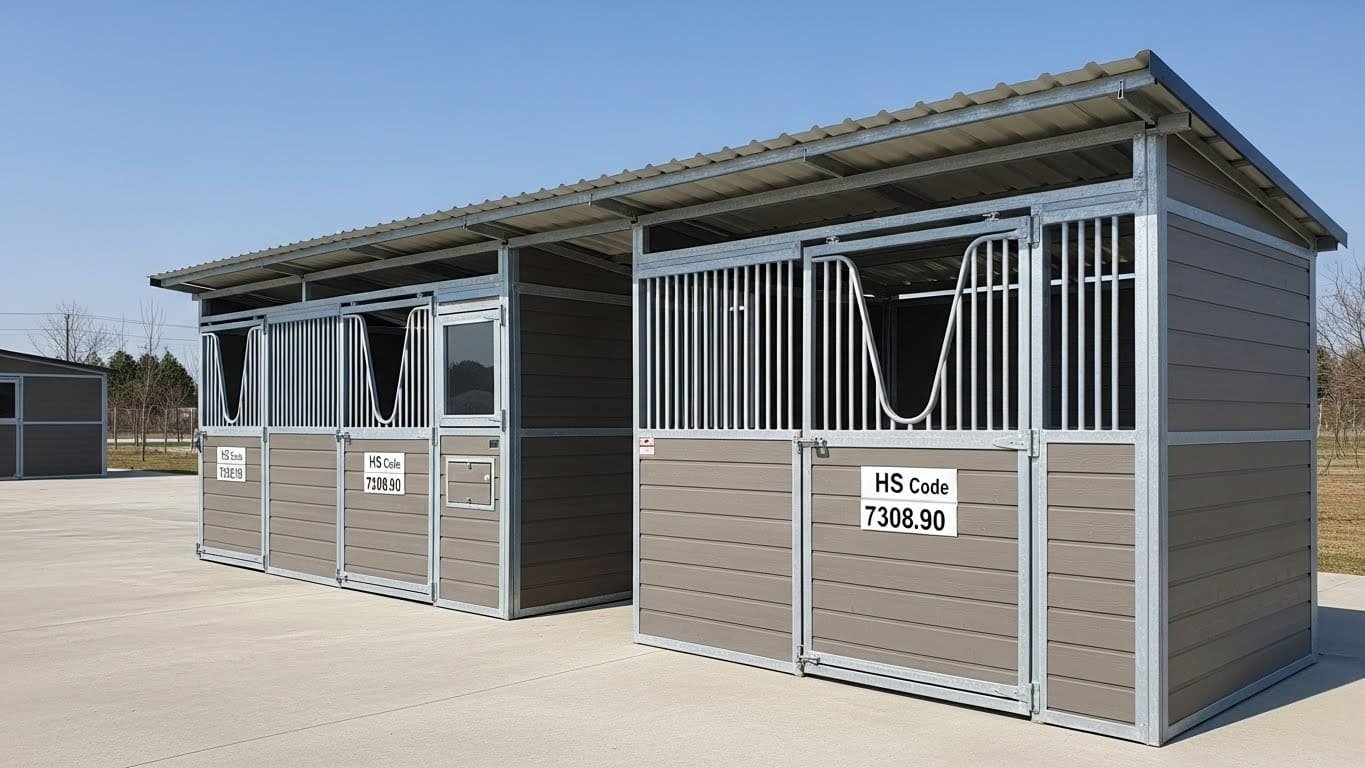
HS Code 7308.90 classifies stable parts as ‘structures of iron or steel,’ not ‘prefabricated buildings.’ This simple distinction prevents high tariffs and complex customs hurdles for importers.
| Classification Detail | HS Code 7308.90 (Our Method) | HS Code 9406 (Prefab Buildings) |
|---|---|---|
| Beschreibung | Structures & Parts of Structures | Complete Prefabricated Buildings |
| Typical Tariff Rate | Low or Duty-Free | Often High Tariffs + Duties |
| Customs Process | Simple, predictable clearance | Complex; may require building permits |
| Result for Importers | Protects Distributor Profit Margins | High Risk of Unexpected Costs |
Understanding HS Code 7308.90: Structures of Iron or Steel
This code covers structures and their individual parts made from iron or steel. Think of components like Platten, posts, gates, and frames—not fully assembled, habitable buildings. This distinction is the core of a smart import strategy. For qualified goods, key sub-classifications like 7308.90.30.00 often carry a free general duty rate, which is a significant financial advantage.
Why Stables as ‘Structures’ Avoids High ‘Prefab Building’ Tariffs
We deliberately classify our flat-pack stabile Systeme under 7308.90. This is the safest way to avoid the ‘Prefabricated Buildings‘ category, which customs officials often flag for higher tariffs and more complex regulatory reviews. Getting stuck in that category can destroy profit margins with surprise taxes and delays. Our approach ensures a predictable, smooth customs process, protecting our distributors from the financial risks of misclassification.
How Do We Fit 45 Sets in One Container? (40HQ Strategy)
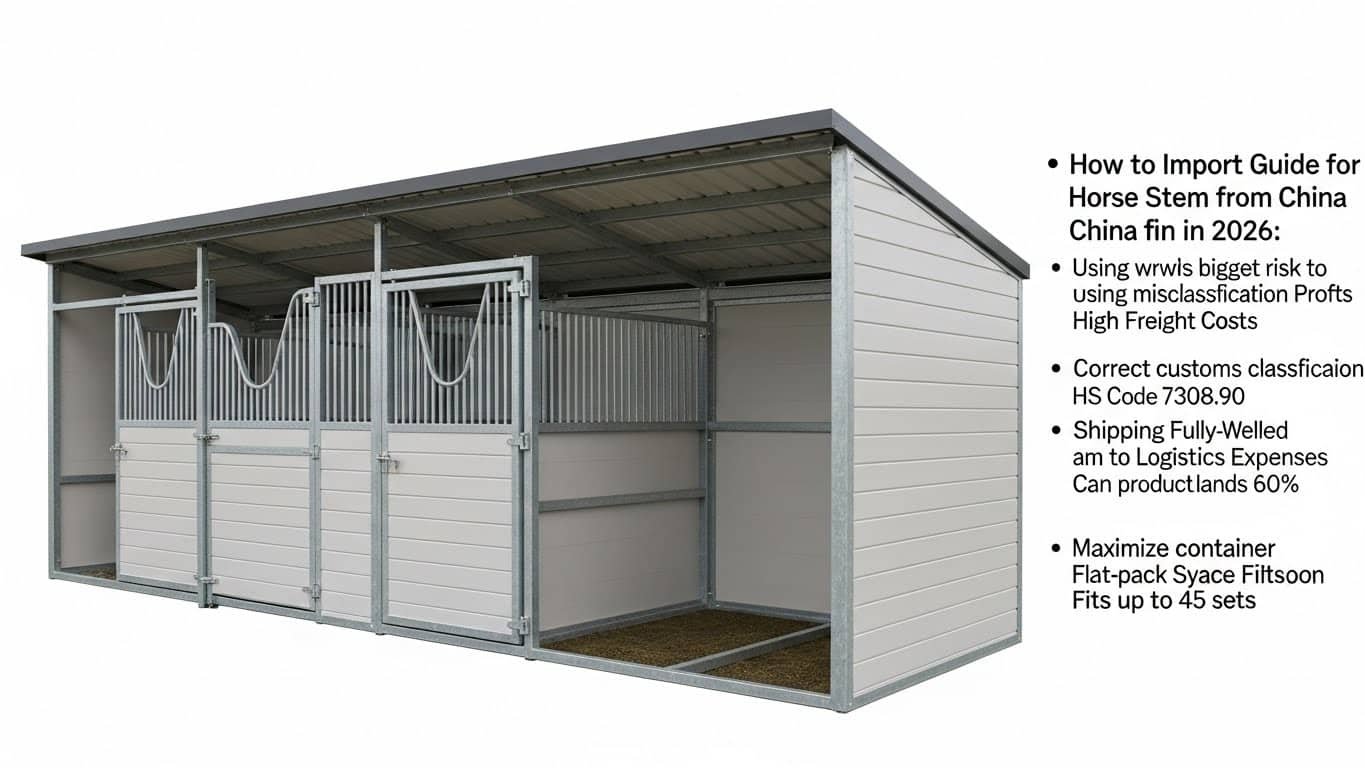
Unser steel pallet flat-pack system loads up to 45 stable sets into one container, cutting distributor freight costs by over 60% compared to welded alternatives.
The High Cost of Shipping Welded Stables
Shipping fully welded stable panels is expensive. Their bulky, non-modular shape creates significant wasted space in a Schiffscontainer. A standard 40HQ container typically fits only 12-15 welded sets, which drives up the per-unit freight cost and cuts directly into an importer’s profit margin.
The DB Stable Flat-Pack System
Unser modular design solves this problem. We can load 30 to 45 stable sets into a single 40HQ container, reducing freight costs by more than 60%. Every component is stacked securely on steel pallets, which eliminates loose loading and makes unloading at the destination port safe and straightforward. This logistical efficiency is a core part of our “Profit Protection” strategy for distributors.
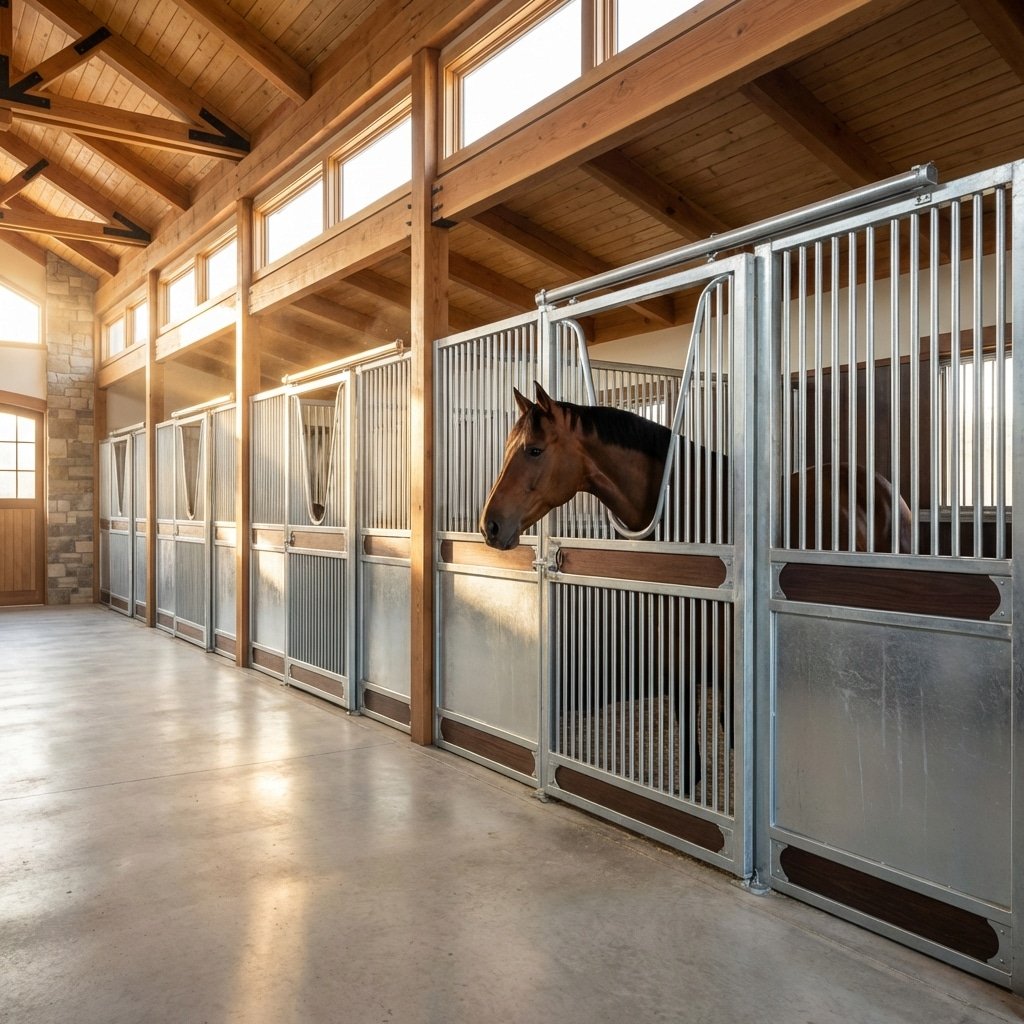
Globally Compliant Stables Engineered for Decades.

Why Do We Require 35-45 Days for Production?
Our 35-45 day lead time isn’t a delay. It’s the required schedule to properly hot-dip galvanize every component *after* fabrication, ensuring total rust protection per ISO 1461.
Standard Fabrication and Assembly Workflow
The process begins with procuring Q235B or Q345B structural steel. We then precision cut, drill, and weld all the frames, doors, and Partitionen. Before these components go for their anti-rust treatment, we assemble them for a rigorous Qualitätskontrolle inspection to ensure perfect alignment and function.
The Crucial Step: Hot-Dip Galvanization After Fabrication
The majority of the lead time is dedicated to our non-negotiable rust protection process. We use a ‘Hot-Dip After Fabrication’ method, which means fully welded panels are submerged in molten zinc. This step requires scheduling with a specialized, off-site ISO 1461 certified galvanizing plant, which is the primary reason for the extended timeline.
This is the only way to guarantee a zinc coating of over 70 microns on every surface, including all welds and cut edges. Cheaper, faster methods like using pre-galvanized tubes leave the welds exposed to rust almost immediately. The 35-45 day wait is the cost of delivering genuine, long-term rust prevention.
How Do You Clear Customs Without Delay?
Smooth customs clearance requires accurate documents and the correct HS Code—7308.90 for steel structures. This step prevents costly tariffs and delays from misclassification.
| Key Item | Purpose in Customs Clearance |
|---|---|
| Commercial Invoice | Declares the value and terms of the sale for duty calculation. |
| Packing List | Details the contents, dimensions, and weights per steel pallet for inspection. |
| Bill of Lading (B/L) | Serves as the contract between the shipper and carrier; proves ownership. |
| HS Code: 7308.90 | Correctly classifies the goods to prevent tariff disputes and penalties. |
Preparing the Necessary Commercial Documents
Customs authorities require a standard set of documents to process any international freight. Your freight forwarder will handle the submission, but you are responsible for providing accurate information. Missing or incorrect paperwork is the most common reason for port delays.
- Commercial Invoice: Details the buyer, seller, product description, value, and incoterms.
- Packing List: Specifies exactly what is in the shipment, including the contents and weight of each steel pallet.
- Bill of Lading: The contract of carriage issued by the shipping line. It acts as a receipt and title to the goods.
Using the Correct HS Code: 7308.90
This is less about filling a box and more about financial protection. We classify our stable systems under HS Code 7308.90 for “Structures of Iron or Steel” for a specific reason. This code correctly identifies the product and, critically, avoids the high tariffs and complex regulations associated with “Prefabricated Buildings.” Using the wrong code is a common and expensive mistake that can tie up your shipment for weeks.
Abschließende Überlegungen
Choosing the cheapest factory is a gamble that costs you more in rust claims, tariff penalties, and excess freight charges. A profitable import strategy depends on verifiable quality like our Hot-Dip After Fabrication process. This protects your reputation and your margins.
Don’t guess on quality—verify it firsthand. We recommend a small trial order to confirm our galvanizing standard and precision fitment. Contact our team to get your project-specific quote and discuss OEM options.
Häufig gestellte Fragen
What are the typical import duties for your stables?
Import duties vary significantly by country and are determined by the product’s declared value and its HS Code. We classify our stable systems under HS Code 7308.90 (Structures of Iron/Steel), which generally avoids the higher tariffs associated with ‘prefabricated buildings.’ For an accurate duty rate for your specific location, you should consult a local customs broker who can provide a precise cost estimate based on this classification.
Does the HDPE infill require fumigation certificates?
No, HDPE (High-Density Polyethylene) infill does not require fumigation. Fumigation is a process to eliminate pests in organic materials like timber. Since HDPE is a synthetic polymer, it is not susceptible to pests, mold, or rot, making fumigation certificates unnecessary. This is a key benefit of our ‘Zero Maintenance’ infill option.
How long does ocean freight take to my country?
Ocean freight transit time depends on the destination. As a general guide, shipping from our factory to major ports in Australia takes 25-35 days, to Europe takes 35-45 days, and to North America takes 20-40 days. Please note this is only the sea transit time and does not include our 35-45 day production lead time or inland transportation.
What documents do you provide for customs clearance?
We provide all necessary factory-side documentation to ensure a smooth customs process. This includes the Commercial Invoice, a detailed Packing List, and the Bill of Lading. We strongly recommend working with a local customs broker who will use these documents to manage the final import declaration in your country.

 German
  English
  Spanish
  French
  Arabic
0 Kommentare