


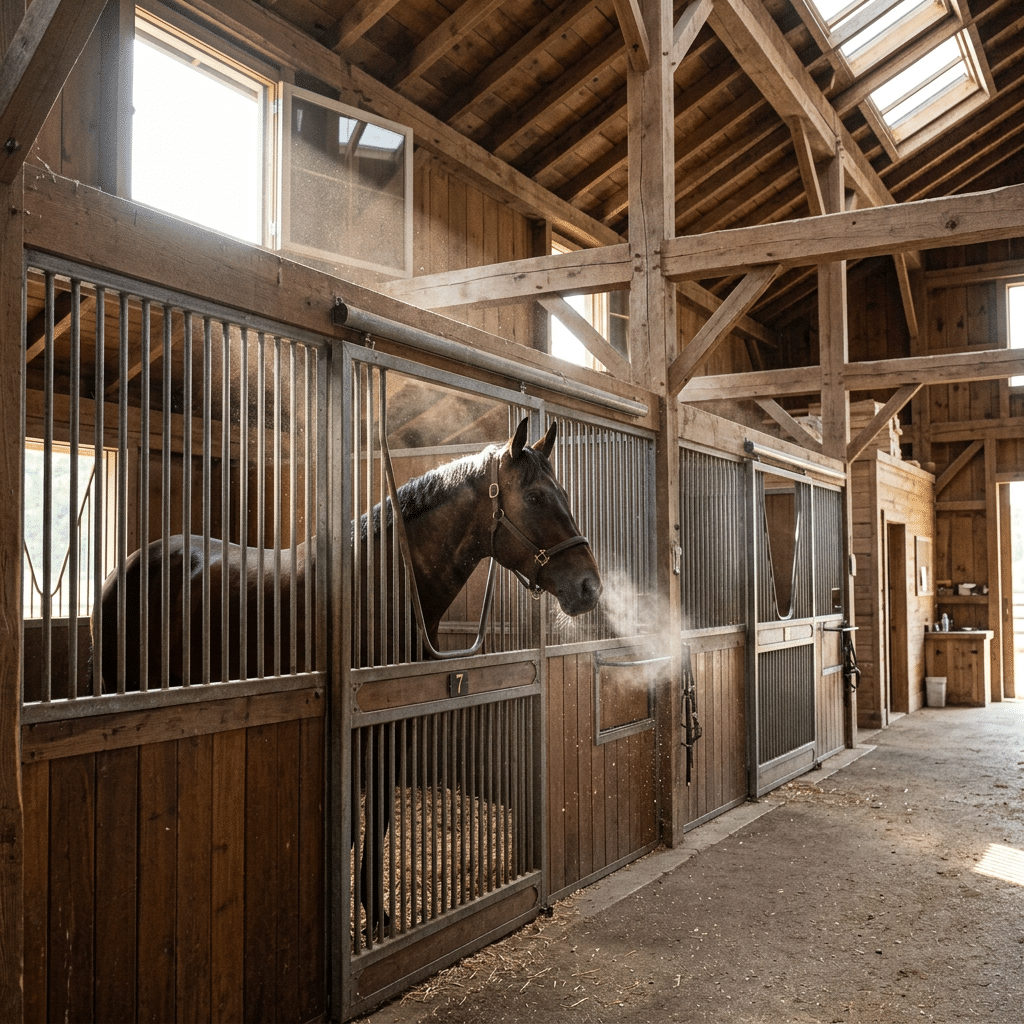
Choosing renovation horse stall fronts is a critical decision that often hides a larger financial risk. Simply replacing panels on a barn with compromised support posts or an unsafe layout is a wasted investment that fails to address the core structural and safety liabilities.
This guide provides the data to make the right choice. We will differentiate between cosmetic fixes and mandatory full rebuilds by analyzing key triggers like post integrity, ventilation flaws, and outdated floor plans, ensuring your project is built for safety and longevity.
Why is Ventilation the #1 Design Priority?
Ventilation protects a horse’s respiratory system by removing harmful ammonia and pathogens. It also stops moisture buildup, preventing the structural rot that makes barns unsafe.
Impact on Equine Health and Structural Integrity
Poor airflow traps harmful elements right where horses breathe. Ammonia from urine, dust, and airborne pathogens accumulate in the lower part of the stall, causing serious respiratory distress and chronic health problems.
Ventilation isn’t just about the horse; it’s about protecting the building. Stale, moist air creates condensation. This moisture rots wood framing, ruins bedding, and encourages mold growth in feed, leading to expensive and dangerous structural failures.
How Open-Grill Designs Create Stack Effect Ventilation
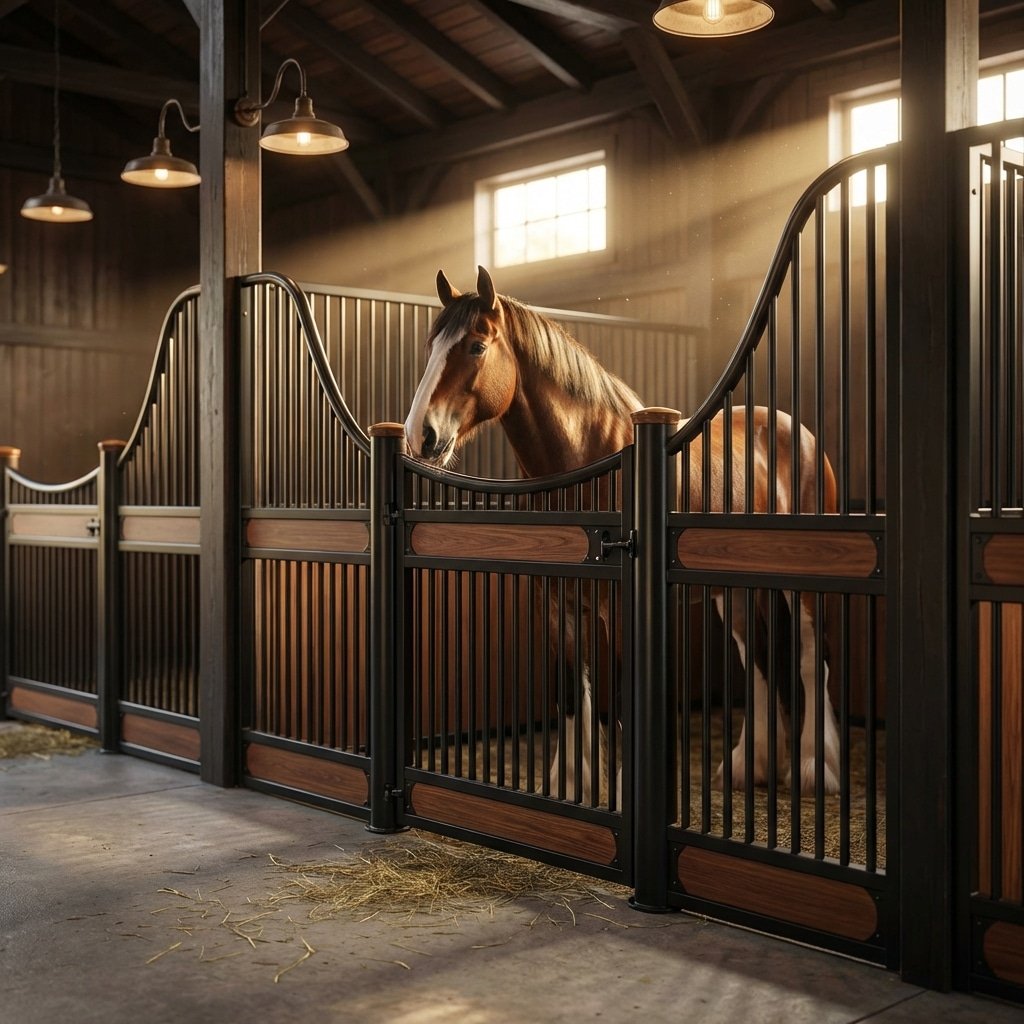
A practical way to ensure constant airflow is through the stall design itself. Our stable systems feature an open top grill specifically to promote continuous vertical air movement.
This design creates a natural chimney, what we call **Stack Effect Ventilation**. Warm, moist, and contaminated air from the horse naturally rises. The open grill allows it to escape upwards, which in turn pulls cooler, fresher air in from below to replace it. This process happens constantly, without any mechanical systems.
5 Essential Small Stable Floor Plans
Modern small stable plans focus on health and efficiency, prioritizing good ventilation and smart use of space over simply minimizing the footprint.
| Floor Plan Type | Hauptmerkmal | Shed Row Barn | No central aisle; each stall has direct outdoor access. Most cost-effective design. | Warm climates, budget-conscious projects, and quarantine units. | |
|---|---|---|---|---|---|
| L-Shaped Layout | Two shed rows at a right angle, creating a semi-protected work area. | Properties with corner lots or those needing a central viewpoint for supervision. | |||
| U-Shaped Courtyard | Three connected wings form a protected central courtyard. | Facilities needing a sheltered, private workspace protected from wind and weather. | |||
| 2-Story / High Country | Utilizes vertical space for hay lofts, tack rooms, or living quarters above the stalls. | Sloping properties or sites where a smaller building footprint is critical. | |||
| Center Aisle Barn | Stalls face each other across a central aisle, providing all-weather protection. | Colder climates or any professional operation where daily care happens indoors. |
While the layout is important, it’s secondary to the single most critical factor in stable design: ventilation. You can’t fix bad airflow after the concrete is poured and the roof is on. Poor air quality leads directly to respiratory disease from dust and ammonia buildup, a problem that even the best stall fronts can’t solve.
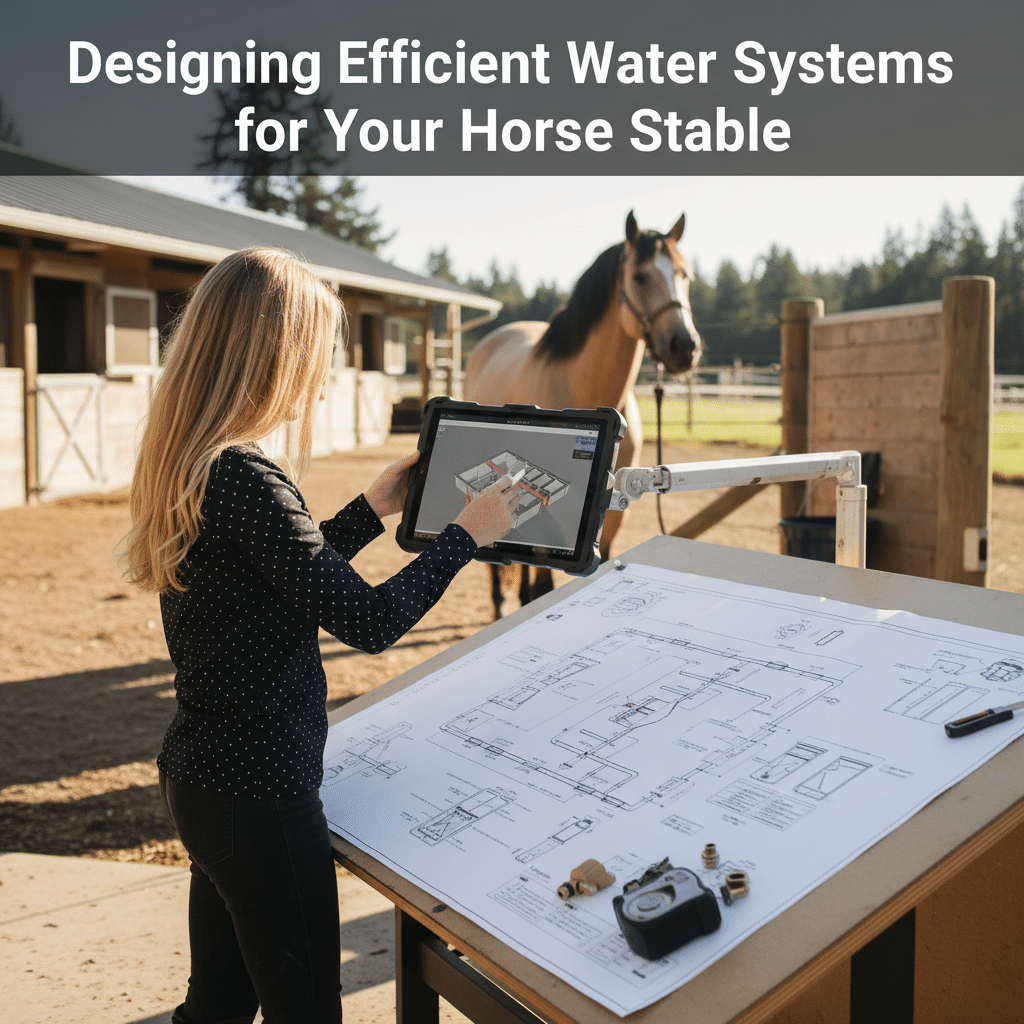
Why Ventilation Overrides Everything Else
Proper ventilation isn’t about fans; it’s about structural design. It relies on a “stack effect,” where warm, stale air rises and exits through ridge vents, while cooler, fresh air is drawn in through eaves or windows. The entire floor plan—from roof pitch to ceiling height and building orientation—must support this natural process.
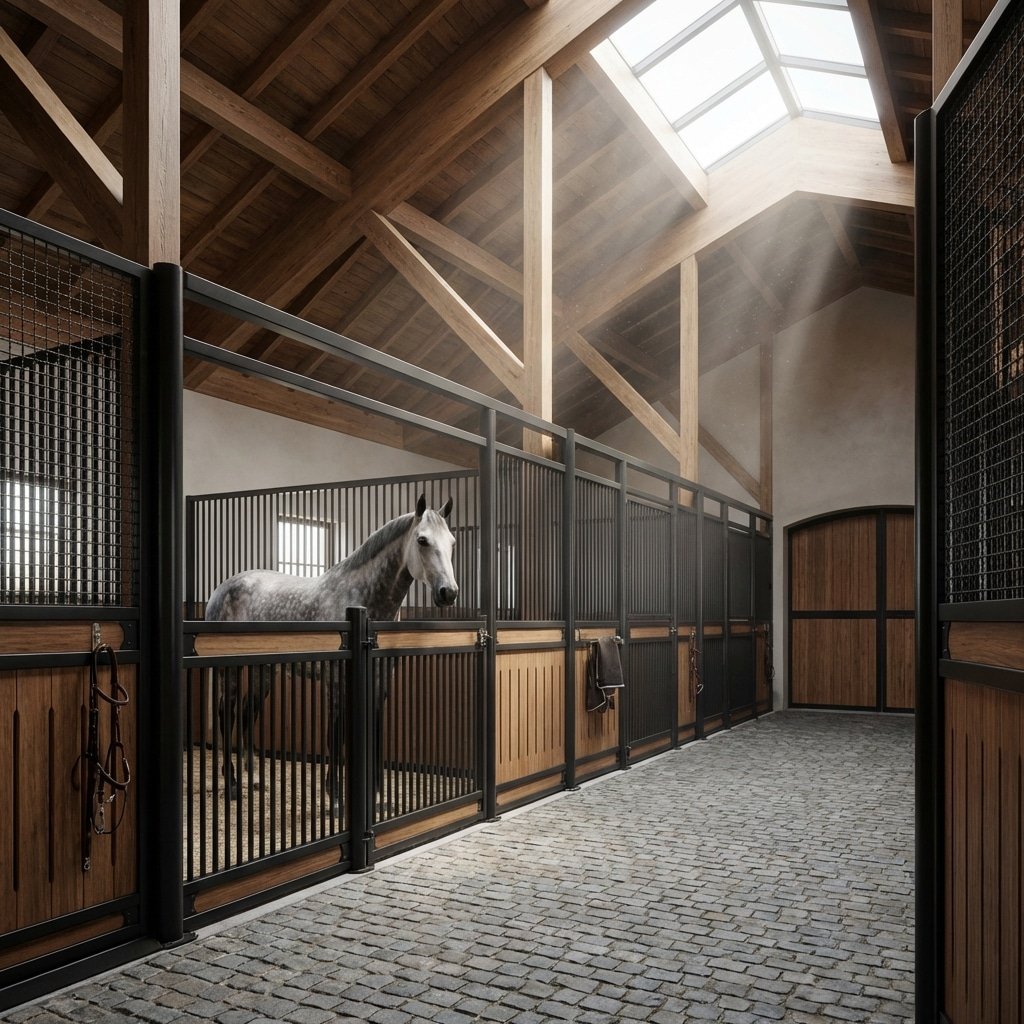
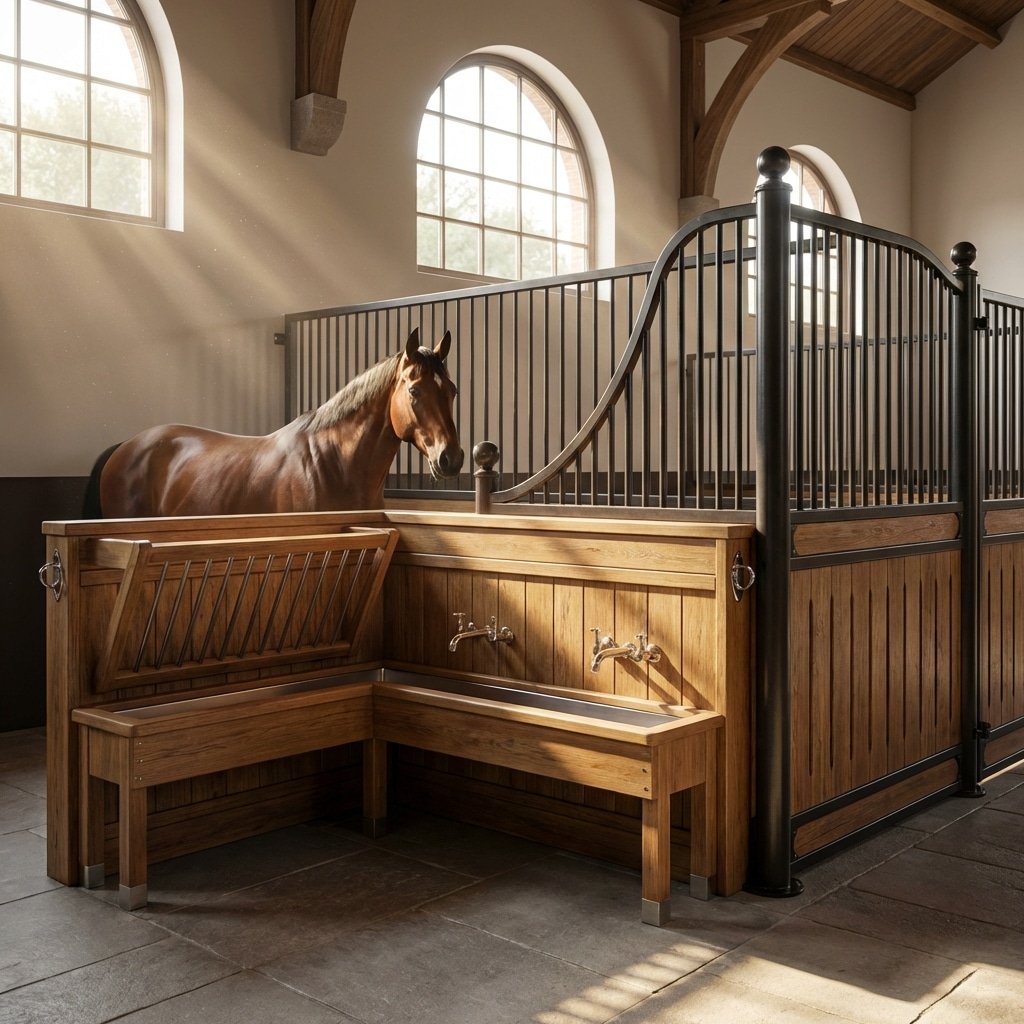
Even the stall components play a role. Open-top grills and mesh bottoms on stall fronts are not just for aesthetics; they are essential for promoting horizontal airflow at the horse’s breathing level, ensuring the “stack effect” works efficiently within each stall.

Key Dimensions to Get Right
Getting the core measurements correct from the start prevents safety hazards and operational bottlenecks. These aren’t suggestions; they are industry standards for professional-grade facilities.
- Stall Size: 12’x12′ is the absolute minimum. For larger breeds like Warmbloods, 14’x14′ is necessary to allow them to turn and lie down safely.
- Aisle Width: 12 feet is the functional minimum. Anything less creates a safety risk. Busy commercial barns should aim for 14 to 16 feet to accommodate equipment and multiple horses.
- Ceiling Height: A 10-foot minimum is required to help with air volume and circulation. Higher ceilings are always better for heat dissipation.
- Doorway Width: A 4-foot clear opening is standard to prevent hip injuries as horses enter and exit.
Ultimately, a great floor plan is just a map. The engineering of the stall system itself—from its kick-proof materials to its cast-proof design with minimal bottom gaps—is what executes the plan safely. The two must work together. A beautiful layout built with weak materials is a liability.
Durable Horse Stables Engineered for Any Climate
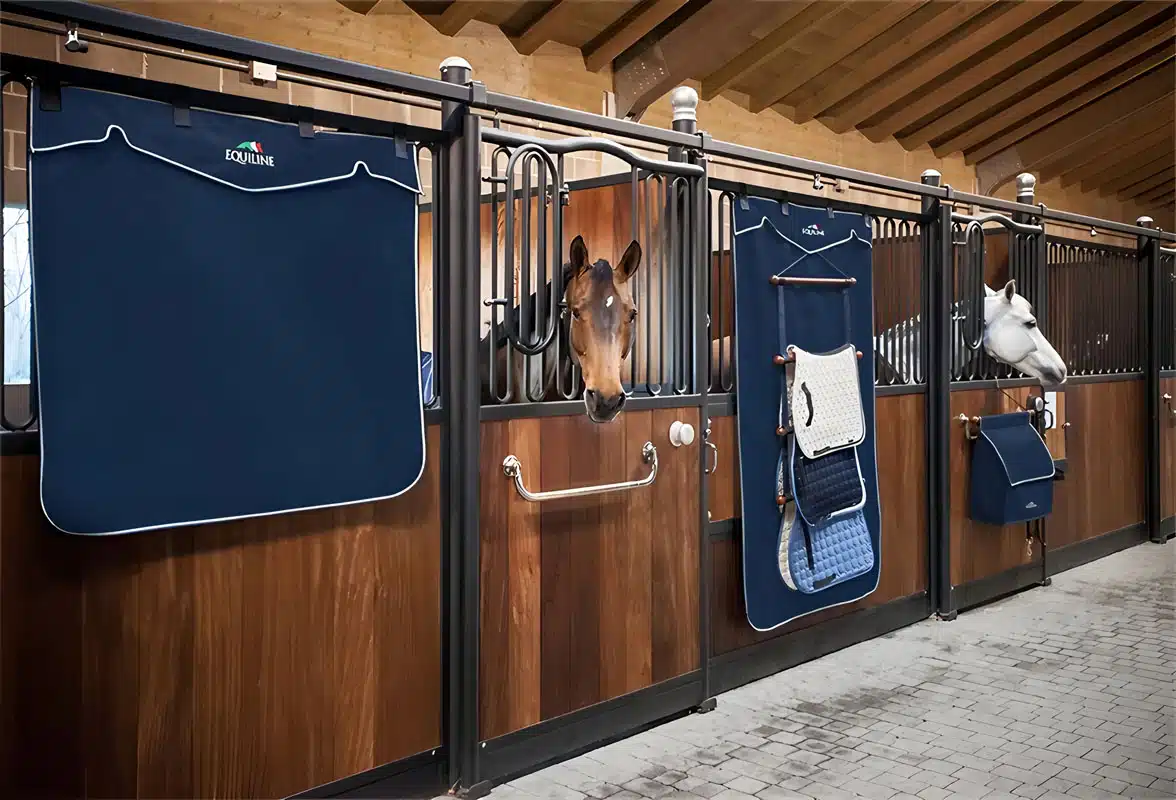
Should You Choose Round (114mm) or Square (50mm) Posts?
Round 114mm posts are safer for horses. Square 50mm posts are faster to install. The choice depends on prioritizing animal safety or installation efficiency.
The Functional Differences: Horse Safety and Ease of Assembly
The primary trade-off between post shapes comes down to safety versus assembly speed. Round posts are inherently safer for horses. Their smooth, curved surface means a horse is more likely to slide or glance off the post during a panic or a kick, reducing the risk of impact injuries or getting caught on a sharp corner.
Square posts, on the other hand, streamline the installation process. Their flat faces make it simple to align and attach panels, hinges, and other hardware. This straightforward connection can significantly speed up assembly on-site. Attaching flat panels to round posts often requires specialized clamps or brackets to get a secure fit, adding a step to the build.
How DB Stable Engineers Both Post Types for Longevity
We don’t force a decision between safety and efficiency. Instead, we ensure both post types are engineered to the same high standard for durability. Whether you choose round or square, the underlying material quality and rust protection are identical.
- Material Standard: Both post options come standard in Q235B structural steel. For projects in cold climates, we offer an upgrade to Q345B for its superior low-temperature impact toughness, which prevents brittle fractures from kicks in winter.
- Rust Protection: Every post is Hot-Dip Galvanized After Fabrication. This process conforms to the ISO 1461 standard, guaranteeing a protective zinc coating that exceeds 70 microns for long-term corrosion resistance.
Ready to Start? Where Can You Download Free CAD Plans?
You can find free CAD plans for horse stalls on architectural resource sites like BiblioCad and CAD Blocks Free. Some building guides also offer sample layouts and 3D visualizers.
If you’re in the planning phase, you don’t need to start from a blank slate. Several online resources host libraries of free, downloadable CAD files for horse stables and barns. These plans can give you a solid foundation for layouts, dimensions, and structural ideas.
Most of these resources provide files in DWG format, which is compatible with AutoCAD and other standard design software. They are useful for architects, builders, or anyone looking to visualize a project before committing to a final design.
- General CAD Libraries: Websites like BiblioCad, CAD Blocks Free, and DWG Free are depositories for architectural drawings. You can find horse stable plans with different layouts, views, and facades ready for download.
- Building Guides: Resources such as BuildingsGuide offer collections of free floor plans for barns that ca
n house anywhere from two to sixteen horses. They often include tools like 3D visualizers to help you modify the designs.
- Government & Institutional Sources: The USDA Forest Service also maintains an engineering AutoCAD library that includes drawings for horse-related structures, like corrals and hitching posts, which can be useful for planning the surrounding facility.
These plans are a good starting point. You can use them as-is for inspiration or hand them to a professional designer or engineer to customize them for your specific property and local building codes.
Häufig gestellte Fragen
Is a 10×10 ft stall large enough for my horse?
A 10×10 ft stall is really only suitable for ponies. Larger horses, like a 17hh Warmblood, need a 12×12 ft stall at minimum. A 12×14 ft or 14×14 ft space is even better. This ensures they can turn around, lie down, and get up comfortably without risking injury.
What is the recommended width for a barn aisle?
The minimum width for a safe barn aisle is 12 feet. This gives enough room for horses and handlers to pass each other and allows for equipment access. It’s also critical for getting horses out quickly in an emergency. Bigger boarding facilities or show barns often go wider, with aisles from 14 to 16 feet.
Should stall doors swing inward or outward?
For safety, horse stall doors must always open outward into the aisle. A door that swings inward can trap a horse, or make it impossible to get in if the horse is standing by the door. Many people prefer sliding doors because they are safer and more space-efficient, since they don’t block the aisle at all.
How much ventilation does a horse stable need?
A good target for a horse stable is 4 to 8 air changes per hour (ACH). This is what it takes to get rid of moisture, ammonia, and dust, which is critical for healthy lungs. You’ll need more ventilation in hot weather to help manage the heat.
Can I customize a pole barn design?
Yes, pole barn plans are very customizable. You can adjust the overall dimensions, change the roof style, and decide where doors and windows go. You can also add interior walls to create stalls and tack rooms, put in a loft for storage, and choose different finishes to match what you need.
Abschließende Überlegungen
Whether you choose fronts or full stalls, the real decision is between temporary fixes and permanent solutions. Using materials that meet the ISO 1461 galvanizing standard is the only way to protect your projects from rust and structural failure. This isn’t about saving a few dollars; it’s about protecting your reputation as a builder.
The best way to confirm the engineering is to see it firsthand. We recommend starting with a small trial order to evaluate our material quality and assembly process. Contact our team to get a quote or discuss your next project’s specific requirements.

 German
  English
  Spanish
  French
  Arabic
0 Kommentare