


Latch Freezing is a structural liability that compromises safety standards and increases maintenance overhead for professional equestrian facilities. Relying on generic hardware often leads to brittle fractures during forced entry, while improper lubrication with oil creates abrasive sludge that permanently seizes critical exit points.
This report defines the material specifications required to eliminate winter lockout, focusing on Q345B Low Alloy Steel and 304 Stainless Steel components. We detail why substituting wet grease with dry graphite powder is the only method to maintain mechanical integrity in sub-zero environments.
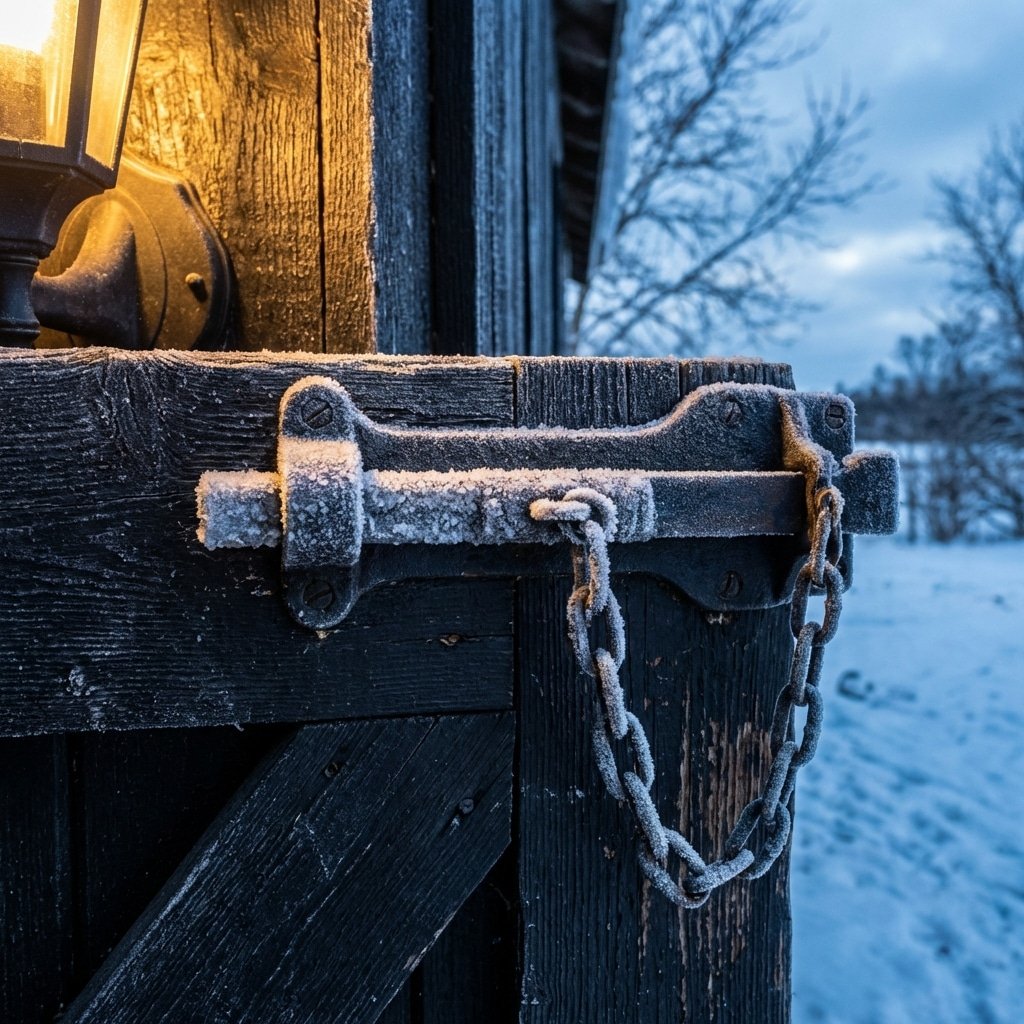
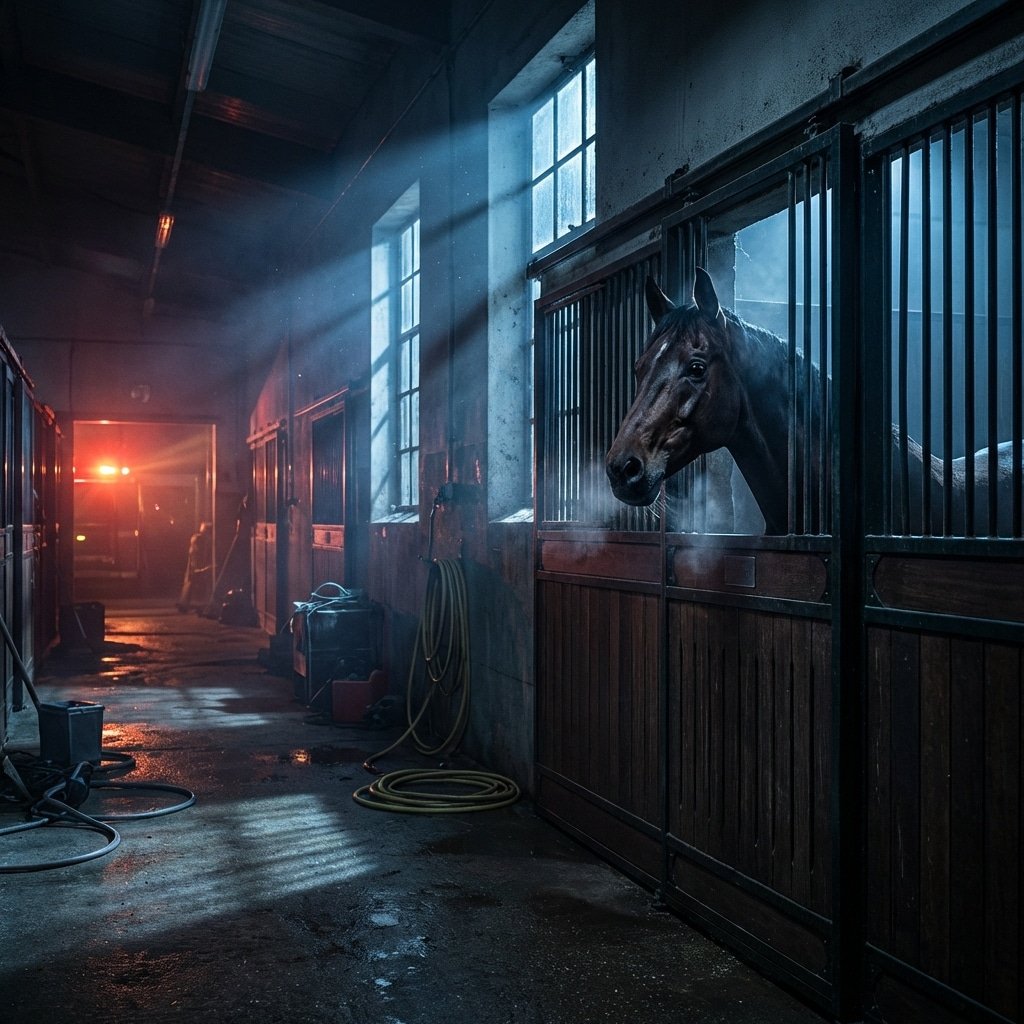
The Winter Nightmare: A Frozen Solid Plunger Latch
Moisture ingress freezes internal springs, seizing the bolt. Forcing a frozen latch causes standard steel to fracture, creating critical safety hazards during winter emergencies.
The Mechanics of Frozen Actuation
A plunger latch fails in winter because water respects no boundaries. Moisture enters the spring housing through daily washing routines or simple condensation caused by the temperature differential between a warm horse and freezing night air. Once inside, that water settles into the tight tolerances between the bolt and the casing.
When temperatures drop, that trapped water freezes and expands. This creates a mechanical lock inside the housing. The spring cannot compress, and the bolt cannot retract. This is not just a maintenance nuisance; it is a stable safety failure. In an emergency—such as a stable fire or a horse suffering from colic—a seized latch means you cannot evacuate the animal immediately. The time spent fighting a frozen mechanism is time you do not have.
Combatting Brittleness with Q345B Structural Steel
The instinct when a latch sticks is to force it, usually with a boot or a hammer. This is where material specification determines whether the latch opens or snaps. Standard Q235 steel (equivalent to ASTM A36) suffers from reduced impact toughness in sub-zero conditions. It loses ductility and behaves more like glass than metal. If you strike a frozen Q235 latch, it often suffers a brittle fracture, shearing off the bolt or cracking the housing.
- Material Upgrade: We specify Q345B Low Alloy High Strength Steel (ASTM Grade 50 equivalent) for all cold-climate orders.
- Impact Toughness: Q345B retains its molecular structure and ductility even in extreme cold, allowing it to absorb impact without snapping.
- The Kick-Proof Guarantee: This material choice ensures our hardware withstands the physical abuse required to open a frozen door, maintaining containment integrity.
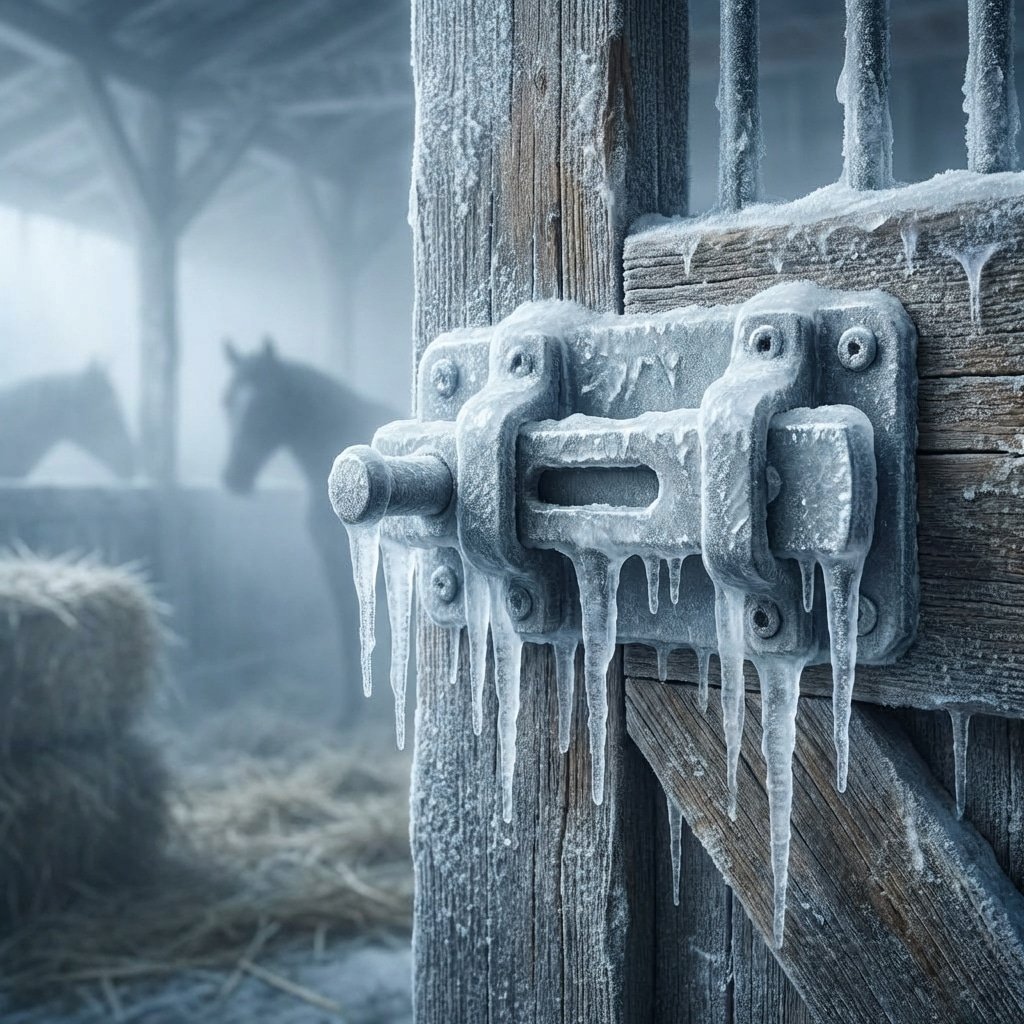
Why Wet Lubricants (Oil/Grease) Freeze and Trap Dirt
Wet lubricants fail because cold temperatures spike viscosity into sludge, while the sticky surface traps stable dust and moisture to form a frozen, abrasive cement.
The Viscosity Spike: Understanding the Pour Point Threshold
Most facility managers assume oil freezes like water—turning from liquid to solid at a specific degree. The reality is more problematic for precision hardware. Wet lubricants suffer from an exponential increase in viscosity as temperatures drop. This is defined by the “pour point,” the specific thermal limit where the fluid loses its ability to flow.
In a horse stable environment, this viscosity spike creates mechanical drag. The 304 stainless steel springs inside a plunger latch rely on rapid, snap-action movement. When the lubricant thickens into a gel-like sludge, it resists the spring’s tension. You don’t end up with a frozen block of ice; you get a sluggish, non-responsive latch that requires excessive force to operate, eventually leading to handle breakage or spring fatigue.
The Contamination Magnet: How Grease Captures Moisture and Dust
The secondary failure mode of wet lubricants is their “tacky” surface. In a controlled laboratory, grease is an excellent friction reducer. In a working stable, it acts as an adhesive trap for every airborne particle. This creates a compounding failure cycle known as the “emulsion-freeze effect.”
- Moisture Absorption: Metal surfaces in unheated barns collect condensation. Grease traps this water, forming an emulsion. When the temperature drops, the water content inside the grease freezes, creating internal ice crystals that lock the mechanism solid.
- Accumulation of Grit: Stables are filled with hay dust, silica sand, and sawdust. Wet grease captures these particulates, turning the lubricant into an abrasive grinding paste. This sludge fills the tight tolerances of the latch housing, physically blocking the bolt from sliding.
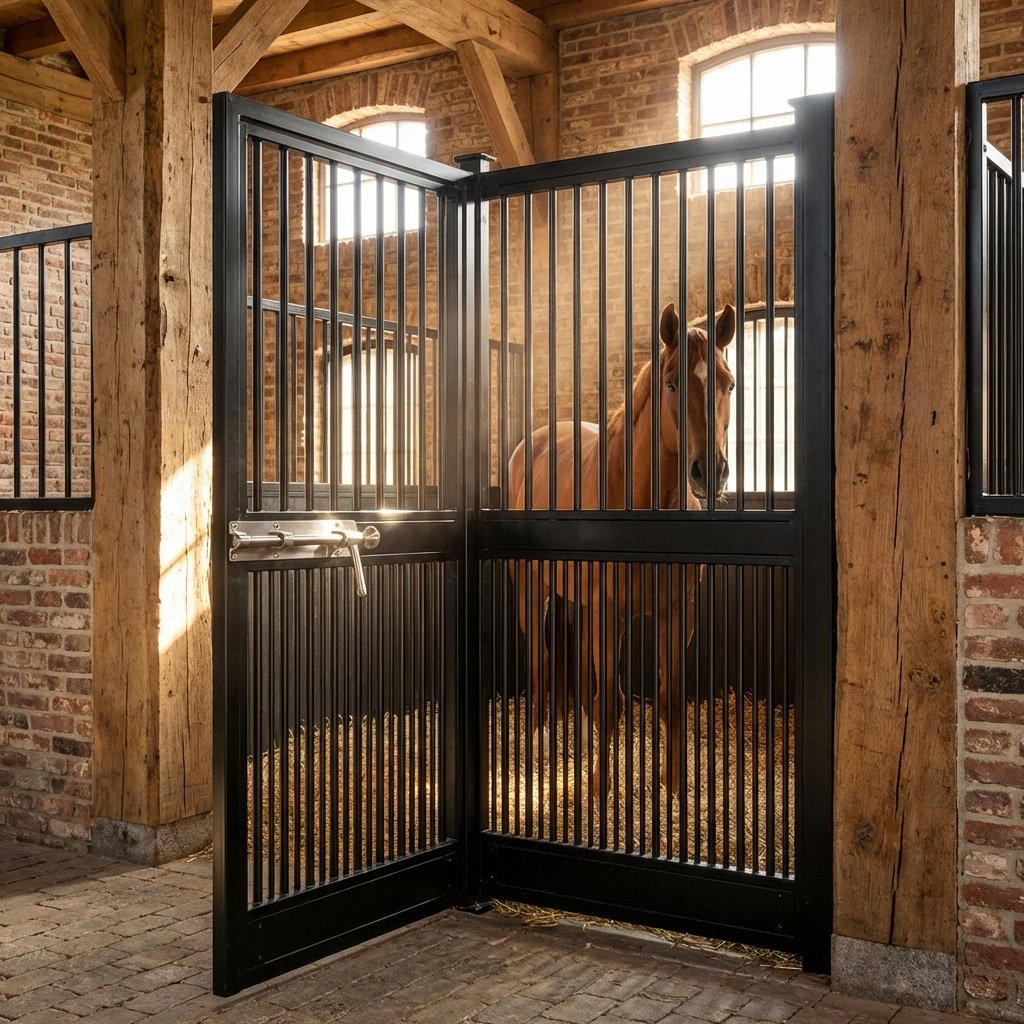
Premium Galvanized Stables Built for Lifetime Durability

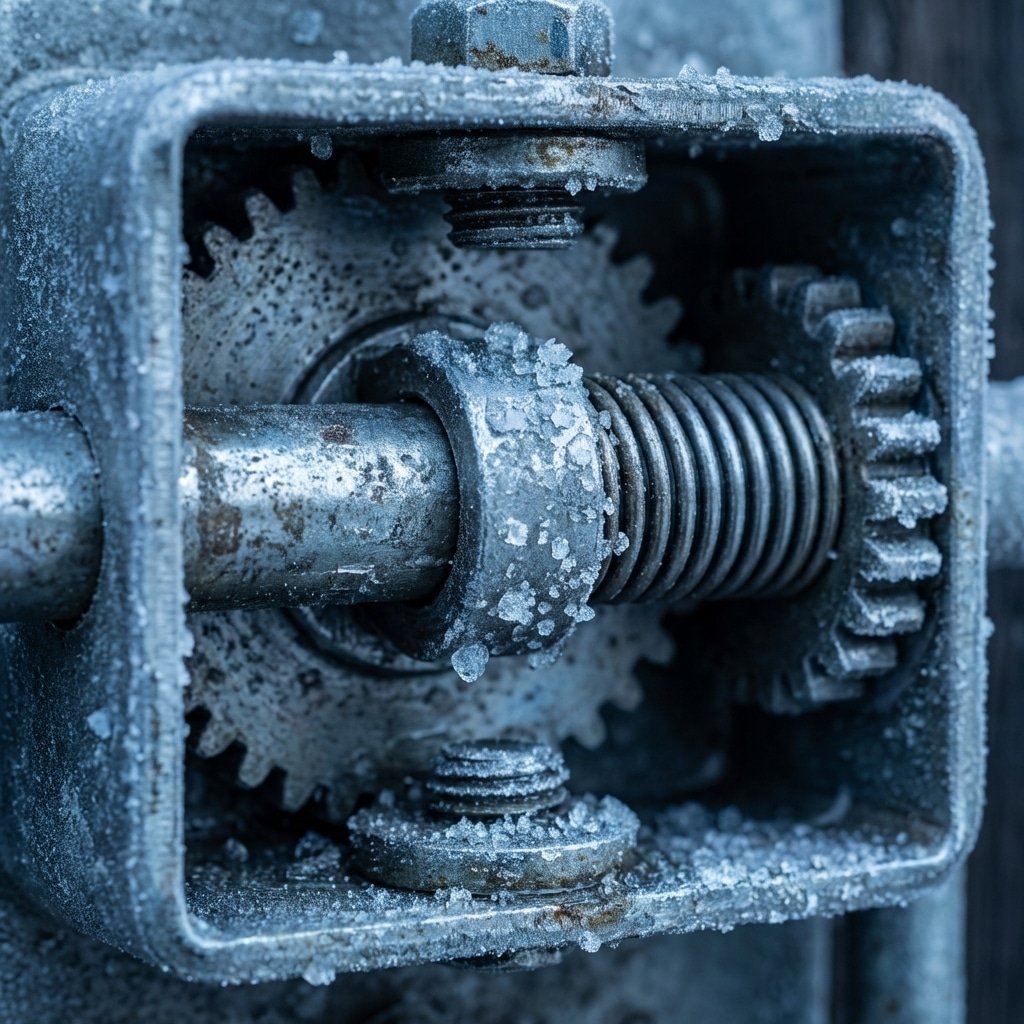
The Power of Dry Graphite Powder on 304 SS Hardware
Dry graphite bonds to 304 stainless steel, creating a freeze-proof film. Unlike oils that thicken in cold, it prevents binding and rejects dust, ensuring instant plunger action.
The Mechanics of Dry Film Lubrication
Standard wet lubricants fail in stable environments because they act as magnets for hay dust, sawdust, and airborne debris. When winter temperatures drop, this contaminated mixture freezes into a sludge that jams mechanical components. Dry graphite operates on a different principle. It is a solid lubricant that physically plates the metal surface without relying on a liquid carrier, making it the only viable option for freezing, dusty environments.
- Surface Bonding: Graphite particles fill microscopic imperfections in the steel, creating a slick, continuous sliding layer.
- Hydrophobic Action: The powder naturally repels water, which prevents ice crystals from bonding inside the lock housing.
- Zero Viscosity: Temperature drops do not alter its state. It performs identically at -30°C and +30°C, never gumming up.
- Grit Rejection: Eliminates the “grit trap” effect caused by sticky wet lubricants, keeping the internal mechanism clean.
Optimizing 304 Stainless Steel Performance
We specify 304 Stainless Steel for all DB Stable hardware due to its superior corrosion resistance. But stainless steel has a high coefficient of friction compared to plain steel. Without proper lubrication, tight-tolerance mechanisms are prone to “galling”—a form of cold welding where metal surfaces tear and seize under pressure. Graphite specifically addresses the metallurgical needs of this alloy.
- Galling Prevention: The graphite film separates mating surfaces, preventing the molecular adhesion that leads to seizing in tight mechanisms.
- Chemical Inertness: It preserves the 304 SS passive oxide layer by avoiding the chemical reactions sometimes triggered by acidic petroleum greases.
- Kick-Proof Reliability: Low friction ensures the spring mechanism snaps back instantly, maintaining the latch engagement required for our safety standards.
- Wear Reduction: A consistent dry film significantly reduces abrasive wear on the internal plunger during repetitive daily cycling.
| Performance Metric | Wet Lubricants (Oil/Grease) | Dry Graphite Powder |
|---|---|---|
| Freezing Point | Thickens/Gels < 0°C | Stable (No freezing point) |
| Contamination | Traps dust, hay, and grit | Repels dust and debris |
| Mechanism Impact | Causes sluggish spring return | Ensures instant snap-back |
| 304 SS Compatibility | Risk of acidic reaction | Chemically inert / Safe |
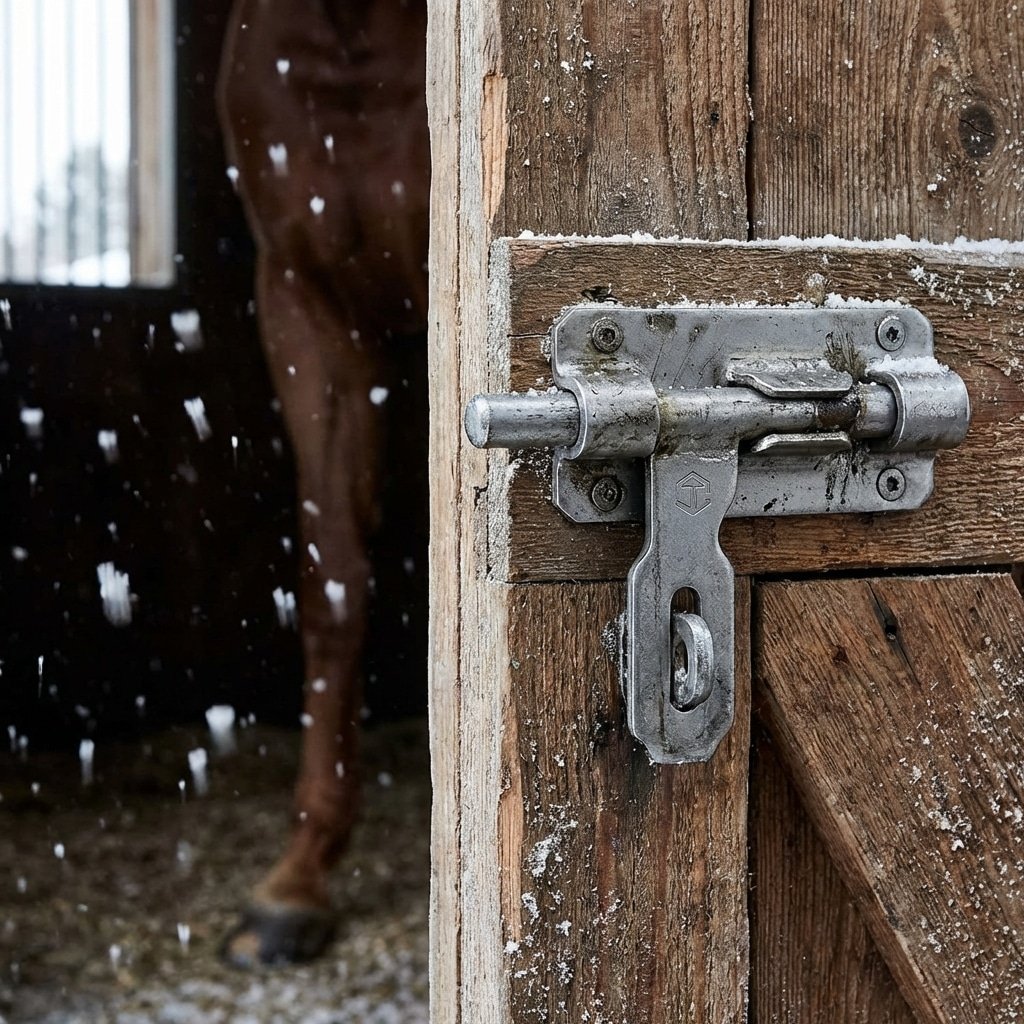
The Spring Mechanism of the DB Plunger Latch
The DB plunger latch utilizes a heavy-duty 304 Stainless Steel compression spring, ensuring constant positive tension and preventing rust-induced seizing in freezing environments.
Internal Compression Dynamics: How the Plunger Retains Tension
The mechanism functions as a self-locking system. Internal spring tension keeps the plunger physically extended until you apply manual force. Unlike gravity latches that rely on weight to fall into place, this system actively drives the bolt into the locked position using constant positive pressure.
When a handler pulls the latch, the internal spring compresses, storing potential energy. As soon as the handle is released, that energy snaps the latch back instantly. This dynamic is critical for equestrian safety. Even if a horse kicks the door or leans heavily against the frame, the continuous outward force prevents the bolt from vibrating loose or bouncing open.
The Role of 304 Stainless Steel in Preventing Cold-Weather Seizing
Standard carbon steel springs are the primary failure point in winter conditions. Condensation inevitably builds up inside the latch housing, causing carbon steel to rust. In freezing temperatures, this rust creates friction and binds the coils, causing the latch to seize solid and fail to retract.
We eliminate this risk by manufacturing the entire internal assembly from 304 Stainless Steel. This material offers superior corrosion resistance against moisture and salt spray. By preventing oxidation, the spring maintains its elasticity and smooth travel range, ensuring the latch operates freely even when temperatures drop significantly.
Abschließende Überlegungen
Recommending oil-based lubricants to your clients guarantees mechanical failure during the first freeze, leading to costly warranty claims and damaged dealer trust. By standardizing on our Q345B Low Alloy Steel and 304 Stainless Steel hardware, you eliminate cold-weather brittleness and corrosion risks entirely. High-performance stable equipment is not just about containment; it is about guaranteeing safety when seconds count.
Do not leave your inventory quality to chance. Request a localized sample kit today to test our spring tension and stainless steel finish against your current stock. Contact our engineering team to secure your territory’s wholesale pricing and discuss custom OEM specifications.


 German
  English
  Spanish
  French
  Arabic
0 Kommentare