


Managing arthritic horses in winter demands more than extra bedding; it requires structural engineering that eliminates cold drafts at the ground level. Standard stable partitions with large bottom gaps create thermal tunnels that accelerate joint stiffness and increase the risk of casting injuries. For rehab yards and professional facilities, inadequate infrastructure leads to higher veterinary liabilities and reduced client retention rates.
This analysis examines how solid-bottom panels utilizing Q345B Low Alloy High Strength Steel prevent brittle fractures during cold snaps. We evaluate the thermal benefits of 28mm HDPE infill against traditional wood, focusing on our ISO 1461 hot-dip galvanization process und Cast-Proof Design standards to ensure long-term safety and zero structural maintenance.
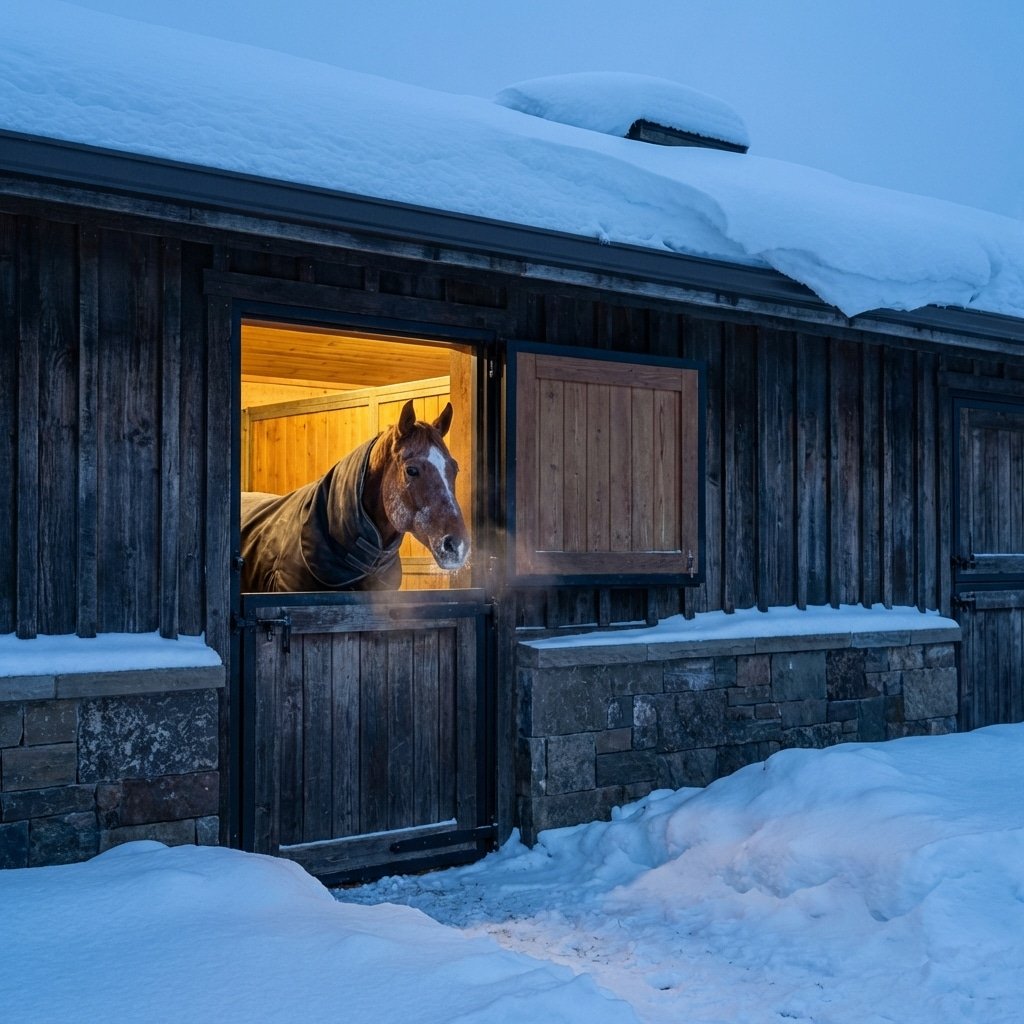
Managing Arthritis in Senior Horses During Winter
Cold temperatures thicken synovial fluid, increasing joint stiffness in senior horses. Effective management combines consistent low-intensity movement with impact-absorbing stable materials to prevent injury.
Combating Joint Stiffness and Synovial Fluid Thickening
Physiologically, winter presents a mechanical challenge for arthritic joints. When ambient temperatures drop, the synovial fluid inside the joint capsule thickens. This fluid is the lubricant that prevents bone-on-bone friction. When it becomes viscous due to cold, it fails to lubricate effectively, leading to increased friction, pain, and stiffness in arthritic limbs.
The most common mistake in winter management is prolonged confinement. While owners often want to keep seniors inside to protect them from the elements, locking an arthritic horse in a stall for extended periods accelerates functional decline. Inactivity allows the joints to “seize up.” Management protocols must prioritize frequent, low-intensity movement to keep synovial fluid warm and viscous, preventing the horse from becoming dangerously stiff.
Material Resilience: Q345B Steel and Impact-Absorbing HDPE
Arthritic horses face significant physical risks inside the stable, particularly when trying to stand up after lying down. The effort required to rise with stiff joints often results in thrashing or accidental kicking of the stable walls. In freezing conditions, the structural integrity of the stable materials becomes a safety critical factor.
- Q345B Low Alloy High Strength Steel: Standard carbon steel can become brittle in extreme cold. For winter climates, we utilize Q345B steel for our frameworks. This alloy maintains superior impact toughness at sub-zero temperatures, ensuring the steel absorbs the energy of a kick rather than fracturing.
- HDPE Infill Absorption: Traditional materials like concrete or hardwood are unforgiving. If a senior horse strikes them, the energy reflects back into the leg, causing severe bruising or fractures. Our 28mm-32mm HDPE infill acts as a shock absorber, dissipating the impact force and reducing physical trauma to the horse’s compromised legs.
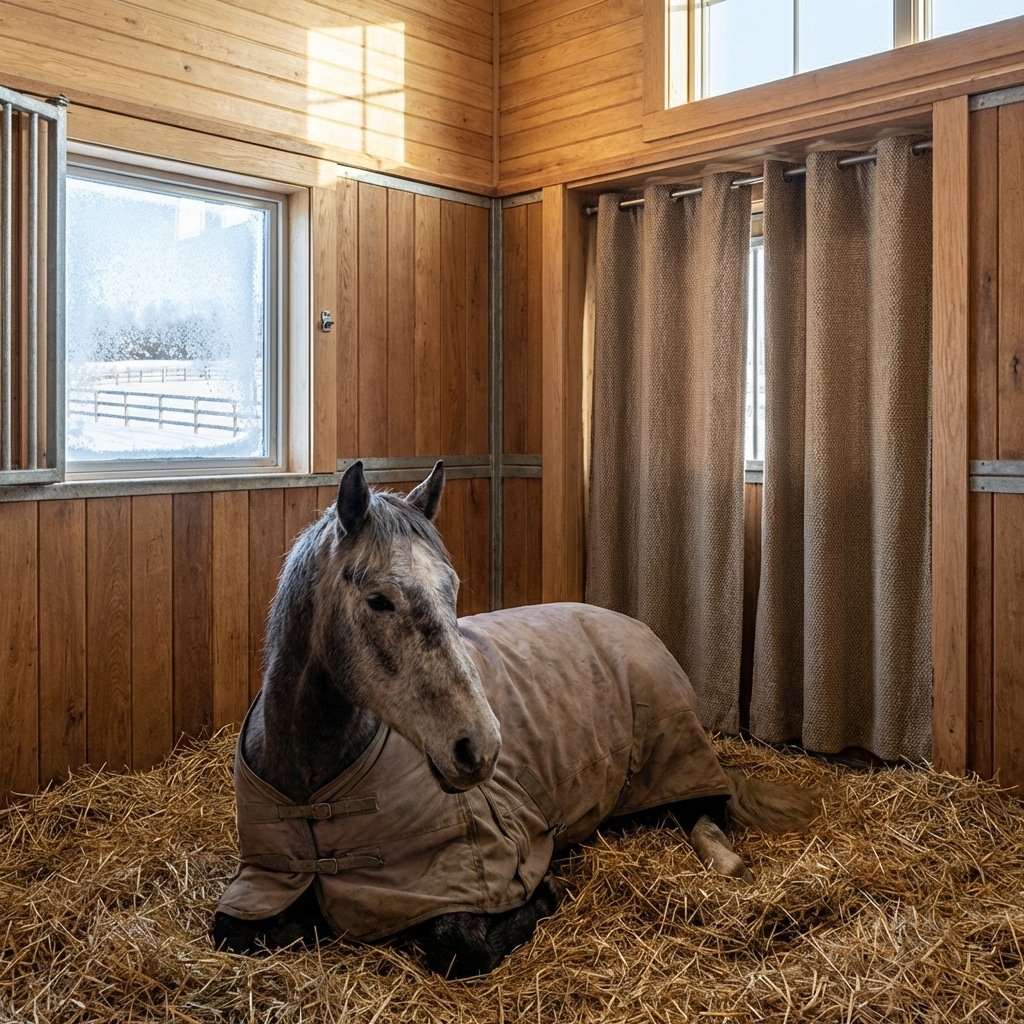
The Problem with Gap-Bottom Stall Partitions
Executive Summary: Bottom gaps larger than 3 inches (76mm) create severe leg entrapment risks. We restrict clearance to approximately 50mm to prevent casting while maintaining drainage.
The Risk of Leg Entrapment and Casting
Many stall manufacturers leave large gaps (4 to 6 inches) at the bottom of partitions to save on material costs or simplify installation on uneven concrete. In a professional equine facility, this is a liability. The primary danger here is “casting”—a situation where a horse lies down against a wall, rolls over, and gets its legs stuck underneath the partition. Once trapped, the horse cannot gain the leverage needed to stand up. Panic sets in, leading to thrashing, severe tendon damage, or bone fractures.
This risk multiplies for senior and arthritic horses. These animals spend more time recumbent to relieve joint pain and lack the agility to quickly tuck their legs beneath them when rising. Industry safety data indicates that any gap wider than 3 inches (76mm) constitutes a “leg trap.” If a hoof can slide under, the fetlock can get caught. For a facility manager, a gap-bottom partition is not just an airflow feature; it is a mechanical hazard for mobility-impaired stock.
Implementing a Cast-Proof Design Standard
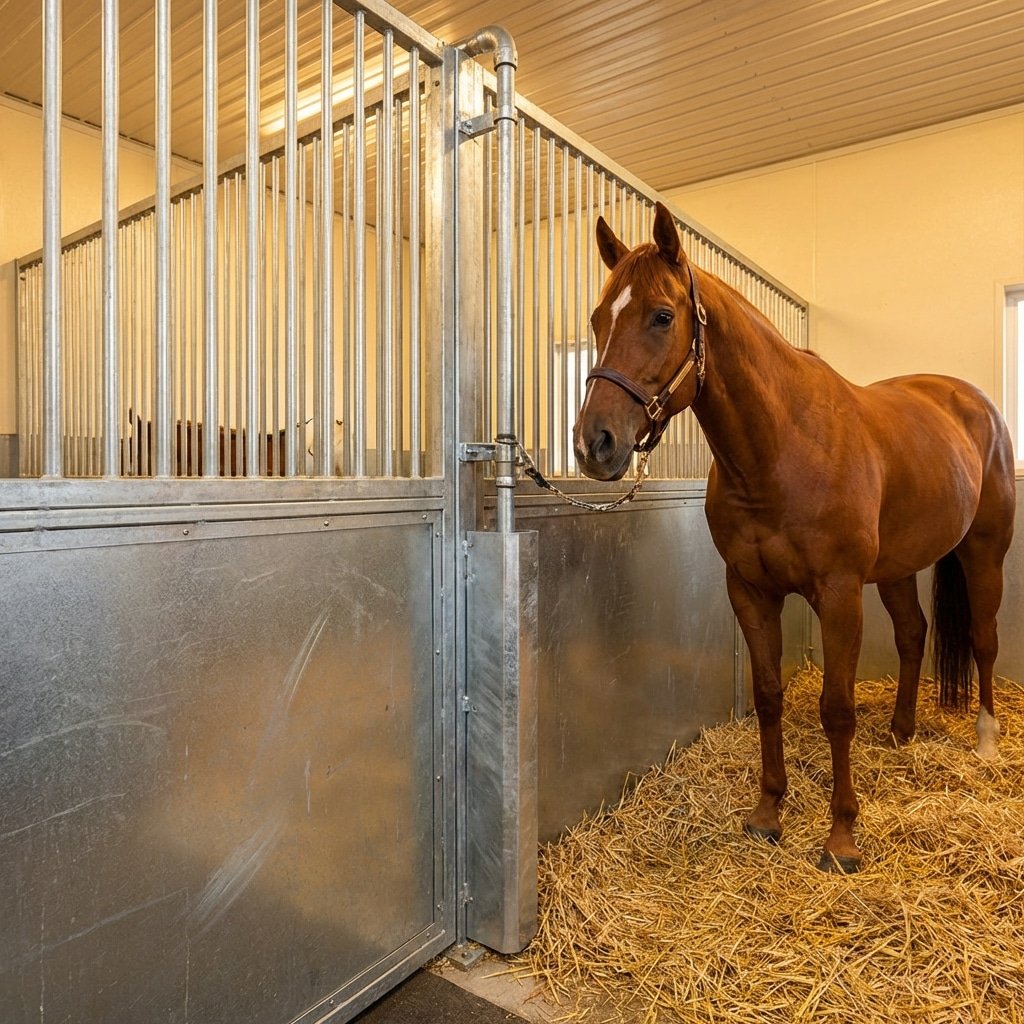
We engineered our “Cast-Proof Design” specifically to eliminate this hazard while preserving necessary functionality. Unlike standard partitions that leave large voids, DB Stable specifications strictly limit the bottom ground clearance to approximately 50mm. This dimension is critical: it is small enough to physically block a hoof from sliding underneath, yet large enough to allow urine and wash-down water to drain into the aisle or drainage system without pooling against the steel.
- Precision Clearance: The ~50mm gap acts as a mechanical stop for the hoof, preventing entrapment before it starts.
- Structural Integrity: We use Q345B Low Alloy High Strength Steel for the bottom frame rails. Cheaper Q235B or standard mild steel can bow upward if a horse kicks the bottom bar, inadvertently widening the gap over time.
- Kick-Proof Guarantee: The combination of high-tensile steel and heavy 14-gauge tubing ensures the safety gap dimension remains constant throughout the product’s lifespan, regardless of impact.
Precision-Engineered Stables Built for Extreme Durability
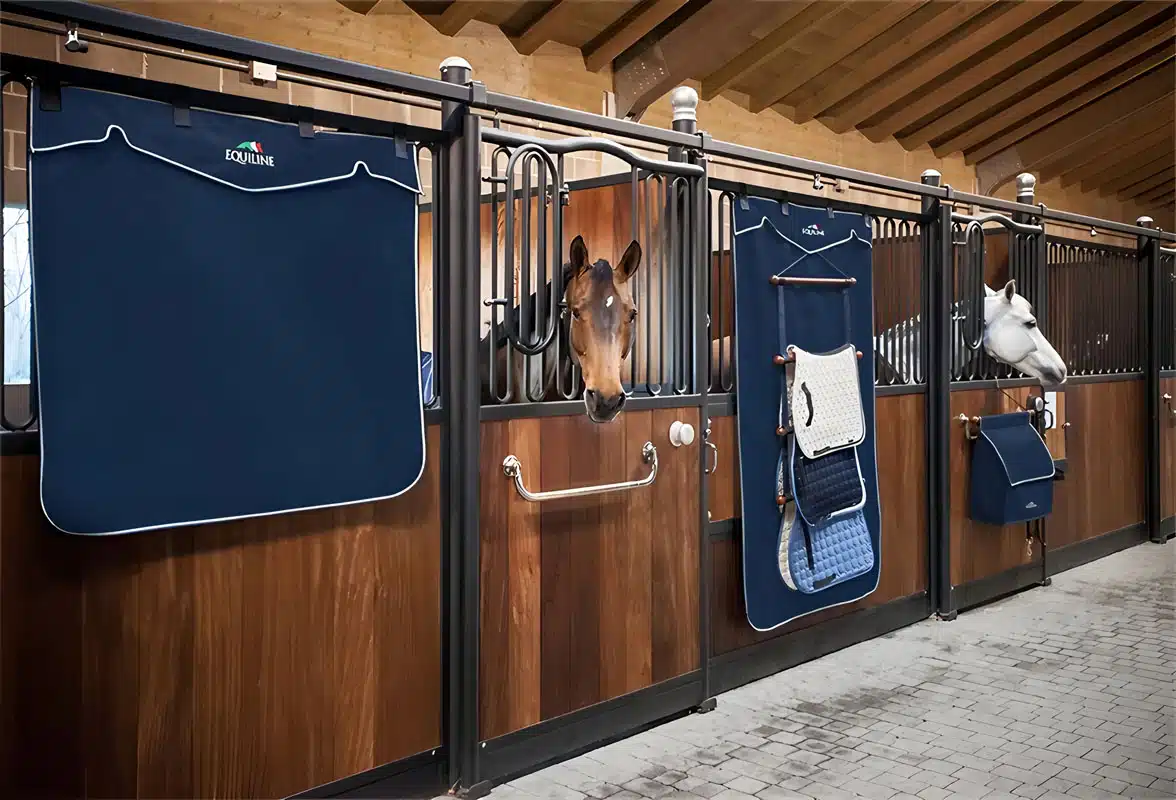
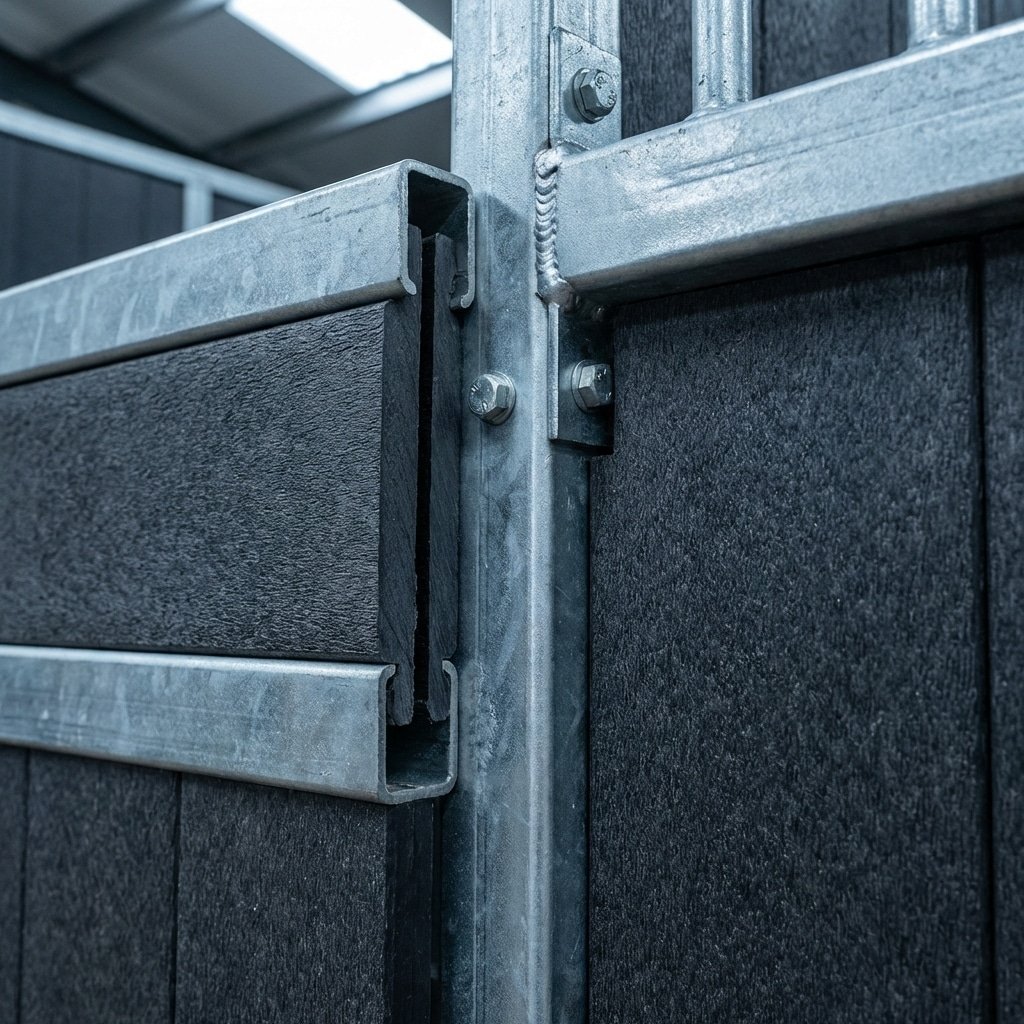
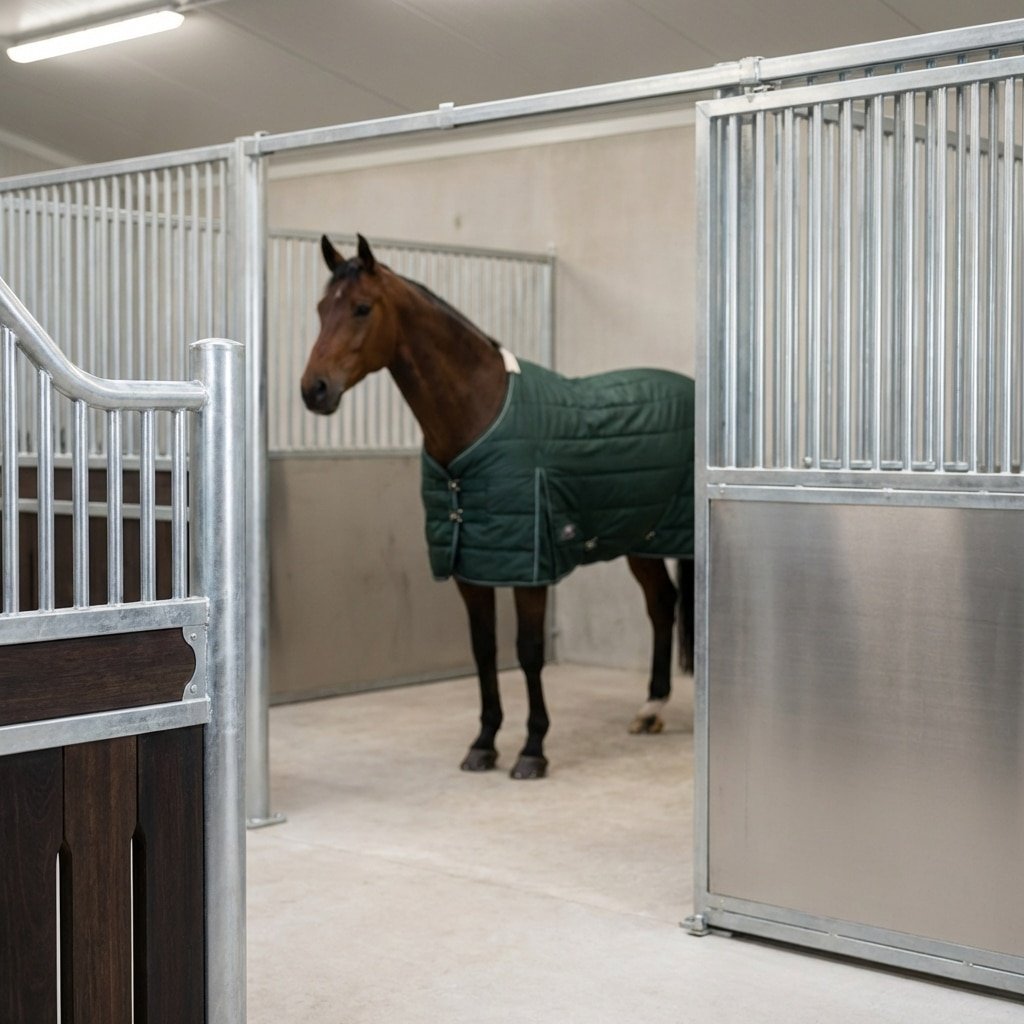
Solid-Bottom Horse Stall Panels: Blocking Ground Drafts
Solid-bottom panels with continuous HDPE infill eliminate ground-level drafts, creating a warmer microclimate that protects senior horses from joint-stiffening cold air currents.
| Performance Metric | Standard Gap-Bottom Panel | DB Solid-Bottom System |
|---|---|---|
| Airflow at Bedding Level | High (Draft Tunnel Effect) | Blocked (Thermal Shield) |
| Infill Material | Softwood (Rot Prone) | 28mm-32mm HDPE |
| Bottom Safety Gap | Variable (Entrapment Risk) | ~50mm Cast-Proof Design |
Mitigating Microclimate Drafts for Senior Horse Health
Barn managers often focus on overhead ventilation, but they overlook the physics of cold air. Cold air is denser than warm air, so it naturally sinks to the floor. Even in an enclosed barn, this creates a specific “draft zone” in the bottom 0-24 inches of the stall. This is exactly where a horse lies down to rest. For a young horse, this is an annoyance. For a senior horse with arthritis, it is a health risk.
Constant exposure to cold drafts at this level causes synovial fluid in the joints to thicken. This increases friction and stiffness, exacerbating chronic pain in arthritic animals. If a horse cannot lie down comfortably because the floor level is freezing, they stay standing, which accelerates joint deterioration.
Solid partitions act as a thermal shield. By blocking airflow at the bottom meter of the stall front and dividers, you maintain a consistent, warmer temperature zone at bedding level. This simple structural change reduces the thermal load on the horse’s joints without compromising the necessary overhead ventilation required for respiratory health.
The “Cast-Proof” Construction with High-Density Infill
We engineer our solid-bottom systems to address two specific failure points in traditional manufacturing: material degradation and safety gaps. Wood absorbs moisture and warps, eventually letting drafts through. We bypass this by utilizing 28mm-32mm HDPE Infill. This high-density polyethylene creates an impermeable wind barrier that creates a true seal against cold currents.
- Zero Maintenance: Unlike wood, HDPE does not rot, shrink, or require staining, ensuring the draft barrier remains intact for decades.
- Corrosion Resistance: The bottom frame sits in ammonia-heavy bedding. We use Hot-Dip Galvanization After Fabrication (ISO 1461) to coat the steel inside and out, preventing the structural rot common in pre-galvanized tubes.
- Cast-Proof Design: We engineer a strict bottom clearance of approximately 50mm. This gap is sufficient for drainage and wash-downs but small enough to prevent a rolling horse from trapping a hoof or leg underneath the panel.
This design aligns with our “Kick-Proof Guarantee,” using Q235B or Q345B structural steel to ensure that the solid bottom isn’t just a windbreak, but a physical safety barrier capable of withstanding impact from confined animals.
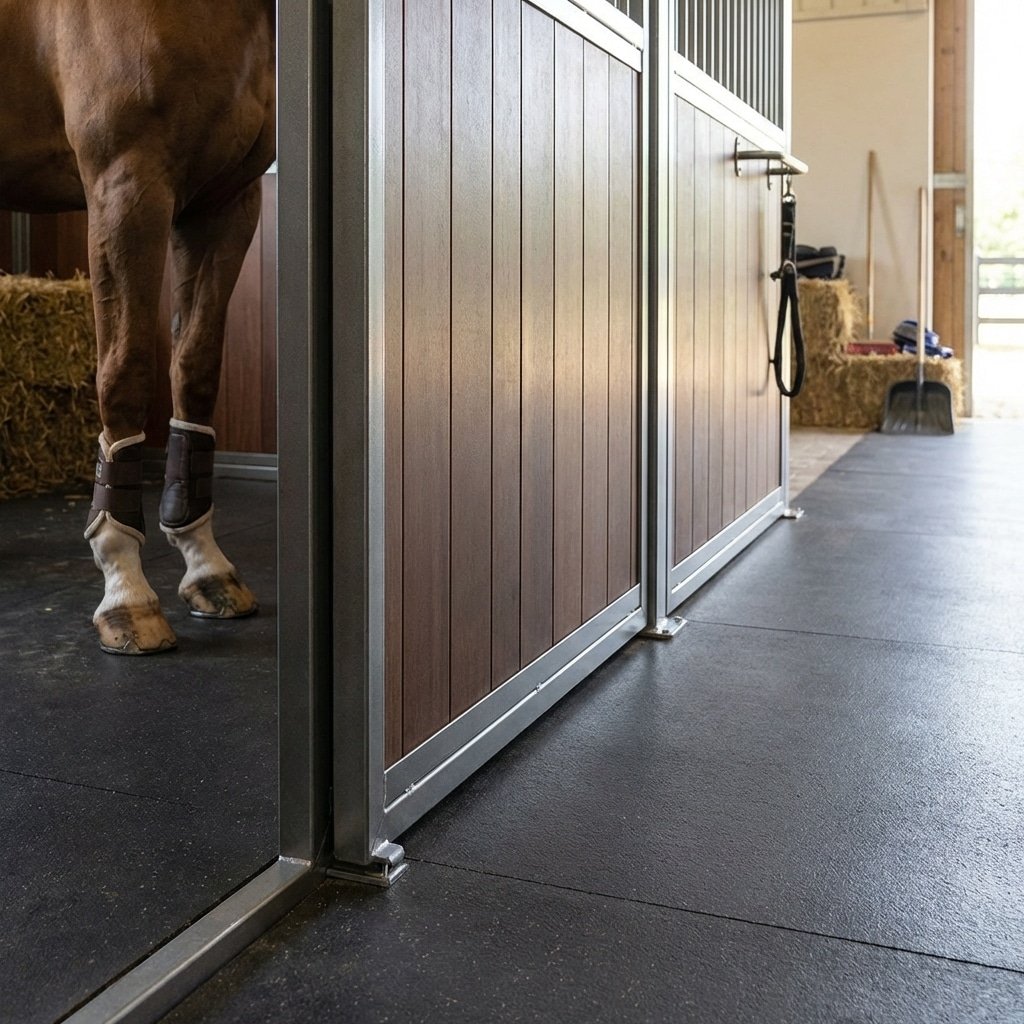
Interlocking Rubber Pavers for Shock Absorption
Rubber pavers reduce ground-force impact by over 50% compared to concrete, protecting arthritic joints but requiring heavy-duty galvanization to withstand the moisture trapped beneath them.
Biomechanics of Impact Reduction
Senior horses often suffer from the cumulative effects of concussion on concrete aisleways and stall floors. Interlocking rubber pavers, typically engineered from 100% recycled tire rubber, solve this by compressing under load rather than resisting it. This mechanical compression mimics natural turf, allowing the hoof mechanism to expand and contract naturally rather than jarring against a rigid substrate.
Research indicates these surfaces provide over 50% force reduction compared to concrete. For a horse with navicular issues or osteoarthritis, this reduction dictates whether they can stand comfortably or require constant pharmaceutical management. The shock absorption directly mitigates chronic pain, lowering the inflammatory response caused by standing on unforgiving surfaces for long periods.
- High-Traction Texture: Provides essential grip for senior horses that struggle to rise from a resting position.
- Impact Dispersion: Dissipates energy laterally, reducing stress on the coffin bone and navicular apparatus.
- Thermal Insulation: Isulates hooves from cold concrete, which can aggravate arthritic stiffness.
Corrosion Resistance in Paver-Equipped Stalls
While rubber pavers benefit the horse, they present a specific engineering challenge for stable infrastructure. These pavers are porous and typically sit flush against the bottom channel of your stable partitions. They effectively trap urine, water, and ammonia against the steel base, creating a permanent “wet zone” that accelerates corrosion in standard steel frameworks.
Standard pre-galvanized steel (black tube welded together) often fails at the base within two years in this environment. To counter this, DB Stable utilizes Hot-Dip Galvanization After Fabrication, strictly adhering to BS EN ISO 1461 standards. We weld the Q235B steel framework first, then submerge the entire unit in molten zinc. This ensures the inside and outside of the bottom channel are sealed against the corrosive slurry trapped by the pavers.
- Zinc Coating Thickness: We maintain an average coating >85 microns on structural parts to resist concentrated ammonia exposure.
- Material Spec: Q235B steel (or Q345B for cold climates) retains structural integrity despite moisture retention in the flooring system.
- Sealed Welds: Post-fabrication dipping eliminates raw weld points where rust typically begins in damp floor environments.
Häufig gestellte Fragen
How can I keep an arthritic horse comfortable in the stable during winter?
Cold temperatures cause synovial fluid in joints to thicken, acting more like glue than lubricant. This leads to immediate stiffness. To combat this, you must insulate the horse from the cold concrete slab using a deeply bedded stall. This creates a thermal barrier and cushions sensitive points like hocks and elbows when the horse lies down.
If the horse is clipped, maintain body temperature with appropriate blanketing to prevent shivering, which aggravates joint pain. Most importantly, the horse needs room to move within the stall to stimulate circulation. A cramped horse is a stiff horse.
Should I use solid or mesh stall panels for senior horses?
A hybrid design works best. Relying solely on mesh creates drafts at ground level, while full solid walls block airflow entirely. For aging horses, we recommend a partition with a solid bottom section of 12 to 24 inches. This acts as a windbreak for the legs and joints, preventing cold air from settling where the horse rests.
The upper section must utilize mesh or open grills to drive Stack Effect Ventilation. This allows warm, moist, ammonia-filled air to rise and escape, protecting the respiratory system without chilling the animal’s joints.
What is the best flooring option for horses with arthritis?
Standard concrete is brutal on arthritic joints due to zero impact absorption. The flooring must offer “spring-back” support to reduce strain on tendons and ligaments. We advise facility managers to install heavy-duty rubber mats with a minimum thickness of 25mm, or invest in orthopedic sealed systems.
This specific density provides necessary shock absorption that thinner mats lack. It also insulates against the cold sub-floor and encourages the horse to lie down and rest, which is critical for daily recuperation.
Abschließende Überlegungen
Standard stabling often fails senior horses through cold drafts and brittle steel, creating significant liability for professional rehab facilities. DB Stable’s Q345B framework and solid HDPE infill deliver the “Kick-Proof Guarantee” necessary to protect compromised joints. Stocking our “Cast-Proof Design” ensures your inventory meets the rigorous welfare standards demanded by premium equine care providers.
Do not rely on spec sheets alone; verify our manufacturing quality directly. Request a trial order of our flat-pack system to test the assembly efficiency and hot-dip galvanization finish firsthand. Contact our engineering team today to secure a production slot for your next container load.

 German
  English
  Spanish
  French
  Arabic
0 Kommentare