


Feed Tub Cribbing rapidly degrades standard plastic infrastructure and transforms feeding equipment into a significant safety liability. When anxious horses bite down on generic polyethylene, the material frequently shatters, creating sharp shards that cause internal injuries and drive up veterinary costs. Relying on non-stabilized feeders creates a constant cycle of replacement that drains facility maintenance budgets.
This analysis benchmarks the structural integrity of cast aluminum swivel feeders against brittle plastic alternatives. We examine how flush-mounted designs and polished rounded edges eliminate the mechanical leverage points necessary for crib-biting. By integrating these units into Q235B structural steel frames, professional stables can permanently resolve breakage issues and protect equine gastric health.
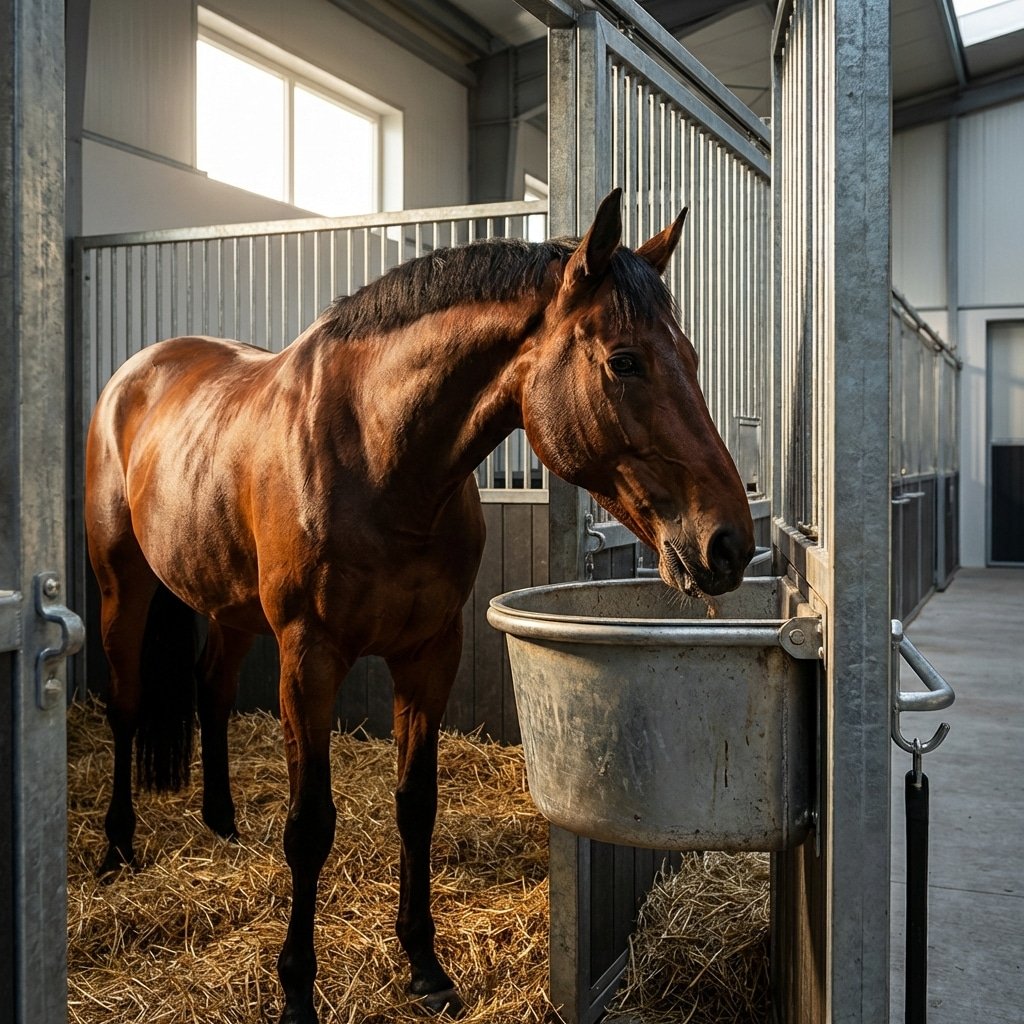
Feed-Time Anxiety and Cribbing on the Bucket Edge
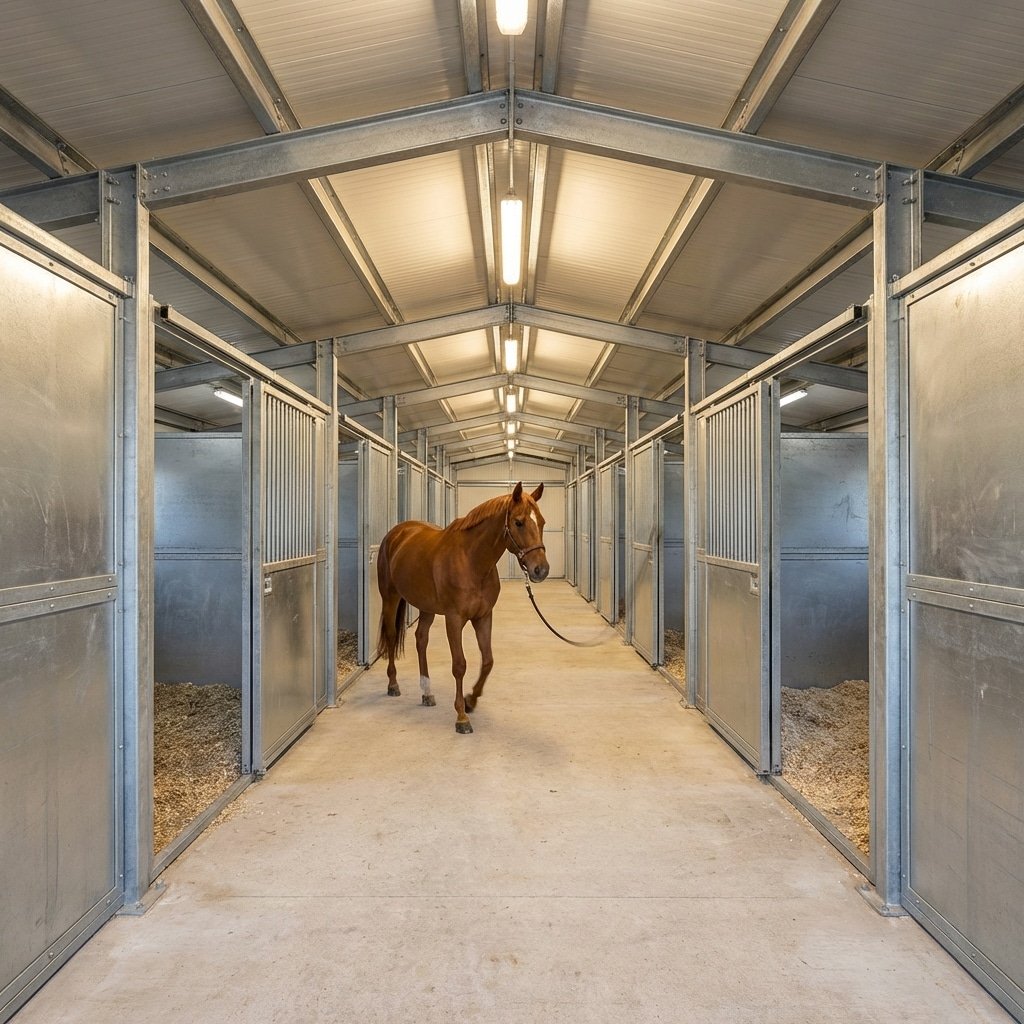
Feed-time anxiety drives horses to aggressively crib on solid edges. DB Stable combats this with 2.0mm+ Q235B structural steel and Feuerverzinkung, ensuring fronts withstand deformation and rust.
Triggers of Feed-Associated Repetitive Behaviors
Horses are biologically designed to graze for over 18 hours a day. When facility schedules restrict forage access to distinct meal times, the horse’s nervous system registers scarcity. This is not happy excitement; it is emotional dysregulation. The resulting anxiety manifests physically as charging, fidgeting, and biting the nearest solid object—typically the stable front or feed bucket bracket.
This behavior often links directly to gastric health. Without constant chewing to produce saliva, stomach acid builds up, leading to ulcers. Horses then crib-bite on stable edges to relieve this gastric discomfort. This creates a repetitive, high-pressure mechanical stress point on your stable infrastructure that lightweight materials cannot handle.
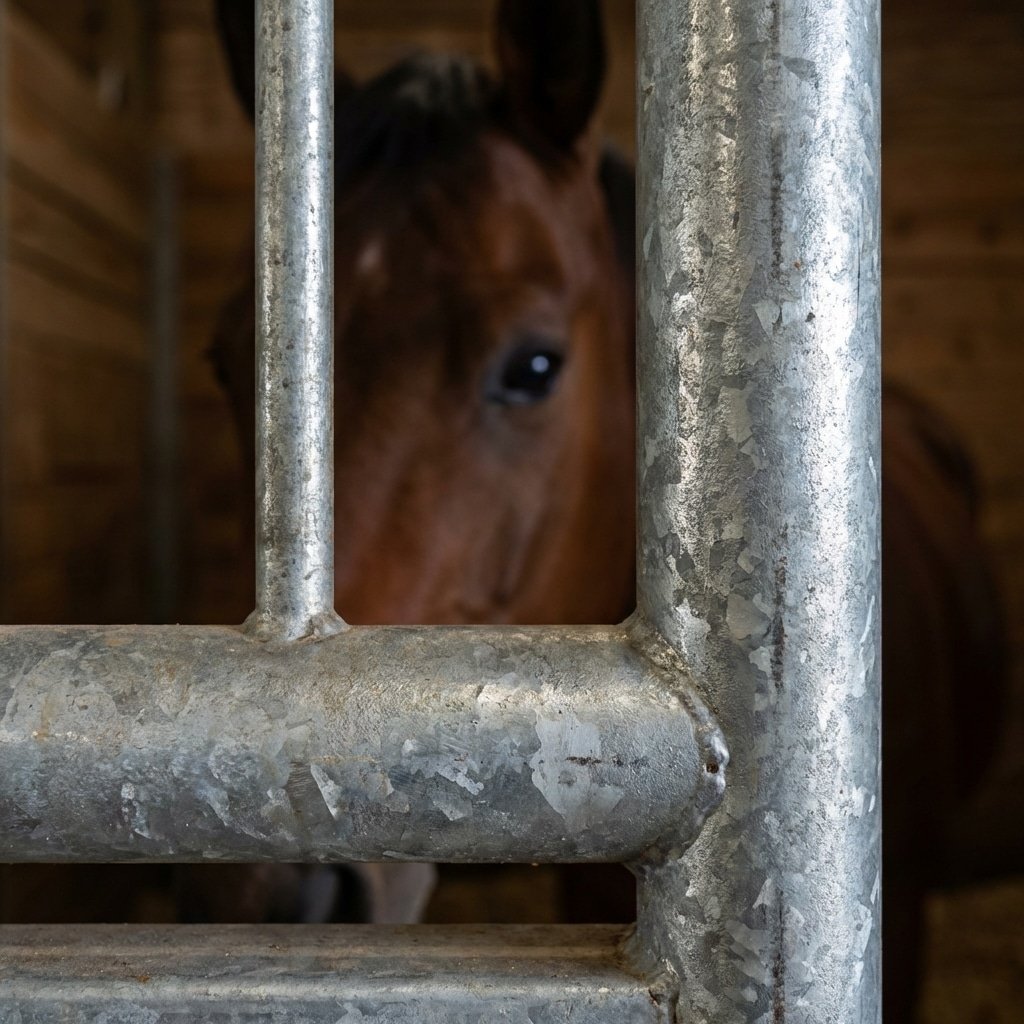
Resisting Mechanical Damage with Hot-Dip Galvanized Steel
Standard consumer-grade stable fronts often use 1.5mm tubing that crimps or bends under the sustained jaw pressure of a cribbing horse. Once the metal deforms, the paint cracks, and rust destroys the panel. We engineer our fronts specifically to resist this cycle of abuse through heavy-duty material selection and industrial processing.
- Structural Steel Integrity: We use Q235B Structural Steel (standard) or Q345B High Strength Steel (cold climate) to prevent bending.
- 14-Gauge Wall Thickness: Our tubing maintains a strict minimum of 2.0mm to 2.5mm thickness, providing the rigidity needed to resist bite pressure.
- BS EN ISO 1461 Galvanization: We use Hot-Dip Galvanization After Fabrication. This metallurgical bond protects the steel even if a horse’s teeth scrape the surface, unlike powder coats that chip and fail.
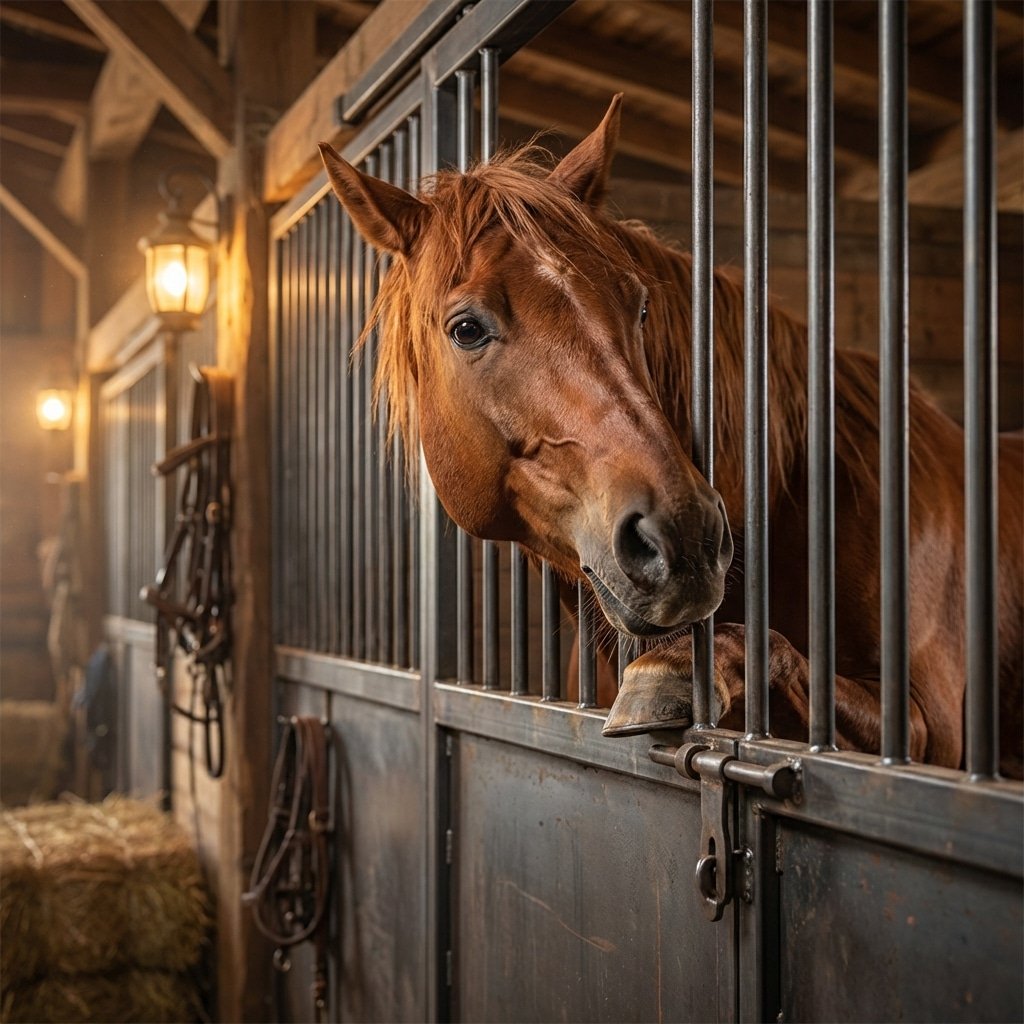
The Splinter Hazard of Chewed Plastic Tubs
Standard plastic feeders shatter into sharp shards when chewed, causing severe internal injuries. Professional facilities must use UV-stabilized materials to prevent this brittle degradation.
Gastrointestinal and Laceration Risks from Ingestion
Cheap plastic feeders are a liability in any stable, particularly where horses exhibit cribbing or wood-chewing behaviors. Unlike the impact-absorbing HDPE we engineer for stall fronts, standard feed tubs rarely survive the mechanical stress of a horse’s teeth. When a horse fractures the rim of a bucket, the resulting debris is not just a mess; it is a medical emergency waiting to happen.
- Oral Lacerations: When plastic snaps, it creates a razor-edge. These fragments slice the tongue, gums, and esophagus as the horse attempts to feed, often leading to reluctance to eat or blood in the saliva.
- Internal Blockages: Synthetic polymers do not break down in the gut. Ingested shards accumulate in the digestive tract, creating a high risk for impaction colic or intestinal perforation.
- Behavioral Amplification: Horses that crib actively seek leverage points. A fracturing bucket rim provides a jagged texture that stimulates further chewing, increasing the volume of plastic ingested.
The Critical Importance of UV Stabilization
The primary reason feed tubs turn into shrapnel is poor material science. Most retail-grade feeders lack sufficient UV inhibitors. Over time, exposure to sunlight—even through windows—breaks down the polymer chains, turning the material brittle. At DB Stable, we use 28mm-32mm UV-stabilisiertes HDPE for our wall panels specifically to combat this issue, but generic feed tubs rarely meet this industrial standard.
- UV Degradation: Without stabilization, plastic suffers from “crazing”—a network of fine cracks on the surface. This structural failure happens long before the bucket looks broken visually.
- Brittleness Factor: Non-stabilized polymers lose their elasticity. Instead of deforming under tooth pressure (like our Kick-Proof HDPE), the material shatters immediately upon impact.
- Maintenance Standard: If your facility relies on non-metallic feeders, staff must inspect rims daily. Any sign of micro-fractures requires immediate disposal to prevent ingestion.
Precision-Engineered Stables Built for 20+ Years
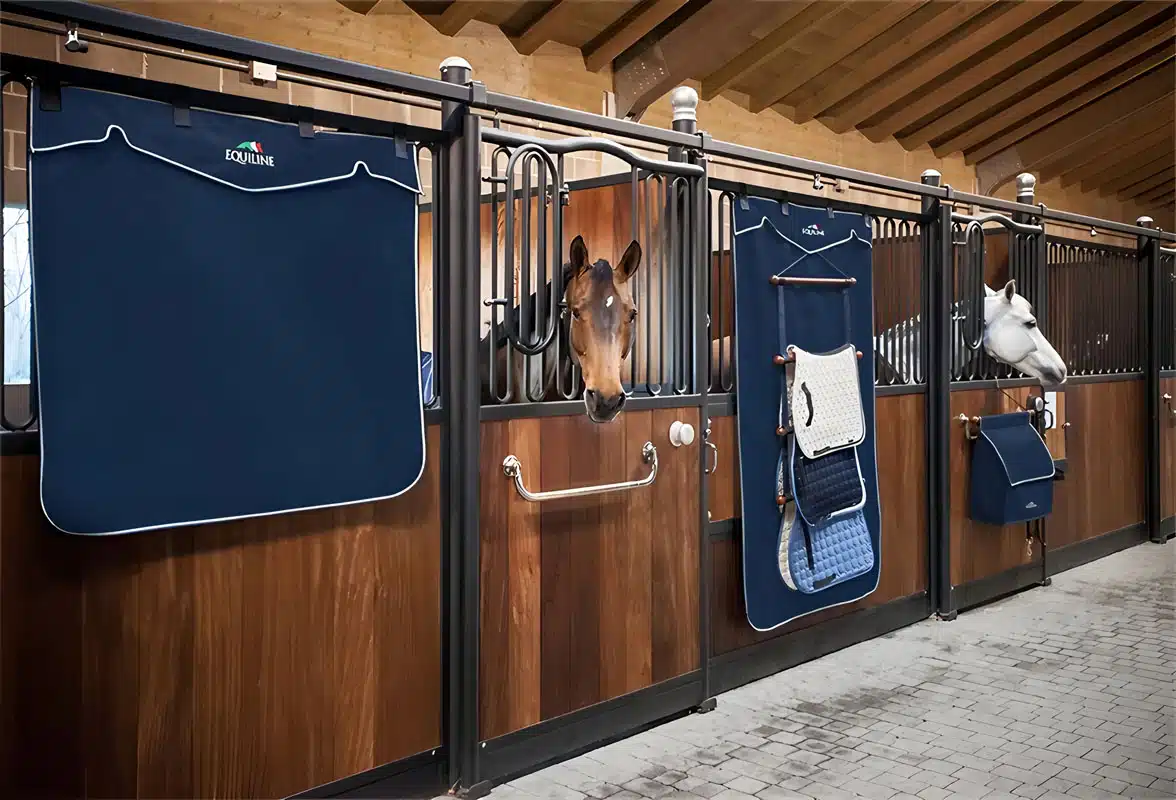
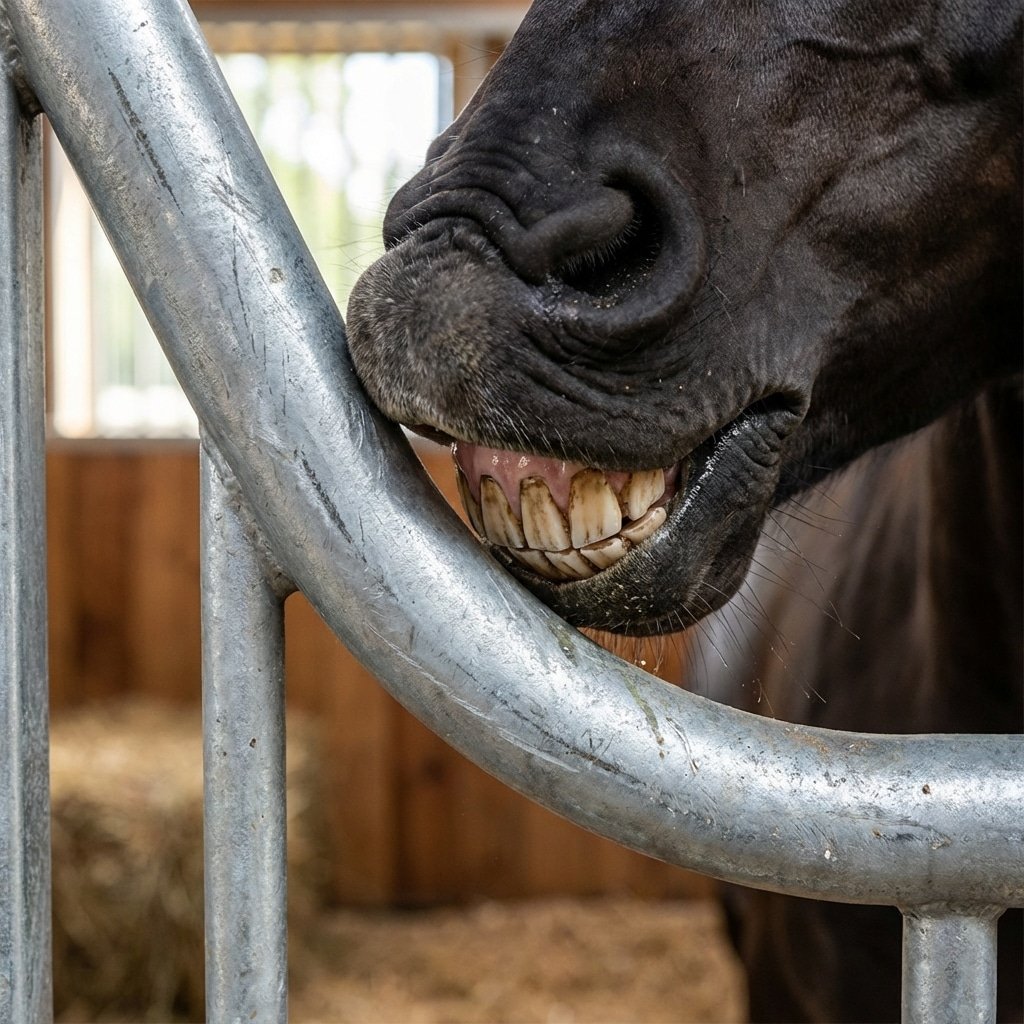
Why Horses Cannot Get a Grip on DB Aluminum Swivels
Cribbing requires a soft substrate and a ledge for leverage. DB Swivels eliminate both by combining high-density cast aluminum with a fully rounded, polished geometry that offers zero traction.
| Merkmal | Standard Plastic / Wood | DB Cast Aluminum Swivel |
|---|---|---|
| Surface Density | Porous/Soft (Yields to pressure) | High Density (Resists penetration) |
| Edge Geometry | 90-degree Rims / Lips | Fully Rounded / Polished |
| Grip Potential | High (Teeth create grooves) | Zero (Teeth slide off) |
Material Hardness vs. Incisor Traction
To successfully crib, a horse must anchor its upper incisors into a surface to create the leverage needed for wind sucking. This mechanical action relies on friction. Materials like high-density polyethylene (plastic) or wood are softer than equine tooth enamel. When a horse bites down, the material yields slightly, allowing the teeth to create micro-grooves or indentations. These grooves act as anchor points, giving the horse the grip necessary to pull back and engage the neck muscles.
DB Aluminum Swivels utilize industrial-grade cast aluminum with a polished finish. This material is significantly harder and denser than the substrates typically found in stables. The surface does not yield to incisor pressure. Without the ability to penetrate the surface layer—even microscopically—the teeth simply slide off the metal. The lack of surface porosity eliminates the friction coefficient required for the behavior to occur.
The Curved Geometry of the DB Swivel Feeder
Material hardness alone is often insufficient if the object provides a convenient shape for latching. A standard feed bucket has a rim, often with a defined lip or a flat 90-degree edge. This shape creates a mechanical ledge that a horse can hook its teeth over, regardless of the material’s hardness. If the jaw can lock over an edge, the horse can crib.
- Fully Rounded Molding: The DB Professional Series feeders feature a continuous curve with no flat spots.
- Elimination of 90-Degree Edges: We removed the right angles found on standard bucket rims, denying the horse a physical latching point.
- Flush Integration: The swivel mechanism integrates smoothly with the stable front, ensuring there are no protruding lips or gaps where a horse could force a grip.
Bolting the Feeder Flush to Prevent Lip Leverage
Cribbing relies on a protruding edge to anchor the upper incisors. Bolting a feeder flush against the wall removes this leverage point, mechanically preventing the behavior.
Eliminating Purchase Points for the Upper Lip
Cribbing is a mechanical action, not just a bad habit. To execute it, a horse requires a horizontal ridge to anchor its upper teeth, allowing it to flex the neck muscles and suck air. Loose hanging buckets are the primary culprits in most stables because the gap between the bucket rim and the wall creates a perfect fulcrum for leverage.
Flush mounting addresses the physics of the problem. By bolting the rim tight against the mounting surface, you deny the horse the necessary grip. Eliminating this “ledge effect” removes the physical option to crib on the feeder, forcing the horse to eat normally without engaging the neck muscles associated with the behavior.
The DB Professional Series: Integrated Swivel Feeder Design
Standard plastic tubs warp under pressure, eventually creating the very edges you are trying to avoid. In our **Professional Series**, we replace loose buckets with a built-in **Aluminium Swivel Feeder** system designed to maintain a zero-leverage profile.
- Seamless Integration: The feeder unit is embedded directly into the **Q345B Steel Frame**, ensuring the rim sits flush with the stable panel structure.
- Rigid Material: Cast aluminum holds its shape against aggressive behavior, unlike plastic which degrades and creates jagged grip points.
- Secure Installation: We use **304 Edelstahl** hardware to lock the feeder in place, preventing it from loosening and creating gaps over time.
Abschließende Überlegungen
Relying on brittle plastic feeders introduces significant injury liability for professional equestrian centers. DB Stable’s **Cast Aluminum Swivels** eliminate these risks by providing a shatter-proof, zero-leverage surface that withstands aggressive cribbing without deformation. Upgrading to this industrial standard ensures your installations meet the rigorous safety demands of high-end facility owners.
Dealers who prioritize durability over replacement volume build lasting trust with commercial stable operators. We recommend scheduling a **video consultation** or requesting a technical specification sheet to see how our flush-mounted systems integrate with your existing portfolio. Secure your supply chain with a manufacturer that engineers for animal welfare and hardware longevity.

 German
  English
  Spanish
  French
  Arabic
0 Kommentare