


Blanket chewing decimates winter turnout budgets, yet facility managers often misdiagnose this expensive destruction as simple boredom. In many cases, standard stable fronts act as abrasive shredders due to microscopic weld burrs and unsafe mounting elevations within the upper grill zone.
We resolve this mechanical failure by defining the precise geometry of the Reach Zone and the structural necessity of mounting hardware on the solid lower half. By leveraging Feuerverzinkung nach der Herstellung to seal sharp edges under a 70-micron zinc layer, facilities can secure their textile investments against both friction and teeth.
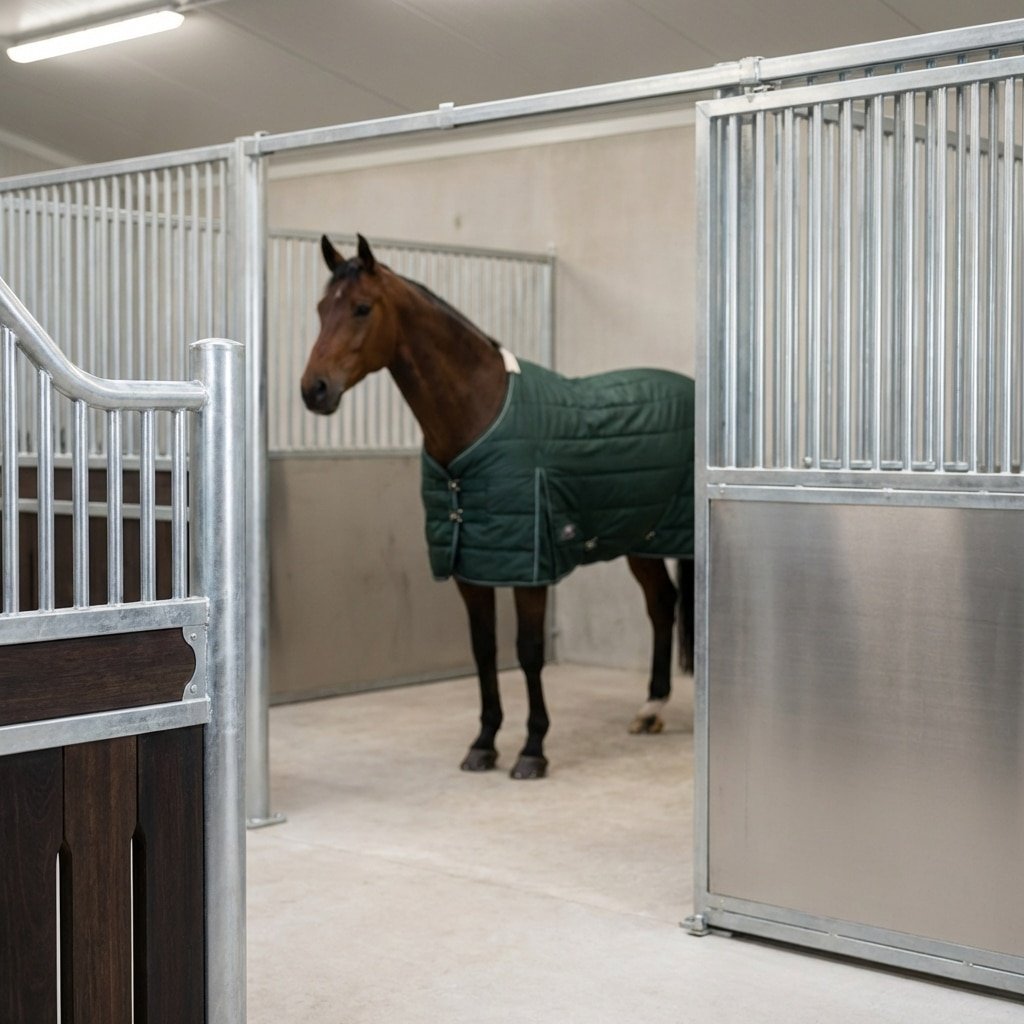
The $200 Mistake: Shredded Winter Turnout Blankets
Winter blankets often fail due to sharp weld burrs, not just horse behavior. Hot-dip galvanization seals abrasive edges, creating a smooth surface that protects fabric investments.
Hidden Hazards: Why 1200D Ripstop Fails Against Rough Welds
Horse owners frequently blame the durability of their blankets when they find rips, but the fault often lies with the stable manufacturing. While “Ripstop” technology and heavy-duty 1200D or 1680D nylon effectively resist teeth and hooves, they cannot withstand constant friction against serrated steel edges. The primary culprit is the “pre-galvanized” manufacturing method used by budget competitors.
In this process, factories weld tubes that are already galvanized. The intense heat of the welding arc burns away the zinc coating at the joint, leaving behind hard, jagged slag and sharp burrs. Unless the manufacturer performs labor-intensive manual grinding—which cheap production lines skip—these joints act like saw blades. When a bored horse rubs its chest against the stall front, these microscopic steel teeth catch the fabric fibers. Over a single night of repetitive movement, a rough weld will saw through even the most expensive turnout gear.
The Snag-Free Finish: Hot-Dip Galvanization After Fabrication
DB Stable eliminates the risk of fabric destruction through our specific manufacturing sequence: Hot-Dip Galvanization After Fabrication. Unlike competitors who assemble pre-coated materials, we construct the entire door profile from raw black steel first. Once the welding is complete, we submerge the entire unit into a bath of molten zinc at 450°C.
- Versiegelte Kanten: The molten zinc flows over every weld seam, encapsulating sharp burrs and slag under a thick, protective layer.
- Heavy Coating: We achieve a zinc thickness exceeding 70 Mikrometer auf Schläuchen und 85 Mikrometer on structural parts (per ISO 1461 standards).
- Smooth Surface: This process creates a self-healing, tactile finish that allows blanket fabric to glide over connections rather than snagging.
This engineering choice does more than prevent rust; it protects the end-user’s operational budget by extending the lifespan of their horse clothing.
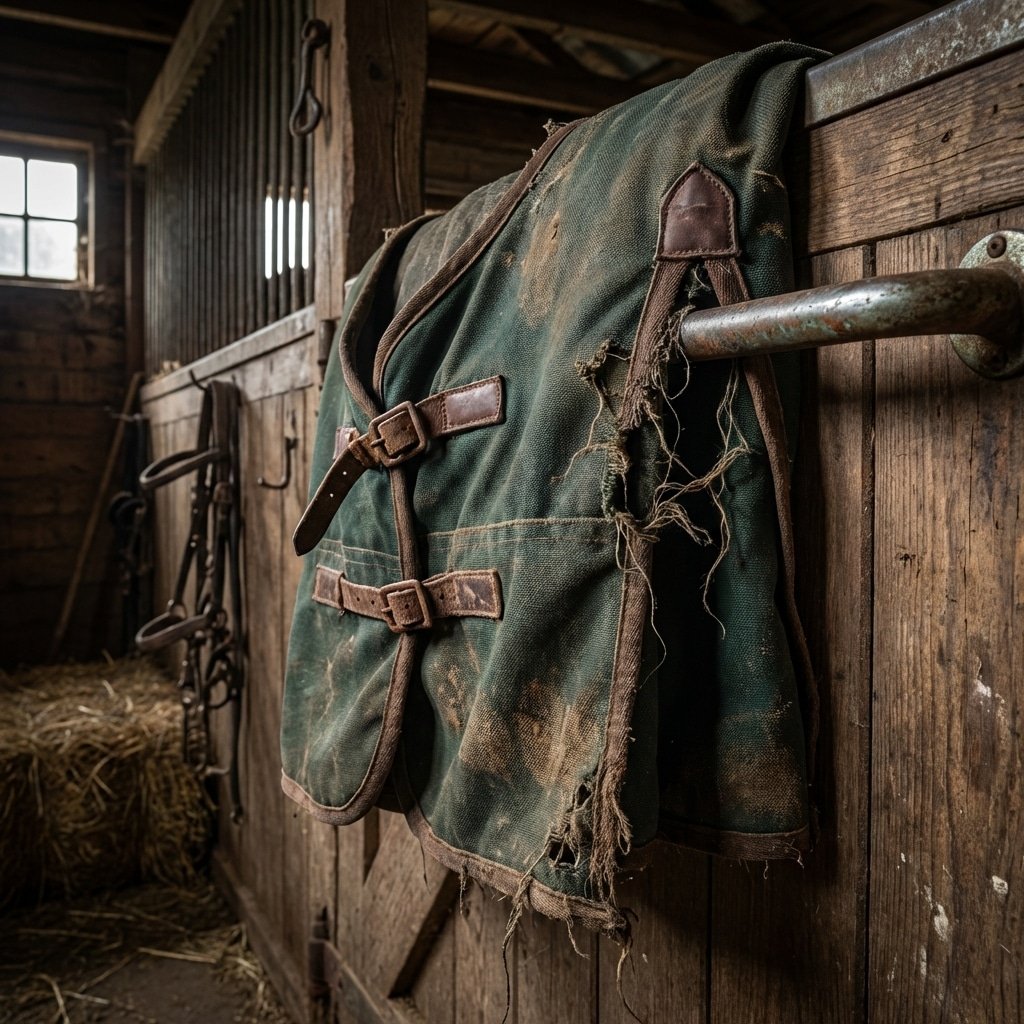
The Reach Zone: How Far a Horse Lips Through the Grill
A horse’s prehensile lips can extend 150mm through standard 50mm safety bars, making the upper grill zone mechanically unsafe for soft fabric storage.
The Mechanics of Prehensile Lips: How Horses Bypass Standard Bars
Standard stable bars effectively stop a horse from getting their head stuck, but they are not hermetic seals. A horse possesses highly dexterous, prehensile lips capable of complex manipulation. This biological tool allows them to investigate and grab objects well beyond the steel boundary of the stall front, effectively bypassing the visual safety of the grill.
- The Reach Radius: Horses can extend their lips 100mm to 150mm (4-6 inches) beyond the grill plane.
- Fabric Vulnerability: Soft fabrics like winter turnout blankets compress easily, allowing them to be snagged and pulled through narrow gaps.
- Destruction Mechanism: Once the fabric is pulled inside the stall, the horse uses its teeth to tear and shred the material.
The Open Top Grill Configuration: Mapping the Vulnerable Zone
In our DB Stable Economy and Professional Series, the Open Top Grill is engineered for “Stack Effect Ventilation” and necessary socialization. While the standard bar spacing (typically 50mm to 70mm) is the industry safety standard for preventing head entrapment, it creates a specific “Reach Zone” that facility managers must recognize. The upper half of the stable front is technically a high-risk environment for any soft storage.
- Ventilation vs. Protection: The open grill design prioritizes airflow but inherently allows lip access.
- The Safe Zone: Die Solid Infill lower half (featuring our kick-proof HDPE or Bamboo) provides the only physical barrier against chewing.
- Mounting Protocol: To prevent destruction, storage solutions for soft items must be mounted exclusively on the solid lower section, below the grill line.
Engineered Modular Stables With 20-Year Durability

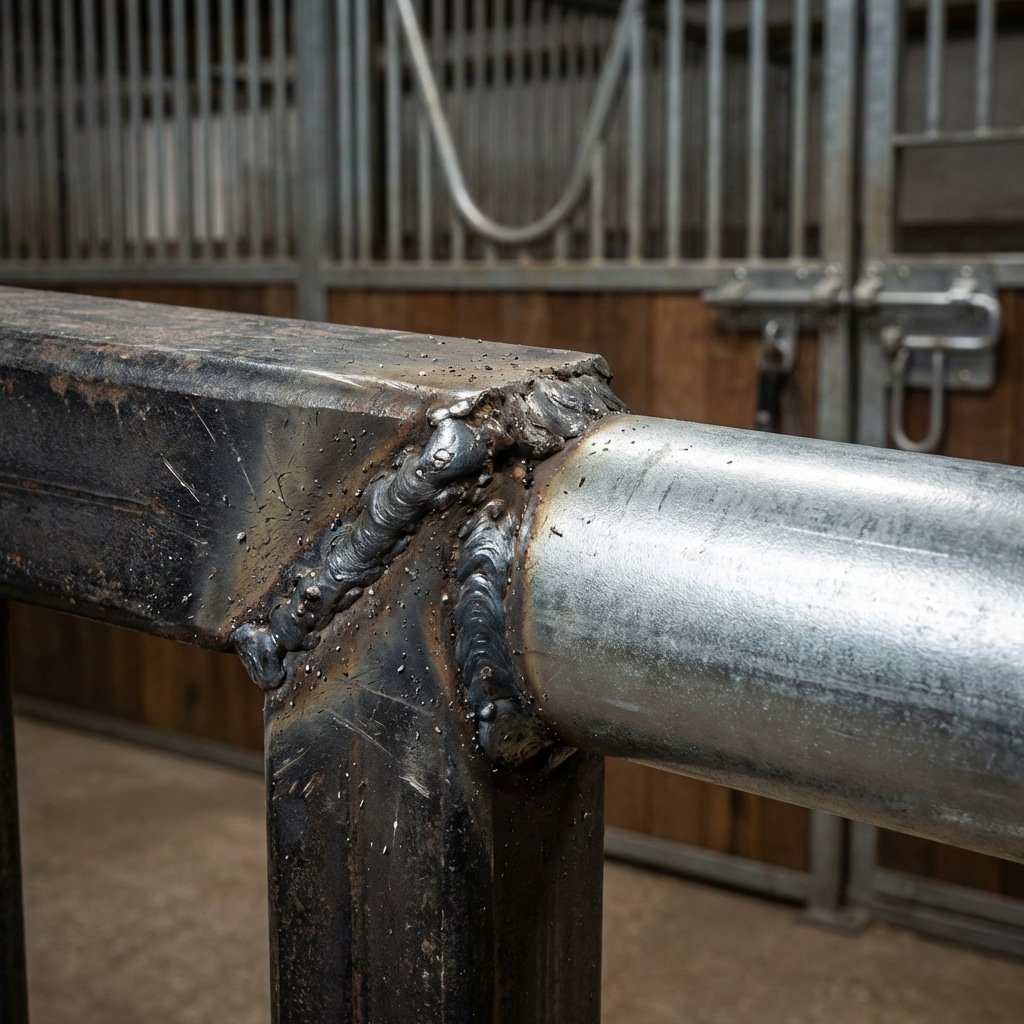
Mounting DB Blanket Bars on the Solid Lower Half
Mounting bars on the solid lower half keeps textiles out of the “Reach Zone.” DB Stable’s 32mm infill boards anchor hardware securely without the need for extra backing.
| Mounting Zone | Lip Reach Risk | Structural Requirement |
|---|---|---|
| Upper Grill (Standard) | High. Horses can pull fabric through bars. | Requires welding or clamp brackets. |
| Solid Lower Half | Zero. Textiles sit below the visual/physical gap. | Direct screw retention into 28mm+ board. |
The Vertical Safety Gap: Positioning Below the Grill
Most blanket damage happens because we underestimate a bored horse’s determination. We call the area immediately reachable through the upper grill “The Reach Zone.” When you mount a blanket bar on the top rail or the grill itself, you essentially serve the expensive turnout rug as a chew toy. The horse can extend its upper lip through the bars, grab the fabric, and pull it into the stall. Once the fabric is inside, the shredding begins.
The geometric fix is simple: drop the mounting point. By securing the bar to the solid lower half of the stable front, you create a vertical safety gap. The blanket hangs entirely against the solid surface, physically separated from the open bars above. This eliminates the “grab and pull” leverage point. Even if a horse is bored, they cannot articulate their neck and lips downward through the bars at the extreme angle required to snag the material.
Securing to 32mm Infill with 304 Stainless Hardware
Moving the hardware lower requires a solid substrate. Cheap economy stables often use thin 12mm plywood or sheet metal skins that cannot hold a screw under load. If you mount a heavy winter turnout on those surfaces, the screws will rip out. DB Stable panels are engineered differently, using high-density infill materials specifically designed to hold structural fasteners.
- High-Density HDPE (28mm-32mm): Our UV-stabilized plastic boards are solid, not hollow. They bite into the screw threads, allowing you to mount bars directly without backing plates.
- Bamboo (28mm-38mm): With a Janka hardness over 3000 lbf, this material is three times harder than oak. Pre-drilling is required, but the pull-out strength is exceptional.
- 304 Stainless Steel Hardware: We strictly use the included 304-grade kit. Lower mounting points are closer to bedding dust and ammonia levels; standard zinc-plated screws will corrode quickly in this zone.
This setup relies on the density of the board. Because our profiles are 28mm to 38mm thick, the screws have enough depth to anchor firmly, supporting the 20+ lbs of a wet winter blanket without sagging.
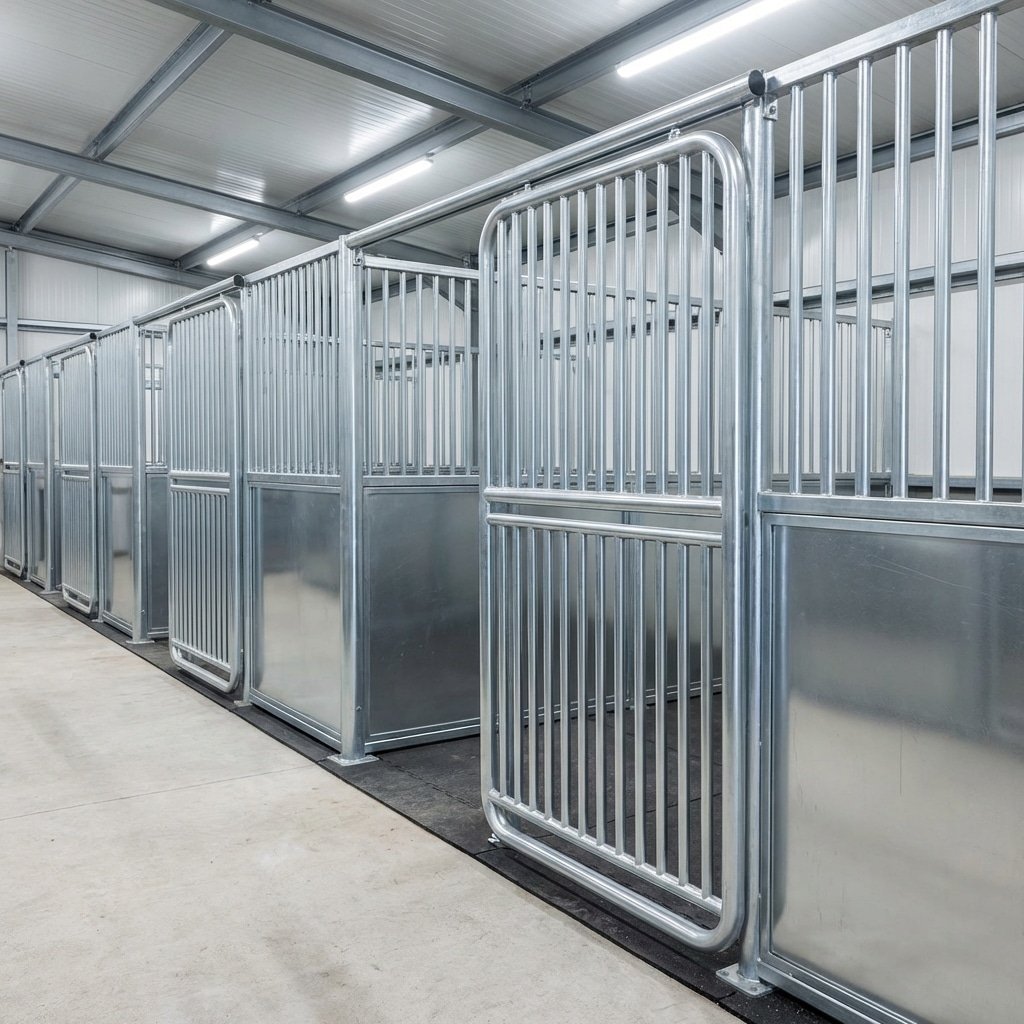
Factory-Welded Solutions for the Sliding Door
Factory-welding black steel frames before galvanization creates a unified structure that resists sagging and seals internal joints against rust, outlasting bolt-together kits by decades.
Structural Rigidity and Door Alignment
Bolt-together door kits rely on friction and fasteners to hold their shape. Over time, gravity and the dynamic stress of daily operation cause these fasteners to loosen. This leads to the “parallelogram effect,” where the door frame sags out of square. A sagging door drags along the bottom guide or jams inside the track, forcing staff to lift and drag the unit to close it.
We eliminate this failure point by welding the door frame into a single, permanent unit. A welded frame maintains absolute squareness regardless of cycle count. This structural rigidity is non-negotiable for the smooth operation of our Hidden Track System, which requires precise alignment to function correctly. The welded joints also withstand direct impact from horses—forces that often shear the bolts on DIY assembly kits.
The “Hot-Dip After Fabrication” Advantage
Many competitors cut costs by using pre-galvanized tubing. They weld these tubes together, which burns the zinc coating off at the joint, leaving the most critical structural points exposed to rust immediately. Touch-up paint on these burned welds is a temporary cosmetic fix, not a solution.
DB Stable uses a “Hot-Dip After Fabrication” process. We fabricate the entire door frame from raw black steel (Q235B or Q345B) first. Only after all welding is complete do we submerge the entire unit into the zinc bath. This process allows liquid zinc to penetrate and seal every seam, weld, and crevice.
- Process Sequence: Weld raw steel first, then galvanize (never reverse).
- Zink Dicke: Guarantees an average coating > 70 microns.
- Standard Compliance: Strictly adheres to BS EN ISO 1461.
- Material Base: Q235B Structural Steel or Q345B for cold climates.
Häufig gestellte Fragen
How can I stop my horse from chewing blankets in the stall?
Address the root cause—usually boredom or gastric stress—by increasing hay access. For immediate hardware solutions, use physical barriers like closed-front blankets or bibs that eliminate the graspable straps horses love to tear. Chemical deterrents like herbal sprays or mild soap applied to the chest area discourage gnawing, but these are temporary fixes compared to adjusting the management routine.
Where is the safest place to mount a blanket bar?
Install racks in a dedicated tack room or high on walls, strictly beyond the horse’s reach zone. If you must mount on a stall front, position the bar against the solid lower partition (such as our 28mm HDPE or Bamboo infill) rather than the open grill. This prevents horses from pulling fabric through the bars, which shreds expensive gear and creates entanglement risks.
What features make a blanket rack safe for stable use?
Select heavy-duty steel construction (specifically Q235B structural steel or better) that resists bending under the weight of wet winter rugs. The design must secure dangling straps to prevent leg entanglement. Verify that the mounting hardware anchors firmly into wall studs or solid infill boards using 304 stainless steel fixtures to prevent rust and structural failure.
Abschließende Überlegungen
Your reputation as a premium supplier depends on delivering infrastructure that protects, rather than destroys, your client’s assets. DB Stable’s ISO 1461 Hot-Dip Galvanization ensures a permanently smooth finish, eliminating the sharp weld burrs that ruin expensive turnouts. Pairing this with our high-density solid infill gives your customers the structural integrity needed to mount hardware safely below the hazard zone.
Eliminate the risk of inventory failure by sourcing from a factory that prioritizes engineering over shortcuts. Contact our team to discuss a sample shipment of our Professional Series fronts, specifically designed for safe, snag-free operations. We are ready to validate our manufacturing quality against any competitor currently in your catalog.

 German
  English
  Spanish
  French
  Arabic
0 Kommentare