


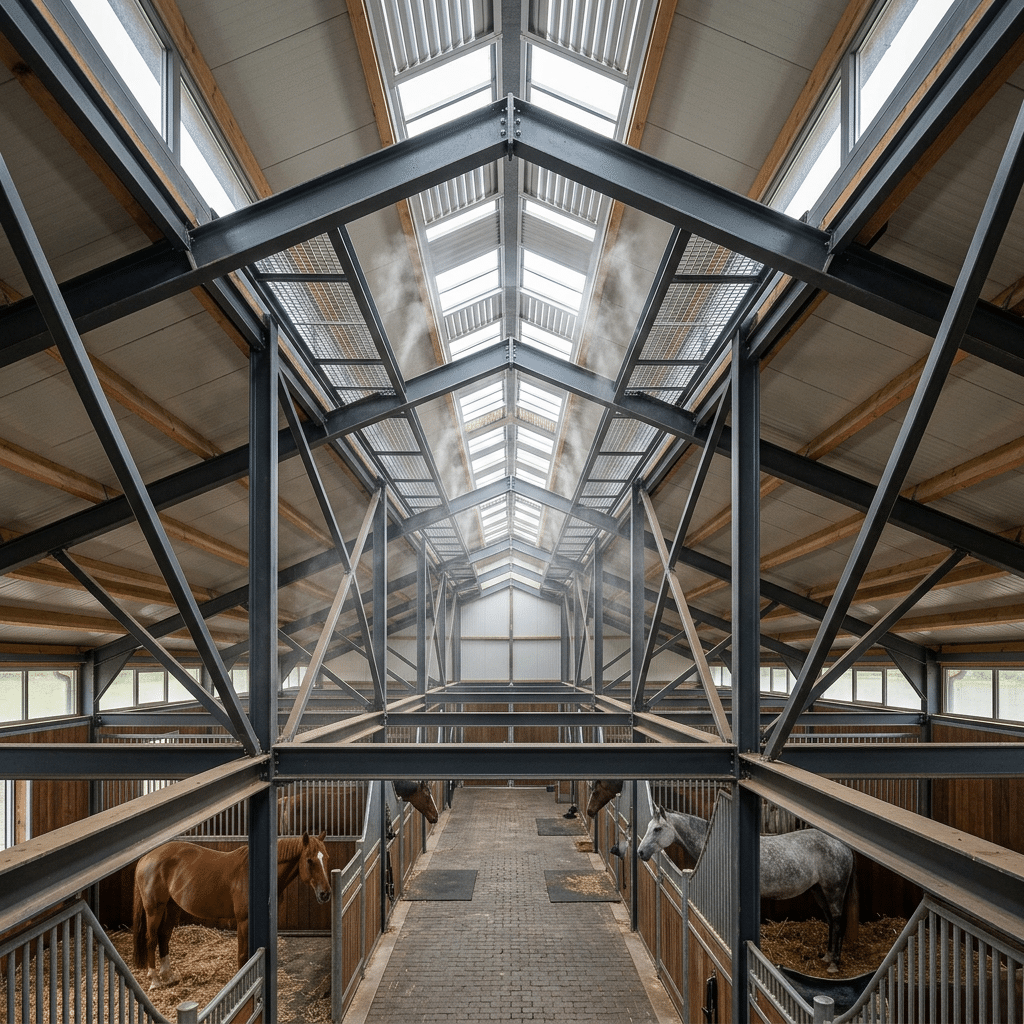
Die Anschaffung wirklich wasserdichter Tierarztboxen ist der wichtigste Schutz vor Verstößen gegen die Biosicherheit und vorzeitigem Verfall der Bausubstanz. Die Verwendung poröser Materialien birgt inakzeptable Risiken für die Patientensicherheit und setzt klinische Einrichtungen kostspieligen Haftungsrisiken sowie Reputationsschäden durch Kreuzkontaminationen oder den Zusammenbruch von Geräten aus.
Diese Analyse vergleicht Hersteller anhand der Norm BS EN ISO 1461 für das Feuerverzinken. Wir bewerten Lieferanten hinsichtlich der technischen Qualität ihrer porenfreien HDPE-Füllung und ihrer Produktionskapazität, um sicherzustellen, dass Sie einen Partner finden, der strenge veterinärmedizinische Vorschriften erfüllt.
Robuste, wetterfeste Ställe für Profis.

Warum Holz in modernen Pferdekliniken verboten ist
Holz wird in klinischen Pferdeeinrichtungen aufgrund zweier wesentlicher Mängel nicht mehr verwendet: Biosicherheit und Sicherheit. Seine poröse Oberfläche nimmt Feuchtigkeit und Krankheitserreger auf, wodurch eine vollständige Desinfektion unmöglich ist. Mit der Zeit verrottet es und splittert, was eine bauliche Gefahr für sich erholende Pferde darstellt.
Das Biosicherheitsrisiko poröser Oberflächen
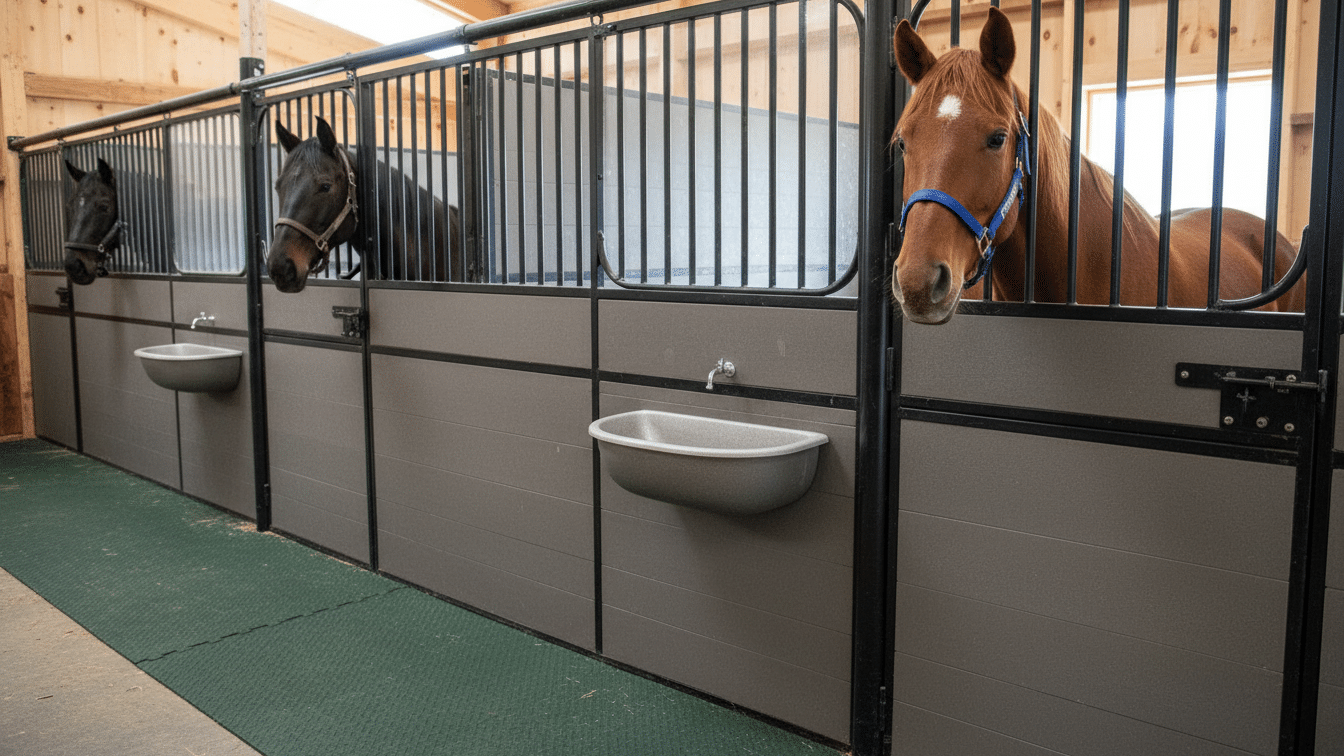
Herkömmliche Holzplanken wirken wie ein Schwamm und nehmen Feuchtigkeit, Blut und andere biologische Verunreinigungen auf. Dadurch entsteht ein idealer Nährboden für Bakterien und Viren, die durch eine oberflächliche Reinigung nicht beseitigt werden können. In einer klinischen Umgebung wie einer Isolationsstation oder einer postoperativen Aufwachstation stellt dies ein inakzeptables Risiko für Kreuzkontaminationen dar. Moderne Standards verlangen porenfreie Materialien. Unsere UV-stabilisierte HDPE-Füllung bietet eine vollständig wasserdichte und glatte Oberfläche, die eine wirksame Desinfektion ermöglicht, die strengen veterinärmedizinischen Hygieneprotokollen entspricht. Dieses “wartungsfreie” Material sorgt dafür, dass sich Krankheitserreger nirgendwo verstecken können.
Konstruktionsversagen und Patientensicherheit
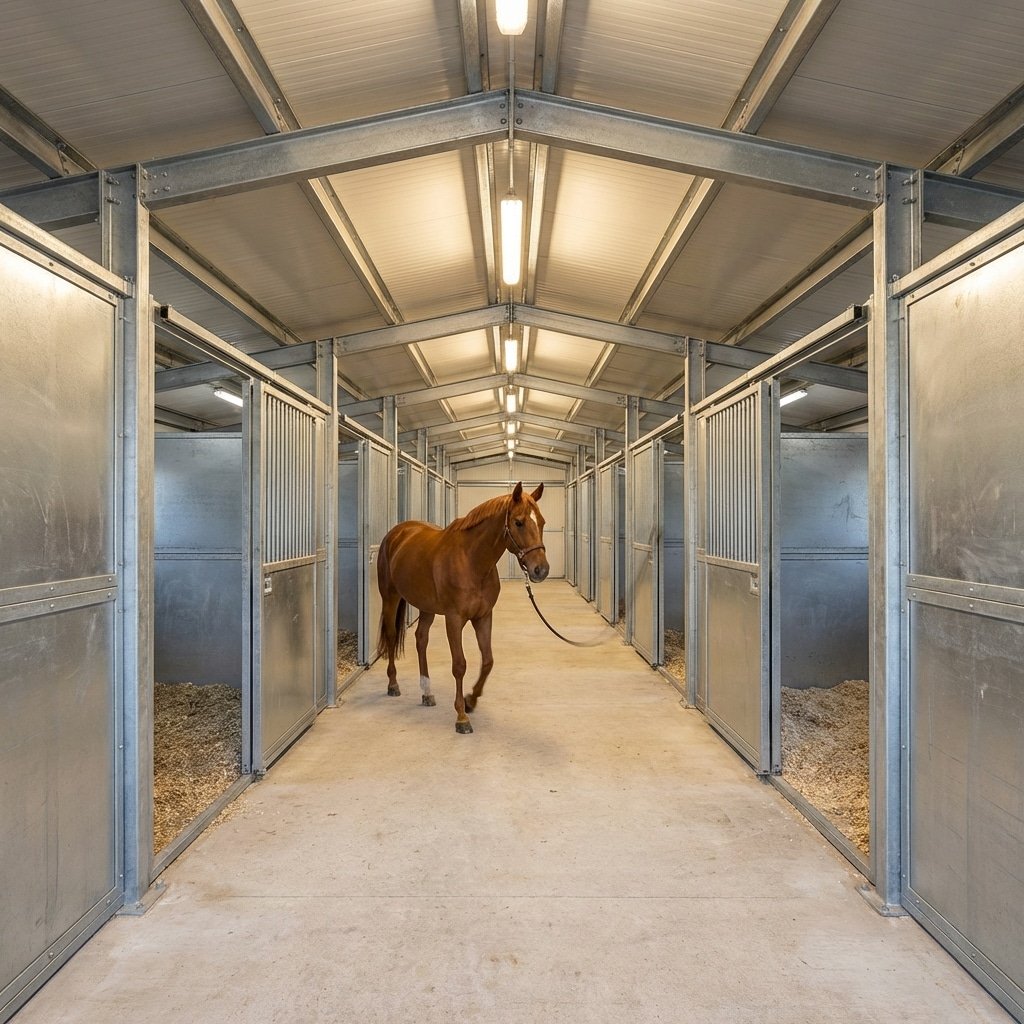
Holz wird strukturell angegriffen, wenn es wiederholt Hochdruckreinigung und sauren Tierabfällen ausgesetzt ist. Es verzieht sich, verrottet und splittert, wodurch die Stabilität der Box beeinträchtigt wird. Ein Tritt eines gestressten oder sich erholenden Pferdes kann eine geschwächte Holzplatte leicht zerbrechen, wodurch scharfe Kanten entstehen und eine ernsthafte Fluchtgefahr entsteht. Wir bauen unsere Stallsysteme mit feuerverzinkten Stahlrahmen und stoßdämpfender HDPE-Füllung. Diese Kombination sorgt für eine langlebige, trittfeste Barriere, die den Patienten sicher im Stall hält und Verletzungen durch Splitter oder Einsturz der Konstruktion verhindert – selbst unter Belastung.
Das Porositätsproblem: Ein Vergleich zwischen HDPE, Gummi und Holz
Beim Bau von Ställen, bei denen Hygiene und Langlebigkeit im Vordergrund stehen, ist die Porosität des Materials ein entscheidender Faktor. Nicht poröse Materialien wie hochdichtes Polyethylen (HDPE) verhindern das Eindringen von Feuchtigkeit und Bakterien und lassen sich daher leicht desinfizieren. Poröse Materialien wie Holz nehmen Flüssigkeiten auf, was zu Fäulnis, Bakterienwachstum und langfristig höheren Instandhaltungskosten führt.
Warum nicht poröse Materialien der klinische Standard sind
Die harte, synthetische HDPE-Schale ermöglicht zudem eine intensive Desinfektion, ohne dass das Material dadurch beeinträchtigt wird. Unsere 28 bis 32 mm dicken HDPE-Planken sind eine echte “wartungsfreie” Lösung und bieten eine langlebige und hygienische Bodenbelagslösung für Einrichtungen, die strenge Reinigungsvorschriften erfordern, ohne dass dabei Kosten für die Instandhaltung anfallen.
Die langfristigen Risiken und Kosten von porösem Holz
Die natürlichen Fasern von Holz nehmen von Natur aus Feuchtigkeit auf. Mit der Zeit führt diese ständige Einwirkung zu Fäulnis, Verformungen und einem Verlust der strukturellen Festigkeit. Aufgrund seiner porösen Beschaffenheit sammeln sich zudem Bakterien und verschüttetes Getreide an, was die Sauberhaltung und Schädlingsbekämpfung erschwert und die Gesundheit der Tiere gefährden kann.
Holz hat zwar ein traditionelles Aussehen, muss jedoch regelmäßig versiegelt und gepflegt werden, um Fäulnis zu verzögern. Eine typische Holzbox hält bei sorgfältiger Pflege etwa 10 bis 15 Jahre. Im Gegensatz dazu bietet unser HDPE eine Lebensdauer von über 25 Jahren, ohne dass chemische Behandlungen erforderlich sind. Für jeden Großbetrieb ist HDPE daher eine langlebigere und kostengünstigere Investition, die Ihre Anlage und Ihren Gewinn schützt.
Der 85-Mikron-Feuerverzinkungsstandard von DB für Waschanlagen
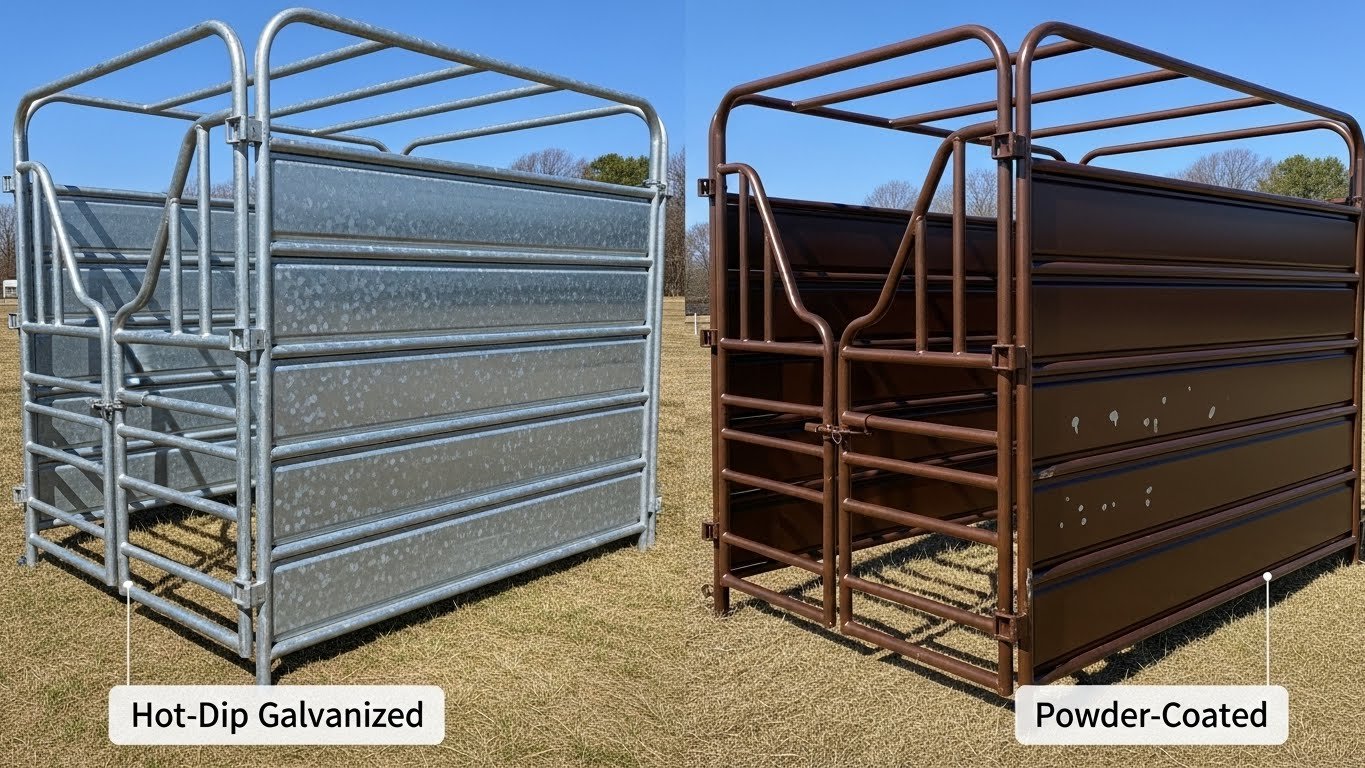
Unser Standard für die 85-Mikrometer-Feuerverzinkung gewährleistet, dass jedes Stahlbauteil der Waschanlage eine dicke, schützende Zinkschicht erhält, die der Norm BS EN ISO 1461 entspricht. Wir tragen diese Beschichtung nach Abschluss aller Fertigungs- und Schweißarbeiten auf und schaffen so eine nahtlose Barriere, die langfristige strukturelle Integrität und Korrosionsbeständigkeit selbst in den rauesten Umgebungen mit hoher Luftfeuchtigkeit garantiert.
Die 85-Mikrometer-Schichtdicke verstehen
Die Angabe von 85 Mikrometern (μm) bezieht sich auf die minimale durchschnittliche Dicke der Zinkschutzschicht, die auf alle Stahlbauteile mit einer Dicke von mehr als 6 mm aufgebracht wird. Dies entspricht der Norm BS EN ISO 1461, einem Qualitätsmaßstab, der einen robusten physikalischen Schutz vor Korrosion unter anspruchsvollen Bedingungen gewährleistet.
Diesen robusten Schutz erreichen wir durch unser Kernverfahren: “Feuerverzinkung nach der Fertigung”. Zunächst fertigen wir die gesamte Waschstraßenverkleidung an und führen alle Schnitte und Schweißnähte am Rohstahl durch. Anschließend tauchen wir die fertige Konstruktion in geschmolzenes Zink ein. Dieser Prozess garantiert, dass jede Kante, jede Fuge und jede Schweißnaht vollständig versiegelt ist, wodurch die Schwachstellen beseitigt werden, an denen bei minderwertigen, vorverzinkten Rohren typischerweise Rost entsteht.
Warum dieser Standard für die Langlebigkeit von Waschanlagen entscheidend ist
Waschplätze sind einer stark korrosiven Umgebung ausgesetzt, da sie ständig Wasser, Desinfektionsmitteln und Tierkot ausgesetzt sind. Eine dicke, 85 Mikrometer starke Zinkbeschichtung bietet langfristigen Opferschutz für den Stahlrahmen aus Q235B. Das bedeutet, dass selbst bei Kratzern an der Oberfläche zuerst die Zinkschicht korrodiert und so den darunterliegenden Stahl aktiv vor Rost schützt.
Diese Korrosionsbeständigkeit gewährleistet die strukturelle Integrität und Sicherheit der Waschanlage über viele Jahre hinweg. Für unsere B2B-Partner bedeutet dies ein zuverlässiges Produkt, das den Bedarf an kostspieligen Reparaturen oder Austauschmaßnahmen drastisch reduziert und so sowohl ihre Investition als auch ihren Ruf für Qualität schützt.
Gipsfeste Spalten für Aufwachräume
Pferde, die sich von einer Narkose erholen, sind einem hohen Verletzungsrisiko ausgesetzt, wenn sie sich wälzen und dabei ein Bein unter einer Boxentrennwand einklemmen. Unser „Cast-Proof“-Design mindert diese Gefahr durch einen minimalen Bodenabstand von 50 mm – zu klein, als dass ein Huf hindurchpassen könnte –, um eine sicherere Umgebung nach der Operation zu gewährleisten.
Die Gefahren des Rollens in Erholungsphasen
Pferde, die gerade aus der Narkose aufwachen, neigen dazu, sich unkoordiniert zu wälzen. Dieses häufige Verhalten birgt die ernsthafte Gefahr, dass sich ein Bein in der Lücke unter einer Boxentrennwand verfängt. In einer handelsüblichen Lücke kann sich ein Huf leicht verfangen, was zu Panik, schweren neuen Verletzungen und erheblichen Rückschlägen im postoperativen Heilungsprozess führen kann.
Die technische Lösung für eine sichere Bergung
Ein ‘Cast-Proof-Design’ ist ein unverzichtbares Sicherheitsmerkmal für Erholungsbereiche. Wir erreichen dies, indem wir den Spalt am Boden auf etwa 50 mm (2 Zoll) minimieren. Dieser präzise Spalt ist zu schmal, als dass ein Huf hindurchrutschen könnte, wodurch das Hauptrisiko, dass sich ein Pferd während der Erholungsphase verrenkt, wirksam beseitigt wird.
Wir integrieren diesen Lückenstandard in unsere Schwer-
Stahlrahmen aus Q235B-Stahl. Dies bietet schutzbedürftigen Tieren eine sichere Umgebung, wenn sie diese am dringendsten benötigen, und schützt sowohl das Pferd als auch den Ruf der Einrichtung hinsichtlich hoher Tierschutzstandards.
Abschließende Überlegungen
Die Entscheidung für Ställe aus porösem Holz oder vorverzinktem Stahl birgt ein inakzeptables Risiko für Verstöße gegen die Biosicherheit und für Fäulnisbefall der Konstruktion. Unser System – basierend auf der Heißverzinkung nach ISO 1461 und porositätsfreiem HDPE – ist nicht ohne Grund der klinische Standard. Es schützt das Tier, die Investition der Einrichtung und Ihren beruflichen Ruf.
Der nächste Schritt besteht darin, sich selbst von unserer technischen Qualität zu überzeugen. Wir empfehlen eine kleine Probebestellung, damit Sie die Verarbeitung und Haltbarkeit aus erster Hand beurteilen können. Kontaktieren Sie unser Team, um ein detailliertes Angebot zu erhalten oder die OEM-Spezifikationen für Ihr nächstes Projekt zu besprechen.
Häufig gestellte Fragen
Welches Material eignet sich am besten für eine Pferdewaschbox?
Für Waschplätze empfehlen wir eine Kombination aus einem Stahlrahmen, der *nach* der Fertigung feuerverzinkt wird, und porenfreien HDPE-Füllwänden. Unser Verzinkungsverfahren entspricht der Norm ISO 1461 und gewährleistet maximalen Rostschutz unter feuchten Bedingungen, während die wasserfesten HDPE-Paneele das Bakterienwachstum verhindern und leicht zu reinigen sind.
Sind Stallwände aus HDPE wasserdicht?
Ja, unsere Platten aus hochdichtem Polyethylen (HDPE) sind wasserdicht und porenfrei. Sie nehmen keine Feuchtigkeit auf, was bedeutet, dass sie nicht aufquellen, verrotten oder Schimmel bilden. Das macht sie zu einer wirklich wartungsfreien Einfülllösung, die sich perfekt für jede Pferdeanlage eignet, insbesondere in feuchten Umgebungen.
Welche Ställe eignen sich am besten für Pferdekliniken?
Unsere Economy-Serie wurde speziell für klinische Anwendungen und Quarantänezwecke entwickelt. Diese Boxen verfügen über vollständig feuerverzinkte Stahlrahmen und eine porenfreie HDPE-Auskleidung. Diese Kombination sorgt für eine langlebige, leicht zu desinfizierende Oberfläche, die die strengen Hygienevorschriften erfüllt, die für die Genesung der Patienten und die Biosicherheit in tierärztlichen Einrichtungen unerlässlich sind.
Wie desinfiziert man Isolationsboxen für Pferde?
Um unsere Ställe zu desinfizieren, entfernen Sie zunächst die gesamte Einstreu und alle organischen Rückstände. Waschen Sie anschließend die nicht porösen Oberflächen aus HDPE und verzinktem Stahl mit einem für den Tierbereich zugelassenen Desinfektionsmittel ab. Die Materialien sind robust genug für eine Hochdruckreinigung. Spülen Sie die Oberflächen stets gründlich mit klarem Wasser ab, um sicherzustellen, dass alle chemischen Rückstände entfernt werden – dies dient der Sicherheit der Tiere.
Zersetzt Bleichmittel verzinkten Stahl?
Längerer Kontakt mit aggressiven Chemikalien kann die Zinkbeschichtung beeinträchtigen. Während die gelegentliche Verwendung einer ordnungsgemäß verdünnten Bleichlösung zur Desinfektion im Allgemeinen unbedenklich ist, müssen Sie die Oberfläche anschließend gründlich mit klarem Wasser abspülen. Dadurch wird verhindert, dass chemische Rückstände auf der Oberfläche verbleiben und die schützende Verzinkungsschicht angreifen.

 German
  English
  Spanish
  French
  Arabic
0 Kommentare