


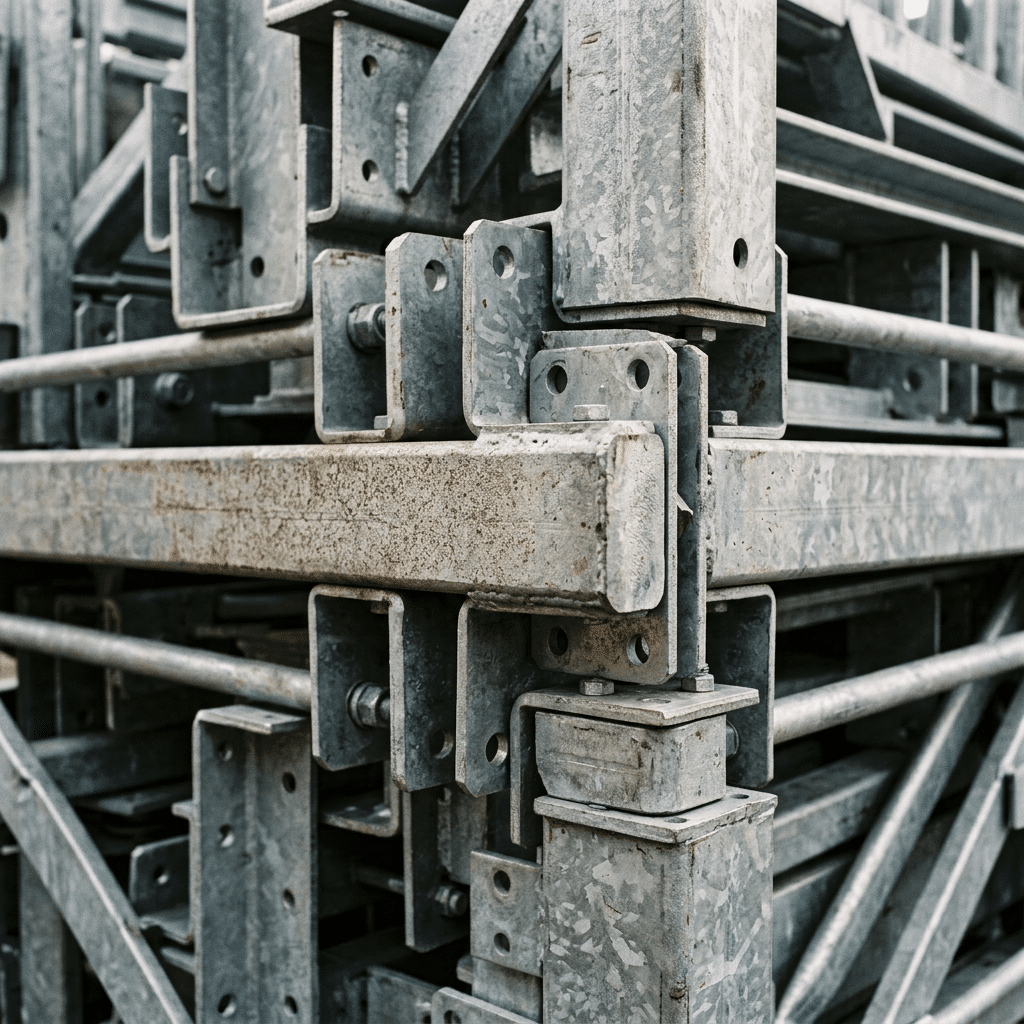
The reliance on stall fans for airflow is a critical liability issue for barn builders and facility managers. Standard fans create a severe fire hazard from dust-clogged motors and circulate airborne particles that damage equine respiratory health. This approach turns a simple cooling attempt into a significant operational risk, leading to potential catastrophic loss and reputational damage.
This analysis contrasts mechanical dependency with architectural engineering. We evaluate barn designs against the ‘Stack Effect Ventilation’ principle, a standard achieved through open-top stall grills. This passive system provides constant air exchange, eliminating the fire risk and dust circulation inherent in running fans 24/7, making it a safer, non-negotiable standard for animal health.
Heat and Dead Air Zones: Diagnosing Poor Barn Layouts
Dead air zones are areas with stagnant air where heat, humidity, and ammonia accumulate. Poor barn layouts with solid partitions or bad roof design cause them, leading to heat stress.
Common Layout Flaws That Trap Stagnant Air
The biggest ventilation problems stem from basic architectural mistakes. When air can’t move naturally at the horse’s level, you create an unhealthy environment. The most common issues are physical barriers that choke off airflow.
- Solid partitions and high walls: Fully solid walls between stalls or high retaining walls are the primary culprits. They block air circulation exactly where the horse lives and breathes, creating isolated pockets of stagnant, humid air.
- Poorly sized inlets and outlets: If a barn can’t breathe, it can’t ventilate. Closed doors, small windows, or improperly sized ridge vents prevent effective air exchange, trapping stale air inside.
- Wide barns with flat roofs: This design is a recipe for trapping heat. Without a decent pitch like a 4/12 roof, warm air has nowhere to go. It pools at the ceiling and creates a massive dead zone instead of naturally rising and exiting through a ridge vent.
The Role of Open-Top Grills in Promoting Airflow
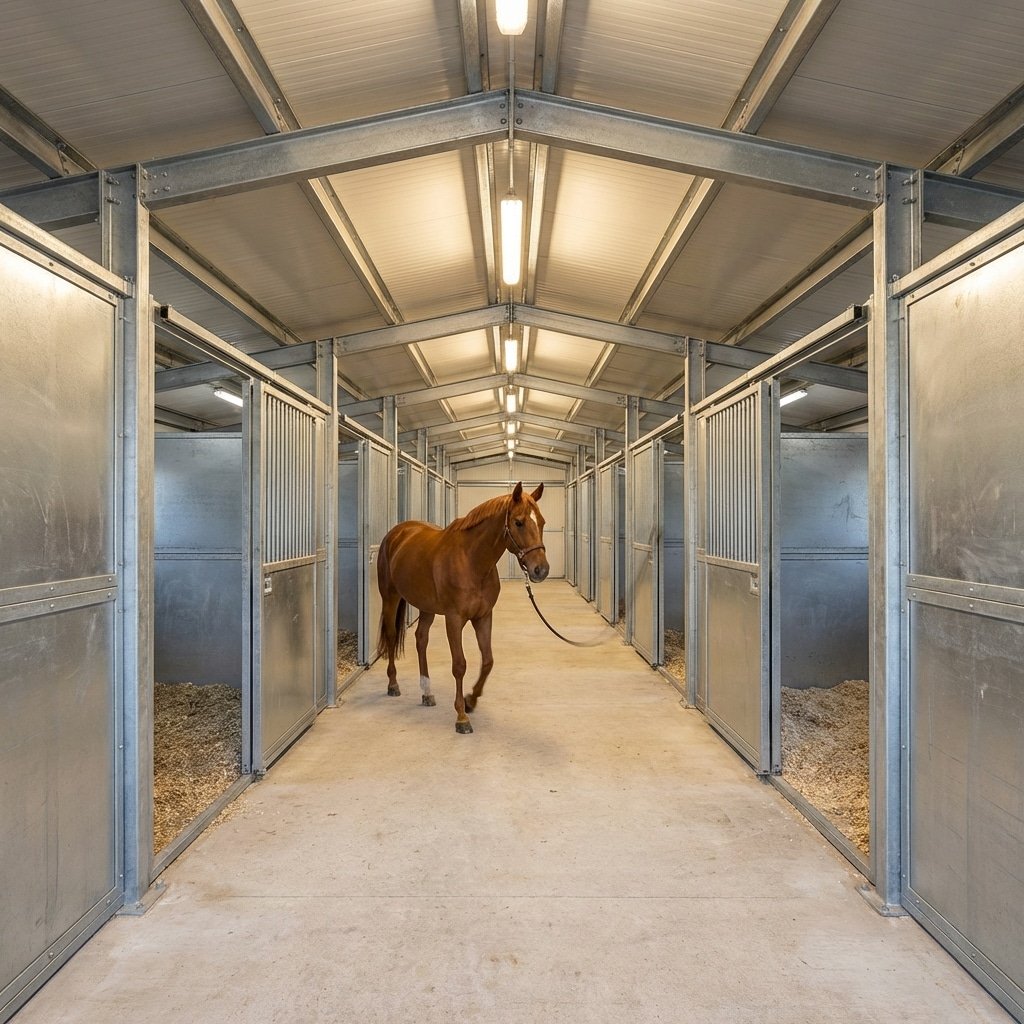
Instead of fighting physics with fans, smart stable design works with it. Open-top grills on stall fronts and partitions are not just for visibility; they are a critical component of a functional ventilation system. This design enables both cross-ventilation along the aisle and vertical air movement, known as “Stack Effect Ventilation.”
The heat and moisture a horse generates naturally rises. The open grills give that warm, stale air a path to escape the stall, move into the higher air volume of the aisle, and exit through roof vents. This movement pulls cooler, fresher air in from lower levels, creating constant, gentle air exchange. It’s a simple system that prevents heat and humidity buildup right inside the stall. That’s why all standard DB Stable systems are built with this open-grill design—it’s a non-negotiable for animal health.
The Danger of Mechanical Fans: Dust Circulation and Fire Hazards
Mechanical fans circulate dust, creating respiratory risks for horses and staff. That same dust builds up on fan motors, insulating them until they overheat and become a major fire hazard.
Airborne Dust and Respiratory Health Risks
Fans don’t just move air; they actively stir up and circulate everything settled on the ground. This includes d
ust, mold spores, and other airborne particles that fill the entire barn. Constant exposure to this contaminated air increases the risk of respiratory illnesses like asthma and COPD for both horses and handlers. The direct airflow can also blow debris straight into an animal’s eyes and throat, causing immediate irritation and potential long-term damage.
The Overlooked Fire Hazard of Dust on Motors
Dust and cobwebs coating a fan’s motor housing act as a blanket, trapping heat and preventing the unit from cooling properly. As the motor overheats, it can easily ignite the flammable dust and hay stuck to it, turning a simple appliance into a fire starter. Our stable designs rely on passive ‘Stack Effect Ventilation’ through open-top grills, creating natural airflow without electrical components. This architectural approach removes the fan motor as an ignition source, making the stable environment safer.
Globally Compliant Stables That Last Decades
Architectural Solutions: Understanding “Stack Effect” Ventilation
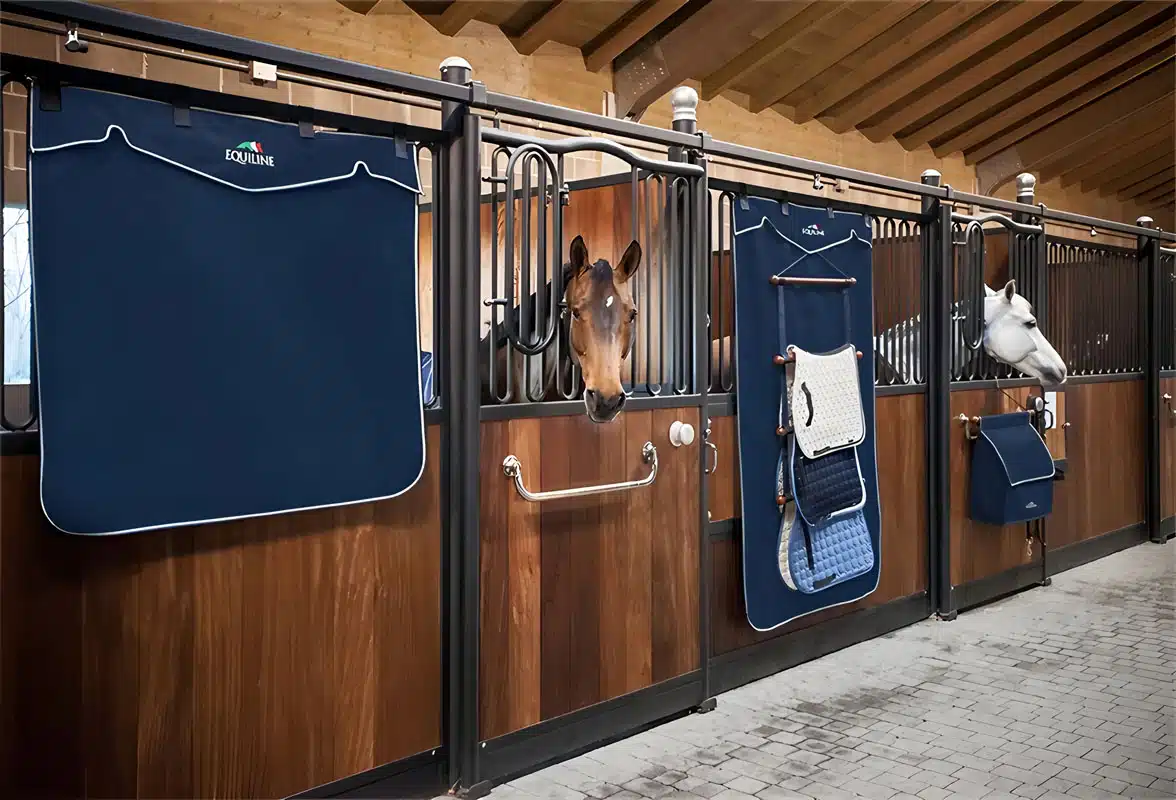
Stack effect ventilation uses open-top stall grills to let warm, stale air rise and escape, naturally pulling in fresh, cool air from below without mechanical systems.
How Natural Buoyancy Drives Air Exchange
The stack effect is a simple process driven by physics. Warm air inside a stable is less dense and lighter than the cooler air outside. This warmer air naturally rises. As it escapes through high-level openings, it creates a subtle pressure difference inside the building. This negative pressure then pulls cooler, denser, fresh air in through lower openings to replace the air that escaped. This creates a continuous, silent cycle of air exchange that operates 24/7 without needing any electricity.
Open-Top Grills as a Ventilation Engine
Our stable front and partition designs are not just for containment; they are part of the barn’s respiratory system. The open-top grill section is the engineered exit point for warm, moist air. This architectural feature intentionally promotes the stack effect right at the source—the horse’s stall. By constantly exhausting ammonia and humid air from the horse’s breathing zone, this design improves respiratory health and reduces bedding moisture. Engineering for natural airflow this way also cuts the reliance on mechanical fans, which can circulate dust and pose fire risks.
The Lungs of the Barn: Open-Top Grills and Half-Mesh Walls
Open-top grills and mesh walls create constant cross-ventilation. This design lets warm, moist air escape, promoting the natural ‘stack effect’ for better air quality and animal health.
| Ventilation Principle | DB Stable Engineering Standard |
|---|---|
| Querlüftung | Open-top grill design is standard on our Economy Series to ensure constant airflow. |
| System Integration | Partitions work with barn eave and ridge vents to drive the natural ‘Stack Effect’. |
| Moisture & Corrosion Resistance | Q235B steel is protected by Hot-Dip Galva nization (ISO 1461) to withstand barn humidity. |
The Principle of Cross-Ventilation in Stall Design
Solid stall walls are a recipe for creating dead air zones. These stagnant pockets trap heat, ammonia, and moisture, which directly impacts a horse’s respiratory health. Open-top stall partitions break this pattern by creating constant cross-ventilation. Think of them as the internal airways of the barn.
This design allows air to move freely between stalls and out into the main aisle. It creates multiple pathways for stale, warm air to escape, preventing condensation on walls and ceilings. This horizontal airflow is a critical component of the overall barn ventilation system. It works with vertical airflow—the ‘Stack Effect’—where warm air rises and exits through ridge and eave vents, pulling fresh, cool air in from below.
DB Stable’s Open-Grill and Mesh Construction
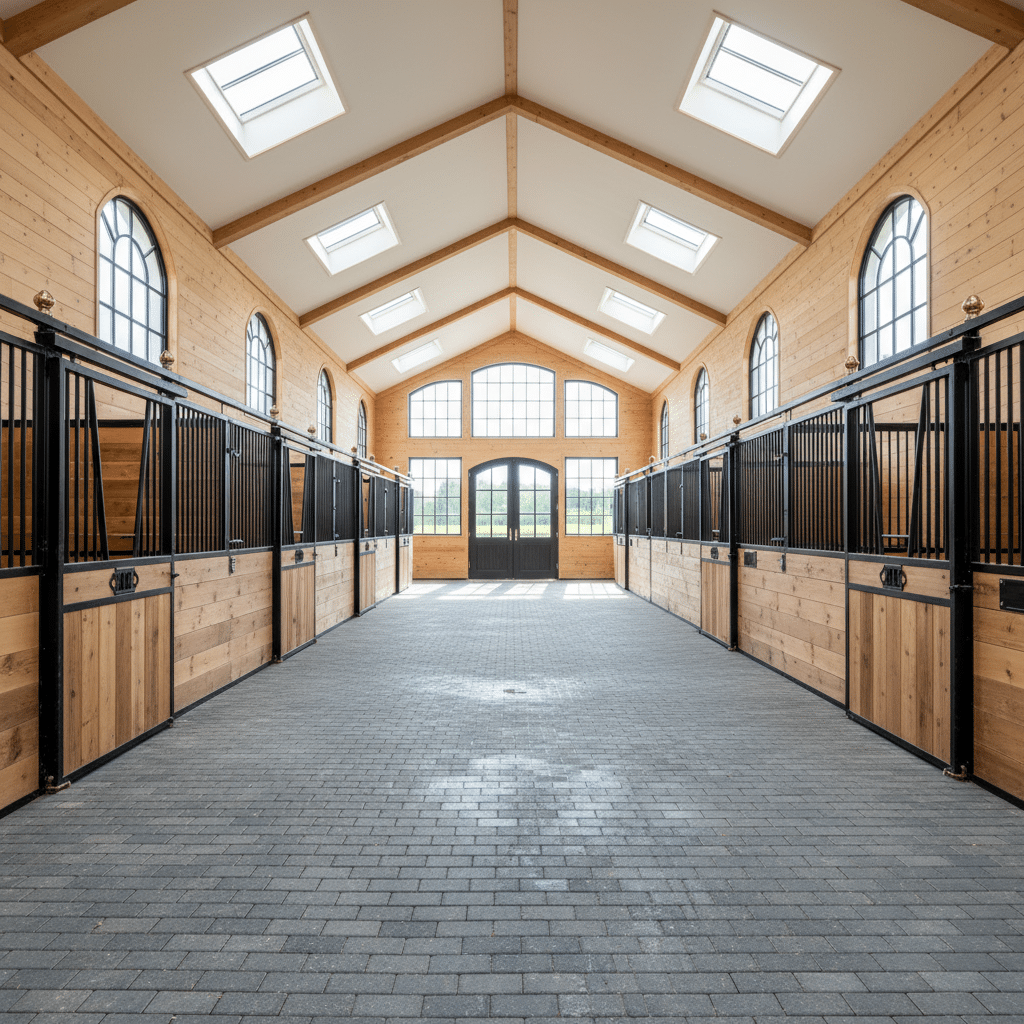
We build this ventilation principle directly into our stable systems. The open-top grill design is a standard feature in our Economy Series, making effective air quality control an accessible baseline, not a luxury upgrade. The entire framework is constructed from Q235B structural steel for the necessary strength and durability.
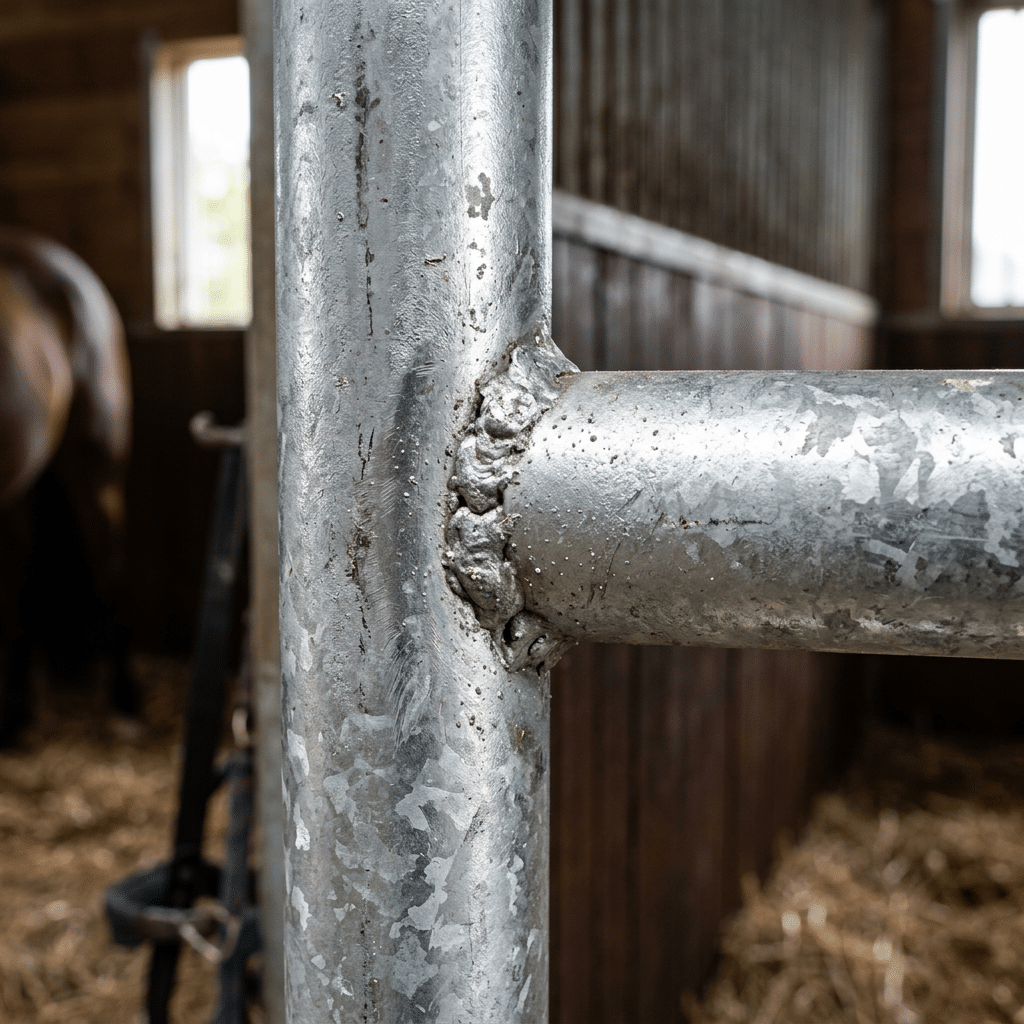
A barn is a high-moisture environment, so corrosion protection is non-negotiable. Every steel component undergoes Hot-Dip Galvanization after all welding and fabrication is complete. This process conforms to the strict ISO 1461 standard, ensuring a thick zinc coating that protects the steel from rust for decades. This is a fundamental difference from cheaper alternatives that weld pre-galvanized tubes, leaving the welds exposed and vulnerable to failure.
Reflecting Radiant Heat: The 0.8mm Colorbond Roof Upgrade
A 0.8mm thick Colorbond roof dramatically reduces radiant heat in a barn. Its surface reflects solar energy, and the commercial-grade thickness ensures durability against harsh weather.
Understanding Solar Absorptance in Roofing
The effectiveness of a roof in a hot climate comes down to a simple metric: Solar Absorptance (SA). This value measures how much solar energy a material soaks up instead of reflecting. A lower SA value means the roof stays cooler and transfers less heat into the building below. This is why material and color selection are critical for managing internal stable temperatures.
- Roofing materials are rated by their Solar Absorptance (SA) to quantify heat absorption.
- Lighter colors naturally have a lower SA value, reflecting more sunlight and staying cooler.
- Modern Colorbond technology is engineered to reflect a high percentage of radiant heat, directly lowering the temperature inside a stable.
The 0.8mm Thickness Standard for Durability
Heat management is only half the battle. DB Stable offers a powder-coated steel roof in a 0.8mm thickness, a specification typically reserved for demanding commercial applications. While standard roofing might be thinner, this increased gauge provides far greater structural integrity and longevity. This is especially important in regions with high UV exposure and extreme weather, like Australia.
This upgrade ensures the roof doesn’t just perform well thermally on day one, but continues to withstand the physical demands of a professional equestrian facility for years. It’s a practical investment in both animal comfort and long-term asset protection.
Häufig gestellte Fragen
Can inexpensive box fans be a fire hazard in a barn?
Yes, they are a significant fire risk. Standard residential box fans have unsealed motors that can clog with dust and hay, causing them to overheat and melt. This can drip molten plastic onto flammable bedding. Their electrical cords are not durable enough for barn conditions, creating further risk. The safest alternative is an agricultural-grade fan with a sealed motor specifically designed for dusty environments.
How can I improve natural ventilation without mechanical systems?
Effective natural ventilation relies on strategic openings. Ridge vents along the roof’s peak allow hot, moist air to escape naturally. Continuous openings at the eaves pull in fresh, cooler air. Placing large doors and windows on opposite sides of the barn creates cross-breezes, which is one of the most effective ways to cool the entire space.
What is ‘stack effect’ ventilation?
The stack effect is a natural process where warm, less dense air rises. In a barn, this means hot air generated by horses and sunlight rises and escapes through high openings, like ridge vents or open-top stall grills. This creates a gentle suction that pulls cooler, fresh air in through lower openings, creating continuous and silent air circulation.
Do open-grill or mesh stall partitions really help with airflow?
Absolutely. Solid partitions block air movement, creating stagnant, stuffy stalls. Half-mesh or open-grill partitions allow air to flow freely between stalls and through the entire barn. This is critical for maintaining consistent temperatures, removing moisture, and ensuring the benefits of your barn’s overall ventilation design reach every horse.
What kind of roof design is best for a barn in a hot climate?
Monitor roofs or raised center aisle designs are ideal for managing heat. The raised central section includes vents or windows that allow trapped heat at the ceiling to escape easily. This design not only improves ventilation but also increases natural light throughout the barn, reducing the need for artificial lighting.
Abschließende Überlegungen
Selling a stall that requires a fan is selling a liability. Our open-grill systems, with Hot-Dip Galvanization after fabrication, are engineered for safe, passive ventilation from day one. This isn’t an upgrade; it’s the standard that protects your client’s assets and prevents costly callbacks.
The next step is to verify the engineering yourself. Request our dealer catalog to review the full product specifications and our flat-pack container loading plans. Our team is ready to configure a trial order to prove the quality firsthand.

 German
  English
  Spanish
  French
  Arabic
0 Kommentare