



Effective quarantine horse stalls are non-negotiable, as a single biosecurity breach can trigger a facility-wide outbreak. Stalls built with porous materials or poor ventilation fail disinfection protocols, leading to operational shutdowns, loss of certification, and catastrophic financial liability.
This analysis benchmarks key stall features against empirical biosecurity requirements. We evaluate the disinfection performance of non-porous HDPE, the structural integrity of hot-dip galvanized Stahlrahmen, and the airflow dynamics of Stack Effect Ventilation to define a true quarantine-ready system.
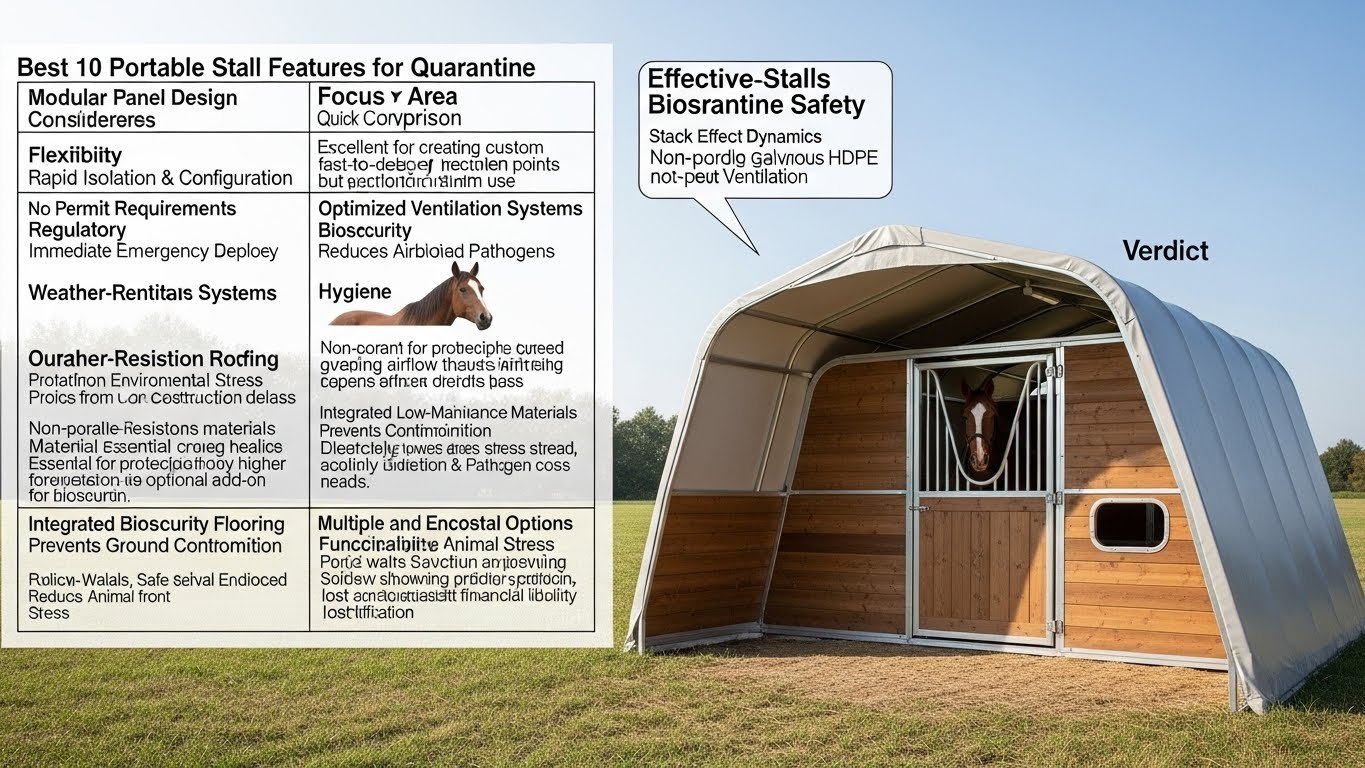
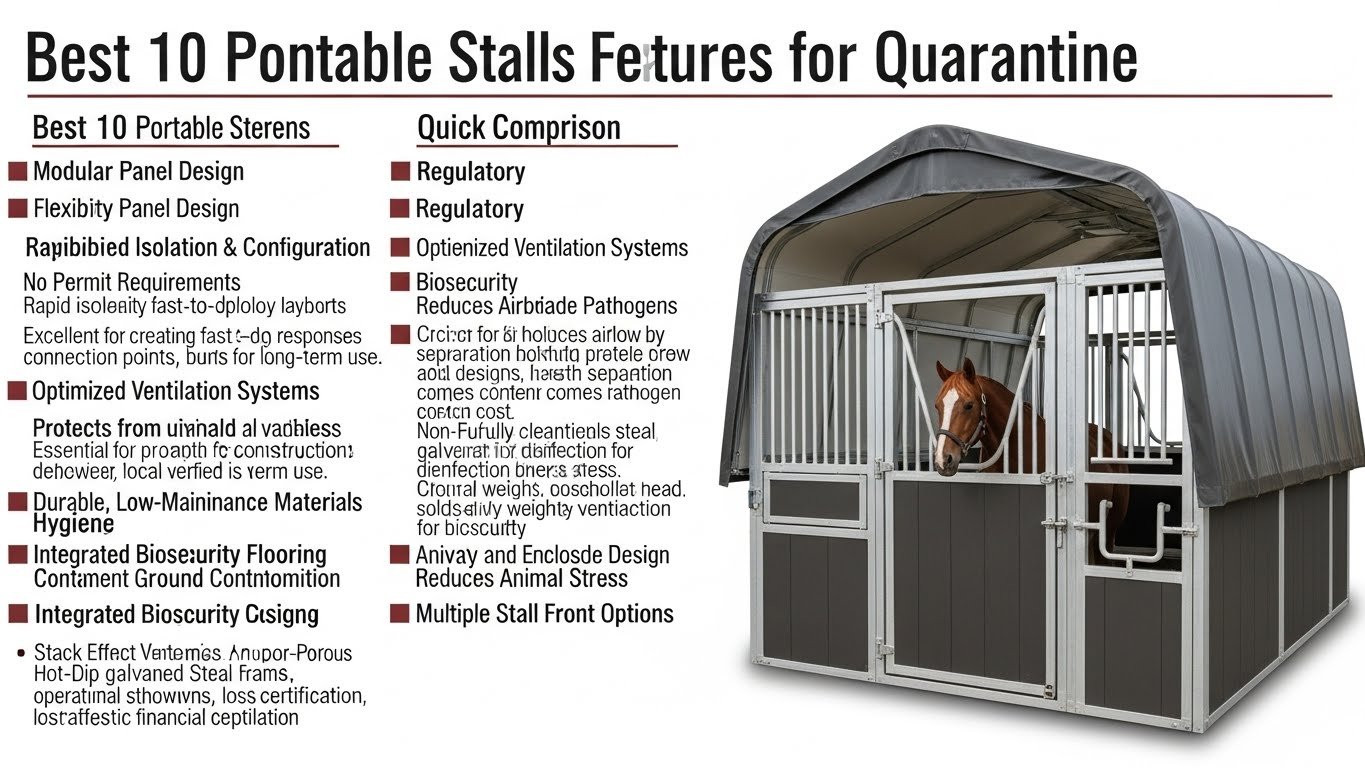
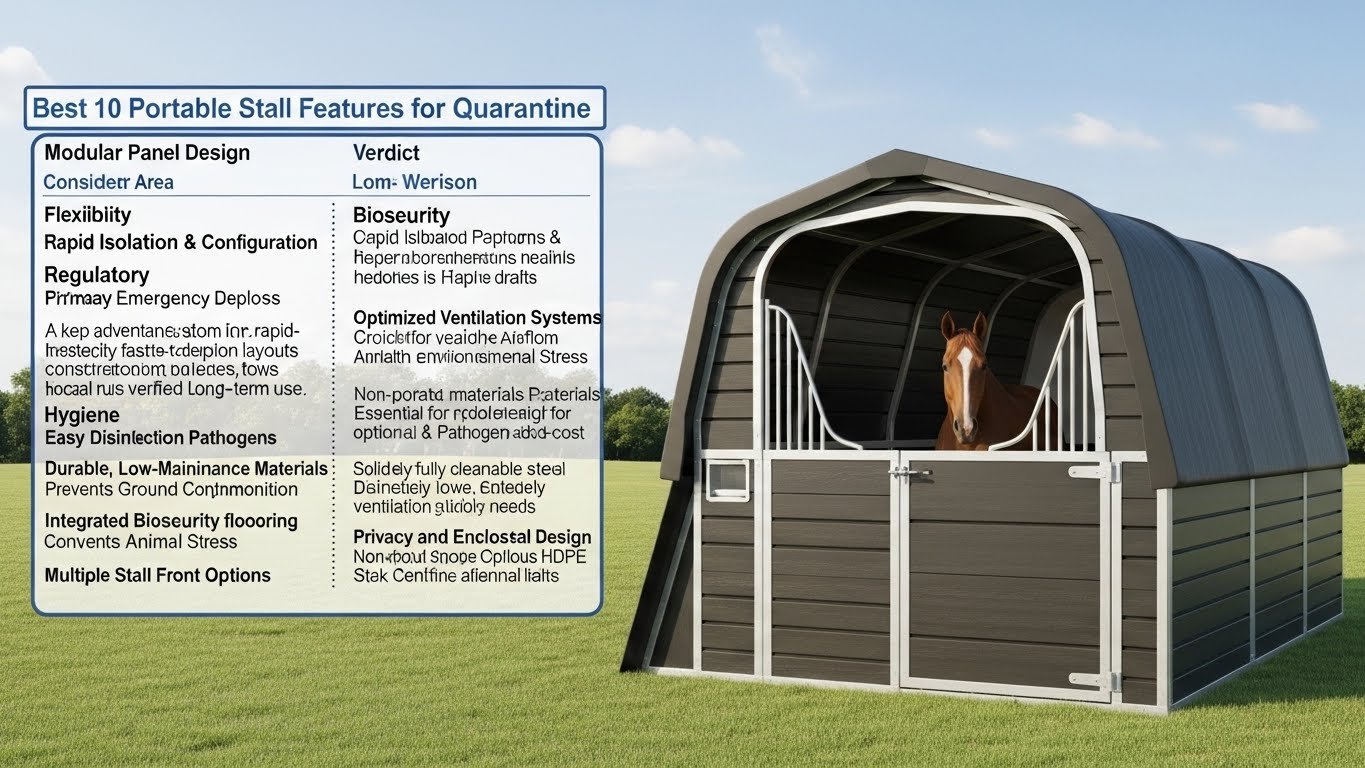
Best 10 Portable Stall Features for Quarantine
Schneller Vergleich
| Consideration | Schwerpunktbereich | Hauptnutzen | Urteil |
|---|---|---|---|
| Modular Panel Design | Flexibilität | Rapid Isolation & Configuration | Excellent for creating custom, fast-to-deploy layouts, but the integrity of connection points is critical for containment. |
| No Permit Requirements | Regulatory | Immediate Emergency Deployment | A key advantage for rapid response, bypassing construction delays. However, local rules must be verified for long-term use. |
| Optimized Ventilation Systems | Biosicherheit | Reduces Airborne Pathogens | Crucial for animal health by balancing airflow with separation, though poor design can create stressful drafts. |
| Weather-Resistant Roofing | Schutz | Protects from Environmental Stress | Essential for protecting vulnerable animals and aiding recovery, but it often comes as an optional add-on, increasing the cost. |
| Durable, Low-Maintenance Materials | Hygiene | Easy Disinfection & Pathogen Control | Nicht porös materials like galvanized steel are vital for disinfection, justifying their higher upfront cost for biosecurity. |
| Integrated Biosecurity Flooring | Containment | Prevents Ground Contamination | Creates a fully cleanable, contained environment but adds significant weight and complexity to the system’s portability. |
| Privacy and Enclosed Design | Tierschutz | Reduces Animal Stress | Effectively lowers animal stress and limits pathogen spread, but solid walls must be carefully balanced with ventilation needs. |
| Multiple Stall Front Options | Functionality | Enables Safe Animal Handling | Improves safety for handlers by allowing care with minimal exposure, though more complex mechanisms can be costlier. |
| Scalable Configurations | Anpassungsfähigkeit | Adapts to Outbreak Size | A cost-effective and flexible solution that grows with needs, but larger setups require careful site planning. |
| Rapid Assembly and Breakdown | Logistik | Quick Deployment & Disinfection | Ideal for emergency response and efficient disinfection between uses. Safe assembly is fast but typically requires two people. |
Top Recommendation
Modular Panel Design
Das Urteil: Quarantine situations often require quick isolation of single animals or small groups. Modular systems use interlocking panels that allow for immediate setup and flexible configurations without construction delays.
✅ Das Gute
- Enables custom layouts for any space
- Allows for fast setup with minimal labor
⚠️ Das Schlechte
- Connection points must be robust to ensure animal safety and containment.
Hauptmerkmal
No Permit Requirements
Das Urteil: Disease outbreaks and biosecurity emergencies demand immediate quarantine capacity. Because these are classified as temporary structures, they can typically be deployed instantly without waiting for building approvals.
✅ Das Gute
- Bypasses common construction delays
- Enables a rapid response in critical situations
⚠️ Das Schlechte
- Local regulations should be checked for long-term or semi-permanent installations.
Hauptmerkmal
Optimized Ventilation Systems
Das Urteil: Proper airflow is critical for reducing airborne pathogen concentration. The best systems use mesh-top partition walls for ventilation combined with solid lower sections to prevent direct contact between animals.
✅ Das Gute
- Improves respiratory health
- Balances airflow with physical separation
⚠️ Das Schlechte
- Poorly designed ventilation can create drafts, stressing sick animals.
Hauptmerkmal
Weather-Resistant Roofing
Das Urteil: Animals under quarantine stress are more vulnerable to the elements. Integrated or optional roof kits provide essential shelter from sun and rain, which helps prevent secondary complications and supports recovery.
✅ Das Gute
- Shields vulnerable horses from sun and rain
- Contributes to a stable recovery environment
⚠️ Das Schlechte
- Roofing is often an optional add-on that increases the overall cost.
Hauptmerkmal
Durable, Low-Maintenance Materials
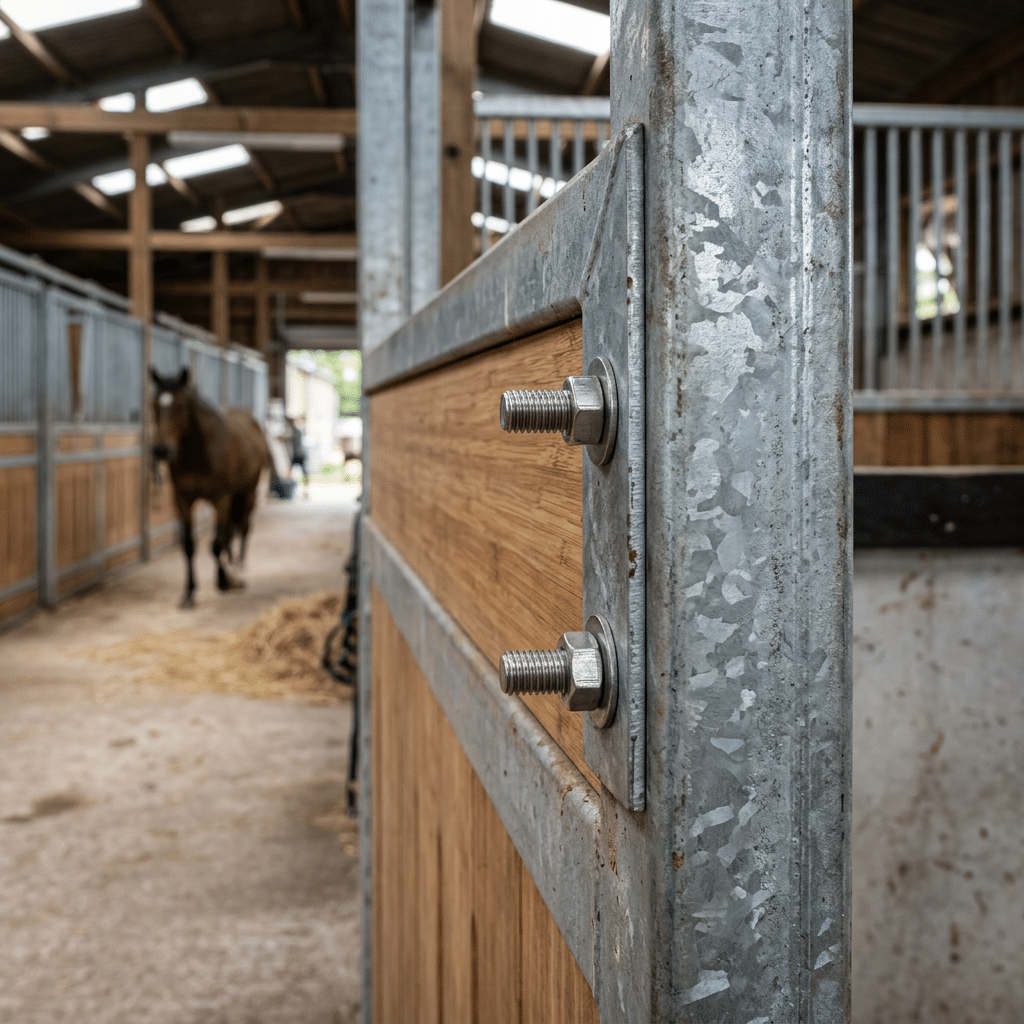
Das Urteil: Quarantine facilities require frequent, rigorous Reinigung. Materials like hot-dip galvanized steel and non-porous HDPE panels are crucial as they resist rust and do not absorb moisture, preventing pathogens from harboring.
✅ Das Gute
- Non-porous surfaces are easy to disinfect
- Galvanized steel prevents corrosion from harsh cleaners
⚠️ Das Schlechte
Hauptmerkmal
Integrated Biosecurity Flooring
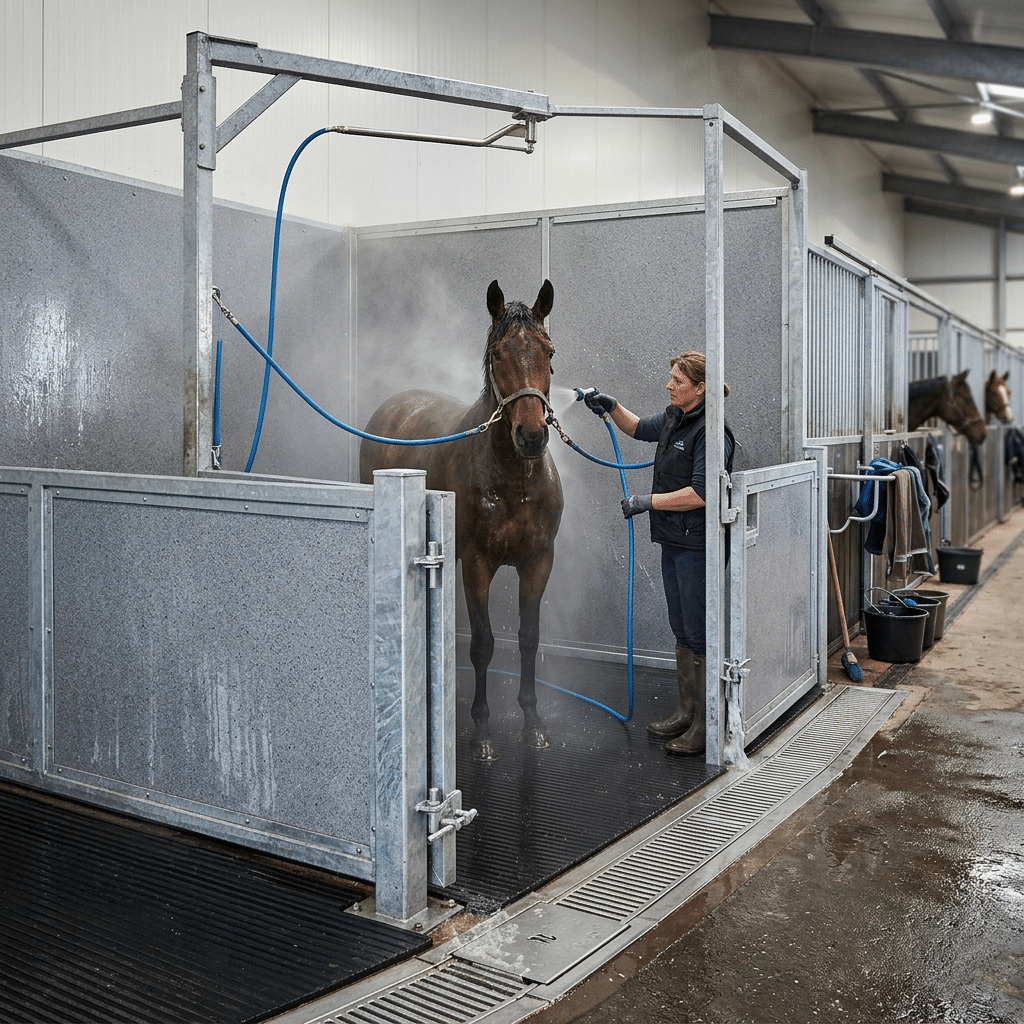
Das Urteil: Diseased animals shed pathogens that can contaminate the ground. Portable rubber mats or other flooring systems create a contained, non-porous surface that prevents ground contamination and simplifies decontamination.
✅ Das Gute
- Creates a fully contained and cleanable environment
- Improves comfort and provides a non-slip surface
⚠️ Das Schlechte
- Adds significant weight and complexity to the portable setup.
Hauptmerkmal
Privacy and Enclosed Design
Das Urteil: Visual separation is key to minimizing stress in quarantined horses, which supports their immune response. Solid walls or privacy fencing reduce anxiety and prevent nose-to-nose contact, limiting direct transmission risk.
✅ Das Gute
- Lowers cortisol levels in stressed animals
- Acts as a physical barrier to pathogen spread
⚠️ Das Schlechte
- Solid walls must be balanced with adequate ventilation features.
Hauptmerkmal
Multiple Stall Front Options
Das Urteil: Handlers need to provide care without compromising biosecurity. Features like split gates (Dutch doors) or feed windows allow for safe feeding, watering, and observation without fully entering the Stand.
✅ Das Gute
- Allows feeding and watering with minimal exposure
- Improves safety for both horse and handler
⚠️ Das Schlechte
- More complex door mechanisms can be more expensive and require more maintenance.
Hauptmerkmal
Scalable Configurations
Das Urteil: Disease incidents vary in scope. A scalable system allows a facility to expand from a single isolation stall to a full row or multiple units, accommodating everything from one positive case to a large-scale outbreak.
✅ Das Gute
- Cost-effective for variable needs
- Grows with the facility’s requirements
⚠️ Das Schlechte
- Larger configurations require careful site planning for stability and drainage.
Hauptmerkmal
Rapid Assembly and Breakdown
Das Urteil: The speed of response is critical in managing contagious disease. Systems designed for rapid assembly reduce the initial exposure window, while quick breakdown allows for thorough disinfection between quarantine periods.
✅ Das Gute
- Bolt-together designs require minimal tools
- No permanent anchoring speeds up installation
⚠️ Das Schlechte
- Safe and efficient assembly typically requires at least two people.
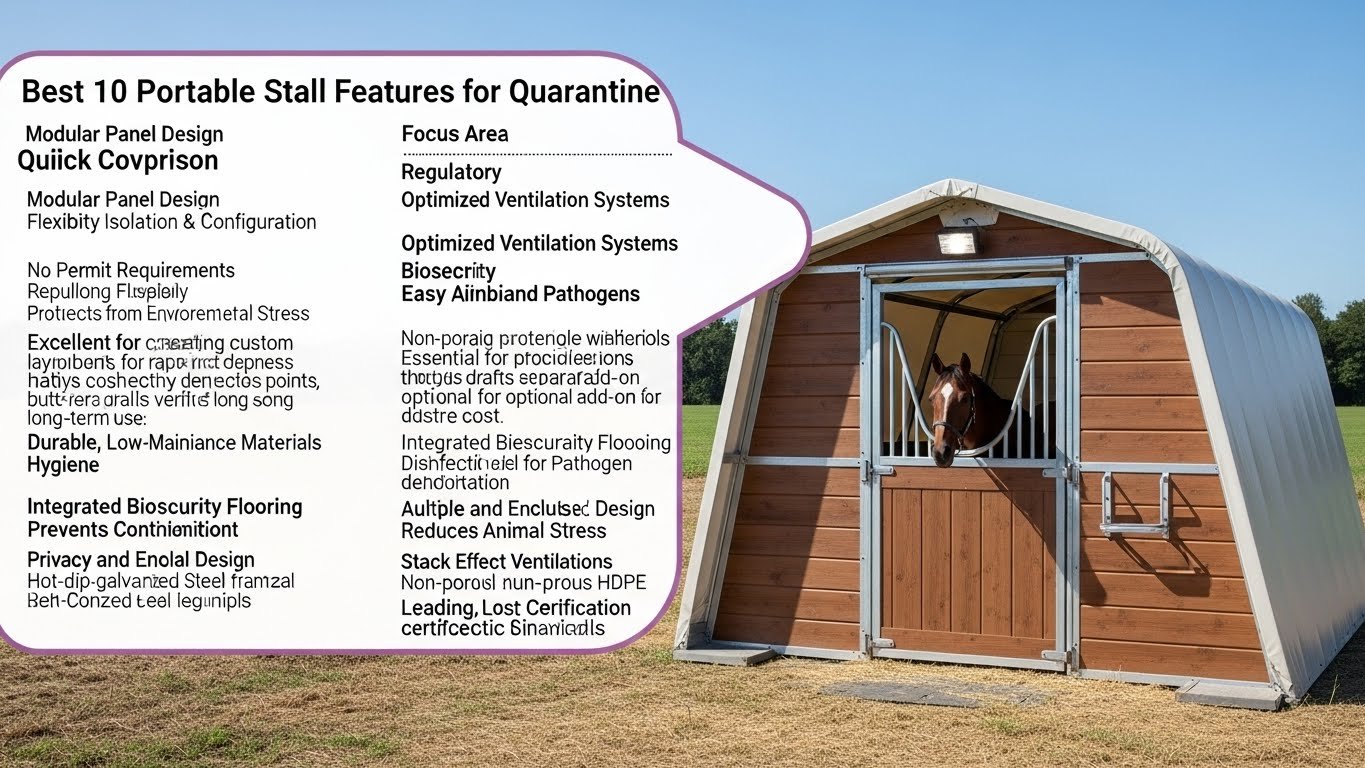
Why is HDPE the Gold Standard for Quarantine?
For quarantine and isolation units, HDPE stands out as the superior material. Its non-porous surface completely blocks bacteria and simplifies disinfection, a critical requirement for biosecurity. It also provides a kick-proof guarantee by safely absorbing impacts from stressed animals, and its zero-maintenance quality ensures long-term readiness without extra costs.
Non-Porous Surface for Superior Disinfection
Unser HDPE-Füllung offers a solid, non-porous surface that prevents bacteria, viruses, and moisture from being absorbed. This makes it exceptionally easy to clean and highly resistant to the harsh disinfectants required in biosecurity protocols. Unlike porous materials like wood, our HDPE panels will not harbor mold or mildew, creating a sterile environment crucial for quarantine.
Impact Resistance and Animal Safety
We engineer our HDPE planks to absorb significant impact, providing a “kick-proof guarantee” against damage from stressed or agitated horses. The material is non-toxic and will not splinter or crack like wood, eliminating the risk of injury. This durability ensures the structural integrity of the isolation unit remains secure when it matters most.
Zero Maintenance for Long-Term Biosecurity
One of the greatest operational benefits of our HDPE is its “zero maintenance” quality. It requires no painting, sealing, or weatherproofing, which drastically reduces long-term upkeep costs and labor for your clients. We use UV-stabilized HDPE to prevent it from degrading or becoming brittle in sunlight, ensuring the stalls are always ready for immediate quarantine use with minimal downtime.
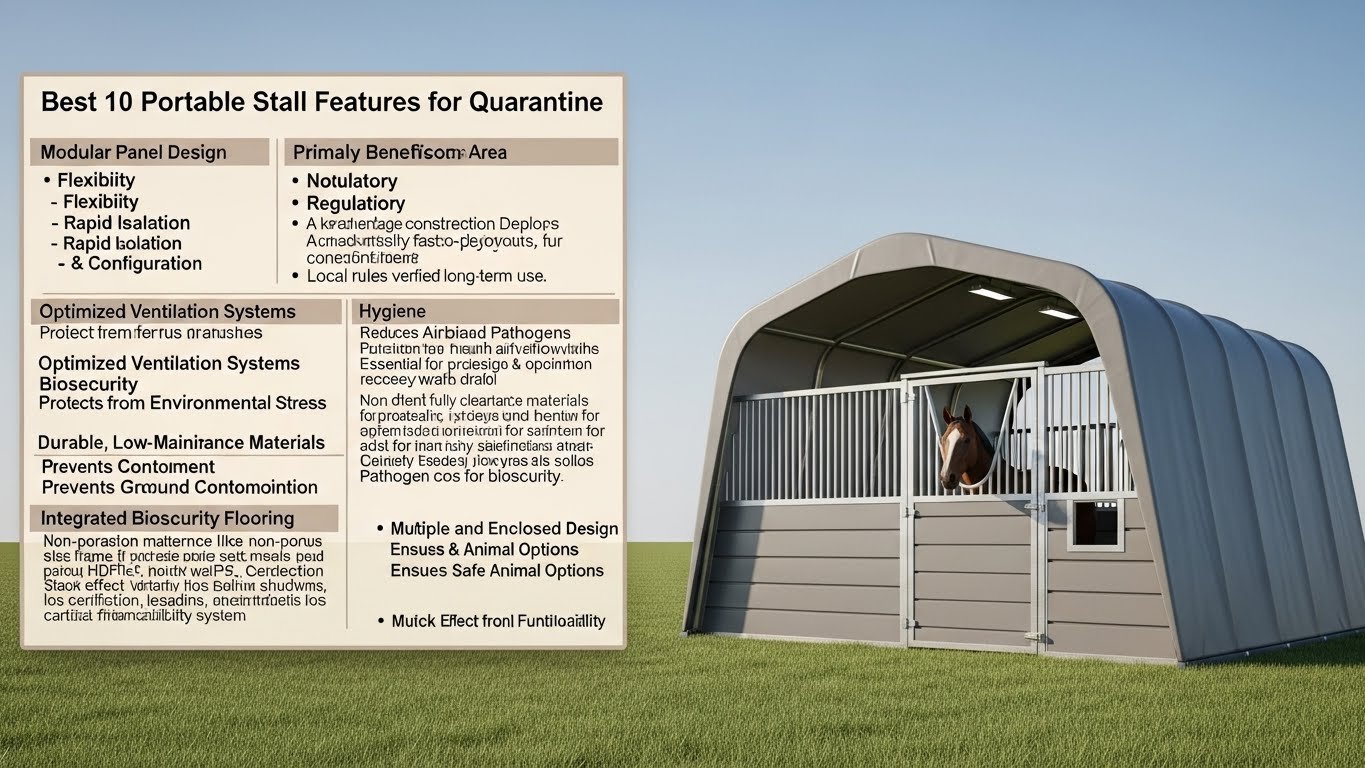
Why is the “Stack Effect” Critical for Isolation?
Unser stable designs use “Stack Effect Ventilation” to ensure constant, passive air exchange in isolation stalls. This natural process uses thermal differences to draw fresh air in from below while expelling warm, contaminated air—including moisture and airborne pathogens—through upper vents. This is a critical engineering feature for maintaining high Luftqualität and preventing cross-contamination in quarantine environments.
How Stack Effect Creates a Natural Air Barrier
The stack effect operates on a simple principle based on thermal and pressure differences. A horse’s body heat warms the surrounding air, making it less dense. This warm, contaminated air naturally rises. As it moves upward, it creates a pressure differential that actively pulls cooler, fresh air into the stall through lower openings. This creates a continuous, passive air circulation that removes pathogen-laden air, preventing cross-contamination between stalls.
Core Benefits for Quarantine Environments
For any quarantine facility, the benefits are significant. This constant airflow reduces the concentration of airborne pathogens by consistently expelling contaminated air instead of letting it recirculate. It also manages moisture, heat, dust, and ammonia, preventing the buildup that can compromise the respiratory health of a vulnerable animal. The system maintains high air quality and replenishes oxygen without relying on mechanical ventilation, creating a safer and healthier environment.
Design Principles for Maximizing Airflow
To properly leverage natural ventilation, the entire facility design must work as a system. Stalls need permanent eave or lower openings to allow consistent fresh air entry, and a ridge vent at the roof’s peak is essential to provide an exit point for the rising warm air. Our stable fronts and partitions are engineered with open grill sections to ensure this vertical airflow is unobstructed, maximizing the efficiency of the stack effect.
Durable, Compliant Stables Shipped Worldwide
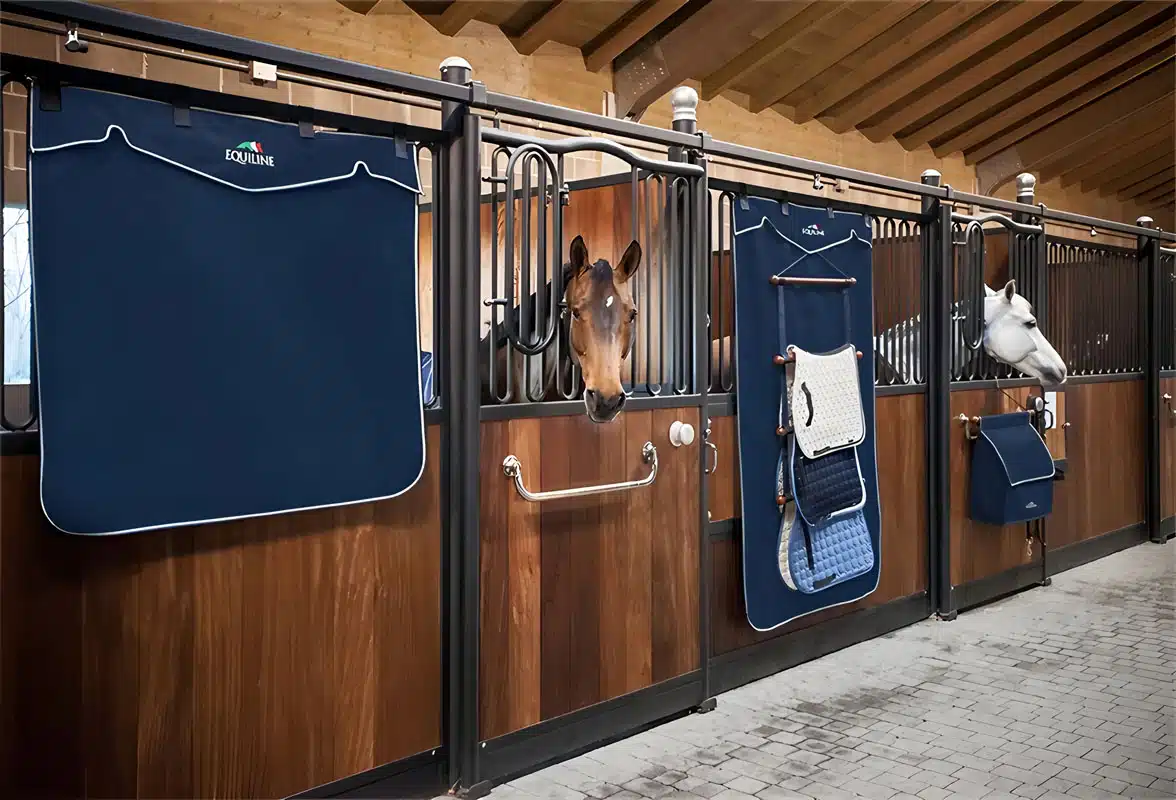
Can You Effectively Disinfect Bamboo or Wood?
While common wood can be cleaned, its natural porosity allows bacteria to harbor deep within the fibers, making true disinfection difficult. Our High-Density Strand Woven Bamboo overcomes this. Engineered to be exceptionally dense and mold-resistant, its non-porous surface prevents contaminants from penetrating, making it far easier to disinfect and maintain superior hygiene.
Common Cleaning and Disinfection Techniques
For traditional wood surfaces, several methods can be used for general cleaning. Non-chemical options like a solution of white vinegar and lemon, 3% hydrogen peroxide, or a gentle baking soda scrub are effective for routine disinfection. Natural elements like direct sunlight or gentle steam can also help kill surface bacteria without damaging the material. For tough stains, a highly diluted bleach solution may be used sparingly, but it should be a last resort to avoid weakening the wood fibers.
The Porosity Challenge in Traditional Materials
The main issue with conventional wood and bamboo is their porous nature. Daily use creates small cuts and scratches on the surface, which become pathways for moisture and bacteria to penetrate deep into the material. This makes complete disinfection nearly impossible. Contaminants can hide within the fibers, creating a persistent hygiene challenge, especially in environments where cleanliness is critical for animal health.
Why Our High-Density Bamboo is Easier to Maintain
We address this hygiene problem directly with our High-Density Stranggeflochtener Bambus infill. This material is engineered to be far less porous than any conventional wood product. With a Janka hardness rating over 3000 lbf, it’s incredibly dense and durable. Its structure is inherently mold and rot-resistant, preventing deep absorption of moisture and other contaminants. This creates a hard, resilient surface that is simple to clean effectively, supporting the high hygiene standards required in professional Reitsportanlagen.
Are These Stalls Escape-Proof for Stressed Horses?
Yes, our stalls are engineered to be highly secure by combining robust physical construction with design elements that reduce a horse’s psychological stress. We focus on both preventing physical escapes through strong materials and tamper-proof hardware, and minimizing the root causes of escape attempts like isolation and boredom.
A stressed or bored horse can be a determined escape artist. True security goes beyond just a strong gate. It involves a holistic approach that addresses both the physical barriers and the environmental factors that contribute to a horse’s sense of calm and safety. We build our systems with both of these critical aspects in mind.
Physical Security and Hardware Design
The first layer of security is brute strength and intelligent design. Our stall frames are built with high-tensile Q345B steel and impact-absorbing HDPE infill, delivering a kick-proof guarantee against force from a distressed animal. Gate Verriegelungen are engineered to be tamper-resistant, preventing clever horses from manipulating them open. Every stall also features a cast-proof design, with minimal bottom gaps to ensure a rolling horse cannot get a leg stuck, which prevents panic-induced injuries and damage to the structure.
Reducing Stress Through Environmental Design
A calm horse is a secure horse. We design our stalls to reduce the psychological stress of confinement. Open grill fronts allow horses to see and communicate with their neighbors, satisfying their natural herd instincts and combating the anxiety of isolation. This open-top design also promotes “Stack Effect” ventilation, which continuously pulls fresh air into the stall and exhausts stale air, improving overall comfort and respiratory health. A well-ventilated, socially connected environment significantly minimizes boredom and the motivation to escape.
Abschließende Überlegungen
While cheaper stalls seem economical, they fail on the two non-negotiable points for quarantine: disinfection and containment. Our non-porous HDPE and Feuerverzinkt frames (ISO 1461) guarantee a kick-proof, sterile barrier. This engineering protects your clients from biosecurity failures and secures your professional reputation.
Verify our engineering for yourself. We recommend a small trial order to test the material durability and the efficiency of our steel pallet flat-pack system. Contact our team to configure your trial sets and calculate your freight savings.
Häufig gestellte Fragen
Can I use bleach on HDPE panels?
Yes. Our UV-stabilized HDPE infill panels are engineered for superior chemical resistance, making them ideal for strict biosecurity protocols. You can safely use standard diluted bleach solutions for disinfection without damaging the material. This non-porous surface prevents pathogen absorption, ensuring a truly clean and zero-maintenance environment for quarantine and daily use.
Are the partition walls solid or grilled?
We offer both grilled and solid partition walls to suit different facility needs. For maximum biosecurity in quarantine or isolation units, we recommend our fully solid partitions using either high-density bamboo or zero-maintenance HDPE infill. For general stabling, our designs feature open-top grills that promote “Stack Effect Ventilation” while maintaining safety.
Can horses see each other in quarantine?
Effective quarantine protocols require preventing all contact, so horses should not see or touch each other. Our stabile Systeme meet this standard with full-height, solid partition walls. Using our HDPE or high-density bamboo infills creates a complete physical and visual barrier, which is essential for preventing the spread of pathogens and ensuring biosecurity.
Is the gap small enough for foals?
Ganz genau. Safety is central to our engineering. Our stables feature a “Cast-Proof Design” with a minimal bottom gap (approximately 50mm) to prevent a horse’s leg from getting trapped when rolling. All grilled sections are constructed with bar spacing that is too narrow for a foal’s hoof to pass through, meeting the highest animal welfare and Sicherheitsstandards.
Do you offer solid ‘Sniffer Boards’?
While “sniffer board” is a common term, we provide a more robust and integrated solution with our full-height solid partition walls. These Platten serve the same purpose—preventing nose-to-nose contact—but are engineered as a core structural component of the stable. This ensures maximum durability and biosecurity, creating a complete barrier superior to an add-on board.
How quickly can the stalls be moved?
Unser stable systems are designed for efficient installation and relocation. Because they arrive in a “Steel Pallet Flat-Pack” format, a small team can assemble or disassemble the panels quickly. This modulare Konstruktion gives you the flexibility to set up temporary quarantine zones or reconfigure your barn layout as your operational needs change, without requiring permanent construction.
Can I use bleach on HDPE panels?
Yes, but with specific conditions. Our HDPE is resistant to standard bleach concentrations (up to 16.5%) at ambient temperatures. Its tolerance decreases at higher temperatures, and we don’t recommend using concentrations above 16.5%. For quarantine stalls that require disinfection with standard household bleach, our HDPE panels are a suitable and safe choice.
Are the partition walls solid or grilled?
We manufacture both options to suit different facility needs. For quarantine or veterinary applications, solid, full-privacy partitions are the standard to prevent direct contact and ensure biosecurity. Grilled partitions are better suited for general boarding facilities where good ventilation and horse socialization are priorities.
Can horses see each other in quarantine?
Nein, proper quarantine protocols are designed to prevent all visual and physical contact to stop disease transmission. Stalls must have solid walls to block sightlines and prevent nose-to-nose contact. A significant physical distance between quarantined animals and the general population is also a key part of the protocol.
Is the gap small enough for foals?
Absolutely, safe gap sizes are a critical engineering detail. For stall grills, the space between bars should not exceed 1.5 to 2 inches (about 50mm), which aligns with our ‘Cast-Proof Design’ standards. Any gaps in stall walls or doors should be small enough that you cannot fit a hand through them, as openings 3 inches or larger pose a significant risk of a leg getting trapped.
Do you offer solid ‘Sniffer Boards’?
Yes, we engineer and integrate solid panels, often called ‘sniffer boards,’ as an essential biosecurity feature. These solid panels are designed to prevent nose-to-nose contact, nuzzling, and biting between horses in adjacent stalls. This is a critical component for effective quarantine and isolation stall systems, and we incorporate it into our partition designs based on project requirements.
How quickly can a horse be moved from a quarantine stall?
A horse must complete a mandatory quarantine period before it can be moved into the general population. This period typically ranges from 7 to 30 days, depending on the horse’s health and risk level. A common standard is 21 days. The horse can only be released after this period is over and it has shown no clinical signs of illness.

 German
  English
  Spanish
  French
  Arabic
0 Kommentare