


Sourcing horse stalls for New Zealand demands rigorous engineering to survive the country’s aggressive rainfall and humidity. Standard pine timber acts like a sponge in these wet climates, leading to rapid structural rot and costly annual maintenance cycles that erode facility operating margins.
This analysis examines waterproof solutions engineered with 28mm HDPE infills and hot-dip galvanized steel conforming to ISO 1461 standards. We evaluate how switching to impermeable synthetic materials and cold-climate Q345B steel eliminates rot risks while protecting long-term asset value.
New Zealand Winters: High Rainfall and Constant Mud
NZ winters demand specific engineering: Corrosion resistance for the humid North and impact-toughened Q345B steel for the freezing South to prevent structural failure.
Regional Winter Extremes: West Coast Rainfall vs. Otago Dry Cold
New Zealand is not a single climate zone. A stable design that functions in the dry cold of Central Otago often fails rapidly in the humidity of the Waikato. The disparity in rainfall data dictates the material specification required for longevity.
- The West Coast Saturation: Regions like Milford Sound record extreme annual rainfall (over 6,545mm), while areas like Westport see consistent heavy precipitation. This creates permanent mud conditions, attacking the base plates of structures. Standard timber rots at the ground level here; hot-dip galvanized steel is mandatory to survive the constant moisture.
- The Northern Humidity: In Auckland and Hamilton, rainfall is moderate (1,100-1,300mm), but humidity remains high year-round. This is an aggressive corrosion environment where “pre-galvanized” steel (welded over black tube) fails at the weld seams. We use الجلفنة بالغمس الساخن After Fabrication to ensure the zinc coating seals these vulnerable joints against rust.
- The Otago Freeze: Conversely, Alexandra sees only ~365mm of rain but experiences deep freezes. Here, the risk isn’t rot—it is brittle fracture in the steel frame itself.
Cold Climate Adaptability: The Q345B Steel Advantage
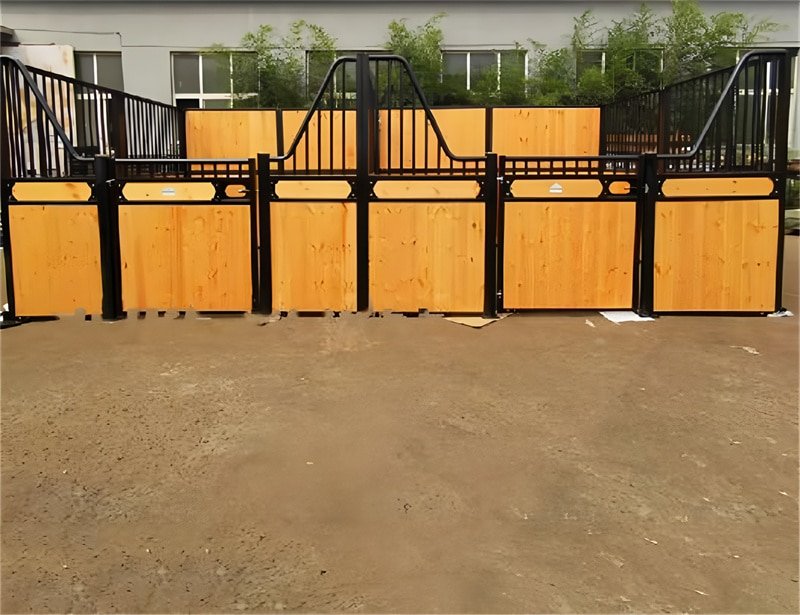
Standard structural steel (Q235B) performs well in temperate climates but loses ductility as temperatures drop below freezing. In the South Island’s winter, a standard steel frame becomes brittle. If a 500kg horse kicks a frozen Q235B post, the metal is more likely to snap or develop micro-fractures rather than absorb the energy.
We address this by upgrading to فولاذ Q345B منخفض السبائك عالي القوة (equivalent to ASTM Grade 50) for our cold-climate exports. This alloy offers superior low-temperature impact toughness. It maintains its structural integrity during the freeze-thaw cycles common in NZ winters, ensuring the “Kick-Proof Guarantee” holds up even when the thermometer drops.
The Base Plate Problem: Wood Rotting from the Ground Up
Traditional timber base plates often rot within months in damp stables. We replace them with hot-dip galvanized steel channels, eliminating ground-level structural failure entirely.
How Moisture Traps Destroy Wooden Base Plates
In stable construction, the “kill zone” is the bottom 150mm of the wall. This area endures constant contact wit
h wet bedding, urine (ammonia), and wash-down water. Traditional construction methods often place a timber bottom plate directly in this high-moisture zone. Once moisture penetrates the wood, fungal spores activate, feeding on the cellulose and compromising the wall’s structural load-bearing capacity.
New Zealand’s climate accelerates this process. In regions with high humidity or rainfall, non-breathable wall systems trap moisture against the timber, preventing it from drying out. Research indicates that untreated or poorly sealed timber in these conditions can begin to degrade in as little as 1 to 6 months. For stable operators, this manifests as structural rot that is often invisible until the wall begins to shift or kick-boards detach under impact.
The Solution: Hot-Dip Galvanized Steel Bottom Rails
We eliminate the risk of base plate rot by removing the timber entirely from the ground level. The DB Stable system utilizes a structural steel bottom channel as the foundation for the infill. We use Q235B structural steel (or Q345B for cold climates) to form a rigid, inorganic barrier between the ground and the stable wall.
To ensure longevity against ammonia and wet manure, we process these steel components through Hot-Dip Galvanization بعد fabrication. This creates a metallurgical bond with the steel, providing a protective zinc coating that exceeds industry standards.
- Standard: Conforms strictly to BS EN ISO 1461.
- سُمك الطلاء: >70 microns (μm) for tubing, >85 microns (μm) for structural parts.
- Material: Q235B or Q345B Structural Steel (14-Gauge / 2.0mm+ wall thickness).
- Imperviousness: Zero absorption of fluids, eliminating bacterial growth and rot.
Premium Custom Stables With 20-Year Durability

100% Waterproof Horse Stall Panels (HDPE vs Pine)
Traditional pine rots and warps in humid environments. 28mm-32mm HDPE synthetic panels provide a 100% waterproof, zero-maintenance solution that rejects moisture and bacteria entirely.
| الميزة | Traditional Pine Timber | DB Stable HDPE Infill |
|---|---|---|
| مقاومة الرطوبة | Hygroscopic (Absorbs water/urine) | 100% Impermeable |
| الصيانة | Requires annual staining/sealing | Zero Maintenance (Wash down only) |
| Hygiene | Traps ammonia and bacteria | Sterile, non-porous surface |
| Structural Stability | Warps and swells in humidity | Dimensionally stable |
The Vulnerability of Pine: Moisture Absorption and Bacterial Risks
Organic materials struggle in professional equine facilities, particularly in regions with high rainfall or humidity like New Zealand. Pine is naturally hygroscopic, meaning it acts like a sponge. In a stable environment, this goes beyond simple water absorption; the wood soaks up urine and manure fluids, leading to rapid structural rot from the inside out.
- Structural Rot: Constant exposure to moisture breaks down the cellulose in pine, requiring frequent and costly board replacement.
- Health Hazards: Porous wood fibers trap ammonia and bacteria. This creates a permanent reservoir of pathogens that can irritate a horse’s respiratory system.
- Operational Failures: Timber swells when wet. We frequently see stable doors jam or tracks misalign because the wood infill expanded during wet winter months.
Engineering Durability: 28mm-32mm UV-Stabilized HDPE Infill
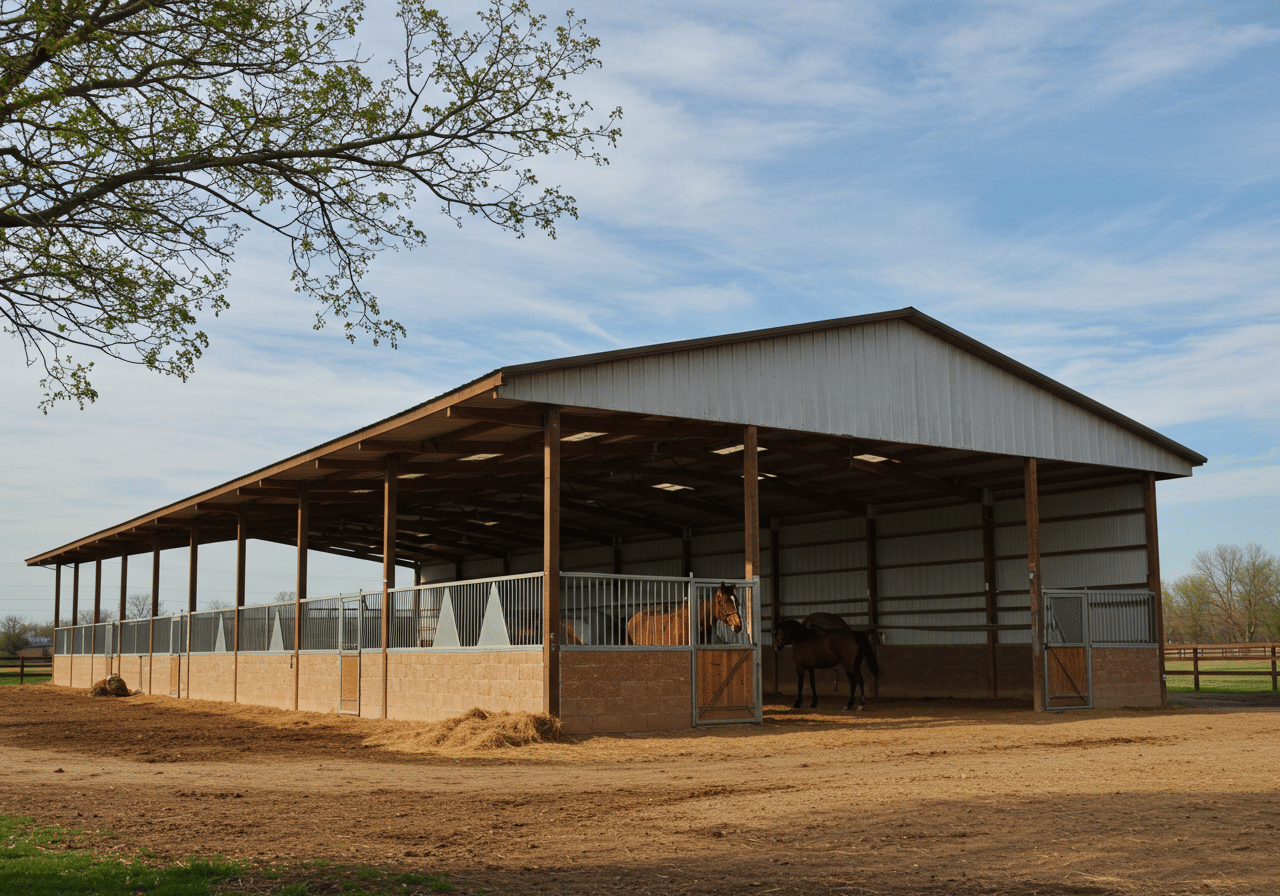
To eliminate these biological failures, we engineered our stalls using high-density synthetic infills. We strictly use 28mm-32mm High-Density Polyethylene (HDPE) profiles. This material is not a “plastic alternative”—it is an industrial-grade engineering polymer designed to withstand abuse while remaining completely inert to biological waste.
- Impermeable Barrier: The material is non-porous. It creates a sanitized environment where bacteria cannot colonize, and ammonia odors wash away instantly.
- UV Stabilization: We incorporate UV stabilizers directly into the polymer matrix. This prevents the boards from becoming brittle or chalky under harsh sunlight.
- Kick-Proof Density: Unlike rigid wood that splinters upon impact, our HDPE has a specific density that absorbs shock. This “Kick-Proof” design reduces the risk of injury to the horse and fracture to the wall.
Hot-Dip Galvanizing: Rust-Proofing Your Stable Frame
ملخص تنفيذي: True rust-proofing requires dipping the entire frame بعد welding. Pre-galvanized tubes leave seams exposed to ammonia, while our process seals every millimeter inside and out.
Why We Dip After Fabrication
Most competitors in the equestrian market take a manufacturing shortcut: they weld pre-galvanized tubes together. The intense heat of welding burns the zinc coating off exactly where the structure needs it most—the joints. This leaves the welds exposed to the elements, inviting rust before the stable is even installed.
We use a “Hot-Dip After Fabrication” process. We weld the entire frame using raw “black” steel (Q235B) first. Once the fabrication is complete, we submerge the entire panel into a molten zinc bath at 460°C. This ensures the zinc isn’t just a surface layer; it creates a metallurgical bond with the steel, forming a fused alloy layer that resists physical impact from hooves.
Crucially, this method allows liquid zinc to flow inside the 50mm RHS tubes. This protects the frame from the insid
e out, sealing the steel against condensation and ammonia that often pool unseen inside the bottom rails.
Meeting ISO 1461 Zinc Standards
We do not rely on generic “rust-proof” claims. Our galvanizing process is strictly quantified and audited against international standards to ensure longevity in wet, coastal, or high-ammonia environments.
- Standard Compliance: All processing strictly adheres to BS EN ISO 1461.
- المكونات الهيكلية: Main structural parts (>6mm steel) receive an average coating of >85 microns (μm).
- Tubing Specs: Our 14-gauge tubing receives an average coating of >70 microns (μm), significantly exceeding the industry average.
- Validation: Verified by ASTM B117 Salt Spray Testing (>96 hours with no red rust).
Designing Open-Front Stalls for Easy Mucking
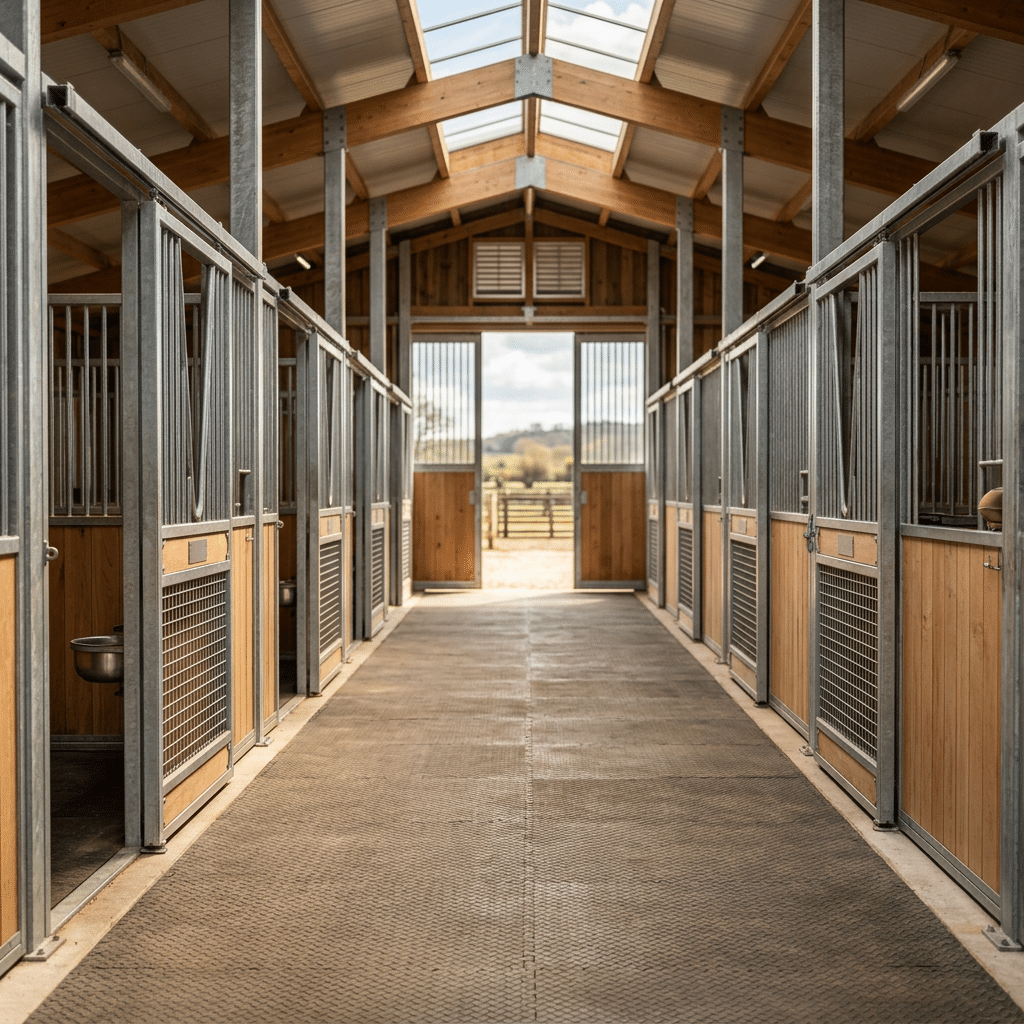
Open-front designs maximize visibility and access. Wide sliding doors and integrated swivel feeders streamline workflows, allowing staff to muck and feed without blocking aisles.
The Open-Concept Workflow Advantage
Traditional enclosed stalls create a visual barrier that slows down daily operations. Staff often have to open heavy solid doors just to check bedding conditions or locate the horse. An open-front design eliminates this step, allowing barn managers to assess multiple stalls instantly from the aisle. This visibility reduces unnecessary entry and exit, cutting down the total time spent on morning rounds.
Beyond visibility, these designs promote “تهوية تأثير المكدس.” By allowing air to flow freely through the lower and upper grills, wet floors dry significantly faster after wash-downs. This prevents ammonia buildup at the bedding level and reduces the physical labor required to scrub persistent damp spots. Removing physical barriers also means staff carrying heavy mucking tools or wheelbarrows can navigate the barn without constantly latching and unlatching doors.
Integrating Swivel Feeders and Sliding Systems
Efficiency in a commercial stable comes down to hardware choices that separate tasks. We integrate specific components into our Professional Series fronts to ensure feeding and cleaning do not interfere with each other.
- 360-Degree Swivel Feeders: These allow staff to feed grain and hay directly from the aisle. You do not need to enter the stall or open the main door, which keeps horses contained while staff work freely in the walkway.
- Hidden Track Sliding Doors: Unlike hinged doors that swing out and block the aisle, our sliding system stays flush with the stall front. This keeps the central walkway clear for tractor or wheelbarrow traffic, preventing the bottlenecks common in busy barns.
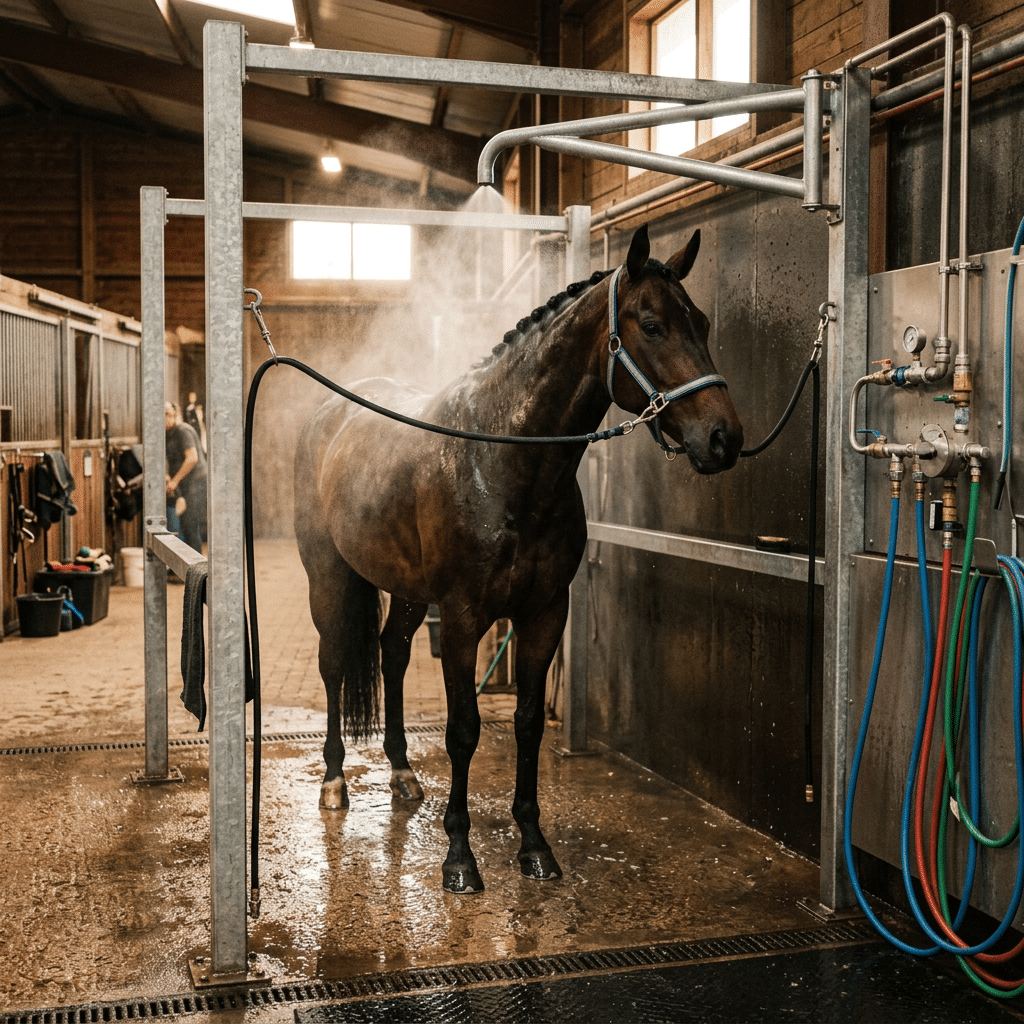
- Zero Maintenance HDPE: Mucking involves manure splatter. Wood absorbs this and requires scrubbing or repainting. Our non-porous HDPE infill allows for quick hose-downs, ensuring the stall front is clean within seconds without risking water damage or rot.
الأسئلة المتداولة
Why is hot-dip galvanization essential for New Zealand stables?
New Zealand’s coastal geography and high rainfall create an aggressive corrosion environment for steel. Standard pre-galvanized tubing often fails here because the welds remain exposed to salt spray and moisture. We solve this by using Hot-Dip Galvanization After Fabrication (ISO 1461). We weld the black steel frame first, then dip the entire unit into molten zinc. This ensures every inch, including internal welds, receives over 85 microns of zinc coating, delivering 20+ years of rust protection even in coastal zones.
How do HDPE panels compare to traditional pine in wet climates?
Traditional pine acts like a sponge in wet climates, absorbing moisture which leads to rot, mold, and structural weakness. Horses also tend to chew soft, damp wood. Our 28mm-32mm HDPE (High-Density Polyethylene) infill is 100% waterproof, UV-stabilized, and non-porous. It offers a true “Zero Maintenance” solution: it will never rot, warp, or splinter, and you can clean it with a simple hose-down. This material longevity protects the facility’s value over time.
What steel grade is used for cold South Island conditions?
Standard structural steel can become brittle in freezing temperatures, making it susceptible to fracturing under impact (like a horse kick). For projects in the South Island or alpine regions, we recommend our Cold Climate Option using فولاذ Q345B منخفض السبائك عالي القوة. This grade offers superior low-temperature impact toughness compared to standard Q235B, ensuring the frame maintains its “Kick-Proof” resilience even in frost conditions.
How does the flat-pack system affect shipping costs to NZ?
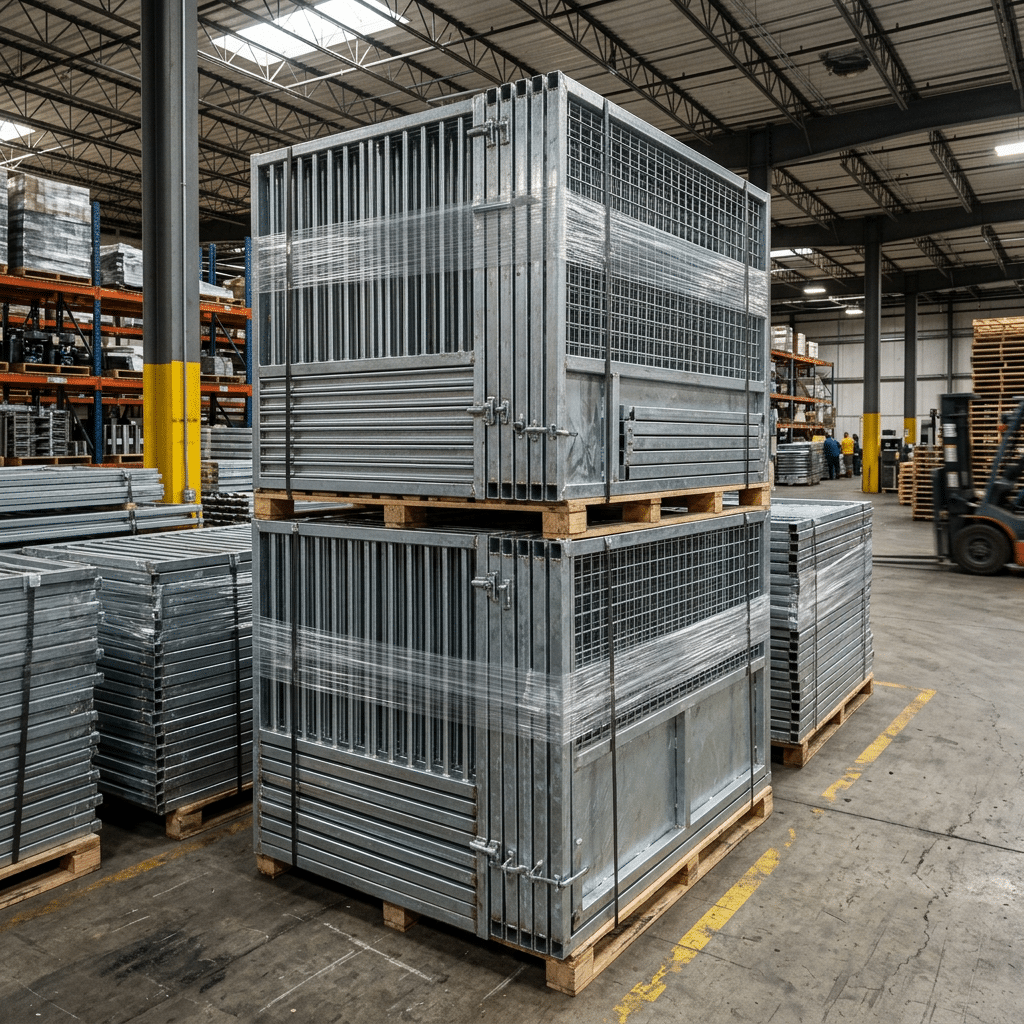
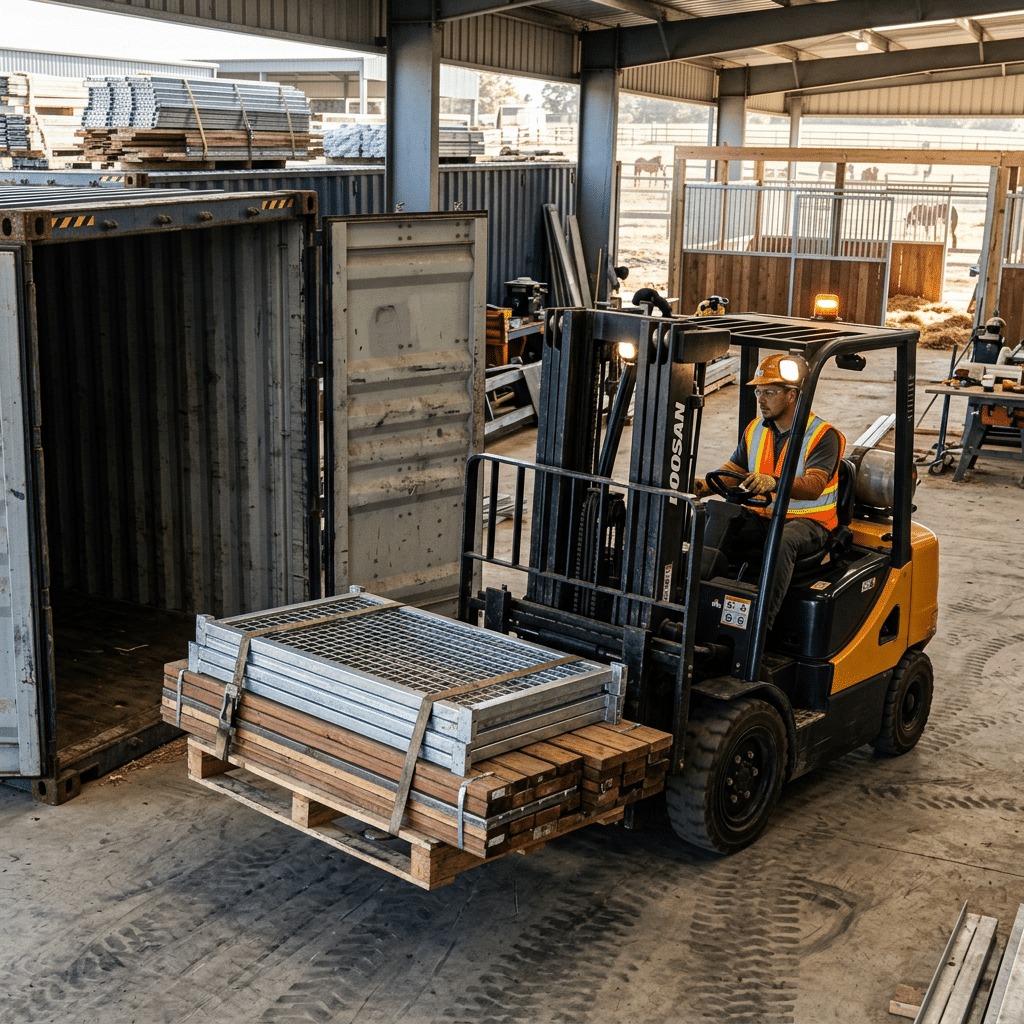
Freight is often the hidden profit-killer in stable imports. Traditional fully welded stables are bulky, limiting a 40HQ container to just 12-15 sets. Our engineered flat-pack design allows us to load 30-45 sets per 40HQ container without compromising structural integrity. This logistics efficiency cuts shipping costs per unit by over 60%, directly protecting the profit margins for our distributors and large-scale project developers.
Do the stables comply with animal welfare safety standards?
Yes, safety is central to our engineering. We utilize a “Cast-Proof” bottom gap (approximately 50mm) which prevents horses from getting a leg trapped if they roll near the wall—a common cause of injury in poorly designed stables. Furthermore, our open-grill upper designs promote “Stack Effect Ventilation,” ensuring constant vertical airflow to reduce dampness and mitigate respiratory risks associated with ammonia buildup.
الأفكار النهائية
Importing generic steel into New Zealand’s aggressive coastal environment guarantees warranty claims within months. Switching to ISO 1461 Hot-Dip Galvanized frames and impermeable HDPE infills eliminates rot-related returns entirely. Your long-term dealer reputation relies on supplying infrastructure that survives both the West Coast rain and the Otago freeze.
لدينا flat-pack engineering optimizes logistics to load 30-45 sets per container, securing your margins against rising freight costs. Stop guessing on durability and request our technical specifications to evaluate the Q345B difference yourself. Contact our export team today to configure a trial shipment for your distribution network.

 Arabic
  English
  Spanish
  French
  German
0 تعليق