


Feeding aggression creates the single highest liability risk for commercial stable operators and boarding facilities. While behavior modification takes time, inadequate infrastructure that forces handlers into the stall invites immediate injury lawsuits and costly workman’s compensation claims.
This engineering brief examines how integrating 360-degree Cast Aluminum Swivel Feeders isolates staff from dangerous contact. We analyze the structural necessity of Q345B Low Alloy Steel frameworks and impact-absorbing HDPE partitions to secure your facility against both physical trauma and long-term asset depreciation.
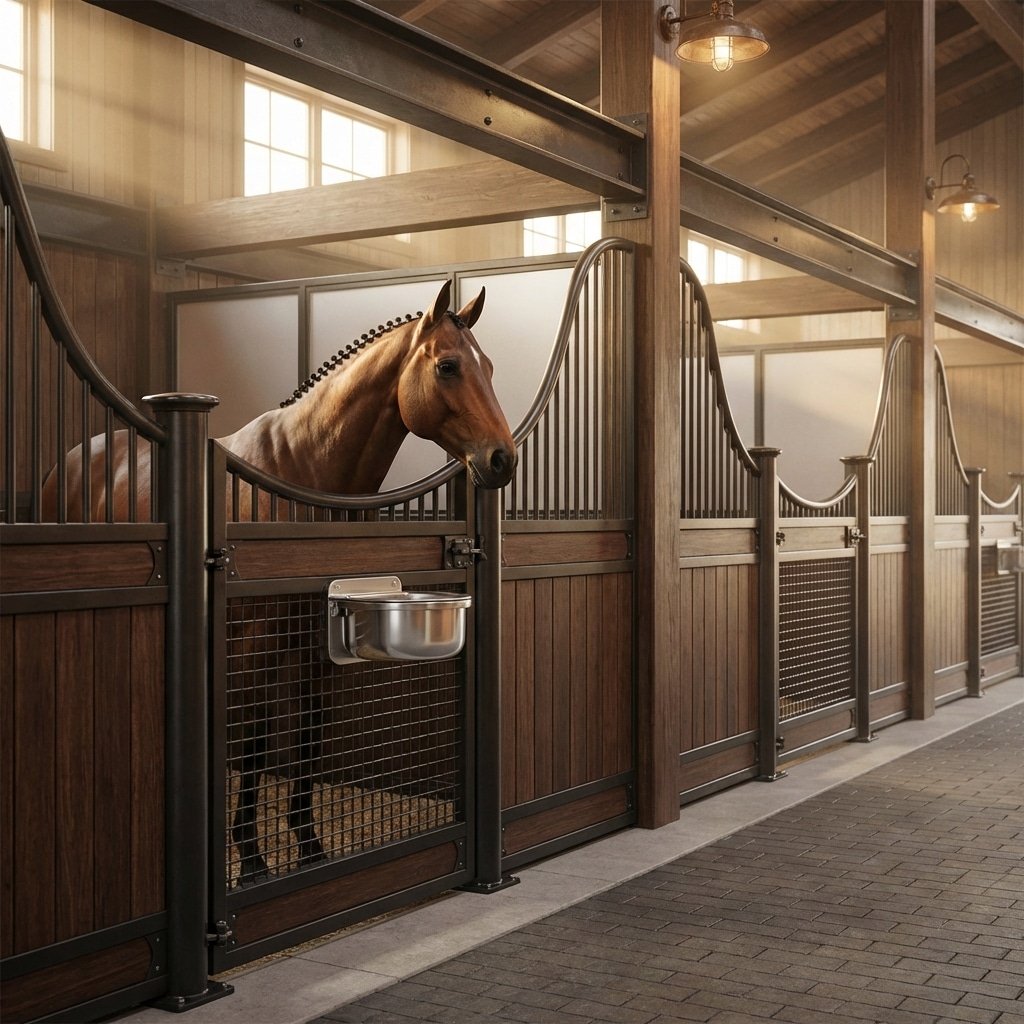
The Danger of Walking into a Hungry Horse’s Stall
Feeding time triggers deep-seated resource guarding instincts. Without high-strength impact barriers, this aggression creates a high-injury zone for handlers and threatens standard steel infrastructure.
Understanding Feed-Induced Aggression
Food aggression isn’t just “bad behavior”; it is biological imperative. In a herd environment, the dominant horse controls access to resources. When a handler enters a stall carrying grain, they are often perceived not as a provider, but as a competitor. If the horse views the human as subordinate, the instinct to guard that resource triggers dangerous physical responses.
This aggression escalates rapidly. A horse experiencing feed anxiety—frustration caused by the anticipation of food—will pin its ears, lunge, or swing its hindquarters toward the threat. Research confirms that horses previously exposed to food scarcity or inconsistent feeding schedules often display heightened possessiveness. In these moments, the stall becomes a trap, and the handler is directly in the line of fire for a targeted strike.
Structural Resilience Against Kick Impact
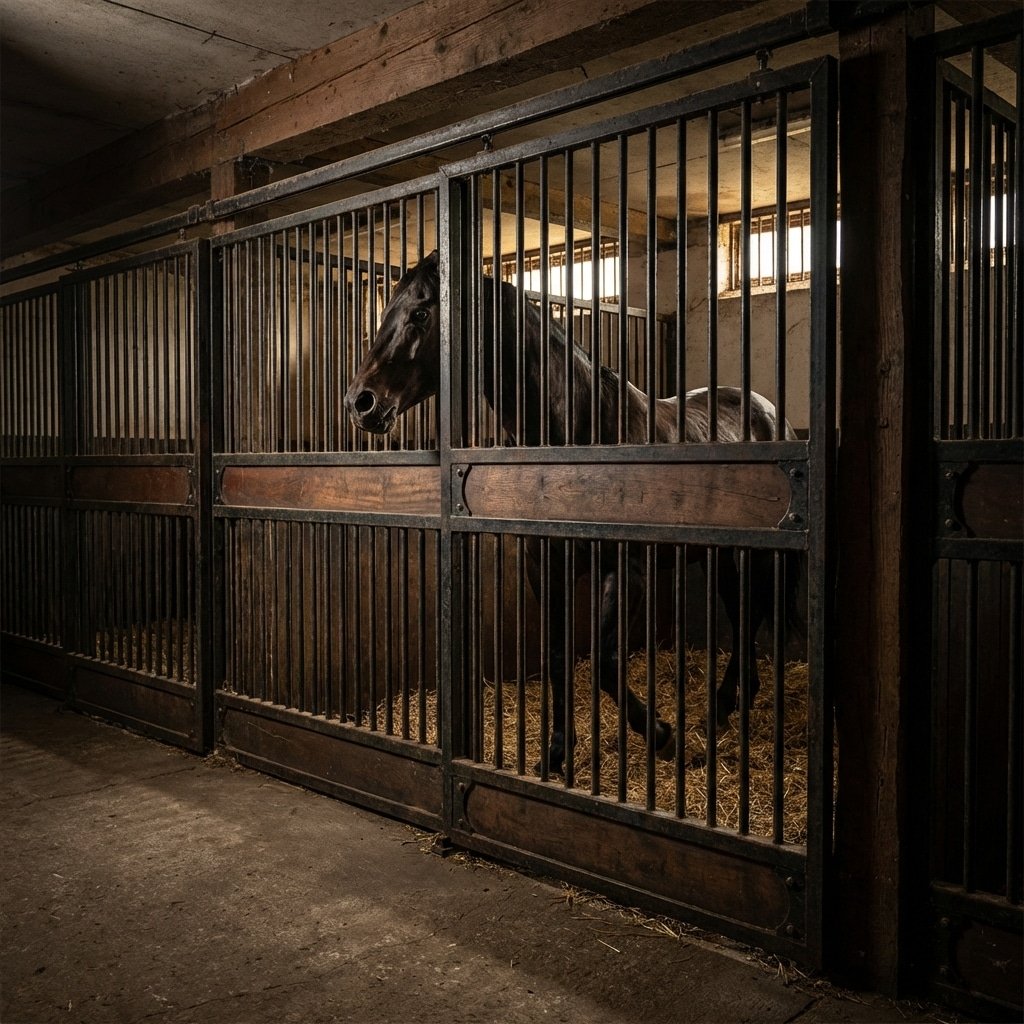
Behavioral training takes time, but structural failure happens in milliseconds. When a food-aggressive horse kicks out, they generate tremendous force capable of buckling standard architectural steel. Most low-cost stable systems rely on Q235B (Standard Structural Steel) or thin-walled tubing, which can kink or fracture under the point-impact of a hoof.
To mitigate this risk, DB Stable engineers specifically for impact absorption using upgraded materials defined in our “Kick-Proof Guarantee.”
- Q345B Low Alloy High Strength Steel: We utilize this grade for our Cold Climate and Professional options. It offers superior impact toughness compared to standard steel, allowing the frame to absorb shock without brittle fracture.
- Minimum Wall Thickness: We strictly prohibit tubing thinner than 2.0mm. Our standard is مقياس 14 (2.0mm – 2.5mm), providing the mass necessary to withstand a direct kick from a 1,200 lb animal.
- Impact-Absorbing Infill: We pair the steel frame with 28mm-32mm HDPE or خيزران عالي الكثافة, both tested to flex slightly under pressure rather than shattering like cheap pine or brittle plastic.
Aluminum Swivel Feeders: 360-Degree Rotation
The 360-degree swivel mount isolates handlers from food-aggressive horses by enabling aisle-side filling, while cast aluminum offers a rust-proof solution for wet feed.
| Operational Metric | Standard Fixed Manger | DB Stable 360° Swivel |
|---|---|---|
| Handler Position | Inside Stall (High Risk) | Aisle Side (Zero Contact) |
| Filling Speed | Slow (Open door, enter, exit) | Fast (Rotate, fill, lock) |
| Corrosion Risk | High (Steel rusts with saliva) | None (Cast Aluminum) |
Operational Safety via Aisle-Side Access
Feeding time triggers high anxiety and aggression in stabled horses. Handlers who enter the stall to fill buckets often face pinning ears, biting, or kicking as the animal fights for dominance over the food resource. The 360-degree swivel mechanism solves this mechanical flaw by keeping the stable front locked during the entire process.
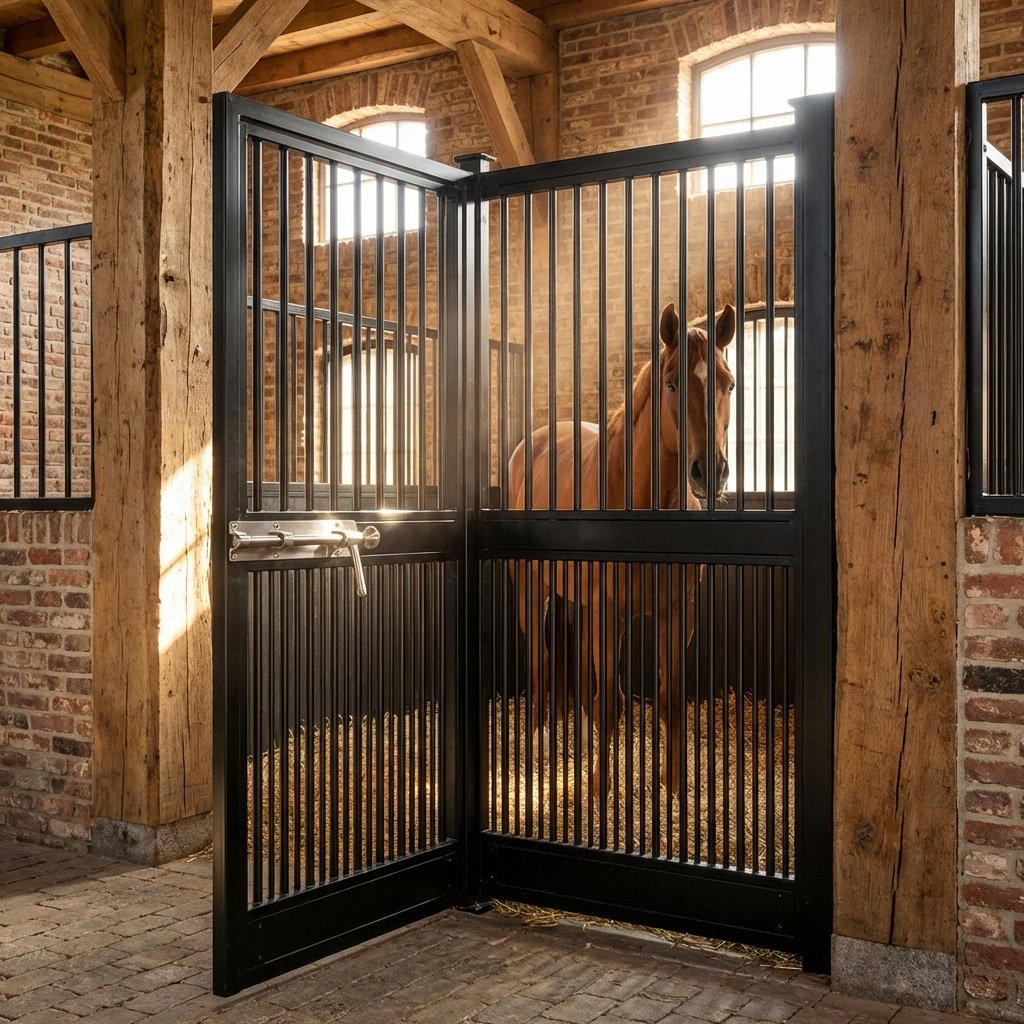
- Physical Isolation: The feeder pivots out into the aisle for filling and locks back into place for the horse. The steel bars of the واجهة المماطلة remain between the staff member and the animal at all times.
- Prevention of Rushing: Opening a stall door for feeding creates a gap that excited horses often try to rush through. The swivel feeder eliminates this opening entirely.
- Visual Checks: Staff can inspect feed consumption levels without entering the stall, reducing unnecessary disturbances to the horse.
Professional Series Cast Aluminum Specifications
نقوم بهندسة السلسلة الاحترافية specifically for high-traffic commercial centers where equipment sees heavy daily use. While steel feeders are common in lower-tier products, they eventually succumb to rust when exposed to the acidity of horse saliva and wet mashes. We use cast aluminum to solve this longevity issue.
- Rust Imperviousness: Cast aluminum does not corrode when in constant contact with water or saliva, making it significantly more hygienic than galvanized steel or plastic options that crack.
- Weight Reduction: A cast aluminum assembly is lighter than a steel equivalent. This reduces the physical strain on stable hands who may operate these latches hundreds of times a week.
- Seamless Integration: Designed to fit directly into our Professional Series fronts, including the Hidden Track System, maintaining a flush profile that prevents horses from catching halters or cribbing on protruding edges.
Precision-Engineered Stables With 20-Year Durability

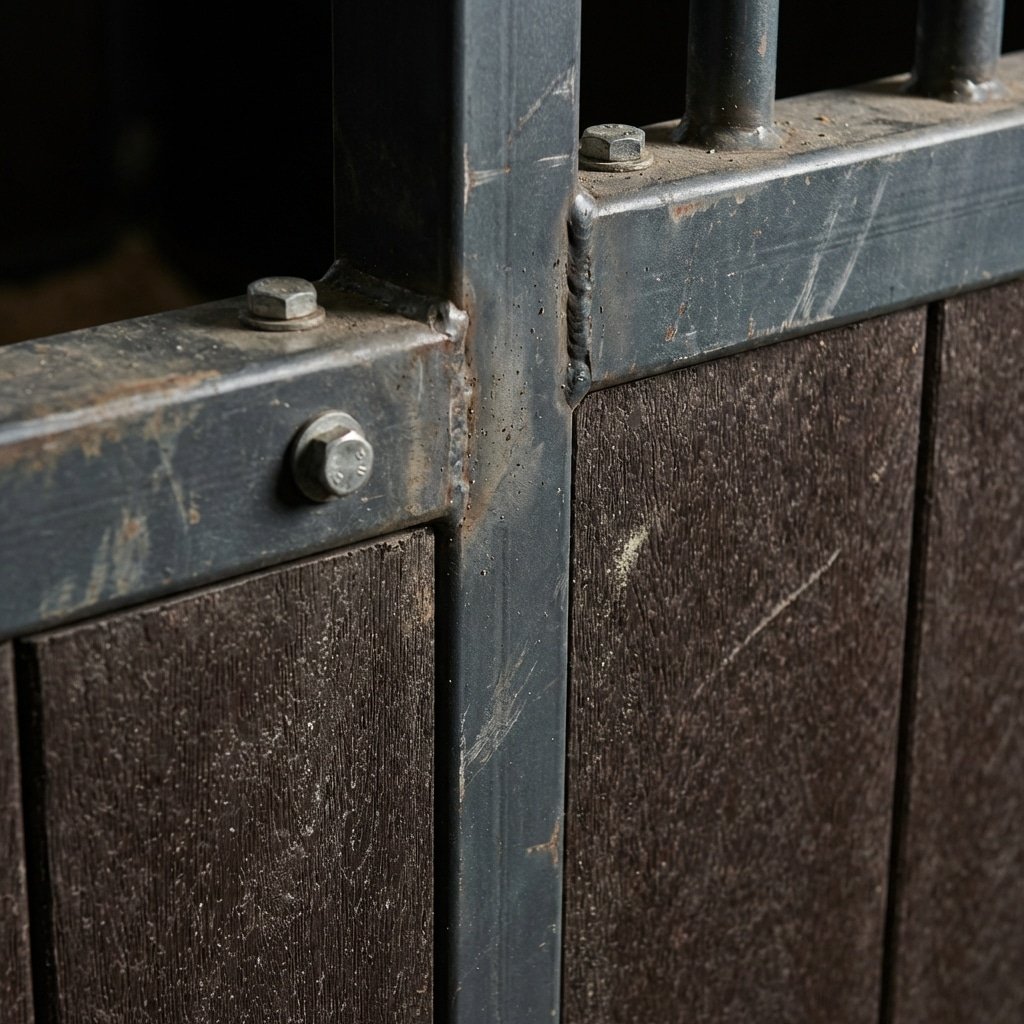
Solid Partitions Near the Feed Zone to Stop Kicking
Feeding aggression is a hierarchy instinct, not a training flaw. Installing solid HDPE partitions near feeders breaks the visual line of sight, stopping intimidation and protecting your infrastructure from kick damage.
Why Feeding Triggers Aggressive Behavior
Food aggression often stems from natural dominance hierarchies where horses compete for limited resources. In a stable environment, this instinct doesn’t disappear just because the horses are separated. If a dominant horse can make visual contact with a neighbor through open bars while eating, they will often try to drive the other horse away. This results in the “kicking the wall” phenomenon that destroys standard partitions.
- Visual Provocation: Direct eye contact through open bars triggers lunging, biting, or pawing at the separation wall.
- Subordinate Stress: Weaker horses may refuse to eat or bolt their food if they feel intimidated, leading to digestive issues like colic.
- Interrupting the Cycle: Physically blocking the visual pathway stops the dominance cycle before it starts, allowing horses to focus on eating rather than fighting.
Using Impact-Absorbing HDPE Barriers to Block Line-of-Sight
Standard wood infill often fails in these high-aggression zones because it splinters under repetitive impact. For the first 1.2 meters of the partition (specifically near the feeder), we engineer a solid visual block using high-performance materials designed to take a beating. This setup isolates the horse during their most vulnerable moment.
- 28mm-32mm HDPE Infill: Unlike wood, High-Density Polyethylene acts as a shock absorber. It flexes slightly under impact rather than cracking, aligning with our “Kick-Proof Guarantee.”
- Reinforced Steel Frame: We use Q235B structural steel (or Q345B for cold climates) to reinforce these high-traffic feeding zones, ensuring the frame doesn’t warp from constant kicking.
- Zero Maintenance: The solid HDPE design creates a safe, isolated feeding environment that requires no painting or replacement, protecting your profit margins from repair costs.
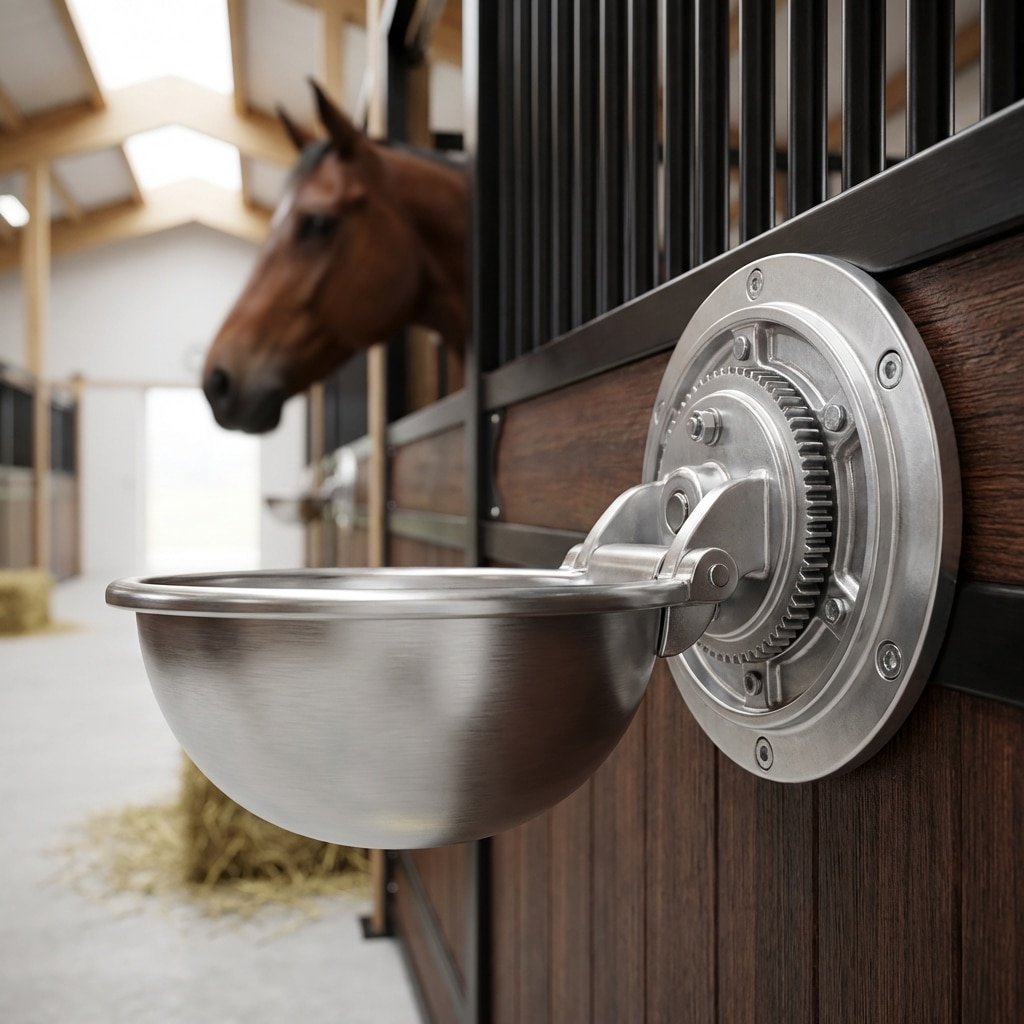
Eliminating Plastic Buckets that Crack in Winter
Standard plastic buckets shatter in freezing temps. DB Stable’s integrated Cast Aluminum Feeders provide a rust-proof, kick-resistant solution, eliminating dangerous shards and recurring replacement costs.
Why Polypropylene Fails in Freezing Conditions
Standard stable management often relies on cheap polypropylene buckets. In moderate climates, these function adequately. But in our key markets across North America and Northern Europe, winter temperatures frequently drop below the material’s glass transition point. At this specific thermal threshold, the plastic loses its flexibility and becomes brittle.
A horse does not stop kicking just because it is -10°C. When a hoof connects with a frozen bucket, the container does not dent—it shatters. This creates sharp, knife-like shards in the bedding, posing an immediate laceration risk to the animal’s legs and hooves. For facility managers, this represents a safety hazard and a recurring annual expense to replace broken inventory.
The Advantage of Cast Aluminum Feeders
DB Stable addresses this failure point in our **Professional Series** by eliminating loose containers entirely. We integrate the **Aluminium Swivel Feeder** directly into the stall front structure. This moves the feeding system from a “consumable” item to a permanent infrastructure asset.
- Cold-Weather Durability: Cast aluminum maintains its structural integrity in extreme cold. It absorbs impact from kicks without fracturing, unlike brittle plastics.
- Sanitation and Corrosion: Unlike galvanized steel, which can eventually corrode if the zinc layer is compromised by teeth, aluminum is naturally rust-proof and safe for wet mash.
- Fixed Safety: The integrated design prevents horses from tossing loose buckets, flipping them over, or getting legs trapped in handles.
الأسئلة المتداولة
How do swivel feeders improve safety during feeding times?
Swivel systems mechanically separate the handler from the horse during high-stress feeding moments. By rotating the feed bowl 360 degrees into the barn aisle, staff can dispense grain without unlocking the door or entering the “kill zone.” This eliminates the risk of being crowded, bitten, or kicked by food-aggressive horses, while significantly speeding up the workflow in large commercial facilities.
Can specific stall partitions help reduce food aggression between horses?
Yes. Food aggression often stems from resource guarding against neighbors. We install solid infills—specifically 28mm HDPE or high-density Bamboo—at the feed bowl level to block visual contact. When horses cannot see their neighbors eating, they stop competing, kicking the walls, and bolting their food. This privacy reduces anxiety for the animal and protects your stable infrastructure from expensive impact damage.
Why are aluminum feeders recommended over standard plastic buckets?
Plastic is a false economy in professional stables. Standard buckets become brittle in freezing temperatures and shatter under impact, creating razor-sharp shards that can injure a horse’s muzzle. Cast aluminum swivel feeders are rust-resistant, handle heavy kicks without cracking, and survive sub-zero climates. We recommend them because they solve the safety hazard and remove the recurring labor and cost of replacing broken plastic buckets.
الأفكار النهائية
Relying on brittle plastic buckets in a commercial facility creates a liability, not a saving. Our Professional Series Cast Aluminum Swivel Feeders eliminate the recurring cost of broken inventory and significantly reduce the risk of handler injury lawsuits. Investing in permanent infrastructure protects your margins from operational downtime and ensures staff safety during high-stress feeding hours.
Verify the engineering yourself before committing to a full facility upgrade. Request a specification sheet or a sample Swivel Feeder unit to test our “Kick-Proof Guarantee” against your current setup. Contact our team today to discuss integrating these safety features into your next wholesale container order.

 Arabic
  English
  Spanish
  French
  German
0 تعليق