


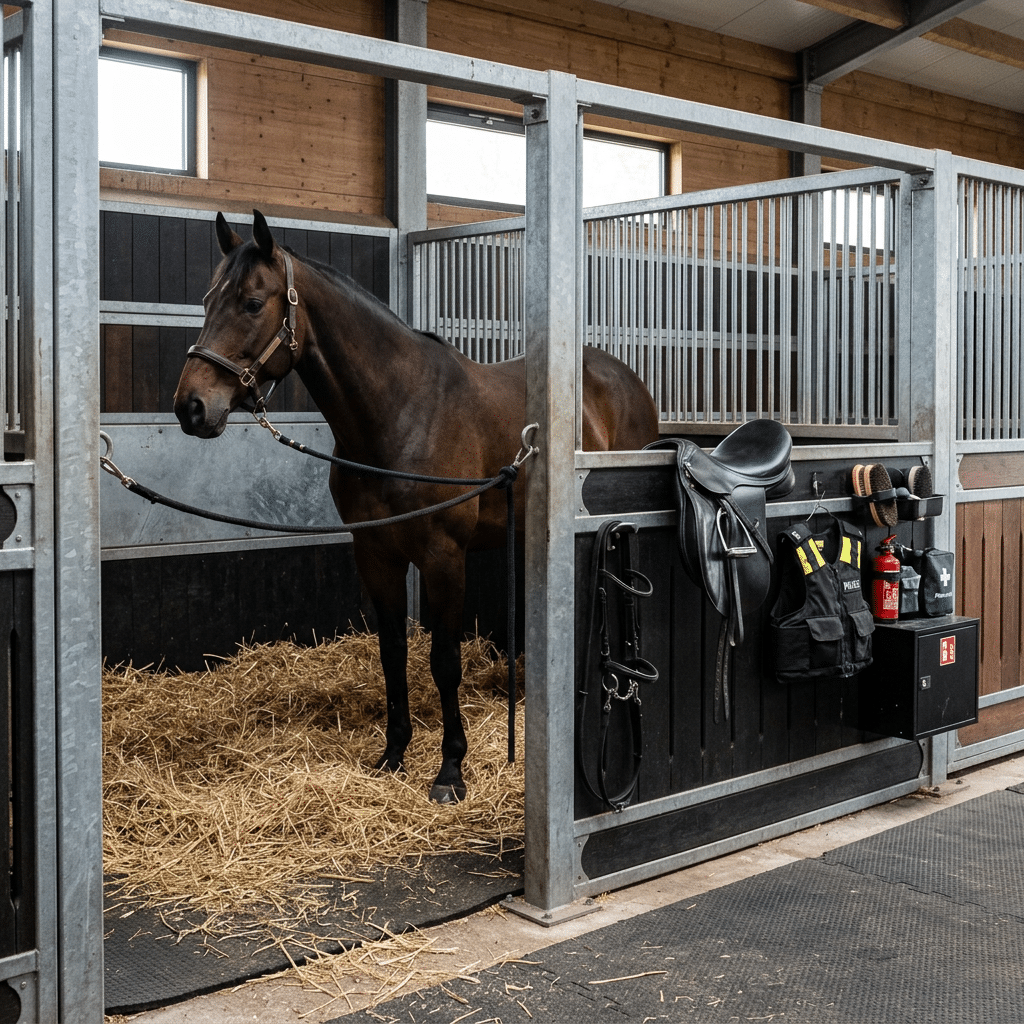
Strategic Trade Show Sourcing is the primary defense against the hidden financial risks of importing sub-par equestrian infrastructure. While Spoga Horse and the Canton Fair offer vast opportunities, failing to distinguish between surface-level aesthetics and true Hot-Dip Galvanization (ISO 1461) often leads to catastrophic warranty claims and rusted inventory. The real cost of procurement is not the travel budget, but the long-term liability of partnering with factories that substitute structural integrity for lower FOB prices.
This analysis benchmarks global exhibition suppliers against the Q345B steel standard and Flat-Pack logistical efficiency. We compare the trade-offs between Spoga’s innovation premiums and Canton’s volume capacity to help you secure a scalable OEM partner that protects your margins.
Designing Stables for Wheelchair Accessibility (ADA)
إجابة سريعة: ADA-compliant stables require 36-inch clear doorways and barrier-free thresholds. Top-hung sliding systems are critical to eliminate swing radiuses and floor hazards for wheelchair users.
Essential ADA Guidelines for Aisle and Door Widths
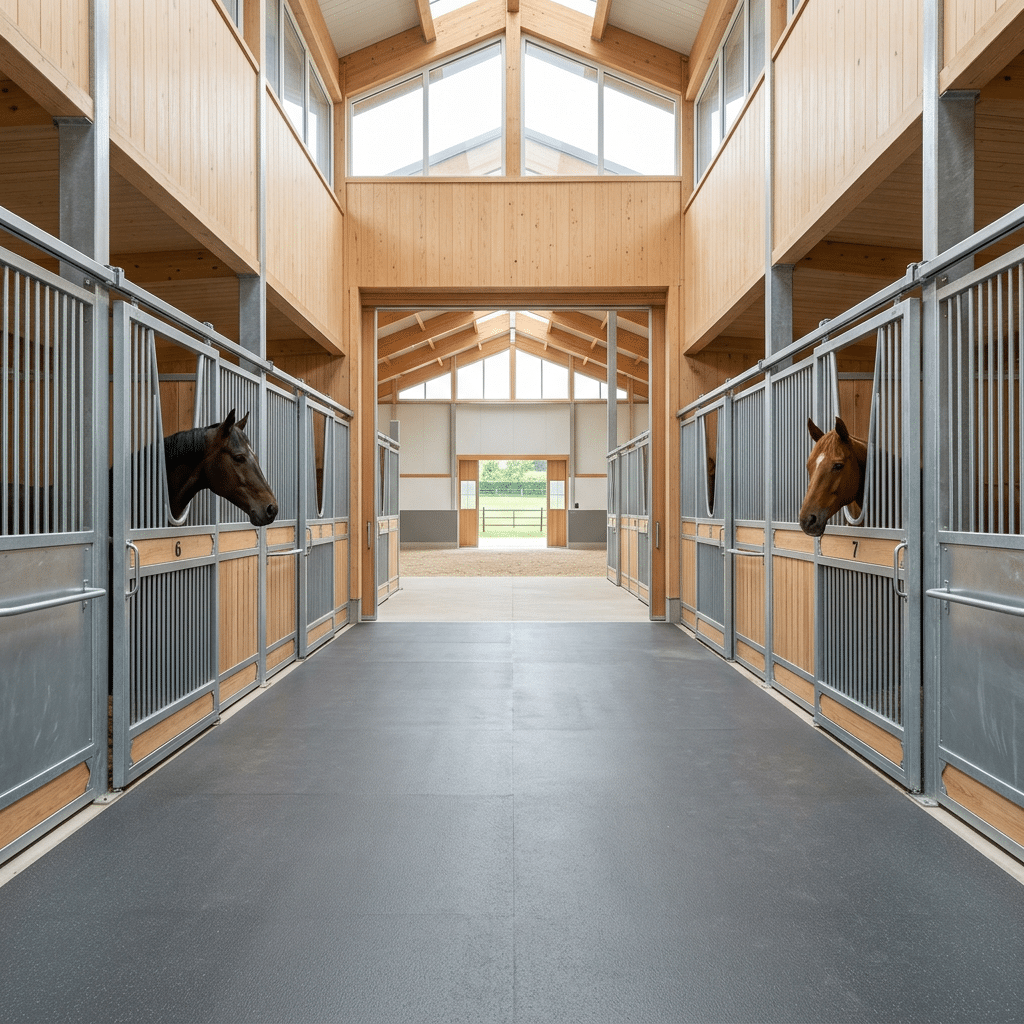
Most standard barns fail accessibility checks at the doorway. A standard stall door often provides less than the required clearance once hardware and stops are installed. To accommodate standard wheelchairs, you must ensure a minimum clear doorway width of 36 inches. This refers to the actual open space available for passage, not the rough opening size of the frame.
Space around the door is just as critical as the door itself. A wheelchair user cannot approach a door, unlatch it, and open it without room to move. You need to maintain a clear floor space of at least 30 inches by 48 inches directly in front of the stall door. Without this maneuvering box, the rider is effectively locked out.
- Aisle Width: Design main aisles with a minimum 5-foot width. This allows a wheelchair to perform a full 180-degree turn without getting stuck.
- Flooring Surfaces: Loose gravel and deep sand are non-starters for wheels. Select firm, slip-resistant surfaces like interlocking rubber pavers or brushed concrete to ensure independent mobility.
Utilizing the Professional Series Hidden Track System
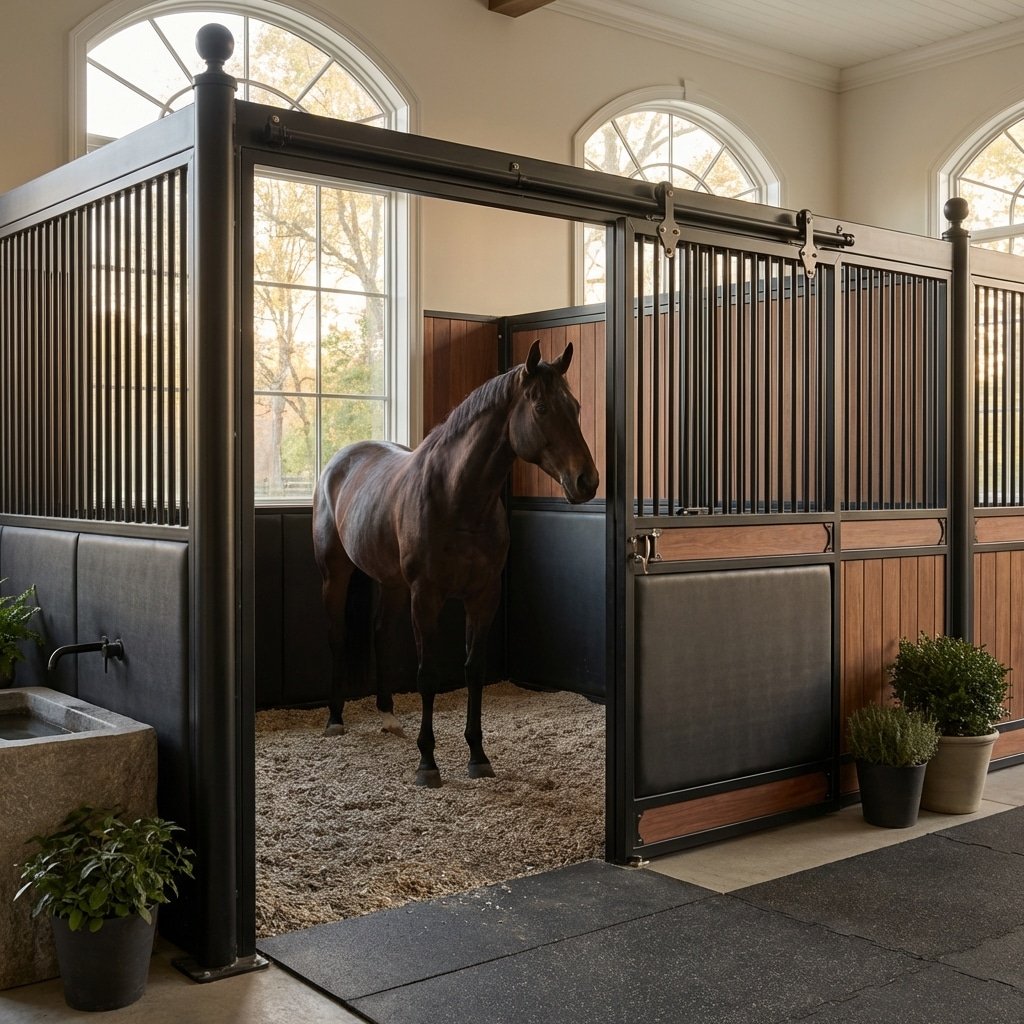
Hardware choice dictates whether a stable is truly accessible or just legally compliant. Our السلسلة الاحترافية addresses the most common barrier in barn design: the threshold. Standard sliding doors often rely on a bottom guide channel that sits on the floor, creating a trip hazard and a physical barrier for small wheelchair castors.
We utilize a Hidden Track System that is exclusively top-hung. This engineering removes the need for a raised bottom track, creating a zero-trip entry. A rider can roll smoothly into the stall without obstruction. This seamless transition is mandatory for safe, independent access.
- Sliding vs. Hinged: Hinged doors force a wheelchair user to back up awkwardly to accommodate the door swing. Sliding doors eliminate this requirement, allowing the user to remain stationary while opening the stall.
- مقاومة الصدمات: Wheelchairs, specifically footrests and hubs, will accidentally hit the door. Our 28mm-32mm HDPE infill is “Kick-Proof” and absorbs these impacts without the splintering or cosmetic damage common with wood.
The Aisle Experience: Wide Sliding Doors vs. Swing Doors
Sliding doors eliminate swing radiuses to maximize aisle usage and safety. DB Stable engineers this with heavy-duty hidden tracks and cast-proof clearances for high-traffic environments.
Optimizing Barn Flow: Space-Saving Slides vs. Traditional Swings
The choice between sliding and swing doors is not just aesthetic; it dictates the operational footprint of your facility. Traditional swing doors create a “dead zone” in the aisle—
specifically, the radius required for the door to open fully. In a standard 12-foot aisle, a 4-foot swing door consumes significant floor space, potentially blocking the path for tractors, feed carts, or other horses passing by.
Sliding doors solve this by keeping the motion flush against the stall front. This design eliminates the swing arc entirely, preventing aisle blockage. For high-traffic commercial barns or racing stables where multiple horses move simultaneously, this spatial efficiency reduces the risk of collision and injury. Wind is another operational factor; an unlatched swing door can catch a gust and slam into a handler or horse, whereas sliding doors remain contained within their tracks.
Technical Edge: DB’s Hidden Track System and Cast-Proof Safety
We engineer our sliding doors to address the two most common failure points in stable hardware: track jamming and leg injuries. Our السلسلة الاحترافية utilizes a proprietary “Hidden Track System.” Unlike open-track designs that accumulate dust, bedding, and debris—eventually causing the door to stick—our enclosed system protects the rollers, ensuring smooth, one-handed operation for decades.
Safety extends to the structural framing. We use Q345 Low Alloy High Strength Steel (equivalent to ASTM Grade 50) for the door frames, providing superior impact resistance against kicks compared to standard mild steel. To protect the horse, we strictly implement a “Cast-Proof Design.”
- Bottom Clearance: Maintained at approximately 50 مم. This specific gap is small enough to prevent a rolling horse from getting a hoof stuck under the door, yet large enough to allow drainage.
- Hardware Material: All latches, guides, and rollers use فولاذ مقاوم للصدأ 304. This resists rust in ammonia-rich stable environments, unlike the zinc-plated hardware used by budget competitors.
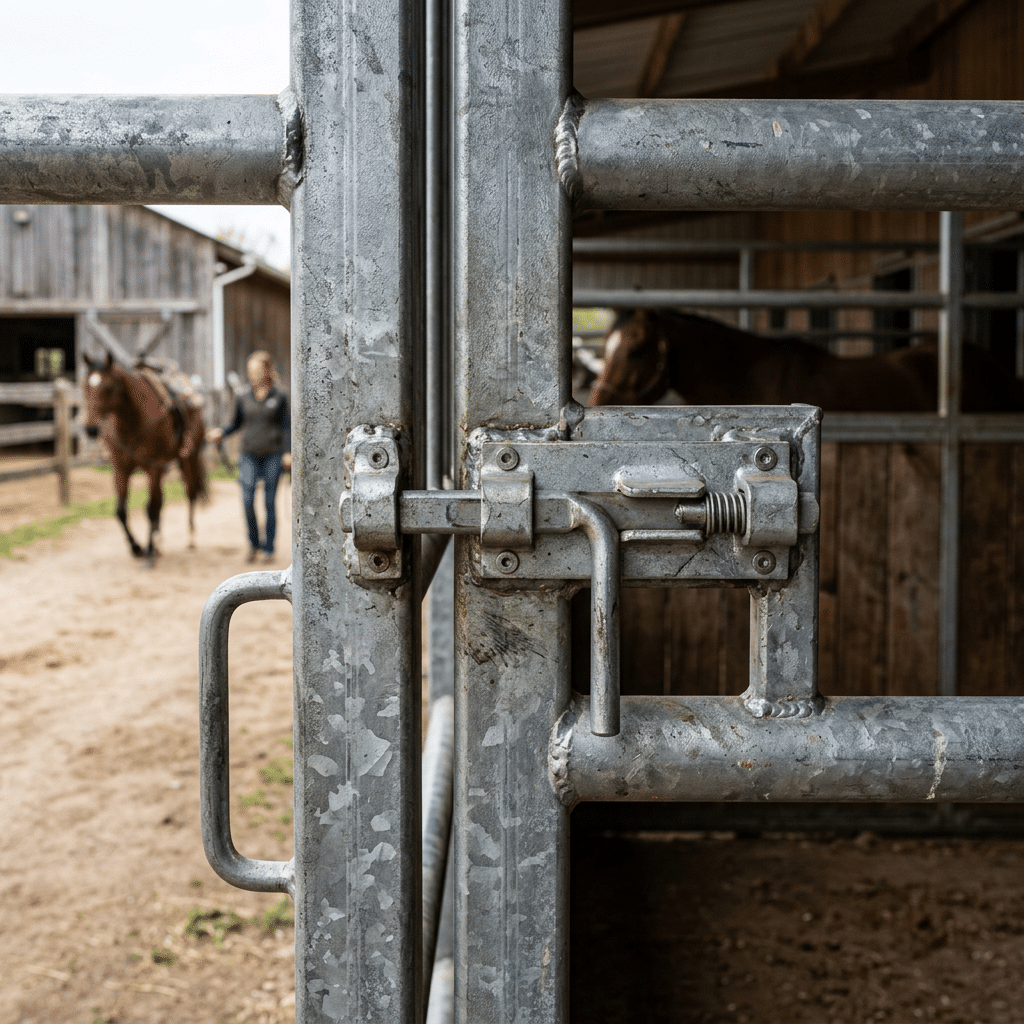
- Rust Protection: The entire door frame undergoes الجلفنة بالغمس الساخن بعد التصنيع (ISO 1461), ensuring every weld point is sealed against corrosion.
الأسئلة المتداولة
How to design an ADA compliant horse barn?
Designing for ADA compliance requires integrating accessibility standards into the agricultural environment. Aisles should exceed the standard 12 feet to allow safe maneuvering, and flooring must be smooth and level—rubber brick or concrete with mats is ideal to prevent wheel obstruction. Doorways require a minimum width of 32 inches, though 48 inches is optimal for comfort. Crucially, you must eliminate raised thresholds; use level transitions or small fixed ramps to ensure wheelchairs can move freely between the aisle, tack rooms, and viewing areas. Restrooms require panic buttons and grab bars, and mounting blocks must be replaced with accessible ramps or lifts.
Minimum door width for wheelchair access in barns?
The absolute minimum clear opening for wheelchair access is 32 inches (measured with the door open at 90 degrees). If the doorway depth exceeds 24 inches, this minimum increases to 36 inches. While standard wheelchairs average 26 inches in width, the extra space allows for arm movement and maneuvering. Hardware like handles and locks must be placed no higher than 48 inches from the floor to remain within reach.
Best stable doors for therapeutic riding centers?
Dutch (split) doors are often the optimal choice for therapeutic centers. They allow the top section to remain open for ventilation and socialization, reducing horse anxiety, while the bottom section keeps the animal securely contained. This visibility is vital for riders with disabilities to interact safely with the horse before entering the stall. For safety, these doors should feature tamper-proof latches that are easy for handlers to operate with one hand but impossible for horses to open. Materials should be heavy-duty galvanized steel to withstand frequent use and cleaning.
Are sliding stall doors easier to open?
Yes. Sliding doors are designed for single-hand operation, which is a critical safety feature when a handler is leading a horse with the other hand. Unlike swing doors, you do not need to step back or move out of the way of the door’s arc. A high-quality sliding system with sealed roller bearings requires minimal force to glide open and will not be caught by wind gusts, making it the safer option for busy aisles.
PATH Intl barn safety standards?
PATH Intl standards focus on strict protocols for facility maintenance and participant protection. Essential requirements include mandatory ASTM-SEI helmet usage for all mounted activities and a ban on open-toed shoes or steel-toed boots. Facilities must maintain clear emergency procedures for fire and medical incidents, including accessible first aid kits and designated assembly points. Access to the barn is strictly controlled; unauthorized personnel are prohibited in feed rooms or paddocks, and all participants must be supervised by trained staff or guardians until they enter the arena.
Engineered For Safety And 20-Year Durability
Zero-Threshold Floors: Eliminating Trip Hazards
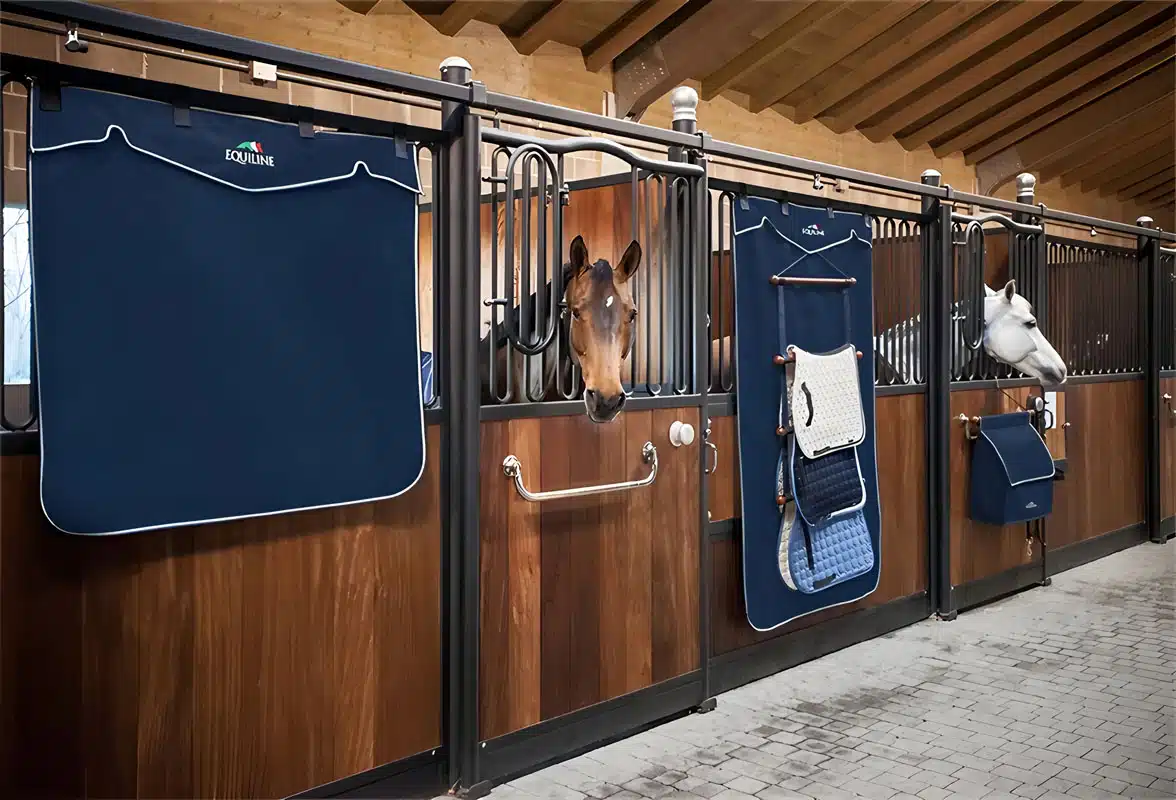
Zero-threshold designs utilize top-hung mechanics and active sealing technologies to remove vertical obstructions, ensuring ADA compliance while preventing water ingress in commercial equestrian facilities.
The Mechanics of Barrier-Free Accessibility
In commercial and therapeutic equine facilities, the floor threshold is often the primary point of failure for accessibility. Traditional raised thresholds create immediate barriers for wheelchair users and pose significant trip hazards for individuals with limited mobility. Removing these vertical obstructions is not just an aesthetic choice; it is a risk management strategy mandated by regulations like the ADA, which restricts threshold height to a maximum of 1/2 inch for accessible routes.
For barn aisles and tack rooms, achieving a true zero-threshold requires seamless visual and physical continuity between indoor and outdoor spaces. This design philosophy aligns with our “Professional Series” approach, where we utilize top-hung hidden track systems for sliding doors. By suspending the door’s weight from the header rather than the floor, we eliminate the bottom track entirely, leaving a clear, unobstructed path of travel that supports heavy equipment and mobility devices alike.
- Risk Reduction: Eliminates trip hazards for aging staff, visitors, and mobility device users.
- الامتثال التنظيمي: Meets strict ADA mandates regarding accessible route continuity and doorway clearance.
- Operational Efficiency: Allows for the smooth transit of feed carts, heavy machinery, and mucking equipment without jarring transitions.
Active Sealing Technologies: Magnetic and Adjustable Systems
The engineering challenge of a zero-threshold floor is maintaining environmental integrity. Without a raised dam, wind-driven rain and drafts can easily penetrate the building envelope. To solve this, the industry relies on active hardware solutions that engage only when the door is closed, ensuring the facility remains weatherproof without compromising accessibility.
Magnetic sealing systems offer the highest performance for exterior applications. These units utilize a magnetic strip embedded in the floor channel that rises to meet a magnet in the door bottom seal when closed. This creates a hermetic seal against driving rain and air infiltration, yet the floor remains completely flat when the door is open. For interior transitions or heavy-traffic zones, mechanical drop seals and flush floor plates provide the necessary durability to withstand the weight of horses and machinery.
- Magnetic Sealing Systems: Solutions like ALUMAT-Frey utilize magnetic lift mechanisms to seal gaps against rain and air without a physical threshold.
- Adjustable Threshold Plates: Heavy-duty hardware (e.g., ZERO International) allows facility managers to fine-tune the gap for high-traffic durability while maintaining low profiles.
- Flush Floor Plates: Systems like FritsJurgens utilize minimized undercuts and flush-mounted mechanics to maintain a pristine, hazard-free aesthetic.
Top Suppliers Engineering for the PATH/RDA Community
Executive Insight: Authentic OEM engineering firms for therapeutic riding are rare; most directories list accredited centers rather than the manufacturers building the infrastructure.
| Supplier Category | Role in PATH/RDA Ecosystem | Critical Engineering Spec |
|---|---|---|
| Stabling Infrastructure (OEM) | Permanent animal housing & aisle safety | Hot-Dip Galv ISO 1461; Q345B Impact Steel |
| Adaptive Tack Manufacturers | Rider support & specialized saddlery | Quick-release mechanisms; high-grip materials |
| Arena Footing Engineers | Ground stability for uneven gaits | style=”padding: 12px; border: 1px solid #ddd;”>Dust-free; high shock absorption ratings |
| Mounting Equipment Fabricators | Wheelchair transfer & mounting | ADA ramp compliance (1:12 slope); non-slip decks |
The “Missing Middle” in Therapeutic Sourcing
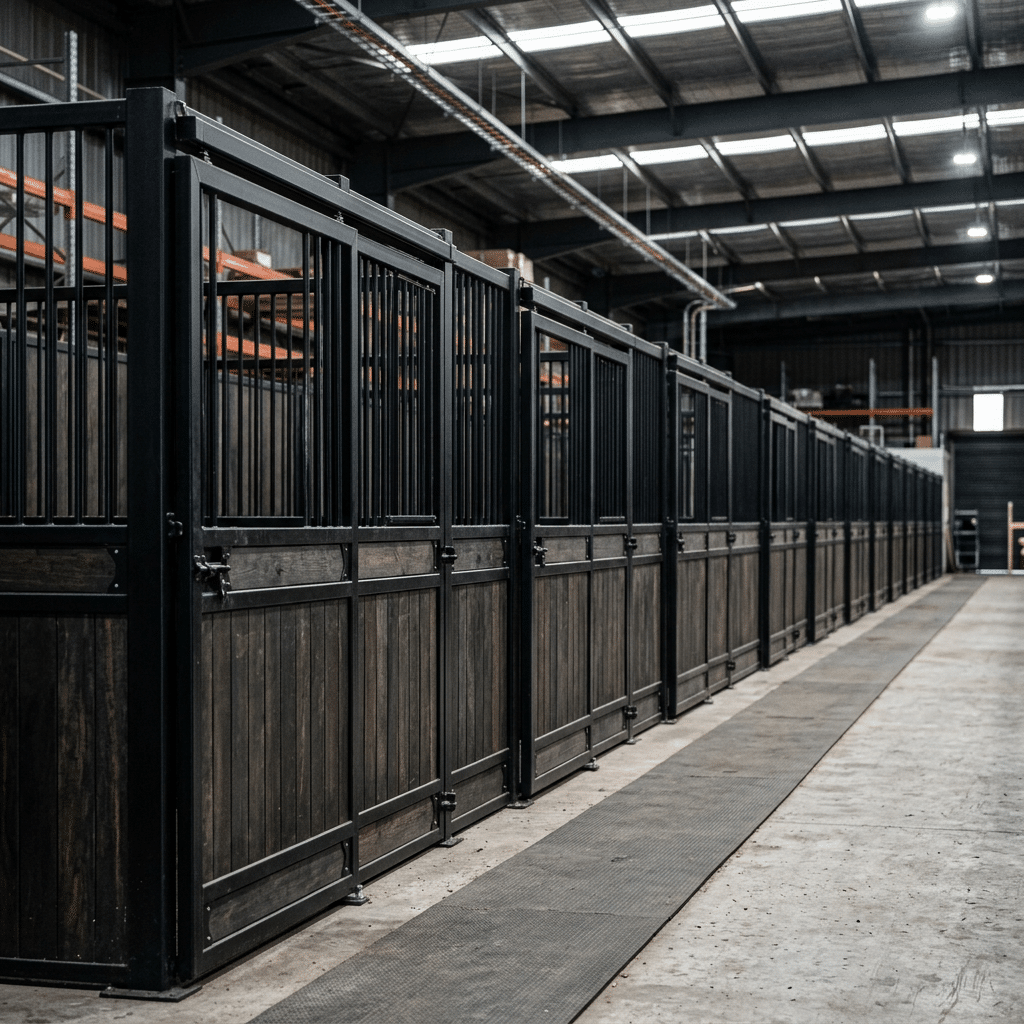
Finding specialized suppliers for Professional Association of Therapeutic Horsemanship (PATH) or Riding for the Disabled Association (RDA) facilities is notoriously difficult. A standard industry search often returns lists of operating centers (the non-profits providing the service) rather than the engineering firms manufacturing the hardware. This forces facility managers to adapt standard agricultural equipment for special needs applications, which frequently creates compliance gaps regarding ADA accessibility and safety.
Engineering for “Zero-Failure” Environments
Suppliers serving this niche must adhere to stricter manufacturing standards than general equestrian fabricators. In a therapeutic setting, a sharp edge or a jammed door is not just an inconvenience—it is a liability.
- Steel Resilience: We strictly utilize فولاذ Q345B منخفض السبائك عالي القوة for structural posts in these environments. Standard Q235B (mild steel) can become brittle in freezing temperatures, posing a fracture risk if a horse kicks out during a session.
- Coating Toxicity: Horses in therapy programs may crib or chew due to stress. We mandate Hot-Dip Galvanization after fabrication (BS EN ISO 1461) rather than powder coating or paint, which can chip off and be ingested.
- Cast-Proof Safety: Suppliers must engineer bottom gaps at approximately 50 مم. Gaps larger than this allow a rolling horse to get a hoof stuck, creating a panic situation that endangers both the animal and nearby participants.
الأسئلة المتداولة
How to design an ADA compliant horse barn?
Designing for ADA compliance in equestrian settings moves beyond standard residential codes. You must focus on three critical zones: routes, thresholds, and interaction heights.
- Accessible Routes: Main aisles should be concrete or rubber brick—dirt or deep sand is impassable for wheelchairs. Aisle width must accommodate a 180-degree wheelchair turn, necessitating at least 60 inches of clear space, though 12-14 foot aisles are standard for safety.
- Zero-Threshold Entry: Eliminate raised door sills. If a weather stop is required, it must be beveled and no higher than 0.5 inches. We recommend a completely flush concrete transition with a slight slope away from the barn for drainage.
- Vertical Reach: Tack hooks, light switches, and latches must be placed no higher than 48 inches to remain accessible to seated users.
Minimum door width for wheelchair access in barns?
The absolute legal minimum under ADA standards is 32 inches of clear width. However, “legal” does not mean “functional” in a barn environment. Standard manual wheelchairs average 26 inches wide, but modern powered wheelchairs and adaptive sports chairs are significantly wider.
For stable aisles and tack rooms, we engineer openings to a minimum of 48 inches (4 feet). This accounts for the user’s elbows, bulky winter clothing, and the potential need for a side-walker or assistant to pass through simultaneously. A 32-inch door is often too tight for safe navigation around 1,000-pound animals.
Best stable doors for therapeutic riding centers?
أبواب منزلقة are the superior choice for aisle-facing stalls in therapeutic centers. Hinged (swing) doors create a dangerous “swept zone” when opening, which can strike a wheelchair user or block the escape route in an aisle. A sliding door remains contained within the stall front’s footprint, maintaining a clear, safe path at all times.
We specifically recommend systems like our السلسلة الاحترافية, which utilizes a hidden overhead track system. This prevents debris from clogging a floor track—a common failure point—and ensures the door cannot be derailed by a horse kicking it, a critical safety feature for high-traffic student barns.
Are sliding stall doors easier to open?
Yes, when engineered correctly. Sliding doors rely on linear momentum rather than the radial torque required to swing a hinged door against gravity and hinge friction. A high-quality sliding system with ball-bearing rollers allows a handler to open the stall with one hand while leading a horse with the other.
Cheap systems often fail here. If the track is exposed to dust or uses nylon rollers without bearings, the door becomes heavy and jams. We use a Hot-Dip Galvanized track with enclosed heavy-duty rollers to ensure the “break-out force” (the effort needed to start the movement) remains low enough for volunteers or riders with limited upper body strength to operate.
PATH Intl barn safety standards?
PATH International standards mandate a “safety-first” physical environment. Beyond operational protocols like helmet usage and emergency drills, the facility hardware must meet specific criteria to pass accreditation.
- Secure Containment: Latches must be “horse-proof” (requiring two distinct movements to open) to prevent escapes.
- Protrusion Hazards: Walls and stalls must be free of hooks, nails, or sharp edges that could snag a rider’s clothing or skin. Our flush-welded joints address this specifically.
- Lighting & Ventilation: Barns must be well-lit (no dark corners) and ventilated to prevent ammonia buildup, which compromises the respiratory health of both horses and vulnerable riders.
DB’s Smooth-Glide Enclosed Track System
Our enclosed, top-hung track eliminates debris buildup and floor hazards. Powered by 304 stainless steel bearings, it ensures fingertip-light operation and anti-jump safety for professional stables.
The “Hidden Track” Architecture
Most barn door failures stem from open rails acting as magnets for dust, bedding, and ammonia-soaked debris. We engineered the “Hidden Track” architecture to solve this by integrating the mechanism directly inside the header beam. This fully enclosed design shields the rollers from the stable environment and eliminates exposed sharp edges that could injure a rearing horse. By utilizing a top-hung configuration, we completely removed the need for floor tracks, eliminating a common trip hazard for both horses and handlers. This architecture is the standard specification for our DB Professional Series, designed for high-traffic facilities where reliability is non-negotiable.
304 Stainless Steel Hardware & Rollers
A smooth door means nothing if the bearings seize after one winter. We reject standard galvanized steel for critical moving parts, opting instead for materials capable of withstanding the corrosive ammonia levels found in active stables.
- 304 Stainless Steel Components: We use Grade 304 stainless steel for all connectors, bolts, and moving parts to guarantee long-term resistance against rust and seizing.
- Heavy-Duty Sealed Bearings: Our industrial rollers are sealed against moisture and dust, ensuring the door glides with fingertip pressure even in freezing climates.
- Anti-Jump Technology: Specialized hardware locks the door vertically to the track, preventing derailment even if the door sustains a heavy kick or impact.
- ISO 1461 Galvanization: The track housing undergoes Hot-Dip Galvanization after fabrication, creating a metallurgical bond that stops internal corrosion.
الأسئلة المتداولة
How to design an ADA compliant horse barn?
Designing for accessibility requires moving beyond standard agricultural codes to meet human-centric mobility needs. While private boarding stables often fall into a regulatory gray area, therapeutic riding centers must operate as public-facing commercial entities. The core design principle is the “Zero-Threshold” concept.
Your layout must eliminate trip hazards and accommodate wider turning radii:
- Entrance Widths: While ADA mandates 32 inches, we recommend 48-inch doorways to accommodate larger motorized wheelchairs and side-walkers comfortably.
- Flooring: Deep dirt or loose gravel is impossible for wheelchair users. Use concrete aisles with flush rubber pavers or mats.
- Hardware Height: Latches, light switches, and tack hooks must be positioned no higher than 48 inches from the floor for seated reach.
- Viewing Safety: If you use “kneewalls” for viewing areas, keep them low (15 inches) or use see-through fencing so seated spectators have clear sightlines without compromising safety.
Minimum door width for wheelchair access in barns?
The absolute legal minimum under ADA standards is a 32-inch clear opening (measured with the door open 90 degrees). However, in an equestrian environment, 32 inches is often insufficient.
For practical barn operations, you should frame doorways for a 36-inch minimum, with 48 inches being the ideal standard for main entry points. Standard wheelchairs average 26 inches in width, but users need additional “knuckle clearance” to propel themselves without scraping their hands against doorframes. Furthermore, if a doorway is deeper than 24 inches (common in thick stone or block barns), the minimum width strictly increases to 36 inches to allow for maneuvering.
Best stable doors for therapeutic riding centers?
Facility managers often debate between Dutch doors and Sliding doors. For therapeutic centers, أبواب منزلقة are generally superior for operational safety, while Dutch doors offer better socialization benefits.
Sliding doors (like our Professional Series) eliminate the “swing radius” into the aisle. In a therapeutic setting, aisles are often occupied by wheelchairs, mounting ramps, and volunteers. A hinged door swinging open unexpectedly can injure a participant or block an escape route. Sliding doors remain flush with the wall, keeping the aisle 100% clear.
However, if you choose Dutch doors to allow horses to hang their heads out for interaction, you must install magnetic hold-backs to secure the door flat against the wall. We recommend using حشوة البولي إيثيلين عالي الكثافة for these doors regardless of style, as it allows for easy sanitization and requires zero maintenance compared to wood.
Are sliding stall doors easier to open?
Yes, provided they are engineered correctly. A high-quality sliding door allows for one-handed operation, which is critical when a handler is leading a horse with the other hand.
The “ease” depends entirely on the track system. Cheap open-channel tracks accumulate dust and bedding, causing friction. We use an enclosed Hidden Track System in our Professional Series, which protects the rollers from debris. This ensures the door glides with minimal force. Additionally, sliding doors are safer in windy conditions; unlike hinged doors, they cannot be caught by a gust and slammed shut on a horse or handler.
PATH Intl barn safety standards?
PATH Intl (Professional Association of Therapeutic Horsemanship) standards focus heavily on risk reduction for vulnerable populations. Compliance involves three main pillars: Facility Maintenance, Access Control, and Equipment Protocols.
- Facility Integrity: Stalls and fences must be free of rust, sharp edges, or protruding nails. We support this via hot-dip galvanization (ISO 1461) to prevent structural corrosion.
- Access Control: Feed rooms, pastures, and equipment areas must be secured against unauthorized entry. Participants cannot be left unattended.
- Emergency Protocol: Facilities must have accessible first aid kits, clearly marked fire exits, and a designated emergency assembly point.
- Attire: Strict enforcement of helmet rules (“No Helmet = No Ride”) and closed-toe footwear for anyone entering the barn area.
الأفكار النهائية
Sourcing for therapeutic centers demands more than generic agricultural standards; it requires strict adherence to safety protocols and ADA compliance. Our ISO 1461 Hot-Dip Galvanization and Q345B impact steel provide the structural integrity necessary to mitigate liability risks in these high-traffic facilities. Investing in verified OEM engineering ensures your infrastructure withstands daily abuse without succumbing to rust or mechanical failure.
Stop guessing on compliance and validate your hardware specifications before construction begins. We recommend requesting a sample of our hidden track system or scheduling a technical consultation to align your project with global accessibility mandates. Partner with DB Stable to deliver a facility that prioritizes safety and operational longevity from day one.

 Arabic
  English
  Spanish
  French
  German
0 تعليق