


Rust Converters often appear as a budget-friendly solution for aging equestrian facilities, yet they consistently fail against the aggressive ammonium carbamate found in active stables. Applying topical tannic acid treatments to structural steel provides only a temporary cosmetic mask while internal corrosion continues to degrade the 14-gauge tubing unseen. This cycle of repetitive maintenance drains operating budgets and risks catastrophic failure at critical weld points where chemical bonding cannot replicate the metallurgical strength of zinc immersion.
This comparison evaluates the limitations of chemical passivation against the industrial standard of BS EN ISO 1461 الجلفنة بالغمس الساخن بعد التصنيع. We analyze why surface adhesion fails in humid environments and how submerging fully welded Q235B frames into molten zinc ensures internal coverage exceeding 70 microns. Distinguishing between a temporary mechanical bond and a permanent metallurgical alloy layer is the only way to secure facility longevity and eliminate recurring repair costs.
The Endless Battle with Rusted Barn Hardware
Barns create a “perfect storm” for corrosion where humidity, acidic ammonia, and abrasion destroy standard steel protections, specifically at weak weld points.
The Aggressive Nature of Stable Environments
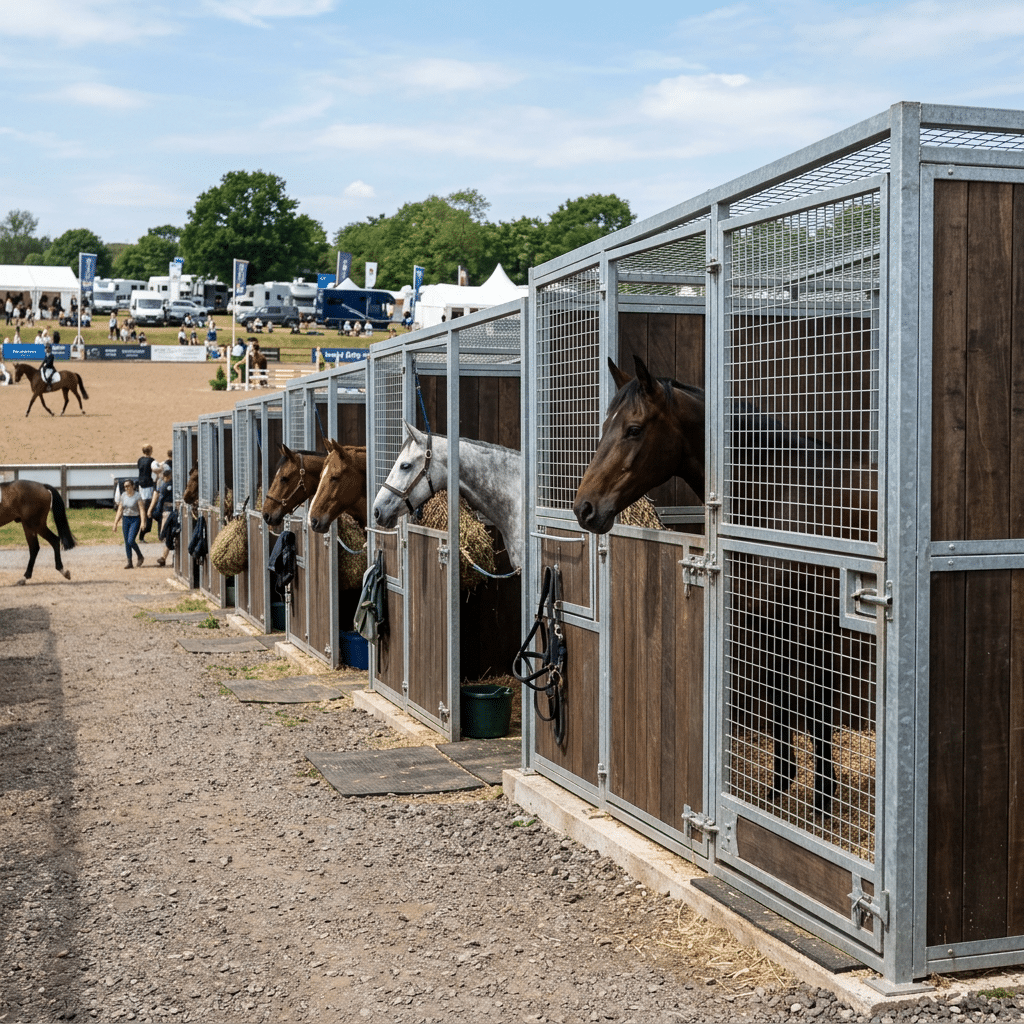
Unlike general agricultural storage or residential sheds, horse stables function as active chemical environments. Standard residential hardware often fails here because it is not engineered to withstand the biological byproduct of livestock. The atmosphere inside a working barn aggressively attacks metal through three specific mechanisms.
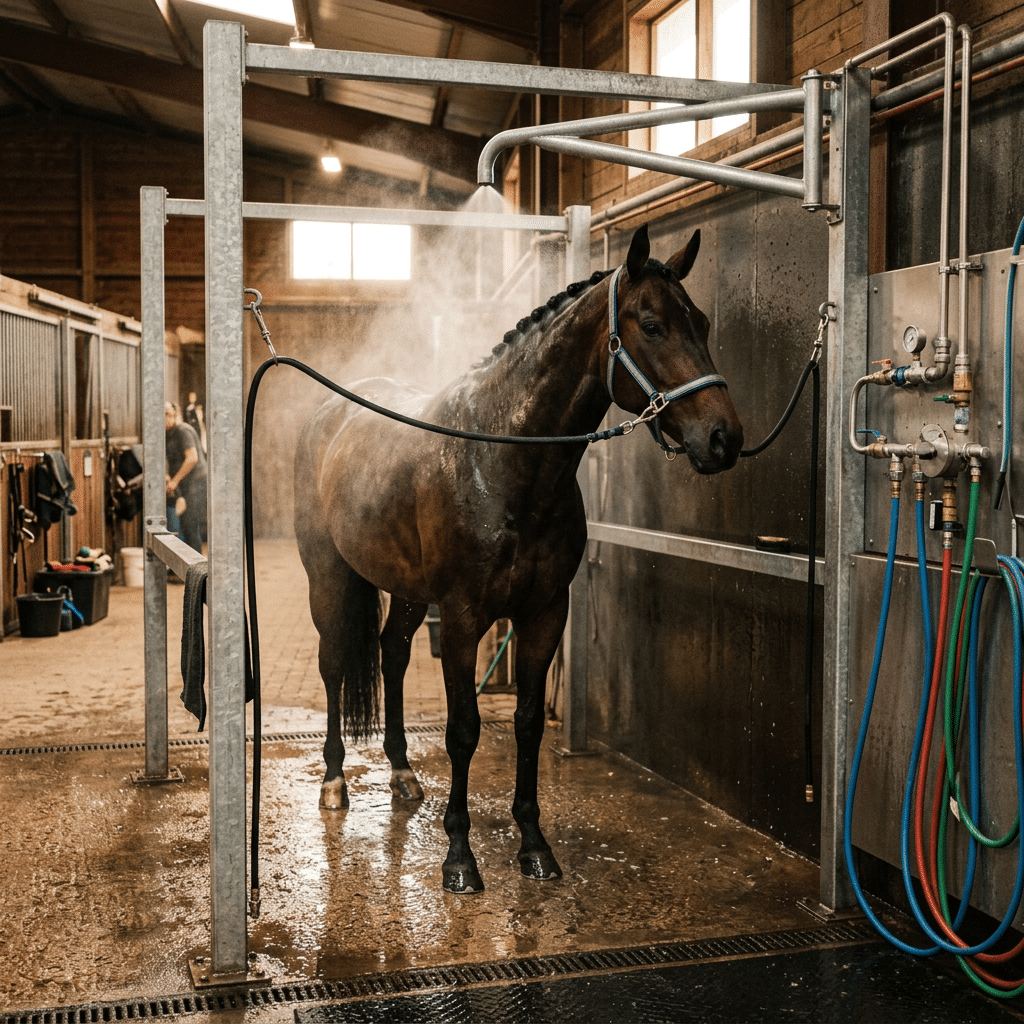
- High Humidity Levels: Horses exhale significant moisture, and combined with wash bay runoff, this creates a damp environment that accelerates oxidation rates on metal surfaces.
- Acidic Ammonia Fumes: Decomposition of urine releases ammonia vapors. This creates an acidic atmosphere that chemically strips standard paint and eats through exposed steel far faster than rainwater alone.
- Physical Compromise: Livestock interact with their environment. Kicks, rubs, and cribbing physically abrade protective coatings, creating immediate entry points for rust to take hold.
Vulnerabilities in Pre-Galvanized Welds
The primary failure point in budget stabling lies in the manufacturing process. Many competitors use “pre-galvanized” tubing to lower production costs. While the raw tube starts with a zinc coating, the fabrication process destroys this protection exactly where it is needed most. Without full immersion in a zinc bath after welding (Hot-Dip Galvanization ISO 1461), the hardware relies on weak cosmetic fixes.
- Zinc Burn-Off: The intense heat of welding vaporizes the zinc layer on pre-galvanized tubes, leaving the weld joint as exposed, burnt steel.
- Immediate Rust Points: Unless the manufacturer re-dips the entire frame (as we do), these black steel welds rely on spray paint for protection and usually rust within months.
- Thin Wall Risks: Budget hardware often utilizes tubing with wall thicknesses under 2.0mm. In a corrosive environment, rust penetrates these thin walls quickly, leading to structural failure rather than just surface aesthetic issues.
How Chemical Rust Converters (Tannic Acid) Work
Chemical converters utilize tannic acid to stabilize iron oxide into inert ferric tannate, while organic polymers create a temporary seal against oxygen and moisture.
The Chemical Transformation: Creating Ferric Tannate
The core mechanism relies on a chelation reaction between tannic acid and iron oxide (common red rust). Unlike abrasive blasting which physically removes corrosion, this chemical approach modifi
es the existing rust structure on a molecular level. The solution uses the rust itself as a raw material for the protective coating.
- Reaction: Tannic acid chemically attacks the iron oxide on the metal surface.
- Conversion: This interaction transforms unstable red rust into ferric tannate, a stable bluish-black complex.
- Stabilization: The process locks iron ions in place, temporarily halting the corrosion cycle without mechanical removal.
The Polymer Barrier: Sealing the Surface
Conversion alone does not guarantee longevity. To prevent immediate re-oxidation, formulation chemists add organic polymers—typically 2-butoxyethanol—to the solution. These secondary ingredients are critical for bridging the gap between a chemical reaction and a physical coating.
- Wetting Agents: The polymer reduces surface tension, allowing the acid to penetrate deep into the rust pores rather than sitting on top.
- Physical Barrier: As the solution cures, these polymers cross-link to form a non-porous film that blocks oxygen and moisture penetration.
- Primer Function: This cured layer serves as a cohesive primer, allowing the treated surface to accept oil or epoxy-based topcoats effectively.
Premium Custom Horse Stables Built To Last
The Inevitable Return of Rust in High-Ammonia Stalls
Chemical rust converters fail in stables because high humidity prevents necessary curing, while ammonium carbamate accelerates decay. Only hot-dip galvanization seals the internal structure of hollow tubing.
The Chemistry of Ammonia-Accelerated Corrosion
Stable environments are not just wet; they are chemically aggressive. The primary culprit is not simple water, but the breakdown of horse urine into ammonium carbamate. This compound acts as a powerful corrosive agent that degrades steel significantly faster than standard oxidation. When you apply a topical rust converter in this environment, you are fighting a losing battle against chemistry.
Most commercial rust converters rely on phosphoric acid to chemically transform iron oxide. For this reaction to form a stable, protective layer, the surface requires absolute dryness during the curing phase. Stables naturally maintain high humidity levels due to animal respiration and waste. This moisture prevents the converter from setting correctly, often causing “flash rust” to reappear within hours of application. The treatment simply cannot bond before the environment attacks the metal again.
The Hidden Danger of Internal Corrosion in Hollow Tubing
The most dangerous rust is the kind you cannot see. Standard horse stalls use hollow steel sections, typically 50mm x 50mm RHS (Rectangular Hollow Section). When you spray or brush a rust converter, you treat only the exterior face of the metal. This leaves the interior completely defenseless against the stable environment.
- Trapped Vapors: Ammonia vapor and condensation penetrate the hollow tubes through bolt holes and joints.
- Internal Rot: The trapped corrosive agents eat away at the 14-Gauge (2.0mm) steel wall from the inside out.
- Structural Failure: The post may look fine on the outside after painting, but the steel becomes paper-thin internally, snapping under the impact of a kick.
This invisible structural decay is exactly why DB Stable mandates الجلفنة بالغمس الساخن بعد التصنيع. Unlike spray-on treatments or pre-galvanized welding, our process submerges the entire welded door into molten zinc. This liquid flows through the drain holes and coats the interior of the tubing, sealing the steel from the inside out. No topical chemical treatment can replicate this internal protection.
The “One and Done” Fix: Upgrading to ISO 1461 HDG Panels
Topical converters offer temporary stabilization, but ISO 1461 creates a metallurgical bond that protects steel—inside and out—for decades without maintenance.
| Comparison Factor | Standard Paint / Chemical Fix | DB Stable ISO 1461 HDG |
|---|---|---|
| Bond Mechanism | Mechanical (Surface Adhesion) | Metallurgical (Zinc-Iron Alloy) |
| Internal Coverage | Zero (External application only) | 100% (Immersion coats inside) |
| Weld Point Safety | High Risk (Heat burns protection) | “padding: 12px; border: 1px solid #ddd;”>Sealed (Dipped after welding) |
| Coating Thickness | Typical 25-40 microns | > 70 microns (Tubing Standard) |
The Science Behind ISO 1461: A Metallurgical Bond
Paint and rust converters rely on a mechanical bond. They stick to the surface of the steel like a sticker. If moisture gets underneath—which it eventually does—the coating fails. Hot-dip galvanizing (HDG) under the BS EN ISO 1461 standard is fundamentally different because it creates a metallurgical reaction. We immerse the steel in molten zinc at roughly 450°C. This heat causes the zinc to react with the iron in the steel, forming a series of zinc-iron alloy layers that are harder than the base steel itself.
This process provides cathodic protection. Zinc is anodic to iron, meaning it will sacrifice itself to protect the steel core. If a horse kicks a panel and scratches the surface, the surrounding zinc corrodes preferentially, “healing” the breach before rust can take hold. Paint cannot do this; once the seal is broken on a painted rail, rust spreads like a virus under the surface.
The most critical advantage for stable systems is internal protection. A spray gun cannot paint the inside of a 50x50mm tube. Condensation and urine vapors often rot hollow stable bars from the inside out, invisible to the eye until the bar snaps. Because ISO 1461 involves total immersion, the molten zinc flows into every hollow section, coating the interior walls with the same thickness as the exterior.
The “After Fabrication” Advantage: Why We Dip After Welding
In the B2B equestrian manufacturing market, “Galvanized” is a loose term often used to hide cost-cutting measures. Most competitors use pre-galvanized tubes. They buy tubes that were galvanized at the steel mill, cut them, and then weld them together. The intense heat of welding burns the zinc off at the joints, leaving the most critical structural points exposed. They spray these burnt joints with cold zinc paint (silver spray), which offers zero structural protection.
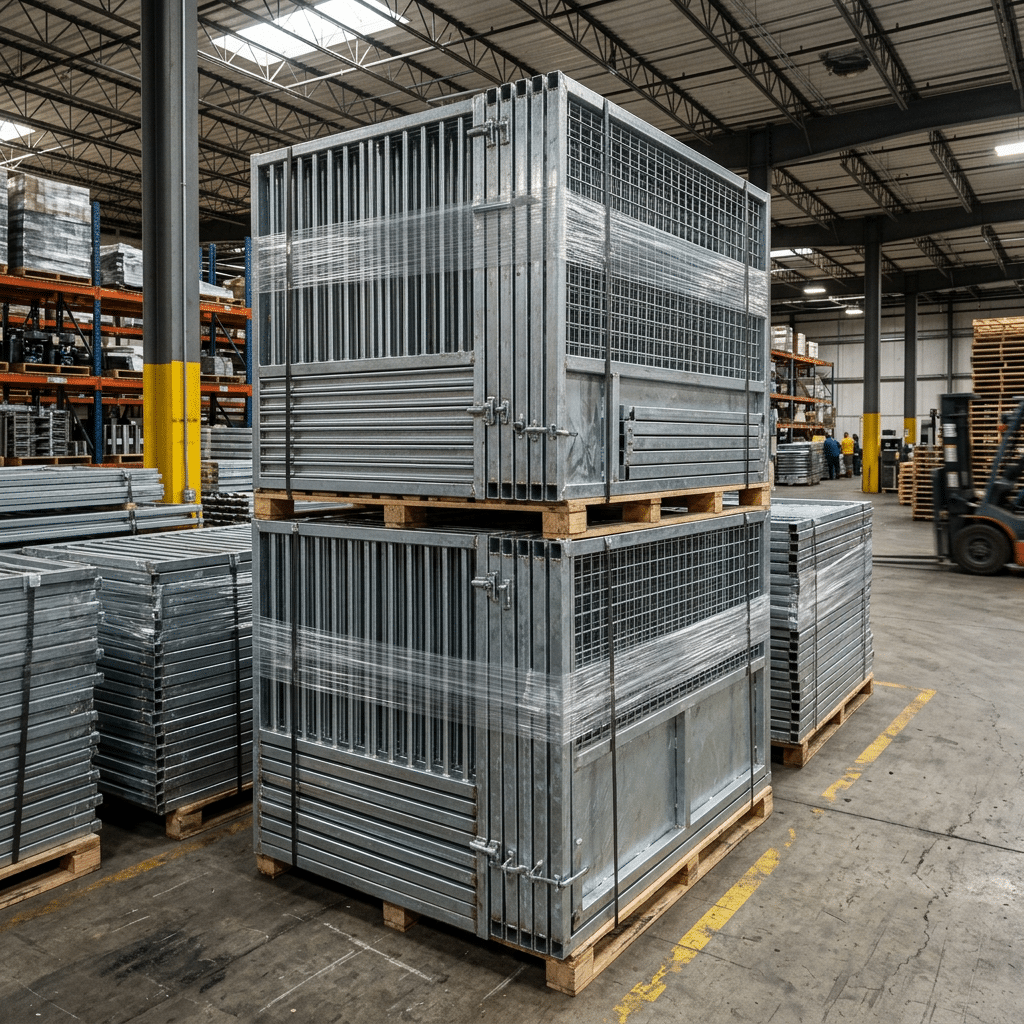
We strictly utilize a “Hot-Dip Galvanization After Fabrication” process. Our factory welds the entire stable front using raw black steel (Q235B or Q345B). Only after all cutting, drilling, and welding are complete do we dip the entire unit. This ensures the weld seams are completely sealed in zinc, eliminating the “rust bleed” often seen on cheaper stable fronts within six months of installation.
- Structural Parts (>6mm steel): We achieve an average coating thickness of > 85 microns.
- Tubing (3-6mm steel): We adhere to a standard of > 70 microns, significantly higher than the 45-micron industry average for pre-galv material.
- التحقق: Every batch undergoes ASTM B117 Salt Spray Testing exceeding 96 hours to ensure zero red rust.
This method costs us more in production time—adding roughly 7-10 days to our lead times for the logistics of moving materials to the bath—but it is the only way to guarantee a product that withstands ammonia-heavy stable environments for decades.
الأسئلة المتداولة
Can I use rust converters on my existing barn hardware?
Rust converters are a temporary cosmetic fix, not a structural solution for stables. They chemically require 100% rust coverage to react effectively. Most barn hardware has patchy rust mixed with old paint, causing the converter to cure unevenly and peel. In high-ammonia stable environments, these chemical barriers typically degrade within months, leading to rapid rust recurrence.
What is the best way to fix rusted horse stall panels?
For light surface discoloration, mechanical removal (wire brushing) followed by a high-zinc primer and agricultural-grade topcoat is effective. But if the rust has pitted the steel or compromised the tube thickness—common in 14-gauge or thinner tubing—replacement is the only safe option. A horse kick can easily fracture weakened steel, creating sharp edges that cause severe injury. We recommend replacing compromised sections with ISO 1461 hot-dip galvanized steel for long-term safety.
Is painted steel or galvanized steel better for horse stables?
Hot-dip galvanized steel is the superior standard for structural longevity in stables. Paint acts only as a barrier; once a horse scratches or bites it, moisture hits the steel, and rust spreads rapidly underneath the paint skin. Galvanization creates a metallurgical bond with a sacrificial zinc layer that chemically protects the steel even when the surface is gouged. For projects requiring color, we use powder coating over a hot-dip galvanized base (our Royal Series), ensuring dual protection.
الأفكار النهائية
Chemical treatments serve as temporary cosmetic patches, but they cannot stop the internal structural decay caused by ammonia in hollow tubing. For dealers, relying on spray-on fixes invites inevitable warranty claims when steel fails from the inside out. Upgrading your inventory to DB Stable’s ISO 1461 Hot-Dip Galvanized standard ensures total internal coverage, protecting your clients’ horses and your business’s credibility for decades.
Do not risk your margin on pre-galvanized shortcuts that bleed rust at the weld points within months. Request a sample section from our Professional Series to physically inspect the zinc thickness (>70 microns) and full weld penetration yourself. Contact our engineering team today to secure a production slot for your next container of fully dipped, corrosion-proof stabling.

 Arabic
  English
  Spanish
  French
  German
0 تعليق