


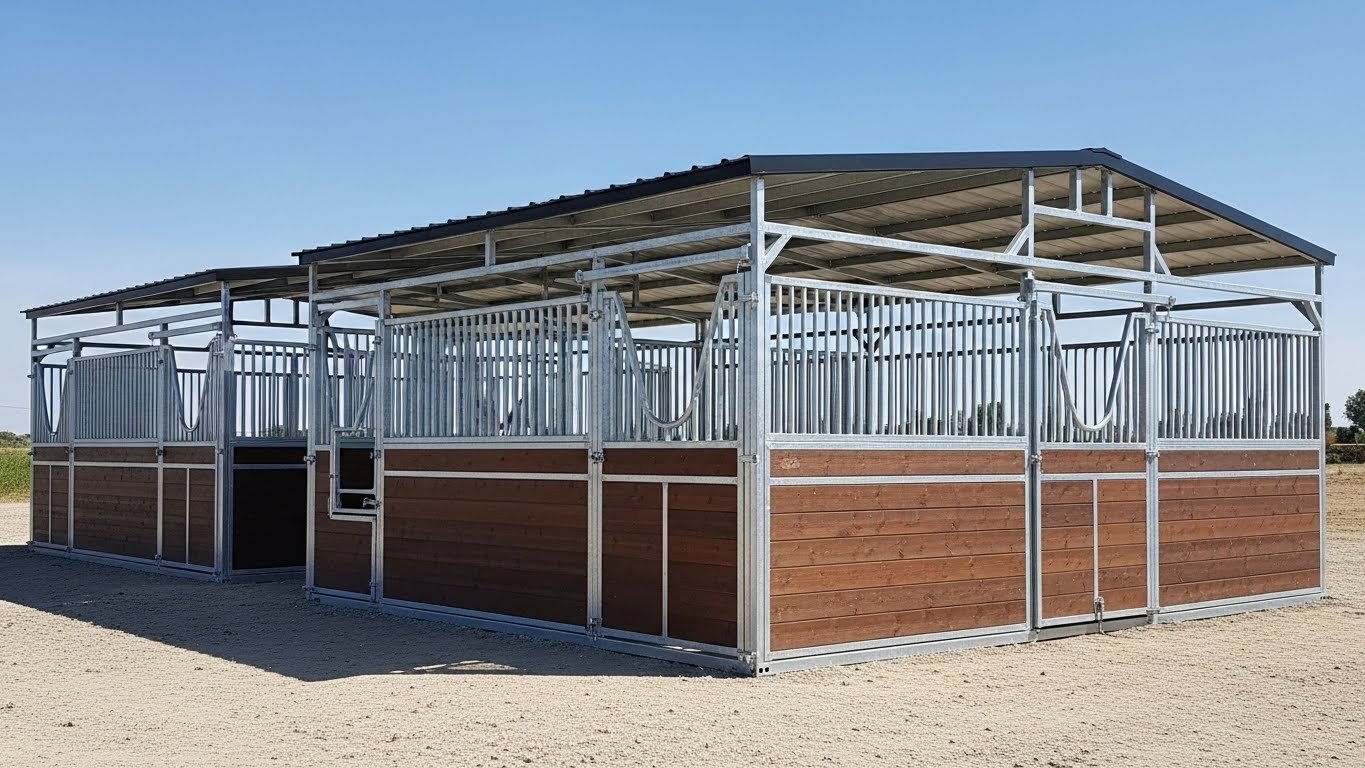
A rapid portable horse stall setup is determined by logistics, not just labor. Traditional fully-welded panels create an immediate bottleneck with slow, manual unloading that inflates on-site costs and risks project delays. Every hour spent handling awkward, heavy components is a direct hit to your operational margin before assembly even begins.
هذا guide details a step-by-step process built on a modular flat-pack system. We analyze how palletized unloading and a pin-connector mechanism allow a small crew to bypass common delays. The method focuses on executing a fast, repeatable assembly that controls labor expenses and meets tight event deadlines.

Expected Outcome & Time
On-site assembly takes a few hours per stall. The complete الجدول الزمني للمشروع, from order to shipment, requires a 35-45 day production cycle for proper hot-dip galvanization.
On-Site Assembly Timeline
Our flat-pack stable systems are designed for rapid on-site builds. A standard stall can be assembled in under four hours using basic tools. The system is straightforward because the infill planks are pre-cut and a complete طقم الأجهزة is included. This eliminates any need for on-site cutting or welding, protecting project timelines and controlling labor costs.
The 35-45 Day Production Cycle
A production lead time of 35-45 days is standard for all orders. This schedule is not a buffer; it is the time required for our ‘الجلفنة بالغمس الساخن After Fabrication’ process. We must coordinate with certified galvanizing plants to ensure every component meets ISO 1461 standards. This is a non-negotiable step that guarantees true rust protection for the finished product.

What Tools Are Essential for Rapid Assembly?
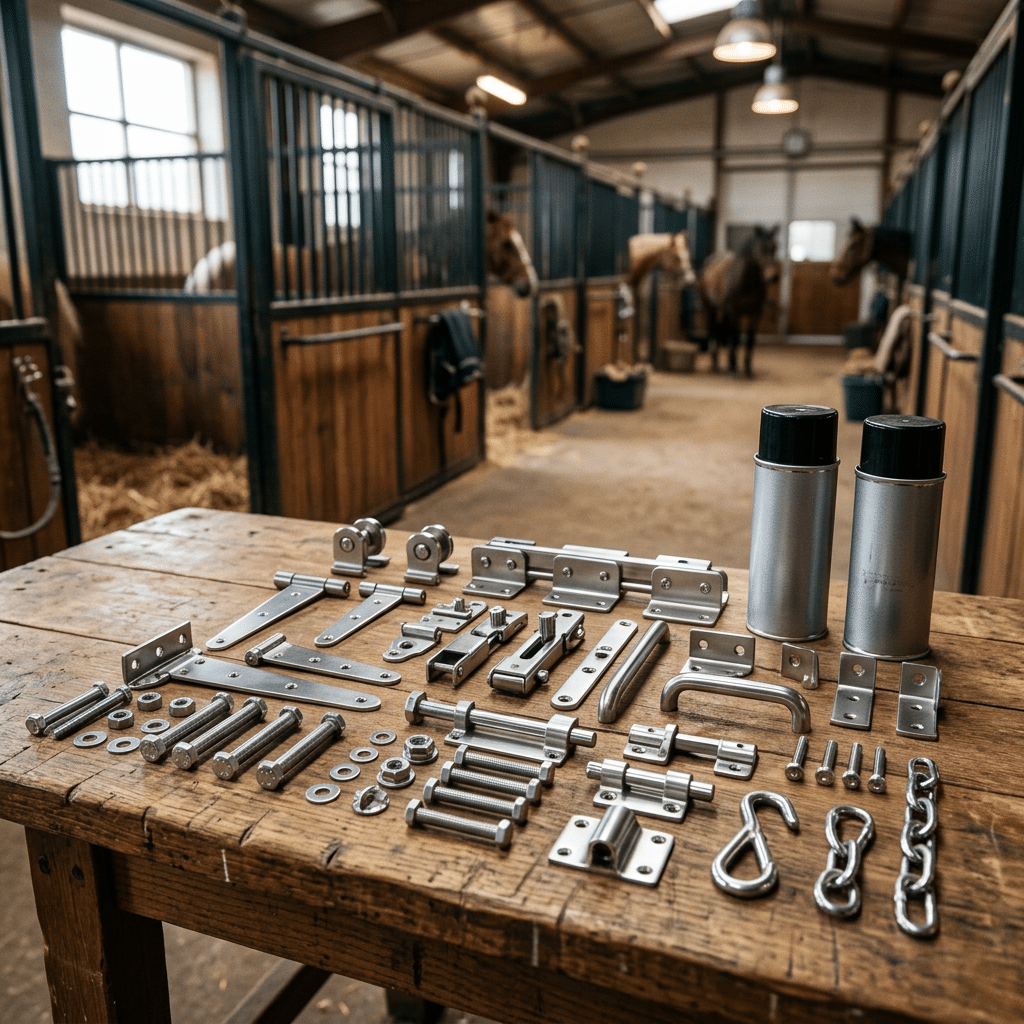
You’ll need basic power and hand tools. We include a complete 304 stainless steel hardware kit, which eliminates the need for any specialized equipment on-site.
Standard Power and Hand Tools
While our system is designed for straightforward assembly, having the right standard tools on hand makes the process smooth. We recommend the installation crew has the following:
- A cordless impact driver or drill for securing bolts quickly.
- A socket wrench set for precise manual tightening of connectors and anchors.
- A level and measuring tape to ensure perfect لوحة alignment before final fastening.
The Included 304 Stainless Steel Hardware Kit
To simplify logistics and prevent on-site delays, every يشحن النظام المستقر مع جهاز كامل kit. It contains all necessary anchor bolts, connectors, and screws for the entire structure.
All fasteners are 304 Stainless Steel. This guarantees excellent corrosion resistance and means your team doesn’t need special tools to handle different materials or worry about sourcing compatible parts.
Durable, Compliant Stables for Any Climate

How Does the Pin-Connector System Work?
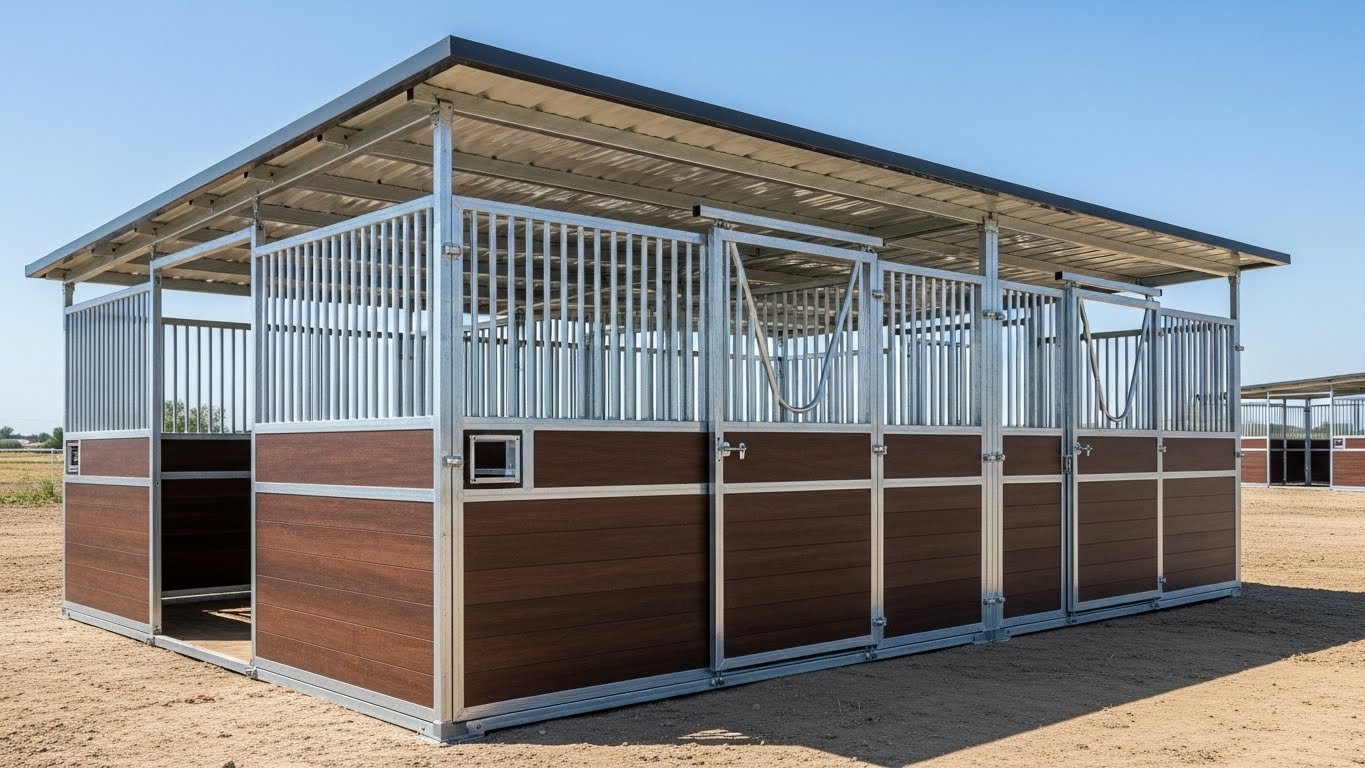
The pin-connector system joins stall panels with removable pins that slide into pre-welded sleeves. This simple design allows for rapid setup and reconfiguration without permanent fasteners.
The Core Mechanism of Modular Connections
The system is straightforward. Each stall front and التقسيم panel has pre-welded connector sleeves. You simply align the panels and slide a removable steel pin through the sleeves to lock them together. This design lets you quickly set up various layouts, like back-to-back or long in-line rows. The connectors are engineered for a snug fit, which minimizes panel movement and keeps the structure stable.
DB Stable’s Robust Galvanized Connectors
Our connectors are built for durability, not just convenience. We fabricate them from fully welded 40x40mm square tubes and heavy 6mm steel plates. After welding, the entire assembly is Hot-Dip Galvanized After Fabrication, conforming to ISO 1461 standards for complete rust protection. This robust system is fundamental to our flat-pack design, which saves distributors over 60% on freight costs.
What is the Most Efficient Layout Strategy?
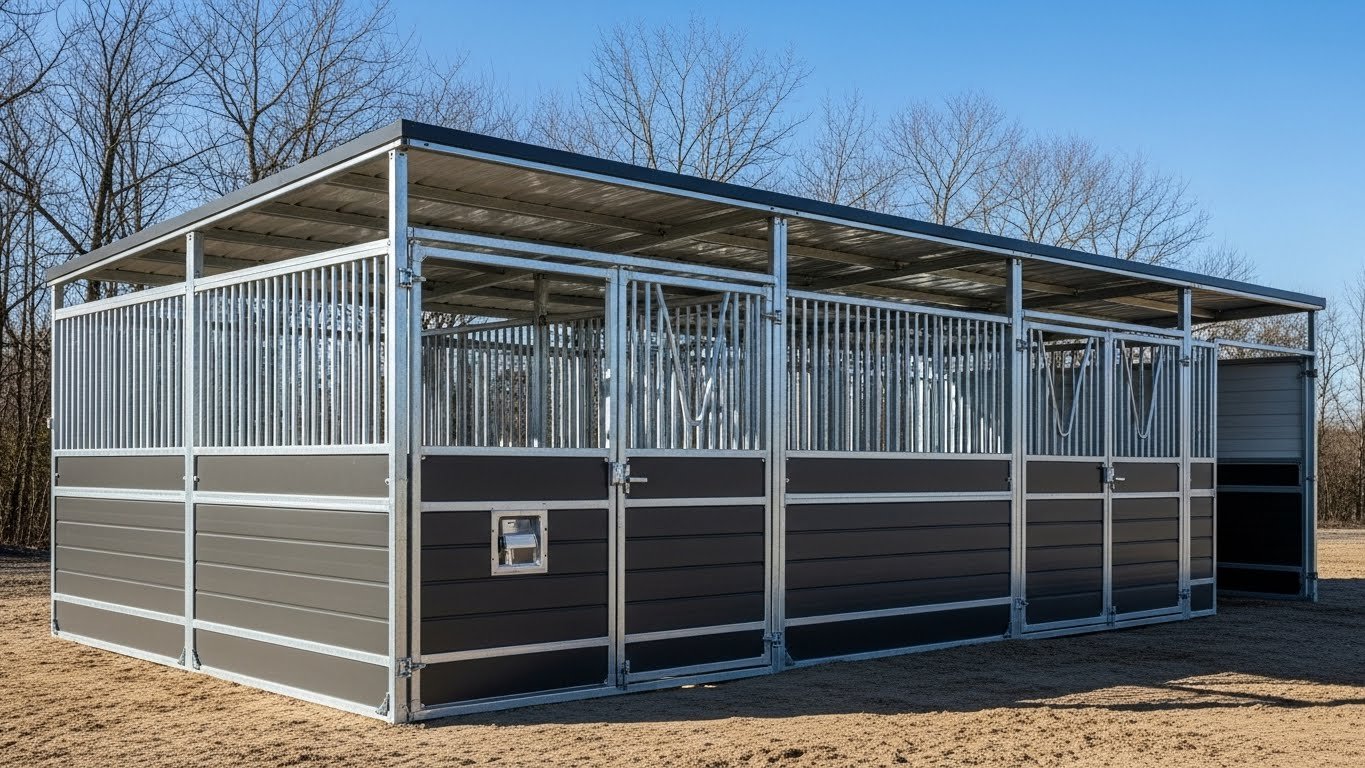
The best layout is a center-aisle or shedrow plan. True efficiency, however, is achieved with a modular flat-pack system that cuts freight costs and speeds up site assembly.
Comparing Center-Aisle and Shedrow Barn Designs
The layout choice comes down to the scale of the operation and climate. Center-aisle barns are the standard for larger facilities, while shedrow designs offer flexibility for smaller properties or phased expansion.
- Center-Aisle Barns: Stalls line both sides of a wide central aisle, typically 12-14 feet. This layout protects horses and handlers from the elements and allows easy movement for daily chores and equipment.
- Shedrow Barns: A single row of stalls with doors that open directly to the outside. This design maximizes natural light and cross-ventilation, making it ideal for temperate climates and simple to expand one stall at a time.
| الميزة | Center-Aisle Barn | Shedrow Barn |
|---|---|---|
| الأفضل لـ | Larger operations, colder climates | Smaller properties, temperate climates |
| الحماية من العوامل الجوية | ممتاز (مغلق بالكامل) | Good (with overhangs) |
| Expandability | More complex to expand | Simple to add more stalls |
The Role of Flat-Pack Systems in Layout Efficiency
A smart layout plan is useless if logistics costs erase your profit margin. The physical design of the stalls themselves is what drives financial and on-site efficiency. A modular, flat-pack system makes any layout more profitable by solving the two biggest cost centers: shipping and labor.
- Logistics Profit Protection: The DB Flat-Pack System loads 30-45 stable sets into a single 40HQ container. Traditional fully-welded stalls max out at 12-15 sets. This difference cuts freight costs by over 60%, directly protecting distributor margins.
- Rapid Assembly: The system’s pre-fabricated panels and connectors are designed for fast installation. This modularity allows crews to quickly assemble stalls within any center-aisle or shedrow blueprint, reducing labor time and project delays.
How Do You Handle Uneven Ground?
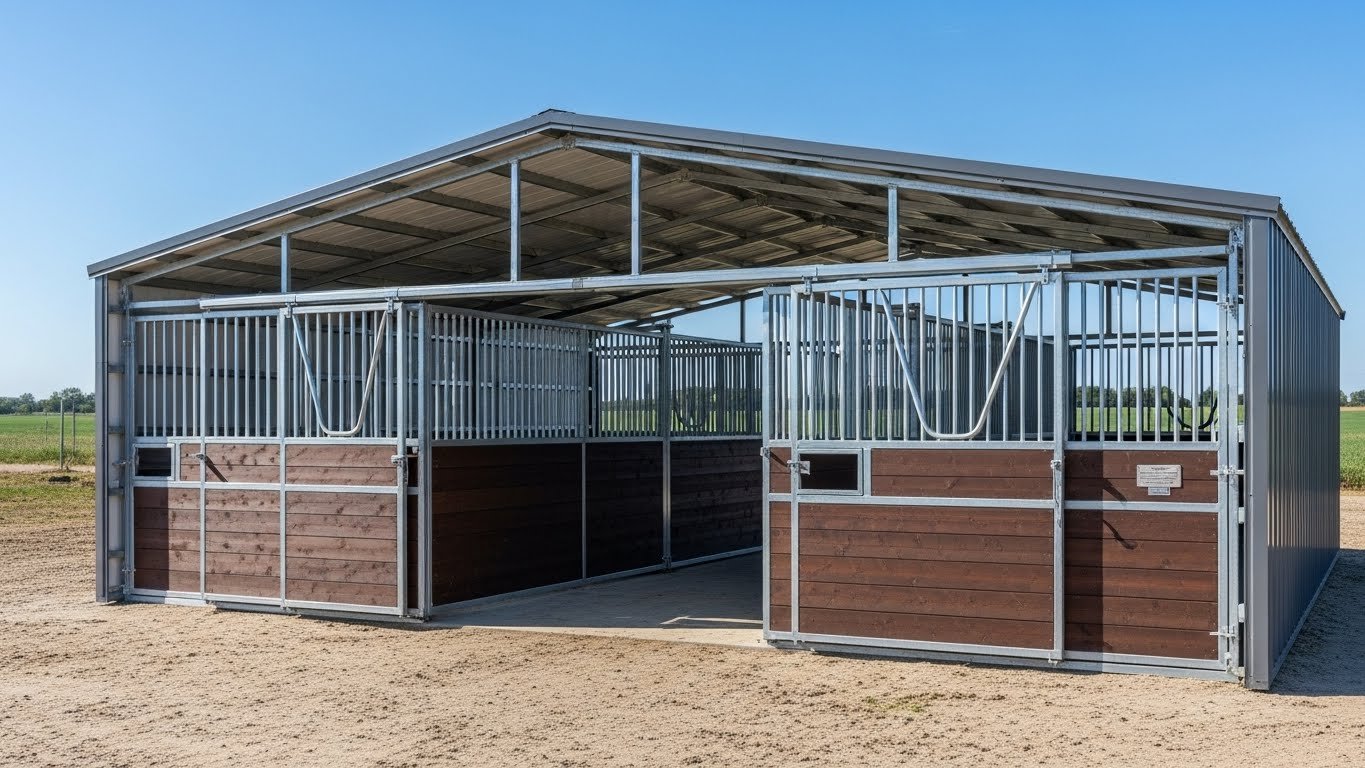
Uneven ground requires a level, compacted base made from crushed rock. Once the foundation is ready, the stable frame is secured with heavy-duty anchor bolts.
Creating a Compacted and Level Base
The first step is to build a solid foundation. Level the site with a deep layer of compacted base material, like a crushed road mix. This process creates a stable, non-shifting surface that is essential for the stable’s structural integrity before you begin installation.
Securing the Frame with the 304 Stainless Steel Hardware Kit
كل قاعدة بيانات Stable system ships with a complete hardware kit. It includes the heavy-duty anchor bolts needed to secure the posts firmly to the new foundation. We use 304 Stainless Steel for all hardware, which guarantees a strong, rust-proof connection for long-term safety.
Why is Flat-Pack Unloading the Key to Speed?
Flat-pack systems ship components on steel pallets, letting a forklift unload an entire container safely and quickly. This avoids the slow, manual handling of welded panels, saving hours on site.
The Logistical Bottleneck of Fully Welded Panels
Traditionally shipped stable panels arrive as fully welded, awkward units. Unloading them is a slow, manual process that requires multiple workers to handle each heavy panel one by one. This method not only eats up hours of labor but also significantly increases the risk of product damage and worker injury. Because of their bulk, a 40HQ container can only fit about 12-15 welded stable sets, making the handling time for each one a critical cost factor.
The Efficiency of Steel Pallet Flat-Pack Systems
Our flat-pack system solves the unloading problem entirely. Instead of loose, bulky panels, every component is methodically stacked and secured onto heavy-duty steel pallets. This allows a single forklift operator to unload the entire container quickly and safely, turning a half-day job into a task that takes less than an hour.
- High-Density Packing: Our system fits 30-45 stable sets into a single 40HQ container, more than double the capacity of welded panels.
- Drastic Freight Savings: This density saves our distributors over 60% on sea freight per unit, a core component of what we call “Profit Protection.”
- Safe & Organized Unloading: Steel pallets eliminate the manual lifting of heavy frames, reducing labor costs and preventing on-site accidents and product damage.
الأفكار النهائية
While pre-welded stalls seem simpler, our flat-pack system is engineered for profit protection. The design cuts freight costs by over 60% and uses Hot-Dip Galvanization to prevent future rust claims. Investing in efficient, durable inventory is what protects your margin and reputation.
The best way to verify our engineering is to see it yourself. We recommend a trial order of 3-5 sets to test the assembly speed and ISO 1461 galvanization finish. Contact our team to get the specifications for your project or distributor catalog.
الأسئلة المتداولة
What is your minimum order quantity (MOQ)?
Our MOQ is flexible. A trial order starts at 3-5 stable sets. Project orders are typically for one 20GP container (around 10-15 sets), and our distributor partners usually order a full 40HQ container (30-45 sets).
How do you ensure the stables are rust-proof?
We use a “Hot-Dip After Fabrication” process. The entire إطار فولاذي is welded first, then submerged in molten zinc. This creates a thick, durable coating compliant with ISO 1461 standards, offering superior protection compared to welding pre-galvanized tubes.
How does your packaging reduce shipping costs?
All components are flat-packed onto steel pallets. This allows us to load up to 45 sets in a single 40HQ container, while traditional welded stables only fit 12-15 sets. This system can save our partners over 60% on freight costs.
What is the standard production lead time?
A typical production cycle takes 35-45 days. This accounts for scheduling with the galvanizing plant, a critical step to ensure the high-quality, long-lasting finish of every stable system.
Do you sell directly to individual horse owners?
No. As a source factory, our business model is strictly B2B. We work directly with distributors and developers on large-scale projects and do not offer retail sales to individual end-users.
Is a forklift required for installation?
No, a forklift is not typically required to assemble the stalls. Our systems are designed with lightweight, modular panels that can be handled and connected by a small team using basic tools. While a forklift is helpful for unloading large palletized shipments, it is not needed for the actual installation process.
Can these stalls be installed directly on grass?
Yes, they can be installed on grass, but we recommend preparing the ground for safety and stability. Natural surfaces can become uneven or muddy. Creating a level base with materials like limestone dust or adding rubber mats inside the المماطلة provides better drainage and a safer footing for the horse.
Are tools required to connect the panels?
No tools are required for the primary frame assembly. The واجهات الأكشاك and partitions connect using a simple pin system that can be operated by hand. Basic tools may be needed for secondary steps, like securing infill boards or attaching accessories.
How do you secure the roof structure?
Securing the roof involves two key steps. First, the roof framework is fastened together with the included bolts and nuts. Second, the entire structure must be anchored to the ground using stakes, tie-downs, or weighted bases to ensure it remains stable in windy conditions or if a horse leans against a wall.
Are video assembly guides available?
Yes, many manufacturers provide comprehensive video guides and step-by-step instructions for portable stall setup. These resources cover everything from assembling the frame and attaching the roof to installing doors and infill panels, making the process straightforward even for first-time installers.

 Arabic
  English
  Spanish
  French
  German
0 تعليق