
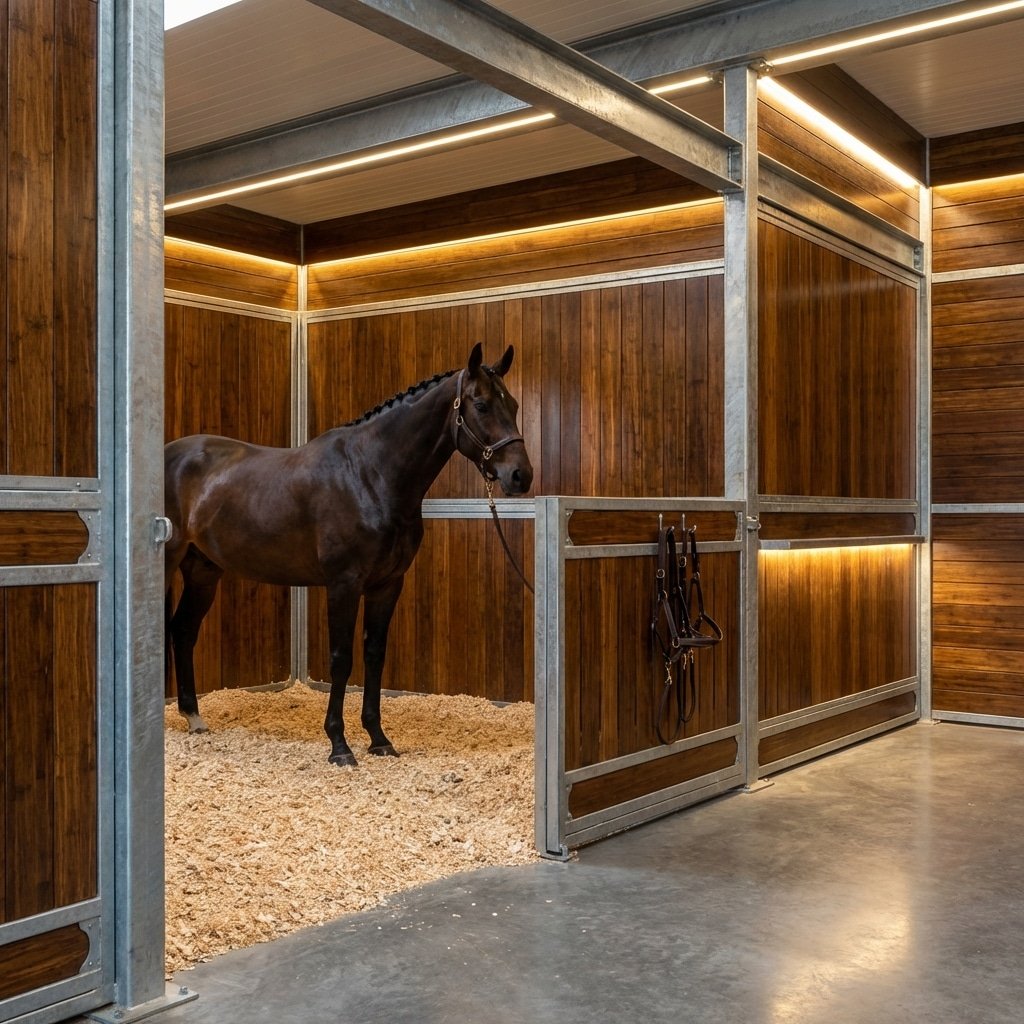
Comparing OSB vs Bamboo for horse stalls reveals a critical safety distinction that directly impacts your long-term maintenance budget. While OSB offers a lower upfront cost, it fails rapidly in high-ammonia environments due to the ‘sponge effect,’ causing irreversible swelling and toxic adhesive breakdown. This structural weakness inevitably leads to dangerous kick-throughs and forces a costly facility renovation years ahead of schedule.
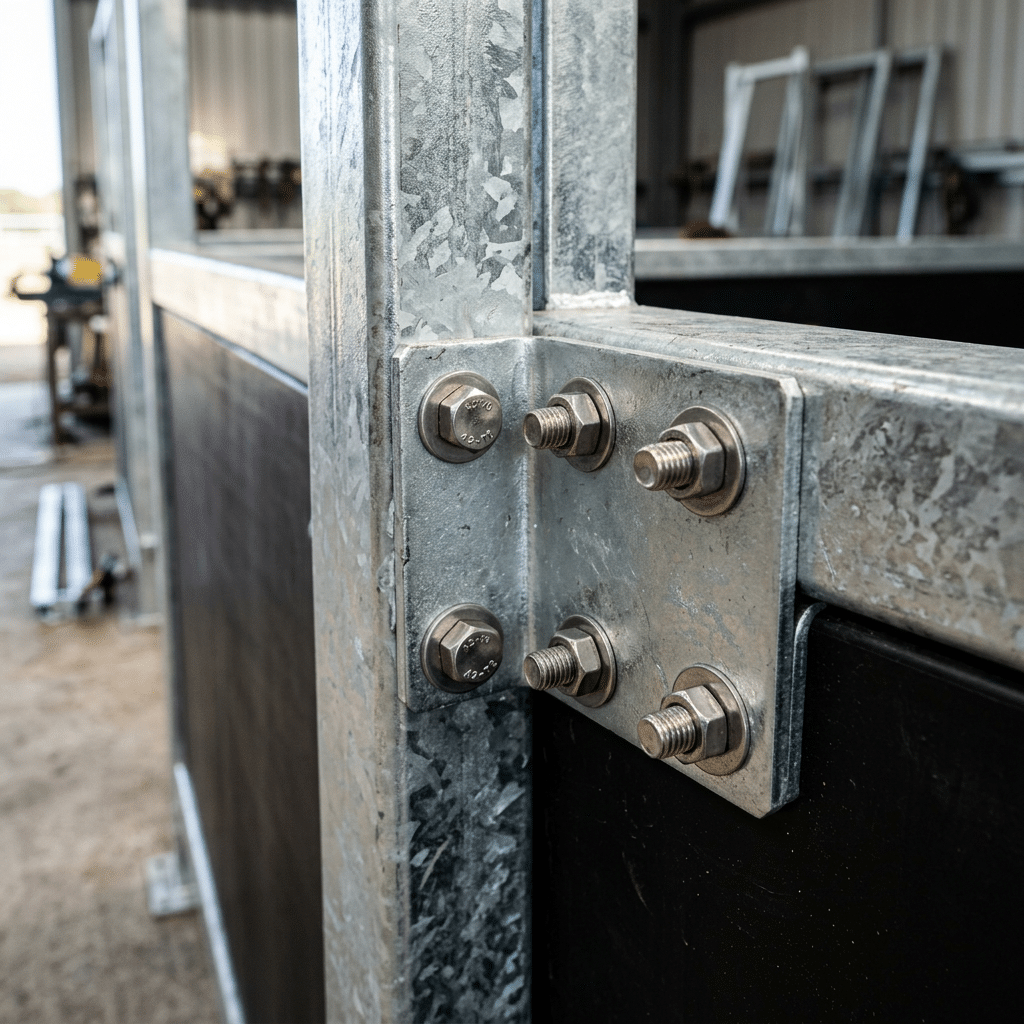
Our solution replaces failing composites with High-Density Strand Woven Bamboo, engineered with a Janka Hardness exceeding 3000 lbf. This material is three times harder than Oak and creates a dense, impact-resistant barrier that withstands aggressive kicking. When secured within our 14-gauge مغلفن بالغمس الساخن steel channels, this system eliminates the risk of rot and structural failure common in standard wood installations.
The Budget Trap: Buying Cheap OSB for Barns
OSB fails in stables due to irreversible moisture swelling and poor impact resistance. High-density bamboo offers a kick-proof, fire-resistant alternative that eliminates the 5-year replacement cycle.
Standard OSB (Oriented Strand Board) is engineered for cost, not the chemical and physical abuse of a horse stable. In this environment, the material faces a specific failure mechanism known as “edge swell.” When urine or wash-down water hits the cut edges of OSB, the material absorbs liquid like a sponge. Unlike plywood, which may shrink back after drying, OSB swells permanently. This creates soft, expanded edges that compromise the structural integrity of the wall.
- Irreversible Edge Swelling: Exposure to fluids causes permanent expansion, loosening fasteners and creating gaps where hooves can get caught.
- Low Compressive Strength: Compared to solid timber, OSB lacks the density to withstand the direct force of a kick, leading to dangerous punch-throughs.
- Accelerated Burn Rate: OSB beams and boards burn up to 8 times faster than solid equivalents, posing a severe risk in hay-filled barns.
- Toxic Off-gassing: As the material chars or breaks down, the adhesives release fumes that are hazardous in confined stable blocks.
إن حشوة البولي إيثيلين عالي الكثافة options”>High-Density Bamboo Strand Board Solution
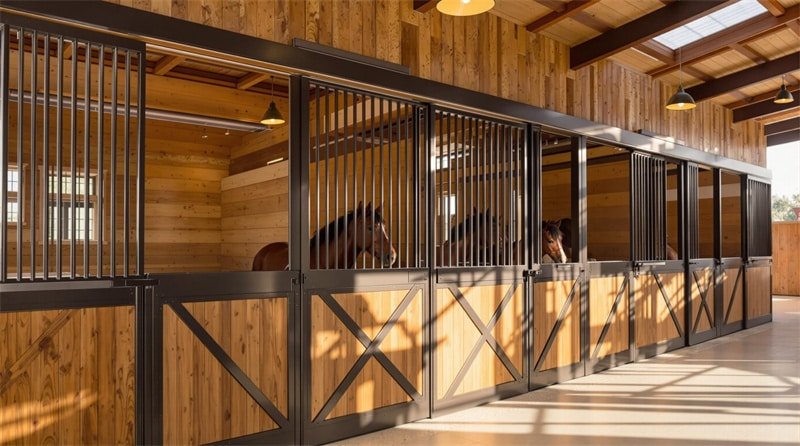
To eliminate these failure points, we use High-Density Bamboo Strand Board in our Professional and Royal Series stables. This is not standard flooring bamboo; it is a structural infill engineered for extreme abuse. By compressing bamboo fibers under massive pressure, we create a board that functions more like hardwood and less like a laminate. It resists moisture penetration and survives impacts that shatter pressed wood.
- Janka Hardness > 3000 lbf: This material is 3x harder than Oak, making it effectively kick-proof against shod horses.
- Superior Density Options: Available in 28mm and 38mm thicknesses, the board eliminates the “hollow” impact sound that startles nervous horses.
- Strand Woven Technology: The interlocking fiber structure prevents splitting and holds fasteners securely, unlike the flaky composition of OSB.
- Long-term ROI: While the upfront cost is higher, it outlasts OSB by decades, removing the labor and material costs of 5-year replacement cycles.
The Sponge Effect: How Urine Destroys Pressed Wood
Urine acidity breaks down adhesive resins in porous particle board, causing irreversible swelling and internal rot—a failure mode physically impossible in high-density bamboo or HDPE.
Capillary Action and Resin Breakdown in Composite Boards
Cheap composite boards like OSB and particle board are essentially wood chips held together by glue. In a stable environment, these materials act like a dense sponge. The failure mechanism here is chemical as much as it is physical. Horse urine contains uric acid and ammonia, which aggressively attack the binding agents holding the wood particles together.
- Acidic Degradation: Urine breaks down the internal resins, causing the structural bond to fail.
- Capillary Action: The porous nature of pressed wood draws liquid deep into the core, far beyond the reach of surface sealants.
- Irreversible Swelling: Once saturated, the internal fibers expand, leading to warping and delamination that cannot be repaired.
- Bio-Hazard Creation: The damp, organic core becomes a breeding ground for black mold and bacteria, creating long-term health risks for the animal.
The Impervious Standard: HDPE and Strand-Woven Density
To eliminate this risk, you must eliminate porosity. At DB Stable, we strictly utilize materials that prevent liquid ingress entirely. This is why we rely on Recycled HDPE and High-Density Bamboo rather than layered composites. These materials do not rely on surface coatings for protection; their density creates a physical barrier against moisture.
- 100% Non-Porous HDPE: Our 28mm-32mm HDPE infill is a solid plastic composite that repels all moisture. Urine sits on the surface until washed away.
- Extreme Density Bamboo: With a Janka Hardness rating > 3000 lbf, our strand-woven bamboo is compressed so tightly that fluids cannot penetrate the grain.
- Zero Internal Rot: Because moisture stays on the surface, the risk of internal structural decay is non-existent.
- Sanitation Capable: These materials support the “Zero Maintenance” standard, allowing for direct power-washing without fear of water damage.
Precision-Engineered Stables For Global Equestrian Facilities
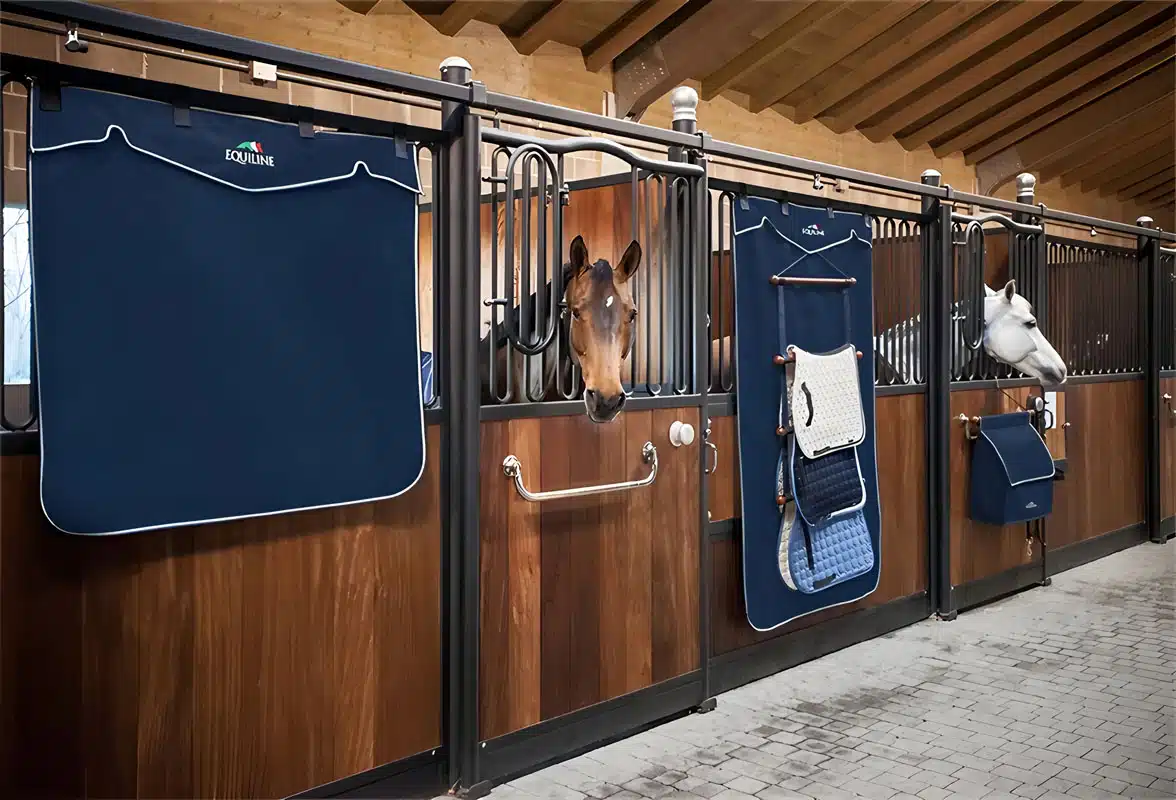
The Toxic Glues Released When OSB Breaks Down
OSB relies on phenol-formaldehyde and isocyanate binders that off-gas toxic compounds when wet or heated. We reject these composites, utilizing chemically inert solid HDPE or density-verified bamboo for stable environments.
Isocyanates and Formaldehyde: The Hidden Hazards in OSB
Cheap OSB panels rely on aggressive adhesives to mechanically bind wood strands together. Most North American production utilizes phenol-formaldehyde (PF), while European facilities frequently apply pMDI (polymeric diphenylmethane diisocyanate). In a climate-controlled warehouse, these binders remain relatively stable. However, a horse stable is a high-moisture, high-ammonia environment that accelerates material degradation.
- Chemical Off-gassing: As moisture penetrates the panel edges, the adhesive matrix breaks down, potentially releasing isocyanates and aldehydes—known respiratory irritants for livestock.
- tyle=”margin-bottom: 10px; line-height: 1.8;”>Thermal Decomposition: When exposed to heat, the chemical bonds in these adhesives degrade, releasing toxic byproducts including carbon monoxide and organic acids.
- Particulate Risks: Many OSB products contain Zinc Borate treatments. When horses kick, chew, or abrade these walls, they generate inhalable dust containing these chemical agents.
The Safer Alternative: UV-Stabilized HDPE Infill Planks
The most effective way to eliminate adhesive toxicity is to remove the adhesive entirely. We engineer our stable systems using solid materials rather than glued composites. Our specification relies on 28mm-32mm UV Stabilized HDPE (High-Density Polyethylene) or High-Density Strand Woven Bamboo. These materials offer structural density without the volatile organic compounds found in cheap sheathing.
- Chemically Inert Composition: HDPE is a solid polymer that does not react with urine, water, or cleaning solvents, preventing the chemical breakdown common in OSB.
- Zero Maintenance Profile: Unlike OSB which requires constant sealing to trap chemicals inside, our HDPE and Bamboo (>3000 lbf Janka hardness) require no surface treatments.
- Respiratory Safety: Eliminating phenol-formaldehyde binders ensures that air quality remains safe, even in enclosed barn environments with limited ventilation.
Upgrading to Strand-Woven Bamboo in DB U-Channels
Strand-woven bamboo delivers a Janka hardness over 3,000 lbf—three times harder than oak. It fits precision-milled DB Stable U-channels to eliminate the warping and rot common in softwood.
| مقياس الأداء | Traditional Red Oak | DB Strand-Woven Bamboo |
|---|---|---|
| Janka Hardness | ~1,290 lbf | > 3,000 lbf |
| Moisture Reaction | Swells & rots over time | High density resists absorption |
| Impact Resistance | Prone to splintering | Virtually kick-proof |
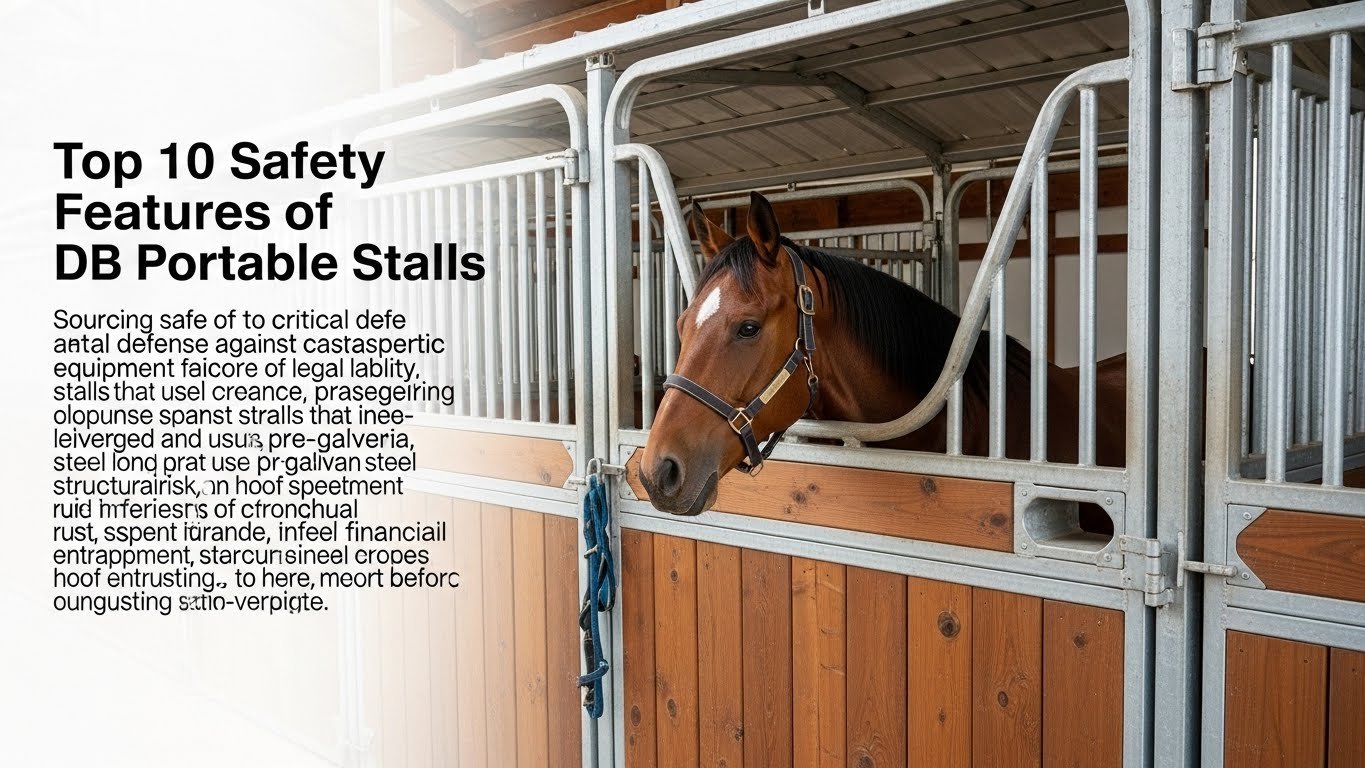
Material Science: Why Strand-Woven Bamboo Outlasts Oak
Most stables rely on softwoods or basic hardwoods that inevitably fail under the abuse of a 1,200 lb animal. We replace these traditional materials with strand-woven bamboo, a composite material engineered by compressing shredded bamboo fibers under 2,500 tons of pressure. This process eliminates air pockets and creates a material density that exceeds 1,100 kg/m³, making it physically closer to concrete than timber.
- Janka Hardness > 3000 lbf: This rating is three times higher than Red Oak. A horse kick that would splinter pine or crack oak simply bounces off this surface.
- Kick Fracture Prevention: The high-density compression ensures the board maintains structural integrity even in freezing temperatures, avoiding the brittleness common in standard wood.
- Rot Resistance: Unlike softwoods that act like a sponge for urine and moisture, the resin-bonded bamboo strands create a sealed barrier that naturally resists mold and decay.
System Integration: The Professional Series Configuration
We do not treat infill as an afterthought. In our السلسلة الاحترافية, the steel framework and bamboo infill function as a unified structural unit. We specify heavy-duty U-channels designed to lock these high-density boards in place, preventing the rattling and gaps often seen in retrofitted stables.
- 14-Gauge Steel Channels: We use 2.0mm – 2.5mm thick steel U-channels, Hot-Dip Galvanized to ISO 1461 standards, to hold the heavy bamboo planks securely.
- Precision Fit: Boards are available in 28mm, 32mm, and 38mm thicknesses, machined to slide perfectly into the channel profiles without shims or wedges.
- Cost Elimination: This configuration stops the cycle of replacing chewed or warped softwood planks every few years, protecting the facility’s long-term maintenance budget.
الأسئلة المتداولة
Is OSB board safe for use in horse stable kickboards?
No. Using OSB (Oriented Strand Board) in stalls is a massive safety liability. It lacks the structural impact strength to withstand a direct kick from a horse. When the board fails, it doesn’t just crack—it creates a jagged hole that can trap the hoof. The resulting panic often leads to catastrophic leg injuries or lacerations. You need materials that absorb impact, like high-density hardwoods or the 28mm-32mm HDPE infills we use in our Professional Series.
Will OSB rot if installed in a barn?
Yes, and quickly. We refer to this as the “sponge effect.” Barns are hostile environments filled with humidity, ammonia from urine, and daily wash-down water. OSB sucks this moisture in through its layered strands. Once wet, it swells, loses its structural bond, and rots from the inside out. Unlike exterior-grade plywood or bamboo which can handle moisture variance, OSB degrades rapidly in these conditions.
What is the best wood for wet horse stall environments?
Historically, builders used dense hardwoods like Brazilian hardwood or White Oak because of their natural rot resistance and tight grain. But natural wood always moves, warps, and requires maintenance. For a true industrial-grade solution, the market has shifted to High-Density Strand Woven Bamboo. It boasts a Janka hardness rating over 3000 lbf (3x harder than Oak) and is engineered to resist mold and rot. Alternatively, for zero maintenance, many facilities switch to UV-stabilized recycled HDPE, which is completely impervious to moisture.
الأفكار النهائية
Relying on OSB guarantees structural failure and customer complaints within five years due to moisture rot and impact weakness. Upgrading to our Professional Series with High-Density Bamboo (>3000 lbf Janka hardness) or impervious 32mm HDPE eliminates these liabilities entirely. Your reputation depends on supplying materials that survive the abusive stable environment, ensuring your clients avoid dangerous repair cycles.
Stop guessing on durability and verify our manufacturing standards firsthand. Request a sample kit of our strand-woven bamboo or HDPE to test against standard wood options. Contact our engineering team today to secure a flat-pack shipping quote that protects your logistics margins and inventory quality.

 Arabic
  English
  Spanish
  French
  German
0 تعليق