


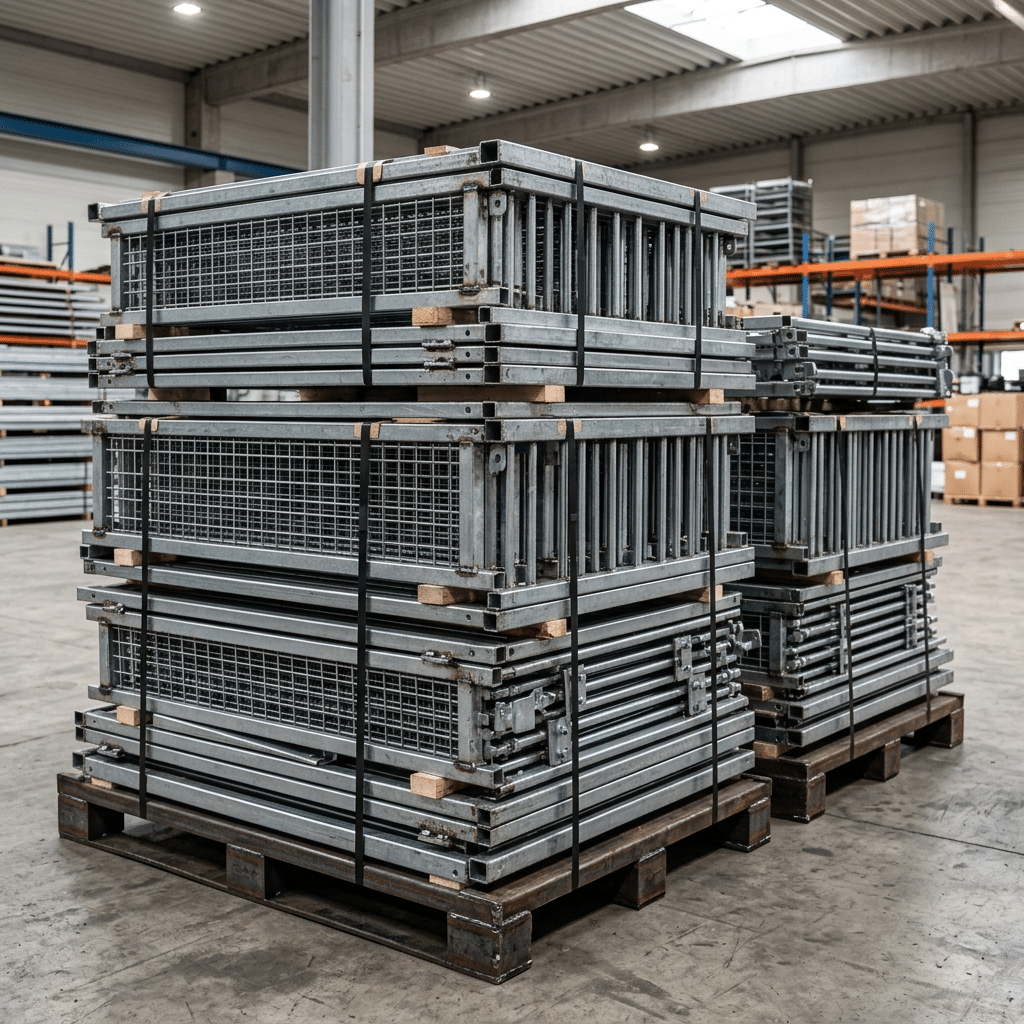
The Zinc Toxicity Myth often misleads facility managers into choosing chemically treated timber, increasing both maintenance liability and veterinary risks. While novices fear the metallurgical bond of فولاذ مجلفن, the documented danger lies in the splintering of soft pine preservatives. Horses cannot mechanically scrape off hot-dip zinc, but they readily ingest toxic wood fillers and paint flakes from lower-grade alternatives.
This report benchmarks the safety of BS EN ISO 1461 compliance against cosmetic powder coatings. We examine how the Hot-Dip After Fabrication process creates a zinc-iron alloy harder than the Q235B base steel, ensuring the protective layer remains fused to the frame rather than flaking off into the feed.
The Myth of Zinc Poisoning in Equestrian Facilities
Zinc poisoning is a documented condition linked to environmental contamination near mining sites, not stable equipment. Properly galvanized steel creates a metallurgical bond that prevents toxic ingestion.
Differentiating Environmental Contamination from Hardware Contact
It is critical to separate environmental hazards from hardware realities. While veterinary literature documents zinc toxicosis (“alkali disease”), research consistently identifies high-risk zones near industrial mining and smelting operations rather than residential stables. The levels of zinc required to induce toxicity are substantial and rarely occur through incidental contact with facility infrastructure.
- High Ingestion Thresholds: Toxic exposure typically requires ingestion levels between 1,300 and 20,000 ppm.
- Source of Contamination: Documented cases overwhelmingly involve contaminated pastures or feed mixing errors, not the licking of stall bars.
- Surface Contact Limits: A horse cannot ingest sufficient zinc to approach toxic limits merely by licking a galvanized surface; the transfer rate is negligible compared to dietary ingestion.
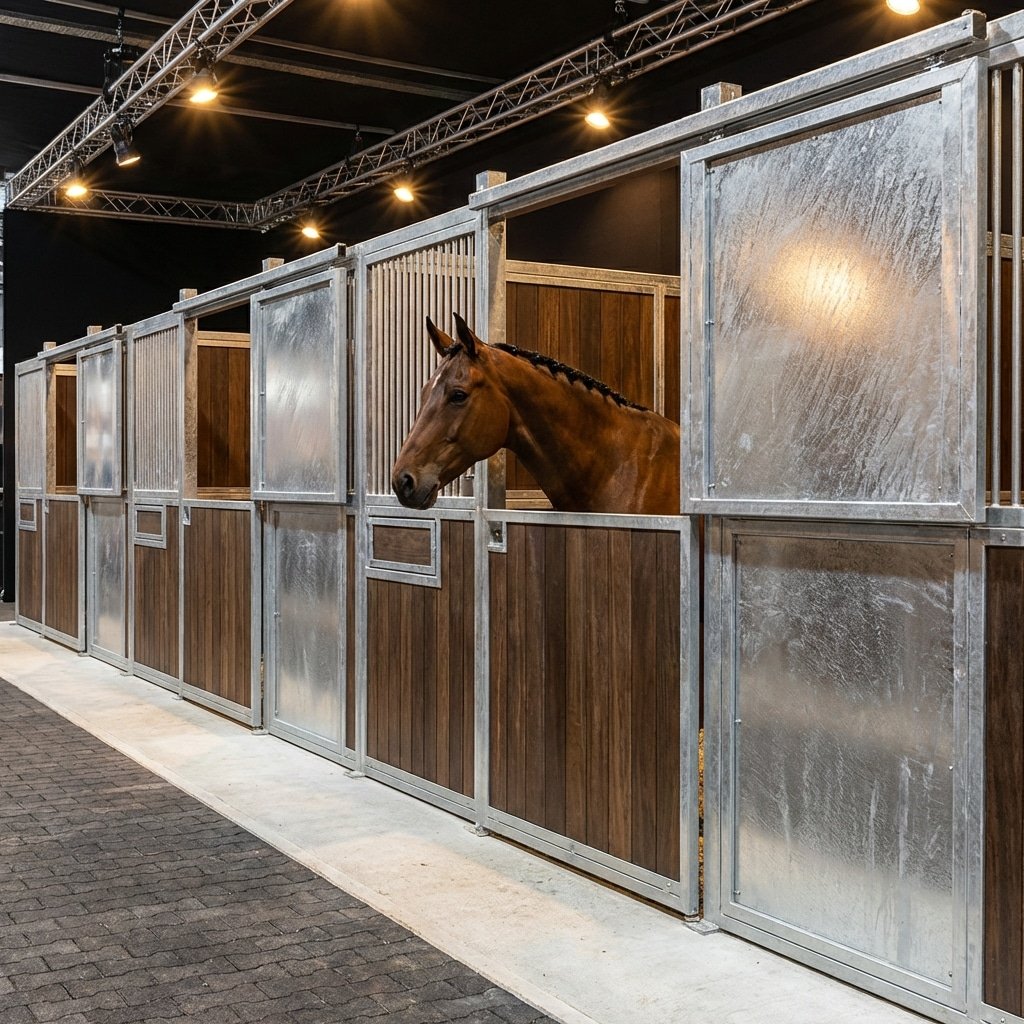
The Safety Profile of BS EN ISO 1461 Galvanized Steel
The safety of galvanized steel relies entirely on the manufacturing standard. At DB Stable, we strictly adhere to BS EN ISO 1461 using a “Hot-Dip After Fabrication” process. Unlike paint or powder coating which simply sits on top of the steel, hot-dip galvanization triggers a chemical reaction. The zinc fuses with the steel to form a zinc-iron alloy that is structurally distinct and mechanically superior to surface treatments.
- Metallurgical Bonding: The zinc-iron alloy layers are harder than the base steel itself, preventing the coating from flaking or chipping if a horse gnaws on the bars.
- سُمك الطلاء: We maintain an average coating of >85 microns for structural parts, ensuring the zinc remains integral to the steel rather than a loose surface contaminant.
- السلامة الهيكلية: Because the coating is bonded metallurgically, there are no loose particles or flakes available for ingestion, neutralizing the risk profile associated with paint chips.
Why Horses Cannot Scrape Off Hot-Dip Galvanization
Zinc and steel fuse at 450°C to form an alloy harder than the base metal, making it physically impossible for horses to peel the coating with teeth or hooves.
| Comparison Factor | Hot-Dip Galvanization (DB Stable) | Bond Type | Metallurgical Bond (Fused) | Mechanical Adhesion (Surface Only) | |
|---|---|---|---|---|---|
| Abrasion Resistance | Harder than the base steel | Soft, easily scratched by teeth | |||
| Interface | No distinct interface to peel | Distinct layer that flakes off |
The Metallurgical Bond: Zinc-Iron Alloy Layers
Many buyers confuse galvanization with a simple “finish” like paint. This is incorrect. Paint relies on mechanical adhesion—essentially glue—to stick to the surface. If a horse bites or kicks a painted bar, the bond breaks, and the paint flakes off. Galvanization is a chemical reaction. When we submerge steel into molten zinc at roughly 450°C (840°F), the two metals react to form a new material entirely.
This process creates a series of zinc-iron alloy layers that grow out of the steel itself. There is no “layer” to scrape off because the coating is integral to the metal structure. The resulting alloy layers (Gamma, Delta, and Zeta) are actually harder than the base steel they protect.
- Chemical Fusion: The zinc does not sit on top; it diffuses into the steel surface.
- Superior Hardness: The inner alloy layers resist abrasion better than raw steel.
- Zero Peeling: Without a distinct interface between coating and substrate, chipping is physically impossible.
ISO 1461 Compliance: Why “After Fabrication” Matters
The method of application dictates the durability of the bond. Many competitors cut costs by using pre-galvanized tubing (often called “black tube” or “pre-galv”). They weld these tubes together, which burns the zinc off at the joints, leaving the most critical areas prone to rust and flaking. At DB Stable, we strictly reject this method.
We utilize a “Hot-Dip After Fabrication” process. We weld the entire door using raw steel first, then dip the complete unit into the zinc bath. This ensures the entire structure, including welds and internal surfaces, is coated to BS EN ISO 1461 المعايير.
- Standard: BS EN ISO 1461 compliance guarantees consistency.
- السُمك: Structural parts receive >85 microns; tubing receives >70 microns.
- Full Coverage: Dipping after welding seals every joint, preventing rust bleed-out.
- Self-Healing: The thick zinc layer provides cathodic protection to any minor surface scratches.
20-Year Rust-Resistant Global Stable Solutions
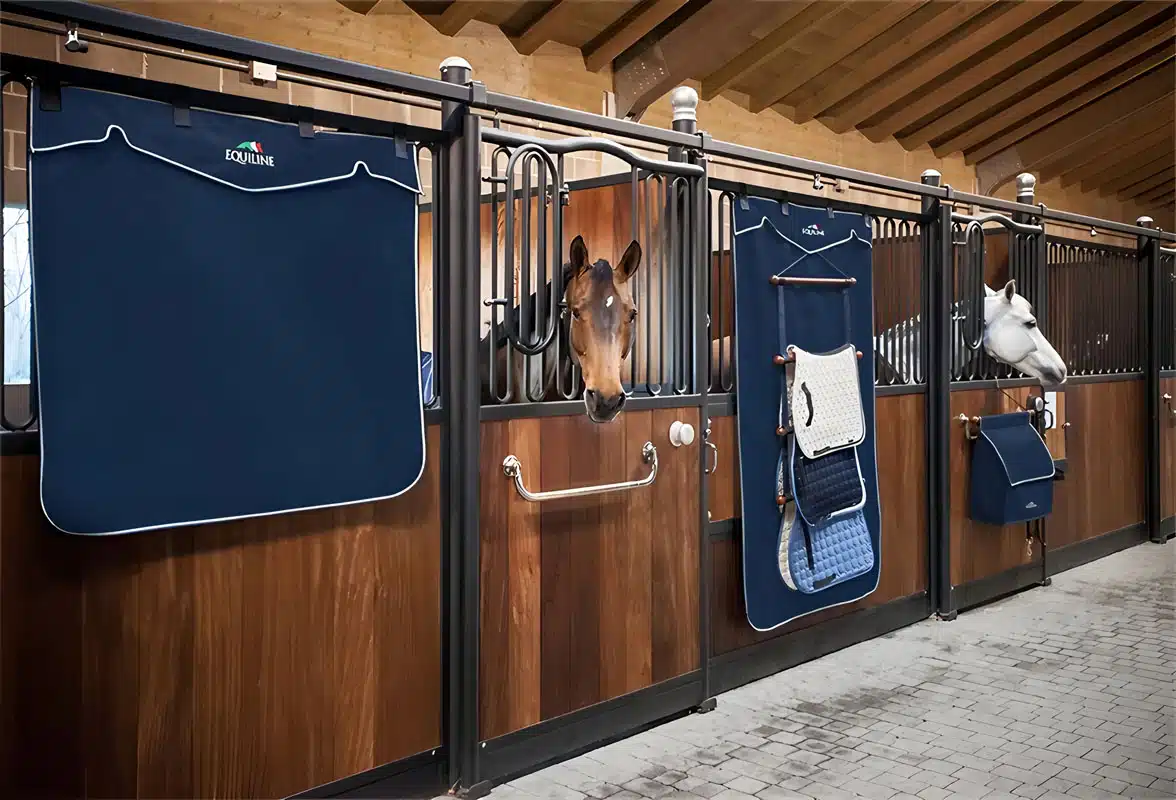
The Real Danger: Chewing Treated Wood or Painted Flakes
The real toxicity threat isn’t zinc—it’s the chemical preservatives in treated lumber and binders in flaking paint. We eliminate these risks using chemically inert HDPE and unpainted galvanized steel.
Chemical Preservatives in Softwood and Paint Flakes
While industry chatter often focuses on zinc, the immediate danger in most stables comes from the materials intended to protect the structure, not the horse. Competitors frequently use soft pine treated with aggressive chemical preservatives to prevent rot, or they cover poor-quality steel with cosmetic paint. When a horse cribs or chews on these surfaces, they ingest concentrated toxins.
- Legacy Preservatives (CCA): Older pressure-treated wood often contains Chromated Copper Arsenate. Chewing this releases arsenic directly into the horse’s system.
- Modern Copper Treatments (CA-B): Newer methods like Copper Azole are safer than arsenic but still rely on ingesting high concentrations of copper compounds, which can accumulate in the liver.
- Paint and Powder Coat Flaking: Painted surfaces eventually chip under impact. Horses often pick at and swallow these flakes, ingesting binders, pigments, and potentially lead from older coatings.
- Physical Trauma: Soft pine splinters when chewed. These sharp fragments cause internal physical injuries that are often more acute and difficult to treat than chemical exposure.
The Safe Alternative: HDPE and High-Density Bamboo
We engineered DB Stable products to remove edible components from the stall environment entirely. By selecting materials that are physically impossible to chew, we eliminate the need for chemical preservatives. Our UV-stabilized HDPE infill is chemically inert and non-toxic. A horse cannot splinter it or digest it, creating a “Zero Maintenance” environment that requires no chemical retreatments.
- Strand Woven Bamboo: Heat-cured with a Janka Hardness rating > 3000 lbf. It is three times harder than oak, making it impossible for horses to crib or generate splinters.
- Metallurgical Bonding: We use Hot-Dip Galvanization After Fabrication (BS EN ISO 1461). The zinc bonds with the steel at a molecular level, meaning there is no “paint layer” to chip, flake, or be ingested.
- Kick-Proof Design: The structural integrity of our Q345B and Q235B steel combined with high-density infills removes the breakage risks associated with soft wood, preventing injury and ingestion simultaneously.
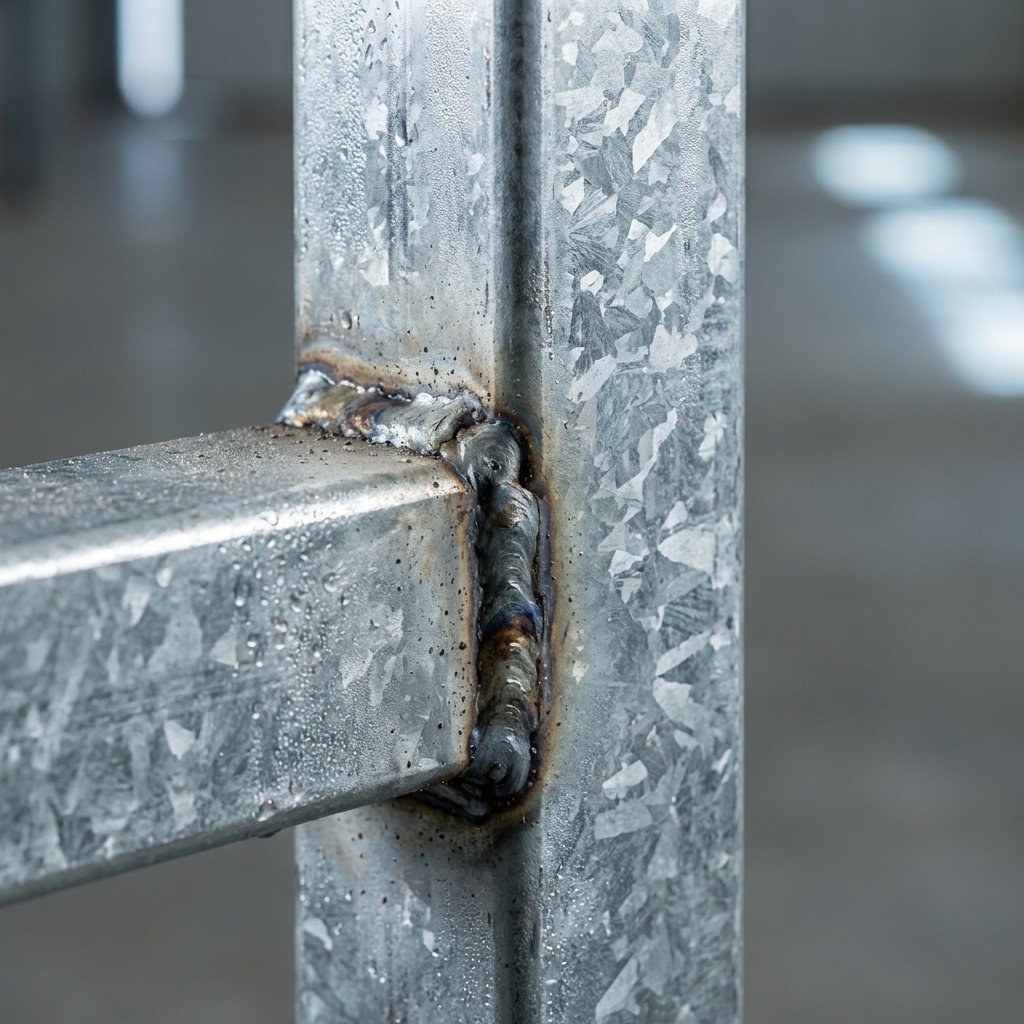
Smooth, Burr-Free Finishes on DB Stall Panels
DB Stall Panels use a metallurgical bonding process that prevents flaking and eliminates sharp burrs, ensuring horses cannot ingest coating debris or injure themselves on rough welds.
Eliminating Sharp Edges to Prevent Lacerations
Horses use their stall fronts and أقسام as scratching posts. They lean, rub, and grind against the metalwork for comfort. If a manufacturer leaves rough welds or metal burrs on these surfaces, the metal acts like a serrated edge. This causes skin abrasions, cuts, and severe eye injuries that result in avoidable veterinary costs.
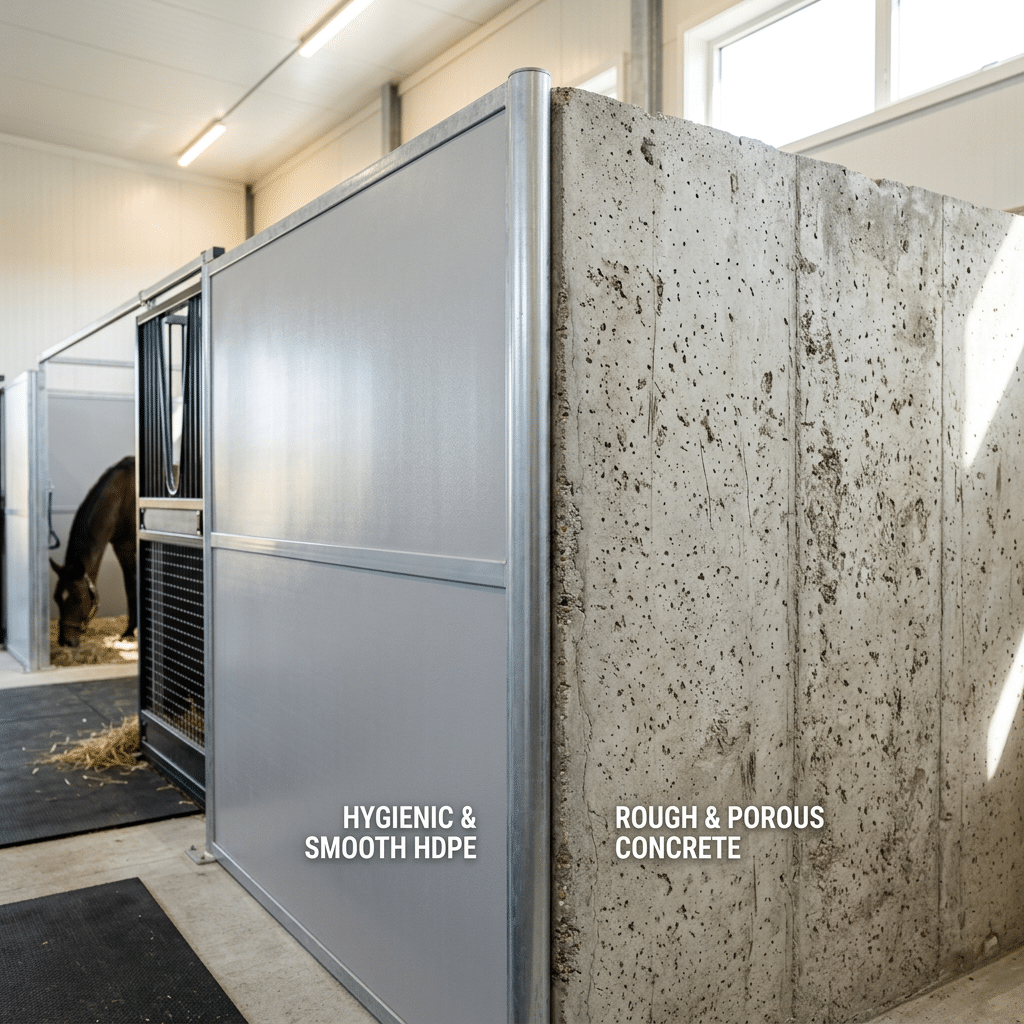
Safety extends to biological hazards as well. A porous or uneven surface traps organic matter and bacteria, making sanitization difficult. We engineer a completely smooth, non-porous finish that wipes clean, preventing bacterial buildup. Crucially, this smoothness prevents ingestion risks. Unlike painted or powder-coated surfaces that chip upo
n impact, our finish offers no loose flakes or debris for a horse to bite off and swallow.
The “Hot-Dip After Fabrication” Manufacturing Advantage
We achieve this finish through a strict “Hot-Dip After Fabrication” process. Many competitors cut costs by using pre-galvanized tubes, welding them together, and then spraying the burnt weld seams with silver paint. This leaves weak points that rust and flake. At DB Stable, we fabricate the entire “Black Body” (raw steel) frame first, including all welding.
Once fabricated, the entire unit is submerged in molten zinc. This creates a metallurgical bond rather than a simple surface layer. The zinc reacts with the steel to form a hard alloy that will not peel. Our process adheres to rigorous specifications:
- Standard Compliance: Strict adherence to BS EN ISO 1461.
- سُمك الطلاء: Averages >70 microns on tubing and >85 microns on structural parts.
- Sealed Joints: Dipping after welding ensures zinc penetrates and seals every joint.
- Manual Inspection: Post-dip, technicians manually remove any zinc drips (spikes) to guarantee a snag-free surface.
الأسئلة المتداولة
Is galvanized steel toxic to horses?
Zinc toxicity is rare in mature horses and typically results from chronic dietary overdose rather than environmental contact. While foals are more sensitive, the zinc coating on our hot-dip galvanized steel is metallurgically bonded to the frame. This chemical bond makes it extremely difficult to scrape off or ingest, unlike loose paint flakes or treated wood splinters that pose genuine ingestion risks.
Can horses chew off the zinc coating?
No. Unlike paint which merely sits on top of the surface, hot-dip galvanization creates a zinc-iron alloy layer that is chemically harder than the base steel itself. Research shows horses typically “lick” metal surfaces due to boredom (cribbing) rather than “chew” them like wood. We use Q345B structural steel, which is sufficiently hard to resist tooth damage, preventing the ingestion of any coating materials.
How does the finish compare to powder-coated stables?
Powder coating over black steel often chips and peels over time due to moisture infiltration, creating loose flakes that a horse might ingest. DB Stable uses a “Hot-Dip After Fabrication” process (ISO 1461 standard), ensuring the protective zinc layer is fused to the steel at 450°C. This eliminates the risk of flaking and provides superior rust protection without leaving hazardous paint residues in the stall.
Are there sharp edges that could injure the horse?
Safety is our core engineering principle. We use a rigorous quality control process where technicians grind all welds smooth and inspect for burrs before the steel enters the galvanizing bath. This ensures a “Cast-Proof” and injury-free surface, preventing cuts that could otherwise attract horses to lick the area or cause infection.
الأفكار النهائية
While painted alternatives offer lower upfront costs, they introduce liability through flaking toxic coatings and rapid corrosion. Adhering to the BS EN ISO 1461 standard with our “Hot-Dip After Fabrication” process is the only way to safeguard your inventory against rust claims and veterinary hazards. Quality infrastructure builds long-term client trust and eliminates the safety risks associated with inferior finishes.
Don’t rely on marketing claims—verify the metallurgical bond yourself. We recommend requesting a steel sample or starting with a Trial Order (LCL) to test our kick-proof durability and smooth finish firsthand. Contact our engineering team today to secure your region’s supply of safe, ISO-certified stabling solutions.

 Arabic
  English
  Spanish
  French
  German
0 تعليق