


Wall height dictates pathogen control. Standard 4-foot dividers create nose-to-nose transmission vectors. This undermines biosecurity. Commercial barns require impermeable barriers. One sick horse becomes a facility-wide liability without them. A professional Horse Stable Supplier prioritizes containment over aesthetics.
Stack Effect Ventilation offers airflow. Solid 28mm HDPE panels provide containment. Our 14-Gauge Q235B frameworks use ISO 1461 الجلفنة بالغمس الساخن. These withstand aggressive stall use. You eliminate maintenance costs associated with porous timber.
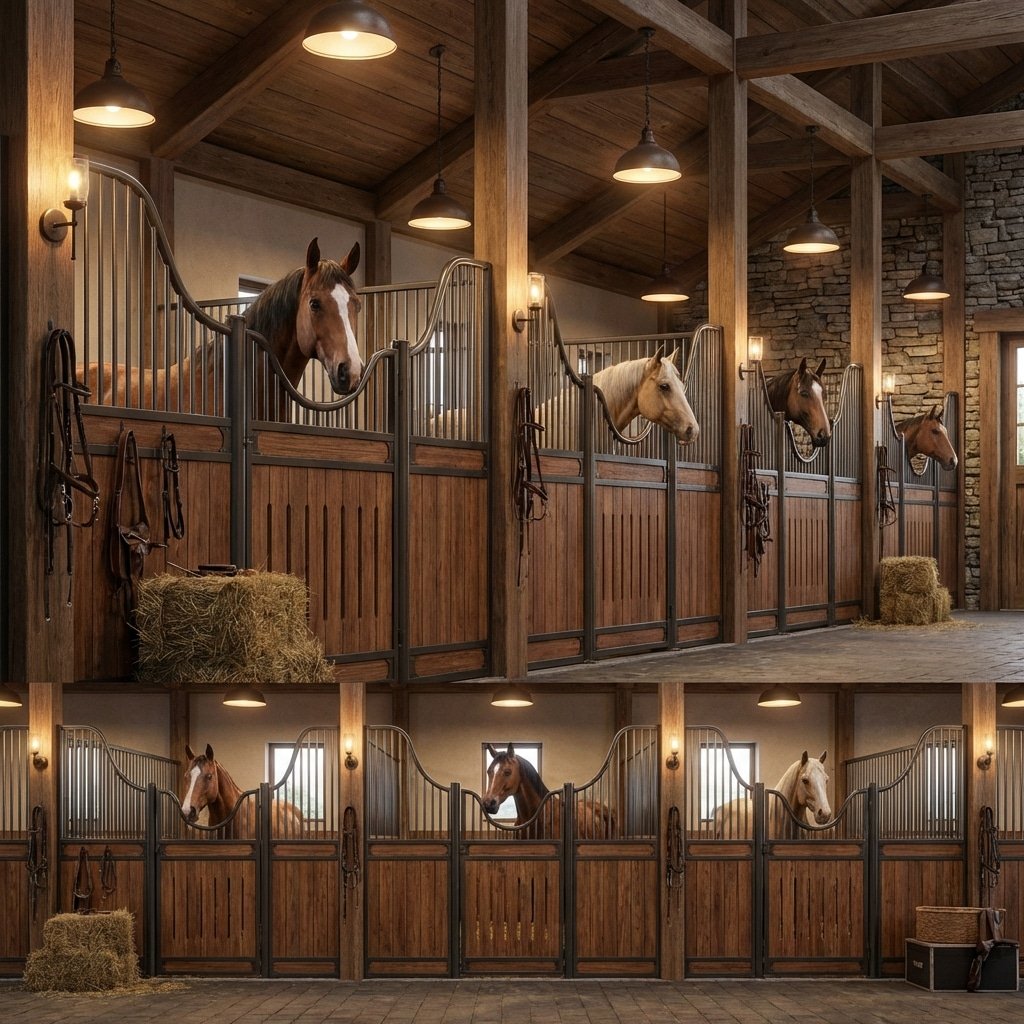
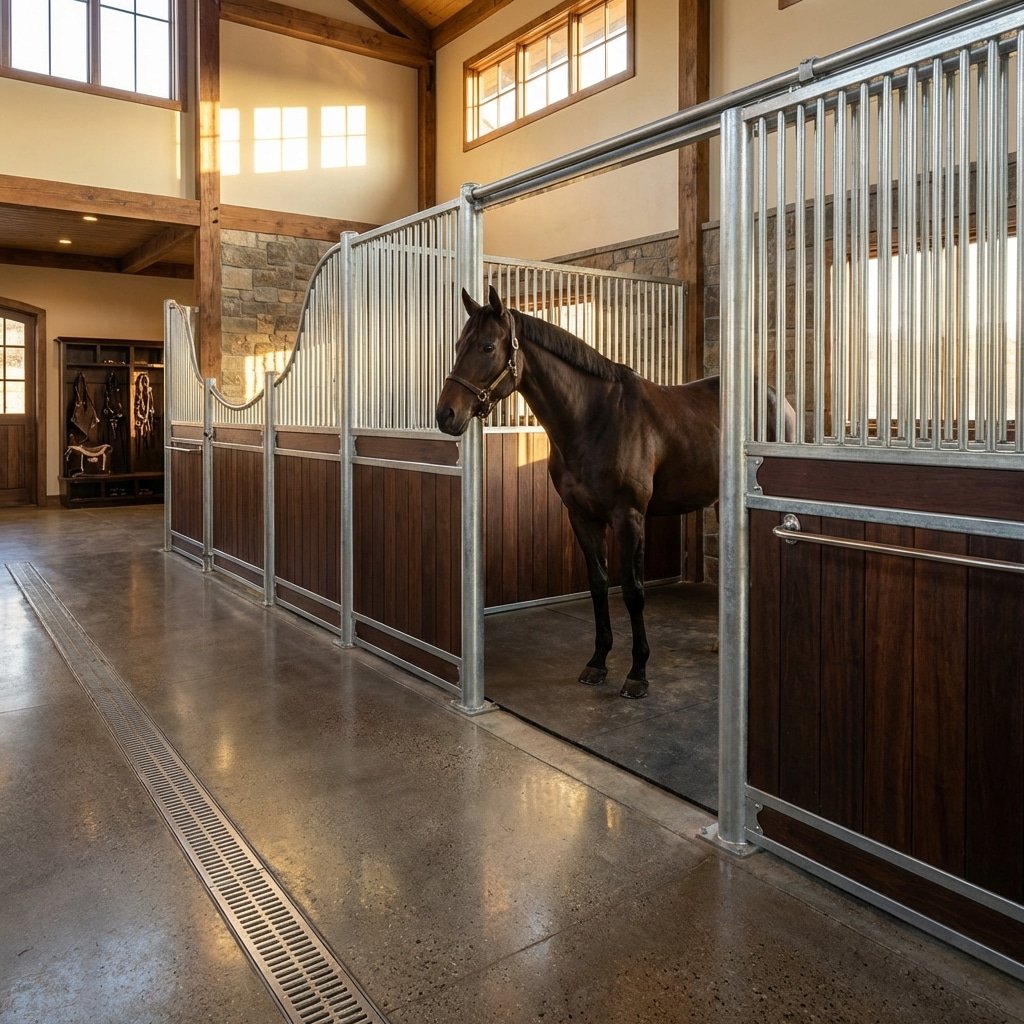
The 4-Foot Solid / 3-Foot Grill Standard Layout
This layout uses a 4-foot solid base to block kicks and a 3-foot upper grill for stack effect ventilation, balancing physical containment with respiratory health.
The Ergonomics of the Split: Balancing Airflow and Safety
Splitting a partition at 4 feet (1.2m) is an engineering calculation. It balances equine biomechanics and facility hygiene. Fully solid walls trap ammonia at floor level. Full grills offer zero protection against aggressive hocks. The 4ft/3ft split addresses three critical failures of single-material partitions.
- Ammonia fumes from bedding are heavy. Body heat causes air to rise. The open top grill allows warm, contaminated air to escape. This prevents respiratory inflammation common in fully enclosed boxes.
- Most equine kicks occur below the 1.2-meter mark. The 4-foot solid bottom absorbs aggressive impact. Solid walls prevent shattering a neighbor’s leg through open bars.
- Horses are prey animals relying on the herd for security. The 3-foot visual clearance allows them to verify their neighbors’ presence. This reduces stalling stress, weaving, and cribbing compared to isolation walls.
DB Stable Specifications: 14-Gauge Grill and HDPE Impact Zones
Design intent fails without the steel to back it up. Competitors use 1.5mm tubing for grill bars to cut costs. This bends when a 500kg animal leans or kicks. We adhere to heavy-duty industrial standards. Your Horse Stable Supplier must ensure the partition holds up to actual barn use.
- We use 14-Gauge (2.0mm – 2.5mm) Q235B structural steel for all grill bars. This thickness provides the rigidity needed to withstand pressure. The structure holds without warping.
- A professional Horse Stable Supplier specifies 28mm HDPE or خيزران عالي الكثافة for the solid bottom section. These materials absorb high-impact force without splintering. Standard pine or plywood fails under similar stress.
- We reject pre-galvanized tubes. The entire grill and frame assembly undergoes Hot-Dip Galvanization after fabrication. This process meets ISO 1461. It seals every weld against rust and ammonia corrosion.
- Our bar spacing prevents hoof entrapment. If a horse rears or rolls against the partition, the design stops them from getting a leg caught between the bars.
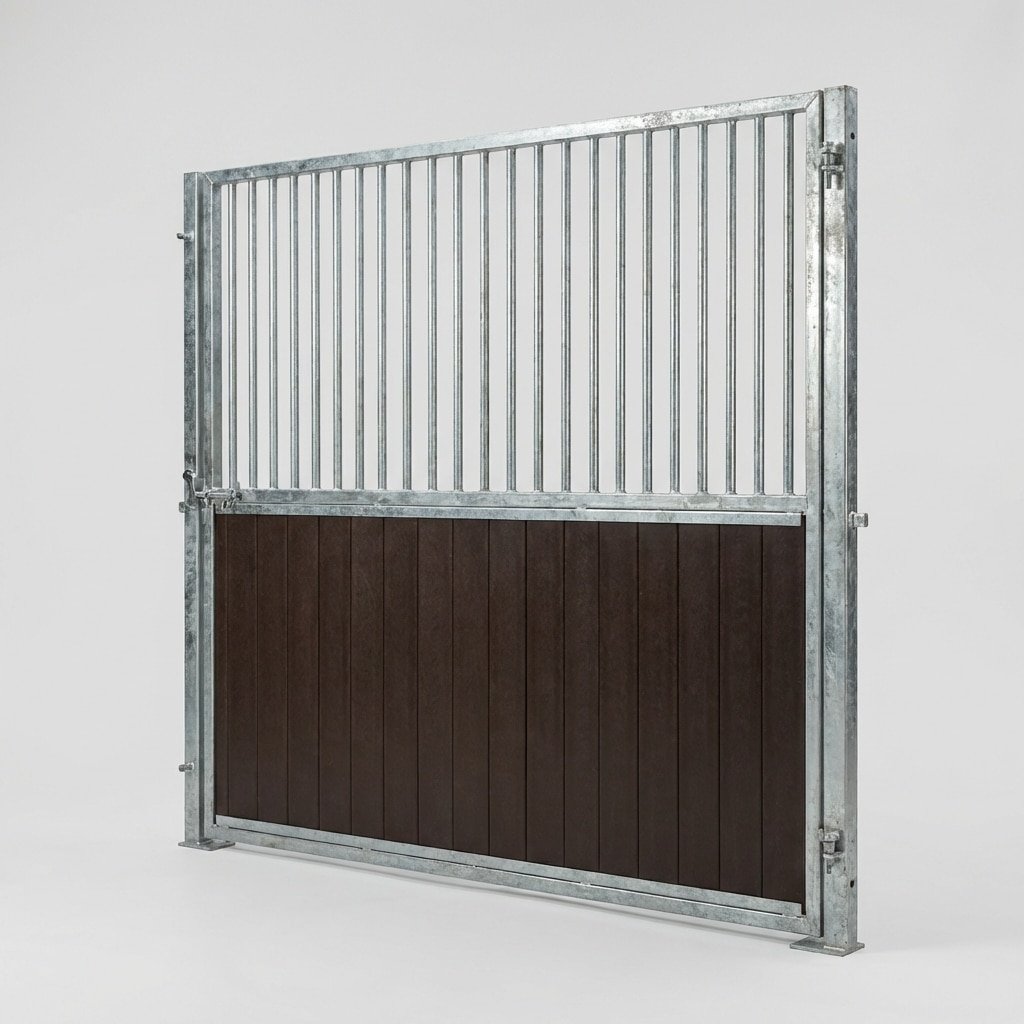
The “Half-Wall” Risk: Nose-to-Nose Contact and Disease
Half-walls prioritize socialization but create a biosecurity gap where horses exchange fluids over the partition. In strict quarantine zones, this open design fails to contain respiratory pathogens.
Understanding the “Nose-to-Nose” Transmission Vector
Standard stable designs prioritize airflow over biological containment. This helps mental health in healthy herds. It creates a transmission highway for pathogens in high-turnover environments. The Half-Wall design places the horse’s head in an open zone. This removes the physical barrier needed for disease control.
- Horses are tactile animals. A 4-foot barrier allows neighbors to touch muzzles directly. This nose-to-nose contact transfers contagious bacterial infections like Streptococcus equi.
- A coughing horse expels respiratory droplets beyond their immediate stall. Without a full-height solid partition, these aerosols drift over the wall. They contaminate the neighbor’s air space and feed.
- Socialization reduces boredom and vices. In a quarantine context, this benefit becomes a liability. You cannot isolate a sick animal if they share air and tactile space with the rest of the barn.
Evaluating the “Economy Series” Open Top Grill Specification
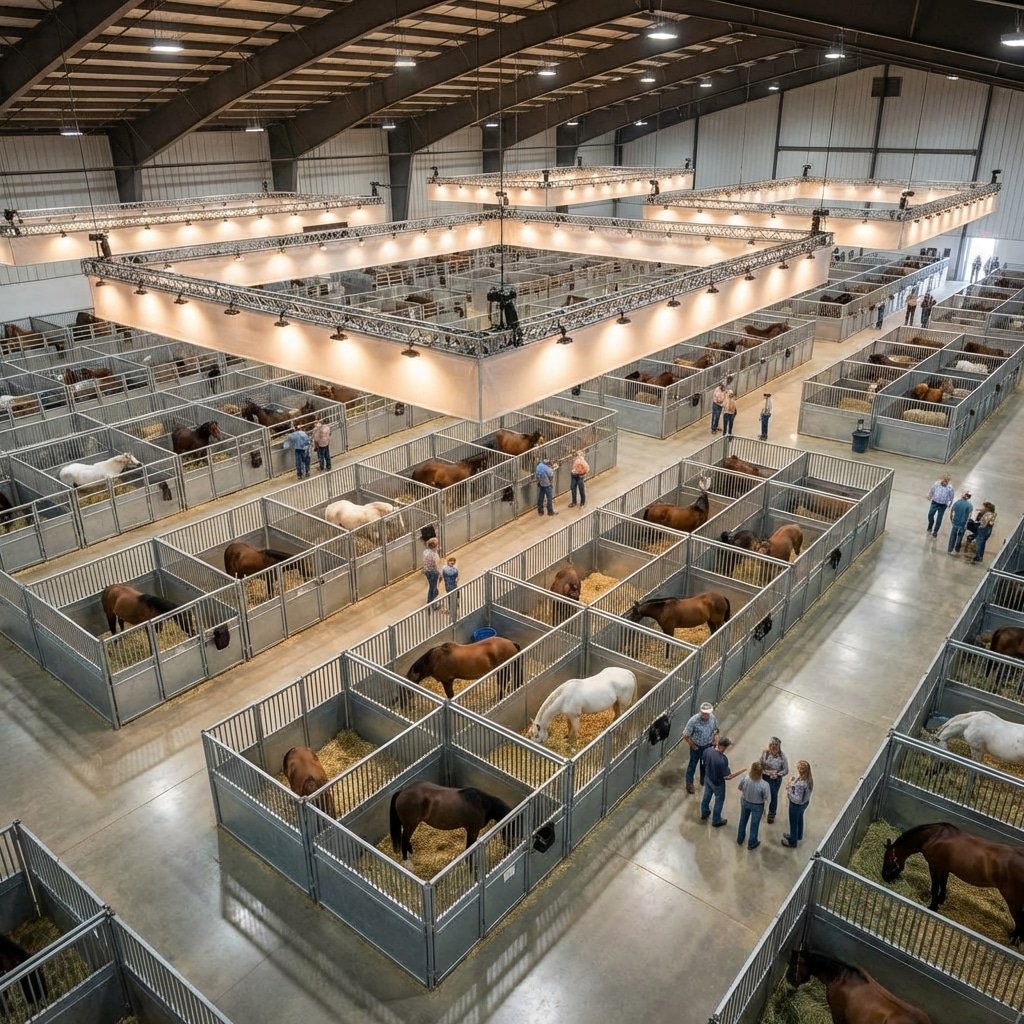
Our Economy Series works well in large commercial projects. It features a Hot-Dip Galvanized frame and HDPE infill. As a Horse Stable Supplier, we advise facility managers to understand the biological implications of the Open Top Grill specification. Do not install it in designated isolation wings.
- Open tops push heat and ammonia out. This stack effect helps general housing. It fails to contain airborne viruses. Airflow paths prevent the containment needed to stop viral particles. A reliable Horse Stable Supplier addresses this trade-off directly.
- Standard bars sit at 50mm. Hooves stay clear. Muzzles still touch. Biosecure units need mesh or solid uppers. Physical blocks stop tactile interaction.
- Hot-Dip Galvanized steel (ISO 1461) and HDPE resist moisture. Bleach and pressure washing work on these surfaces. Sterile materials do not fix physical gaps. Walls clean easily. Air gaps above them do not.
Factory-Direct Stables Built for Extreme Durability
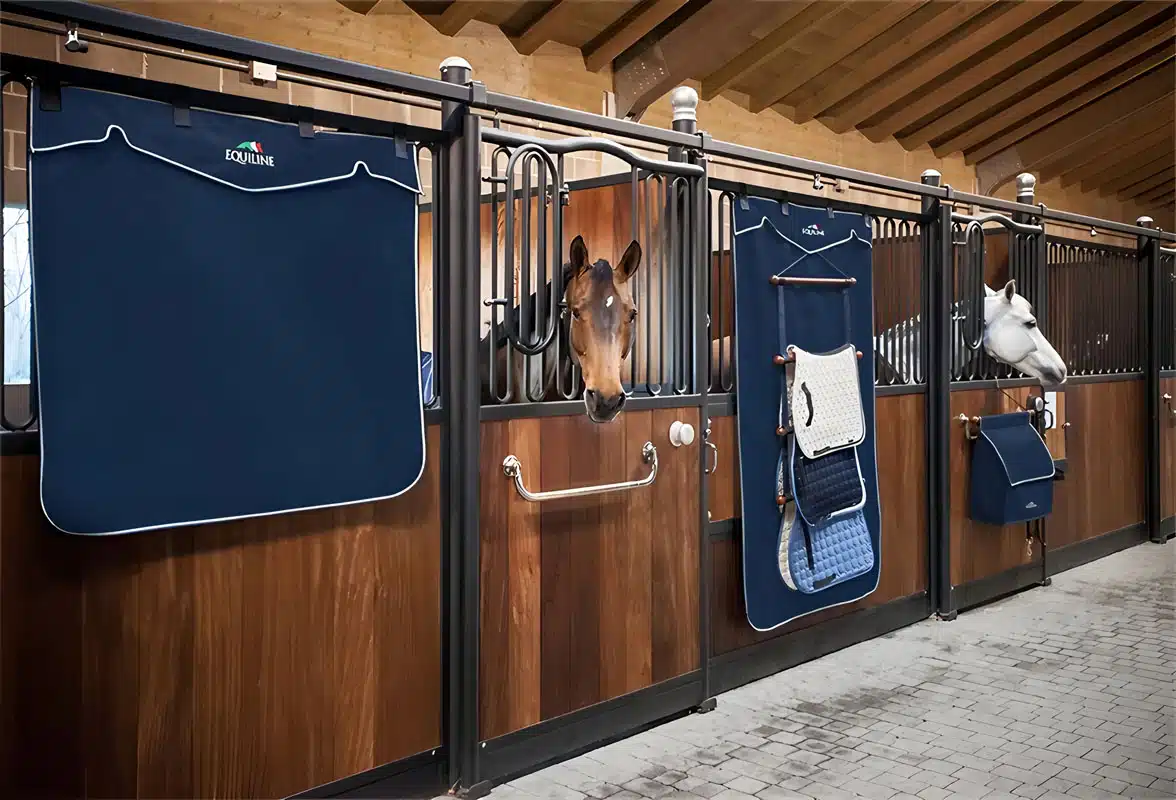
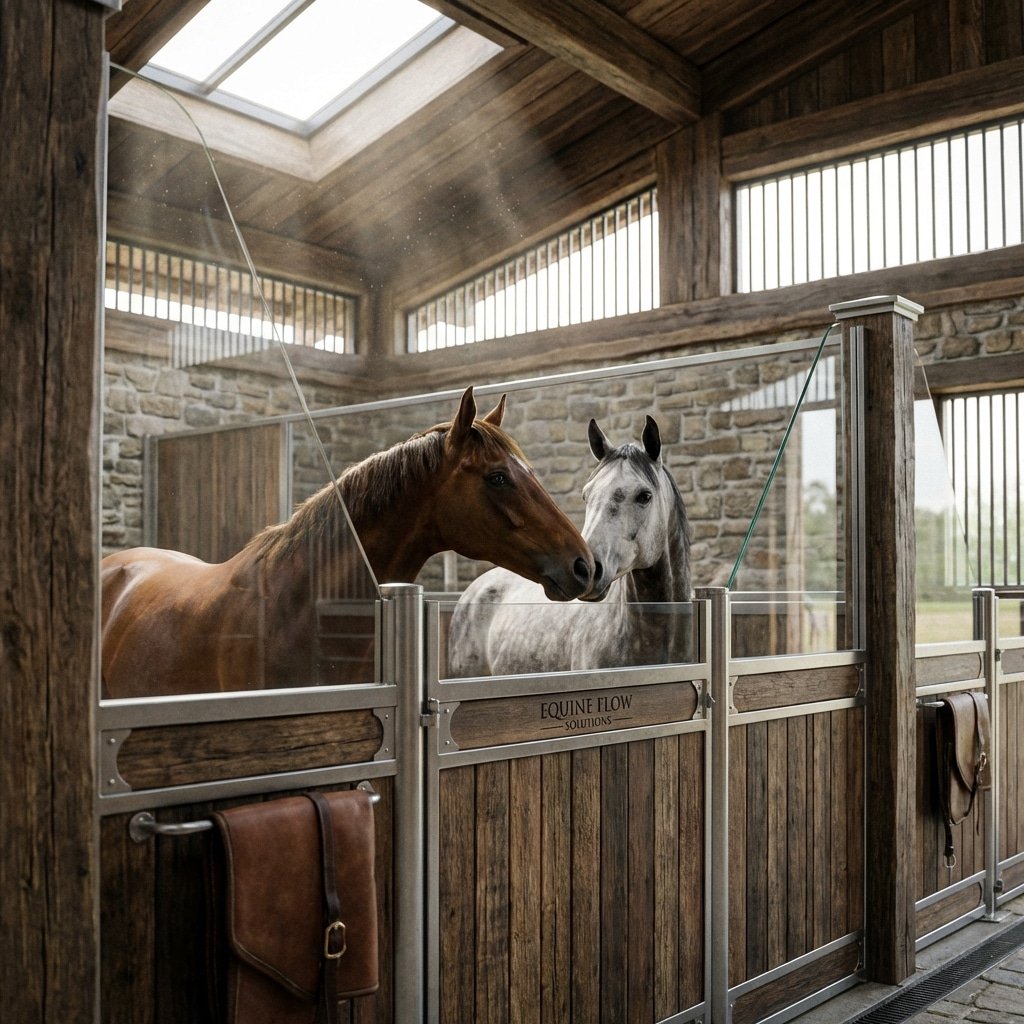
The Full-Wall Solid HDPE Quarantine Panel
Full-height 28mm HDPE panels create an impermeable sanitary barrier, eliminating nose-to-nose contact and withstanding rigorous chemical disinfection without the degradation seen in wood.
Hygiene and Disease Control Standards
Airflow between stalls creates liability in isolation units. Full-wall solid partitions cut transmission lines for respiratory diseases. Grill tops allow pathogen transfer via droplets. Floor-to-ceiling barriers block direct interaction. This stops nose-to-nose contact. Viruses spread primarily through this vector in equine facilities.
Surface structure equals height in importance. Wood absorbs moisture, bacteria, and ammonia. High-Density Polyethylene (HDPE) creates a non-porous shield. Heavy-duty chemical disinfectants or pressure washers clean these walls daily. Material stays intact. This closes hygiene gaps in traditional designs. Pathogens cannot bypass the barrier or colonize the surface.
The 28mm Impact-Absorbing HDPE Specification
Standard plywood shatters. The HDPE absorbs impact. Isolation panels specify 28mm-32mm thickness. Structural integrity holds against aggressive horses. Material density flexes to dissipate energy. Cracks do not form. Synthetic composition includes UV stabilizers. Brittleness and fading stay absent even in Australia or the southern US.
- Impact Absorption uses 28mm-32mm HDPE. Design flexes and absorbs energy. System prevents dangerous shattering.
- Maintenance requirements approach zero. Materials resist rot, mold, and cribbing damage. Timber repair expenses disappear.
- UV Stabilization: Intense sunlight does not degrade these materials. Structural strength remains intact.
- Kick-Proof Guarantee: Material density and flexibility absorb direct kicks. Confined animals cause no damage.
The Compromise: Floor-to-Ceiling Mesh Dividers
Floor-to-ceiling mesh dividers balance security with airflow, utilizing “Stack Effect Ventilation” to vent ammonia while maintaining safe social contact for stabled horses.
| الميزة | Solid Full Wall | Full Mesh Divider |
|---|---|---|
| التهوية | Blocks cross-breeze; traps ammonia | Maximized “Stack Effect” airflow |
| Social Impact | Isolates horse; increases stress | Full visibility; reduces anxiety |
| الأمن | Total physical separation | Prevents biting/rearing; safe contact |
Optimizing “Stack Effect” Ventilation and Visibility
Mesh dividers outperform solid walls on air quality. Ammonia fumes settle low. Horse heat rises. Solid walls trap stagnant, contaminated air. Mesh dividers enable Stack Effect Ventilation. Warm air exhausts through roof vents. Fresh air pulls in from the aisle. Continuous cycling reduces respiratory risks.
Dividers support equine psychology. Horses are herd animals. They require visual contact for security. Solid walls create isolation. Isolation triggers vices like weaving, cribbing, or stall walking. Mesh provides visual connection without physical risk. Design eliminates confinement issues. Aggressive horses cannot rear over shorter partitions.
The 14-Gauge Hot-Dip Galvanized Standard
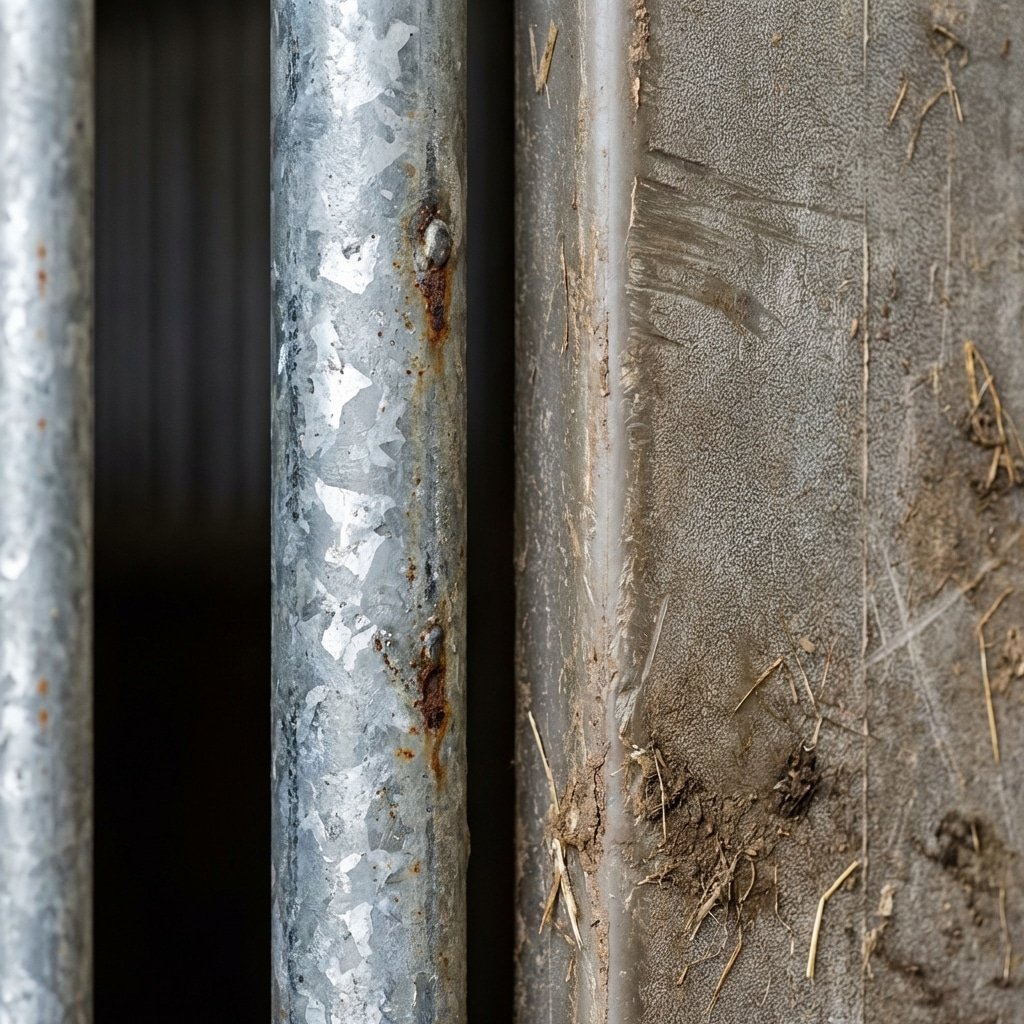
Mesh divider safety depends on materials. Cheap, thin-gauge wire warps under pressure. It snaps if kicked. Sharp points become dangerous. We engineer dividers to be Kick-Proof. Strict material specifications exceed standard options. A reliable Horse Stable Supplier rejects inferior wire. We adhere to strict specs.
- Heavy Framework: 50mm x 50mm RHS posts form the structure. 14-Gauge (2.0mm–2.5mm) tubing connects to posts. We reject 1.5mm tubing. Budget alternatives rely on 1.5mm. We specify heavier gauge.
- Hot-Dip After Fabrication: Mesh designs contain hundreds of weld points. Welding pre-galvanized steel burns zinc off at every joint. Rust forms immediately. We weld raw black steel first. The entire unit dips into molten zinc.
- ISO 1461 Compliance: Process delivers zinc coating average exceeding 85 microns. Service life spans decades. Standard coatings last years. Ours last longer.
الأسئلة المتداولة
What is the main functional difference between half-wall and full-wall partitions?
Partition height dictates equine respiratory health and biosecurity. Our full-wall 14-Gauge Hot-Dip Galvanized systems stop nose-to-nose contact in isolation zones. This blocks pathogen spread. Thinner 1.5mm alternatives rust and fail structurally. That creates long-term liability for your facility.
Does a full solid wall affect stable ventilation?
Industrial standards protect your facility’s reputation. Impact-absorbing HDPE and ISO 1461 steel cut long-term maintenance costs. Request the technical catalog or schedule a consultation. Finalize a partition configuration for your quarantine requirements. Verify every specification with your Horse Stable Supplier.
What materials are used to ensure the walls withstand heavy impact?
Half-Wall vs Full-Wall Horse Stall Partitions: Disease Control vs Airflow
Can I mix half-wall and full-wall panels in the same barn?
Horse Stable Partitions: Compare Half vs Full Walls. 14-Gauge ISO 1461 Steel & HDPE. Factory Direct for Commercial Barns.
How do these partitions prevent injury if a horse becomes cast?
horse-stable-partitions-half-vs-full-wall
الأفكار النهائية
Horse Stable Partitions, Horse Stable Supplier
Secure your facility’s reputation with infrastructure built to industrial standards. Request our technical catalog or schedule a consultation to review how our impact-absorbing HDPE and ISO 1461 steel reduce your long-term maintenance costs. Contact us now to finalize a partition configuration that meets your specific quarantine requirements.


 Arabic
  English
  Spanish
  French
  German
0 تعليق