


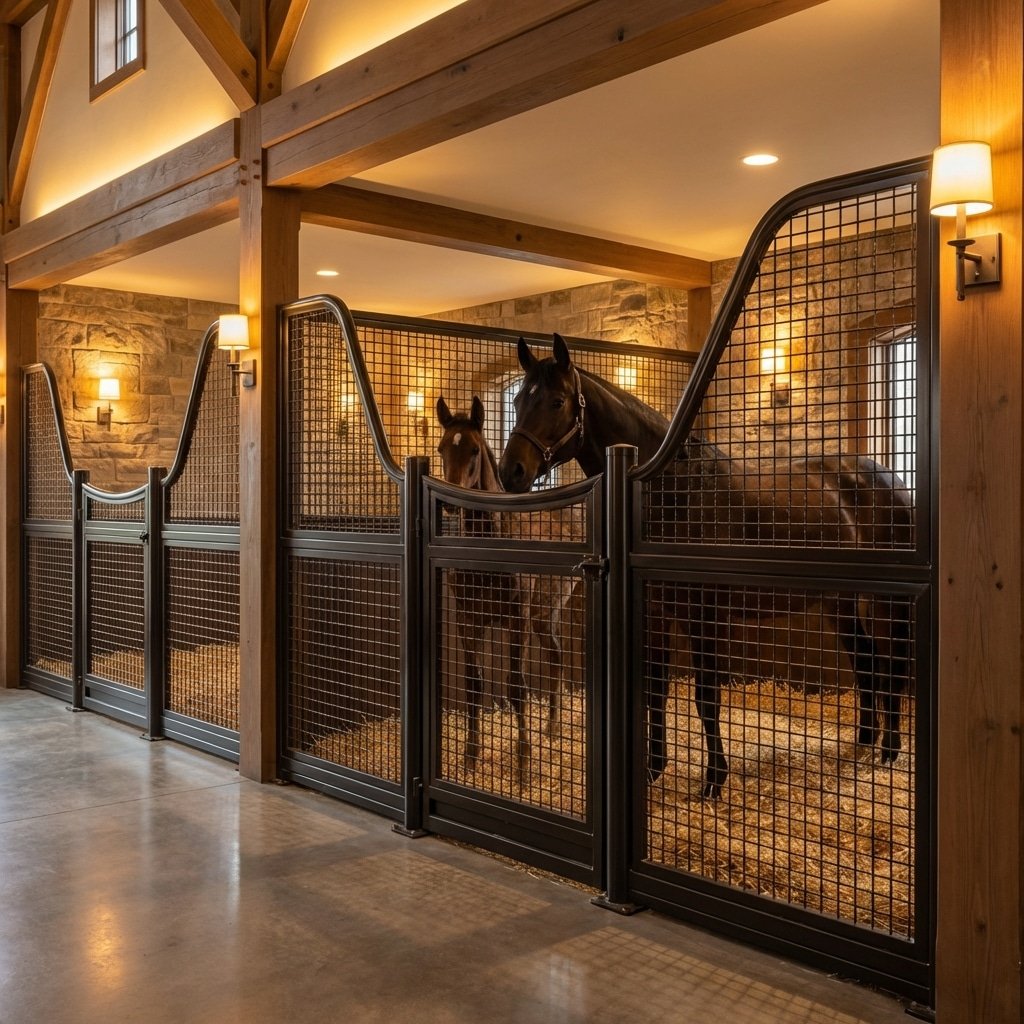
Weaning foals triggers a doubling of cortisol levels and frantic escape behaviors that expose facilities to catastrophic limb injuries. Standard containment often fails during this volatile transition, turning a routine process into a significant liability for breeders protecting high-value stock.
DB Stable mitigates this risk through engineering that supports safe proximity weaning. We utilize Q345B High Strength Steel frames and strict 50mm mesh apertures to resist high-velocity impacts and prevent hoof entrapment, ensuring physical safety while maintaining the sensory bonds that lower stress.

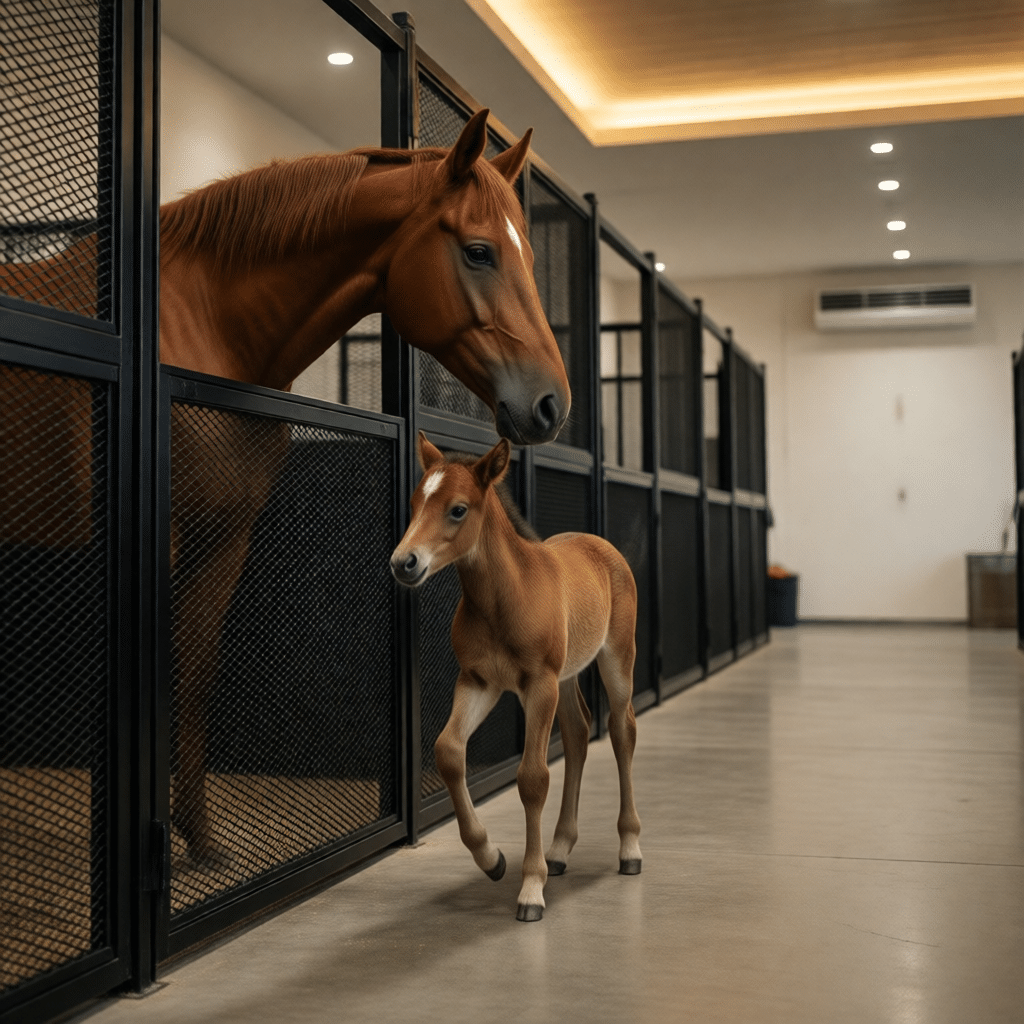
The Stress of Weaning for Mare and Foal
Weaning triggers a doubling of cortisol levels and frantic escape behaviors, making industrial-grade containment essential to prevent catastrophic limb injuries during this volatile transition.
The Biological Toll: Cortisol Spikes and Separation Anxiety
Weaning is physiologically violent for a foal. Research confirms that fecal cortisol concentrations double on the day of separation. This hormonal spike drives frantic physical responses, with tracking data showing foals travel up to four times their normal daily distance. They do not rest; they pace fence lines and test perimeters in a state of panic.
The physical toll extends well beyond the first day. Acute stress markers usually persist for more than three weeks, creating a prolonged window of high injury risk. Distributors supplying breeding facilities must understand that standard containment often fails during this volatile period.
- Vocalizing and Pacing: Constant movement significantly increases the chance of hoof entrapment or impact injury.
- Physiological Distress: Symptoms include loose feces, diarrhea, and visible exhaustion.
- Extended Adaptation: Cortisol levels rarely return to baseline within the first 21 days.
Ensuring Safety with the Kick-Proof Guarantee
A panicked 6-month-old foal generates immense force when striking a stall wall. Most generic stables use standard Q235B steel, which risks brittle fracture under this specific type of high-velocity impact, especially in colder climates. DB Stable mitigates this liability by using Q345B High Strength Steel (ASTM Grade 50 equivalent) for our Cold Climate options.
We back this material choice with our “Kick-Proof Guarantee.” This isn’t marketing fluff; it is an engineering standard based on material physics. We utilize 14-gauge (2.0mm – 2.5mm) tube profiles to ensure walls withstand repeated blows without buckling. For large projects, this durability protects the facility’s investment and reduces long-term maintenance costs caused by bent bars and broken welds.

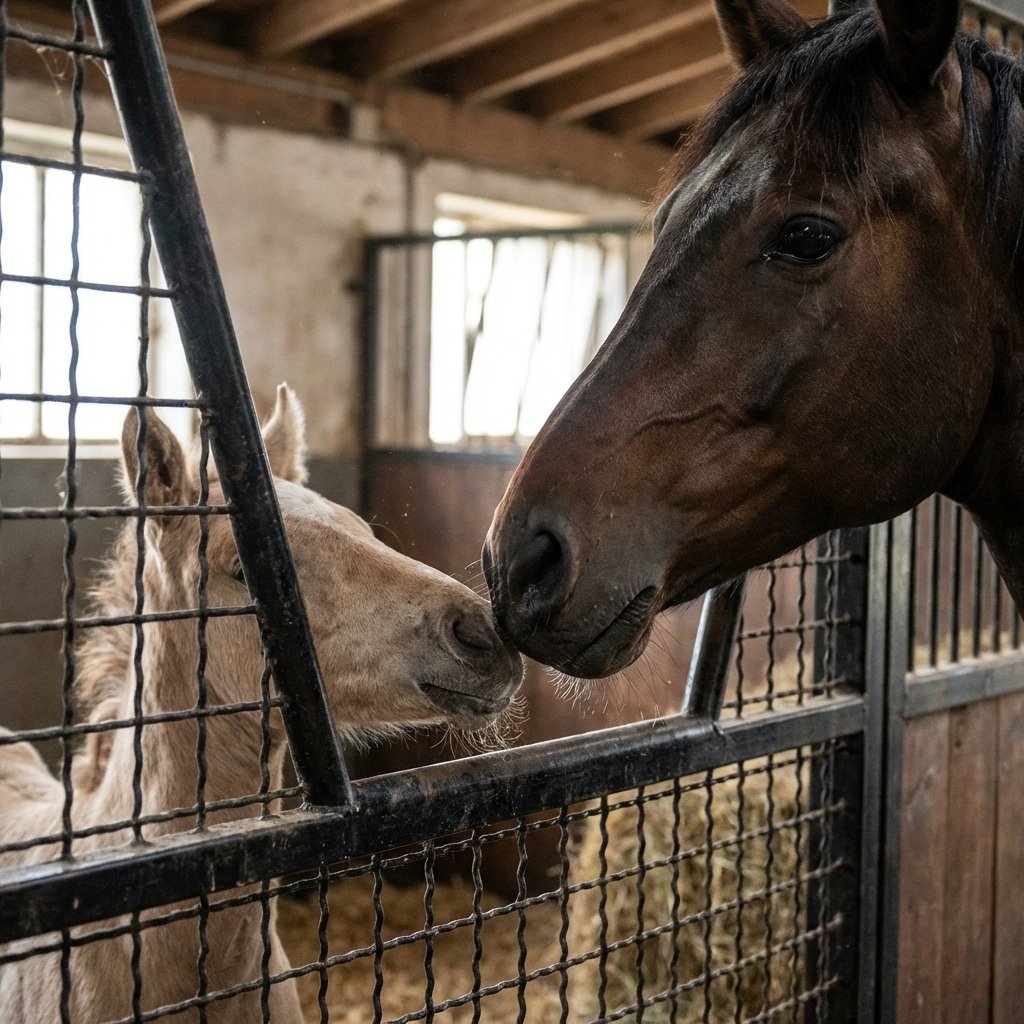
The “Over the Fence” Weaning Method Indoors
This method separates mares and foals into adjacent stalls, allowing nose-to-nose contact while preventing nursing. It significantly lowers cortisol levels and behavioral stress compared to abrupt isolation.
How Proximity Weaning Reduces Stress
Abrupt weaning creates a massive spike in cortisol because it severs all sensory connection between the mare and foal. The indoor “Over the Fence” approach mitigates this by placing them in adjacent stalls. The physical barrier stops the foal from nursing, but the open design maintains the social bond.
By allowing “nose-to-nose” interaction, you eliminate the panic-induced pacing and vocalization typical of total isolation. The foal can see, smell, and touch the mare, which reassures them of her presence. Research supports this methodology, showing that foals weaned this way maintain higher feed intake and significantly lower heart rates post-separation compared to those in solid-walled isolation.
Facilitating Contact with Open Top Grill Partitions
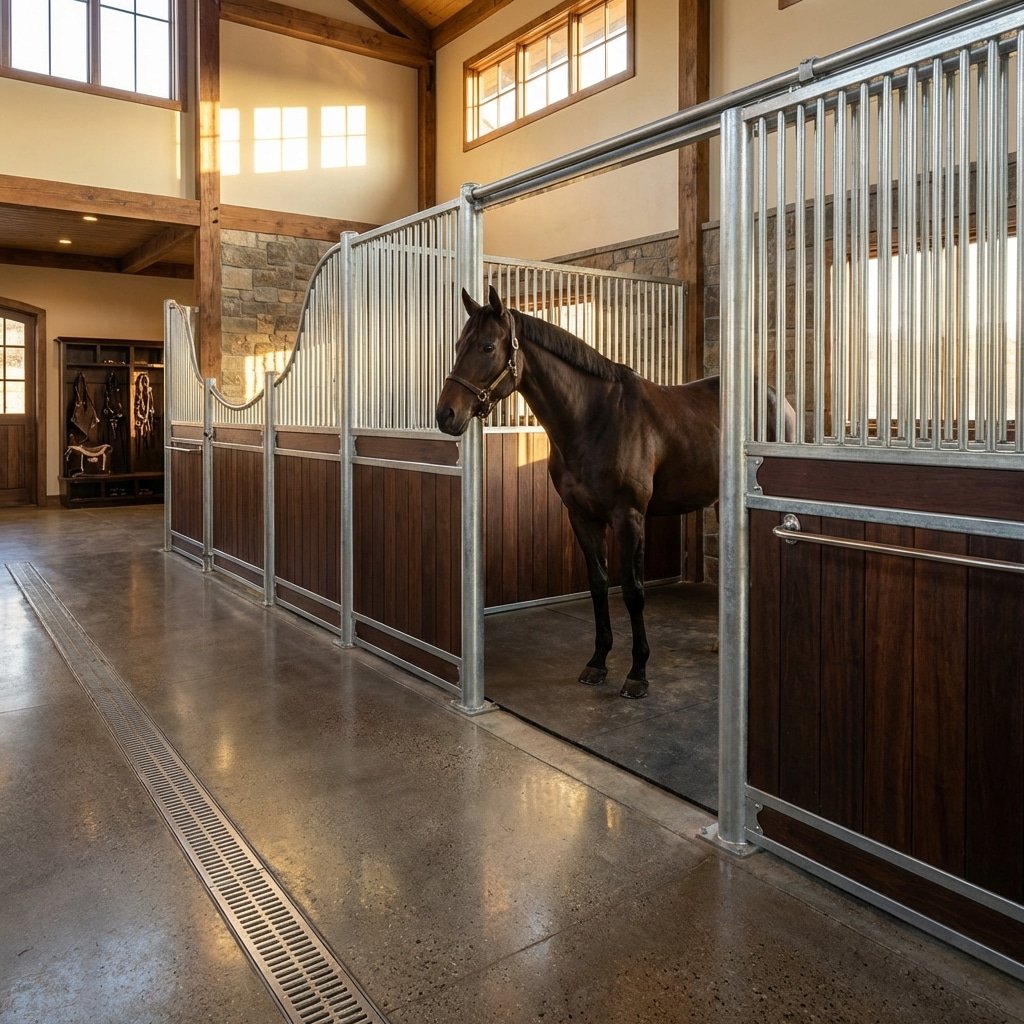
Success with this method relies on specific stable architecture. Solid walls block the necessary sensory input, while unsafe makeshift barriers invite injury. We utilize the **Open Top Grill** partition design—standard in our Economy and Professional Series—to create a safe, permanent indoor “fence-line.”
- Hot-Dip Galvanized Protection: Anxious foals use their mouths to cope. They will lick, chew, and gnaw on partition bars. Unlike pre-galvanized or painted steel which fails under this acidity, our frames are **Hot-Dip Galvanized After Fabrication** (BS EN ISO 1461). This provides a zinc coating over 70 microns thick that withstands constant oral contact without rusting.
- Kick-Proof Guarantee: Frustration often leads to kicking. We use **14-gauge (2.0mm+) structural steel** paired with **28mm-32mm HDPE infill**. This system absorbs high-impact blows without splintering or deforming, ensuring the foal does not suffer leg injuries during a tantrum.
Engineered for Safety and 20-Year Durability

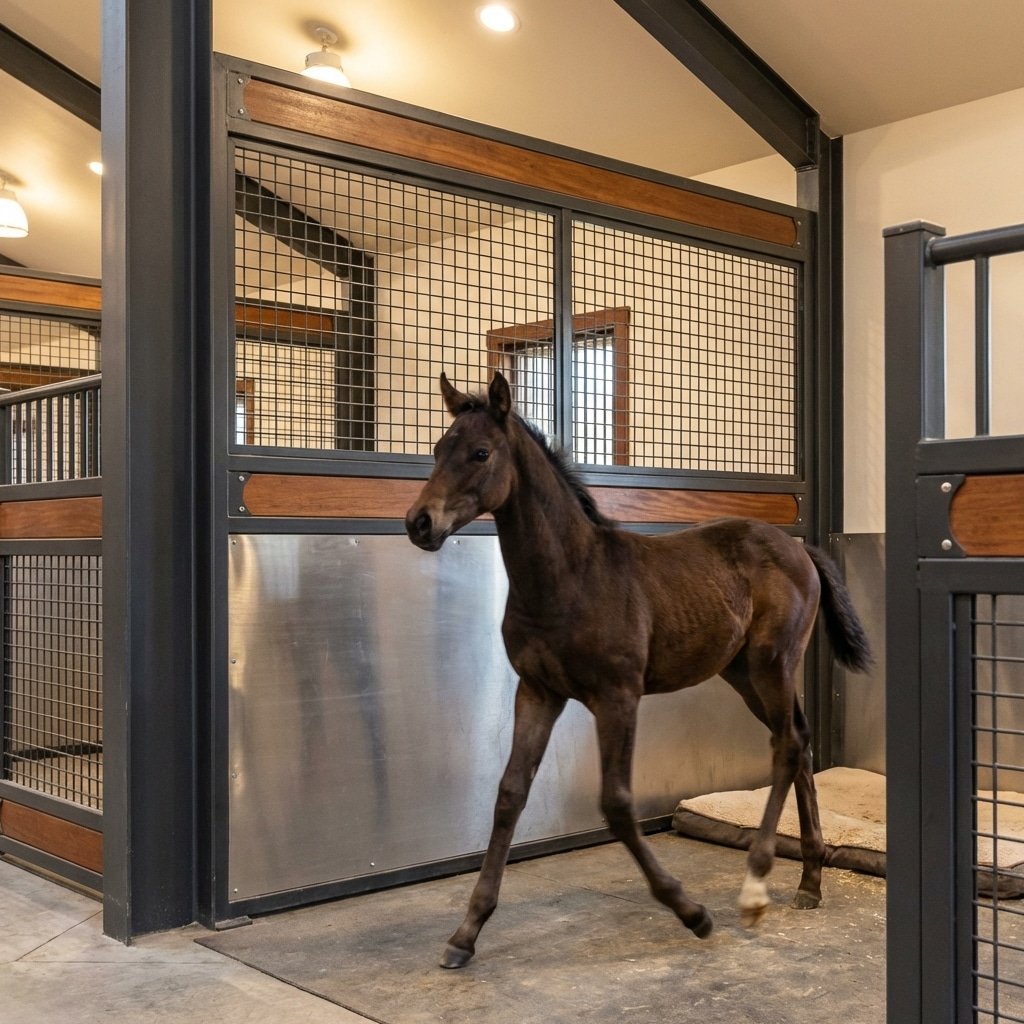
Why Solid Walls Cause Extreme Weaning Anxiety
Full-height visual barriers induce panic when auditory bonds remain intact. Foals that hear but cannot see their dam exhibit higher cortisol levels and frantic pacing. Semi-open designs balance physical safety with essential herd visibility.
The Stress of Visual Isolation With Intact Auditory Bonds
Many facility managers assume that completely blocking a foal’s view creates a calmer environment. In practice, this often backfires. When a foal is separated behind a solid wall but remains within earshot of the mare, the disconnect between auditory cues and visual reality triggers a “seek and search” panic response. The foal hears the dam calling but hits a visual dead end, escalating anxiety rather than reducing it.
Research supports “fence-line weaning” as a superior method to abrupt, full-wall isolation. Foals maintained in environments where they can see their dam—or at least other horses—show significantly lower cortisol levels than those in solitary confinement. When visual contact is cut off while auditory bonds persist, the anxiety manifests physically. You see immediate behavioral spikes: weaving, box-walking, and dangerous rearing against the solid infill as the foal attempts to climb the barrier to locate the source of the sound.
Mitigating Separation Panic With Open Top Grill Profiles
To address this, we engineered the DB Stable partition system to support “proximity weaning” rather than total isolation. The goal is to provide a physical barrier that prevents nursing while maintaining the social connection vital for keeping stress hormones in check. This approach relies on specific design features found in our Economy and Professional Series.
- Open Top Grill Design: We utilize an open grill profile for the upper half of the partition. This allows essential nose-to-nose socialization and visual confirmation of the herd, drastically reducing the feeling of confinement.
- Stack Effect Ventilation: Unlike full solid walls that trap heat and ammonia, the grill top facilitates vertical airflow. This keeps air quality high even when a foal is pacing or sweating due to stress.
- 28mm-32mm HDPE Infill: The lower section requires absolute physical security. We use heavy-duty HDPE to create a solid “Kick-Proof” barrier. This material absorbs the impact of a frantic foal’s hooves without splintering or breaking, ensuring physical safety without causing psychological isolation.

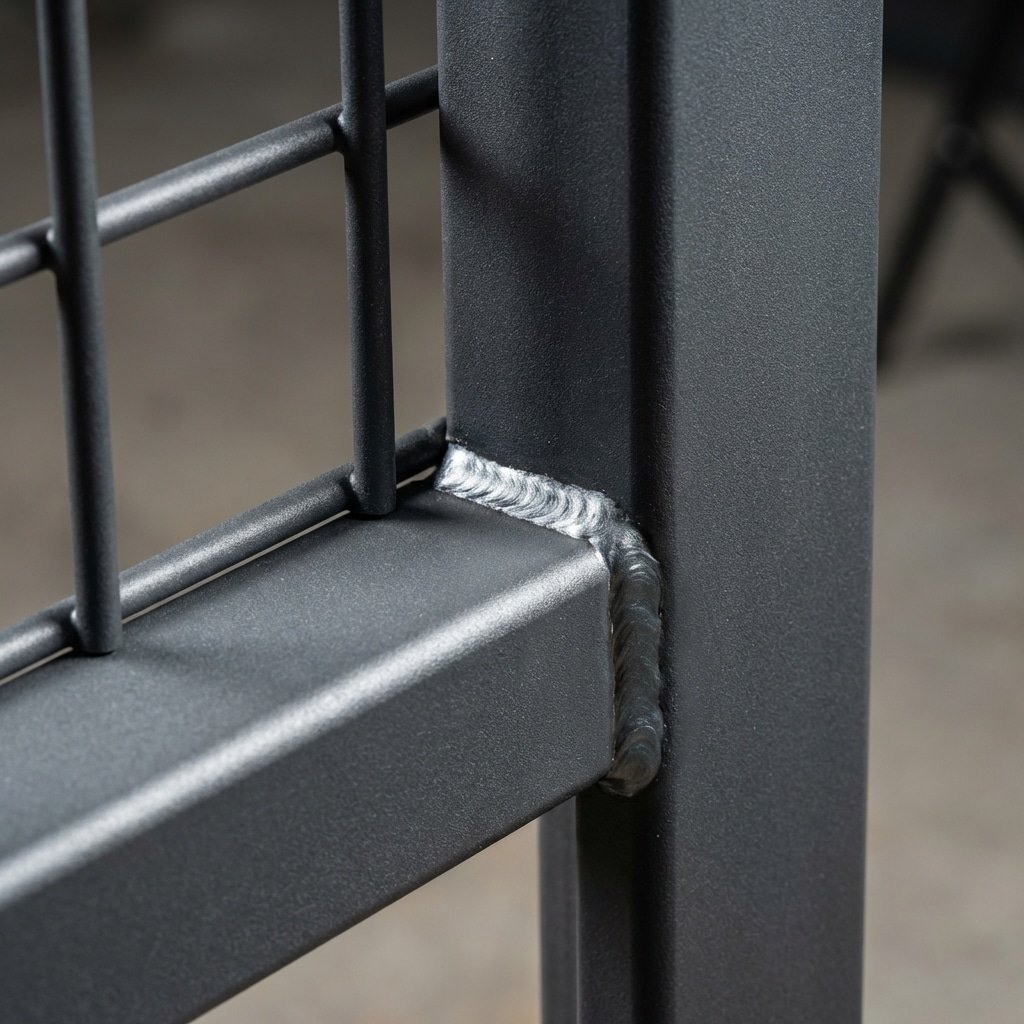
Safe Wire Mesh Dividers: 2-Inch Gaps for Sniffing, Not Snagging
Wire mesh dividers with 2-inch (50mm) apertures enable ‘proximity weaning,’ allowing foals to smell and hear their dams to lower stress levels while preventing limb entrapment common in wider agricultural fencing.
| المواصفات | Weaning Function | Safety Outcome |
|---|---|---|
| 50mm (2-Inch) Aperture | Allows olfactory (smell) and auditory contact. | Rejects small foal hooves to prevent entrapment. |
| Hot-Dip Galvanized Finish | غير متاح | Eliminates sharp burrs that cut rubbing foals. |
| Heavy-Gauge Wire | Prevents nursing through the barrier. | Resists warping from frantic pacing or kicking. |
Proximity Weaning: Reducing Stress Through Sensory Contact
Weaning is a massive stress event, but “proximity weaning” significantly mitigates the cortisol spike. Unlike solid walls that create total isolation, mesh dividers allow for “incomplete separation.” The mare and foal occupy adjacent spaces where they can still smell, hear, and see each other. This sensory contact reassures the foal that the dam is present, even if nursing is physically impossible.
The behavioral difference is immediate. Foals separated by mesh display fewer stereotypic behaviors like cribbing, weaving, or frantic box-walking compared to those in complete isolation. They spend time near the divider, interacting with the dam, which eases the transition to independence. This method allows the foal to acclimate to a new diet and routine without the psychological shock of sudden abandonment.
The 50mm Safety Standard: Engineering Against Hoof Entrapment
The engineering challenge here is balancing visibility with hoof safety. The industry standard for foal-safe mesh is strictly 2 inches (50mm). This dimension is calculated to be smaller than the hoof of a weanling. If a foal kicks out or rears against the divider in a moment of panic, the hoof must bounce off the mesh, not punch through it.
- Rejecting the Hoof: 50mm gaps prevent the “snag and snap” injury. Standard agricultural 2″x4″ (50mm x 100mm) fencing is dangerous because a foal’s small hoof can slip through the 4-inch side, get trapped, and result in a fracture when they pull back.
- Smooth Edges: We use Hot-Dip Galvanization After Fabrication (ISO 1461). This ensures every weld point on the mesh is coated in zinc, eliminating sharp steel burrs that could lacerate a foal’s nose or skin as they pace along the divider.
- السلامة الهيكلية: Woven V-mesh or heavy-gauge welded grids are required. Flimsy wire will warp under the pressure of a leaning foal, creating entrapment pockets.
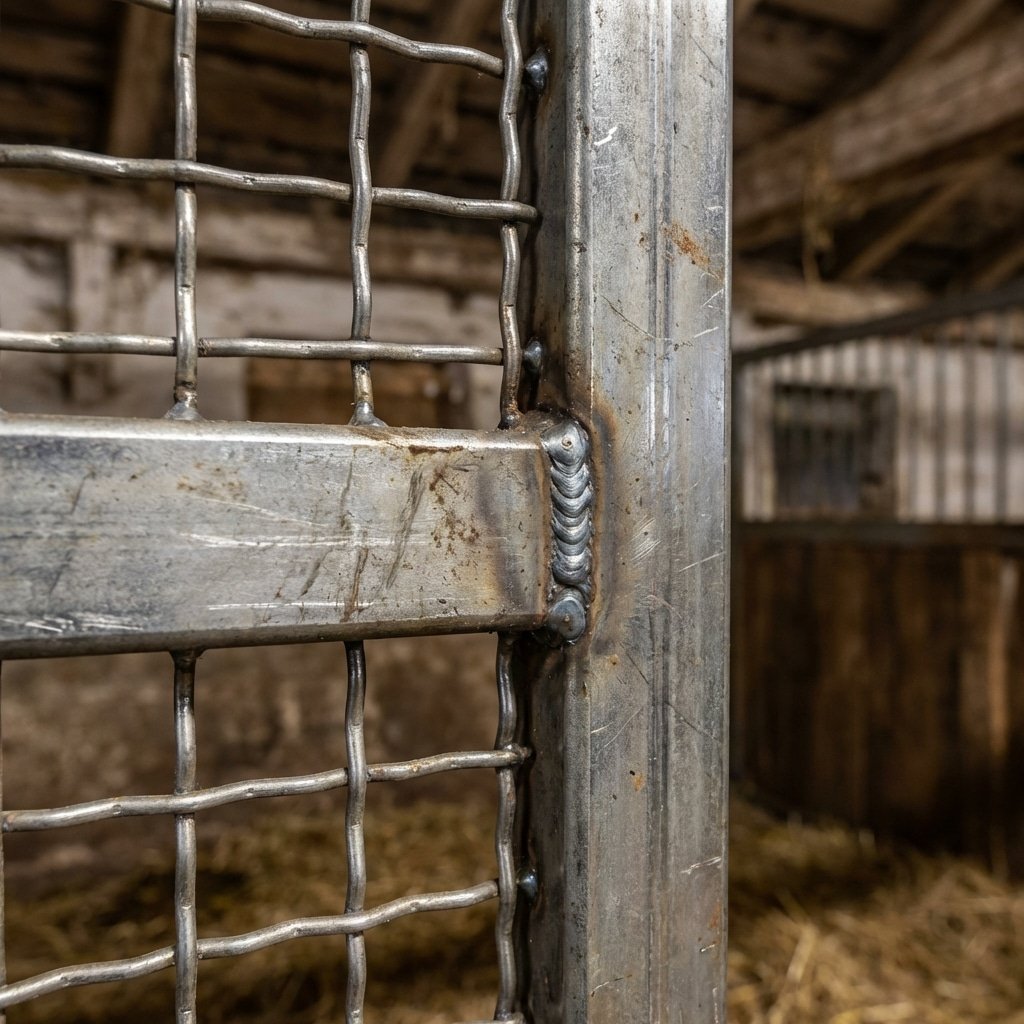
14-Gauge Strength for Frantic Pacing
Weaning foals generate massive repetitive impact force. We utilize 14-gauge (2.0mm-2.5mm) Q345B structural steel to absorb this energy without buckling or snapping.
How Repetitive Pacing Weakens Standard Metals
Weaning is hard on hardware. A stressed foal doesn’t just kick once; they pace, weave, and rear against the partition for hours. This creates a continuous cycle of lateral pressure and vibration that attacks the welds of standard lightweight steel. If the metal fatigues, the containment fails.
Most market-standard tubing (16-gauge or 18-gauge) cannot handle this dynamic load. When a foal rears and strikes the wall, they deliver concentrated point-impacts. Thinner steel dents immediately. Once the structural integrity is compromised, the hollow section can crumple. This creates sharp, jagged edges—a severe laceration risk for a foal already in a panic state.
The 2.5mm (14-Gauge) Standard for Impact Resistance
At DB Stable, we don’t gamble with foal safety. We enforce a strict prohibition on tubing thinner than 2.0mm for any partition intended for breeding operations. Our standard is 14-gauge steel, ranging up to 2.5mm thick.
- Material Upgrade: We use Q345B Low Alloy High Strength Steel (ASTM Grade 50) specifically for weaning stalls.
- Impact Toughness: Unlike standard brittle steel, Q345B offers superior resistance to fractures during high-stress impacts.
- Kick-Proof Guarantee: This specification backs our guarantee that the frame will absorb shock without structural failure.
This ensures the foal stays contained and the investment stays intact.
الأسئلة المتداولة
What is the most effective low-stress weaning method?
Research consistently supports “fenceline weaning” (proximity weaning) as the gold standard. This method places the mare and foal in adjacent spaces where they can see, smell, and hear each other but cannot nurse. Compared to abrupt, complete separation, this approach significantly lowers cortisol levels and reduces dangerous behaviors like frantic pacing or calling.
Can fenceline weaning be adapted for indoor stables?
Yes. You can replicate the benefits of outdoor fenceline weaning by placing the mare and foal in adjacent stalls separated by a partition that allows visibility. Using stalls with grilled or mesh tops ensures the pair maintains the necessary sensory contact to stay calm while physically preventing nursing.
What are the critical safety specs for a weaning stall partition?
For foals, the most critical specification is bar spacing. Vertical bars should be spaced no wider than 3 inches (approx. 76mm) to prevent small hooves from slipping through and becoming trapped. All welds must be smooth, and the partition should be free of protruding hardware (like hay racks or latches) that could injure an anxious foal.
How do DB Stable systems protect weanlings?
Our systems utilize a “Cast-Proof Design” with a minimal bottom gap (approx. 50mm) to prevent legs from getting stuck if a foal rolls near the wall. Also, our partitions are Hot-Dip Galvanized after fabrication (ISO 1461), ensuring smooth, burr-free surfaces that won’t cut or scrape delicate skin, even if the foal rubs against the bars.
الأفكار النهائية
Cheap containment creates liability when weaning foals generate double the cortisol and massive impact forces. We engineered our Q345B High Strength Steel partitions with a Kick-Proof Guarantee to withstand this biological violence without fracturing. Specifying 50mm Hot-Dip Galvanized mesh protects your stock from catastrophic limb entrapment and eliminates the rust claims common with inferior agricultural fencing.
Do not risk valuable bloodlines on unproven materials. We recommend requesting our Project Specification Kit to verify our 14-gauge tubing and galvanization thickness firsthand. Contact our engineering team today to secure a Trial Order and upgrade your facility’s weaning protocols before the next season.


 Arabic
  English
  Spanish
  French
  German
0 تعليق