


For Hippotherapy Centers, barn design directly translates to rider safety and operational liability. Choosing the wrong structural materials for ADA equipment or high-humidity environments leads to expensive retrofits and safety failures that can compromise the entire therapeutic mission.
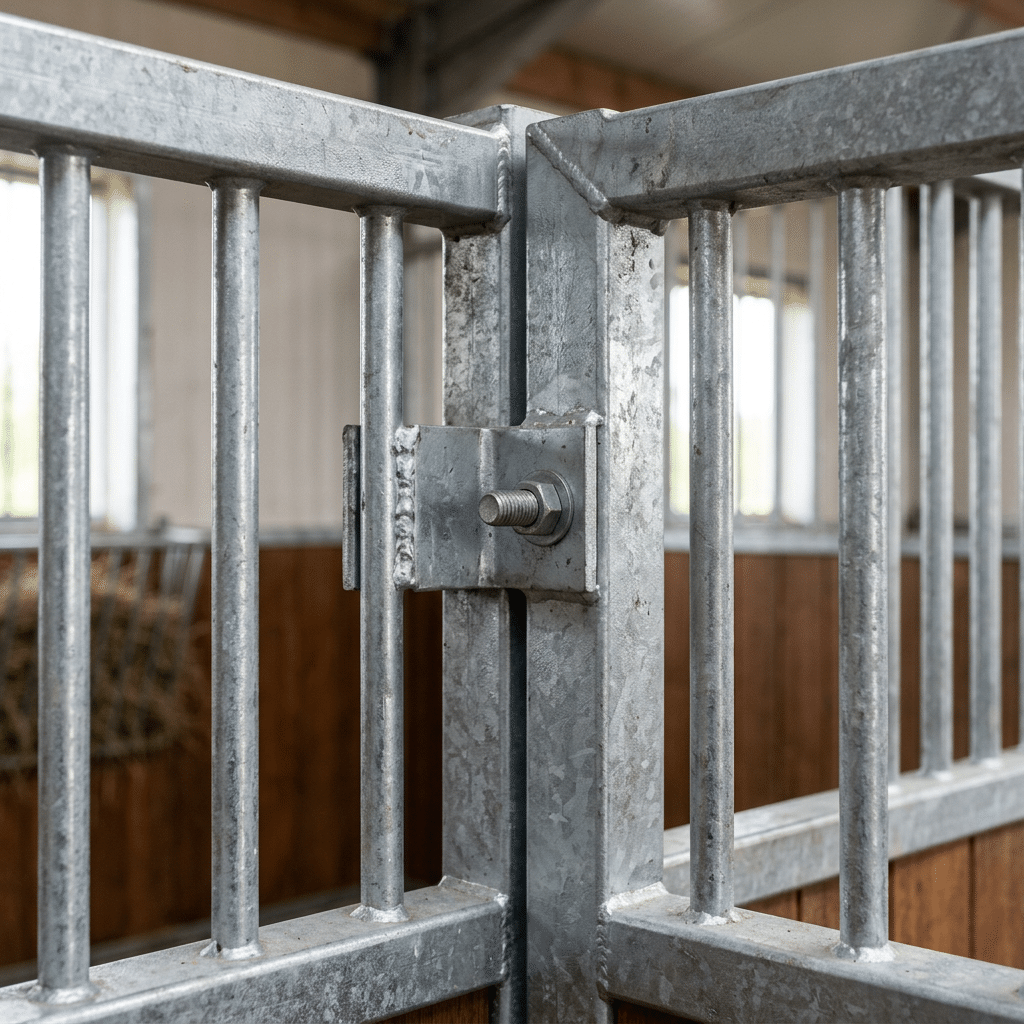
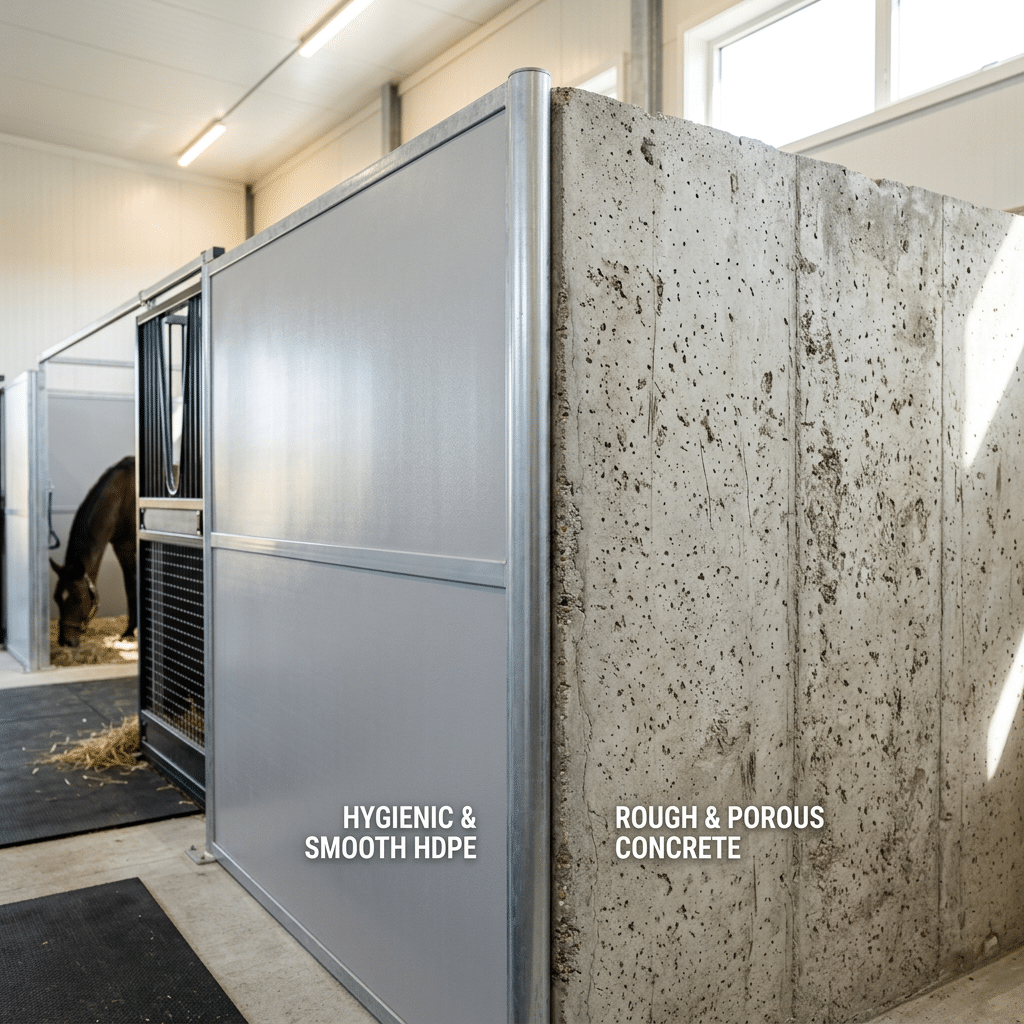
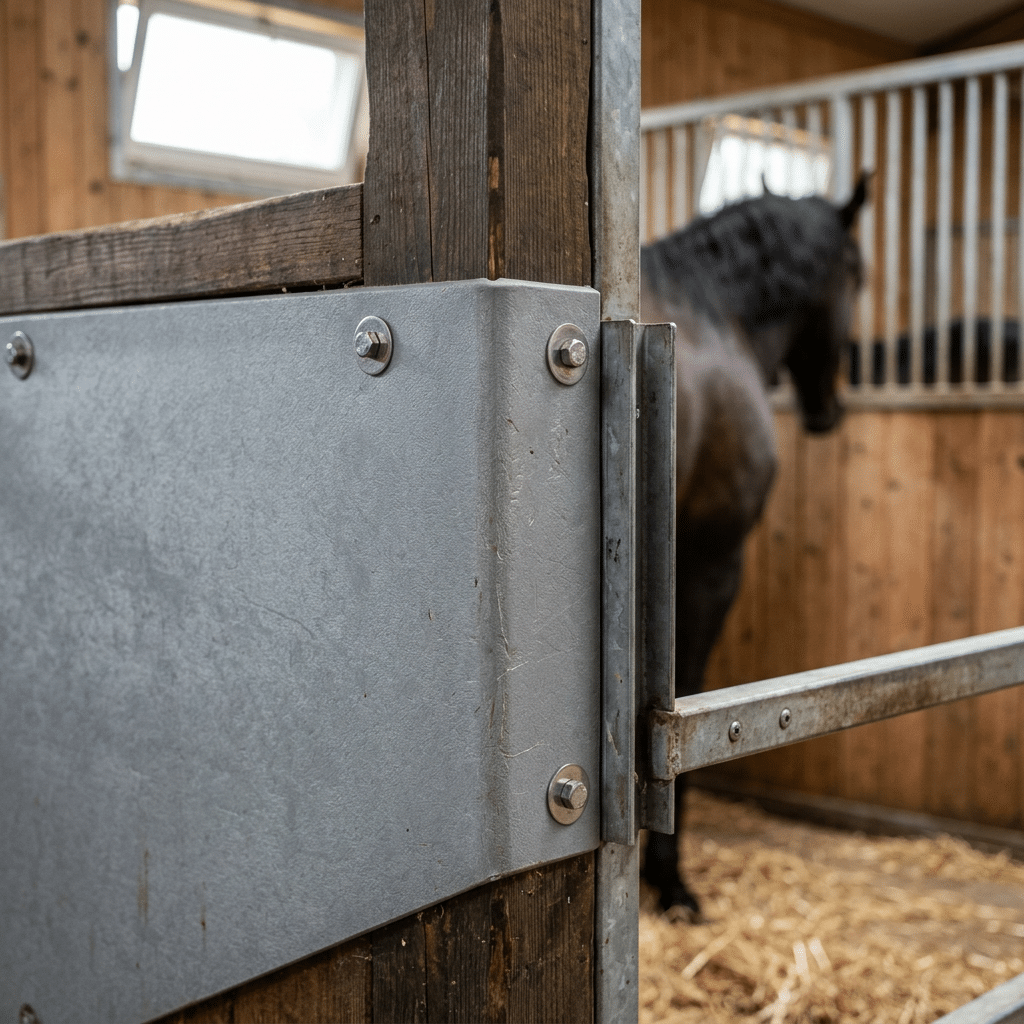
This analysis specifies the engineering required for a compliant and safe facility. We evaluate systems on their use of 50mm x 50mm steel posts for secure ramp anchoring and non-porous HDPE infill to create a quiet, rot-proof environment essential for sensory clients.
The Rot Cycle in High-Humidity Environments
Traditional wood rots in high humidity because it absorbs moisture, feeding mold. Non-porous materials like HDPE and dense bamboo prevent this cycle from ever starting.
How Moisture Fuels Material Decay
Porous materials like untreated wood act like a sponge. When they are saturated with moisture for long periods, they create the perfect environment for fungal spores to grow and spread. Poor ventilation inside a stable traps this damp air, preventing surfaces from drying out and speeding up the decomposition process. This decay directly weakens stall walls, creating safety hazards for horses and requiring costly, frustrating replacements.
Choosing Rot-Proof Infill: HDPE and Bamboo
Our HDPE infill is a non-porous plastic polymer, which makes it completely waterproof and immune to rot. It provides a genuine ‘Zero Maintenance’ solution that won’t degrade in damp conditions. As an alternative, our high-density strand-woven Bamboo is naturally resistant to mold and rot. With a Janka hardness over 3000 lbf, it’s far harder than traditional oak. Both materials stop the rot cycle before it can start, ensuring long-term structural safety and durability in any climate.
Material Comparison for Tropical Climates
In tropical climates, water absorption dictates material failure. Engineered options like HDPE and treated bamboo outperform traditional pine by preventing the moisture that fuels mold and rot.
| المواد | Water & Moisture Resistance | Mold & Rot Resistance | Verdict for Tropical Use |
|---|---|---|---|
| Treated Pine | Poor. Absorbs 18-22% water by weight, creating a consistently damp substrate for fungus. | Low. Requires constant ventilation and active maintenance to prevent mold and mildew growth. | Suboptimal. A high-maintenance choice that is prone to failure in persistently humid environments. |
| Strand-Woven Bamboo | Excellent. High-density boards (Janka Hardness > 3000 lbf) have a water absorption rate of only 0.4%. | High. The thermal modification process removes the sugars and starches that fungi feed on. | Superior Choice. Offers the strength of hardwood with engineered resistance to tropical decay. |
| البولي إيثيلين عالي الكثافة (HDPE) | Waterproof. A non-porous material with virtually zero (<0.01%) water absorption. Will not swell or delaminate. | Total Resistance. The inorganic, non-porous surface provides no food or substrate for mold to grow. | Best for Zero Maintenance. Completely impervious to moisture, making it ideal for hygiene-critical applications. |
The Core Problem: Moisture Absorption
The defining challenge in tropical climates is constant high humidity, often exceeding the 60% threshold where mold growth accelerates. When a material absorbs moisture from the air, it becomes a breeding ground. Mold spores can colonize damp, porous surfaces like wood within 24-48 hours.
Treated pine fails in these conditions because its cellular structure readily absorbs water, despite chemical treatments designed to deter insects and rot. The constant moisture retention creates an ideal environment for surface mold and mildew that requires relentless cleaning and maintenance.
Engineered Solutions for a Hostile Environment
Engineered materials solve this problem by fundamentally changing how they interact with water. HDPE is completely non-porous, offering a waterproof barrier that mold cannot penetrate or feed on. It provides a “Zero Maintenance” solution because there is no organic material to support fungal growth.
High-density strand-woven bamboo takes a different approach. The manufacturing process uses immense heat and pressure, which removes the natural sugars and starches from the bamboo fibers. This eliminates the food source for mold and rot, creating a plank that is three times harder than oak and naturally resistant to the decay common in tropical settings.
Custom Horse Stables for Any Climate

Airflow Design to Prevent Tropical Fungal Infections
Open-grill stables create ‘stack effect ventilation,’ pushing warm, moist air out while pulling cool, dry air in. This constant exchange lowers humidity and disperses fungal spores.
Why Stagnant Air Encourages Fungal Growth
Fungi thrive in the warm, damp, and still conditions found in many tropical regions. Without proper ventilation, a horse stall becomes an incubator for mold and other infections. The moisture from a horse’s breath and waste gets trapped inside, quickly raising the humidity.
This stagnant, moisture-heavy air allows fungal spores to settle on bedding, feed, and wall surfaces. Once settled, they multiply rapidly, increasing the risk of respiratory issues and skin infections for the horses living inside.

Using Open Grills for Stack Effect Ventilation
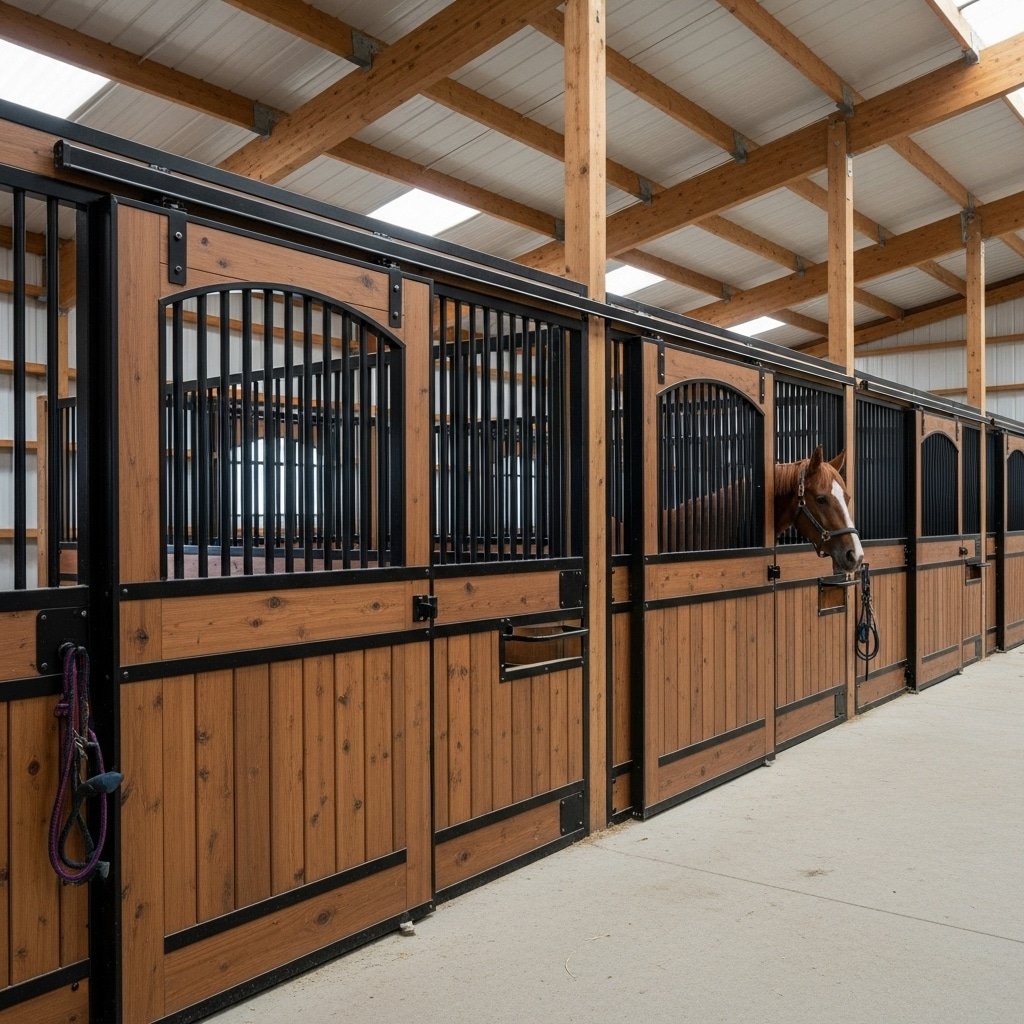
DB Stable systems directly address this problem with an open top grill design on both front and partition panels. This feature is not just for visibility; it’s engineered to promote a natural process called ‘Stack Effect Ventilation’.
The physics are simple. Warm, moist air is less dense, so it naturally rises. The open grills at the top of the panels provide an escape route. As this air exits, it creates a gentle vacuum that pulls cooler, drier, and fresher air in from below. This creates a continuous, passive cycle of air exchange that effectively lowers indoor humidity and keeps the stable environment healthier.
الأفكار النهائية
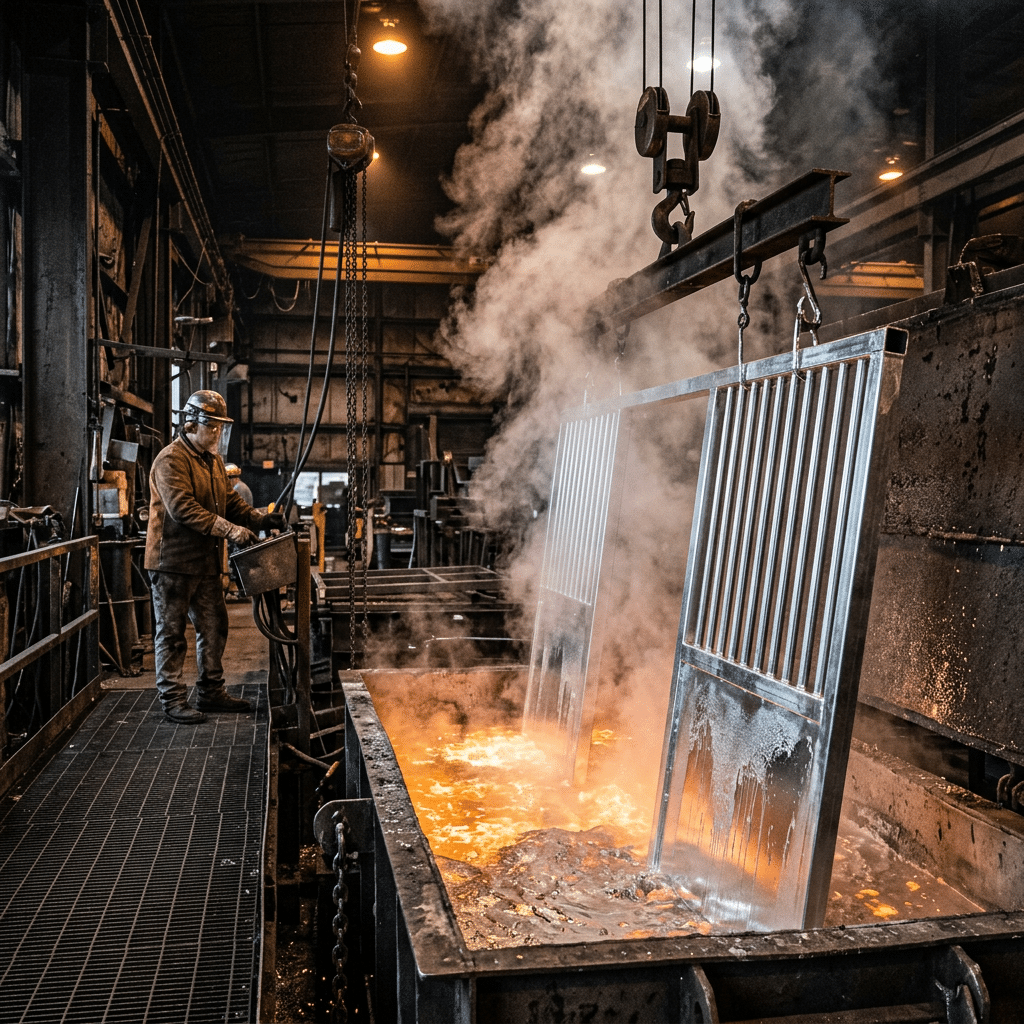
A hippotherapy barn is not the place to cut corners on materials. While generic wood stalls offer a lower initial price, they introduce long-term risks of rot, structural failure, and sensory triggers that undermine the therapeutic mission. Our systems are engineered with Hot-Dip Galvanized steel and solid HDPE infill to provide a safe, silent, and zero-maintenance environment from day one.
The best way to verify this level of engineering is to see it yourself. Request a material sample kit to test the durability of our HDPE and Bamboo infills. Contact our team to configure a small trial order and confirm the quality your clients demand.

 Arabic
  English
  Spanish
  French
  German
0 تعليق