


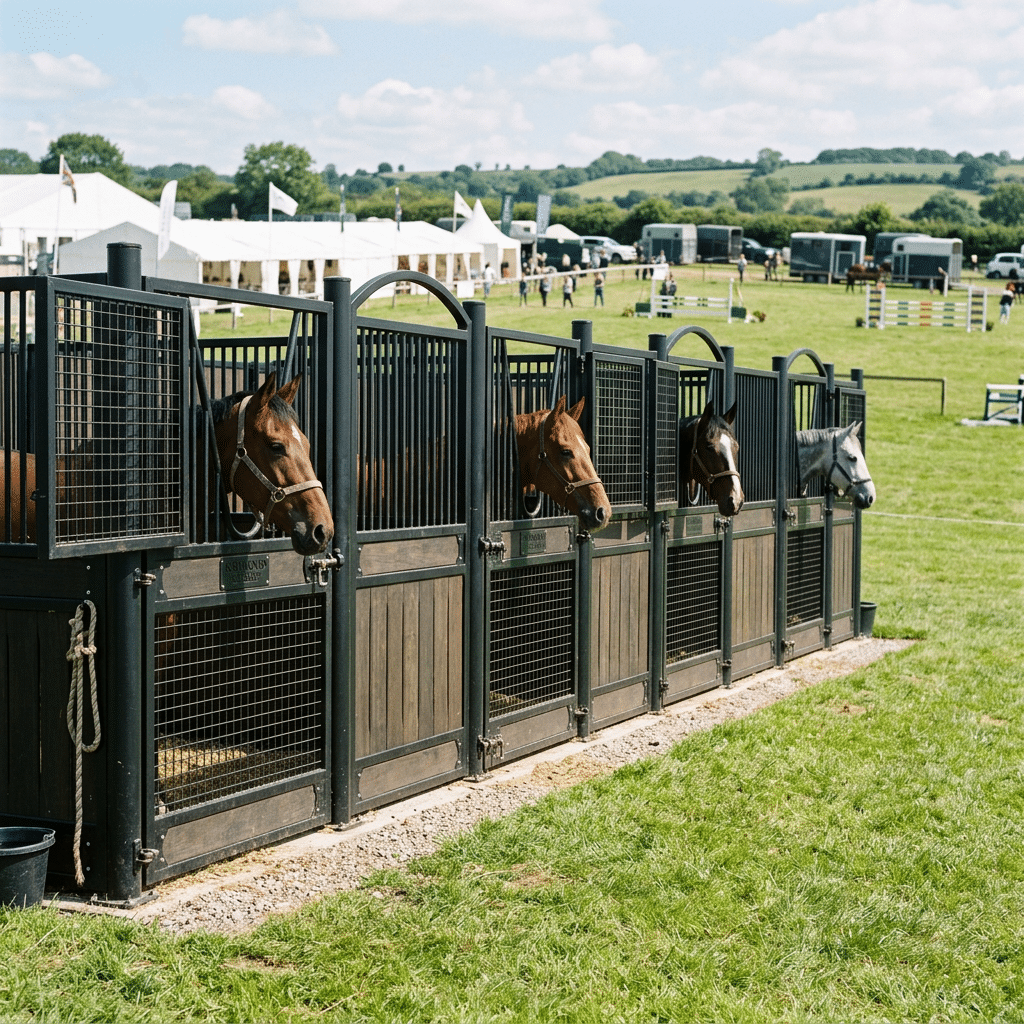
Designing compliant Hippotherapy Centers demands infrastructure that exceeds standard agricultural codes to mitigate strict liability risks. Relying on traditional porous timber creates hygiene hazards and structural vulnerabilities that drive up insurance premiums and maintenance costs. For facility managers, selecting the right materials is a critical compliance strategy that defines operational viability.
This guide benchmarks stable design against Q235B structural steel and ISO 1461 galvanization standards required for sanitary environments. We analyze how zero-threshold track systems and high-density strand woven bamboo infills resolve ADA accessibility challenges while preventing impact injuries. Adopting these engineered specifications ensures facilities meet adaptive riding demands without incurring frequent repair expenses.
صعود الحوكمة البيئية والاجتماعية وحوكمة الشركات في مجال الإنشاءات
By 2026, ESG has shifted from voluntary sustainability to a critical compliance framework. With construction responsible for 34% of global emissions, regulators and investors now mandate strict embodied carbon limits and efficient logistics.
From Voluntary Green Building to Mandatory Carbon Budgets
The construction sector generates approximately 34% of global CO₂ emissions. This statistic has moved beyond academic concern to become a primary driver of regulatory policy. In 2026, we see a distinct shift where environmental compliance is no longer a marketing “nice-to-have” but a gatekeeper for project viability.
Clients and investors now require explicit carbon budgets and comprehensive Lifecycle Assessments (LCA) before approving capital. Green financing options are increasingly tied to meeting specific environmental performance criteria, meaning projects that fail to demonstrate carbon efficiency face higher capital costs or outright rejection.
To meet these strict mandates, the industry prioritizes modular and offsite construction methods. By shifting production to controlled factory environments, developers minimize onsite waste, control emissions, and ensure precise material usage that traditional onsite fabrication cannot match.
Reducing Scope 3 Emissions via High-Density Flat-Pack Systems
For stable manufacturers and distributors, ESG compliance often hinges on Scope 3 emissions—specifically those tied to the supply chain and logistics. The DB Stable product line addresses these metrics through engineered efficiency and material selection.
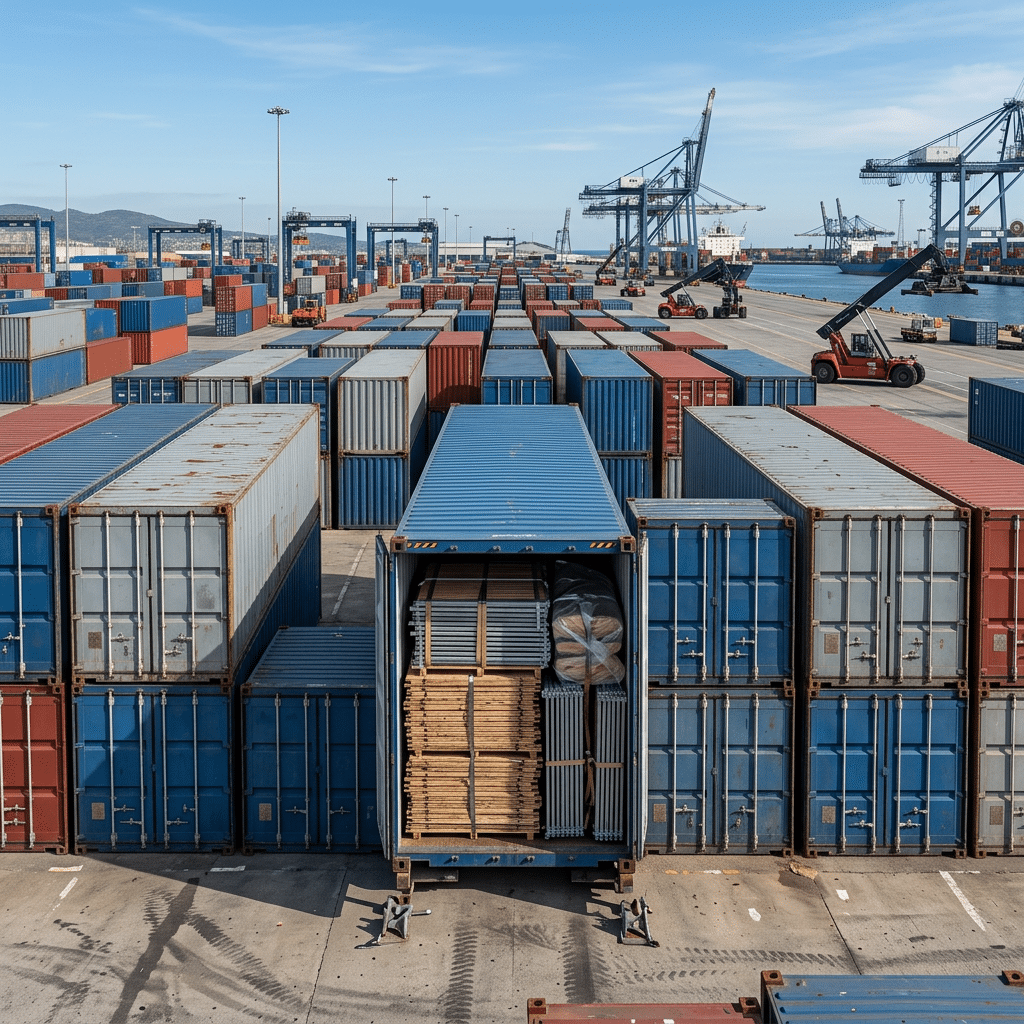
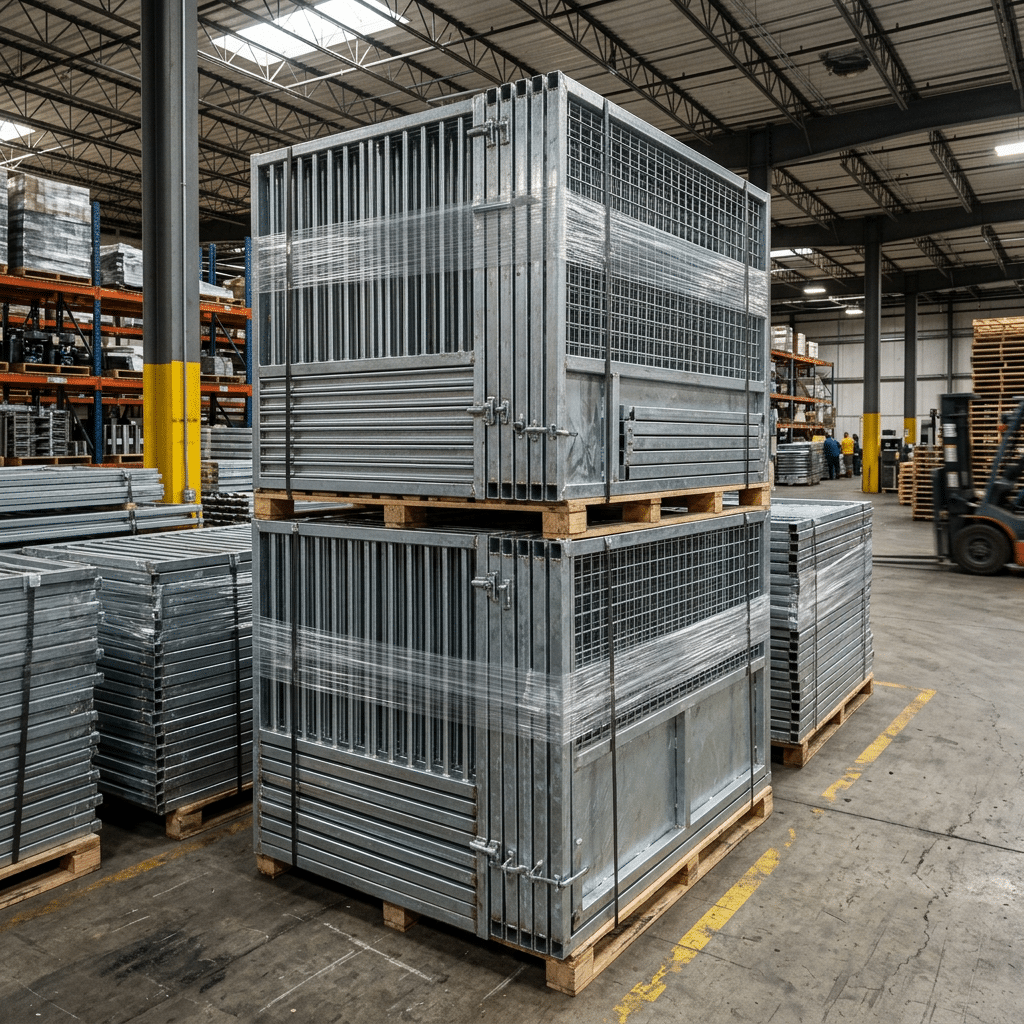
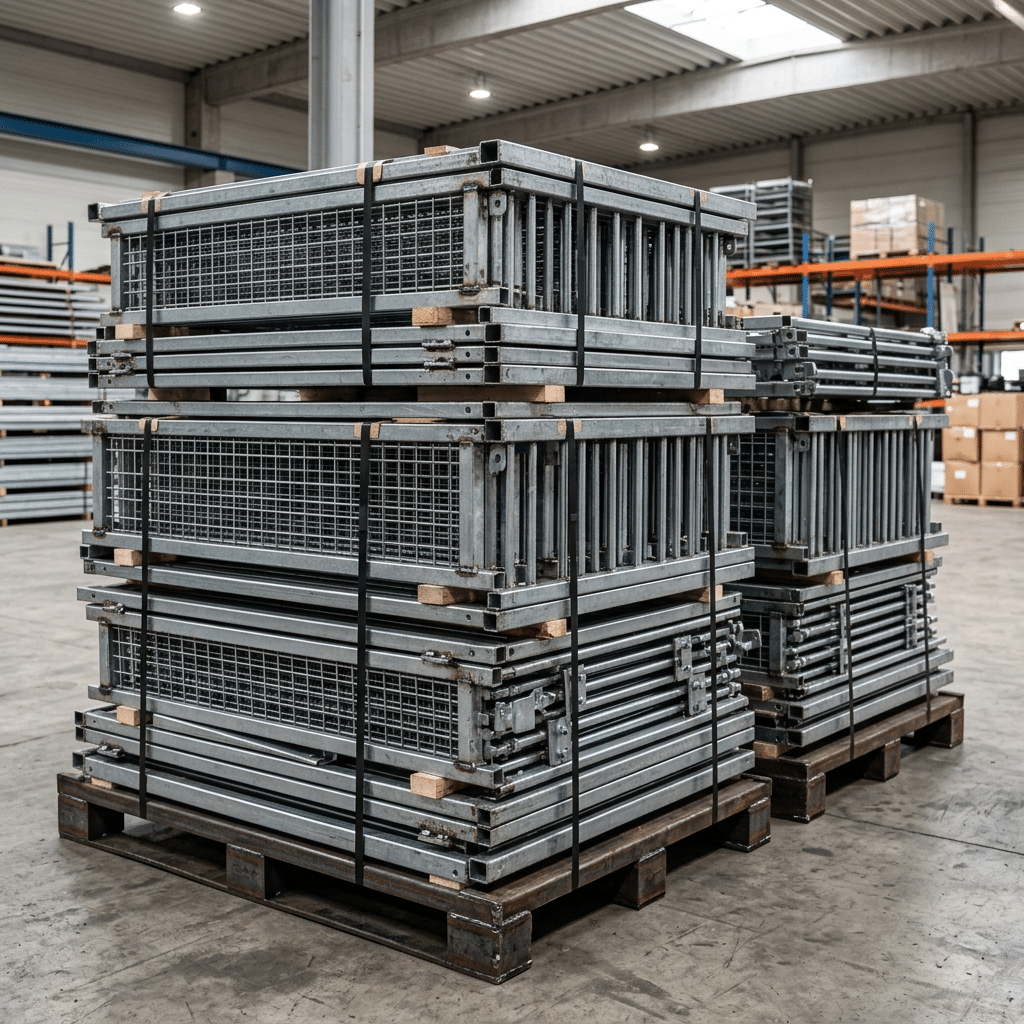
- Logistics Efficiency: Traditional fully welded frames take up massive volume, limiting shipping to 12-15 sets per 40HQ container. The DB Flat-Pack System fits 30-45 sets in the same space. This density reduces freight-related carbon emissions by over 60% per unit.
- Material Sustainability: We utilize High-Density Strand Woven Bamboo (Janka Hardness > 3000 lbf). This provides a renewable, fast-growing alternative to slow-growing hardwoods without sacrificing durability.
- Lifecycle Longevity: Sustainability requires durability. Our steel undergoes الجلفنة بالغمس الساخن to ISO 1461 standards (>85 microns), ensuring structures last decades. This aligns with circular economy principles by drastically reducing replacement frequency compared to pre-galvanized alternatives.
- Waste Reduction: Factory-based pre-fabrication means materials are cut to precision specifications before shipping, eliminating the scrap and waste generation typical of onsite cutting.
الابتعاد عن أخشاب الغابات القديمة (البلوط/الصنوبر)
Traditional lumber cannot match the hygiene or durability standards of modern commercial facilities. We engineer exclusively with High-Density Strand Woven Bamboo and UV-stabilized HDPE for zero-maintenance performance.
The Ecological and Structural Deficits of Traditional Hardwood
Using old-growth hardwood for horse stables is becoming p
ractically obsolete in the professional sector. The primary issue is the regeneration cycle; species like oak require decades to mature, making them an inefficient resource compared to rapidly renewable crops. Beyond the environmental cost, wood presents immediate functional liabilities in a stable environment.
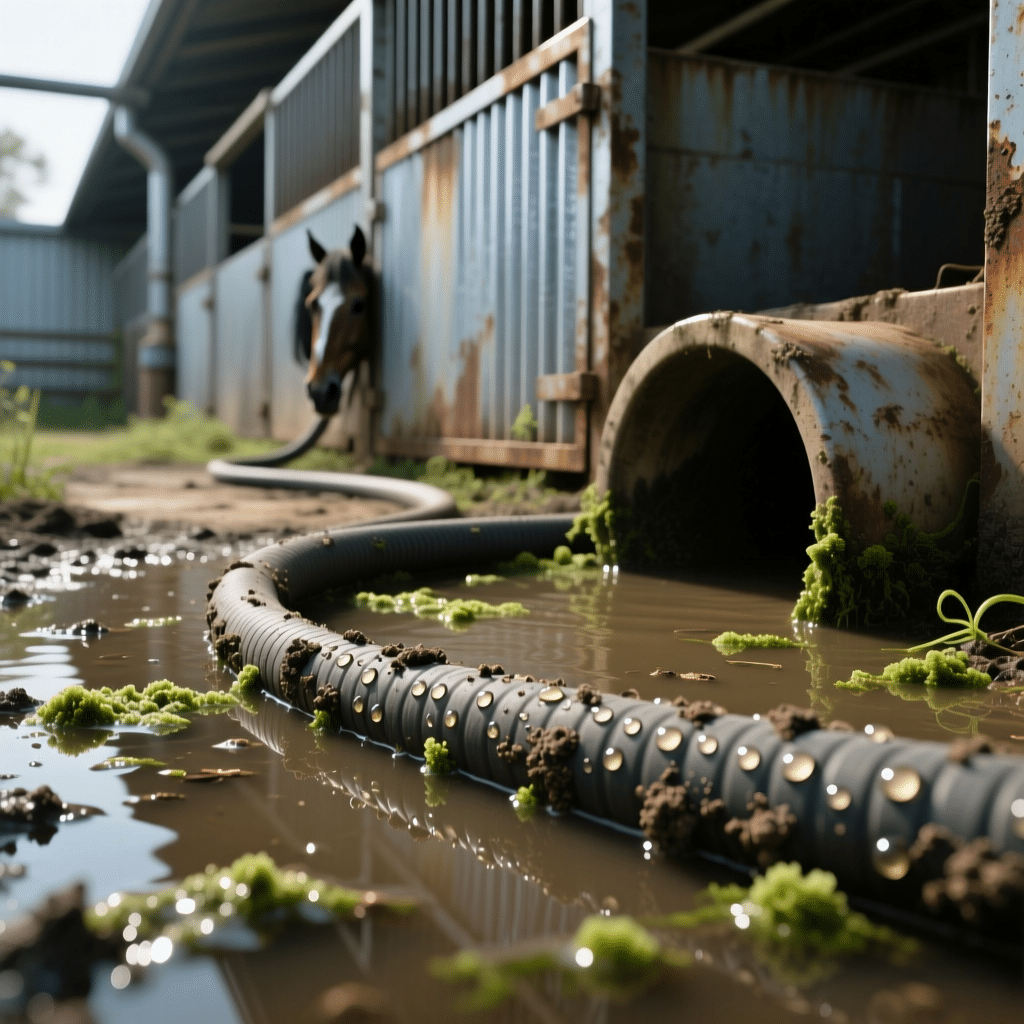
Natural timber is porous. It absorbs urine, water, and environmental moisture, turning the bottom boards of a stall into a breeding ground for bacteria and ammonia. Over time, this absorption weakens the structural integrity of the wood, leading to rot that requires expensive replacement. In high-traffic commercial barns, this maintenance cycle kills profitability.
Softwoods like pine offer even less protection. They lack the density to withstand impact. If a horse kicks a pine board, it shatters into sharp splinters that can cause catastrophic leg injuries. Furthermore, softwoods are highly susceptible to cribbing (chewing). Horses can easily destroy top rails and ingest wood fibers, creating both a veterinary risk and a constant need for repairs.
High-Density Bamboo and HDPE: The Engineered Standard
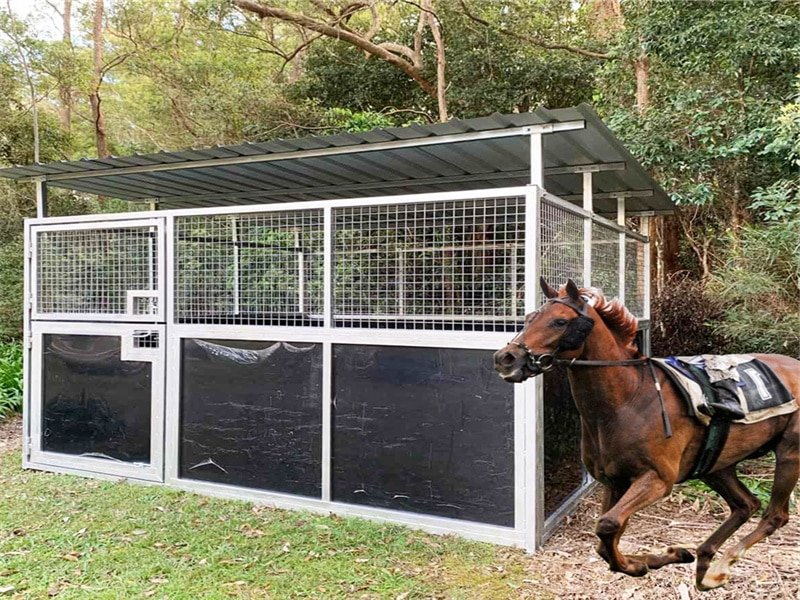
We replaced traditional lumber with engineered solutions that handle the abuse of active equestrian facilities. For clients prioritizing aesthetics and strength, we use High-Density Strand Woven Bamboo. This material is not the hollow bamboo used in garden furniture; it is compressed under extreme pressure to achieve a density that outperforms traditional hardwoods.
- Extreme Hardness: Our bamboo carries a Janka Hardness rating greater than 3000 lbf, making it 3x harder than oak. It is impervious to cribbing teeth.
- Rapid Renewability: Bamboo matures in just 3-5 years, offering a high-strength building material with a significantly lower environmental footprint than timber.
- Mold & Rot Resistance: The strand-woven process eliminates the natural porosity found in standard wood, preventing urine absorption.
For veterinary clinics, quarantine units, and rental barns where hygiene is the absolute priority, we specify UV-stabilized HDPE (High-Density Polyethylene). These 28mm-32mm synthetic planks provide a true “Zero Maintenance” solution. They are fully waterproof, allowing staff to pressure wash the entire facility without risking water damage. The material also absorbs shock better than wood, reducing the risk of injury if a horse kicks the wall.
Premium Galvanized Stables With 20-Year Durability

أفضل المصانع التي تتبنى المواد المستدامة
Sustainable manufacturing has shifted from a compliance checkbox to a strategic necessity. Leading facilities now prioritize materials like Q235B steel and strand-woven bamboo to reduce carbon footprints without sacrificing structural integrity.
The “Green Factory” concept has evolved beyond simple energy saving. In 2026, the top industrial manufacturers are defined by their raw material sourcing and lifecycle management. Rather than relying on vague environmental claims, tier-one factories are integrating specific, high-yield sustainable materials into their core production lines to meet increasingly strict ESG (Environmental, Social, and Governance) mandates.
| Production Sector | Legacy Material | Sustainable Factory Standard | B2B Advantage |
|---|---|---|---|
| Structural Framework | Virgin Steel / Concrete | Q235B Recyclable Steel | 100% Recyclability & High Strength |
| Infill & Cladding | Old-Growth Hardwoods (Oak) | Strand-Woven Bamboo | Regenerates in 3-5 Years (vs 50) |
| Logistics | Loose Loading | Steel Pallet Flat-Pack | 60% Freight Savings |
1. The Shift to Q235B Recyclable Steel
Steel remains the backbone of industrial infrastructure, but the sourcing has changed. Top factories have moved away from virgin steel production, which is energy-intensive, favoring Q235B structural steel. This material is 100% recyclable and maintains its structural properties indefinitely, even after multiple recycling loops. In the context of equestrian and industrial construction, using Q235B allows manufacturers to support a closed-loop economy where end-of-life structures are re-smelted rather than landfilled.
We strictly utilize Q235B (and Q345B for cold climates) not just for its recyclability, but for its compatibility with الجلفنة بالغمس الساخن. By dipping the steel بعد fabrication, we ensure a zinc coating exceeding 85 microns. This extends the product lifespan to 30-50 years, significantly reducing the environmental impact associated with frequent replacements and repairs.
2. Replacing Old-Growth Timber with Engineered Bamboo
Factories facing pressure to stop depleting oak and pine forests are turning to Strand-Woven Bamboo. Unlike traditional timber which takes 30-50 years to mature, bamboo reaches maturity in just 3-5 years. It acts as a high-capacity carbon sink, absorbing up to four times more CO₂ than comparable tree species.
For industrial applications, raw bamboo is insufficient. The “Top Factory” standard involves compressing bamboo fibers at extreme density to create boards with a Janka Hardness rating over 3000 lbf—making them three times harder than oak. This engineering process results in a material that is virtually immune to the kicking and chewing damage common in stables, eliminating the waste generated by broken wooden boards.
- Regeneration: Self-regenerates from roots; no replanting required.
- المتانة: High density prevents rot, mold, and insect damage.
- Carbon Credit: Industrial bamboo products can achieve negative carbon footprints over their lifecycle.
3. Modular Prefabrication and Logistics
Sustainability in manufacturing extends to how products leave the factory. Traditional “loose loading” methods are inefficient and prone to shipping damage. Leading manufacturers have adopted modular prefabrication and flat-pack systems to optimize logistics. By designing components like stable fronts to fit precisely onto steel pallets, factories can maximize container space.
Our data shows that moving from fully welded units to a flat-pack system increases container capacity from 12 sets to approximately 30-45 sets per 40HQ container. This drastically reduces the carbon emissions per unit transported and protects the Distributor’s margins by cutting freight costs by over 60%.
خيزران منسوج من الخيزران: بالوعة كربون عالية الإنتاجية
Strand-woven bamboo plantations sequester up to 12 tons of carbon annually per hectare. This rapidly renewable material creates a structural board harder than oak that actively lowers facility carbon footprints.
Carbon Sequestration Capacity of Bamboo Forestry
Bamboo operates differently from traditional timber forestry. While a standard hardwood forest takes decades to mature, bamboo reaches harvestable maturity in 3 to 5 years. This rapid growth cycle drives its high carbon absorption rates. A single bamboo culm sequesters approximately 50–60 kg of CO2 over its lifespan. When managed correctly, these plantations store roughly 12 tons of carbon per hectare annually, nearly double the 6–8 tons sequestered by typical mixed forests.
The sustainability factor extends below ground. Bamboo relies on a rhizome root system, meaning the plant regenerates naturally after harvesting without the need for replanting or soil tilling. This keeps the soil carbon stocks intact and prevents erosion. Replacing concrete or standard timber blocks with bamboo infills in a stable facility directly reduces the project’s overall embodied carbon.
High-Density Compression a
nd the 3,000+ lbf Janka Rating
Raw bamboo is a grass, not a structural wood. To make it viable for the heavy impact of equine environments, we strip the bamboo into fibers and compress them with eco-friendly resins at extreme pressure. This process creates High Density Strand Woven bamboo with a density around 1,200 kg/m³.
The resulting board is technically superior to the raw material. It achieves a Janka Hardness rating exceeding 3,000 lbf, making it approximately three times harder than Red Oak. For our stables, we utilize 28mm to 38mm thick boards. This density provides the necessary kick-proof resilience to prevent splintering under impact. Unlike standard softwood, the strand-woven structure is naturally resistant to mold and rot, a critical requirement for damp stable conditions where ammonia and moisture compromise lesser materials.
الأسئلة المتداولة
كيف تبني مركزاً للفروسية متوافقاً مع المعايير البيئية والاجتماعية والمؤسسية؟
Building an ESG-compliant facility requires a three-pronged approach. Environmentally, focus on energy and emissions by installing solar generation (aiming for high self-sufficiency) and creating a closed-loop water system that harvests rainwater for wash-bays. Socially, prioritize safety and wellbeing; this includes documented risk assessments, safe handling equipment, and decent facilities for staff. Governance involves setting a strategic framework where horse welfare and sustainability are board-level priorities, backed by measurable data rather than vague “green” claims.
هل الخيزران مادة بناء مستدامة؟
Yes, but the processing matters. Bamboo is highly sustainable due to its rapid renewability—it matures in 3–5 years compared to 30–50 years for hardwoods—and its ability to sequester massive amounts of carbon (up to 4x more than some tree species). However, natural bamboo has poor durability against insects and decay. For construction and stables, it must be strand-woven and treated. This engineering process turns a fast-growing grass into a dense, long-lasting building product that rivals steel in tensile strength while remaining carbon-negative.
التأثير البيئي للحظائر الفولاذية مقابل الحظائر الخشبية؟
The choice depends on whether you prioritize initial embodied carbon or long-term lifecycle circularity. خشب generally has lower production emissions because trees grow naturally, whereas steel production involves high-heat mining and smelting. However, الفولاذ (specifically Q235B/Q345B) is 100% recyclable without strength loss and offers a significantly longer service life (30–50+ years) in harsh stable environments where wood often rots, warps, or gets chewed. Steel minimizes replacement waste, while modern electric arc furnaces are steadily reducing the carbon cost of steel production.
الشهادات الخضراء لإسطبلات الخيول؟
There is no single “Green Stable” certification. Instead, facilities adopt broader building standards. LEED (Leadership in Energy & Environmental Design) principles are often applied to the clubhouse or main structures, focusing on natural lighting, ventilation, and material selection. In regions like California, the CalGreen Code mandates specific water and energy conservation measures for agricultural structures. Most sustainable stables focus on practical site planning—stormwater management, manure composting, and graywater systems—rather than chasing a specific plaque.
الشركات المصنعة لحظائر الخيول الصديقة للبيئة؟
The market has shifted toward manufacturers integrating sustainable materials and prefab efficiency. Companies like DC Structures utilize responsibly sourced heavy timber from the Pacific Northwest. MD Barnmaster و WYO Custom Builders focus on metal modular construction, which reduces job-site waste and offers fully recyclable structures resistant to pests and fire. The “eco-friendly” designation largely comes down to material sourcing (certified timber or recycled steel) and the efficiency of the prefabrication process that minimizes transportation emissions and construction waste.
فولاذ Q235B: إطار 100% القابل لإعادة التدوير
Q235B steel is a low-carbon structural material offering a balance of ductility and strength. Known for being 100% recyclable, it supports sustainable building practices while maintaining the necessary yield strength for equine safety.
The Sustainable Lifecycle of Low-Carbon Steel
Sustainability in industrial manufacturing often gets reduced to vague buzzwords, but Q235B steel offers a quantifiable advantage: infinite recyclability. Unlike composite materials or treated timber—which often become hazardous landfill waste due to chemical preservatives—steel operates within a closed-loop system. We can re-smelt Q235B indefinitely without compromising its structural lattice or yield strength.
Low-carbon steel composition significantly reduces the energy required for reprocessing compared to virgin ore extraction. Current industry data suggests that up to 70% of structural steel in circulation contains recycled content. For green factory projects, using Q235B framework eliminates the disposal costs and environmental penalties associated with demolition waste, as the scrap value remains high at the end of the facility’s lifecycle.
Engineering Specs: The ASTM A36 Equivalent Standard
In the global market, material consistency determines safety. Q235B is the direct equivalent to the American standard ASTM A36, providing a minimum yield strength of 235 MPa. This specific grade offers high plasticity and excellent weldability, which are non-negotiable prerequisites for the hot-dip galvanization process (ISO 1461) used to prevent corrosion.
- Standard Grade: Q235B (ASTM A36 Equivalent).
- Wall Thickness: We strictly adhere to a 14-Gauge (2.0mm – 2.5mm) standard. Tubing thinner than 2.0mm risks deformation from high-impact horse kicks.
- Cold Climate Variant: For regions requiring higher impact toughness at low temperatures, we upgrade to Q345B (ASTM Grade 50).
- Yield Strength: 235 MPa (minimum), ensuring the frame absorbs shock rather than snapping under pressure.
الأسئلة المتداولة
كيف تبني مركزاً للفروسية متوافقاً مع المعايير البيئية والاجتماعية والمؤسسية؟
Building an ESG-compliant facility requires a structured approach across energy, water, and waste. Environmentally, prioritize renewable energy integration; leading facilities generate up to 80% of their electricity via on-site solar. Water management should focus on closed-loop systems, harvesting rainwater for wash bays and irrigation to achieve near self-sufficiency. For social and governance compliance, implement documented safety protocols, ensure fair labor practices, and establish a biodiversity plan that protects local flora rather than just clearing land for paddocks.
هل الخيزران مادة بناء مستدامة؟
Yes, bamboo is highly sustainable due to its rapid renewability. A bamboo culm matures in 3-5 years, compared to 30-50 years for hardwoods like oak, and it self-regenerates from the root system without replanting. It also sequesters significantly more carbon per hectare than traditional timber. However, sustainability depends on processing: raw bamboo rots quickly. For equestrian use, we utilize High Density Strand Woven bamboo (Janka Hardness > 3000 lbf), which compresses the fibers with resin to create a plank 3x harder than oak and resistant to moisture and cribbing.
التأثير البيئي للحظائر الفولاذية مقابل الحظائر الخشبية؟
Wood barns have lower embodied carbon at the initial construction phase because trees sequester carbon during growth. However, steel barns often win on long-term lifecycle analysis. Steel is 100% recyclable without down-cycling, whereas treated wood is often landfill waste. Furthermore, steel structures (specifically hot-dip galvanized) resist warping, rot, and cribbing (chewing) damage, offering a lifespan of 30-50+ years with minimal maintenance. If longevity and circular economy principles are the priority, steel is the superior choice; for short-term low carbon footprint, wood is effective.
الشهادات الخضراء لإسطبلات الخيول؟
There is no single “Horse Stable Green Certification.” Instead, facilities typically pursue broader commercial standards. LEED (Leadership in Energy and Environmental Design) can be applied to large equestrian centers by focusing on site selection, water efficiency, and materials. In specific regions like California, the CalGreen Code applies mandatory sustainability standards to agricultural structures. Key compliance areas include stormwater management (preventing manure runoff), energy efficiency (LED lighting/Solar), and using low-VOC materials.
الشركات المصنعة لحظائر الخيول الصديقة للبيئة؟
Eco-friendly manufacturers generally fall into two categories: sustainable timber framers and modular steel fabricators. Companies like DC Structures focus on responsibly sourced heavy timber. Conversely, modular manufacturers (like MD Barnmaster or our own DB Stable systems) utilize prefabrication to reduce waste. By manufacturing components in a factory setting (offsite construction), we minimize material scrap and transportation emissions compared to traditional onsite building. When selecting a partner, look for ISO 14001 (Environmental Management) or ISO 1461 (Galvanizing) compliance to ensure the manufacturing process itself meets environmental standards.
الأسئلة المتداولة
Why is hot-dip galvanized steel preferred over wood for therapy centers?
Wood acts as a sponge for bacteria, mold, and moisture—a massive liability for facilities hosting immunocompromised clients. We use Q235B structural steel, hot-dip galvanized بعد fabrication to ISO 1461 standards. This creates a non-porous, sterile surface that withstands industrial sanitization. Steel is also non-combustible, which drastically lowers the fire risk compared to traditional timber barns.
Is bamboo infill a sustainable choice for eco-friendly facilities?
Yes. Bamboo reaches structural maturity in just 3-5 years, compared to 25-75 years for hardwood, and it absorbs significantly more CO2 during growth. We use High-Density Strand Woven bamboo with a Janka Hardness rating over 3000 lbf—three times harder than oak. This gives you a renewable material that resists hoof impact and rot without the environmental cost of old-growth timber.
How do your stables support ADA accessibility requirements?
Our designs accommodate mobility needs through “Zero-Threshold” sliding door tracks and wide entry points (typically exceeding 1.2 meters). Flush floor systems eliminate the tripping hazards caused by traditional bottom guides, ensuring smooth, safe passage for wheelchairs and clients using assistive walking devices.
Can these stables contribute to Green Building certifications like LEED?
Using 100% recyclable steel and renewable bamboo infill aligns directly with material sourcing credits. More importantly, durability drives sustainability metrics in frameworks like LEED and CalGreen. Our hot-dip galvanization process (coating thickness >85 microns on structural parts) extends the asset lifespan to 30-50 years, reducing the carbon footprint associated with replacing rotted materials.
What maintenance is required for the HDPE infill options?
We engineer our HDPE (High-Density Polyethylene) for a strict “Zero Maintenance” standard. Unlike wood, it requires no painting, staining, or sealing. The material is UV-stabilized to prevent brittleness and fading. For busy therapy centers or non-profits, a simple pressure wash keeps the facility sanitary and looking new without labor-intensive upkeep.
الأفكار النهائية
In a therapeutic environment, material failure is not just a maintenance cost; it is a critical liability. Choosing Q235B hot-dip galvanized steel over porous timber ensures a sterile, splinter-free structure that withstands decades of daily sanitation without corroding. This investment protects your vulnerable riders while eliminating the recurring expense of replacing rotted wood.
Compliance requires precision, not guesswork. Contact our engineering team today to review your facility blueprints and secure a flat-pack logistics quote that optimizes your project budget. We recommend requesting a material sample kit to verify the kick-proof density of our bamboo and HDPE infills before you commit.

 Arabic
  English
  Spanish
  French
  German
0 تعليق