


Colorbond Roofing stands as the primary defense against the thermal inefficiency of standard galvanized tin in high-UV agricultural zones. While generic zinc sheets offer lower upfront costs, they generate a stifling heat-sink effect that endangers livestock health and drives up long-term operational cooling expenses.
This analysis aligns roofing specifications with DB Stable engineering standards, specifically examining the interaction between reflective coatings and Stack Effect Ventilation in our Q235B structural frames. We evaluate how pairing advanced thermal emissivity with open-grill fabrication prevents heat accumulation, ensuring your facility complies with rigorous animal welfare and durability mandates.
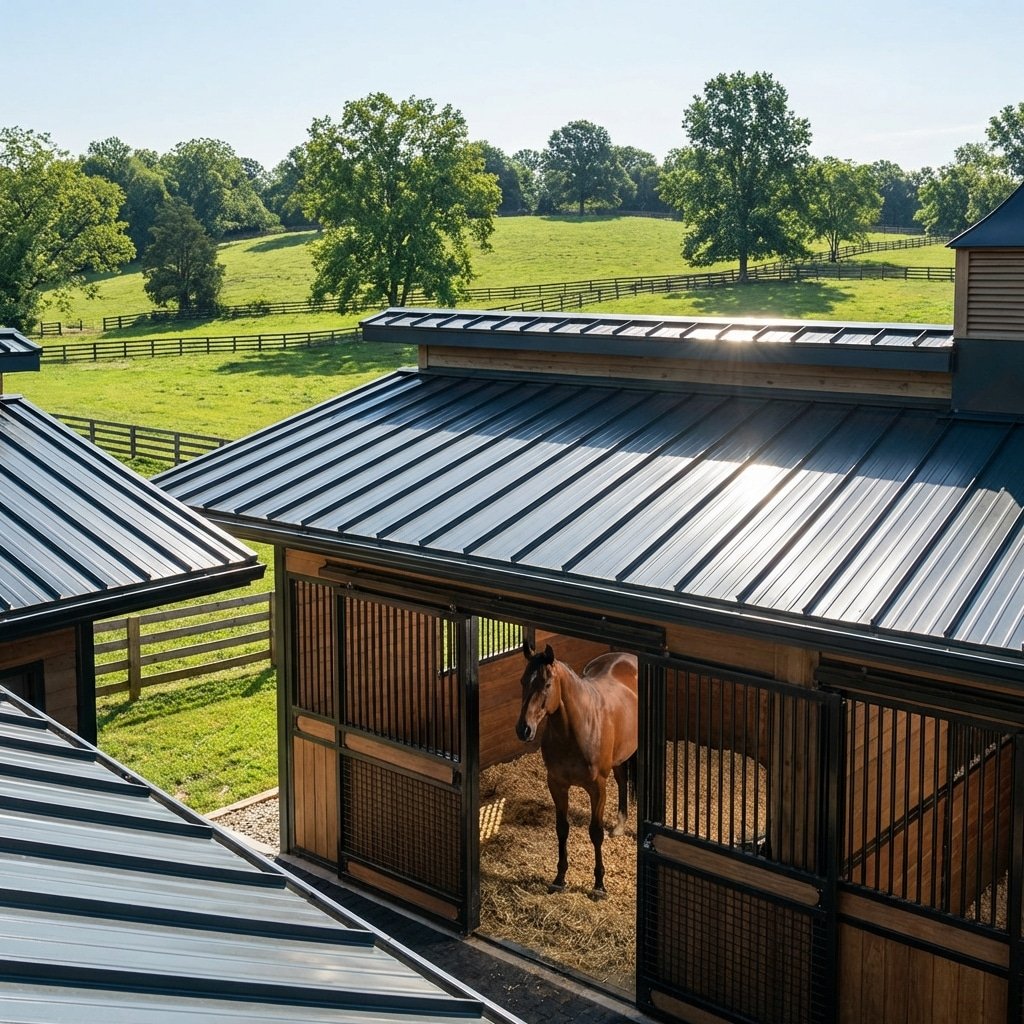
The Bake-Oven Effect of Standard Galvanized Tin
Uncoated galvanized steel absorbs solar radiation and radiates heat downward, creating a stifling “oven” environment that endangers equine health, unlike modern coated materials with high thermal emissivity.
How Bare Zinc Surfaces Trap Solar Radiation
Standard galvanized steel, often referred to as “tin” in the agricultural sector, presents a significant thermal liability for livestock housing. While the material is durable, bare zinc surfaces possess high thermal conductivity combined with low thermal emissivity. Instead of reflecting solar energy, the raw metal absorbs UV radiation and creates a conductive heat loop.
Once the roof sheet saturates with heat, it stops acting as a shield and begins acting as a radiator. It transfers that energy directly into the stall below. In enclosed spaces without proper coating technologies (like the Thermatech® found in Colorbond), this raises the internal temperature significantly above the ambient outside temperature. You essentially bake the horse in a metal box.
Mitigating Heat Stress via Stack Effect Ventilation
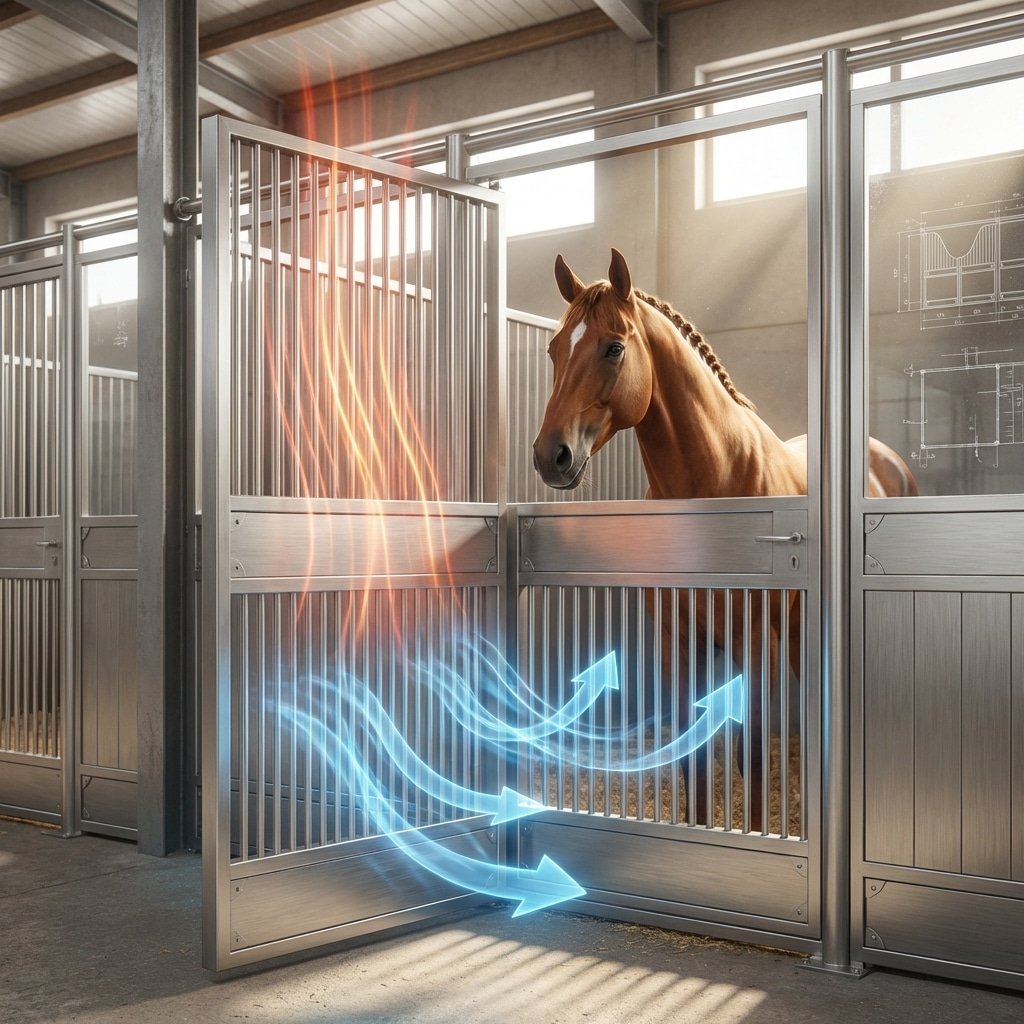
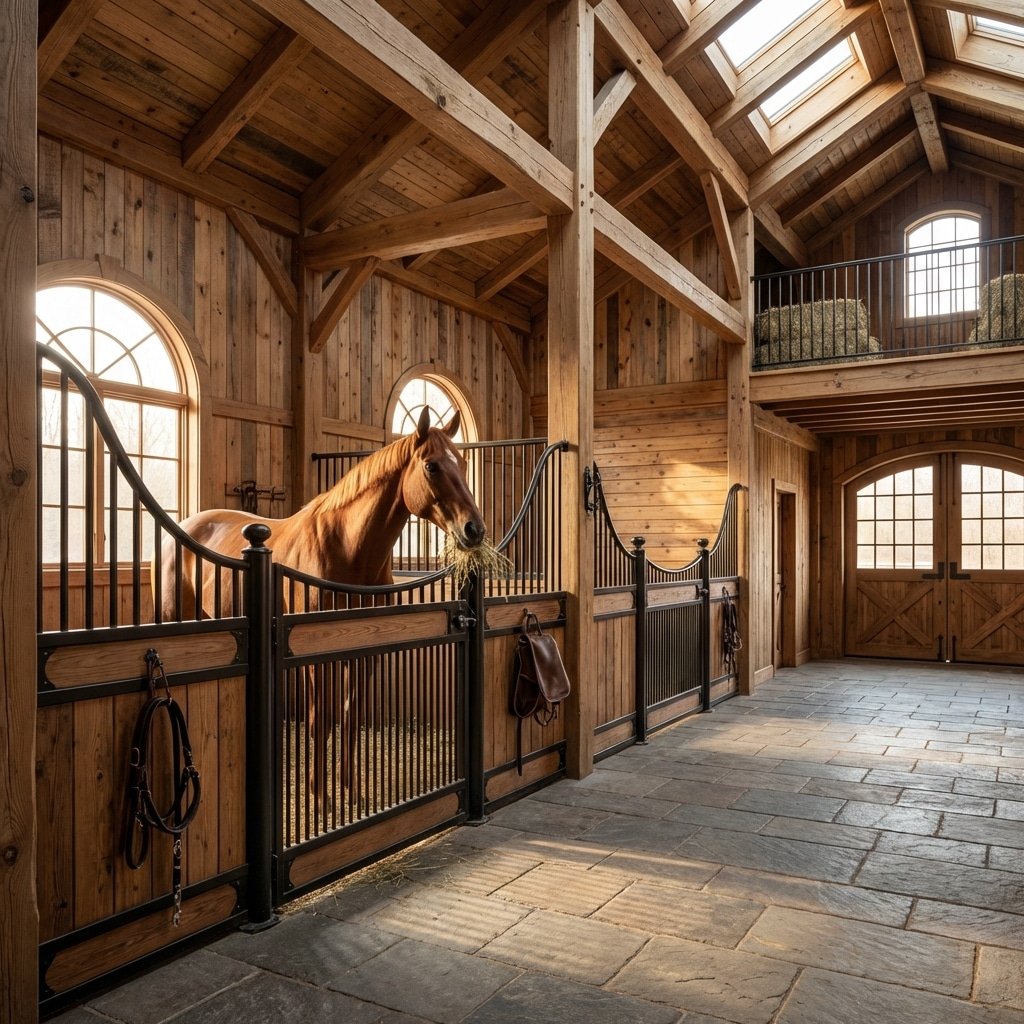
We counter this thermal accumulation through structural engineering rather than just material selection. DB Stable designs incorporate “Stack Effect Ventilation” directly into the fabrication of the stall fronts and partitions. This passive cooling system relies on the buoyancy of hot air to maintain a safe environment.
- Open Top Grill Profiles: Unlike solid walls that trap heat, our upper grill sections allow rising hot air to escape naturally.
- Vertical Airflow Promotion: This design draws cooler air in from the bottom while venting superheated air out the top.
- Breaking the Thermal Lock: Continuous air movement prevents the stagnant “oven” conditions caused by conductive metal roofing.
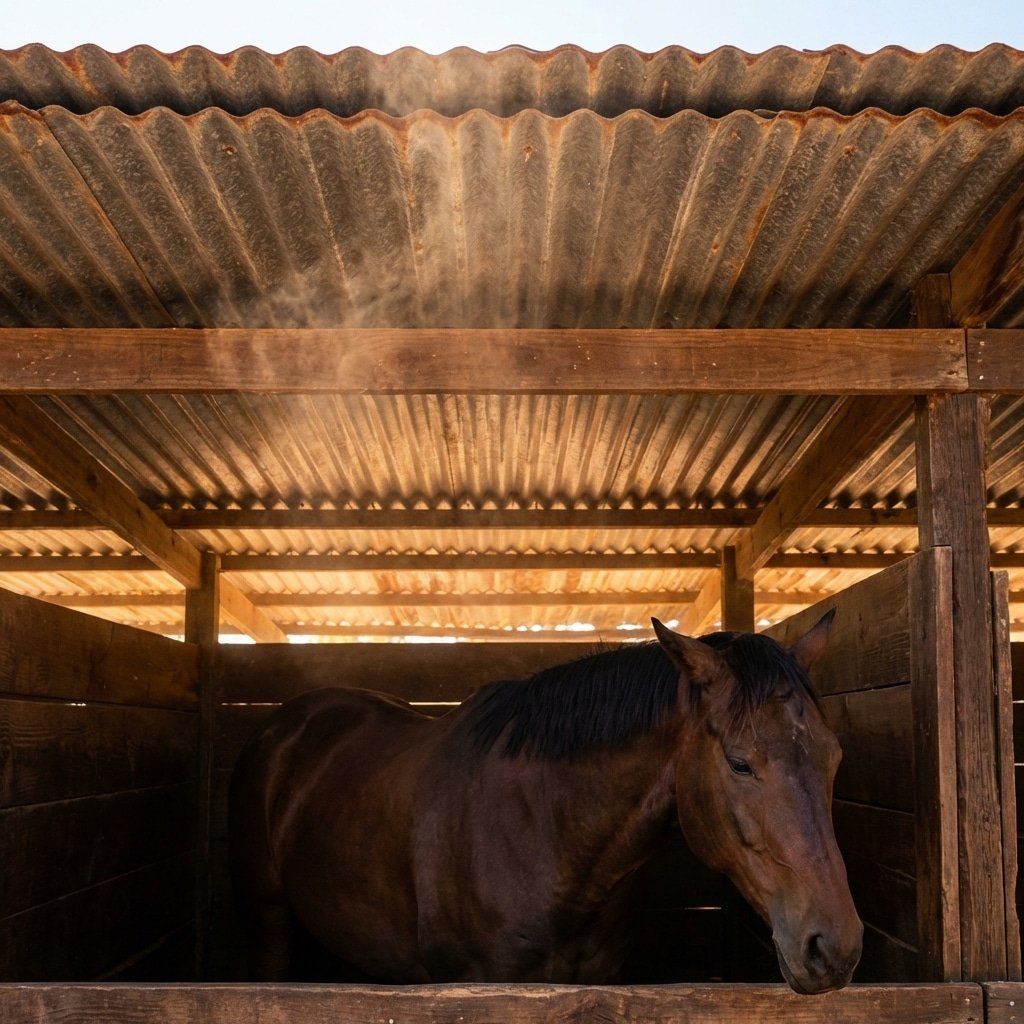
What is Colorbond Steel Roofing?
Colorbond is a pre-painted steel system featuring a Zincalume core and oven-baked finish, engineered specifically to survive Australian UV and salt spray conditions without peeling.
The Multi-Layered Structural Composition
Many buyers mistake Colorbond for standard galvanized iron with a simple coat of paint. In reality, it is a complex laminate system manufactured by BlueScope Steel. The durability comes from the bonding process of its layers, which prevents the delamination seen in cheaper metal roofing products.
- Zincalume Core: The base steel uses a zinc-aluminium alloy coating. This provides galvanic protection, effectively “healing” minor scratches to stop rust from spreading to the structural steel.
- Pre-Treatment Layer: A conversion coating is chemically applied to the surface. This step optimizes adhesion, ensuring the subsequent primer locks onto the metal substrate.
- Baked-On Finish: The primer and exterior topcoat are not air-dried; they are oven-baked. This creates a permanent bond that resists chipping, peeling, and cracking far better than standard post-painted finishes.
Meeting Requirements for High UV and Salt Spray Resistance
For our Australian and coastal clients, standard steel roofing often fails within a few years due to environmental aggression. We utilize materials that align with these specific local realities to ensure the structural integrity of the stable roof matches the lifespan of our hot-dip galvanized frames.
- Salt Spray Protection: The material is engineered to withstand coastal air and highly saline environments. It meets strict corrosion resistance standards that standard painted steel cannot handle.
- UV Stabilization: The exterior paint formulation includes UV stabilizers specifically tested to resist fading and “chalking” under intense solar exposure.
- Bushfire Compliance: The steel composition is non-combustible. This makes it a compliant and safe choice for use in bushfire-prone areas where ember attacks are a significant risk.
Precision-Engineered Stables With 20-Year Durability

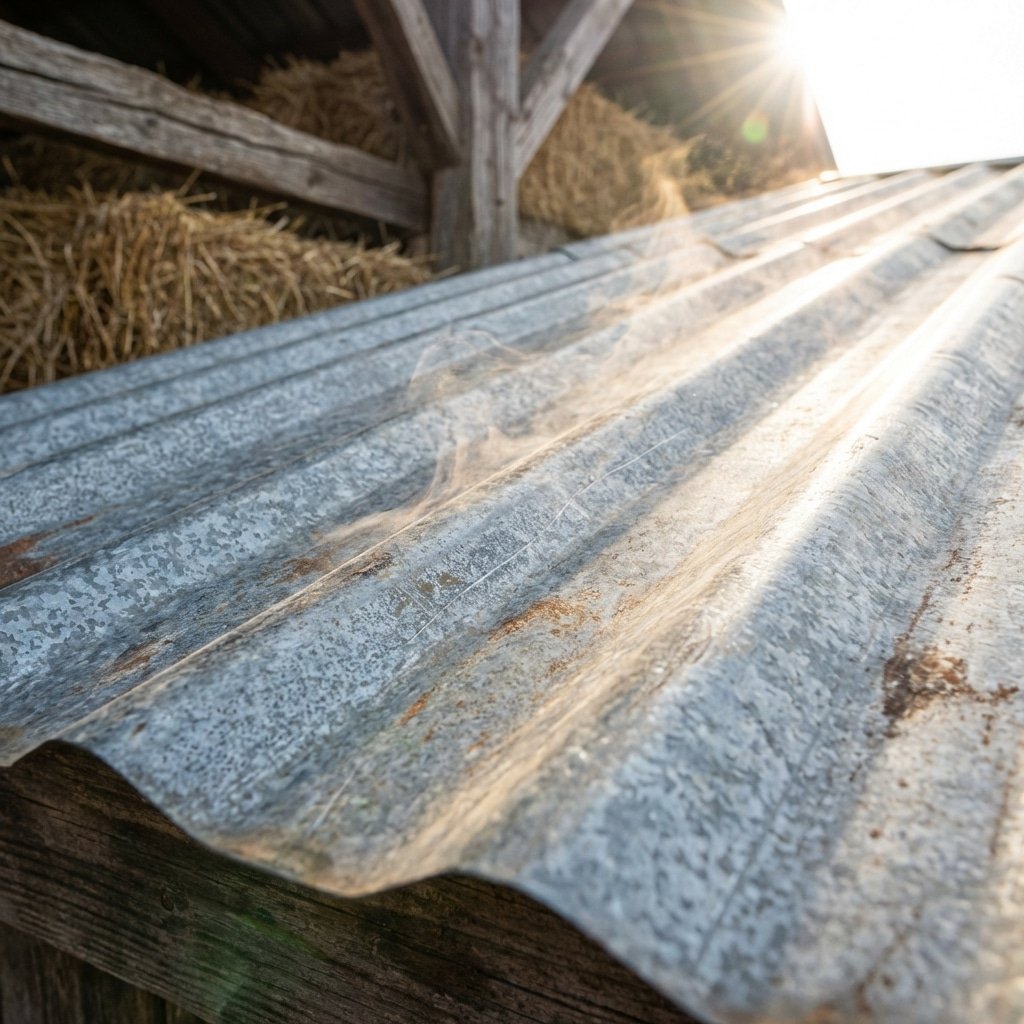
Radiant Heat Reflection: Dropping Stall Temps by 10 Degrees
Advanced reflective coatings bounce solar radiation away rather than absorbing it, lowering peak roof temperatures by up to 11°C and significantly reducing internal heat transfer.
| مقياس الأداء | Standard Dark Steel | Reflective Treated Steel |
|---|---|---|
| Solar Interaction | Absorbs high-energy radiation | Reflects Infrared & UV light |
| Peak Surface Temp | High (Heat Sink Effect) | Reduced by ~11°C |
| Internal Climate | Radiates heat downward | Maintains cooler ambient air |
The Mechanics of Solar Reflectance
Standard roofing materials act like sponges for solar energy, absorbing heat and radiating it directly into the stall below. Thermatech® technology changes this physical interaction by repelling high-energy solar radiation before it penetrates the material. This isn’t just about color; specialized pigments reflect invisible infrared and ultraviolet light, allowing even darker aesthetic options like Woodland Grey to remain thermally efficient.
Research data indicates that this technology reduces peak roof temperatures by approximately 11°C compared to conventional steel. Lower surface temperatures create a direct benefit for the livestock: there is significantly less radiant heat transferring downward into the animal housing area. This keeps the internal environment manageable without the need for expensive mechanical cooling.
Advantages of Powder Coated Steel Roofing
We engineer DB Stable roof systems to capitalize on these thermal properties. Our specification utilizes a steel board roof system ranging from 0.4mm to 0.8mm thickness, specifically compatible with advanced reflective coatings. We apply a “Powder Coat over Galvanized” process, which provides the necessary base for high solar reflectance while ensuring long-term corrosion resistance.
- Heat Sink Elimination: Reflective steel prevents the roof from holding heat after sunset, unlike porous or dark absorbent materials.
- Animal Welfare Compliance: Supports strict European and Australian standards for maintaining regulated internal climates.
- Material Spec: 0.4mm – 0.8mm steel thickness ensures structural rigidity alongside thermal performance.
Upgrading Your DB Free-Standing Horse Stable Kit
Move from economy to professional grade by swapping HDPE for High-Density Bamboo (>3000 lbf hardness) and adding swivel feeders for safer, faster operational workflows.
Switching to High-Density Bamboo Infills
Standard economy kits typically ship with 28mm HDPE infills. While HDPE is excellent for zero maintenance, professional facilities often require the structural rigidity and traditional aesthetic of wood without the rot. We offer an upgrade to High-Density Bamboo, which is engineered specifically for high-impact environments.
- Janka Hardness Rating: Exceeds 3000 lbf, making it significantly stronger and 3x harder than traditional Oak.
- Strand-Woven Construction: The manufacturing process compresses bamboo fibers into a dense barrier that resists moisture absorption.
- مقاومة الصدمات: The density prevents “kick-through” damage often seen in softer pine or standard hardwood planks.
Integrating Professional Swivel Feeders
Efficiency in a commercial stable comes down to reducing the steps staff take per horse. The standard fixed feed grill works for low-traffic barns, but upgrading to a 360-degree swivel feeder system changes the workflow. This hardware allows staff to deploy grain and hay from the safety of the aisle, eliminating the need to enter the stall during feeding times.
- Time Savings: Reduces feeding time by removing the need to open and close stall doors for every horse.
- Seamless Integration: These units bolt directly into our standard Q235B frame, requiring no onsite cutting or fabrication.
- Material Options: Available in heavy-duty Cast Aluminum or Galvanized steel to match the frame finish.
الأسئلة المتداولة
What is the best roofing material for a portable horse stable?
For commercial rental fleets or long-term portable units, lightweight metal roofing (like hot-dip galvanized steel or Colorbond) is the only serious option. It offers the structural rigidity needed to survive frequent transport and protects against high winds. While Onduline is quieter and lighter, it doesn’t handle the physical abuse of relocation as well as steel. Vinyl covers are strictly for temporary show tents, not durable stabling.
Does Colorbond steel really keep stables cooler than standard tin?
Yes. Standard galvanized tin acts like a radiator, trapping heat and creating an oven effect. Colorbond (and similar pre-painted steels) utilize solar reflectance technology—often dropping internal roof temperatures by up to 10°C compared to plain zinc/alum coatings. In high-UV markets like Australia, this thermal efficiency is a safety requirement, not just a luxury.
How can I improve ventilation in an enclosed stable?
You need to leverage the “Stack Effect.” Hot air rises, so you must have high exit points (like open top grills or ridge vents) to let it escape, which naturally pulls cool air in from the bottom. Avoid solid floor-to-ceiling walls; our Economy and Professional series use open bar tops specifically to maximize this vertical airflow. Also, orient the stable broadside to prevailing winds to drive cross-ventilation.
Can portable stables withstand severe weather?
Portability does not mean fragility if the materials are right. A stable built with structural grade steel (Q235B or Q345B) and heavy-duty connectors will handle significant wind loads when properly anchored. The weak point in cheap stables is usually the frame thickness or the welding quality. If you use a heavy steel frame and secure it to the ground with appropriate footings or earth anchors, it performs just like a permanent barn.
الأفكار النهائية
Ignoring the thermal liabilities of bare zinc places your reputation at risk in high-heat markets like Australia and Spain. Pairing Colorbond technology with DB Stable’s ISO 1461 Hot-Dip Galvanized frames ensures your infrastructure survives both coastal salt spray and internal heat spikes. This specific combination delivers a measurable 11°C temperature drop, validating your premium positioning against generic competitors.
Capitalize on our high-efficiency flat-pack system to land up to 45 sets in a single 40HQ container, protecting your margins against freight volatility. We recommend initiating a Professional Series trial order to verify our Q235B structural rigidity and finish quality firsthand. Reach out now to align your production slot with our 35-day manufacturing lead time.


 Arabic
  English
  Spanish
  French
  German
0 تعليق