


Anchoring Portables is the critical variable that prevents a temporary equine asset from becoming a significant liability. Relying on gravity alone leaves livestock vulnerable to shifting structures, where a single wind event or animal impact can result in catastrophic failure and expensive veterinary bills.
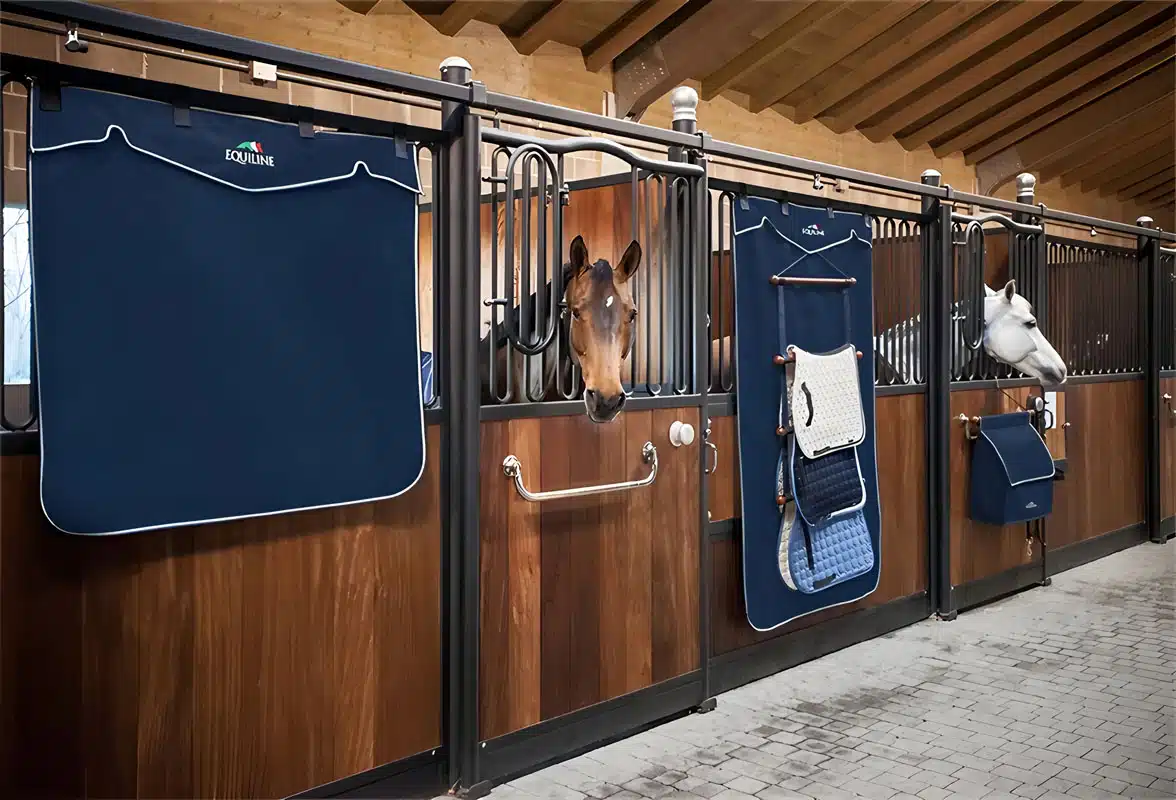
This technical review validates the use of earth augers over permanent concrete foundations for securing Q235B structural steel frames. We examine the mechanical connection between 14-gauge tubing and permeable aggregate bases to define a setup that ensures safety while avoiding strict planning permission requirements.
![[URL] 超写实产品摄影,现代独立式马厩,Q235B 结构钢,压实石粉底座,橡胶垫,一匹健康的棕色马站在里面,自然阳光,高细节,电影级灯光,--ar 16:9 --no text](https://dbhorsestable.com/wp-content/uploads/2026/02/feature-image-35.jpg)
The Myth of the Concrete Slab for Temporary Stables
Contrary to popular belief, temporary stables rarely require concrete. A permeable base of compacted stone dust paired with rubber matting ensures better drainage, hoof health, and faster regulatory approval.
The Regulatory and Health Drawbacks of Concrete
Many facility managers assume a poured concrete slab is the “gold standard” for any equine structure. For temporary or mobile stables, this assumption is often a costly liability. Pouring a permanent foundation fundamentally alters the legal classification of your build. In many jurisdictions, adding a concrete slab moves the project from “temporary chattel” to “permanent structure,” immediately triggering full planning permission requirements. This process typically adds 8+ weeks to the timeline and involves significant architectural and council fees.
Beyond the red tape, concrete introduces functional issues for the horses. The surface is impermeable and unforgiving. Without a specialized drainage system installed within the concrete, urine pools on the surface, leading to rapid ammonia buildup. This forces staff to use excessive amounts of bedding to absorb moisture, driving up operational costs. Physically, the lack of shock absorption increases impact strain on joints and hooves, contributing to long-term soundness issues that softer, natural bases avoid.
Building on Permeable Aggregate with the DB Modular Design
The most effective alternative for temporary stables is a permeable aggregate base. This approach uses layers of compacted crushed rock or limestone fines to create a surface that is as hard as concrete for stability but allows fluids to drain naturally into the ground. This “self-draining” capability significantly reduces bedding consumption and eliminates ammonia odors.
To finish the floor, heavy-duty rubber mats are laid directly over the compacted aggregate. This combination provides a non-slip, impact-absorbing surface that protects hoof health while maintaining the “temporary” legal status of the building. Our stables are engineered specifically for this application:
- Structural Rigidity: We use Q235B Structural Steel (minimum 2.0mm thickness) for all frames. This high-tensile material maintains squareness on leveled ground without needing a concrete footing to hold it in place.
- Anchor Compatibility: The base plates are designed to accept ground anchors or rebar stakes, securing the structure directly to the aggregate base.
- Cast-Proof Safety: When combined with proper matting, the bottom gap is minimized, preventing leg entrapment even without a raised concrete curb.
![[URL] 超写实产品摄影,便携式马厩安装在自然地面上,无混凝土板,Q235B 钢框架结构,干净设计,周围绿色牧场,柔和日光,强调无需永久地基的稳定性,--ar 16:9 --no text](https://dbhorsestable.com/wp-content/uploads/2026/02/h2-concrete-myth.png)
The Structural Weight of 14-Gauge Portable Panels
14-gauge steel (minimum 2.0mm) creates a “dead weight” of 45kg to 65kg per panel, drastically increasing static load to prevent shifting without complex anchoring systems.
Mass as the Primary Stabilizer
Stability in portable livestock housing relies heavily on inertia. When a 500kg horse leans against a wall, lightweight “economy” panels (typically 16-gauge or 18-gauge) slide or buckle because they lack sufficient mass to generate friction against the ground. To make these lighter systems safe, installers must rely on aggressive ground anchoring at every connection point.
We engineer 14-gauge panels to provide a different reality. The sheer physical weight of the steel creates natural resistance to lateral pressure, reducing the reliance on external hardware. This “dead weight” acts as the first line of defense against animal impact.
- Heavier Panels (55kg+): High-mass frames naturally resist kicking and leaning forces through gravity friction alone.
- Economy Panels (20-32kg): These lighter alternatives require frequent, deep earth anchors to prevent dangerous shifting during use.
- Operational Efficiency: 14-gauge steel hits the “sweet spot” for manual handling—heavy enough to stay put, but light enough for a crew to position without heavy machinery.
The 14-Gauge (2.0mm) Manufacturing Standard
In the steel trade, definitions of “gauge” can vary, and many suppliers market 1.6mm tubing as heavy-duty. We strictly prohibit tubing thinner than 2.0mm in our structural components. This material specification defines the integrity of the DB Stable system and ensures the product survives the harsh environment of a working stable.
The manufacturing process further increases this mass. Unlike pre-galvanized tubing that uses a thin spray of zinc, we utilize Hot-Dip Galvanization after fabrication. This process bonds a thick layer of zinc to the steel, adding measurable weight and significant corrosion resistance to the final product.
- Wall Thickness: We adhere to a strict 2.0mm – 2.5mm standard using Q235B or Q345B Structural Steel.
- Zinc Mass: Hot-Dip Galvanization (>70 microns) adds actual physical weight to the frame compared to standard pre-galv tubing.
- Unified Gravity: A complete stable set weighs between 250kg and 450kg, creating a unified, gravity-stabilized structure that resists movement.
Premium Custom Stables With 20-Year Guarantee
![[URL] 超写实产品摄影特写,马厩底部显示重型橡胶垫铺在压实碎石骨料上,钢锚桩将框架固定在地面上,石头和金属的详细纹理,专业灯光,--ar 16:9 --no text](https://dbhorsestable.com/wp-content/uploads/2026/02/h3-permeable-aggregate.png)
Using Earth Auger Anchors Through Base Plates
Earth auger anchors stabilize portable structures on natural ground by screwing 3 to 5 feet deep, connecting directly to the stable frame via high-tension turnbuckles.
| Step | المواصفات | Key Action |
|---|---|---|
| Drilling | 1-inch Pilot Hole | Ensure vertical alignment |
| Driving | 3 to 5 Feet Depth | Use impact wrench or leverage bar |
| Connecting | 304 Stainless Hardware | Attach to 50mm RHS Frame |
The Pilot Hole and Driving Process
Installing auger anchors requires precision, not just brute force. If the anchor enters at an angle, the base plate will not align with the frame, compromising structural integrity. We recommend pre-drilling a 1-inch pilot hole to guide the anchor vertically and prevent the “walking” effect common with blunt-end screws.
- Vertical Alignment: The pilot hole keeps the shaft straight for the first critical 12 inches of penetration.
- Depth Requirements: Drive the auger to a depth of 3 to 5 feet using a high-torque impact wrench or a manual leverage bar.
- Friction Reduction: If you encounter hard, dry clay, pour water into the pilot hole. This lubricates the soil and significantly eases the driving process.
Securing the 50mm RHS Framework
Once the anchors are set, the connection to the DB Stable framework must be rigid. Our base plates are designed to sit directly under the 50mm x 50mm RHS posts, ensuring direct load transfer and preventing the frame from twisting under wind load or animal impact.
- Alignment: Position the base plates so the anchor eyelet sits centered within the bracket slot.
- Hardware Connection: Connect the frame to the anchor using the provided 304 Stainless Steel hardware kit. We use 304 grade to prevent corrosion at ground level where moisture accumulates.
- Final Tensioning: Tighten the turnbuckles until the anchor head sits flush against the stabilizer plate. This tension creates a solid hold that resists shifting.
![[URL] 超写实产品摄影微距拍摄,马厩框架上的 14 号结构钢管,显示 2.0mm 厚度和高拉伸材料质量,金属纹理,坚固焊接接头,工作室灯光突出耐用性,--ar 16:9 --no text](https://dbhorsestable.com/wp-content/uploads/2026/02/h2-structural-weight.png)
Connecting Panels into a Rigid 4-Sided Box
We lock panels at strict 90-degree angles using 304 Stainless Steel hardware to create a self-supporting unit that resists racking without permanent ground posts.
Orthogonal Alignment and Corner Rigidity
Individual portable panels are essentially 2D fences that lack independent stability. You transform these flat components into a self-supporting 3D structure by mechanically locking them at precise 90-degree angles. This orthogonal alignment prevents “racking”—the tendency for a square structure to lean and collapse into a parallelogram shape. By securing the corners, the box becomes rigid enough to stand on concrete or dirt without immediate ground anchoring.
This geometric stability also manages physical impact. When a horse kicks a side wall, the rigid corner connections distribute that kinetic energy across the entire framework rather than isolating it on a single panel. This prevents the wall from buckling under pressure and maintains the structural integrity of the stall.
Assembly with the 304 Stainless Steel Hardware Kit
The connection points are the first area to fail in a stable environment due to the high presence of corrosive ammonia from urine. While many manufacturers cut costs with zinc-plated bolts that rust within two years, we use a dedicated hardware kit designed for longevity and safety.
- 304 Stainless Steel Components: We use this grade for all bolts, connectors, and screws to provide superior resistance to ammonia and moisture.
- Heavy-Duty Frame Compatibility: The hardware is engineered to secure our Q235B (Standard) and Q345B (Cold Climate) steel frames without shearing under load.
- Vibration Resistant Joints: The connections remain tight despite the constant vibration and impact caused by horses, preventing the “rattle” that often weakens cheaper structures.
الأفكار النهائية
Skipping the concrete slab saves your clients thousands in planning fees, but it demands a structure with significant physical mass to ensure safety. Only our 14-gauge Q235B structural steel provides the “dead weight” necessary to resist impact without a permanent foundation. By stocking a system that anchors directly to natural ground, you offer a compliant, high-margin solution that solves immediate housing needs without construction delays.
Secure your position in the market by offering a portable solution that meets professional safety standards. We recommend ordering a single Trial Kit to verify the heavy-duty galvanization and auger anchor compatibility firsthand. Contact our engineering team today to configure a sample shipment or discuss private labeling for your region.


 Arabic
  English
  Spanish
  French
  German
0 تعليق