

A door on an inside partition only has to swing. Move the same leaf to an outside wall — a gable end, an aisle door left open to a prevailing wind — and it stops being a partition and becomes a small structure carrying weather on one face and pressure on the other. That is where an external wind load door hardware decision starts: not at the finish, but at the hinge line, the stop and the seal.
Be exact about what is published, because the gap is where projects stall. This manufacturer’s barn component line covers ventilated stable windows and Dutch doors in V-yoke and tempered-glass styles, from CNC-machined stock with automated 360-degree welding, at a stated 500+ sets a month, with a stated MOQ of 10 stall systems or 50 fence panels, a stated 4-6 week global lead time, ISO 9001 and CE, and 20 years of rust resistance for hot-dip galvanized steel. Not published: a leaf dimension, a gasket compound, a design wind pressure, a stop detail or a price. Those are yours to state on a schedule and to verify when the crate opens.
النقاط الرئيسية
- The leaf loads one line. A panel hinged along one edge deflects at the free corner, so hinges, frame fixings and the wall share a single load path.
- Sealing fights ventilating. A Dutch door is built to shed air; where rain and draft both matter, the seal is a specified item, not an assumption.
- No seal, stop or size data is published here. Nothing states a gasket compound, a wind rating or a threshold height — write them in or ask in writing.
- Stops and restraints are separate purchases. A stop limits travel, a hold-back resists wind, a latch carries it, and the 20-year coating statement covers steel as supplied only.
- Accept against a checklist. Gaps, square, latch engagement and hardware contents, recorded before the crates are recycled.
What an outside wall changes

Wind presses on the exposed face, then looks for the easiest way through. A leaf hung on two hinges along one edge is one of the least stiff arrangements: the load runs into the hinge line and the free corner moves. Indoors nobody notices. Outdoors that movement opens a gap at a rail, lets driven rain behind the frame, and turns a latch that engaged cleanly in March into one resting on the strike plate in July.
So the frame is structure, only as strong as its fixings into the wall, and the leaf is a moisture assembly, because air moving through an opening carries dust and cold with it. The hardware is a chain with one weakest member: hinges, latch, stop and hold-back all resist the same movement. Treat the opening as part of the building envelope rather than as a fixture.
Perimeter sealing: what to specify and what to ask
The published scope names ventilated stable windows and Dutch doors in V-yoke and tempered-glass styles. It does not state a perimeter seal, a gasket compound or a groove detail, so start with a written question: is a seal supplied, is it fitted in the field, and is the frame prepared with a channel or only a flat face?

Ask about the mechanism, because that decides replacement intervals — request the compound and its expected service life. An elastomer seal under constant compression loses much of its recovery over time; an ultraviolet-exposed surface cracks at the corners before it fails along the straight run. A brush seal tolerates a leaf that is not perfectly straight, while a solid bulb profile punishes frame distortion. On a metal frame in a coastal market, fasteners and the seal shoulder can age before the seal does, and the draft returns with nothing visibly broken.
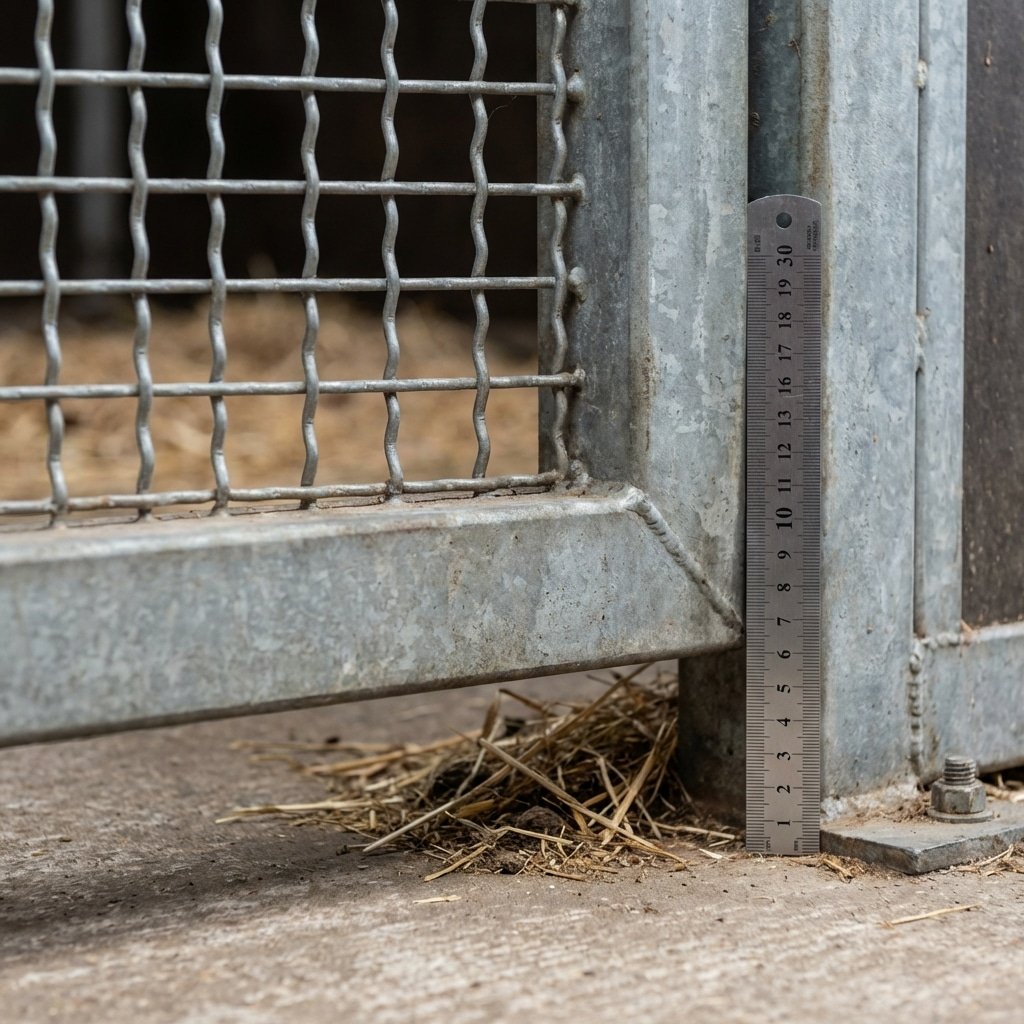
Our position: on an exposed wall, seal the meeting rail and the bottom of the lower leaf before you touch the finish. The mid-rail of a split door is the joint the horse uses twice a day and the weather uses all night, and a joint commonly left as bare timber against bare metal. Ask what is fitted there as standard, and what changes for a wind-facing opening in a market they already ship — Australia and Spain are stated for UV-resistant materials rated to 40 degrees, Poland for structures tolerant of -10 degree winters.
Stops, restraints and the hardware set
Four items get confused, and each is bought separately. A stop limits how far the leaf swings. A hold-back or hook keeps it open against wind. A latch or catch holds it shut and carries the pressure of a leaf trying to blow back. A closer decides how it arrives at the frame. Order one and receive another, and the crew improvises with a bolt and a chain — which is how a door quoted as a system ends as a site fabrication.
The published line does not list ironmongery contents per door, so ask for the hardware set by name: hinge type and count, fixing sizes, latch or catch, stop, spare keys, with a spare set for each opening kept on site. Corrosion behavior of that hardware in humid or coastal conditions is covered separately in dutch door hardware for humid climates; this article deals only with what a schedule must state for an external, wind-facing opening.
Door schedule lines and arrival checks
A door schedule is a list, one line per opening, and it outlives the email thread. A supplier sheet describes what is offered; the schedule states what your building needs. Writing one costs an afternoon. The architect-facing version of that first document is covered in dutch door tear sheets and architect specs; what follows is the schedule side.
| Schedule line | What it must state | Why it matters outside |
|---|---|---|
| Opening and orientation | Which wall, and which way the leaf swings against the weather | An outward leaf puts wind pressure on the hinges unless the frame carries it |
| Leaf build and infill | Frame material, infill (bamboo, HDPE, pine), glazing style where used | The stated liners differ in UV and cleaning behavior, so this is a maintenance choice |
| Seal provision | Supplied or not, where fitted, replaceable or bonded | Not on the line means not supplied, and the gap gets closed with whatever is in the van |
| Hardware set | Hinges, latch, stop, hold-back, fixings and spare keys by name and quantity | A named set per opening makes a spare parts order possible two years later |
| Acceptance values | Your target bottom gap, latch engagement, square, frame fixing pattern | Written before shipping these are evidence; afterwards they are an opinion |
Run the arrival check the same week, not after installation. Photograph the packing list against the schedule, count hardware sets before the crates are recycled, and take three readings per opening: bottom gap, top gap with the leaf shut, and whether the latch engages without lifting the door. Send deviations to the same written thread that carries the order, quoting the schedule line. With the stated 4-6 week order lead time, and 1-2 weeks from the Sydney or Warsaw warehouse when expedited, a defect found on day one is a scheduling problem and one found in month three is a claim.
الأسئلة المتداولة
Should an external stable door open in or out?
Usually inward, so wind pushes the leaf onto its stop rather than pulling it away. Nothing published for this line states a wind rating; confirm direction and restraint with your designer.
Are these doors supplied with weather seals?
The published scope names ventilated windows and Dutch doors without stating a gasket, so treat it as unspecified until answered in writing. Ask whether one is supplied and whether it replaces without a new frame.
What stops a Dutch door being blown open?
A catch or hold-back matched to the leaf weight, plus a latch that engages without lifting the door. A friction stay holds a window, not a door in wind, so ask what is included.
Do site-drilled fixings affect the 20-year coating claim?
The statement covers hot-dip galvanized steel as supplied. Drilling or cutting exposes edges and holes, so ask what touch-up is recommended and record it against that schedule line.
الخاتمة
An external door tends to fail in a familiar order: movement first, then the seal that movement destroys, then the restraint nobody ordered. Putting all four on one schedule line decides whether the next conversation is a claim or a site improvisation.
Set the schedule before you request pricing, and ask two written questions in the same thread — what the door carries for sealing, and what hardware arrives in the crate. The range is on the barn window and door page.

 Arabic
 English
 Spanish
 French
 German
0 تعليق