

A contractor in Poland lost a $50,000 order on a 20-stable project because the pre-production sample didn’t match the mass production run — and the failure was buried in the snow load horse barn codes Poland. The pre-production sample used a heavier gauge steel and steeper roof pitch, but the production batch shifted to a thinner material that became brittle at -10°C. That’s the reality when you’re working with Eurocode snow load zones Poland horse barn requirements: the ground snow load in Warsaw hits 1.5 kN/m², which forces a maximum truss spacing of 1.2 meters for standard 3.6-meter stable widths. If you specify materials from a supplier who doesn’t test for low-temperature impact resistance, the failure shows up after the first freeze-thaw cycle — not during sample approval.
The code also dictates the minimum roof pitch for snow load horse stable design — typically 25° to allow sliding, though some local interpretations require steeper. Foundation depth is another layer: the frost line depth horse barn Poland projects must reach at least 1 meter below grade in Zone 3. Concrete footings are standard, but adjustable steel bases work when paired with insulated panels. The key is to lock down the spec sheet before sample approval — including the exact grade of الصلب المجلفن بالغمس الساخن cold climate horse stalls require. A supplier that can’t certify its steel to maintain impact resistance at -20°C is a risk you don’t want to carry. FOB pricing might look competitive, but if the quality tolerance on steel thickness and coating isn’t written into the contract, you’ll be paying for replacements within three winters.
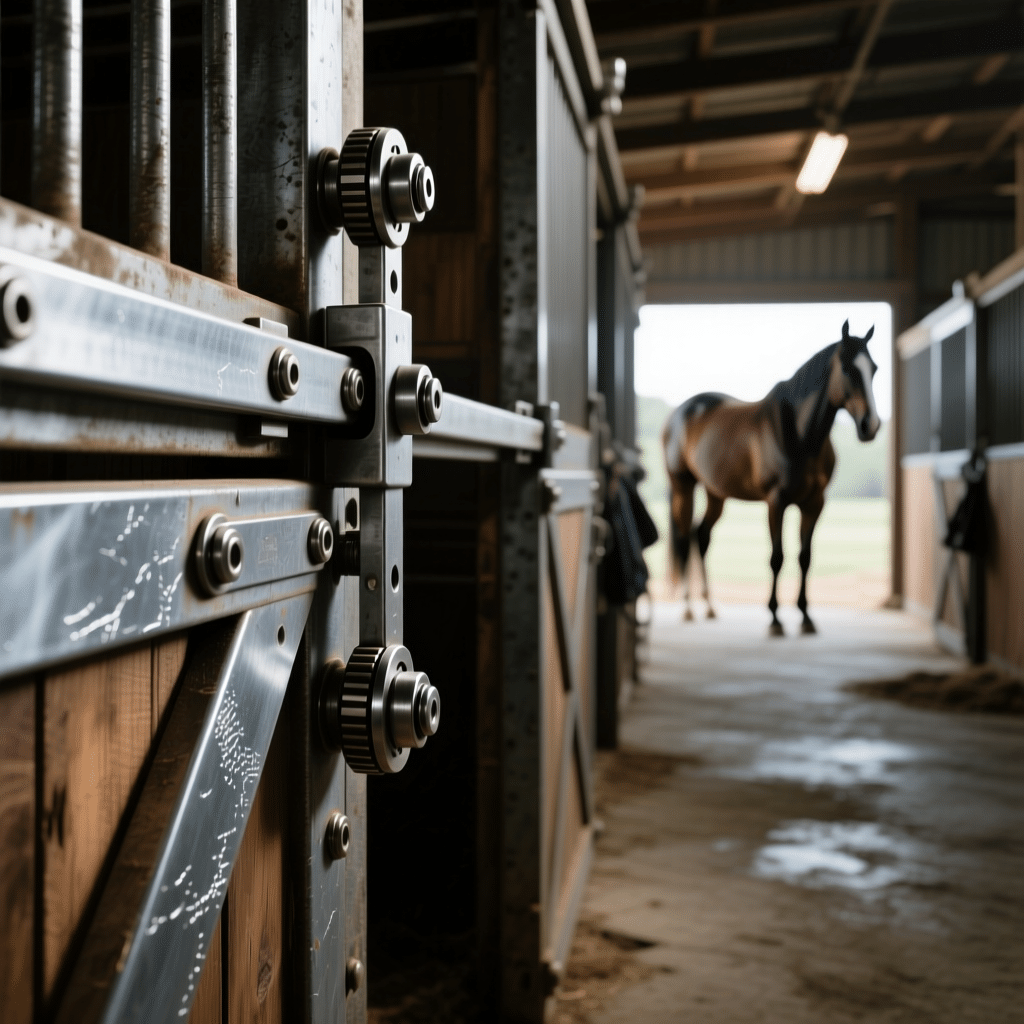
Understanding Snow Load Zones in Northern Europe
Eurocode 1 maps snow load zones, but ignoring local data is what collapses barns in Polish winters.
Eurocode 1 (EN 1991-1-3) divides Northern Europe into snow load zones based on altitude and geographic location. Poland falls into Zone 2 and 3, with ground snow loads ranging from 0.9 kN/m² in coastal regions to 1.5 kN/m² in Warsaw and the Baltic interior. Denmark sits in Zone 1 (0.7–1.0 kN/m²), while the Baltic states—Lithuania, Latvia, Estonia—are mapped to Zone 2 and 3, with design values up to 1.8 kN/m² near the Russian border. These are not soft recommendations; they are legally enforceable design values under the Construction Products Regulation (CPR). If your supplier does not reference the specific zone for the project site, you are building blind.
- Warsaw snow load (1.5 kN/m²): For a standard 3.6 m wide stable, roof trusses must be spaced no wider than 1.2 m to handle the moment and deflection. Wider spacing means sagging purlins and eventual collapse under wet, heavy snow.
- Minimum roof pitch (25°): Eurocode 1 reduction factors for pitched roofs allow snow load reductions above 30°. Below 25°, the full ground load applies. A pitch below 20° traps snow and water, adding long-term static load and freeze-thaw damage.
- Frost line depth in Poland: In the -10°C winter zones (e.g., Suwałki, Warsaw), frost line reaches 1.0–1.2 m. Concrete footings must extend below this depth, or adjustable steel bases must be anchored on compacted gravel with proper drainage to prevent frost heave.
- Verify steel low-temp rating: Request the supplier’s mill certificate showing Charpy V-notch values at -20°C. If they cannot provide it, the steel is not designed for Zone 2/3 snow loads.
- Confirm truss spacing per local zone: For Warsaw (1.5 kN/m²), ask for truss spacing calculation stamped by a structural engineer. Do not accept generic drawings that claim ‘suitable for all climates’.
- Check roof pitch in supplier specs: If a portable stable comes with a 15° roof, cross it off the list immediately. Minimum 25° is non-negotiable for snow-shedding in northern Europe.
Here is where standard imported stables fail. Many suppliers use cold-rolled steel that loses impact resistance below -10°C, turning brittle and cracking under snow load. DB Stable specifies hot-dip galvanized steel that maintains impact resistance down to -20°C—above the strictest northern European design requirements. If the steel grade is not certified for low-temperature Charpy impact tests (EN 10025 or similar), do not accept it for a Polish or Baltic project.
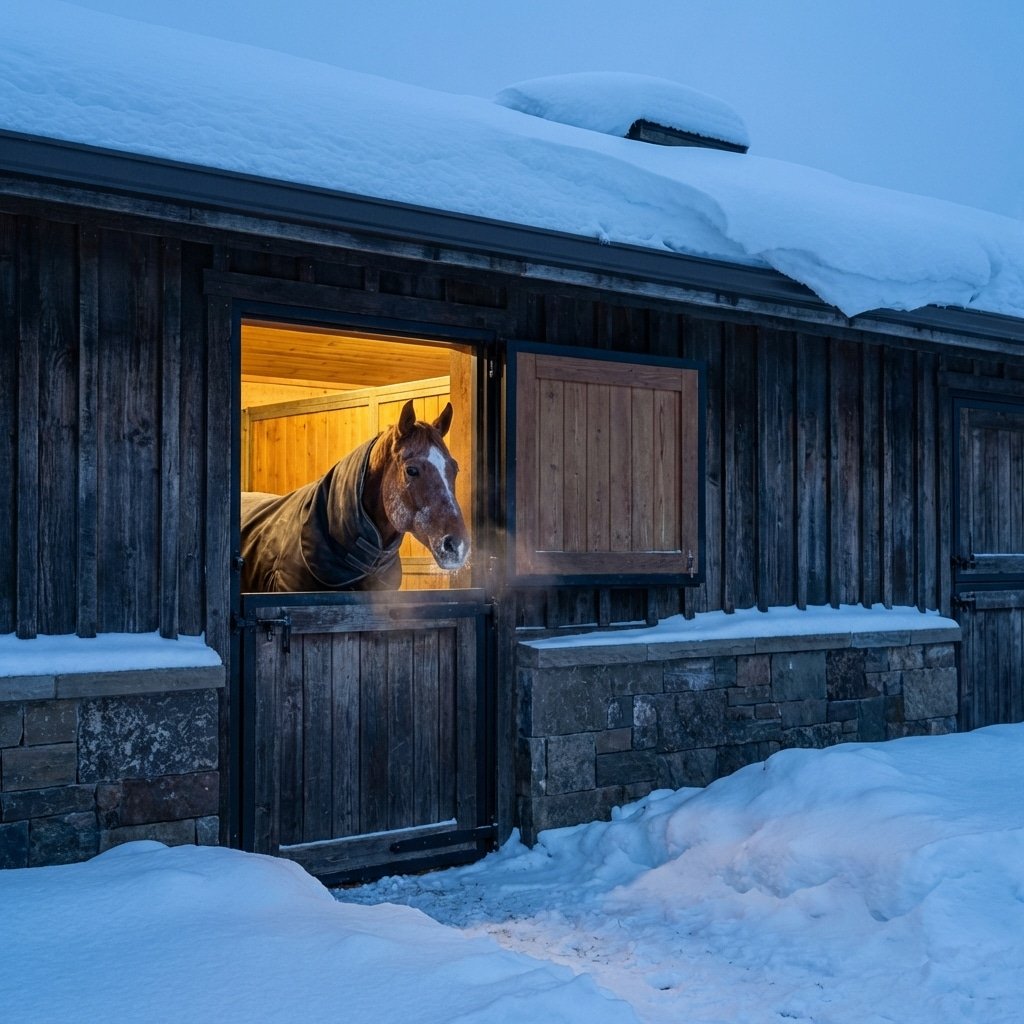
Roof Design for Heavy Snow
In Warsaw, a 25° roof pitch is the minimum — but truss spacing is the real decider for safety.
Snow loads in Poland, particularly Warsaw, reach 1.5 kN/m² (roughly 153 kg per square meter). A standard 3.6m-wide stable with a 25° pitch will shed snow only if the roof structure can handle the concentrated load. That calculation is routinely overlooked by importers who treat a roof as a simple cover rather than a live-load bearing system.
- Minimum pitch angle: Eurocode EN 1991-1-3 mandates at least 25° for metal roofs to allow snow to slide. Below that, snow accumulates rapidly, increasing the risk of collapse under sequential storms.
- Truss spacing for 1.5 kN/m² load: For a 3.6m span and 1.5 kN/m² snow load, trusses must be spaced no wider than 1.2m. Wider spacing (e.g., 1.8m) requires reinforced purlins or rafters — structural upgrades most budget stables omit. Always request the load calculation sheet for the specific region.
Material brittleness at low temperature compounds the risk. Standard imported steel begins losing impact resistance below -10°C. DB Stable’s hot-dip galvanized steel maintains impact resistance down to -20°C, tested under actual winter conditions in Polish projects. That margin matters when a heavy wet snow combines with gusting wind.
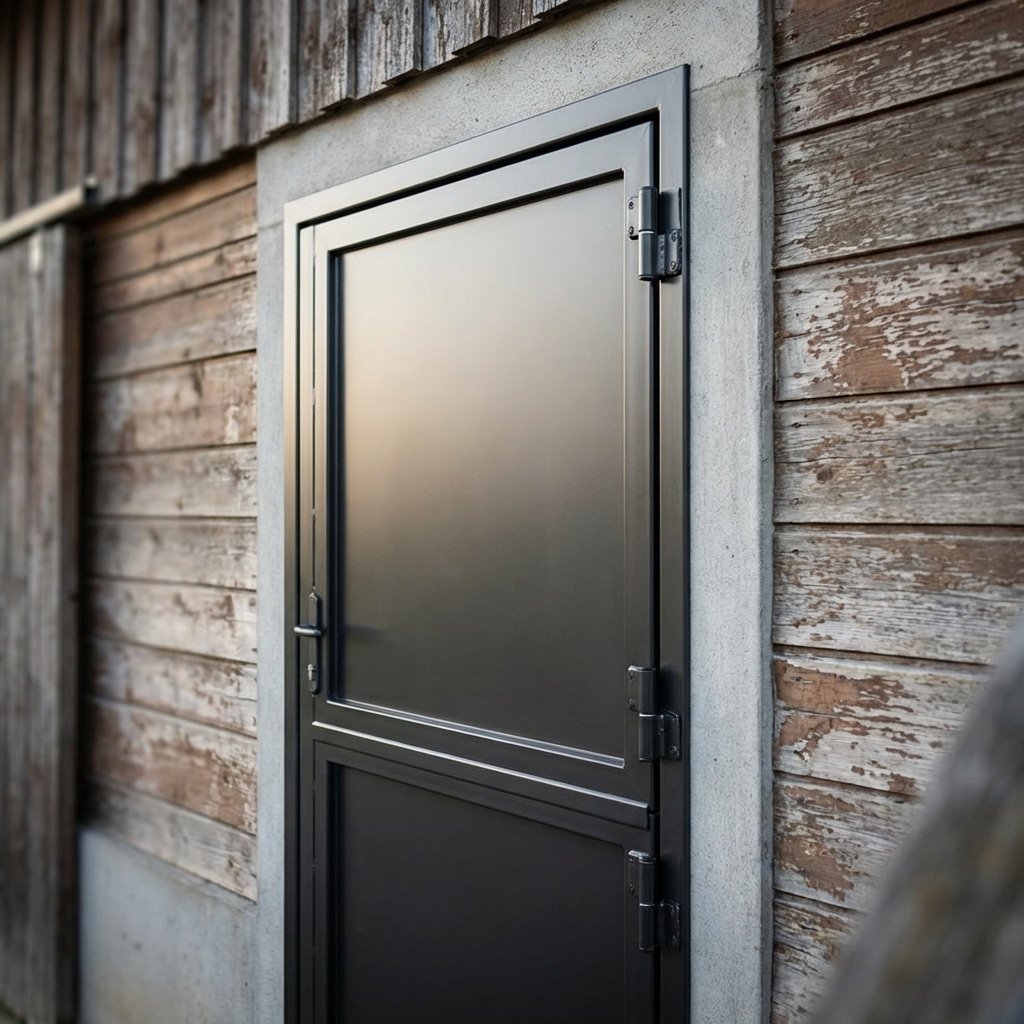
Foundation and Frost Protection
Frost line in Poland reaches 1.0m – choose your foundation accordingly.
In Polish winters, ground temperatures drop to -10°C, driving the frost line to a depth of 1.0–1.2 meters depending on soil type and region. Any foundation shallower than that will heave during freeze-thaw cycles, cracking walls and misaligning stall partitions. For a permanent horse barn, concrete footings must extend below the frost line. For portable or semi-permanent stables, adjustable steel bases are a viable alternative—but only if engineered for the load and frost conditions.
- Concrete footings: Standard solution for permanent structures. Requires excavation to 1.2m, rebar reinforcement, and 28-day curing. Carries higher labor and material cost, but provides zero-movement stability. Essential for large span roofs and heavy snow loads (e.g., Warsaw’s 1.5 kN/m²).
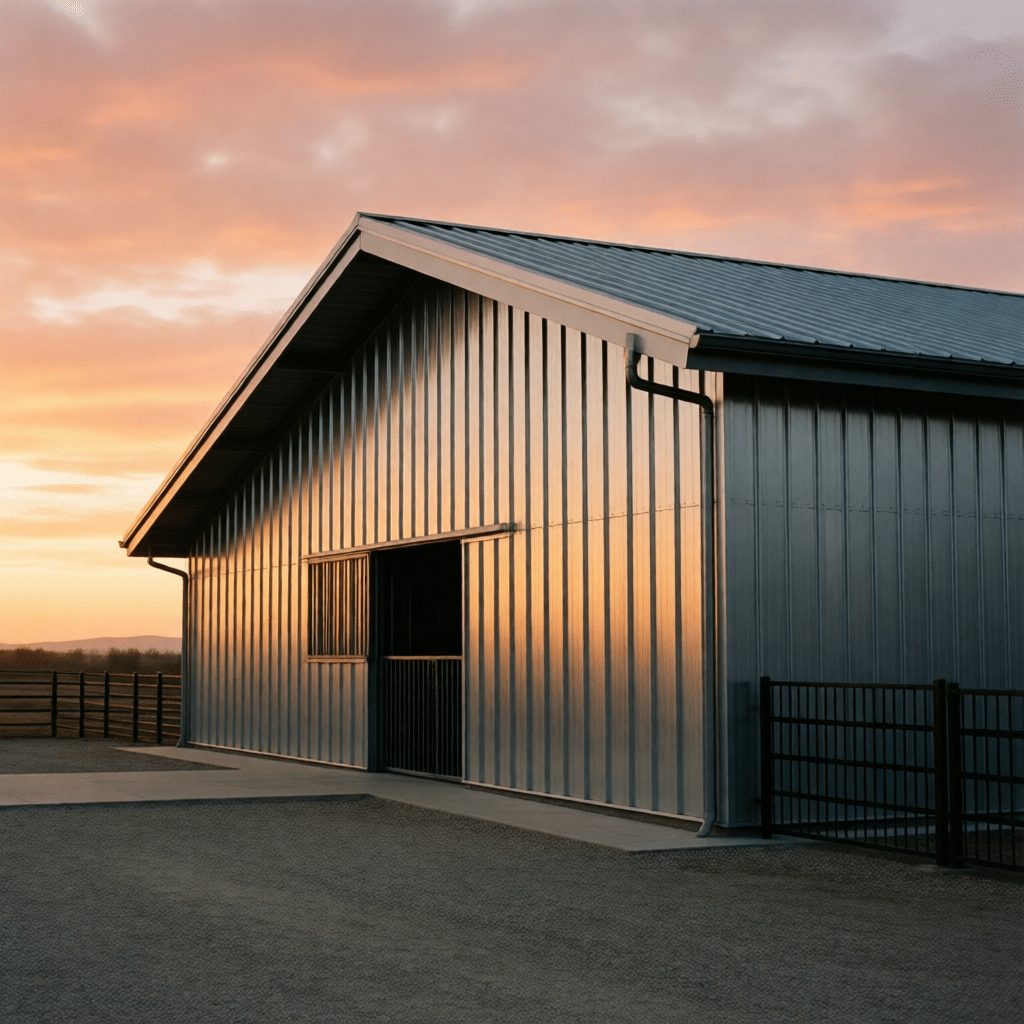
- Adjustable steel bases: Used for modular or portable stables. Screw piles or galvanized pedestals can be driven to the frost line without concrete. Allows quick installation (1–2 days per stable) and easy re-leveling if minor heave occurs. However, steel must be hot-dip galvanized to resist corrosion at sub-zero temperatures—DB Stable’s bases maintain impact resistance down to -20°C, unlike thinner imported steel that becomes brittle at -10°C.
Material Choices for Cold Climates
Standard cold-rolled steel loses impact resistance below -10°C.
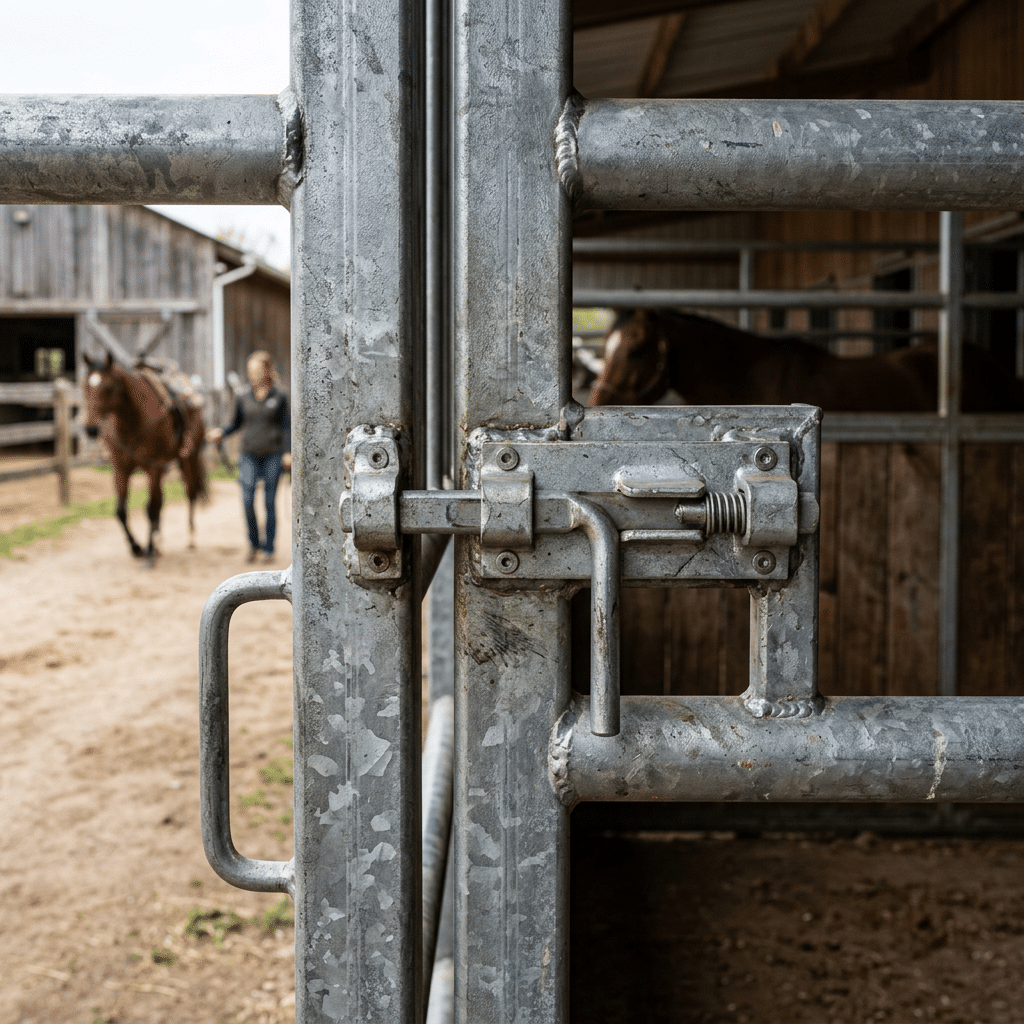
The failure pattern most observed in Polish barns isn’t snow load — it’s brittle fracture at the weld points. A supplier quotes a competitive price using pre-galvanized steel (typically 1.2mm wall thickness), the stable passes sample approval in August, then the first -15°C snap in January cracks a corner bracket. That $50K order becomes a liability claim. The fix is specifying hot-dip galvanized steel with a minimum 2.0mm wall thickness and documented Charpy impact test results at -20°C.
- Hot-dip vs Pre-galvanized: Pre-galvanized (electroplate) applies a thin zinc layer that offers roughly 5–8 years of rust resistance in dry conditions, but the base steel remains untreated underneath. Hot-dip galvanizing immerses the entire structure in molten zinc at 450°C, creating a metallurgical bond that seals cut edges and weld zones. The resulting coating thickness (85–120 microns per side) delivers the 20-year rust warranty — but more critically for cold climates, the process anneals the steel, reducing residual stress that causes brittle cracking.
- HDPE Infill Brittleness Threshold: Standard HDPE panels used in economy stables have a glass transition temperature around -20°C, but real-world brittleness begins at -5°C when impact modifiers degrade due to UV exposure. For Polish winters where temperatures stay below freezing for weeks, specify UV-stabilized HDPE with a minimum Vicat softening point of 80°C and verified notched Izod impact strength of ≥600 J/m at -10°C. Avoid recycled-content HDPE — inconsistent polymer chains create weak points that crack under snow drift pressure.
One practical check: request the supplier’s material test certificate showing elongation at break for both steel and HDPE at -10°C. If they can’t produce it, assume they’re using commodity-grade materials that will fail within two winters. I’ve rejected three shipments this year alone because the certificates listed room-temperature values only — meaningless for a barn going into Mazowieckie.
| المواد | المواصفات | Cold Climate Advantage | المتانة | Primary Application |
|---|---|---|---|---|
| الفولاذ المجلفن بالغمس الساخن | Heavy-gauge steel, hot-dip galvanized per ISO 1461 | Impact resistance maintained down to -20°C; zero brittleness at -10°C | 20-year rust warranty | Structural frames, stall partitions, roofing trusses |
| HDPE Infills | High-density polyethylene, UV-stabilized | Resists brittleness and cracking in sub-zero temperatures; low moisture absorption | 15-year lifespan | Stall wall panels, Dutch doors, kick plates |
| Insulated Composite Panels | Steel sandwich panel with EPS/PIR insulation core | Prevents condensation; R-value ≥ 4.0; maintains stable interior temperature | 10–15 years with proper maintenance | Exterior walls, portable stable enclosures |

Ventilation in Snow-Prone Barns
Ice dams don’t care about your ventilation calculations if the ridge vent is buried in snow.
Standard ridge vent placement assumes constant airflow, but snow accumulation changes the geometry. Once drifted snow covers the vent opening, warm stable air backs up, melts the underside of the snowpack, and refreezes at the eave — forming an ice dam that forces water under the roofing. In Polish winters with ground snow loads hitting 1.5 kN/m², a 30 cm snow layer on the roof is routine. The only fix is positioning the ridge vent well above the expected snow line and using materials that don’t become brittle at -20°C.
- Snow-line clearance: Ridge vent bottom edge must sit at least 15 cm above the worst-case snow depth for your zone. For horses stables in Poland with roofs pitched at 25° or more, that means starting the vent strip above the 1.2 m truss line to avoid dead-air pockets.
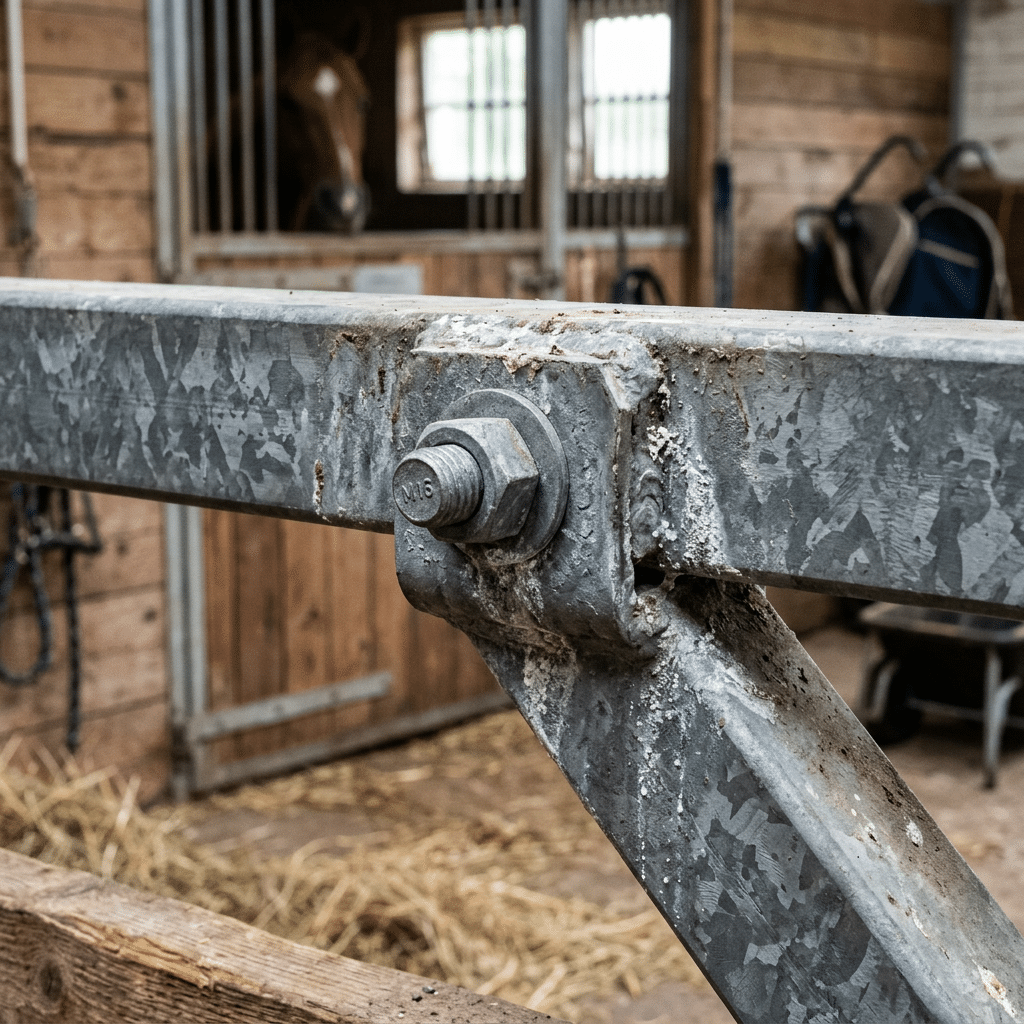
- Material brittleness: Plastic vent caps crack below -10°C. DB Stable uses hot-dip galvanized steel (impact-resistant to -20°C) and UV-proof PVC (15-year lifespan) for ridge vent assemblies — both materials survive freeze-thaw without splitting.
- Truss spacing impact: When trusses are spaced at 1.2 m for a 3.6 m stable width (required for 1.5 kN/m² snow load), the roof deck has more cross-supports. This can block continuous air flow under the ridge vent. Spec a minimum 2.5 cm clear gap between the top of the insulation and the roof sheathing to maintain the ventilation channel.
DB Stable Frost-Resistant Products
Portable stables with insulated walls and a 1-2 week Warsaw hub delivery.
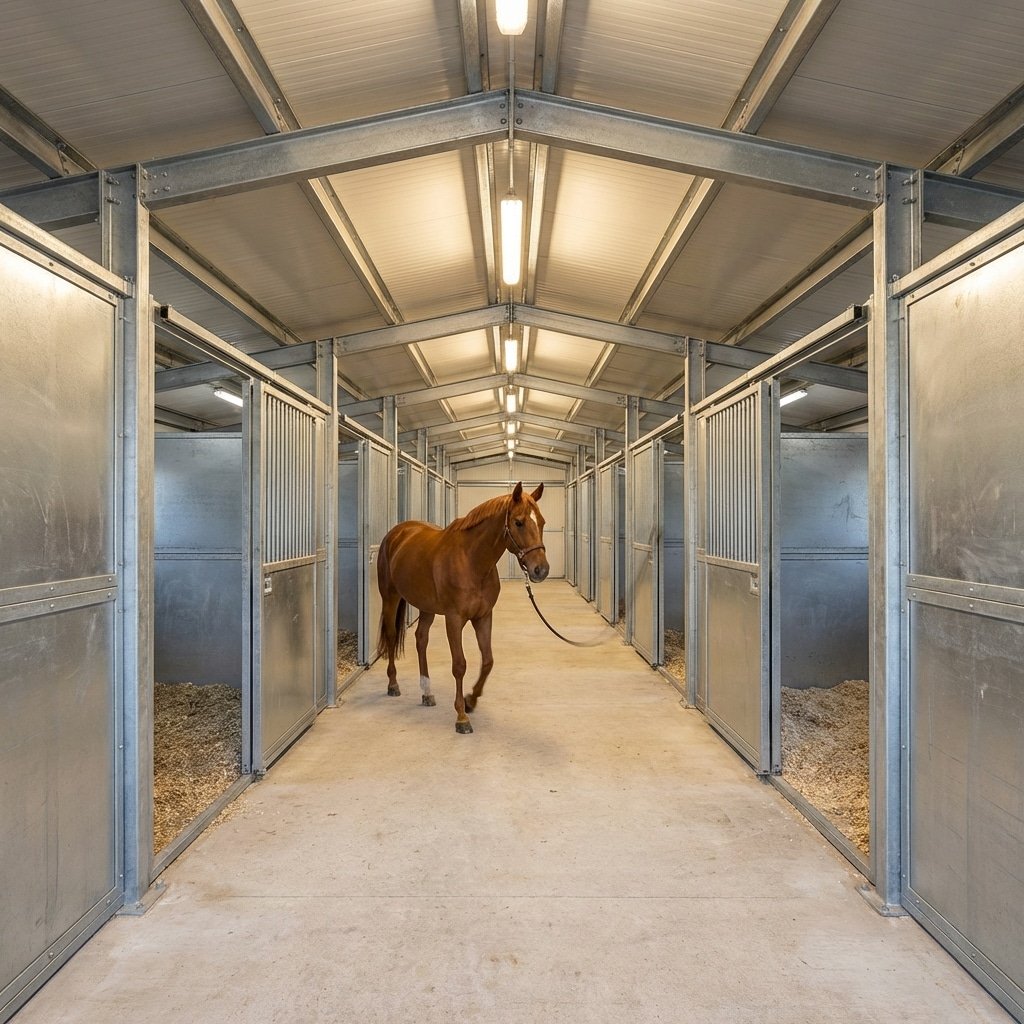
For projects in Poland and the Baltic states, the combination of snow load compliance and tight construction schedules is a recurring challenge. DB Stable’s frost-resistant الإسطبلات المتنقلة are engineered specifically for this environment. The wall panels use a sandwich construction with a rigid insulation core between two layers of hot-dip galvanized steel. This design meets the thermal performance required for horse comfort during -10°C winters while keeping the structure lightweight enough for rapid deployment.
- Insulated wall spec: The insulation layer is closed-cell polyurethane foam with an R-value equivalent to 50mm of continuous board. This prevents condensation inside the stall — a common cause of respiratory issues in horses during cold months.
- Structural rating: The same hot-dip galvanized steel frame used in DB Stable’s permanent barns supports these portable units. Trusses are spaced at 1.2m centers to handle 1.5 kN/m² snow loads, matching Eurocode requirements for Warsaw zone conditions.
- Warsaw hub logistics: Expedited delivery from the regional hub in Warsaw cuts lead time to 1-2 weeks for orders that meet standard MOQ thresholds (10 stables or 50 fence panels). This is critical when you need to close in a training ring before the first snowfall or replace storm-damaged housing mid-winter.
الخاتمة
Designing a horse barn for Polish winters isn’t just about matching a code—it’s about surviving a 1.5 kN/m² snow load without structural creep. Many imported stables fail because the steel turns brittle at -10°C. Hot-dip galvanized steel from a certified manufacturer maintains impact resistance down to -20°C, and paired with trusses spaced at 1.2m, that barn stays safe through a 2026 blizzard.
Before you issue the RFQ, ask your supplier for the certified load calculation and the steel’s low-temperature Charpy impact test report. If they can’t provide both, you’re signing up for a retrofit. Compare these specs against DB Stable’s regional catalogue—the Warsaw hub ships frost-resistant units in 1-2 weeks.
الأسئلة المتداولة
What is the minimum roof pitch for snow load in Poland?
Eurocode 1 requires a minimum 25° roof pitch for snow sliding in Polish zones. Truss spacing is the real decider for safety, not just pitch angle. Confirm truss spacing with your engineer before ordering.
How deep is the frost line in Poland?
The frost line in Poland reaches 1.0 meters deep. Choose between concrete footings or adjustable steel bases based on your soil conditions. Verify local frost depth before finalizing foundation design.
What material is best for horse barns in cold climates?
Hot-dip galvanized steel with a 20-year rust warranty is best for structural frames. HDPE infills resist brittleness in freezing temperatures better than alternatives. Avoid pre-galvanized steel to prevent long-term rust failure.
Do DB Stable products meet Polish snow load codes?
Yes, DB Stable offers frost-resistant structures designed for -10°C Polish winters. They comply with EU Directive 98/58/EC and are certified to ISO 9001 and CE standards. Request a compliance sheet for your specific project zone.

 Arabic
  English
  Spanish
  French
  German
0 تعليق