Exporting heavy-duty stabling to Germany demands engineering that withstands the kinetic impact of 17-hand Warmbloods. Standard 2.2m partitions frequently fail under the stress of these high-performance athletes, leading to catastrophic injury liability and costly facility retrofits.
Our analysis benchmarks professional mesh dividers against the strict 2.4m height requirement and Q345B structural steel standards essential for المناخات الباردة. We examine how cast-proof 50mm spacing and ISO 1461 hot-dip galvanization define the difference between a lifetime asset and a rusted safety hazard.
The Physical Demands of Housing Hannoverians and Holsteiners
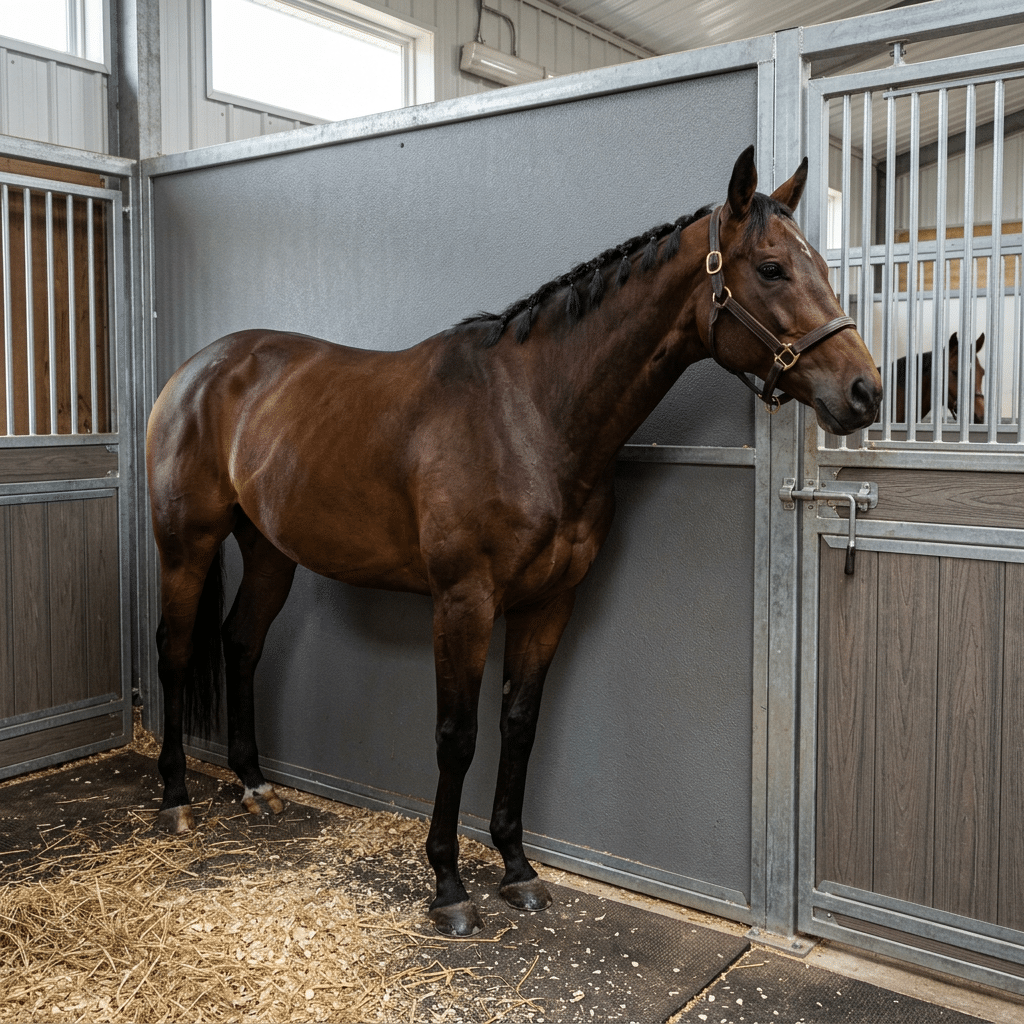
Hannoverians and Holsteiners average 16-17 hands, demanding 12’x14′ stalls and heavy-duty impact protection. Standard lightweight stabling cannot withstand the kinetic energy of these performance athletes.
</
blockquote>
Spatial Requirements and Behavioral Stressors
German Warmbloods are not average horses. A Holsteiner or Hannoverian typically stands 16 to 17 hands high, significantly larger than the 15-hand average many standard stalls are built for. Placing a 17-hand dressage horse in a standard 12’x12′ box restricts movement, limits the ability to lie down comfortably, and drastically increases the risk of becoming cast against a wall.
Professional facilities housing these breeds are shifting toward 12’x14′ (approx. 3.6m x 4.2m) dimensions or larger. Beyond simple size, these animals are high-energy athletes bred for jumping and dressage. When confined, that athletic potential often manifests as behavioral stress, including stall walking and high-impact wall kicking. A standard stable partition with thin lumber or light-gauge steel will fail under the repetitive strike force of a 1,400lb warmblood.
The Safety Standard: Kick-Proof HDPE and Cast-Proof Design
To mitigate the risks associated with these powerful breeds, we engineer our Professional and Royal Series stables with specific impact-resistance features. We do not rely on visual deterrents; we rely on material science.
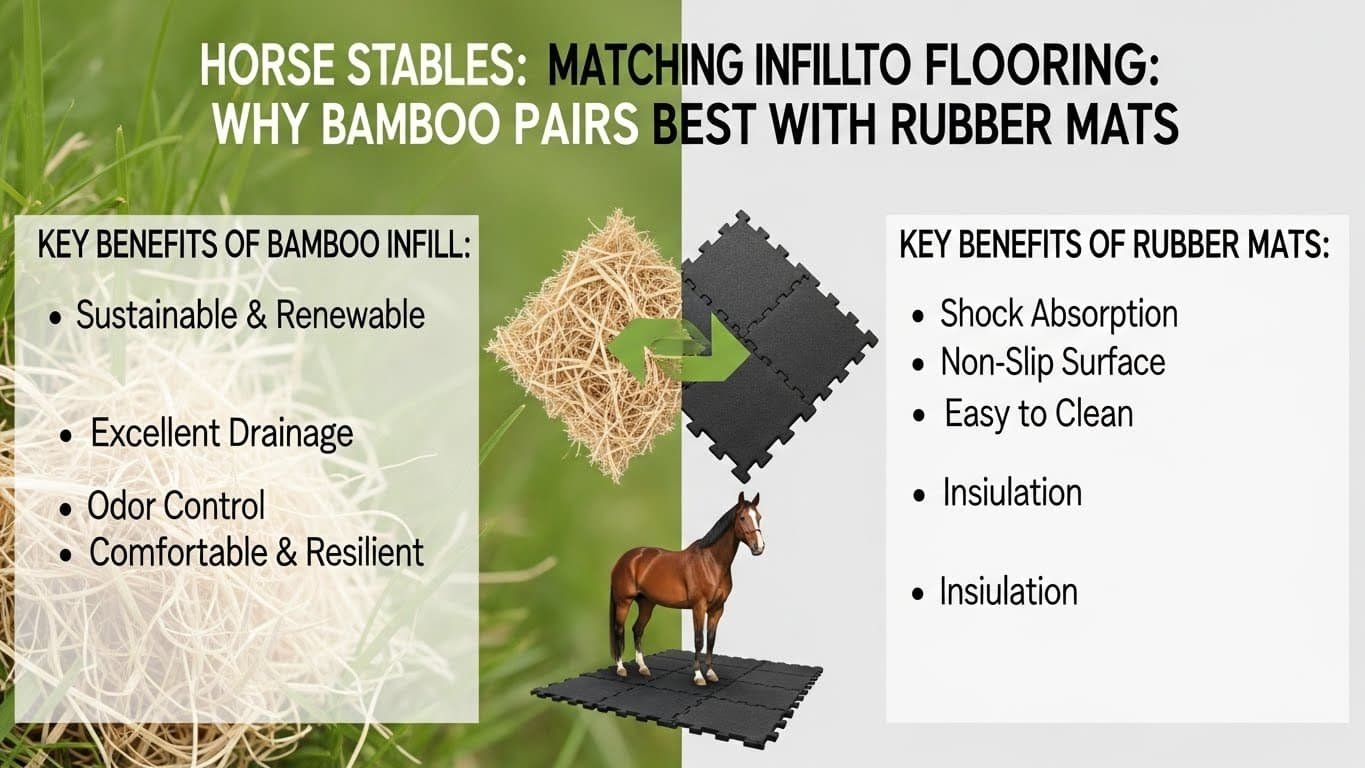
ضمان ضد الركل: We utilize 28mm-32mm shock-absorbing حشوة البولي إيثيلين عالي الكثافة or high-density bamboo. Unlike standard pine which snaps and splinters upon impact, HDPE absorbs the kinetic energy of a kick, preventing leg fractures and wall failure.
Cast-Proof Clearance: Our designs feature a strict 50mm bottom gap between the floor and the steel frame. This specific clearance prevents a rolling horse from getting a hoof trapped under the partition—a common cause of panic and career-ending injuries in larger breeds.
Structural Steel Backbone: For facilities in cold climates or those housing stallions, we recommend upgrading to Q345B High Strength Steel. This low-alloy steel maintains impact toughness even in freezing temperatures, ensuring the frame does not become brittle and crack under stress.
Height Matters: Upgrading to 2.4m Tall Horse Stall Fronts
ملخص تنفيذي: A 2.4m (7.8ft) stall front is the mandatory baseline for large Warmbloods. This height prevents rearing accidents and maximizes the “Stack Effect” to clear ammonia from the horse’s breathing zone.
Containment Security for Large Breeds
Standard 2.2m (approx. 7.2ft) stall fronts often fail when housing athletic Warmbloods or Thoroughbreds. If a 17-hand horse rears in a moment of stress or excitement, their head and neck can easily clear a standard heig
ht door. This creates a dangerous “hang-up” zone where the horse risks catching its jaw or hooking a front leg over the top rail, leading to catastrophic panic injuries.
Upgrading to the professional 2.4m standard eliminates this leverage point. We engineer these fronts to provide a secure physical barrier that taller breeds cannot attempt to jump or climb. Despite the imposing height, the design maintains full visibility into the aisle. You get the security of a high wall without creating a claustrophobic “prison cell” environment for the animal.
Maximizing Airflow via Stack Effect Design
Height serves a critical function beyond safety: it acts as an engine for ventilation. Professional stable design relies on “Stack Effect Ventilation,” where heat generated by the horse causes air to rise. Low stall fronts trap this rising air—along with dust and ammonia—right at the horse’s head level.
Vertical Escape Route: The extra height allows hot, stale air to rise above the horse before dissipating, reducing respiratory stress.
Ammonia Reduction: By increasing the volume of the stall, you dilute the concentration of ammonia buildup at the breathing zone.
Passive Exchange: When paired with our Open Top Grill designs, the 2.4m height promotes a constant cycle of fresh air intake and stale air exhaust without relying solely on electric fans.
Premium Galvanized Stables: Built To Last 20 Years
Source globally compliant stables engineered to withstand extreme climates and heavy impact. Secure long-term value with modular designs that reduce installation time by 30%.
Q345B steel delivers 345 MPa yield strength, essential for absorbing high-impact kicks from 17-hand Warmbloods without the brittle fracture risks common in standard carbon steel during freezing winters.
Structural Integrity: Understanding the 345 MPa Yield Standard
Standard Q235B steel serves well for average riding horses, but it creates a liability when housing heavy Warmblood breeds. A 17-hand Holsteiner or Hanoverian generates massive kinetic energy when striking a stall front. We engineer our heavy-duty systems using Q345B (equivalent to ASTM Grade 50) specifically to counter this force. With a yield strength of 345 MPa, this material significantly outperforms standard options, allowing the frame to absorb repeated heavy impacts without permanent warping or structural failure.
Cold Weather Safety: Preventing Brittle Fractures from Kicks
Geography dictates material choice. In freezing temperatures, standard carbon steel loses ductility and becomes brittle. A kick that might simply dent a tube in summer can cause a “brittle fracture” in winter, snapping the steel and creating jagged, razor-sharp edges that result in catastrophic leg injuries.
Cold Climate Option: We mandate Q345B for clients in Northern Europe and North America because its alloy composition retains impact toughness in sub-zero conditions.
Liability Protection: Using Q345B ensures the “Kick-Proof Guarantee” remains valid regardless of the thermometer, preventing equipment failure when the material is under thermal stress.
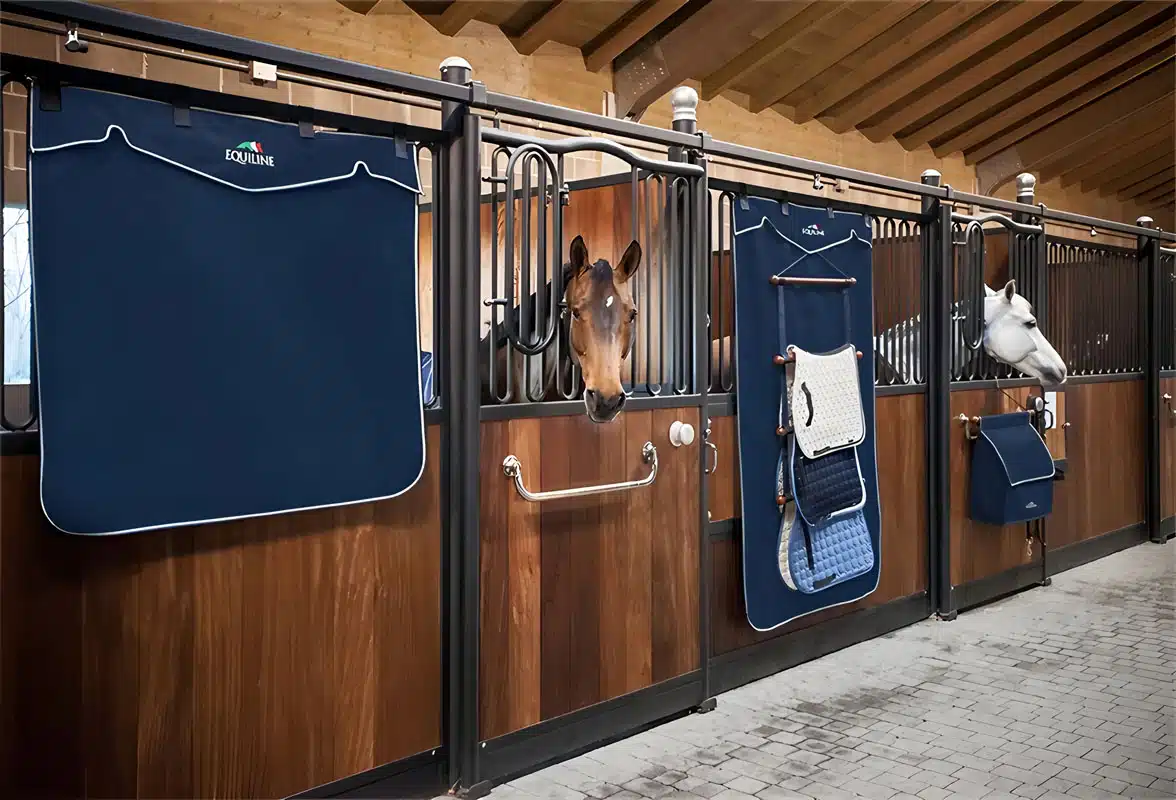
Mesh dividers utilize “Stack Effect Ventilation” to clear ammonia while maintaining herd socialization. We engineer ours using Q345B structural steel and Hot-Dip Galvanization (ISO 1461) for maximum impact resistance.
الميزة
Operational Benefit
Technical Spec (DB Stable)
تصميم التهوية
Clears ammonia & reduces respiratory stress
Stack Effect (Open Upper Grill)
Core Material
Resists high-impact kicks in cold climates
سبيكة فولاذ منخفض السبائك Q345B
Rust Protection
Prevents corrosion in humid barns
Hot-Dip Galv ISO 1461 (>70μm)
Safety Spacing
Prevents hoof entrapment
50mm (Cast-Proof Design)
Optimizing Airflow and Herd Socialization
Stagnant air is the enemy of equine respiratory health. Ammonia from bedding settles near the floor, damaging lung tissue over time. Open upper dividers solve this by promoting “Stack Effect Ventilation.” As body heat rises from the horse, it escapes through the mesh top, pulling fresh, cooler air in from the bottom. This passive airflow cycle runs constantly without mechanical fans, keeping the stable environment cleaner.
Beyond air quality, these dividers address the biological need for a herd environment. Solid walls isolate horses, leading to “stable vices” like weaving, cribbing, or stall kicking born from anxiety and boredom. Mesh profiles allow neighbors to see, smell, and hear each other, satisfying their social instincts while keeping them physically separated. For facility managers, this visibility also means clear sightlines. You can check the health and status of every horse down an aisle in seconds without opening a single door.
Structural Integrity: Q345B Steel and ISO 1461 Protection
A kicker can generate impact forces capable of shattering standard construction materials. We do not use standard Q235 steel for our professional-grade dividers. Instead, we use فولاذ Q345B منخفض السبائك عالي القوة (equivalent to ASTM Grade 50). This material offers superior low-temperature impact toughness, meaning it won’t turn brittle and snap if a horse kicks it during a freezing winter morning. This is a critical safety factor often overlooked by manufacturers cutting costs with standard steel grades.
Cast-Proof Spacing: We set bar spacing at approximately 50mm. This prevents hooves from slipping through and getting trapped if a horse rolls against the divider.
14-Gauge Thickness: Our tubing wall thickness is strictly 2.0mm to 2.5mm. We never use the 1.5mm tubing common in retail-grade kits.
Hot-Dip Galvanization After Fabrication: We weld the black steel frames first, then dip the entire unit into molten zinc according to BS EN ISO 1461 standards. This ensures the welds are coated, unlike competitors who weld pre-galvanized tubes and leave the joints exposed to rust.
Precision CNC Bolting for Rattle-Free Stalls
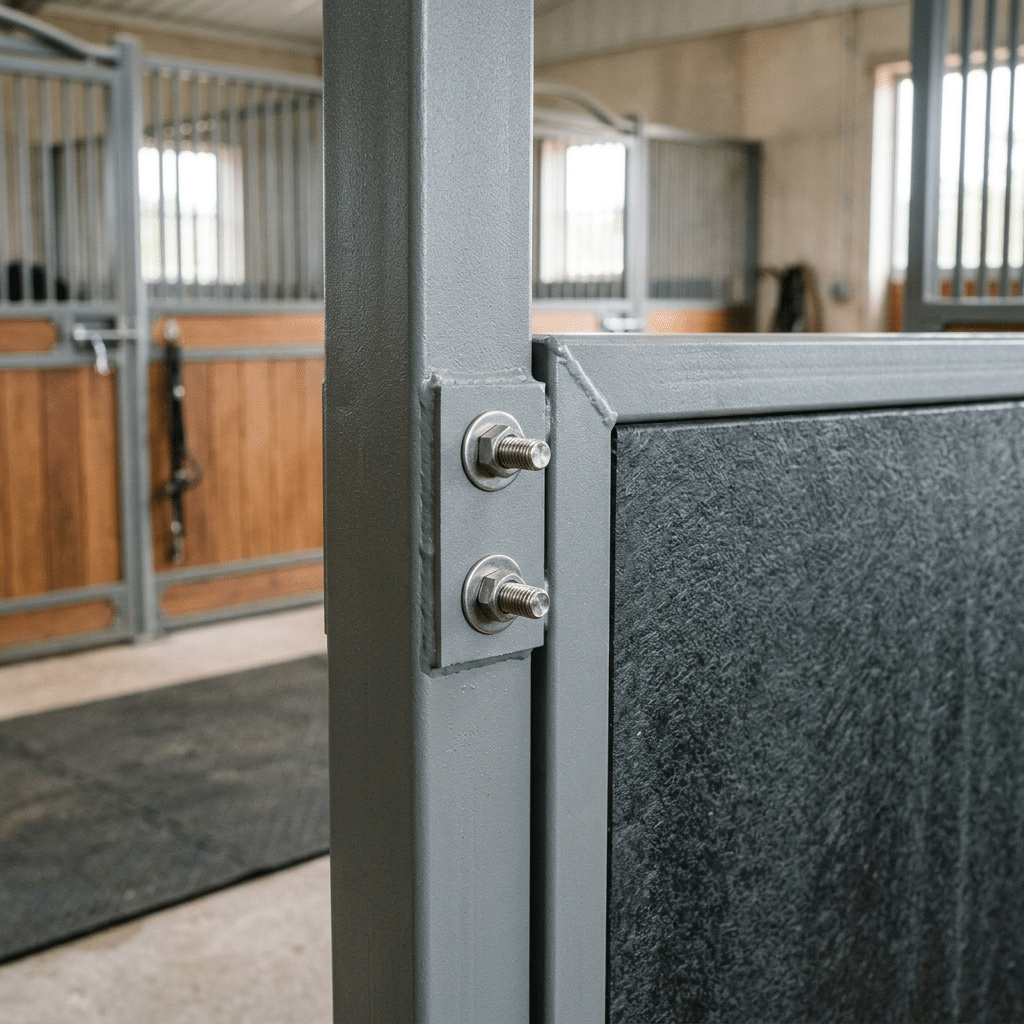
Rattle-free stalls rely on precision CNC tolerances and 304 Stainless Steel hardware to eliminate acoustic resonance, ensuring connections withstand repetitive impact without loosening.
The Science of Vibration-Damping Connections
Most structural failures in stables begin with a simple rattle. Standard bolts often loosen under the repetitive stress of horse kicks, creating dangerous gaps between components. Once this play exists, kinetic energy builds up during every impact, eventually shearing fasteners or warping the steel frame.
Precision CNC machining solves this by achieving ultra-tight tolerances that prevent “acoustic resonance” in stall fronts. Tight connection geometry ensures the frame acts as a single solid unit rather than a collection of rattling parts. Eliminating this vibration is critical for animal welfare, as constant mechanical noise contributes significantly to behavioral stress in stabled horses.
304 Stainless Steel Hardware Integration
Engineering precise geometry is useless if the material fails. DB Stable utilizes a complete 304 Stainless Steel hardware kit for all anchors, connectors, and screws. Unlike standard galvanized fasteners, stainless steel offers superior tensile strength to resist the shear forces generated by heavy impacts.
مقاومة التآكل: 304 grade steel prevents thread degradation, ensuring bolts remain tight for the lifespan of the stall.
Protective Fit: Specialized connectors are designed to fit our hot-dip galvanized frames without damaging the protective zinc layer.
Full Kit Integration: Every connection point uses this spec, eliminating weak links in the assembly.
الأسئلة المتداولة
What is the recommended stall size for large breeds like Hannoverians?
For larger Warmbloods standing 16-18 hands, the standard 12′ x 12′ (3.6m) stall often restricts movement. We recommend upgrading to 12′ x 14′ (3.6m x 4.0m) or 14′ x 14′ dimensions. This extra space allows the horse to turn and lie down comfortably, adhering to modern animal welfare standards for larger breeds.
Why is Q345B steel specified for professional stable fronts?
Q345B is a low-alloy high-strength steel (equivalent to ASTM Grade 50) that offers superior impact resistance compared to standard Q235B. It is specifically chosen for its ‘Kick-Proof’ resilience and ability to maintain structural integrity in cold climates, preventing brittle fractures if a horse kicks the frame during winter.
What is the safety standard for stall front heights?
While many commercial stables use a 2.2m height, we recommend 2.4m (approx. 8 feet) for Warmbloods and stallions. This additional height prevents horses from rearing over the door or getting their legs caught on the top rail, a critical safety feature for high-value performance horses.
How does hot-dip galvanization after fabrication differ from pre-galvanized tubes?
Pre-galvanized stables are made from tubes coated before welding, leaving the weld seams exposed to rust. Our process involves welding the raw black steel first, then dipping the entire door into molten zinc (ISO 1461). This seals every joint and weld with a coating exceeding 70 microns, providing true lifetime protection against corrosion.
Do mesh dividers compromise stable strength?
Not when engineered correctly. We use heavy-gauge wire mesh welded into a rigid tubular frame. This design maintains the ‘Kick-Proof’ strength of solid bars while significantly improving airflow and allowing social interaction between horses, which reduces stall vices like weaving or cribbing.
الأفكار النهائية
Housing 17-hand Warmbloods in standard stabling creates a liability, not a cost-saving opportunity. Our Q345B High Strength Steel and ISO 1461 galvanization ensure your facility withstands the massive impact forces of these performance athletes without brittle fractures or corrosion. Upgrading to this industrial standard protects high-value bloodstock and secures your reputation as a supplier of professional-grade safety.
Do not compromise on safety specifications when housing heavy breeds. Contact our engineering team today to review your project layout or request a quote for our heavy-duty Professional Series mesh dividers. We provide the certified structural data you need to validate your choice to demanding professional breeders.
مرحباً، أنا فرانك تشانغ، مؤسس شركة DB Stable، شركة تديرها عائلة، خبير متخصص في إسطبلات الخيول. في السنوات الـ 15 الماضية، ساعدنا 55 دولة وأكثر من 120 عميلاً مثل المزرعة والمزرعة لحماية خيولهم. الغرض من هذه المقالة هو مشاركة المعرفة المتعلقة بإسطبلات الخيول للحفاظ على سلامة حصانك.




 Arabic
  English
  Spanish
  French
  German
0 تعليق