


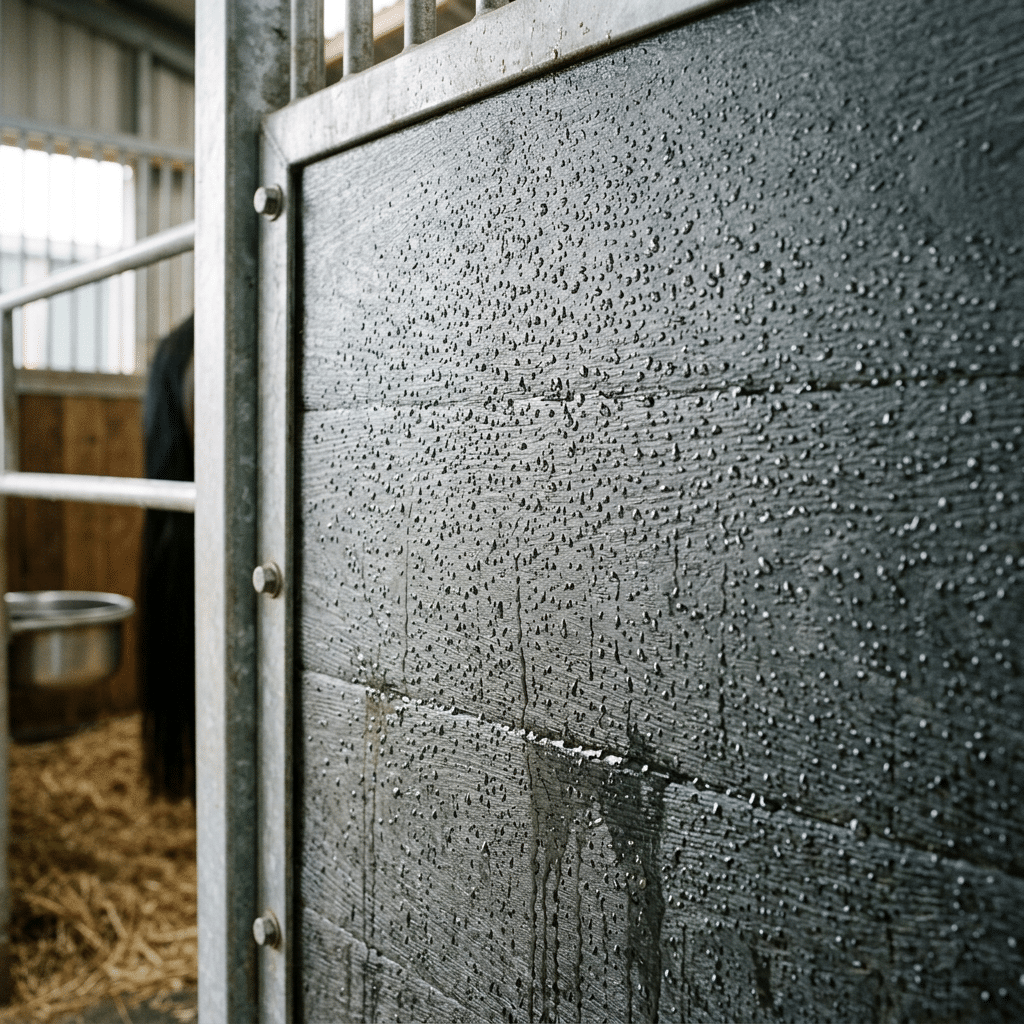
In high urine soils, the catastrophic failure point for any stable system is the ground-level steel. Standard powder-coated or thinly galvanized base plates corrode rapidly from ammonia exposure, leading to costly structural replacements and destroying dealer margins through warranty claims.
This analysis benchmarks foundation systems against an engineered standard for acidic environments. We evaluate base plates on their الجلفنة بالغمس الساخن thickness (>85 microns) and anchor hardware on its material grade (304 Stainless Steel) to eliminate galvanic corrosion.
The Rot Cycle in High-Humidity Environments
Constant moisture from urine and water in humid stables creates a perfect environment for fungal and bacterial growth in wood. Using non-porous, rot-resistant materials stops this decay cycle.
Why Traditional Timber Stalls Decay
Wood is porous and acts like a sponge. It absorbs moisture from every available source inside a stable—urine, spilled water, and even high ambient humidity. This constant dampness provides the fuel that fungi need to grow and spread, initiating the rot process from within the planks.
The problem gets worse when soiled bedding is packed against the stall walls. This material traps moisture directly against the wood surface and supplies a steady source of organic nutrients for bacteria. The combination of moisture and food creates an ideal breeding ground for decay organisms.
Poor ventilation seals the deal. Stagnant, damp air prevents any moisture from evaporating, keeping the wood saturated and accelerating the entire decay cycle. Without consistent airflow, the stable environment remains perpetually primed for rot.
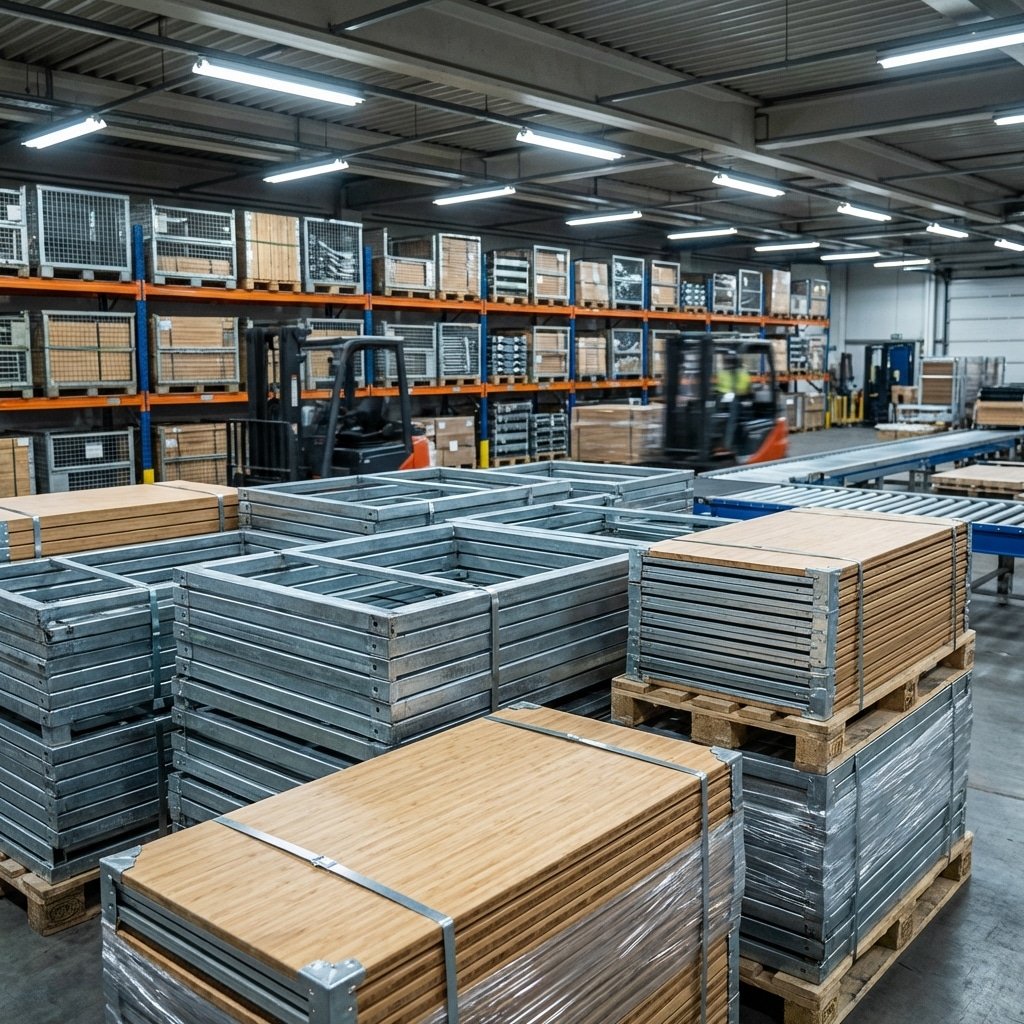
Using Mold-Resistant Bamboo and HDPE Infill
High-density strand woven bamboo is engineered to resist these conditions. Unlike traditional lumber, it doesn’t readily absorb moisture, which makes it naturally resistant to mold and rot. With a Janka hardness rating over 3000 lbf, it’s also exceptionally durable and dense, preventing moisture from penetrating the board.
البولي إيثيلين عالي الكثافة (HDPE) infill offers a complete barrier to biological decay. As a non-organic polymer, it provides zero food source for fungi or bacteria. It’s completely waterproof and will not swell, delaminate, or rot, delivering a true zero-maintenance solution for the wettest stable environments.
Both of these materials are designed to stop the rot cycle before it can even begin. By removing the moisture absorption and organic food source that wood provides, they ensure a much longer and safer lifespan for stalls in consistently damp conditions.
Material Comparison for Tropical Climates
In humid climates, material choice dictates long-term performance. Engineered options like HDPE and strand-woven bamboo vastly outperform treated pine in moisture and mold resistance.
| المواد | Moisture & Mold Resistance</t
h> | Primary Advantage |
|---|---|---|
| Treated Pine | Poor. Absorbs significant moisture (18-22% by weight), creating ideal conditions for mold growth. Requires constant, active maintenance. | Initial chemical treatment provides basic resistance to insects and rot in dry, well-ventilated applications. |
| خيزران منسوج من الخيزران | Excellent. Thermal treatment removes sugars, making it naturally resistant to rot and mold. Extremely low water absorption (0.4% in 24 hours). | Extreme hardness (Janka >3000 lbf) and density make it exceptionally durable and impact-resistant. |
| البولي إيثيلين عالي الكثافة (HDPE) | Absolute. It is 100% waterproof and non-porous. Mold and mildew cannot penetrate or feed on the material. | Zero maintenance. Will not swell, delaminate, or rot, making it a “set-it-and-forget-it” solution for the wettest environments. |
The environment dictates the right material. In tropical zones where humidity regularly exceeds 60%, the wrong choice leads to constant repair costs and health hazards from mold.
Treated Pine: A Suboptimal Choice
Treated pine is a common building material, but it’s fundamentally mismatched for high-humidity climates. Its cellular structure readily absorbs atmospheric moisture. Once the wood’s water content gets high enough, the chemical treatment becomes less effective against mold spores. This makes it a high-maintenance material that requires excellent ventilation just to survive, rather than thrive.
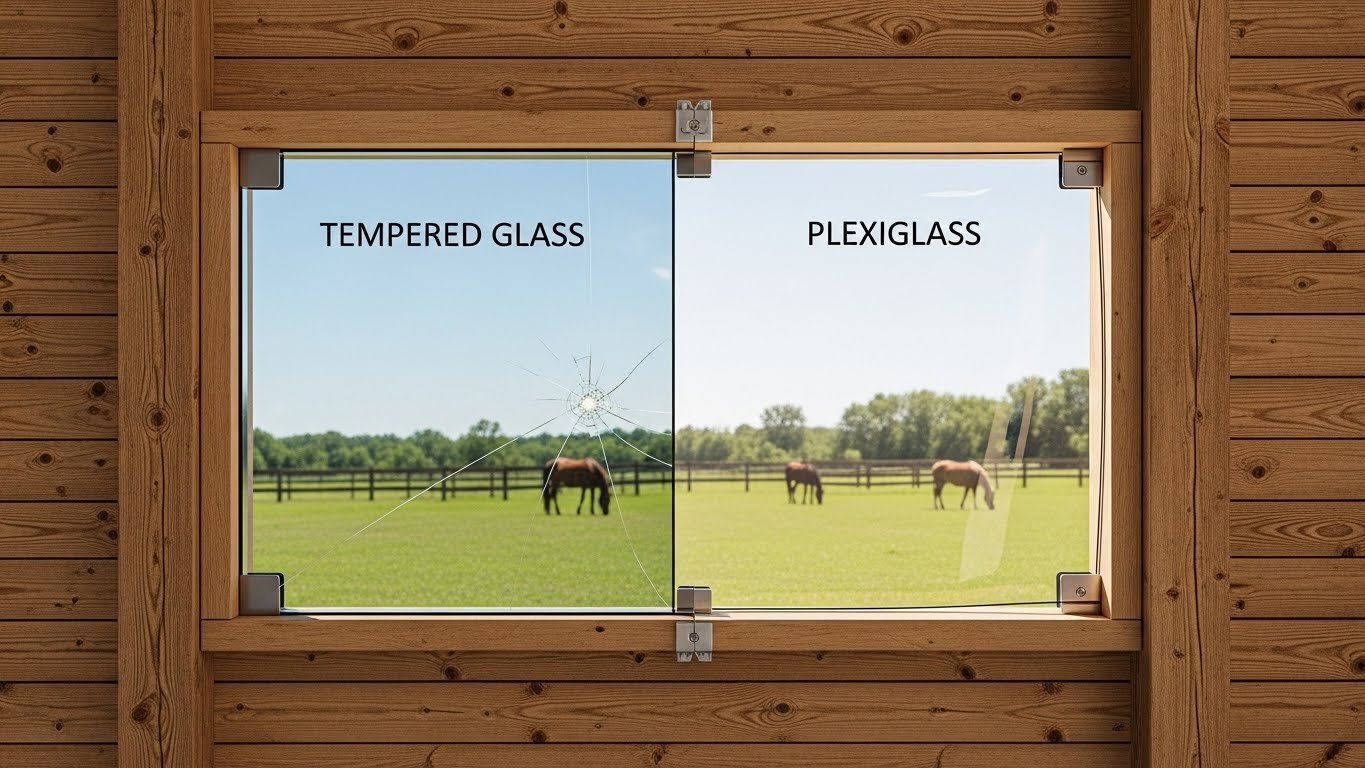
Strand-Woven Bamboo: The High-Performance Option
This isn’t the decorative bamboo you see in gardens. Strand-woven bamboo is an engineered product. We shred bamboo fibers and compress them under intense heat and pressure. This process, combined with thermal treatment, removes the natural sugars that fungi feed on. The result is a board that is three times harder than oak, incredibly dense, and naturally resistant to mold and rot. It’s the go-to for applications demanding both aesthetic appeal and extreme durability.
HDPE: The Waterproof Solution
For pure, uncompromising performance in wet conditions, HDPE is the clear winner. As a non-porous plastic, it offers zero foothold for mold or mildew because it absorbs no water. It will not swell, crack, or delaminate. This makes it the ideal material for stables, wash bays, and any area where hygiene and low maintenance are the top priorities. It’s the practical, long-term solution that eliminates moisture-related problems entirely.
Globally Compliant Stables Engineered for Any Climate
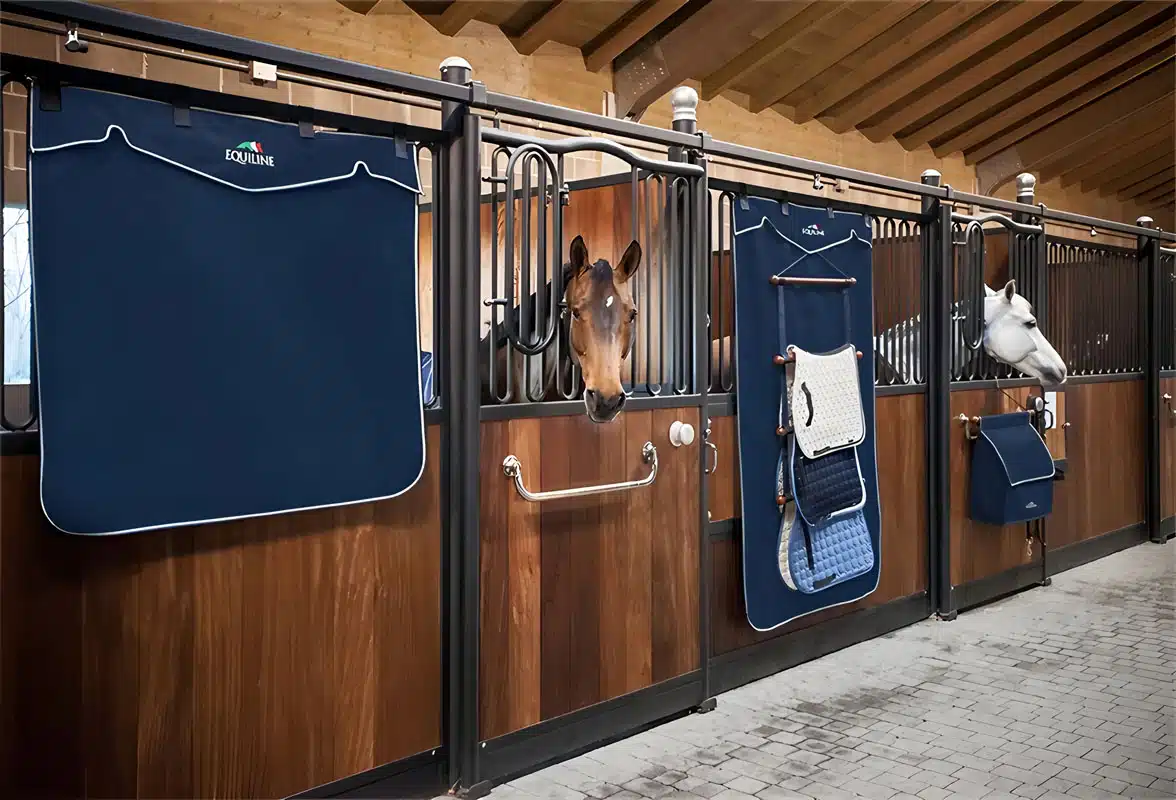
Airflow Design to Prevent Tropical Fungal Infections
In tropical regions, moisture condensation on stall surfaces drives fungal growth. Open-grill designs promote constant air circulation, keeping surfaces dry and preventing fungal proliferation.
How Condensation Fuels Fungal Growth
The core problem in humid climates is simple physics. When warm, moisture-heavy air comes into contact with cooler stall surfaces like steel bars or concrete walls, the moisture condenses into water droplets. This persistent dampness creates the perfect breeding ground for fungi, especially common respiratory threats like Penicillium and Aspergillus.
Stalls with poor ventilation trap this moist air. This not only accelerates fungal growth across surfaces but also increases the concentration of airborne spores that horses inhale directly.
The Role of تهوية تأثير المكدس
DB Stable systems address this issue with an open-top grill design engineered to promote “Stack Effect Ventilation.” This isn’t a mechanical system; it’s a natural process that uses the horse’s own body heat.
Warmer, moisture-laden air—from the horse’s breathing and body heat—naturally rises and escapes through the open top of the stall front. This upward movement draws cooler, drier air in from the bottom of the stall. This continuous, passive air exchange is highly effective at keeping stall surfaces dry, significantly reducing the conditions required for fungal growth without needing fans or complex electrical systems.
الأفكار النهائية
While generic stalls offer lower upfront costs, our system of post-weld hot-dip galvanization (>85μm) and 304 stainless steel anchors is the only way to safeguard your reputation against rust claims. This engineering standard eliminates the risk of ground-level corrosion that erodes customer trust. Selling a product designed to last protects your brand and your long-term margins.
Don’t guess on quality—verify it yourself. We recommend a trial order to test our fabrication standards and material finish firsthand. Contact our engineering team to discuss your market’s specific OEM requirements and available distributor packages.

 Arabic
  English
  Spanish
  French
  German
0 تعليق