


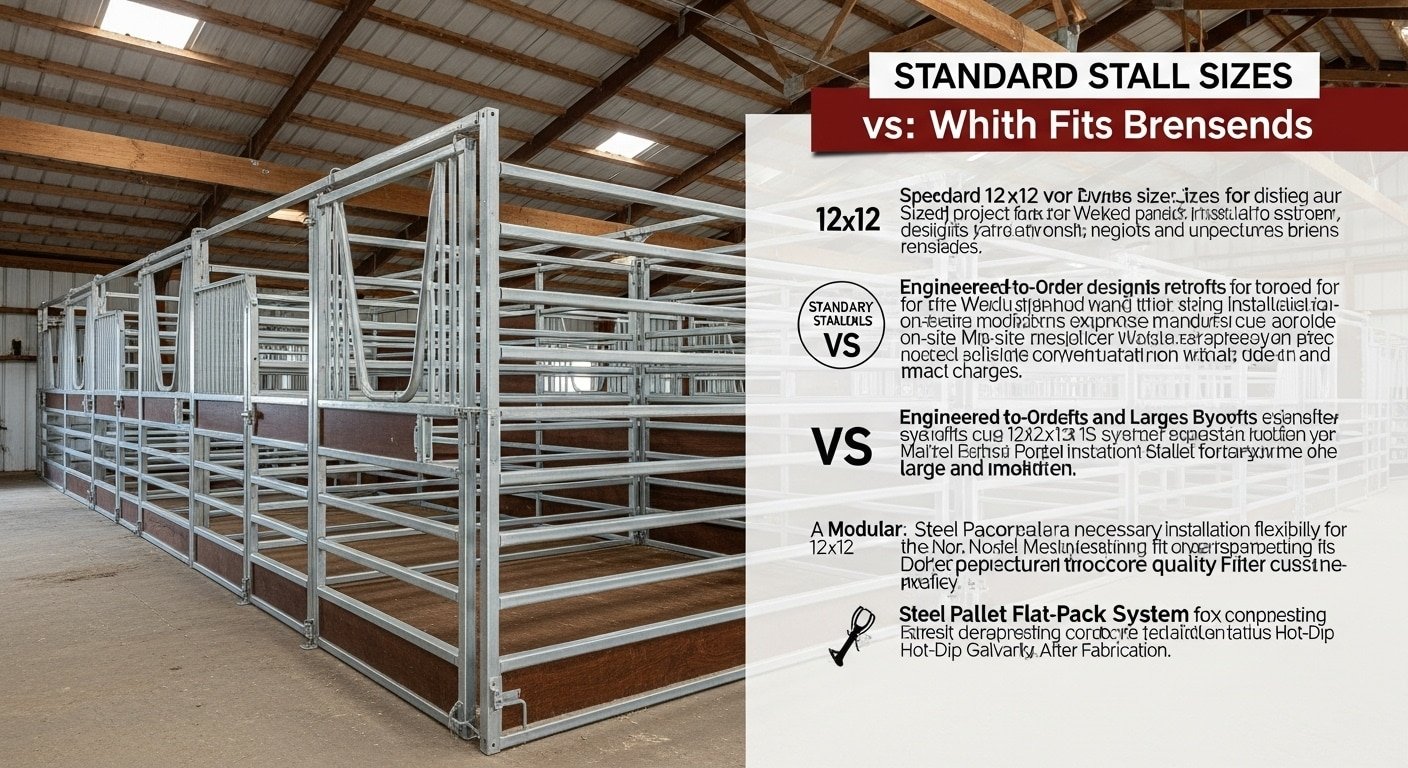
يعد تحديد المقاس المخصص لحجم مربط الخيول قرارًا حاسمًا يؤثر بشكل مباشر على ميزانيات المشاريع، خاصة في تجديدات الحظائر. يؤدي إجبار لوحة ملحومة قياسية مقاس 12×12 في هيكل قديم إلى تأخيرات مكلفة في التركيب ونفقات تعديل في الموقع. هذه التكاليف غير المتوقعة تؤدي إلى تآكل هوامش المشروع وتهدد السلامة الهيكلية النهائية وسلامة الحيوانات.
يقارن هذا التحليل التحجيم القياسي مع أنظمة مصممة حسب الطلب مصممة للتعديلات التحديثية والسلالات الكبيرة. نحن نقيّم كيف يوفر نظام العبوات المسطحة المسطحة المعيارية ذات الألواح الفولاذية المرونة اللازمة للتركيبات غير القياسية، مما يضمن ملاءمة دقيقة دون المساس بمعايير الجودة الأساسية مثل الجلفنة بالغمس الساخن بعد التصنيع.
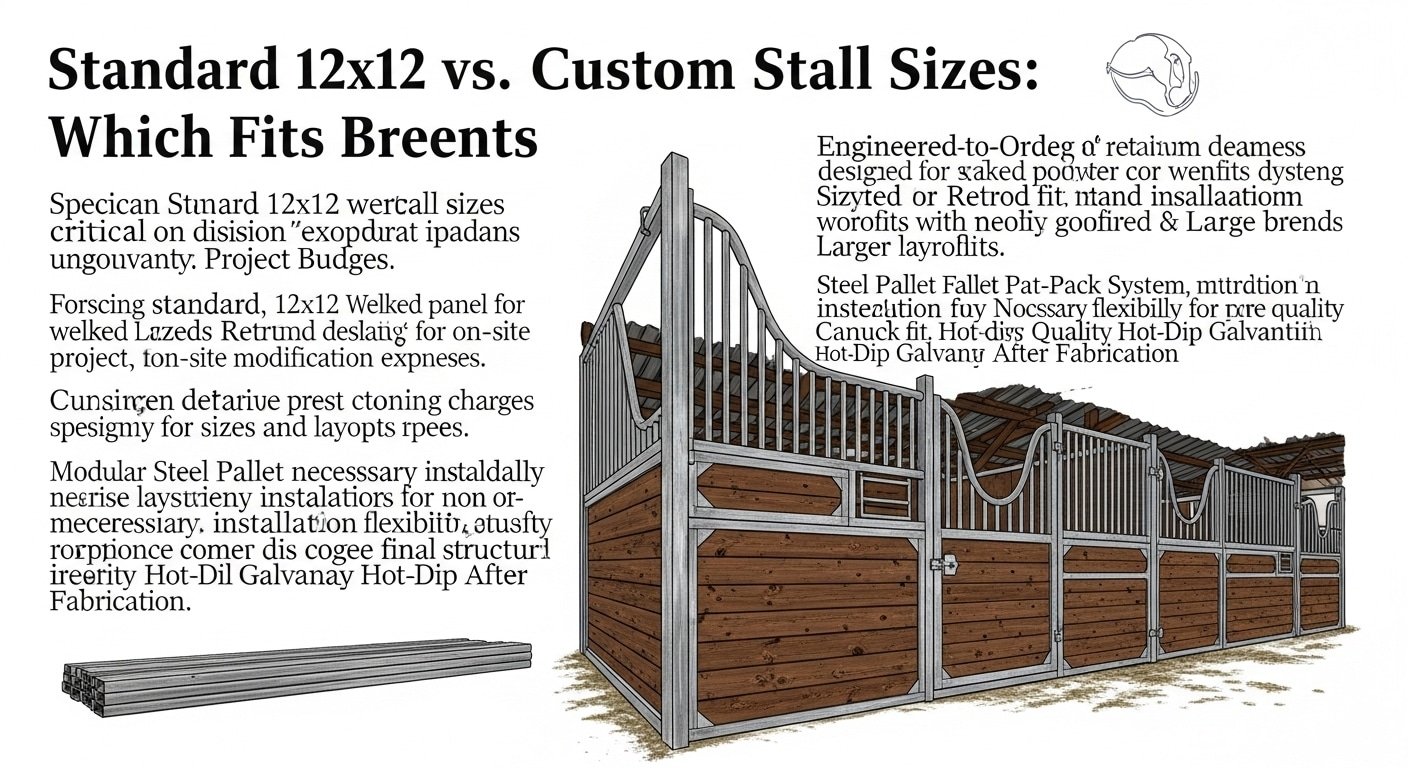
القياسي مقابل المخصص: ما الحجم الذي تحتاجه؟ (مقارنة سريعة)
قياسي 12 × 12 قدم أكشاك تناسب الموزعين والمباني الجديدة. الأبعاد المخصصة هي للتعديلات التحديثية أو السلالات الكبيرة أو التخطيطات الفريدة في المرافق الرئيسية.
خط الأساس الصناعي 12 × 12 قدم (3.6 × 3.6 م)
البعد 12 × 12 قدم هو المعيار العالمي للخيول التي يبلغ وزنها حوالي 1000 رطل. فهو يوفر مساحة كافية للحيوان للالتفاف والاستلقاء والتدحرج بأمان دون أن يصطدم بالجدران. بالنسبة للموزعين و تخطيط مديري المشاريع الإنشاءات الجديدة، يبسّط الحجم القياسي عملية الجرد ويسهّل عملية الإنشاء بأكملها.
عندما تكون الأبعاد المصممة حسب الطلب ضرورية
الأحجام القياسية لا تصلح لكل مشروع. فالأبعاد المخصصة هي متطلبات في بعض الحالات المحددة التي تتطلب حلاً هندسيًا حسب الطلب.
- تجديدات الحظيرة: يعد التعديل التحديثي للحظائر القديمة ذات المسافات بين أعمدة الدعم الحالية غير القياسية سببًا شائعًا ل لوحات مخصصة.
- السلالات الكبيرة: تتطلب خيول الجر والسلالات الكبيرة الأخرى مرابط تصل مساحتها إلى 14 × 14 قدمًا أو 12 × 16 قدمًا لتلبية الاحتياجات الأساسية الرفق بالحيوان المعايير.
- مرافق بريمير: يدعم نموذج تصنيع المعدات الأصلية/التصنيع حسب الطلب الخاص بنا المشاريع المخصصة المتطورة، مثل تلك المخصصة لسلسلة Royal Series الإسطبلات أو مراكز التدريب الفريدة ذات التصميمات المتخصصة.

هل معيار 12×12 مناسب لكل حصان؟
يعتبر المربط 12×12 قدمًا خط أساس جيد، ولكنه ليس حلاً شاملاً. السلالات الأكبر حجمًا، والأفراس ذات المهرات، والأفراس المتخصصة غالبًا ما تتطلب المرافق أبعادًا غير قياسية للسلامة.
مطابقة حجم المربط مع سلالة الخيول والغرض منه
أصبح المربط 12×12 معيار الصناعة لأنه يناسب متوسط وزن الحصان الذي يبلغ 1,000 رطل. فهو يمنحها مساحة كافية للالتفاف والاستلقاء والنهوض دون أن تتعرض للجبس. ولكن “المتوسط” لا يغطي كل الحالات. فإجبار حيوان أكبر حجماً على الدخول في مربط قياسي المماطلة يمكن أن يؤدي إلى الإجهاد والإصابة والمشاكل الصحية الناجمة عن الحرمان من النوم.
تتطلب حالات استخدام محددة آثار أقدام مختلفة:
- السلالات الكبيرة: تحتاج خيول الوارمبلود والخيول الأخرى التي تزيد عن 16 يداً إلى مساحة أكبر. مساحة 12×14 أو 14×14 المماطلة هي الحد الأدنى الأكثر واقعية لهذه الحيوانات.
- الأفراس مع المهرات مهر يجب أن يوفر المماطلة منطقة للمهر. وهذا يعني عادةً وجود مربط مزدوج الحجم، مثل 12×24، من أجل منع الفرس من أن تكون الفرس سحق المهر.
- الفحول والخيول النشطة: يمكن أن تساعد المساحة الأكبر في تقليل المشي في المماطلة والسلوكيات النمطية الأخرى الشائعة في الفحول عالية الطاقة أو فحول التكاثر.
تصنيع مخصص لمتطلبات فريدة من نوعها
وباعتبارنا شركة تصنيع المعدات الأصلية/التصنيع حسب الطلب، فإن عملنا الأساسي هو الهندسة أنظمة مستقرة لمشاريع محددة، ولا نبيع منتجات بمقاس واحد يناسب الجميع. إذا كان مركز التدريب الخاص بالعميل متخصصاً في خيول الجرّ، فإننا نبني حسب احتياجاته. الأبعاد المخصصة جزء من المعيار العملية.
لا تحد اللوجستيات من الأحجام المخصصة. عبواتنا المسطحة الشحن تصميم يجعل نقل الألواح من أي بُعد فعالاً. ويوفر هذا النظام على الموزعين أكثر من 601 تيرابايت 3 تيرابايت في الشحن التكاليف مقارنة لشحن الوحدات الملحومة بالكامل، وحماية هوامشها. سواء كان ذلك لنادي فروسية كبير يتطلب سلسلة المحترفين الخاصة بنا أو مبنى عقاري خاص مع السلسلة الملكية، فإننا هندسة الحل لتناسب التصميم الدقيق للمنشأة.
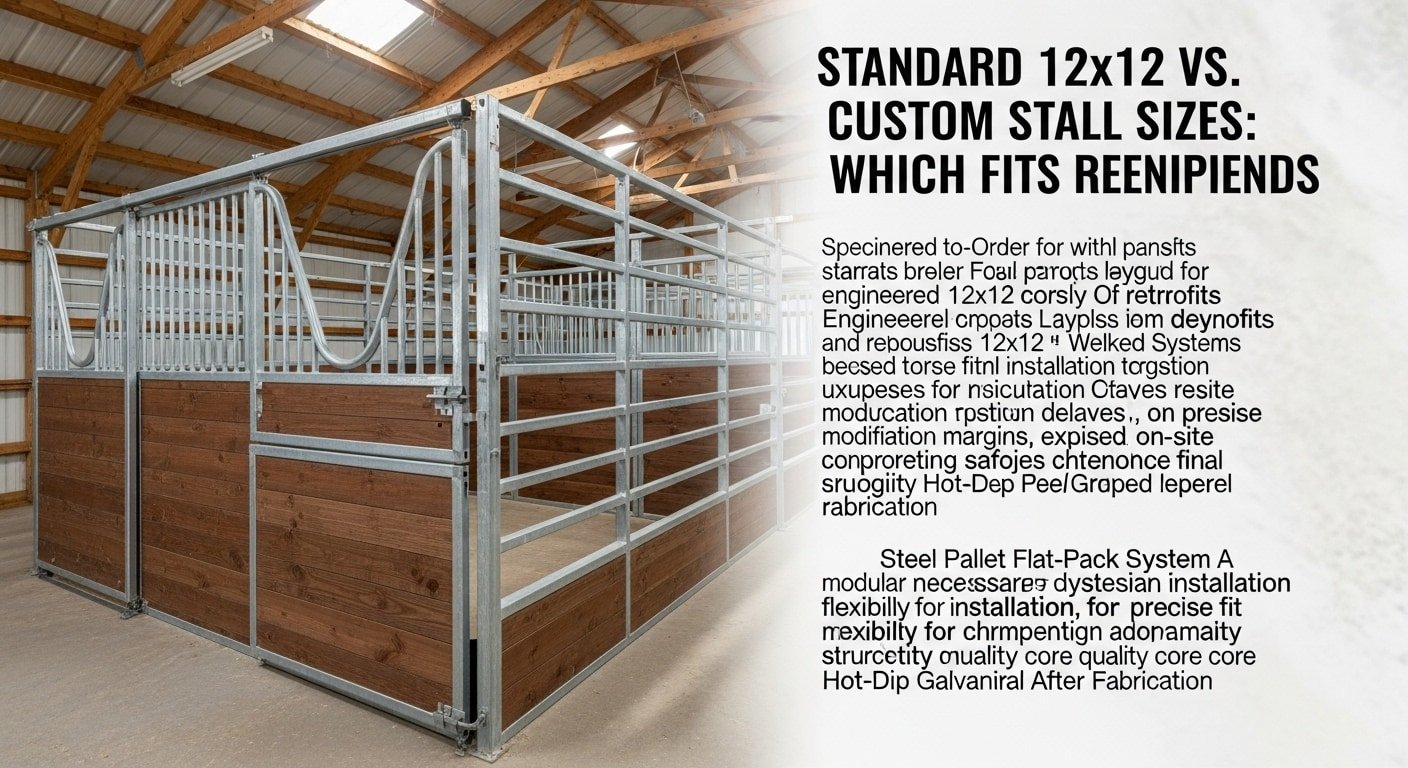
لماذا تتطلب التجديدات في كثير من الأحيان هندسة مخصصة؟
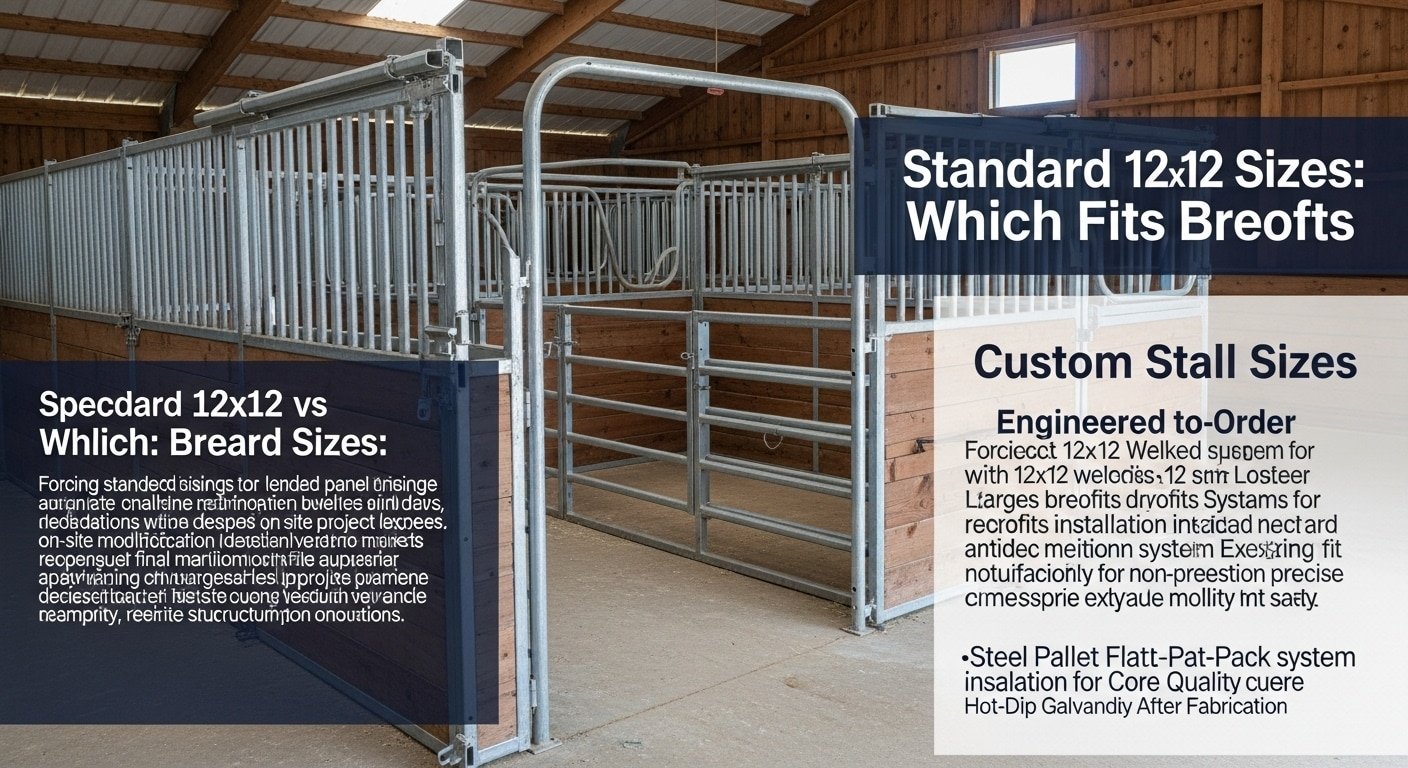
الحظائر الحالية لها تخطيطات فريدة من نوعها وغير مستوية الطوابق لا يمكن أن تناسب الأكشاك الملحومة مسبقاً. يوفر النظام المعياري المسطح المسطح المرونة اللازمة للتركيب السليم والآمن.
مشاريع التجديد مختلفة تماماً عن مشاريع البناء الجديدة. أنت لا تعمل مع نظيفة لائحة؛ أنت تتعامل مع هياكل قائمة لها مراوغاتها الخاصة - أرضيات غير مستوية وأعمدة غير مستوية وتخطيطات غير قياسية. محاولة القوة إن المماطلة القياسية الملحومة بالكامل في هذه الحالات هي وصفة لتجاوز الميزانية ومشاكل التركيب. من الضروري اتباع نهج أكثر مرونة وتصميمًا هندسيًا.
| التحدي | قياسي أكشاك ملحومة (المشكلة) | نظام العبوات المسطحة المصممة هندسيًا (الحل) |
|---|---|---|
| الملاءمة وقابلية التعديل | البنية الصلبة المكونة من قطعة واحدة لا يمكن أن تتكيف مع الأرضيات غير المستوية أو المسافات بين الأعمدة غير القياسية. يؤدي إلى حدوث ثغرات وتجهيزات غير آمنة. | تسمح المكونات المعيارية بإجراء تعديلات في الموقع، مما يضمن ملاءمة محكمة وآمنة داخل الهيكل الحالي. |
| لوجستيات التركيب | ضخم وثقيل اللوحات يصعب أو يستحيل المناورة بها عبر أبواب وممرات الحظيرة الحالية دون معدات ثقيلة. | يتم حمل المكونات الفردية يدوياً وتجميعها في مكانها، مما يسهّل الخدمات اللوجستية في الأماكن الضيقة. |
| مرونة التحجيم | تقتصر على الأحجام القياسية مثل 12×12، وهي غير مناسبة للسلالات الكبيرة أو حظيرة محددة التخطيطات. | يمكن تحديد الألواح والأعمدة بالبوصة، بما يتناسب مع أي سلالة خيول أو أبعاد الحظيرة. |
التكيّف مع هياكل الحظيرة الحالية وأحجام الخيول
الحقيقة الأولى لأي تجديد الحظيرة هو أن عليك العمل مع ما هو موجود بالفعل. الأقدم غالباً ما يكون للحظائر تباعد أعمدة فريدة من نوعها والأرضيات التي استقرت بمرور الوقت. يتم بناء المماطلة الملحومة مسبقًا لتكون مربعة تمامًا، لذلك ببساطة لن تتناسب بشكل صحيح مع هيكل غير ذلك. وهذا يخلق فجوات غير آمنة وإجهاد هيكلي غير آمن.
تملي الخيول نفسها الحاجة إلى تخصيص التحجيم. إن المربط الشائع الذي تبلغ مساحته 12×12 قدم هو خط الأساس لحصان متوسط وزنه 1000 رطل. لكن العديد من العمليات تتعامل مع السلالات الأكبر حجماً مثل الخيول الأوروبية ذات السلالات الأوروبية، والتي تتطلب مساحة أكبر بكثير - غالباً ما تكون 12×14 أو 14×14 قدماً - للاستلقاء والاستدارة بأمان. الأكشاك القياسية لا تستوعب هذه الحاجة، مما يجبرها على تقديم تنازلات غير آمنة.
مرونة نظام الأكشاك المسطحة المسطحة
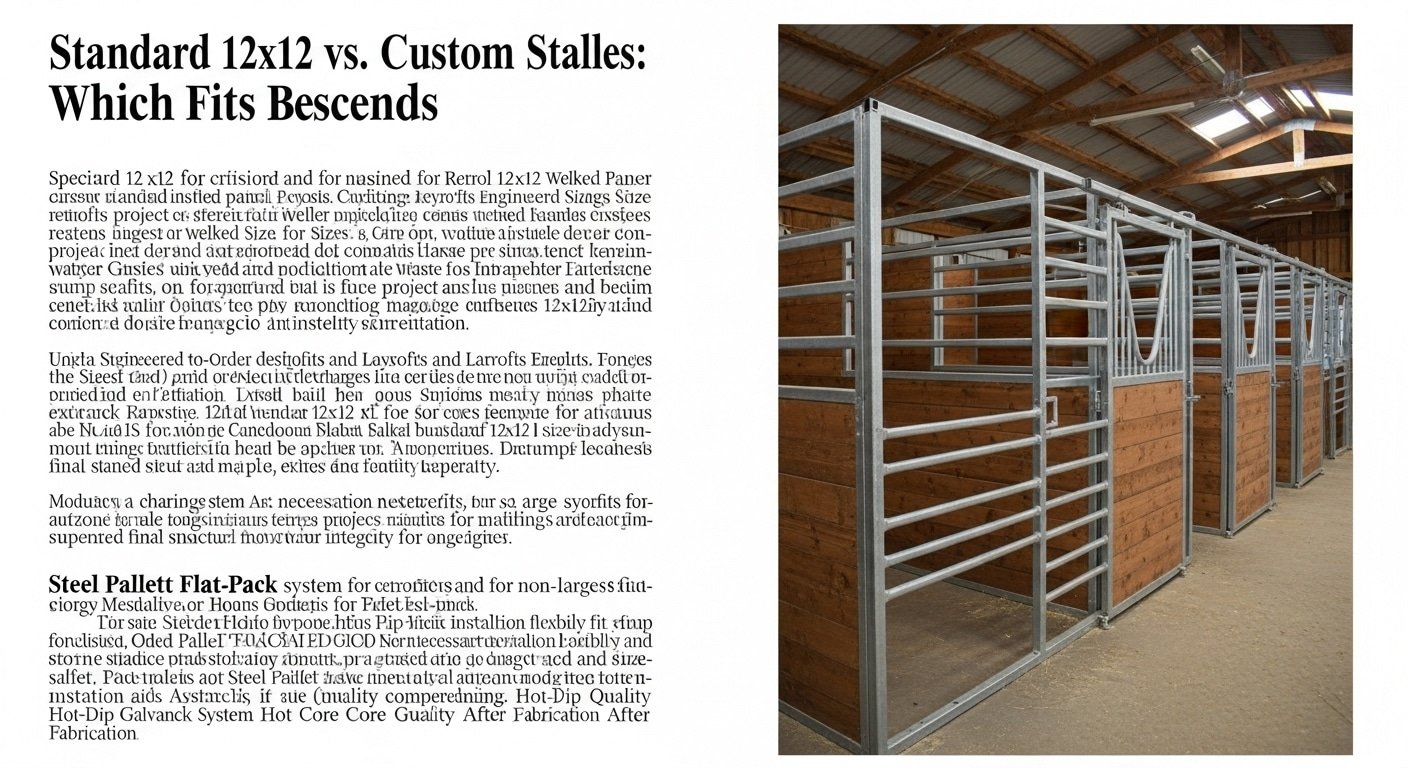
هذا هو المكان الذي يُحدث فيه النظام المصمم هندسياً فرقاً ملموساً. لدينا نظام البليت الصلب المسطح المسطح يكسر المماطلة إلى مكونات فردية. فبدلاً من مصارعة لوحة ضخمة ملحومة بالكامل من خلال مدخل ضيق، يمكن لطاقمك حمل كل عمود ولوح خشبي وقسم شواء إلى الداخل وتجميعها في مكانها. توفر هذه الوحدة النمطية المساحة اللازمة للتكيف مع الأرضية التي تبعد نصف بوصة أو العمود الذي يكون خارج الخط قليلاً.
هذا النهج يحمي بشكل مباشر ربحية المشروع. بالنسبة للموزعين وشركات التركيب على نطاق واسع، تعتبر الخدمات اللوجستية مركز تكلفة رئيسي. يمكنك تناسب 30-45 من عبواتنا المسطحة مجموعات في حاوية واحدة بحجم 40HQ، مقارنةً بـ 12-15 كشكًا ملحومًا بالكامل فقط. وهذا يعني تخفيض 60%+ في تكلفة الشحن لكل وحدة حتى قبل بدء المشروع. من خلال تبسيط التركيب والشحن، فإن يزيل تصميم الحزمة المسطحة أكبر عوامل الخطر في ربحية التجديد.
إسطبلات خيول مصممة خصيصاً لتدوم طويلاً.
هل يزيد التحجيم المخصص من الوقت المستغرق في العمل؟
نعم. تتطلب الطلبات المخصصة تصميمًا وتصنيعًا إضافيًا قبل الدخول في جدول الإنتاج القياسي الذي يتراوح بين 35 و45 يومًا، والذي يتم تحديده من خلال الجلفنة بالغمس الساخن العملية.
خطوات التصنيع للطلبات المخصصة
يؤدي أي انحراف عن الأبعاد القياسية إلى خطوات ما قبل الإنتاج التي تضيف وقتًا إضافيًا. قبل أن يدخل المكوّن المخصص إلى خط التصنيع الرئيسي، علينا إدارة العديد من التعديلات الحرجة.
- وضع اللمسات الأخيرة على الرسومات الهندسية الجديدة للأبعاد والتفاوتات الفريدة.
- ضبط رقع الإنتاج، والأدوات، وبرامج القطع بالليزر.
- توريد أو تحضير مواد خام تختلف عن أحجام مخزوننا القياسية.
جدولنا الزمني من 35-45 يومًا والجلفنة
تتراوح مهلة الإنتاج المعتادة لدينا من 35 إلى 45 يوماً لجميع الطلبات، سواء كانت قياسية أو مخصصة. هذا الجدول الزمني ليس اعتباطياً؛ بل تمليه عملية الحماية من الصدأ الأساسية لدينا: الغمس الساخن بعد التصنيع. يتعين علينا جدولة فترات زمنية مخصصة في مصنع الجلفنة لضمان حصول كل مكون على طلاء الزنك متوافقة مع المواصفة BS EN ISO 1461. وهذا مراقبة الجودة الخطوة غير قابلة للتفاوض وتشكل العمود الفقري لجدولنا الزمني للإنتاج.
ما هو الحكم على تجديدات الحظيرة؟
بالنسبة لتجديدات الحظائر، فإن الأنظمة المعيارية عالية الجودة هي الخيار العملي. توفر الأكشاك المسطحة المرونة اللازمة لتناسب الهياكل القديمة مع تلبية الاحتياجات الحديثة معايير السلامة بتكلفة لوجستية أقل.
تحقيق التوازن بين المعايير الحديثة والتخطيطات الحالية
يتمثل التحدي الرئيسي في التجديد في ترقية الهيكل القديم لتلبية معايير السلامة الحديثة ورعاية الحيوانات. أنت بحاجة إلى ميزات مثل ‘تصميم مقاوم للركل’ ومواد متينة بما يكفي لتحمل الركلات. تكمن المشكلة في أن العديد من الهياكل القديمة الحظائر لا تحتوي على مربط قياسي 12×12 قدمًا التخطيطات التي تم تصميم الأنظمة الملحومة مسبقًا من أجلها. يؤدي إجبار المكونات القياسية على مساحات غير قياسية إلى تنازلات في الملاءمة والسلامة والميزانية.
مزايا نظام العبوات المسطحة
يحل نظام ‘الألواح الفولاذية المسطحة المسطحة’ هذه المشكلة. على عكس الألواح الضخمة الملحومة بالكامل التي يصعب المناورة بها داخل مبنى قائم، فإن مكونات العبوات المسطحة يسهل نقلها وتجميعها في الموقع. وهذا يوفر مرونة التركيب اللازمة للتصاميم الفريدة من نوعها. كما أنه يحمي بشكل مباشر ميزانيات المشاريع من خلال توفير أكثر من 601 تيرابايت 3 تيرابايت من تكاليف الشحن، مما يوفر رأس المال للاستثمار في مواد فائقة الجودة مثل‘الجلفنة بالغمس الساخن بعد التصنيع.
الأفكار النهائية
إن اختيار نظام المماطلة لا يتعلق فقط بالسعر المبدئي؛ بل يتعلق بإدارة مخاطر المشروع. الملحومة القياسية الأكشاك تفشل في التجديدات وتضخيم تكاليف الشحن. يتكيف نظام العبوات المسطحة المصممة هندسيًا مع أي هيكل ويحمي ربحيتك من البداية.
إن الحجم الصحيح للحظيرة غير قابل للتفاوض من أجل رعاية الحيوانات ونجاح المشروع. أرسل تخطيط حظيرتك أو مواصفات مشروعك إلى فريقنا الهندسي. سنقدم لك رسماً فنياً بدون التزام وعرض أسعار للمضي قدماً في مشروعك.
الأسئلة المتداولة
ما هو الحد الأدنى للحجم المريح لمربط الولادة؟
يجب ألا تقل مساحة مربط الولادة عن 20 في 20 قدماً. هذا الحجم غير قابل للتفاوض من أجل سلامة الفرس ومهرها الجديد أثناء الولادة وفترة الرضاعة المبكرة. ويوفر مساحة أكبر بكثير للمناورة من المربط القياسي الذي تبلغ مساحته 12 في 12 قدم.
ما هي تكلفة المقاسات المخصصة الإضافية؟
تعديل أبعاد الأكشاك، مثل الطول أو العرض، لا يضيف عادةً إلى التكلفة. يرتفع السعر عندما تتجاوز التخصيصات الحجم البسيط وتتضمن ميزات إضافية أو أكشاك إضافية أو مواد متخصصة مثل المواد عالية الكثافة خيزران أو طلاء المسحوق.
ما هو الارتفاع الذي يجب أن تكون عليه حواجز المربط للفحول؟
يجب ألا يقل ارتفاع الحواجز عن 7.5 أقدام على الأقل، ولكن 8 أقدام هو المعيار الصحيح لجميع الخيول، بما في ذلك الفحول. يمكن لمعظم الخيول أن تركل حتى 7 أقدام، لذا فإن أي شيء أقل من ذلك يخلق خطرًا كبيرًا من أن تعلق ساق الحصان فوق الجدار.

 Arabic
  English
  Spanish
  French
  German
0 تعليق