The Swivel vs Floor Feeders choice is a critical decision impacting daily labor costs and herd health. Floor troughs, while simple, consistently lead to higher feed contamination and waste. This operational drag erodes profitability through increased staff hours for...
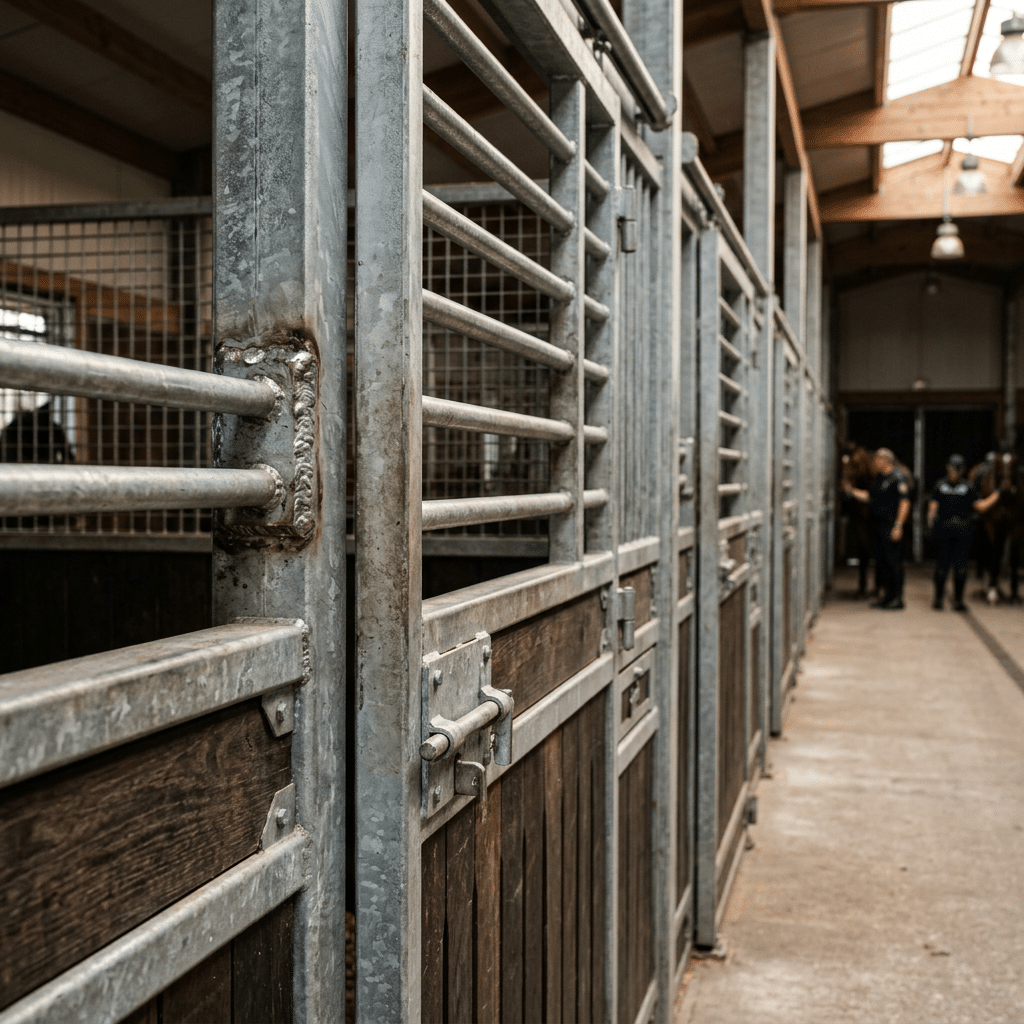
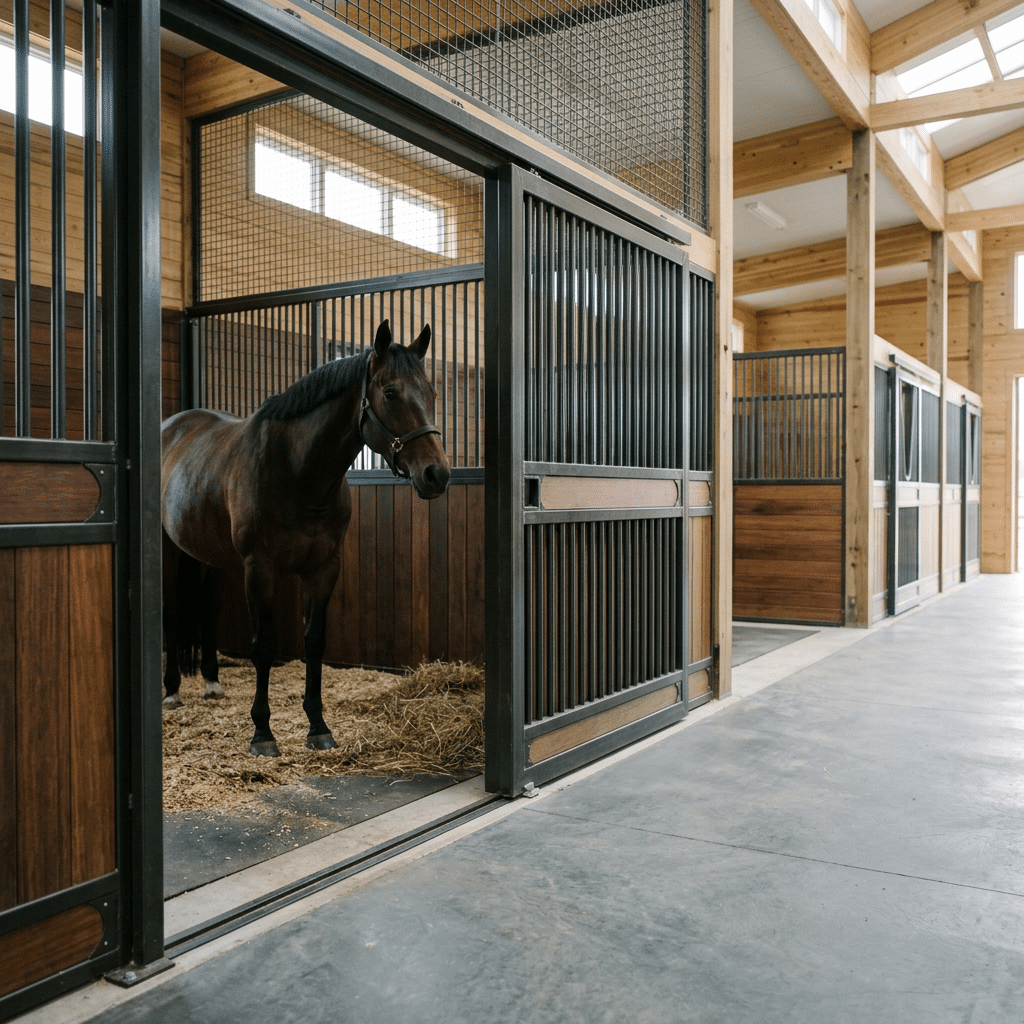
Choosing between Roller vs Track Doors for horse stables directly impacts operational costs and safety. Exposed rollers jam with bedding, demanding constant greasing and increasing labor overhead. A single door failure isn’t just an inconvenience; it’s a...
The welded vs bolted hinges decision directly impacts project costs and liability. Welded hinges offer zero post-installation adjustment. A settled post or minor frame misalignment creates a dragging door, forcing expensive on-site cutting and welding. This generates...
Integrating Indoor Arena Stables is a direct investment in equine respiratory health. A layout that fails to engineer for proper airflow and dust control leads to increased veterinary costs and operational liabilities, eroding the long-term profitability of the...
A successful Equine Clinic Layout directly addresses biosecurity and patient safety from the ground up. Specifying the wrong materials, like porous wood or standard painted steel, creates permanent pathogen reservoirs and risks structural failure from harsh...
Specifying a Hurricane/High-Wind resistant stable is a direct defense against total structural failure and catastrophic liability. Standard barns are not engineered for the uplift forces of a Category 4 storm; roof separation and wall collapse are predictable...



 Arabic
  English
  Spanish
  French
  German