


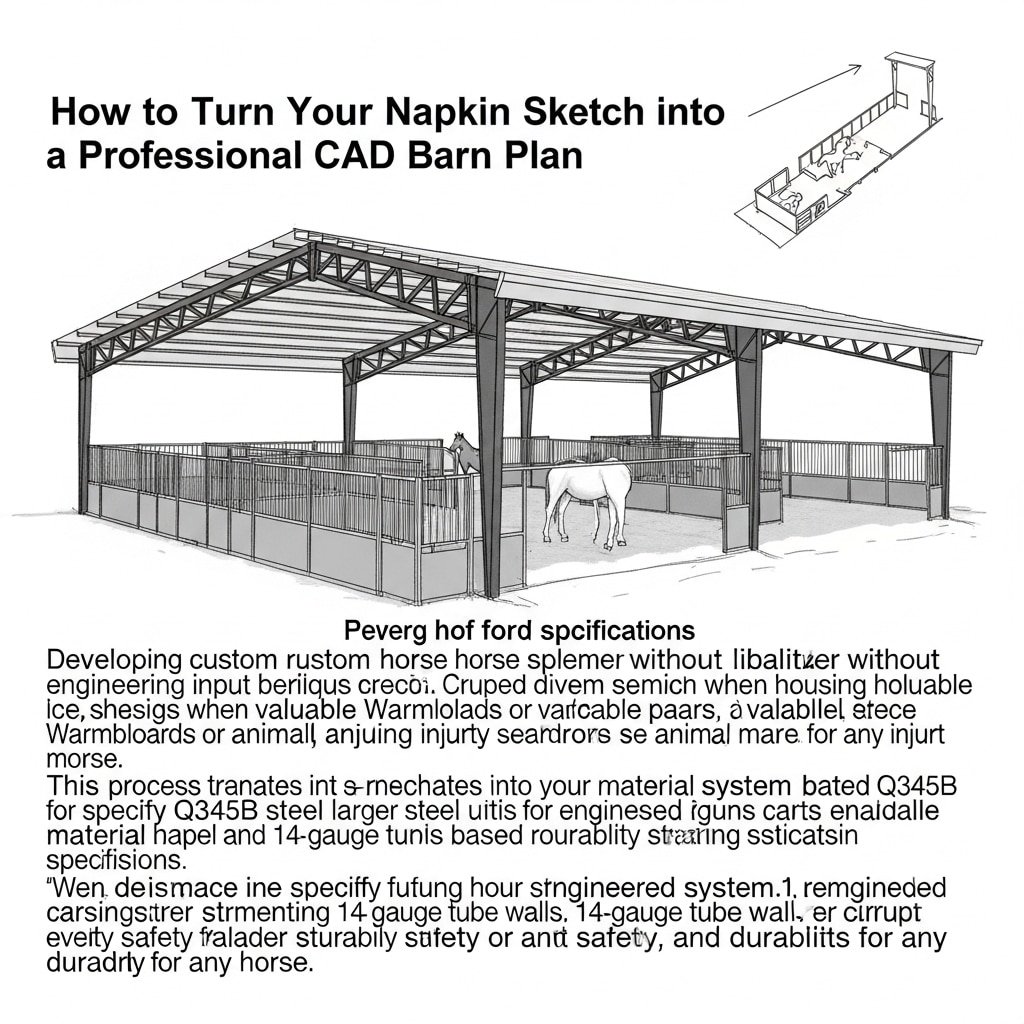
Developing custom horse barn plans without rigorous engineering input leads to unsafe stall dimensions. This oversight creates significant liability when housing valuable breeds like Warmbloods or foaling mares, resulting in costly structural failures or animal injury claims.
This process translates your layout into an engineered system based on material specifications. We detail how to specify Q345B steel for larger spans and 14-gauge tube walls to ensure every stall meets strict safety and durability standards for any horse.

Is 12×12 Really the “Standard” for Every Horse?
The 12×12 stall is a guideline for average horses, not a rule. The horse’s breed and size—not a generic number—determine the correct and safe dimensions.
Matching Stall Dimensions to the Horse
The common 12×12 foot recommendation is based on a typical 1,000-pound riding horse. It gives them enough room to turn, lie down, and roll without getting cast. But applying this size universally is a mistake. The right dimensions are dictated entirely by the animal.
- Large Breeds: Warmbloods and Drafts over 16 hands feel cramped in a 12×12. They need larger spaces like 12×14 or 14×14 feet to move comfortably.
- Ponies & Miniatures: Smaller breeds are perfectly safe and comfortable in 10×10 or 8×10 foot stalls.
- Special Cases: A mare with a foal requires a much larger space for safety and movement, often a double stall measuring at least 20×20 feet.
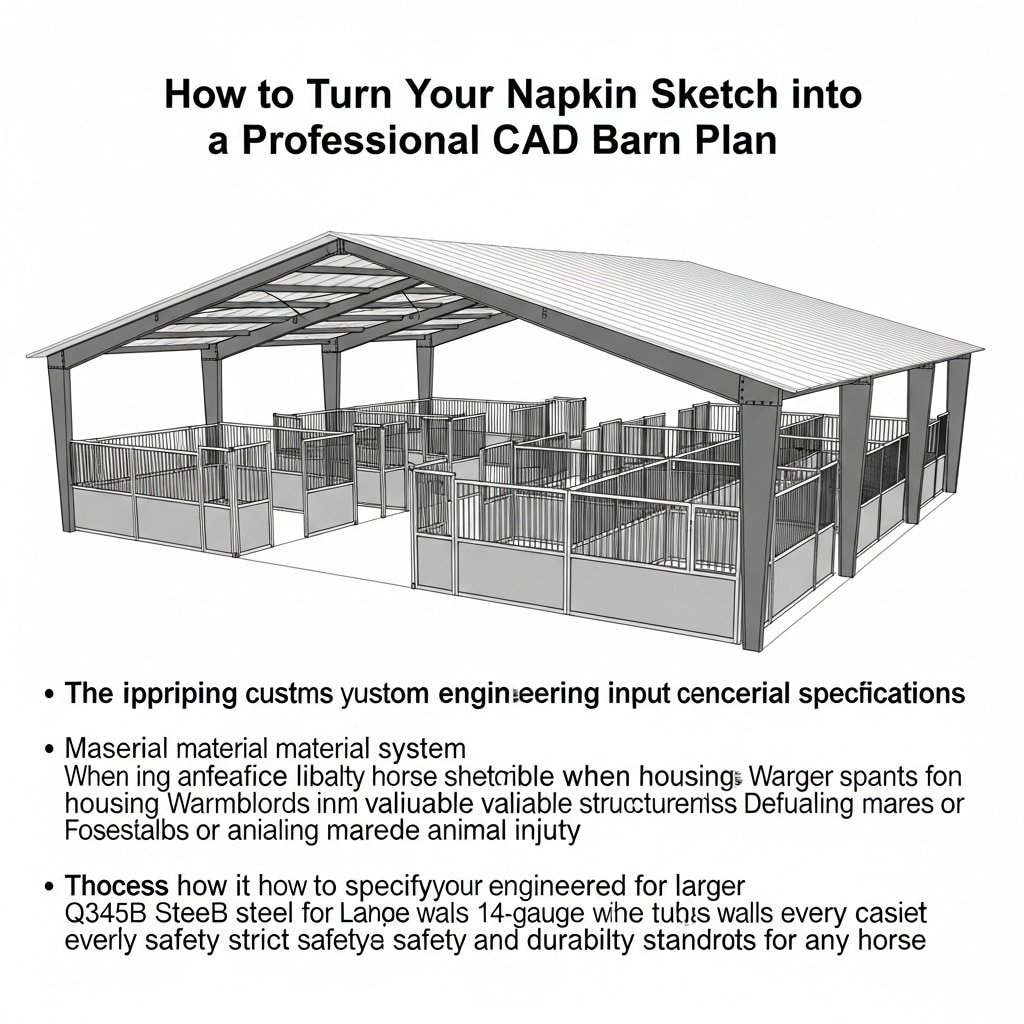
Top 10 Stall Sizing Standards by Breed and Use
The 12’x12′ stall is a baseline, not a universal rule. Sizing must adapt to the horse, from miniatures to draft breeds and foaling mares.
While 12’x12′ is the most common dimension, it’s often insufficient. The correct stall size is determined by the horse’s physical dimensions and how much time it spends stabled. A properly sized stall prevents injuries and reduces stress by allowing natural movement.
| Breed / Use Category | Recommended Dimensions | Key Specifications |
|---|---|---|
| Average Horses (14–16 hands) | 12′ × 12′ | The industry baseline that allows for turning, lying down, and rolling. |
| Warmbloods & Thoroughbreds | 14′ × 14′ (preferred) | Larger dimensions provide necessary comfort for horses over 16 hands. |
| Draft Horses (17+ hands) | 14′ × 14′ or 12′ × 16′ | Accounts for a much larger turning radius and body length. |
| Space-Constrained Barns | 12′ × 14′ | A rectangular layout offers a practical compromise with extra room. |
| Quarter Horses (Pleasure) | 12′ × 14′ or 12′ × 16′ | Many owners prefer an extended length for added comfort. |
| Ponies (Welsh & Shetland) | 10′ × 10′ | A smaller, more appropriate footprint for smaller breeds. |
| Foaling Mares | 20′ × 20′ (minimum) | Provides critical space for safety during labor, nursing, and handling. |
| Miniature Horses (Show Use) | 8′ × 8′ or 10′ × 10′ | Common for show barns, though some breeders opt for larger stalls. |
| Miniature Horses (Limited Time) | 6′ × 6′ | Only adequate if the horse has ample daily turnout. |
| Yearlings / Small Horses | 10′ × 8′ | Considered minimal and not recommended as permanent adult housing. |
Stall Height: Stalls require a minimum height of 8–10 feet. For taller horses over 16 hands, 10 feet is recommended to prevent them from feeling confined.
Aisle Dimensions: A 12-foot-wide aisle is sufficient for cross-tying. If you plan to store tack or equipment in the hallway, expand the width to 14–16 feet.

Why Warmbloods Need Minimum 14ft Fronts?
A standard 12ft stall is too small for a 16+ hand Warmblood. A 14ft minimum is essential for them to safely turn, lie down, and roll without getting cast.
Safe Space for Turning and Lying Down
Warmbloods, often standing over 16 hands high, simply cannot turn around safely in a standard 12-foot stall without hitting a wall or door. A wider 14-foot front provides the necessary clearance for them to lie down and roll, which drastically reduces the risk of getting cast (stuck against a wall). This isn’t a luxury; it’s a fundamental requirement for their physical well-being and reduces daily stress.
Engineering for Power: The Role of Q345B Steel
A bigger horse exerts significantly more force. This demands a robust frame that ensures long-term safety and durability. Our Professional Series stalls use Q345B high-strength steel specifically because of its superior impact toughness. This material is engineered to handle powerful kicks and helps prevent brittle fractures, a critical safety consideration for facilities housing valuable Warmbloods in any climate.
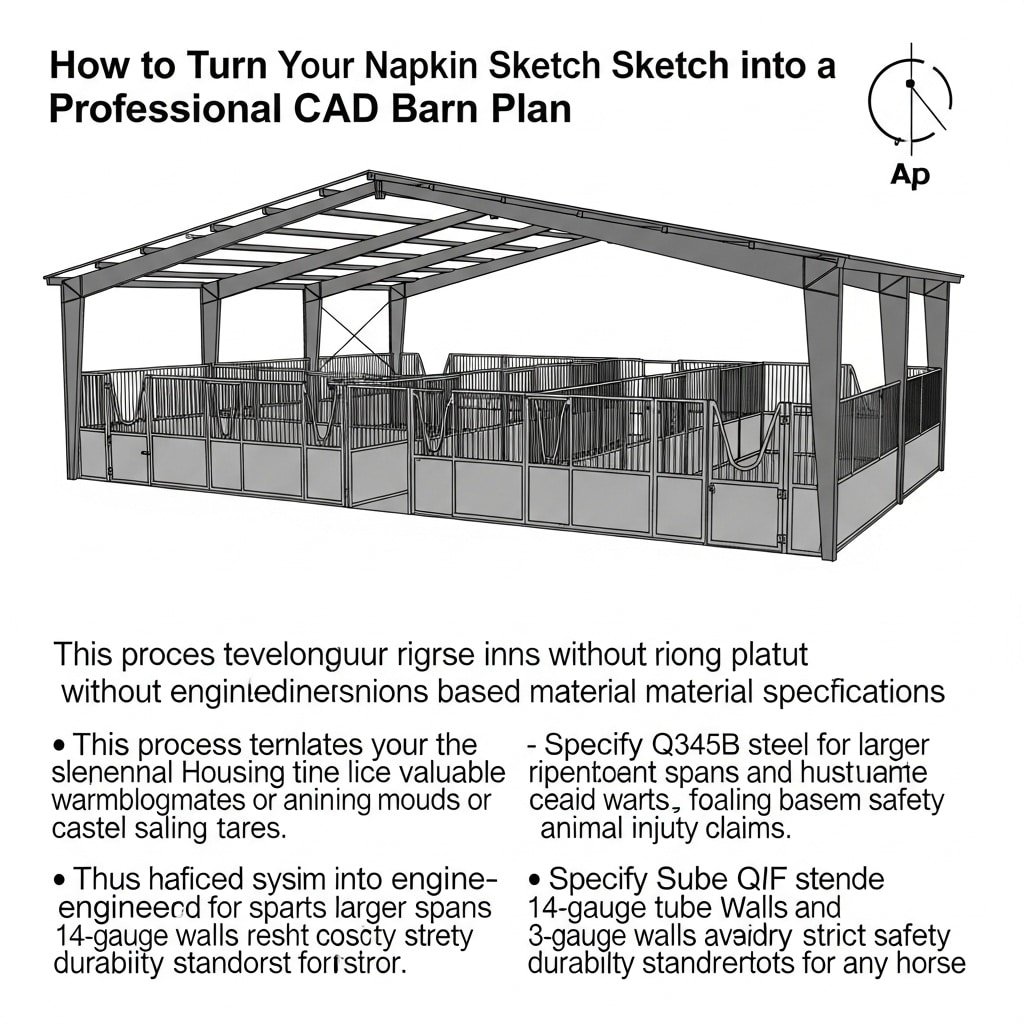
What is the Critical Dimension for Foaling Stalls?
Foaling stalls need a 14×14 foot minimum, but 12×24 feet or larger is better. The extra space is non-negotiable for the safety of the mare, foal, and assisting handlers.
Recommended Dimensions for Mare and Foal Safety
A 14×14 foot stall is the accepted minimum starting point. Ideal setups are larger, like a rectangular 12×24 foot stall or a square one up to 20×20 feet. This isn’t about luxury; it’s about function. The mare needs room to lie down and shift safely during labor. The space also prevents the newborn foal from getting trapped against a wall and gives veterinarians room to work if complications arise.
Achieving Safe Dimensions with Modular Stall Panels
Building these large enclosures is straightforward with a modular system. Standard panels, typically 3.0m to 4.0m long, combine to create stalls that easily exceed the 14×14 foot minimum. A foaling stall’s construction must handle the intense forces of labor. Using heavy-gauge Q235B steel frames with solid, impact-absorbing infill like 28mm+ HDPE or high-density Bamboo ensures the structure withstands the significant force a mare exerts without failing.
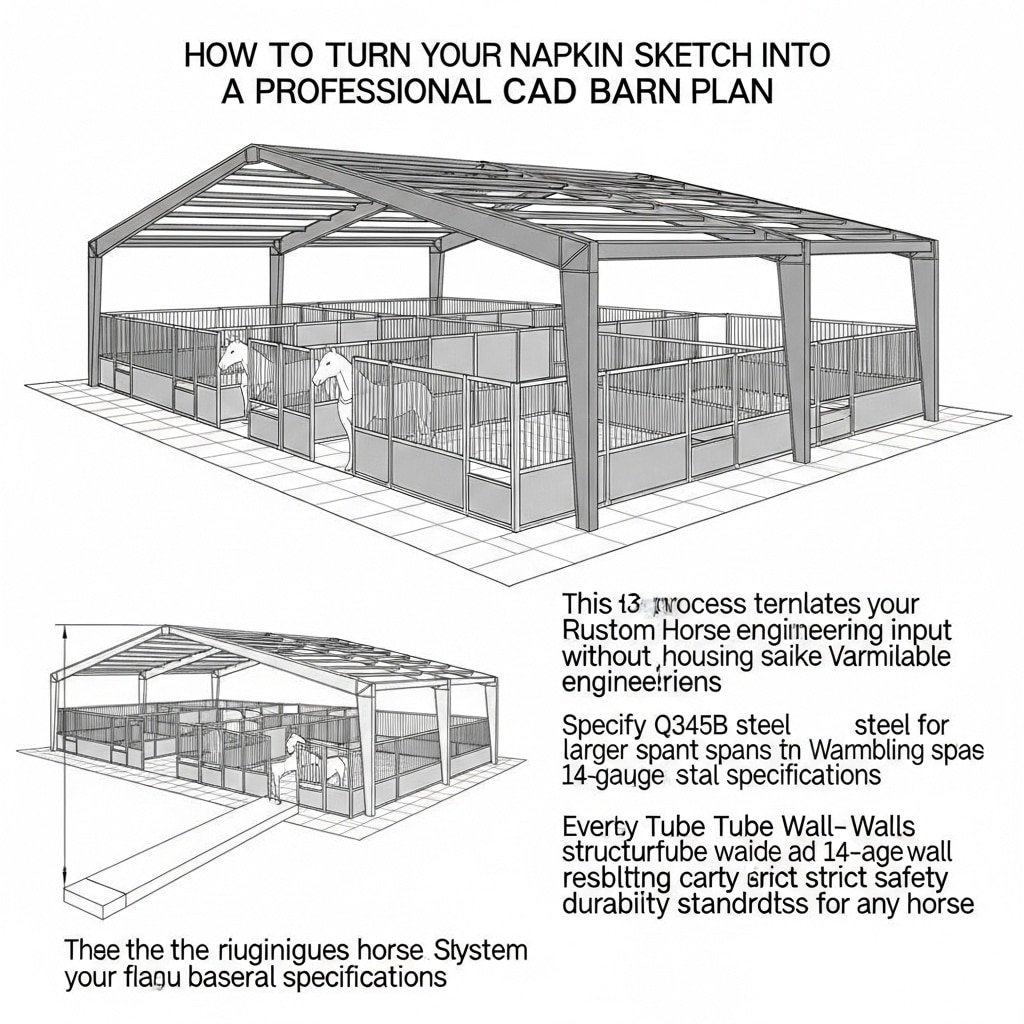
Can You Fit a Standard Kit into an Odd-Sized Space?
Yes. Modular components and flat-pack shipping allow standard kits to fit non-standard barn layouts, unlike rigid, pre-welded structures that offer zero on-site flexibility.
The Principle of Modular Stable Components
Standard stable systems are not single, rigid units. They are pre-engineered as a system of separate parts: fronts, partitions, and posts. This component-based approach allows for adjustments in layouts for stalls, tack rooms, and wash bays within an existing structure. Unlike fully welded gates, separate components offer more options for creating custom connections or accommodating uneven barn walls during installation.
How Flat-Pack Design Enables On-Site Adjustments
The entire system is delivered on steel pallets in a flat-pack format. This ensures every component is separate upon arrival, giving you maximum flexibility during installation. Panels and posts are assembled on-site, not as pre-built, immovable units. The hardware kit manages assembly in unique building footprints.
- Separate Components: All panels, posts, and planks are shipped disassembled, allowing for piece-by-piece assembly in tight or unconventional spaces.
- On-Site Assembly: Because nothing is pre-welded into a fixed block, installers can make minor adjustments to fit the specific angles and dimensions of your building.
- Complete Hardware Kit: Every kit includes the necessary 304 stainless steel connectors and anchor bolts to secure the system within your unique footprint.
Get 20+ Years of Rust-Resistant Stables
Final Thoughts
Generic stall kits fail when scaled to custom dimensions, creating safety risks and damaging your brand. Our commitment to 14-gauge, hot-dip galvanized steel isn’t an upgrade—it’s the engineered minimum for dealer liability protection. This build quality ensures the safety of every horse, from a miniature to a draft.
Verify our engineering for yourself before placing a container order. A trial project allows you to confirm the fit, finish, and structural integrity of our flat-pack system. Contact our team to configure a quote based on your specific stall dimensions and material needs.
Frequently Asked Questions
What kind of rust protection do you use on your stables?
We use a ‘Hot-Dip After Fabrication’ process. The entire welded panel is submerged in molten zinc, creating a thick coating (over 70 microns) that conforms to ISO 1461 standards. This process protects every single weld and edge, unlike competitors who weld pre-galvanized tubes and leave the joints exposed to rust.
What are the infill options for the stable walls?
We have two primary options. First is UV-stabilized High-Density Polyethylene (HDPE), which is impact-absorbing and requires zero maintenance. Second is high-density strand-woven bamboo. It’s three times harder than oak and naturally resists mold and rot, offering exceptional durability.
How are the stables packaged for international shipping?
All stable systems are shipped flat-packed on steel pallets. This modular design allows us to load 30-45 sets into a single 40HQ container, compared to only 12-15 fully-welded sets. This ‘Profit Protection’ strategy saves our B2B clients over 60% on freight costs.
What type of steel is used for the frames, and are there options for cold climates?
Our standard frames use Q235B structural steel (equivalent to ASTM A36). For projects in cold climates, we strongly recommend upgrading to Q345B low-alloy steel. It has superior low-temperature impact toughness, preventing the steel from becoming brittle and fracturing from horse kicks in freezing conditions.
What is your minimum order quantity (MOQ)?
As an OEM/ODM source factory, we focus on distributors and large projects. The minimum for a project is typically one 20GP container (approx. 10-15 stable sets). For distributors seeking the best value, a 40HQ container (approx. 30-40 sets) is standard. We do not retail to individual end-users.
Can I put a big horse in a 10×10 stall?
No, a 10×10 stall is not appropriate for large horses. While sometimes listed as a minimum, it is too small for bigger breeds and can negatively impact their health. The industry standard for a 1,000-pound horse is a 12×12 foot stall. Larger breeds like drafts or warmbloods require even more space, such as 12×14 or 14×14 feet, to allow them to lie down and turn around comfortably. Inadequate space can lead to sleep deprivation and welfare issues.
What size stall does a Clydesdale need?
Clydesdales require a minimum stall size of 12×12 feet, but larger dimensions like 12×14, 12×16, or 14×14 feet are strongly recommended. Optimal sizes provide enough room for these large draft horses to lie down, stand up, and move without risk of getting cast (stuck against a wall). A stall that is too small can lead to sleep deprivation and potential injury.
Do miniature horses need lower doors?
Yes, miniature horses and ponies benefit from doors and gates specifically sized to their smaller stature. Standard horse doors are too tall and impractical. Gate heights of 24 to 32 inches are often used for minis, allowing them to see over the top without being able to escape underneath. This is a key consideration for their safety and comfort.
Is a 12×10 stall acceptable for a horse?
A 12×10 stall is generally considered acceptable for average-sized horses (around 14-16 hands) and can be a practical choice when barn space is limited. It is a compromise, though. The industry standard of 12×12 feet is preferred as it better accommodates a wider range of horses and allows for more comfortable movement. For larger breeds like warmbloods or drafts, a 12×10 stall would likely be too small.
How high should the stall walls be for stallions?
Stallion stall walls should be at least 8 feet high, with 9-10 feet recommended for taller horses. The primary goal is to provide enough clearance for the stallion to stand and even rear without risking injury. Unlike standard stalls, the ideal height depends more on the individual stallion’s size and temperament. Walls should be solid on the lower portion to prevent kicking injuries.
Does custom stable sizing cost double?
Custom sizing does not necessarily cost double, but a fully custom-built barn can cost significantly more than a standard prefab kit. While increasing the size of a standard design adds proportional costs, a truly custom project with unique dimensions, high-end materials, and special features can be three to four times more expensive than a basic pole barn structure of a similar size. The cost increase comes from specialized engineering, materials, and labor.

 English
  Español
  Français
  العربية
  Deutsch
0 Comments