


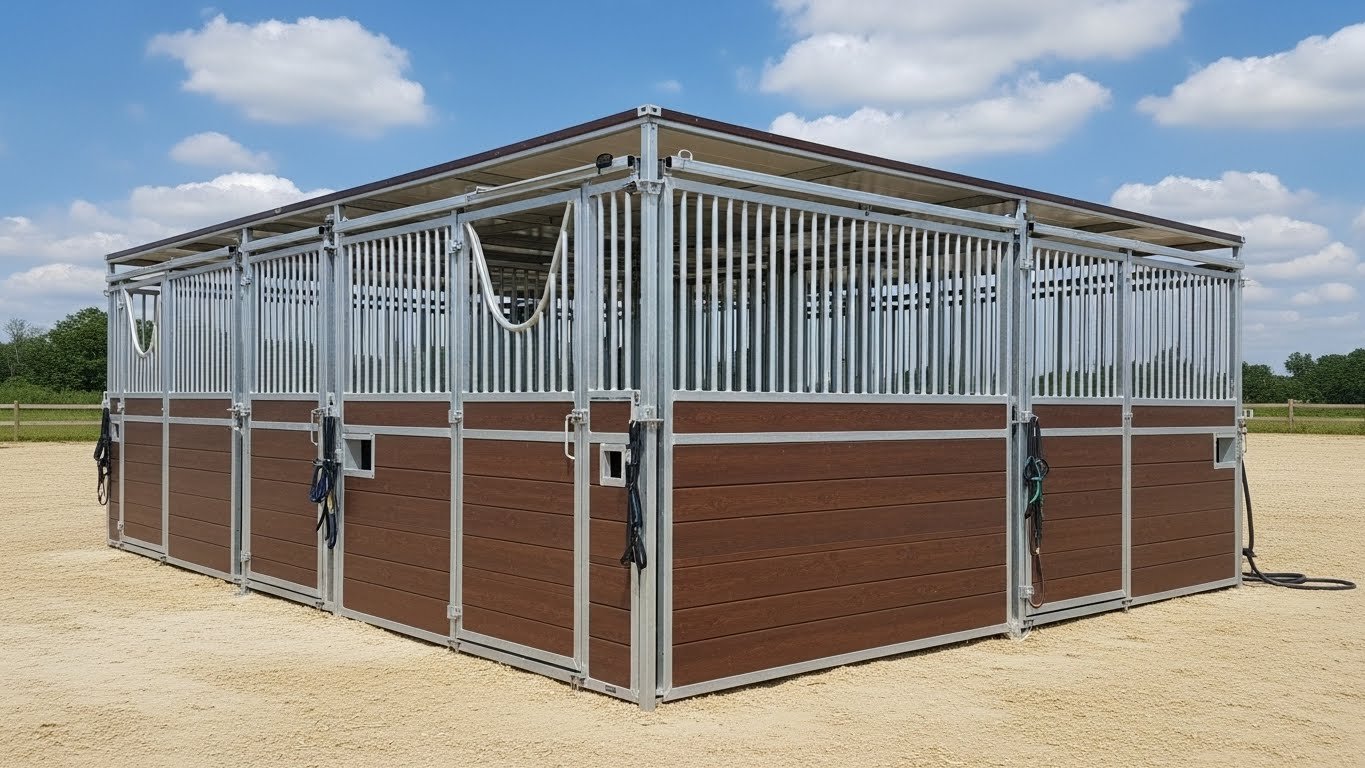
Maintaining horse stalls for a 20-year lifespan is determined by the initial fabrication standard, not the cleaning routine. Most rental fleets fail prematurely due to rust at the welds—a direct result of suppliers using cheap, pre-galvanized tubing. This single manufacturing shortcut creates guaranteed failure points, inflating replacement costs and introducing serious safety liabilities.
This guide provides the technical specifications for true longevity. We benchmark systems against the non-negotiable ISO 1461 standard for Hot-Dip Galvanization After Fabrication and a minimum 14-gauge steel framework. These engineering details are the only way to control long-term operational costs and ensure animal safety across a fleet.

Why Should You Avoid Cheap Portable Panels?
Cheap panels use poor rust protection like pre-galvanizing, where welds burn off the coating. This leads to rapid corrosion, structural failure, and safety hazards for horses.
The Hidden Dangers of Poor Rust Protection
Many low-cost panels are built from pre-galvanized tubes. The manufacturing process involves welding these already-coated tubes together, which burns off the protective zinc at every joint. These exposed welds become immediate failure points, inviting rust from the moment they are exposed to air and moisture.
Thin coatings, often under 42 microns, wear away quickly in agricultural environments. As rust takes hold, it compromises the steel’s integrity, creating sharp, jagged edges and structural weak points that can easily injure a horse.
Ensuring Longevity with Hot-Dip Galvanization After Fabrication
The correct manufacturing method is to weld the entire panel from raw, uncoated steel first. Then, the fully assembled panel is submerged in a bath of molten zinc. This process, known as hot-dip galvanization after fabrication, completely seals every surface, corner, and weld joint.
- Certified Standard: The process must conform to BS EN ISO 1461 to be legitimate.
- Coating Thickness: It achieves a thick, robust zinc coating of over 70 microns, far exceeding the protection on pre-galvanized material.
A proper galvanized coating protects against corrosion for decades. This prevents the safety hazards and high replacement costs that always come with inferior panels.
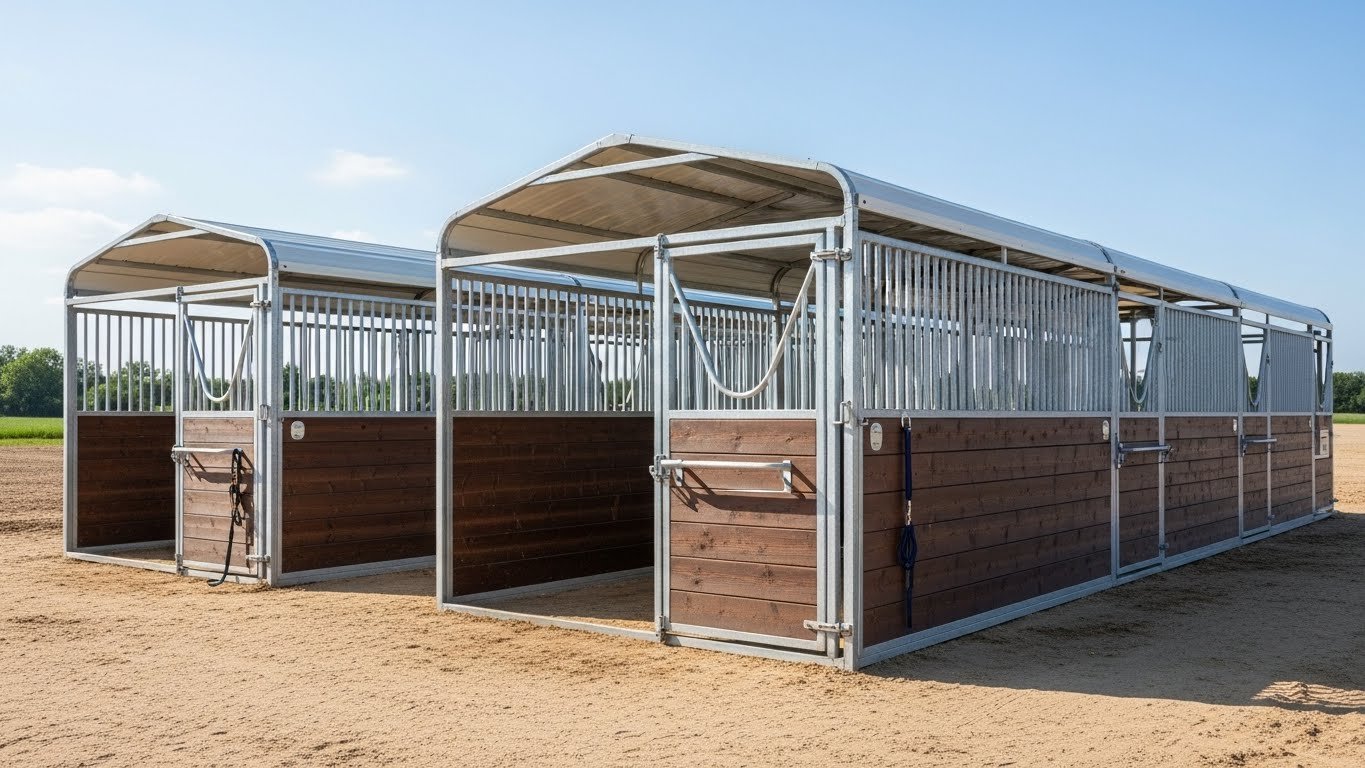
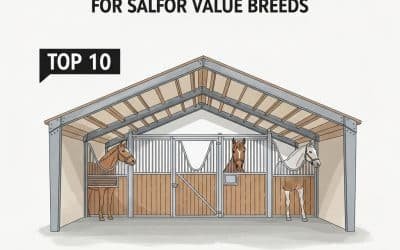
Top 10 Features for Evaluating Portable Horse Stalls
Evaluate stalls on fabrication quality, not just features. Post-weld galvanizing, verifiable steel gauge, and freight efficiency define a professional system that lasts.
When sourcing portable horse stalls for large projects or distribution, the spec sheet tells the real story. Below are the essential engineering and logistical features that separate durable, safe systems from low-cost alternatives that create liability and warranty issues.
| Feature | Key Specification | Why It Matters (B2B Context) |
|---|---|---|
| 1. Rust Protection | Hot-Dip Galvanized *After* Fabrication (ISO 1461) | Prevents rust at welds, ensuring product longevity and reducing warranty claims. |
| 2. Steel Framework | 14-Gauge (2.0mm+) Q235B or Q345B Steel | Guarantees structural integrity against kicks; avoids liability from thin-walled steel. |
| 3. Infill Material | UV-Stabilized HDPE or High-Density Bamboo | Offers zero-maintenance (HDPE) or extreme impact resistance (Bamboo). |
| 4. Horse Safety Design | “Cast-Proof” Gaps (~50mm), No Sharp Edges | Minimizes common injuries, a critical selling point for high-welfare facilities. |
| 5. Ventilation | Open Grill Design (“Stack Effect Ventilation”) | Promotes airflow, which is crucial for respiratory health and meeting EU standards. |
| 6. Assembly & Logistics | Flat-Pack System (Steel Pallets) | Drastically cuts shipping costs (30-45 sets/40HQ), protecting profit margins. |
| 7. Hardware & Connectors | 304 Stainless Steel Bolts & Connectors | Resists corrosion, ensuring secure connections and reliable on-site assembly. |
| 8. Door Mechanism | Smooth Track Systems, Secure Latches | Provides reliable operation without sharp edges or snag points. |
| 9. Weather Resistance | >70µm Zinc Coating, UV-Stabilized Infill | Meets requirements for harsh climates (AU salt spray, EU frost). |
| 10. Modularity | Standardized Panels & Connector Types | Allows for flexible layouts and easy expansion for large-scale equestrian projects. |
1. The Critical Difference: Hot-Dip Galvanization *After* Fabrication
Many manufacturers weld pre-galvanized tubes to cut costs. This process burns off the zinc coating at every joint, creating immediate rust points. The only way to ensure complete protection is to demand that the entire panel is hot-dip galvanized *after* all welding and fabrication are complete. This method, conforming to ISO 1461, encapsulates every edge and weld in a thick zinc layer (>70 microns), preventing structural failure.
2. Steel Gauge and Type: The Foundation of Safety
The wall thickness of the steel frame is a non-negotiable safety feature. We strictly use 14-gauge (2.0mm) Q235B structural steel as a minimum, which prevents bending or breaking from horse kicks. For cold climates where steel can become brittle, Q345B high-strength steel provides superior low-temperature impact toughness. Asking for the specific steel grade and gauge separates professional suppliers from those using thin, unsafe materials.
3. Logistics Matter: The Power of Flat-Pack Design
Shipping costs can destroy profit margins. Fully welded stalls are bulky, limiting a 40HQ container to just 12-15 sets. A modular, flat-pack system shipped on steel pallets allows for loading 30-45 sets in the same container. This logistical efficiency is a form of profit protection for distributors and project managers, cutting freight costs by over 60%.

Does “Pre-Galvanized” Mean Rust-Proof? (Spoiler: No)
Pre-galvanized steel is only rust-resistant, not rust-proof. Cutting and welding during fabrication removes the zinc coating, leaving edges and joints exposed to immediate corrosion.
The Failure Point: Welds and Cut Edges
Pre-galvanized material is coated with zinc at the steel mill, long before it becomes a horse stall. When a fabricator cuts, drills, or welds this material, the protective zinc coating is simply burned off at the joints. These exposed steel areas are the starting points for rust, which then creeps under the remaining coating and compromises the entire panel’s integrity.
The B2B Standard: Hot-Dip Galvanization After Fabrication
The only acceptable method for long-term structural products is “Hot-Dip Galvanization After Fabrication.” We weld the entire stall panel from raw black steel first, and only then is the completed structure submerged in molten zinc. This process creates a thick, comprehensive coating that covers every surface, weld, and edge without exception.
- Governing Standard: Conforms to BS EN ISO 1461.
- Coating Thickness: Averages over 85 microns, providing decades of true rust-proof performance.
This ensures true rust-proof performance, not just temporary resistance. Any supplier using pre-galvanized tubing is cutting corners at the direct expense of the product’s lifespan.
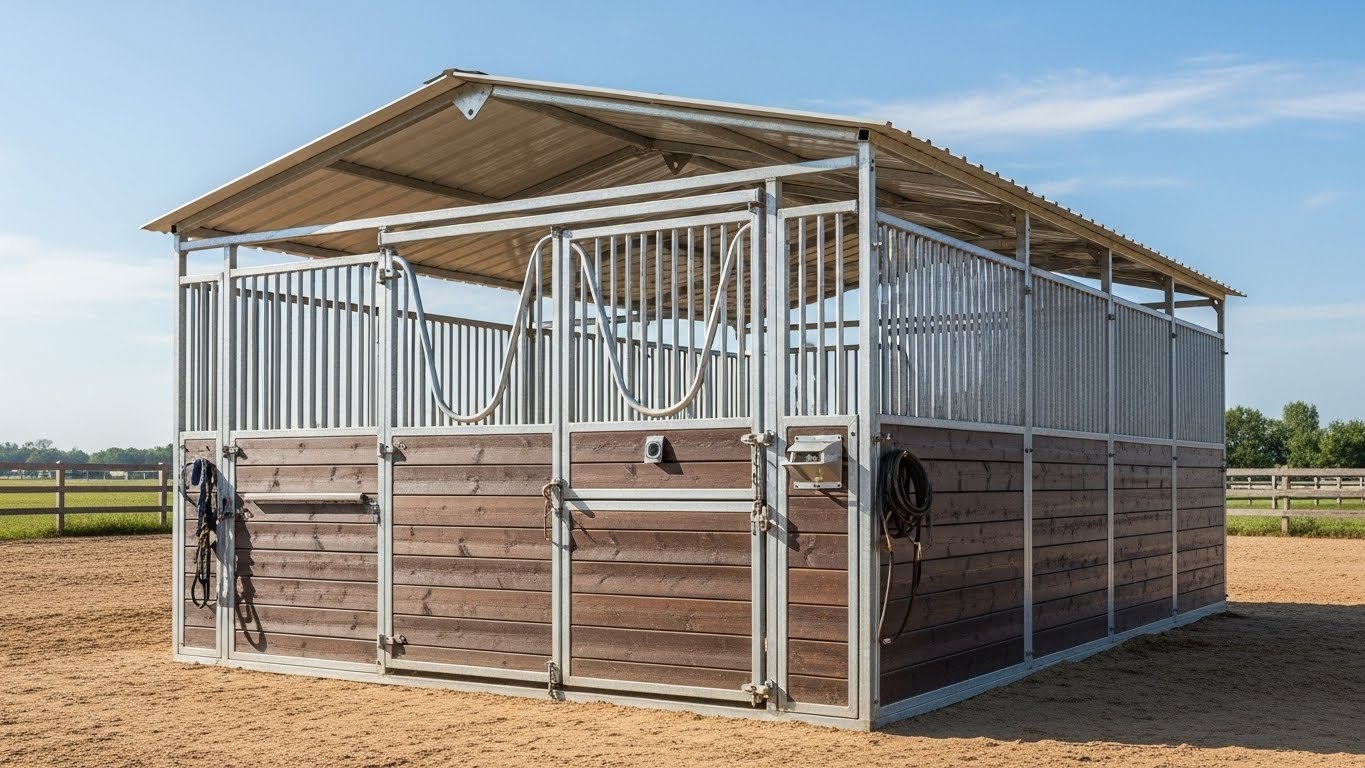
Why Should You Demand HDPE over Plywood?
HDPE is a zero-maintenance infill that won’t rot, swell, or warp. It’s waterproof, easy to clean, and absorbs kicks, making it safer and more cost-effective than plywood.
The Inherent Flaws of Plywood in Stable Environments
Plywood is fundamentally unsuited for stable environments. Its wood core acts like a sponge, absorbing moisture from urine and cleaning fluids. This leads directly to swelling, warping, and eventually, rot. To delay this process, you have to constantly seal or paint it, which adds to labor and material costs. The porous surface also traps bacteria and mold, making sanitation difficult and compromising hygiene.
HDPE: The Zero-Maintenance, Impact-Absorbing Solution
HDPE eliminates every one of plywood’s failures. It is completely non-porous, so it will never rot, splinter, or require a coat of paint. Our stable systems use specific materials designed for this environment.
- Material Grade: 28mm-32mm thick, UV-stabilized High-Density Polyethylene.
- Lifespan: A true ‘Zero Maintenance’ service life. It is impermeable to water and waste.
- Safety: Engineered to absorb impact, earning it our ‘Kick-Proof Guarantee’ and making it a safer barrier for the horse.

How Important is the Connector Design?
Connector design dictates the structural integrity of modular stalls. Quality, corrosion-resistant hardware is vital for horse safety, ensuring long-term stability and allowing for flexible yet secure layouts.
The Foundation of Structural Safety and Flexibility
The connectors are what hold a free-standing stall system together. In any non-permanent setup, they supply the core structural integrity. A robust design stops panels from shifting or misaligning when a horse leans or kicks, which is a common point of failure in cheaper systems. Good connectivity also gives barn owners the freedom to change stall layouts without needing to perform major structural work on the barn itself.
Why 304 Stainless Steel Hardware Matters
The material used for fasteners is just as important as the design. Our hardware kits—including all anchor bolts, connectors, and screws—are made from 304 Stainless Steel. This isn’t a minor detail. 304 Stainless offers superior corrosion resistance, preventing the rust that weakens connections over time. For our clients using flat-pack systems, this guarantees fasteners stay strong and reliable through repeated assembly and disassembly.
Durable, Compliant Stables for Any Climate

Final Thoughts
Pre-galvanized stalls save money upfront but create liability when their welds rust. Our standard—hot-dip galvanization after fabrication to ISO 1461—is the only way to safeguard your fleet against structural failure and warranty claims. This engineering choice separates a disposable product from a 20-year asset.
Don’t take our word on durability—verify it yourself. A small trial order is the best way to test our engineering and finish against your operational demands. Contact our team to get the specs and pricing for your first container.
Frequently Asked Questions
What is the minimum order quantity (MOQ) for 2026 projects?
We accommodate various project sizes. You can start with a trial order of 3-5 stables. A standard project order is one 20GP container, holding about 10-15 sets. Our distributor partners need to order a full 40HQ container (30-45 sets) to get wholesale pricing.
How do you package the stables for international shipping?
We flat-pack all components onto steel pallets. This method ensures safe, organized unloading at your port. Our flat-pack system is a key advantage for distributors, as it allows loading 30-45 sets into a single 40HQ container. This drastically reduces the per-unit shipping cost.
What kind of steel do you use for the frames?
Our standard frames use Q235B structural steel. For regions with harsh winters, like parts of Europe or North America, we recommend upgrading to Q345B steel. It has superior low-temperature impact toughness, ensuring the frame resists brittle fractures from horse kicks in the cold.
Which infill material is better, Bamboo or HDPE?
Both are top-tier choices. HDPE offers a zero-maintenance, impact-absorbing solution that’s completely waterproof. High-density strand woven bamboo is exceptionally durable—three times harder than oak—and provides a classic, premium appearance. The right choice depends on your facility’s look and operational priorities.
What is included in a complete stable kit?
Each kit includes one stable front panel with a door, one side partition panel, all required infill planks (HDPE or Bamboo), and a complete hardware pack. The hardware pack contains all necessary 304 stainless steel connectors and bolts. We also add a can of cold galvanizing spray for any touch-ups needed after installation.
What is the difference between 14-gauge and 16-gauge steel?
For horse stalls, the gauge number refers to the steel tubing’s wall thickness. 14-gauge steel has a wall thickness of about 2.0mm, while 16-gauge is significantly thinner at around 1.5mm. This difference is critical for safety and durability.
We exclusively use 14-gauge (2.0mm – 2.5mm) Q235B structural steel. Thinner 16-gauge tubing can dent or fail under a direct kick from a horse, creating a serious safety hazard. Our thicker steel standard ensures structural integrity and provides a kick-proof guarantee that is essential for animal containment.
Why is plywood bad for portable stalls?
Plywood fails in stall environments because it absorbs moisture from urine and humidity, leading to rot, mold, and warping. Over time, the surface can splinter, creating a risk of injury for the horses. It requires constant sealing and maintenance to delay this inevitable decay.
This is why we use non-porous infill materials. High-Density Polyethylene (HDPE) is a zero-maintenance option that is completely waterproof and impact-absorbing. High-density bamboo is three times harder than oak and naturally resists mold and rot, offering a durable and sanitary alternative to wood.
How can I check if it’s hot-dip galvanized?
Visually, a hot-dip galvanized finish is typically a dull, matte gray and may have a crystalline or “spangle” pattern on the surface. But looks can be deceiving. The critical distinction is the process: was it galvanized *before* or *after* welding?
Cheap products use pre-galvanized tubes that are then welded together, burning off the protective zinc at the joints and leaving them vulnerable to rust. We use a “Hot-Dip After Fabrication” process. The entire stall panel is welded from raw steel first, then fully submerged in molten zinc. This process, certified to ISO 1461, encapsulates every weld and edge for complete rust protection.
Do you sell replacement parts?
Yes, we support our B2B partners and large-scale projects with complete replacement components for our stable systems. As an OEM/ODM manufacturer, we don’t operate like a retail parts store. Instead, we ensure our distributors have access to all necessary components—from side panels to complete hardware kits with 304 stainless steel fasteners—to maintain the integrity and safety of the installations they manage.
What is the warranty on portable horse stalls?
Warranties in the market vary widely, but a paper guarantee is only as good as the product it covers. We focus on the engineering that makes a warranty unnecessary. Our “Lifetime Standard” for rust protection isn’t just a slogan; it’s the result of a strict manufacturing process.
This includes using thick 14-gauge Q235B structural steel, performing hot-dip galvanization *after* fabrication to the ISO 1461 standard, and achieving a zinc coating over 85 microns thick. This level of quality is the real guarantee of a stall’s longevity.
Are the edges sharp?
No. Sharp edges are an unacceptable safety failure. Our “Hot-Dip After Fabrication” process is key to ensuring a smooth, safe finish. After welding the entire panel, we submerge it in molten zinc. This process not only provides rust protection but also coats and smooths over any burrs or sharp points at weld joints and cut ends. It’s a fundamental part of our commitment to “Engineering Safety.”


 English
  Español
  Français
  العربية
  Deutsch
0 Comments