


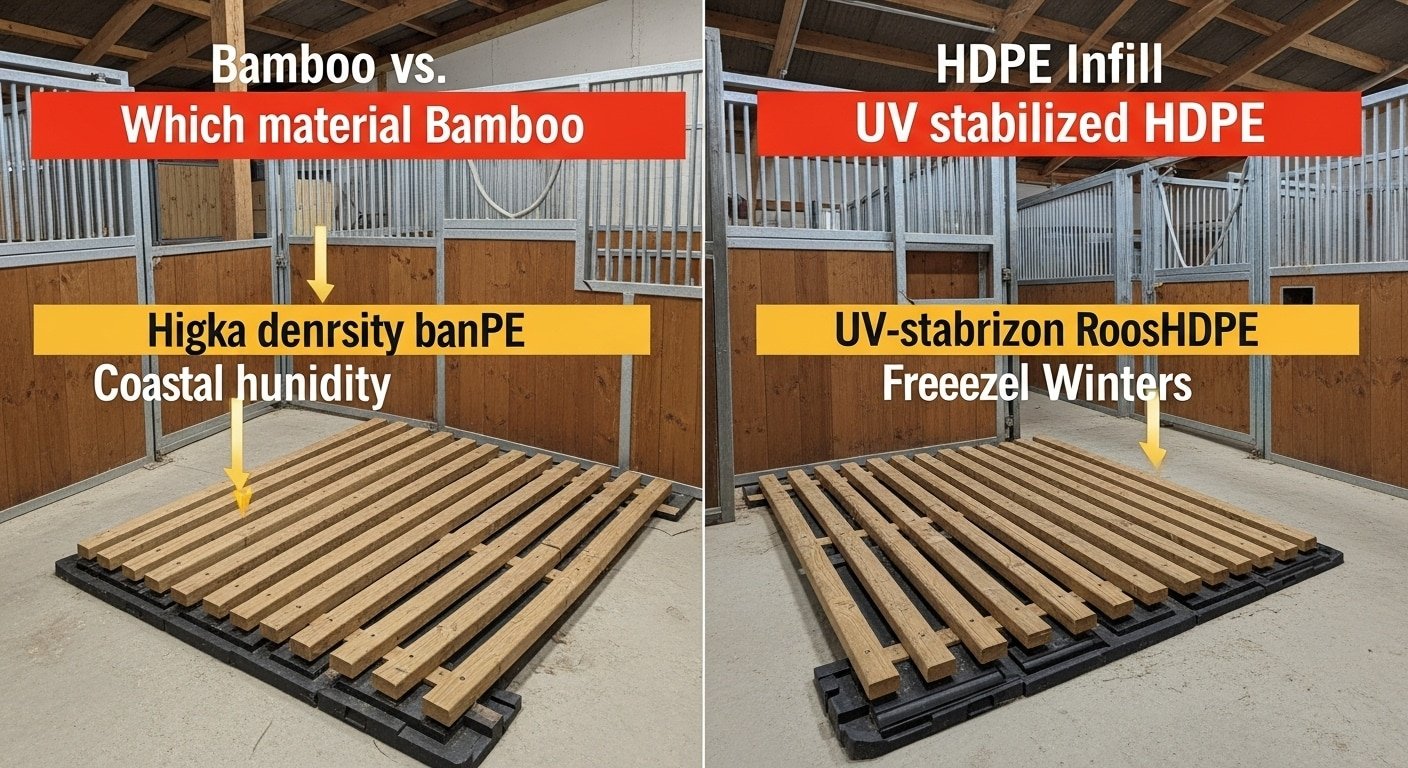
Choosing the right horse stall panels is a decision that directly impacts operational costs and safety. Specifying an infill material unsuited to your climate can lead to premature failure—from UV degradation in hot regions to rot in damp ones—creating replacement expenses and potential liability issues.
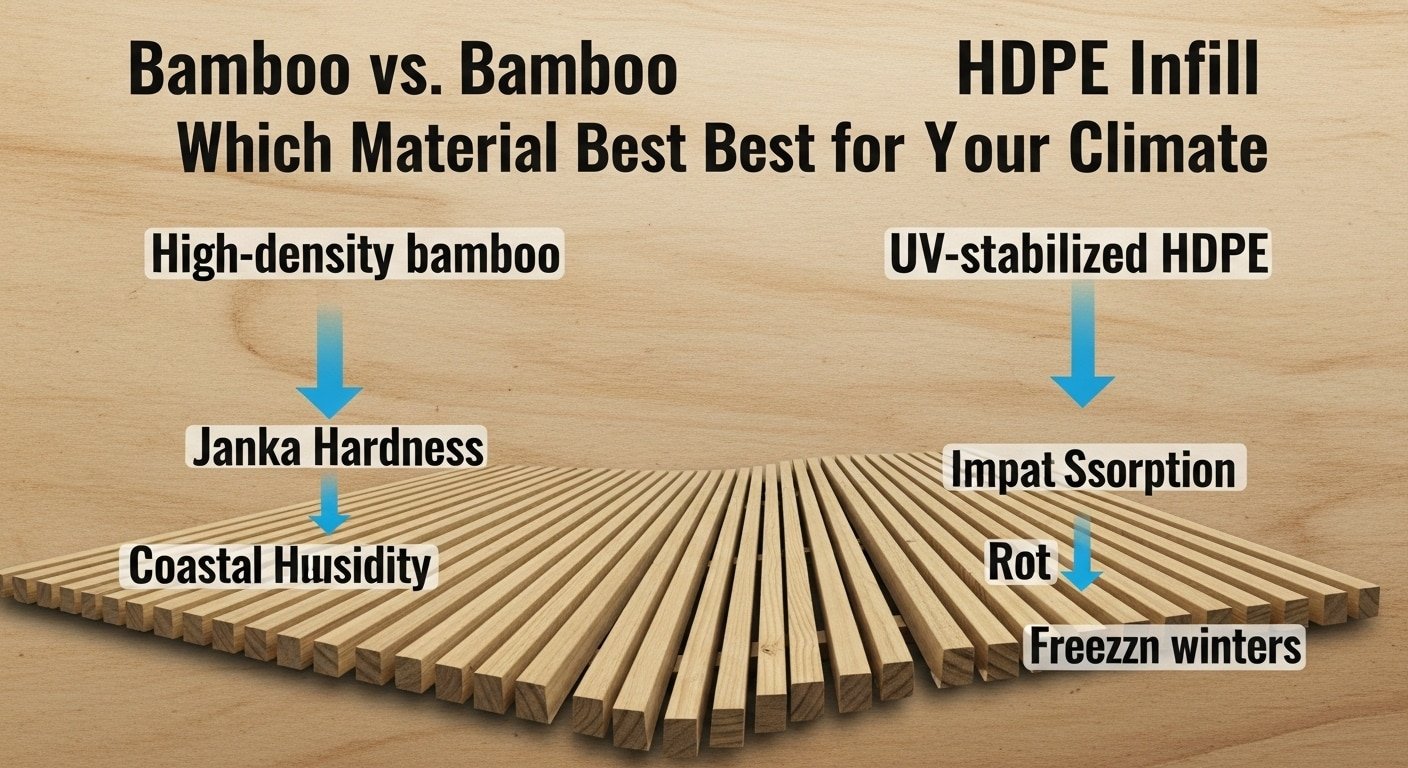
This analysis directly compares high-density bamboo with UV-stabilized HDPE. We evaluate material properties like Janka hardness and impact absorption to determine which option delivers the best performance against specific environmental challenges, from coastal humidity to freezing winters.
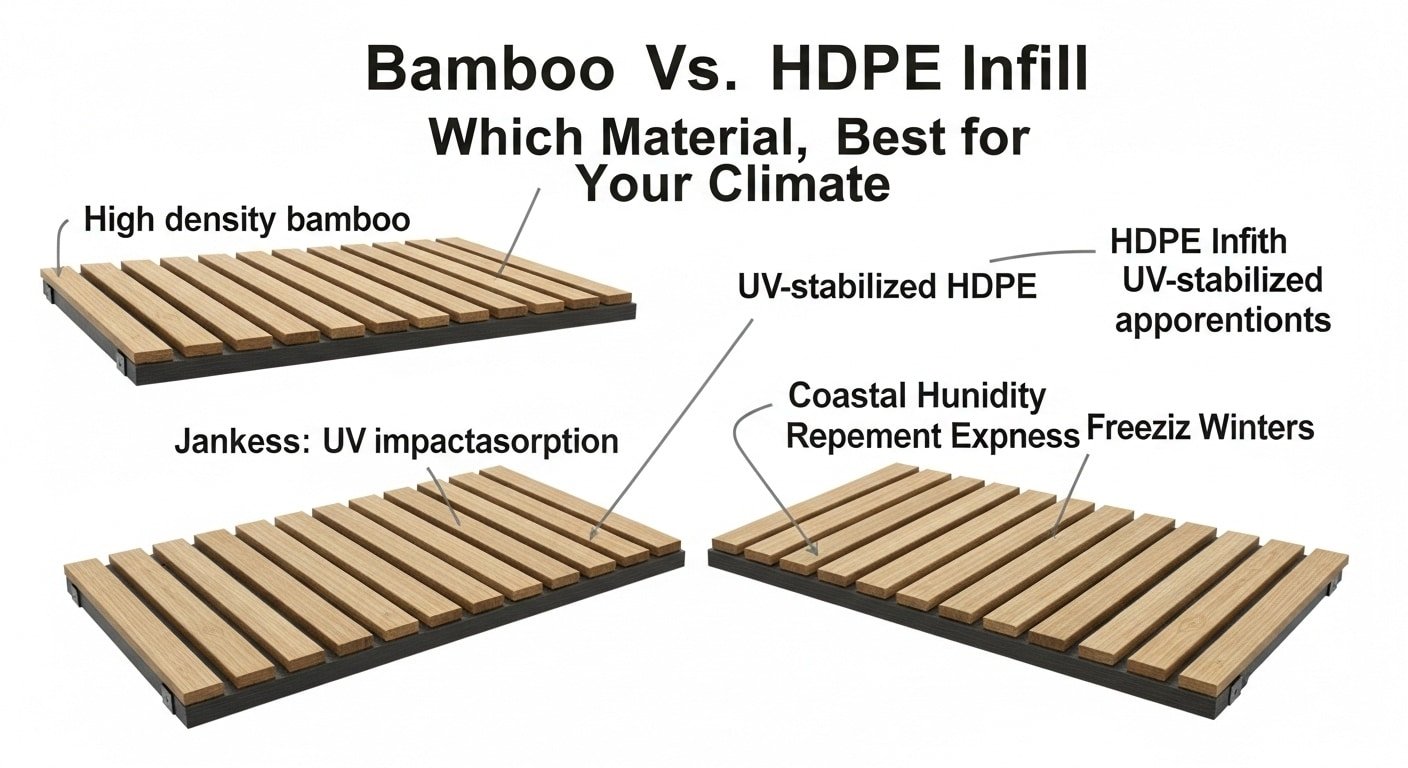
Bamboo vs. HDPE: How Do They Stack Up? (Comparison Table)
Bamboo offers extreme hardness and natural rot resistance. HDPE provides impact absorption with zero maintenance, making it a practical synthetic choice for busy stables.
| Feature | High-Density Bamboo | HDPE (High-Density Polyethylene) |
|---|---|---|
| Material Type | Natural, High-Density Strand Woven Wood | UV-Stabilized Synthetic Polymer |
| Hardness & Strength | Janka Hardness > 3000 lbf (3x harder than oak) | Impact-Absorbing & Resilient to Kicks |
| Maintenance | Low Maintenance | Zero Maintenance (No painting or sealing) |
| Resistance | Naturally resistant to mold and rot | UV resistant to prevent fading and degradation |
| Standard Thickness | 28mm to 38mm | 28mm to 32mm |
High-Density Bamboo: The Natural Hardwood Choice
Bamboo is the choice for facilities that want the look of traditional wood but need much greater durability. This isn’t decorative fence bamboo; it’s a dense, engineered material designed to withstand stable life.
- Construction: Made from High-Density Strand Woven bamboo fibers.
- Hardness: Features a Janka rating over 3000 lbf, making it approximately three times harder than standard Oak.
- Resistance: Naturally defends against mold and rot, a key advantage in damp stable environments.
- Thickness Options: Available in thicknesses ranging from 28mm to 38mm.
HDPE: The Zero-Maintenance Synthetic Option
HDPE is a purely practical choice. It’s built for operators who prioritize longevity and minimal labor costs over a natural aesthetic. The material is engineered to absorb abuse and ignore the weather.
- Key Feature: Engineered for impact absorption, handling kicks from horses without shattering.
- Weather Resistance: UV stabilized to stop sun exposure from causing brittleness or color fade.
- Maintenance: This is its main advantage—it requires zero upkeep and never needs painting, staining, or sealing.
- Standard Thickness: Typically offered in 28mm to 32mm options.
Is Bamboo Really Stronger Than Oak?
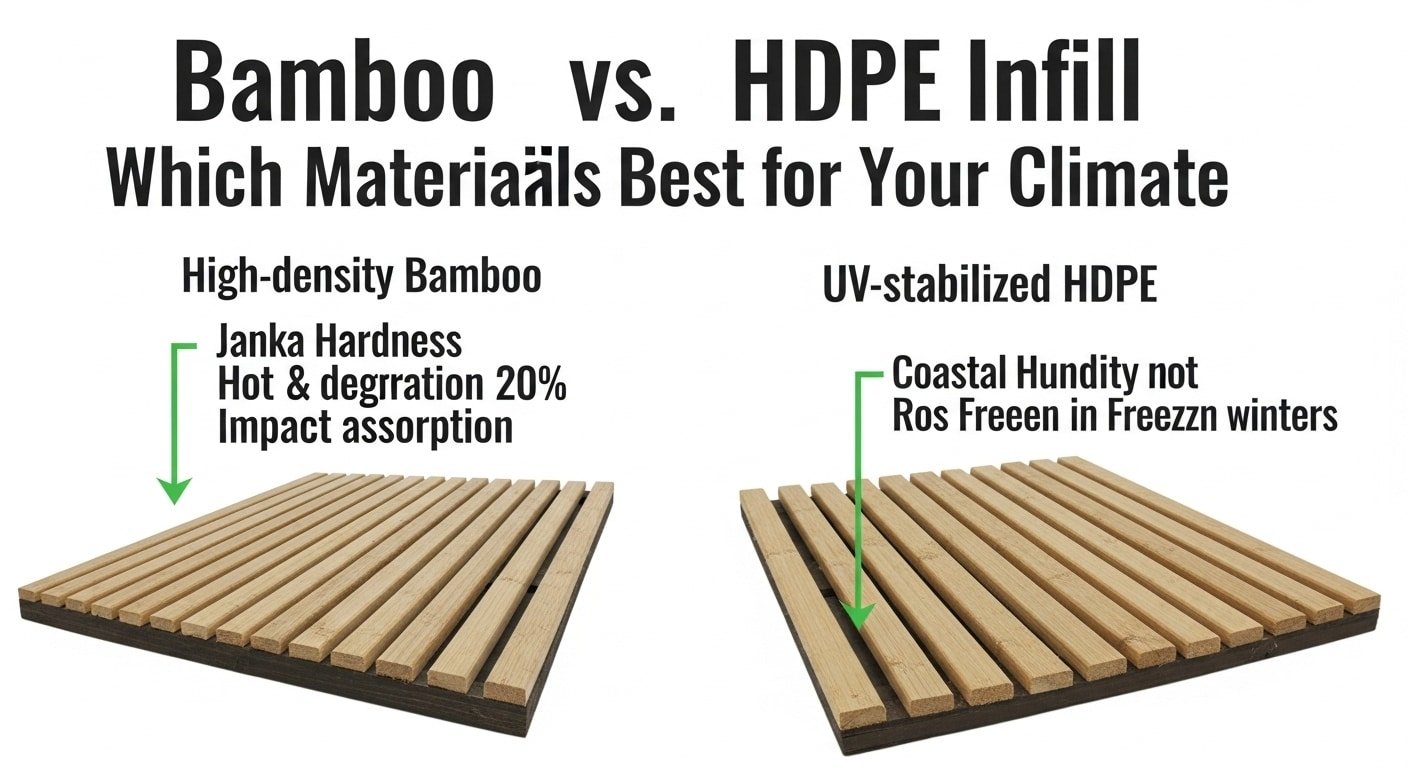
Our high-density strand-woven bamboo has a Janka hardness over 3000 lbf. It’s engineered to be three times harder than oak, providing far better resistance to kicks.
Comparing Hardness and Tensile Strength
The word “strong” can be misleading because materials have different types of strength. Tensile strength measures how well a material resists being pulled apart. In that test, bamboo’s long fibers give it an edge over oak.
But for a horse stall, the most important metric is Janka hardness. This scale measures a material’s resistance to dents, wear, and impact. It directly predicts how well an infill panel will stand up to a kick.
The Advantage of High-Density Strand Woven Bamboo
The material we use is not natural bamboo cane. Our stable infill is made from high-density strand-woven bamboo, which is produced by compressing bamboo fibers under extreme heat and pressure.
This process creates an incredibly dense and durable board with a Janka hardness rating of over 3000 lbf. This makes our bamboo infill roughly three times harder than oak, ensuring it can withstand powerful kicks while also resisting mold and rot.
Does HDPE Infill Truly Require Zero Maintenance?
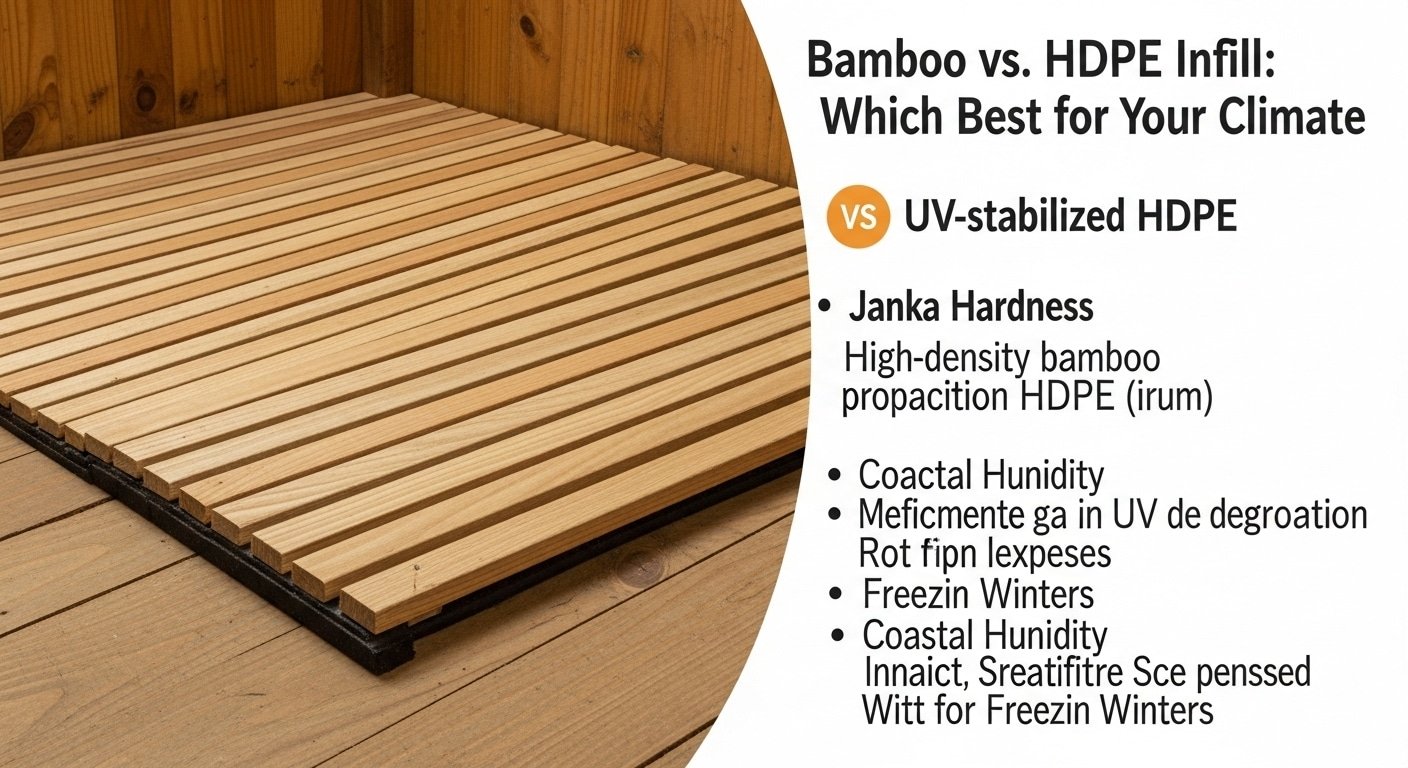
HDPE is low-maintenance, not zero-maintenance. It eliminates structural repairs like painting or sealing wood, but occasional cleaning is still required for hygiene and appearance.
The Reality of ‘Low-Maintenance’ Upkeep
The term “zero maintenance” is a marketing shorthand. In practice, it means you eliminate the constant structural upkeep associated with wood. HDPE doesn’t need painting, staining, or sealing to protect it from moisture or rot. It won’t splinter, warp, or crack, so you stop spending time and money replacing failed boards. The only upkeep required is routine cleaning with basic soap and water to remove dirt and manure, keeping the stall environment hygienic.
The Role of UV Stabilization in Durability
Plastic’s biggest enemy is sunlight. Our HDPE infill is UV Stabilized to prevent the material from becoming brittle or faded after long-term sun exposure. This built-in protection is non-negotiable for demanding markets like Australia, where high UV resistance is a core requirement. By resisting UV degradation, the planks maintain their impact-absorbing properties and appearance for years without needing any special coatings or treatments.
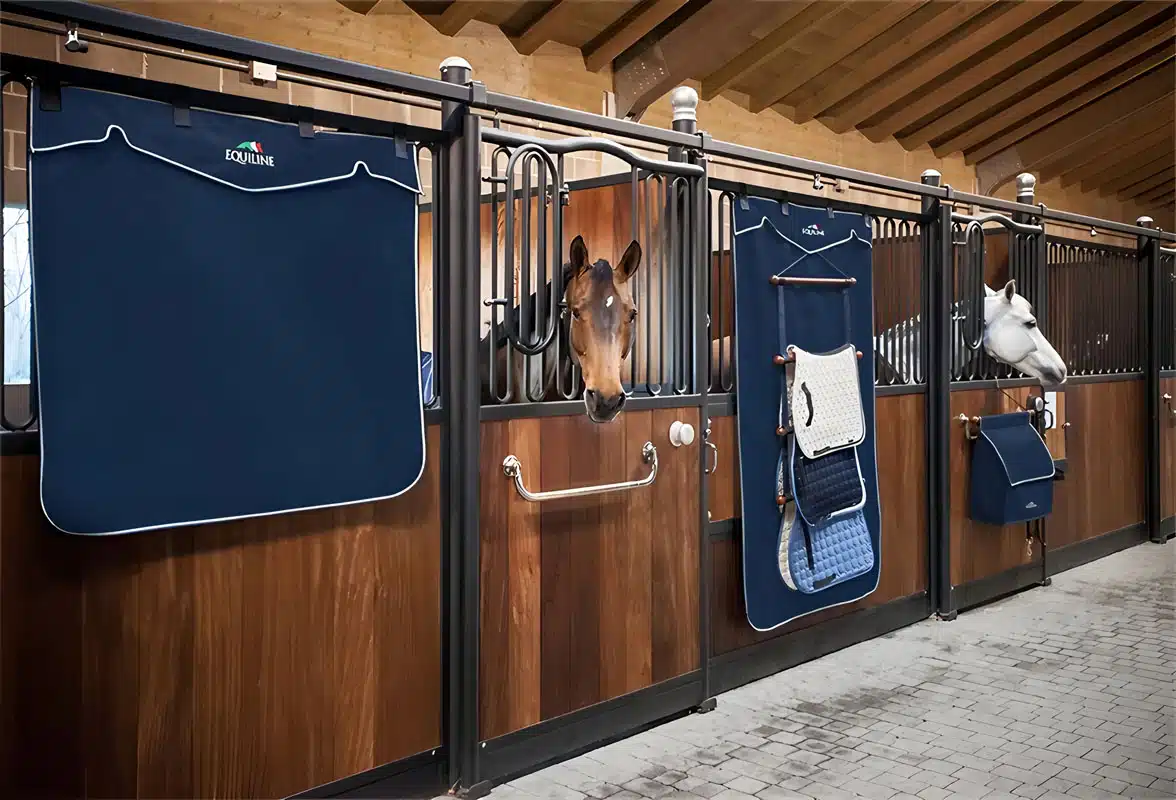
Global Horse Stables Engineered to Last
Which Material is More Resistant to Kicks?
A material’s kick resistance depends on its ability to absorb impact. HDPE excels by flexing to dissipate force, while high-density bamboo offers superior hardness. For the frame, Q345B steel provides crucial low-temperature toughness.
Understanding Impact Resistance vs. Hardness
Impact resistance and hardness are not the same thing. A material with high impact resistance can flex under force, which dissipates the energy from a kick without cracking or splintering. Hardness refers to surface-level resistance against scratches and dents. While a hard material like our high-density bamboo (over 3000 lbf on the Janka scale) resists surface damage, a material that is too hard without any give can become brittle.
The Advantage of HDPE and Q345B Steel
A safe stall needs both properties. Our HDPE infill is engineered to be impact-absorbing. When a horse kicks, the panel flexes to spread the force, protecting the stall structure and the horse’s legs. The steel frame requires a different kind of strength. We use Q345B steel because of its superior low-temperature impact toughness. This quality prevents the steel from becoming brittle and fracturing from powerful kicks during cold weather, a known failure point in lower-grade steel.
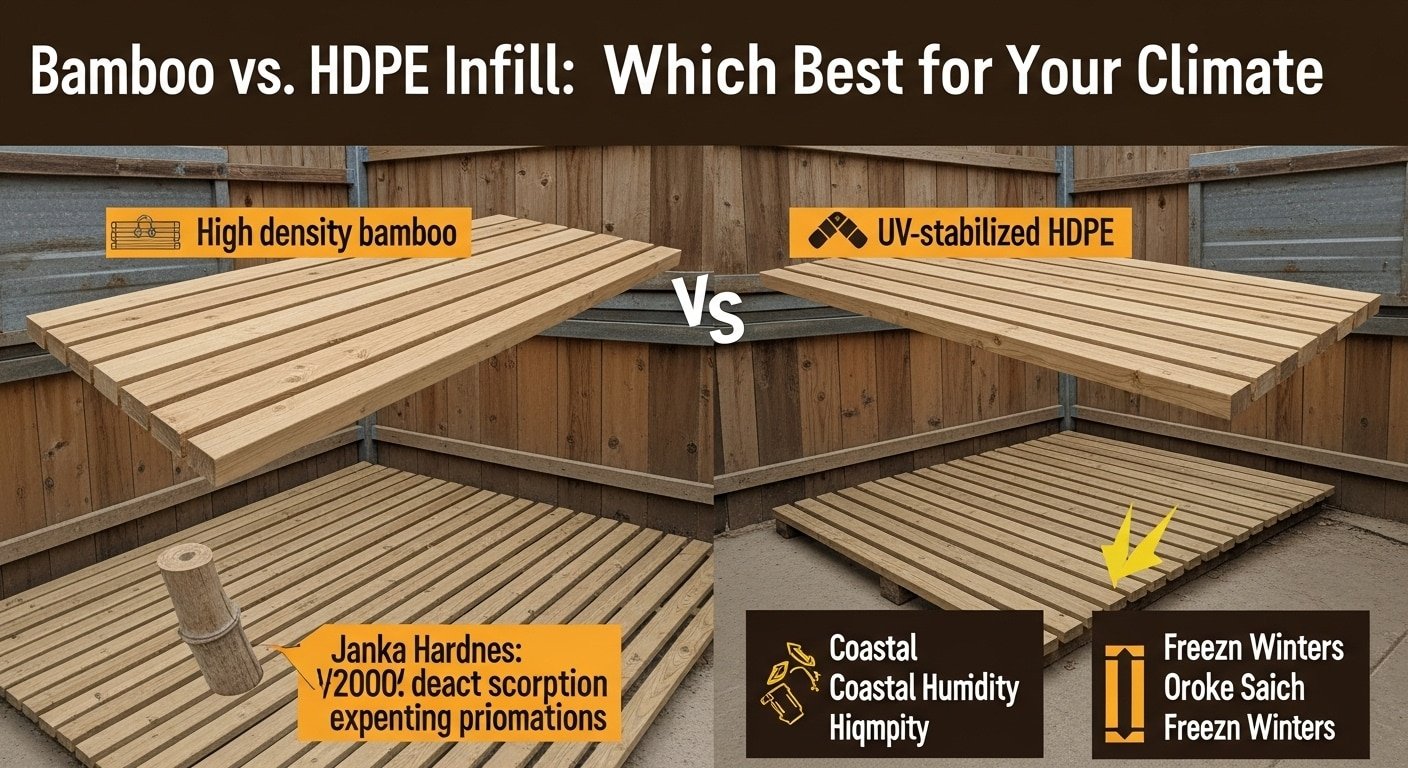
Which Material Suits Your Climate Best?
For hot climates, UV-stabilized HDPE and hot-dip galvanized steel prevent sun and rust damage. In freezing winters, Q345B steel is essential to prevent brittle fractures.
| Climate Challenge | Recommended Frame Material | Recommended Infill Material |
|---|---|---|
| Hot, Humid & Coastal | Hot-Dip Galvanized Steel | UV-Stabilized HDPE or High-Density Bamboo |
| Freezing Winters | Q345B Low Alloy Steel | HDPE or Bamboo (Frame is critical) |
Solutions for Hot, Humid, and Coastal Climates
Intense sun, constant humidity, and salty air will destroy improperly specified equipment. For markets like Australia, material choices must directly counter UV degradation, rust, and rot. Anything less is a costly failure waiting to happen.
- UV-Stabilized HDPE: Standard HDPE becomes brittle and fades under constant sun. We use UV-stabilized boards specifically to resist cracking and maintain color integrity in high-exposure environments.
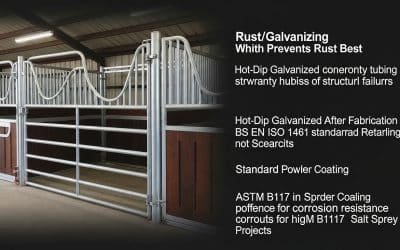
- Hot-Dip Galvanization: We galvanize the entire structure *after* all welding is complete. This process ensures a zinc coating of over 70 microns, providing critical corrosion defense against salty coastal air.
- High-Density Bamboo: In humid regions where mold and rot are concerns, our strand-woven bamboo offers natural resistance that outlasts traditional timber.
Engineering for Freezing Temperatures
In cold climates, the primary risk isn’t just rust; it’s brittle fracture. Standard steel loses its ductility at low temperatures, meaning a powerful kick from a horse could shatter a frame member instead of just denting it. This is a major safety and liability issue, particularly in European markets with stringent animal welfare standards.
Our solution is to specify Q345B low alloy, high-strength steel as a cold-climate option. This material maintains superior impact toughness at low temperatures, ensuring the frame remains resilient and kick-proof even through the harshest winters. It prevents the steel from becoming fragile, protecting both the animal and your investment.
Final Thoughts
Choosing the right material is a commercial decision, not just a technical one. A low-cost steel frame that becomes brittle in winter is a liability, not a saving. Specifying the correct materials—like Q345B steel for cold and UV-stabilized HDPE for sun—protects your investment and your reputation.
The specifications on paper are just the start. The next step is to request a quote tailored to your climate’s engineering demands. Contact our team to discuss your project or arrange a trial order to validate our fit and finish firsthand.
Frequently Asked Questions
Do horses chew on HDPE plastic boards?
HDPE is an extremely durable, zero-maintenance material. Our stable systems using HDPE are designed to be ‘crib-proof,’ meaning the material and the overall construction withstand such behaviors without damage.
Will bamboo rot in wet climates like the UK or Ireland?
Untreated bamboo will rot in wet environments. That’s why we use high-density, strand-woven bamboo that is specifically treated and sealed to resist moisture, making it a durable option for damp climates when properly maintained.
Is HDPE strong enough to withstand a kicking horse?
Yes. The strength comes from the entire system. We use thick, impact-absorbing HDPE infill inside a robust, hot-dip galvanized steel frame. The complete panel is engineered to safely handle powerful kicks.
Does bamboo infill require annual sealing?
Not necessarily every year. The schedule depends on your climate. In most moderate conditions, re-applying a sealant every 18-24 months is sufficient. For extremely harsh or wet locations, an annual check is a good idea.
Which material performs better in very cold winters?
The steel frame is the most critical part in extreme cold. We recommend our Q345B steel option, which has superior low-temperature impact toughness. It’s engineered to prevent becoming brittle and fracturing from kicks in freezing temperatures.
Can I power wash bamboo stable panels?
Yes, but you have to do it correctly. Use a wide fan nozzle (over 35 degrees) and keep a safe distance. A concentrated, high-pressure stream will damage the bamboo fibers and strip away its protective sealant.



 English
  Español
  Français
  العربية
  Deutsch
0 Comments