



Shipping glass products often feels like a gamble, where a single mishandling can lead to costly breakage and project delays. But not all glass is equally fragile. Tempered glass, for example, is engineered to be four to five times stronger than standard annealed glass, capable of withstanding significant impact.
Choosing the right packaging is critical for protecting that investment. This guide compares the two primary shipping solutions—reusable A-frames and fully enclosed, ISPM 15–compliant wooden crates—to help you decide which is best for your application. We will also cover the materials used to separate glass sheets, the function of “Do Not Stack” cones, and the safety protocols to follow if a break occurs.
The Fragility Myth: Tempered Glass Strength
Tempered glass isn’t fragile; it’s 4-5 times stronger than standard glass. This strength comes from a rapid cooling process that creates high surface compression (over 10,000 psi), allowing it to withstand significant impact and break into small, safe pieces if it fails.
How Thermal Tempering Creates Strength
The unique strength of tempered glass comes from a specific manufacturing process. It begins by heating standard glass to approximately 1,150°F (621°C). Immediately after heating, the glass is rapidly cooled with high-pressure air jets. This rapid cooling, or “quenching,” locks the outer surfaces in a state of high compression while the core remains in tension. This internal stress dynamic makes the final product four to five times stronger and more resistant to impact than standard annealed glass.
Strength and Safety by the Numbers
Industry standards quantify the performance of tempered glass. According to ASTM C1048, fully tempered glass must withstand a minimum surface compression of 10,000 psi (69 MPa). Its durability also allows it to meet critical safety glazing codes, including ANSI Z97.1 and CPSC 16 CFR 1201. A key safety feature required for certification is its unique fracture pattern. If the glass does break, it shatters into small, cube-like pieces that are far less likely to cause serious injury than the large, sharp shards of standard glass.
Packaging Method: A-Frames vs. Wooden Crates
A-frames are open, reusable structures ideal for efficiently shipping large flat glass by preventing mechanical damage. Wooden crates are fully enclosed boxes used for fragile, high-value, or export items requiring complete environmental protection, cushioning, and ISPM 15 compliance.
| Feature | A-Frames | Wooden Crates |
|---|---|---|
| Primary Use Case | Large flat glass, windows, and stone slabs shipped vertically. | Fragile, high-value, or export items needing full enclosure. |
| Protection Type | Mechanical damage (impact, tipping, edge chipping). | Environmental (dust, moisture) and shock/vibration cushioning. |
| Structure | Open structural steel or reinforced softwood frame. Often reusable and stackable. | Fully enclosed or open-slatted box using ISPM 15–compliant wood. |
| Key Benefits | Handling efficiency, reusability in closed-loop systems, space optimization. | Total enclosure, climate control compatibility, and international compliance. |
A-Frames: For Structural Integrity and Efficiency
A-frames are engineered structures designed to transport large, flat materials like glass, windows, and stone slabs. They hold items vertically, which is the strongest orientation for preventing bending and breakage during transit. Built from structural steel or truss-plate–reinforced softwood, these frames provide robust support. Steel stillage A-frames are particularly efficient in closed-loop supply chains because they are reusable, stackable, and often feature foldable uprights to save space on return trips. To ensure product safety, A-frames are used with tested strapping systems and blocking, which are validated in packaging labs to resist impact and transit shock. This method is best suited for situations where the main risk is mechanical damage, such as tipping or edge chipping.
Wooden Crates: For Enclosed Protection and Climate Control
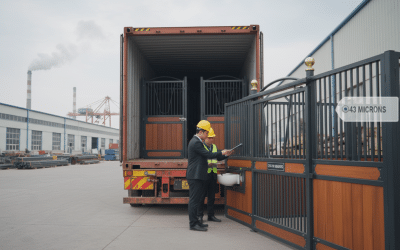
Wooden crates offer complete enclosure, making them necessary for products that require a higher level of protection. They are the standard for international shipping, as they use ISPM 15–compliant wood that has been heat-treated or fumigated to prevent the transport of pests. Unlike an open A-frame, a wooden crate shields contents from environmental hazards like dust, moisture, and contamination. These crates can be customized with internal components like closed-cell polyolefin foam for shock absorption, moisture barriers, and VCI corrosion inhibitors to protect sensitive assemblies. An engineered open-slatted crate can reduce lumber use by around 40% compared to a fully sheathed case but still safely carry loads from 2,600 to 24,700 pounds.
Separation Layers: Cork Pads & Foam
Cork pads and foam are placed between glass items during shipping to absorb shock, prevent scratches, and reduce friction. While common, no specific engineering standards define their performance; protection often comes from integrated chemical coatings applied directly to the glass that serve a similar function.
Role of Pads and Foam in Preventing Damage
Separation materials like cork and foam provide a physical cushion between glass surfaces to absorb vibration and impact during transit. This barrier prevents direct glass-to-glass contact, which minimizes the risk of surface scratches, abrasions, and chipping. The pads also reduce friction between stacked or adjacent glass items, a key factor in preventing stress fractures from developing.
Protective Coatings and Glass Durability Metrics
Many glass containers use a dual-layer coating system for protection instead of physical separators. A tin oxide layer applied at the hot end and a polyethylene wax or oleic acid layer at the cold end work together to reduce friction. These coatings address the same risks as pads by enhancing load-bearing strength and protecting against surface damage.
Glass integrity is measured by its ability to meet strict engineering standards. For example, glass must withstand thermal shock, such as a temperature drop of 40°C. Key benchmarks also include pressure resistance up to 10 bar and an annealing tension limit of 18 nm per mm of thickness, as defined by ASTM C148.
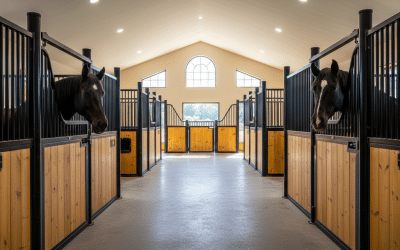
Horse Stables Engineered for Any Climate

“Do Not Stack” Cones
“Do Not Stack” cones are high-visibility cardboard triangles placed on top of pallets. They create a physical and visual barrier, preventing other pallets from being stacked on top, which could crush fragile contents like glass. They are a low-cost, sacrificial tool to enforce safe handling procedures.
Function and Design Purpose
These cones provide a simple but effective way to protect fragile shipments. By creating a triangular point that rises above any flat surface on the pallet, they make it physically difficult to stack another pallet on top without crushing the cone. This design serves two roles: it acts as a clear visual warning for forklift operators and provides definitive evidence of mishandling if the cone is damaged. The cones signal that the pallet contains fragile goods like glass, glazing, or electronics that are at risk of crushing or instability if stacked.
Materials, Dimensions, and Features
Most pallet cones are made from lightweight corrugated cardboard and are shipped flat for easy storage and assembly. When folded into their three-sided shape, they typically stand between 160 mm and 235 mm tall, with a common base size of 8 x 8 x 10 inches. Common designs feature high-contrast, multi-language warnings like “DO NOT STACK / NE PAS EMPILER / NO APILAR” printed in red or black letters. To secure them to the load, cones include pre-cut slots or tabs that allow them to be attached with strapping or tape.
What to Do if You Hear Broken Glass
If you hear glass break, immediately stop all activity and isolate the area to prevent injury, following OSHA guidelines. Then, assess if the breakage is contained within its packaging. If it has created an open spill, you may need to follow hazardous material response protocols.
Immediate Protocol: Isolate and Secure the Area
The first step is to immediately stop all foot and vehicle traffic in the vicinity of the sound. This clears the area and prevents anyone from accidentally walking or driving into unseen hazards like sharp glass or a liquid spill.
Next, you must cordon off the area to control access. This procedure is a fundamental safety action required under OSHA’s general duty clause to protect team members from laceration hazards created by broken materials.
Taking these actions ensures the facility maintains safe walking-working surfaces, which is a specific mandate under the OSHA standard 29 CFR 1910.22(a). A secured zone prevents further incidents while the situation is assessed.

Assess the Break: Contained Package vs. Open Spill
If you suspect a break occurred inside a package, quarantine the entire carton. Packaging that is properly tested to ISTA 3A standards is designed to fully contain shards and liquids, so handling the sealed box as a single unit is the correct procedure.
If glass and liquids have spilled openly onto the floor, you need to follow your facility’s HazCom and spill control protocols according to 29 CFR 1910.1200. For releases of known hazardous substances, more stringent emergency response rules (29 CFR 1910.120(q)) may apply, requiring specialized PPE and cleanup teams.
In facilities with monitoring systems, acoustic glass-break sensors can help pinpoint the incident’s location. These sensors are tuned to the 3–6 kHz frequency of fracturing glass and can typically detect a break within a radius of approximately 7.6 meters (25 feet).
Final Thoughts
Shipping glass without breakage relies on a systematic approach, not just luck. It starts with knowing your material—tempered glass is far stronger than many assume. From there, you match the packaging to the risk: efficient A-frames for structural support or fully enclosed crates for complete environmental and impact protection. Simple tools like separator pads and “Do Not Stack” cones add final layers of defense against common transit hazards.
But even the best packaging systems can fail. That’s why having a clear response plan for breakage is just as critical as the packaging itself. Knowing how to immediately isolate an area and assess a spill according to safety standards protects your team and minimizes disruption. A complete glass handling strategy addresses both prevention and response, ensuring safety from the factory to the final destination.
Frequently Asked Questions
Does insurance cover broken glass?
For both vehicles and buildings, broken glass is typically covered only when you have specific glass coverage, such as comprehensive auto insurance or a building glass endorsement. Insurers often apply a per-occurrence deductible, around $250–$500, and a stated glass limit, often near $5,000 for building glass. Some auto “full glass” options waive the deductible for repairs or replacements.
How is the glass packed?
Glass is typically shipped vertically on timber or steel A-frames. The sheets are separated by paper or plastic interleaves, protected with edge guards, and secured with steel or polyester straps and shrink wrap. This method follows industry standards like EN 12487 to prevent movement and impact damage during transit.
Is the glass tempered?
Glass is only tempered if required by the product specification or a safety code, such as for safety glazing. You must confirm the tempering status by checking product documentation or markings for standards like ANSI Z97.1 or EN 12150. Tempered glass is about 4–5 times stronger than standard annealed glass.
Can I buy replacement glass locally?
Yes, for building and vehicle applications, you can source replacement glass from local suppliers. Ensure the glass is certified and marked to meet relevant safety standards for the specific opening, such as ANSI Z97.1 or CPSC 16 CFR 1201, to comply with building codes.
Do you ship spare glass?
Shipping spare glass is not a universal industry standard; it is a commercial policy. In specialty glass orders, it is common to offer extra panes as separate line-item units, often 1–2 extra pieces or a small percentage of the total order, rather than including them by default.
What if the crate is damaged?
If a crate arrives with visible damage like broken boards, punctures, or crushed corners, you should quarantine the unit, photograph the damage, and perform a full inspection of the glass inside. If any glass shows signs of impact or fracture, the shipment should be rejected according to standard industry protocols.

 English
  Spanish
  French
  German
0 Comments