


When your imported goods arrive at the port, you’re immediately on the clock. You face steep demurrage fees, often $75–$300 per day, if you can’t clear them quickly. Paying duties upfront can also tie up 5–30% of your capital in inventory that hasn’t even sold yet. This system pressures your cash flow and forces logistical decisions based on avoiding fees rather than meeting market demand.
A customs bonded warehouse offers a strategic alternative. This article explains how these facilities allow you to defer duties for up to five years, freeing up working capital. We’ll compare the high daily costs of port storage with the more economical monthly rates of a bonded warehouse and cover how the “pay as you take” model for partial withdrawals can improve your inventory management.
What is a Customs Bonded Warehouse?
A customs bonded warehouse is a secure facility licensed by a country’s customs authority (like U.S. CBP) where imported goods can be stored for up to five years without paying duties. This system allows importers to defer taxes and fees until the goods are withdrawn for domestic sale or avoid them if the goods are re-exported.
Core Function: A Secure Duty-Deferral Zone
A customs bonded warehouse is a facility licensed and secured under customs authority where dutiable imported goods can be stored, manipulated, or undergo limited manufacturing. Its primary function is the deferral of import duties, excise taxes, and other fees until the goods are officially entered for domestic consumption. This provides importers with valuable flexibility in managing inventory and cash flow.
Goods can be stored for up to five years from the date of import. If an importer re-exports the goods directly from the warehouse, the deferred duties and taxes are typically avoided entirely. This makes the warehouse a strategic tool for international distribution and for companies using a country as a transit hub rather than a final destination.
Regulatory Framework and Warehouse Classes
In the United States, these warehouses are governed by regulations in 19 CFR Part 19. The facility operates under a customs bond, like U.S. CBP Form 301, which is a surety bond that secures the potential duties and taxes owed on the stored inventory. Minimum bond amounts for these facilities often start at $25,000, with the final amount determined by the local port director.
Warehouses are categorized into 11 official classes that define their use. A Class 2 warehouse, for example, is a private facility used by a single importer for their own goods. A Class 8 warehouse is designated for cleaning, sorting, repacking, or otherwise changing the condition of goods without manufacturing them. These classifications dictate what activities are permitted on the inventory.
All bonded warehouses must adhere to strict operational rules. They are required to maintain detailed inventory control systems synchronized with customs authorities and implement physical security measures like controlled access and video surveillance. These controls ensure the integrity of the goods while they are held in bond.
Benefits: Cash Flow & Storage
A bonded warehouse improves cash flow by allowing you to defer duties and taxes until goods are sold domestically, freeing up 5–30% of capital. It also provides secure, long-term storage near ports where you can inspect, label, or repackage items before duties are applied.
A customs bonded warehouse functions as a strategic tool that separates the physical arrival of goods from the financial event of paying import taxes. This creates a duty-deferred storage layer between the port of entry and the domestic market, offering significant advantages for both cash flow management and operational logistics.
| Benefit Type | Primary Function | Business Impact |
|---|---|---|
| Financial | Defer customs duties, VAT, and taxes until domestic sale. | Improves cash flow by freeing 5–30% of capital; no duties are paid on re-exported goods. |
| Operational | Store goods long-term and perform value-added services (e.g., labeling, kitting). | Enables strategic inventory placement near ports and allows product preparation before taxes are due. |
Improve Cash Flow by Deferring Duties & Taxes
Using a bonded warehouse directly improves your working capital. Instead of paying customs duties and import taxes upon arrival, you only pay them when items are withdrawn to enter the domestic market. This deferral can free up 5–30% of your capital that would otherwise be locked in taxed inventory. The same principle applies to VAT and sales taxes, which are suspended while goods remain under bond. If you plan to re-export products, you can ship them directly from the warehouse and avoid paying domestic duties altogether.
Secure Long-Term Storage with In-Warehouse Processing
Bonded warehouses offer more than just tax deferral; they provide secure, long-term storage under customs supervision, often located strategically near ports and airports. While your goods are held in this duty-suspended state, you can perform value-added services like quality inspections, relabeling, kitting, or light assembly. This allows you to prepare inventory for specific markets or orders without triggering a tax liability. These customs-approved facilities also provide a high-security environment, protecting valuable inventory while giving you access to process items before final distribution.
The 5-Year Storage Rule
The 5-Year Storage Rule allows importers to store dutiable goods in a U.S. customs bonded warehouse for up to five years from the import date without paying duties. This deferral helps manage cash flow. At the end of the period, the goods must be exported, destroyed, or entered for U.S. consumption with duties paid.
Defining the Storage Limit
Imported dutiable goods can be stored in a bonded warehouse for a maximum of five years starting from the date of importation. This rule, outlined in 19 CFR §19, permits importers to postpone duty and tax payments. This deferral helps manage cash flow and align product release with market demand. The five-year countdown begins the moment Customs and Border Protection (CBP) officially processes the importation.
Compliance and Expiration Actions
Before the five-year period ends, the owner must resolve the status of the goods. The options are to withdraw them for U.S. consumption by paying all duties and taxes, export them to another country, or have them destroyed under the supervision of CBP. For auditing and compliance, you must retain all records related to entry, withdrawal, and manipulation for five years from the date of importation.
If no action is taken by the deadline, the goods are deemed abandoned. CBP will then move them to a General Order (GO) warehouse, and they may eventually be sold at a public auction to recover duties and storage costs.
Stables Engineered to Last, Customized for Your Climate.


Protect your horse arena with our high-quality fencing.
Cost Comparison: Port Storage (High) vs Bonded (Low)
Port storage uses high, daily demurrage fees ($75–$300/day) to force quick container removal after a few free days. A bonded warehouse charges a lower monthly rate, making it far more economical for storage needs beyond 7-10 days, while also allowing up to five years of duty deferral.
| Feature | Port Terminal Storage | Bonded Warehouse |
|---|---|---|
| Cost Basis | Daily per container (Demurrage) | Monthly per pallet, CBM, or sq. ft. |
| Typical Cost | High and escalates rapidly ($75–$300+ per day) | Economical for periods over 7-10 days |
| Storage Limit | Short-term only (3–7 “free days”) | Long-term (up to 5 years) |
| Duty Payment | Required upon customs clearance at arrival | Deferred until goods are withdrawn for sale |
The Punitive Cost of Port Terminal Storage
Port terminals are designed for cargo throughput, not for storage. After an initial “free time” period of 3 to 7 days, terminals apply daily demurrage charges that typically range from $75 to $300 per container. These fees are intentionally punitive. The goal is to force importers to retrieve their containers as quickly as possible to maintain terminal fluidity and avoid yard congestion. This model makes port storage an extremely expensive and impractical solution for anything beyond very brief delays, as costs accumulate rapidly each day.
Bonded Warehousing: A Lower-Cost Monthly Model
A bonded warehouse provides a strategic, lower-cost alternative for importers needing storage. Instead of punitive daily fees, these facilities charge on a monthly basis. While the rates are often a premium over standard warehousing—sometimes 1.5 to 4 times higher—the total monthly cost is significantly less than accumulating daily demurrage fees for storage needs that extend beyond a week. The primary financial benefit is the ability to defer customs duties and taxes for up to five years. This allows importers to align cash outflow with actual sales, paying duties only when goods are withdrawn from the warehouse to enter the domestic market.

Sturdy horse fencing designed for equestrian services.
Partial Withdrawals (Pay as you take)
Partial withdrawal lets you store goods in a bonded warehouse and take out only what you need, paying duties and taxes solely on the withdrawn portion. This ‘pay as you take’ system improves cash flow by deferring customs payments until your products are ready to enter the market.
Paying Duties Only on Goods Entering the Market
This model allows you to pay duties and taxes only on the specific portions of a shipment withdrawn to enter the domestic market. It improves cash flow by deferring large, upfront customs payments until your goods are actually needed for sale or distribution. After the duty payment is processed for the withdrawn items, bond liability on that portion is cancelled, while the rest of the shipment remains secure and untaxed in the warehouse.
Withdrawal Rules and Documentation
Every withdrawal requires filing CBP Form 7501, which serves as the entry summary for goods being released into commerce. A statement must be included with this form as specified by customs regulation 19 CFR §144.32. Goods generally cannot be withdrawn in quantities less than an entire package or bale unless the Commissioner of Customs grants special authority. The warehouse proprietor must get permission from CBP before any partial removal can happen, as it is not an automatic right.

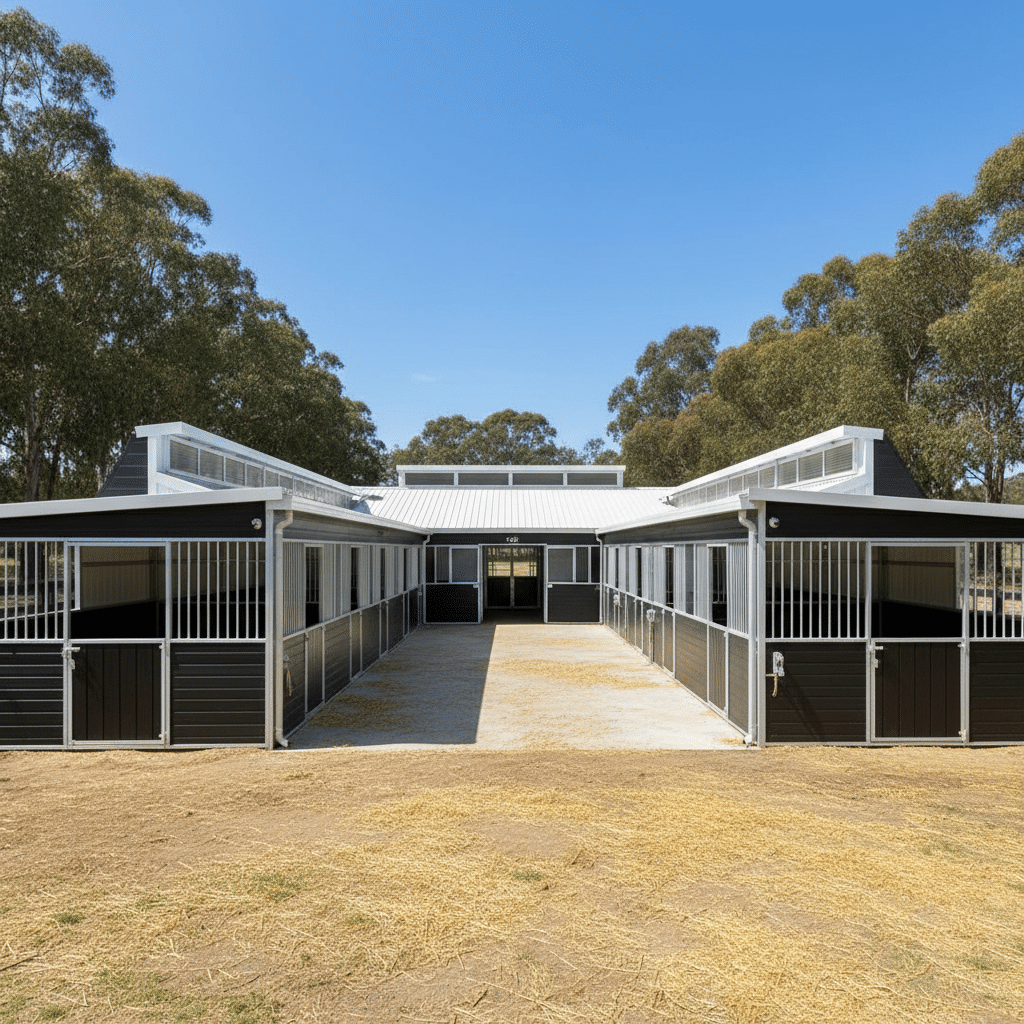
A versatile arena tailored for equestrian training and events.
Final Thoughts
A bonded warehouse gives importers direct control over their supply chain finances. It fundamentally separates the physical arrival of goods from the financial obligation of paying duties. This allows you to store inventory securely, pay taxes only when products enter the domestic market, and avoid duties entirely on re-exported items. This system turns a mandatory tax payment into a flexible tool for managing cash flow and inventory.
This strategy is most effective for businesses that need to store goods for more than a few weeks, face uncertain market demand, or require time to label, package, or modify products. While bonded storage costs more than a standard warehouse, it is far more economical than paying punitive port demurrage fees. For the right import model, it’s a calculated decision that makes your supply chain more resilient and financially efficient.

Spacious equestrian arena designed for optimal training.
Frequently Asked Questions
What is a bonded warehouse?
A bonded warehouse is a secure facility approved by customs authorities where imported goods can be stored without immediate payment of duties. These duties are suspended until the goods are moved into the domestic market. If the goods are re-exported, no duty is paid.
Do I pay duty while my goods are in storage?
No. In a bonded warehouse, the payment of customs duties and taxes is suspended. You only pay these fees when you withdraw the goods for sale or use within the country. This deferral period can last for up to five years.
How long can goods stay in a bonded warehouse?
In the U.S., goods can remain in a bonded warehouse for a maximum of 5 years from the date of importation. Before the 5-year limit, you must withdraw them for consumption, export them, or have them destroyed under customs supervision.
Can I inspect goods in a bonded warehouse?
Yes, goods can be inspected. Customs officials are authorized to examine, count, and mark packages upon entry and during compliance checks. This ensures all items are properly accounted for.
What is a ‘withdrawal’ from a bonded warehouse?
A withdrawal is the formal process of removing merchandise from the warehouse. This action must be authorized by the importer of record. Goods can be withdrawn for consumption (requiring duty payment), for exportation, or for transportation to another port.



 English
  Español
  Français
  العربية
  Deutsch
0 Comments