


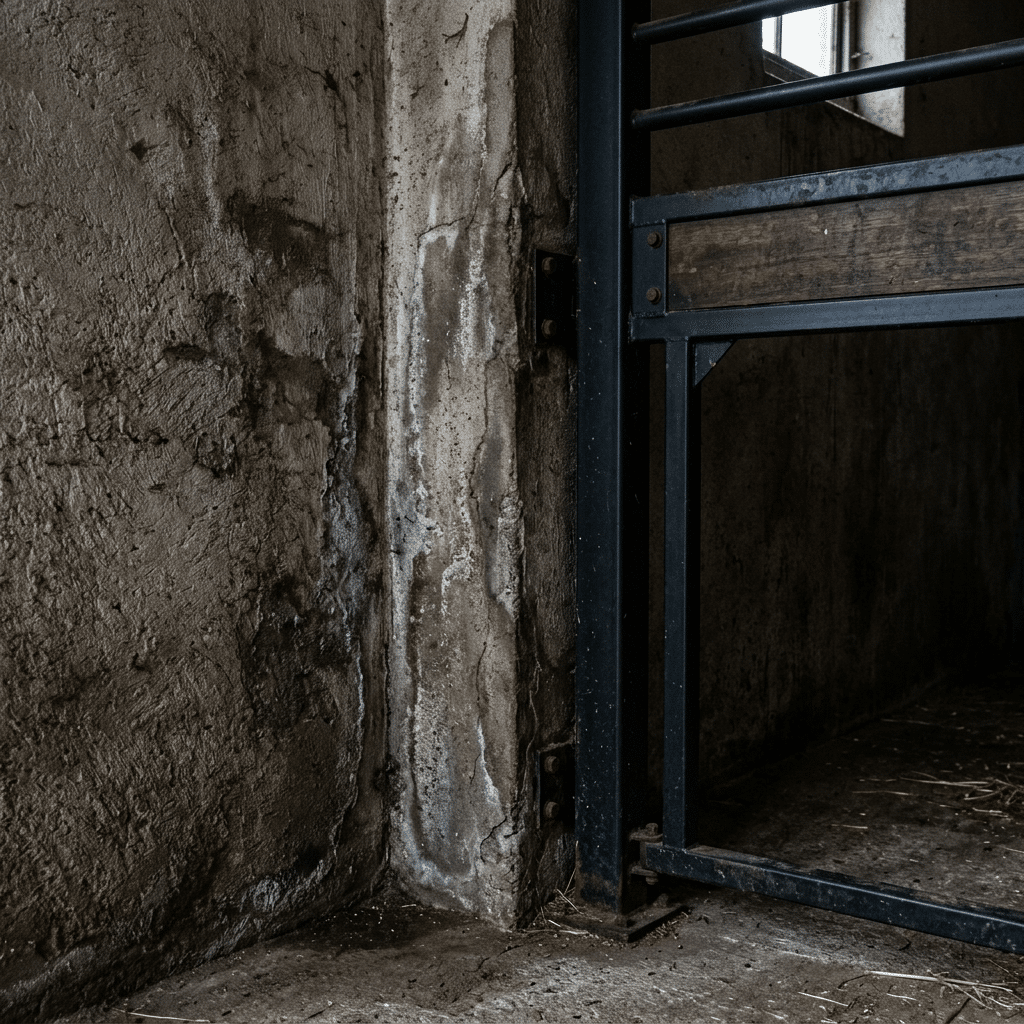
Commercial Stud Farms operate on strict schedules where infrastructure failure directly impacts asset value. Relying on traditional timber or painted steel invites rapid depreciation through rot and rust, forcing costly renovation cycles that disrupt breeding seasons.
This analysis examines infrastructure built to the ISO 1461 galvanisation à chaud standard, ensuring a 50-year lifecycle for high-traffic facilities. We evaluate the shift from hardwood to high-density strand woven bamboo, focusing on kick-proof durability and flat-pack logistics that secure your long-term capital investment.
The Rise of ESG (Environmental, Social, Governance) in Construction
By 2026, ESG is mandatory, not optional. We align with this shift through hot-dip galvanization that extends asset life and flat-pack logistics that cut shipping emissions by over 60%.
Mandatory Carbon Reporting and Scope 3 Emissions
The construction industry is shifting from voluntary green-washing to mandatory “whole-life carbon” accounting. Regulators and investors no longer just look at operational energy (lights and heating); they now demand data on the carbon cost of the materials themselves—from extraction to end-of-life. For large-scale equestrian projects, securing capital now requires compliance with frameworks like TCFD (Task Force on Climate-related Financial Disclosures).
Scope 3 emissions—those generated by your supply chain—are the biggest hurdle. This makes the source and transport of your building materials critical. Investors penalize projects that cannot transparently track where their steel comes from or how efficiently it was shipped.
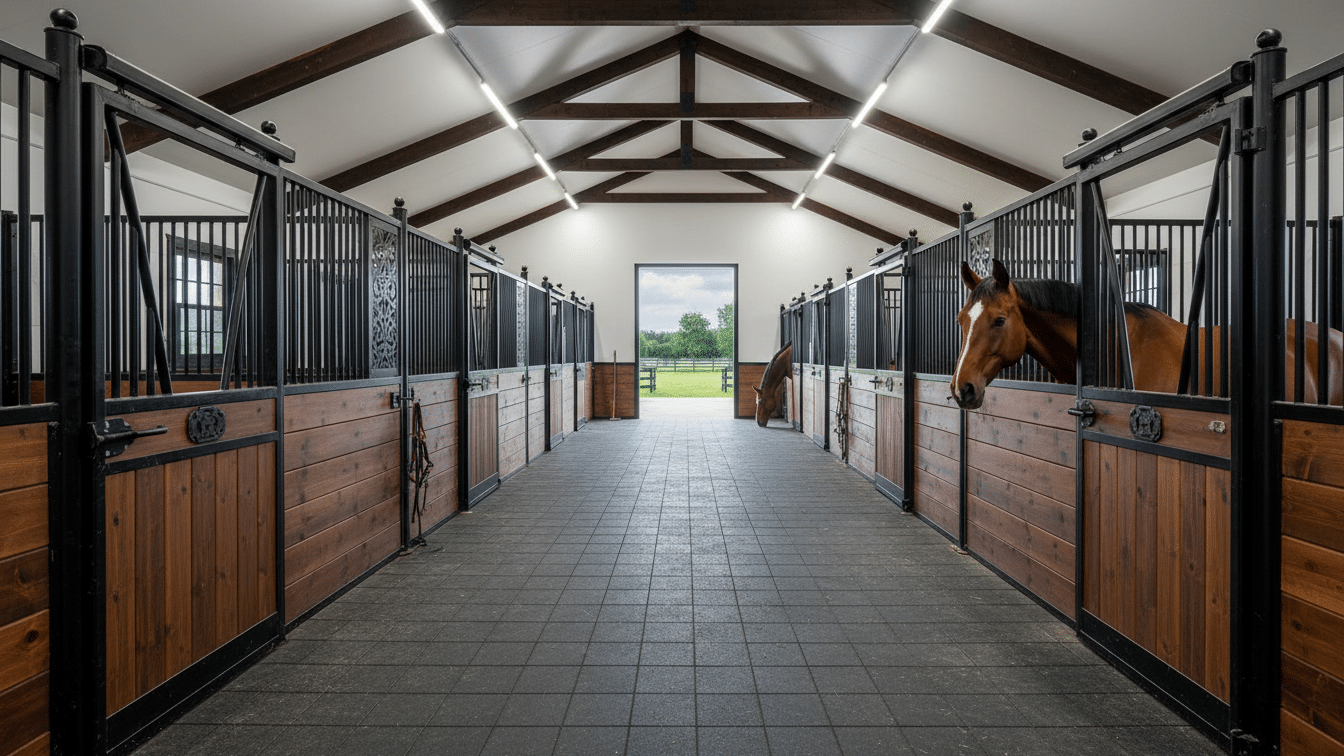
Reducing Embodied Carbon with Hot-Dip Galvanization and Flat-Pack Logistics
To meet these stricter carbon budgets, we engineer our stable systems to minimize environmental impact through longevity and logistic efficiency. A product that needs replacing every 10 years has a massive carbon footprint compared to one that lasts 30.
- BS EN ISO 1461 Hot-Dip Galvanization: We apply a zinc coating of >70 microns (and >85 microns for structural parts). This extends the replacement cycle significantly, drastically lowering the long-term “embodied carbon” cost of the facility.
- Logistics Efficiency (Scope 3 Reduction): Traditional welded stables fill a container with just 12-15 sets. Our flat-pack system fits 30-45 sets per 40HQ container. This reduces freight emissions per unit by over 60%, a key metric for ESG reporting.
- Sustainable Infill: We utilize High-Density Strand Woven Bamboo (Janka Hardness > 3000 lbf). It matures in 3-5 years compared to decades for hardwoods, offering a renewable, carbon-sequestering alternative without sacrificing durability.
Questions fréquemment posées
How to build an ESG compliant equestrian center?
Building an ESG-compliant center requires a three-pronged approach. Environmentally, prioritize renewable energy (solar) and water management (rainwater harvesting), but also focus heavily on material longevity—choosing structures that won’t end up in a landfill in a decade. Socially, ensure safe working conditions and fair labor practices in your supply chain. Governance requires you to establish a formal strategy to track emissions data (energy use, commuting, waste) and report it transparently to stakeholders.
Is bamboo a sustainable building material?
Yes, but the grade matters. Bamboo is a grass that reaches maturity in 3-5 years, making it a rapidly renewable carbon sink compared to oak or pine (30-50 years). For horse stables, standard bamboo is too weak. We specifically use High-Density Strand Woven Bamboo, which is compressed to be 3x harder than oak (Janka rating >3000 lbf). This ensures the material is both sustainable and durable enough to withstand equine impact.
Environmental impact of steel vs wood barns?
It comes down to production vs. lifespan. Wood has lower initial embodied carbon during production but degrades faster (rot, chewing, warping), requiring frequent replacement and chemical treatments. Steel has a higher initial carbon cost but is 100% recyclable without losing strength. When hot-dip galvanized (like our ISO 1461 process), steel structures last 30-50 years with zero maintenance, often making them the lower-carbon choice over the full lifecycle of a commercial facility.
Green certifications for horse stables?
There is no specific global certification exclusively for horse stables. However, commercial equestrian facilities often pursue LEED (Leadership in Energy & Environmental Design) certification by adapting its principles: efficient water use, renewable energy, and sustainable materials. In specific regions like California, the CalGreen Code applies mandatory green standards to agricultural structures, covering water conservation and construction waste reduction.
Eco-friendly horse barn manufacturers?
True eco-friendly manufacturing focuses on durability and logistics. Manufacturers like DB Stable prioritize hot-dip galvanization (extending asset life to reduce waste) and flat-pack logistics (fitting 3x more product per container to slash shipping emissions). Other approaches include companies focusing on Mass Timber (CLT) or modular steel construction. When selecting a partner, look beyond the marketing and ask about their Scope 3 emissions strategy and material recyclability.
Moving Away from Old-Growth Timber (Oak/Pine)
The industry is pivoting from scarce, rot-prone hardwoods to engineered bamboo, which offers 3x the hardness of Oak and sustainable 5-year regeneration cycles.
The Sustainability Paradox of Traditional Hardwoods
For decades, Oak and Pine were the default choices for stable infills, but the environmental and practical costs have become difficult to justify. Old-growth forests, which provide the dense grain necessary
for durability, are facing strict global logging limitations to preserve biodiversity. This scarcity drives up costs and forces manufacturers to rely on younger, less dense timber that lacks the structural integrity of its predecessors.
From a technical standpoint, traditional wood struggles in the equestrian environment without heavy intervention. Active stables are high-moisture zones due to washing and animal waste. To prevent rot in softwoods like Pine, mills must apply aggressive chemical treatments. These treatments solve the rot issue but introduce toxicity concerns for horses that crib (chew) on their stall walls.
High-Density Bamboo: The Engineered Alternative
DB Stable has transitioned to High-Density Strand Woven Bamboo as the technical successor to wood. This is not raw bamboo; it is an engineered material where bamboo fibers are fused under extreme pressure. The result is a board with a density exceeding 900 kg/m³, solving the durability issues inherent in natural timber.
We prioritize this material for three specific performance metrics:
- Janka Hardness > 3000 lbf: This rating makes the material approximately 3x harder than Oak. It is effectively “kick-proof” and resistant to teeth marks from cribbing.
- Rapid Regeneration: Bamboo reaches maturity in 3-5 years, compared to the decades required for hardwoods, ensuring a consistent supply chain without depleting ancient forests.
- Résistance à l'humidité : Unlike Pine, which splinters and softens when wet, strand woven bamboo resists mold and rot naturally, maintaining its structural integrity in damp stable conditions.
Premium Galvanized Stables Built For Extreme Durability
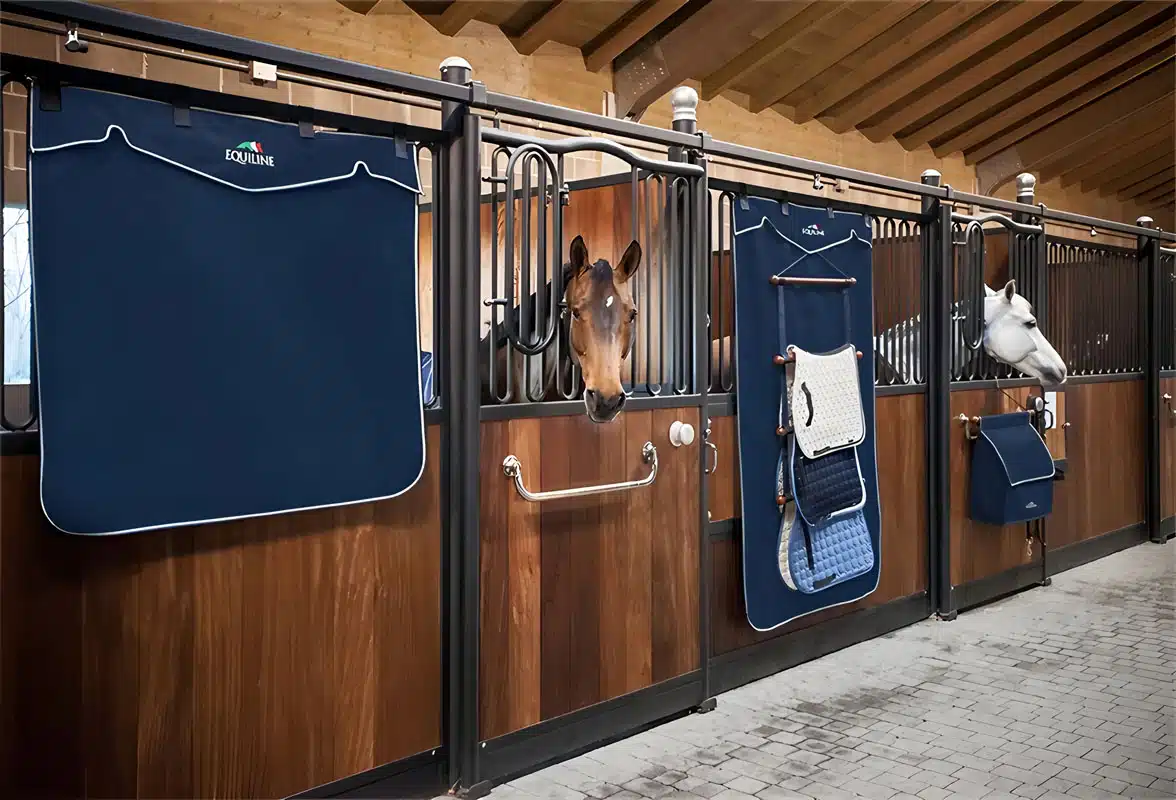
Top Factories Embracing Sustainable Materials
Leading manufacturers are shifting to circular economy models, prioritizing 100% recyclable steel and renewable bamboo to reduce long-term carbon footprints without sacrificing structural durability.
| Material Category | Traditional Standard | Sustainable Spec (DB Stable) |
|---|---|---|
| Structural Frame | Painted Black Steel (Single Use) | Q235B/Q345B Galvanized (100% Recyclable) |
| Infill Board | Old Growth Oak/Pine (Slow Regrowth) | High-Density Bamboo (3-5 Year Maturity) |
| Longevity | 10-15 Years (High Replacement Waste) | 50+ Years (ISO 1461 Galvanized) |
The Industry Shift to Circular Economy Manufacturing
The manufacturing sector is moving away from the “take-make-waste” model. In the equestrian infrastructure space, this means prioritizing materials that can be reintegrated into the supply chain at the end of their lifecycle. Top-tier factories now focus on steel not just for its immediate strength, but for its infinite recyclability. Unlike concrete or treated timber which often end up in landfills, steel maintains its structural integrity through multiple recycling cycles, directly supporting circular economy goals.
Energy efficiency during production is the second pillar of this shift. Manufacturers are integrating renewable energy sources and optimizing thermal processing to lower the embodied carbon of farm infrastructure. This aligns with the increasing demand for “Green Building” standards like LEED in agricultural projects. Buyers are no longer just asking if a stable will last; they are auditing the carbon cost of its construction.

Sustainable Specs: Bamboo and Recycled Steel
At DB Stable, we align our production specs with these sustainability mandates. We utilize specific materials engineered to balance environmental responsibility with the harsh demands of equestrian environments.
- Recyclable Structural Steel: We use Q235B and Q345B (Low Alloy High Strength) steel. These grades provide superior kick resistance and are fully recyclable at the end of the facility’s life. Combined with hot-dip galvanization (ISO 1461), the steel resists corrosion for decades, preventing premature replacement and material waste.
- Renewable Bamboo Infills: Our High-Density Strand Woven Bamboo is a renewable alternative to slow-growing hardwoods. Bamboo reaches maturity in 3-5 years compared to decades for oak. It is technically superior for stables, registering a Janka Hardness of >3000 lbf—making it 3x harder than oak and highly resistant to hoof impact.
- Long-Life HDPE: For projects prioritizing zero maintenance, we use UV-stabilized HDPE (High-Density Polyethylene) infills. While synthetic, these 28mm-32mm boards prevent the cycle of rot and replacement common with softwoods, significantly reducing the total volume of waste generated over the stable’s operational life.
Strand-Woven Bamboo: A High-Yield Carbon Sink
Moso bamboo sequesters up to 12 tons of CO₂ annually and regenerates in just five years, creating a negative carbon footprint material that outperforms traditional hardwoods in both speed and durability.
Rapid Regeneration and CO₂ Capture
The primary environmental argument against traditional hardwood infill (like Oak or tropical timber) is the “refresh rate.” A standard hardwood tree requires 30 to 40 years to reach harvest maturity. In that same timeframe, a Moso bamboo plant can be harvested six to eight times. This rapid cycle creates a highly efficient carbon pump.
Bamboo operates as a giant grass rather than a tree, utilizing a rhizome root system that remains underground after harvesting. This network allows the plant to regenerate naturally without the energy-intensive need for replanting or soil tilling, maintaining soil stability and preventing erosion. From a carbon perspective, the biomass accumulation is aggressive:
- Growth Cycle: Reaches full maturity in approximately 5 years.
- Efficiency: Outperforms conifers and many hardwood species by a factor of 2.5 in carbon fixation.
High-Density Strand Woven Technology
Raw bamboo is hollow and unsuitable for equine environments. The “carbon sink” benefit is only realized when the material is processed into high-density strand-woven boards. This manufacturing process crushes the bamboo fibers and compresses them under extreme pressure (roughly 2,500 tons) with eco-friendly resins. This effectively locks the captured carbon into a stable, rot-resistant structure that lasts for decades.
For stable construction, this engineered density is critical. We utilize 28mm-38mm boards that achieve a density profile far exceeding natural timber. This creates a “Kick-Proof” surface that resists hoof impact and prevents the splintering common in pine or standard plywood. By extending the product lifespan, we ensure the embodied carbon remains stored rather than released through early decomposition or replacement.
- Janka Hardness: > 3000 lbf (Rated 3x harder than Oak).
- Density: Exceeds 1,100 kg/m³, creating a solid, void-free mass.
- Lifecycle Impact: Negative carbon footprint due to high sequestration and long-term durability.
Q235B Steel: The 100% Recyclable Framework
Q235B steel offers a closed-loop lifecycle, allowing indefinite re-smelting without structural degradation, while meeting ASTM A36 toughness standards for horse safety.
Infinite Recyclability and Material Lifecycle
In the industrial B2B sector, sustainability isn’t just about the initial carbon footprint; it’s about the end-of-life plan. Q235B steel distinguishes itself from timber and plastic composites through its capacity for indefinite re-smelting. Unlike wood, which often ends up in landfills due to chemical treatments (like creosote or pressure treating), or plastics that degrade with each recycling cycle, Q235B steel retains 100% of its metallurgical properties after recycling.
Using Q235B significantly reduces the construction footprint by tapping into established secondary steel supply chains. Most modern Q235B production incorporates a high percentage of scrap metal, effectively closing the loop on industrial waste. For large-scale equestrian projects, this means the framework you install today becomes the raw material for future infrastructure, eliminating the “build-and-dispose” cycle common with organic building materials.
Meeting ASTM A36 Structural Standards
We strictly specify Q235B because it acts as the functional equivalent to ASTM A36, the global benchmark for structural resilience. This isn’t just about holding up a roof; it’s about withstanding the dynamic, concentrated impact of a horse kick. Brittle materials snap under this pressure, creating sharp, dangerous edges. Q235B possesses the necessary yield strength to absorb energy and deform slightly rather than fracturing catastrophically.
- Profile Spec: We utilize 50mm x 50mm RHS (Square Hollow Section) profiles to maximize rigidity.
- Épaisseur de la paroi : We adhere to a strict minimum of 14-gauge (2.0mm – 2.5mm). Many competitors cut costs with 1.5mm or 1.6mm tubing, which compromises safety.
- Impact Toughness: The material composition ensures ductility, preventing the “shattering” effect seen in lower-grade, high-carbon steels during impact.
Questions fréquemment posées
How to build an ESG compliant equestrian center?
Building an ESG-compliant center requires balancing three pillars: Environmental impact, Social responsibility, and Governance. Environmentally, you must move beyond “greenwashing” and implement measurable systems. This includes installing solar generation (targeting 80%+ self-sufficiency), implementing closed-loop water systems (rainwater harvesting for wash bays), and managing manure to prevent nitrogen runoff. Socially, the design must prioritize animal welfare—using stall sizes that exceed minimums—and ensuring safe working conditions for staff, such as wide aisles and kick-proof fixtures.
Governance involves supply chain transparency. You need to verify that your steel comes from ISO 14001 certified mills and that your timber or bamboo sourcing is traceable. Buying cheap, uncertified materials undermines the entire ESG framework.
Is bamboo a sustainable building material?
Yes, but only if you select the correct type. Standard hollow bamboo is prone to rot and insect damage, making it unsustainable due to frequent replacement needs. However, **Strand Woven Bamboo**—which we use exclusively—is a high-density engineered material. It is produced by compressing bamboo fibers under extreme pressure (2,500+ tons).
This process creates boards with a Janka hardness rating over 3,000 lbf, making them 3x harder than oak. Because bamboo matures in 3-5 years (vs. 50+ years for hardwoods), it regenerates quickly without deforestation. The sustainability here comes from the combination of rapid renewability and extreme durability.
Environmental impact of steel vs wood barns?
Wood wins on initial embodied carbon, as trees sequester carbon while growing. However, wood barns lose on longevity and maintenance. Horses chew wood, moisture rots it, and pests destroy it, leading to chemical treatments and frequent replacement. A wood barn might need major renovations every 10-15 years.
Steel has higher initial production emissions, but its lifecycle is superior. A Hot-Dip Galvanized steel barn (ISO 1461 standard) lasts 30-50+ years with zero structural maintenance. It is 100% recyclable at the end of its life. If you calculate environmental impact over a 50-year horizon, steel often outperforms wood because you build it once, whereas a wood structure might be built twice in that same period.
Green certifications for horse stables?
There is no specific “Green Stable” global certification, but facilities often use **LEED (Leadership in Energy and Environmental Design)** standards adapted for agricultural use. Achieving LEED status involves scoring points in categories like Water Efficiency, Materials & Resources, and Indoor Environmental Quality.
In California, the **CalGreen Code** mandates specific recycling and energy standards for agricultural structures. For B2B buyers, the most practical “certification” to look for is **ISO 14001** (Environmental Management) from your manufacturer, and **ISO 1461** for galvanization, which ensures the product won’t become landfill waste due to premature rust.
Eco-friendly horse barn manufacturers?
True eco-friendly manufacturers focus on **logistics efficiency** and **product longevity**. Companies like DB Stable utilize a flat-pack logistics model that fits 30-45 sets in a 40HQ container, compared to traditional welded designs that fit only 12-15 sets. This reduces shipping carbon emissions by over 60% per unit.
Look for manufacturers who use Hot-Dip Galvanization after fabrication. While “painted steel” or “pre-galv” tube might seem eco-friendly due to lower initial energy cost, they rust quickly in ammonia-rich stable environments, leading to waste. The most eco-friendly barn is the one that never needs to be replaced.
Questions fréquemment posées
Is a steel framework more sustainable than traditional wood construction?
While wood claims lower initial production emissions, steel dominates in long-term durability and circular economy metrics. Our Q235B structural steel is 100% recyclable without material degradation, unlike treated timber which often ends up in landfills due to chemical contaminants. In commercial equestrian facilities, hot-dip galvanized steel eliminates the need for toxic preservatives (like arsenic or copper compounds) required to keep wood from rotting in ammonia-rich stable environments. You get a lifecycle exceeding 50 years with virtually zero replacement waste.
Why is bamboo recommended for stallion stall infills over hardwoods?
Bamboo offers a superior strength-to-sustainability ratio. We use high-density strand woven bamboo that rates over 3,000 lbf on the Janka hardness scale—making it three times harder than Oak and resilient against stallion kicks. From an environmental standpoint, bamboo reaches structural maturity in 3-5 years, compared to 30-50 years for traditional hardwoods. This rapid renewability, combined with its natural resistance to mold and rot without heavy chemical treatment, makes it the responsible choice for high-impact equine applications.
What distinguishes ‘Hot-Dip Galvanization After Fabrication’ from standard protection?
Most budget competitors use pre-galvanized tubing, cut it, and weld it together. This burns the zinc off at the weld seams, guaranteeing rust within months. We adhere to the ISO 1461 standard: we weld raw black steel first, then submerge the completely finished panel into molten zinc. This forms a metallurgical bond with a coating thickness exceeding 70 microns (and often 85+ microns on structural parts), sealing every joint, edge, and internal surface against corrosion. This process is the only way to achieve a true “Lifetime” rust protection standard in wet stable conditions.
How does the flat-pack system impact project logistics?
Our engineered flat-pack design is a direct “Profit Protection” strategy for distributors and large projects. Traditional fully welded frames are bulky—you can only fit about 12-15 sets in a 40HQ container, meaning you are mostly shipping air. By flat-packing onto steel pallets, we load 30-45 sets per container. This reduces freight costs by over 60% per unit. The steel pallet system also prevents damage during transit and allows for safe, organized unloading via forklift, rather than manual loose unloading.
What is the typical lead time for a commercial order?
Production for commercial orders typically runs 35-45 days. This timeline is non-negotiable because we do not cut corners on the galvanization process. After precision fabrication of the Q235B/Q345B steel components, we must schedule slot times with the galvanizing plant to ensure the zinc coating meets ISO 1461 standards. While some factories might rush this by using pre-galvanized materials to ship in 20 days, we dedicate the necessary time to ensure the structural integrity and finish quality required for long-term B2B contracts.
Réflexions finales
Regulatory pressure on carbon reporting makes “disposable” infrastructure a financial liability for modern commercial stud farms. Choosing Q235B steel with ISO 1461 hot-dip galvanization secures your asset against rust and future-proofs your facility for mandatory ESG compliance. This decision goes beyond sustainability; it eliminates the capital drain of replacing rot-prone timber every decade, protecting your bottom line.
Your supply chain’s efficiency directly dictates your project’s profitability. We invite you to audit our flat-pack logistics model, which loads 30-45 sets per container to slash your Scope 3 shipping emissions by over 60%. Contact our engineering team today to review your site plans and lock in a production slot for the upcoming season.

 French
  English
  Spanish
  Arabic
  German
0 commentaires