


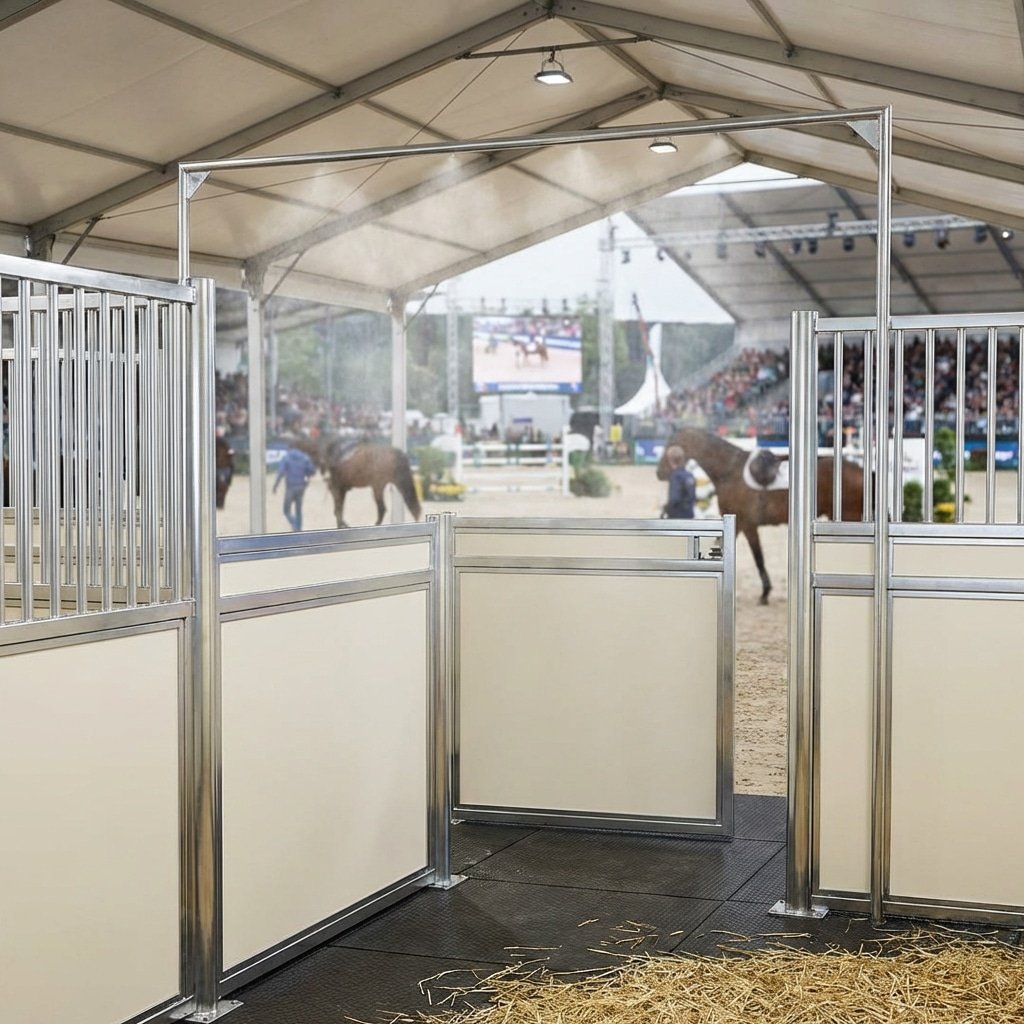
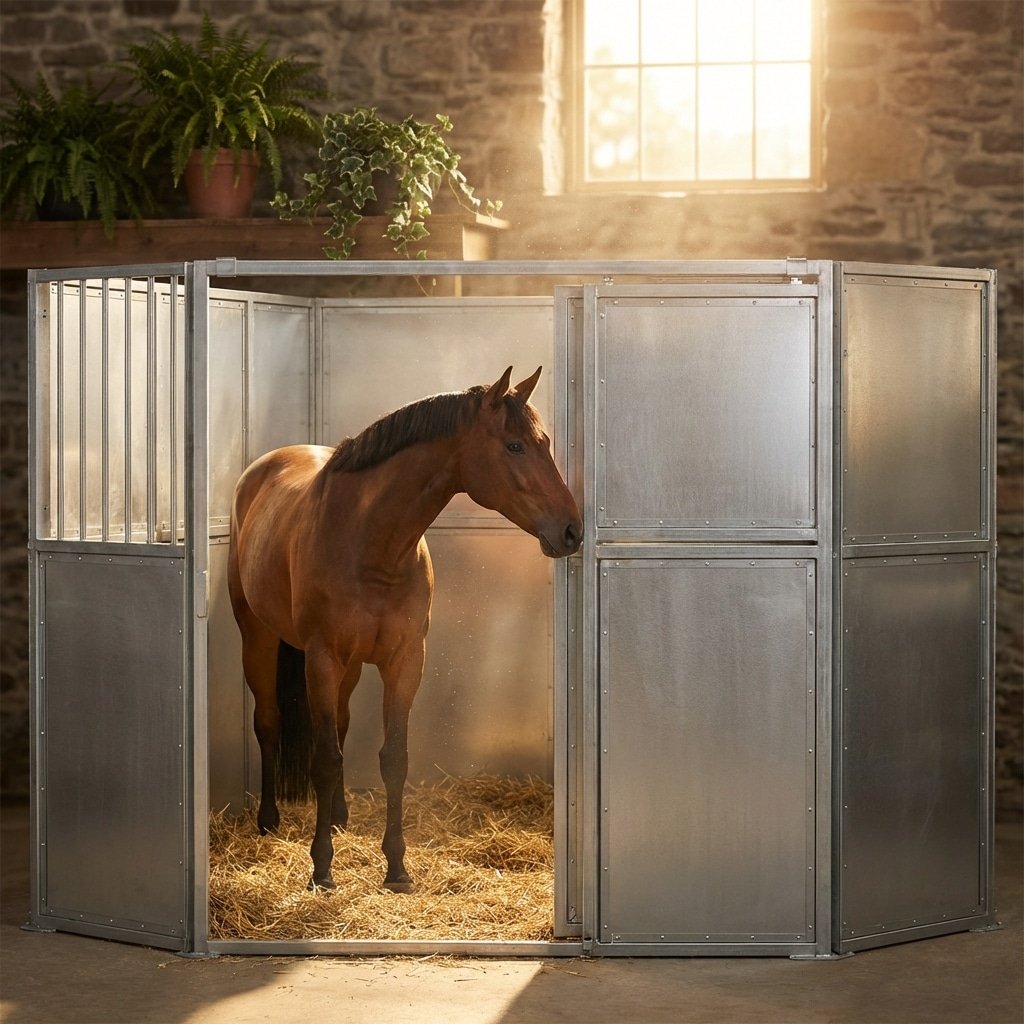
Maintaining rigorous Show Biosecurity is the only defense against the catastrophic liability of a contagious outbreak at mega-events. Porous timber stalls act as pathogen sponges, resisting sterilization and forcing managers into a costly cycle of bleaching and replacing rotted materials.
This analysis benchmarks temporary stabling solutions against strict ISO 1461 Hot-Dip Galvanization standards for infection control. We evaluate how replacing plywood with non-porous HDPE infills ensures rapid, hospital-grade disinfection between competitors while flat-pack logistics protect your bottom line.
The Rise of ESG (Environmental, Social, Governance) in Construction
ESG principles now dictate construction choices, favoring durable, recyclable materials like galvanized steel to minimize long-term waste and maximize animal safety standards.
style=”margin-top: 30px; margin-bottom: 15px; font-weight: 600; line-height: 1.3;”>The Strategic Necessity of Sustainable Construction
ESG has shifted from a marketing buzzword to a fundamental operational requirement. Investors and facility owners now view sustainability as a key indicator of long-term value and risk management. In the construction sector, this means moving away from the “build cheap, replace often” mentality toward materials and designs that endure.
The environmental pillar forces a re-evaluation of the material lifecycle. Builders are abandoning single-use or short-lifespan materials in favor of circular economy practices. The goal is to reduce the carbon footprint not just during the build, but over the facility’s entire 30-year operational life.
Social governance in this industry specifically targets user safety. In equine facility design, “users” include both the staff and the animals. Biosecurity and injury prevention are no longer just veterinary concerns; they are structural responsibilities. A facility that fails to prevent injury or spreads disease due to poor material choice now represents a significant liability risk.
Meeting ESG Metrics with Hot-Dip Galvanized and HDPE Systems
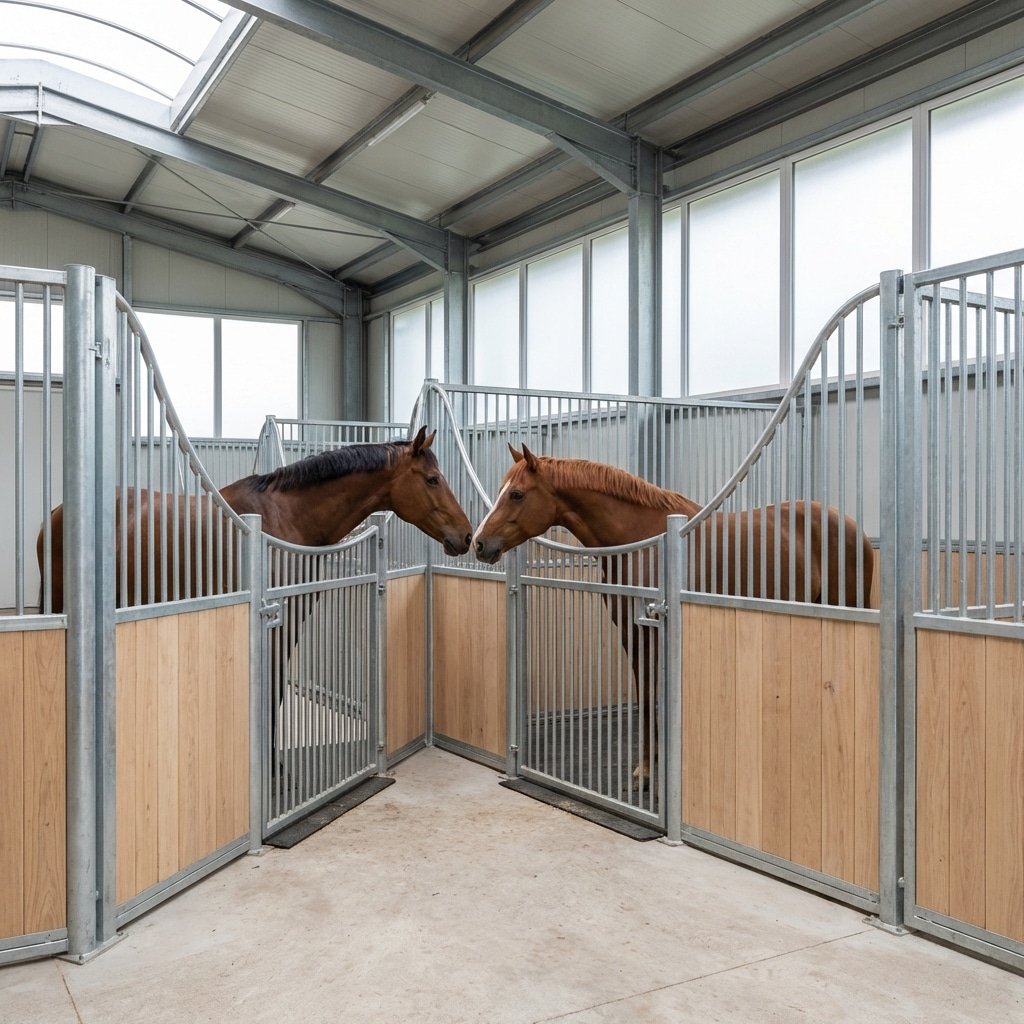
We engineer our stables to align directly with strict ESG criteria. By utilizing industrial-grade materials and standardized manufacturing processes, DB Stable helps projects meet sustainability goals without sacrificing durability.
- Environmental (Longevity & Recyclability): We use Hot-Dip Galvanization to ISO 1461 standards. This bonds zinc to steel at 450°C, extending product lifespan to 10+ years and eliminating the cycle of repainting and replacing rusted steel. Unlike wood, our steel is 100% recyclable at end-of-life.
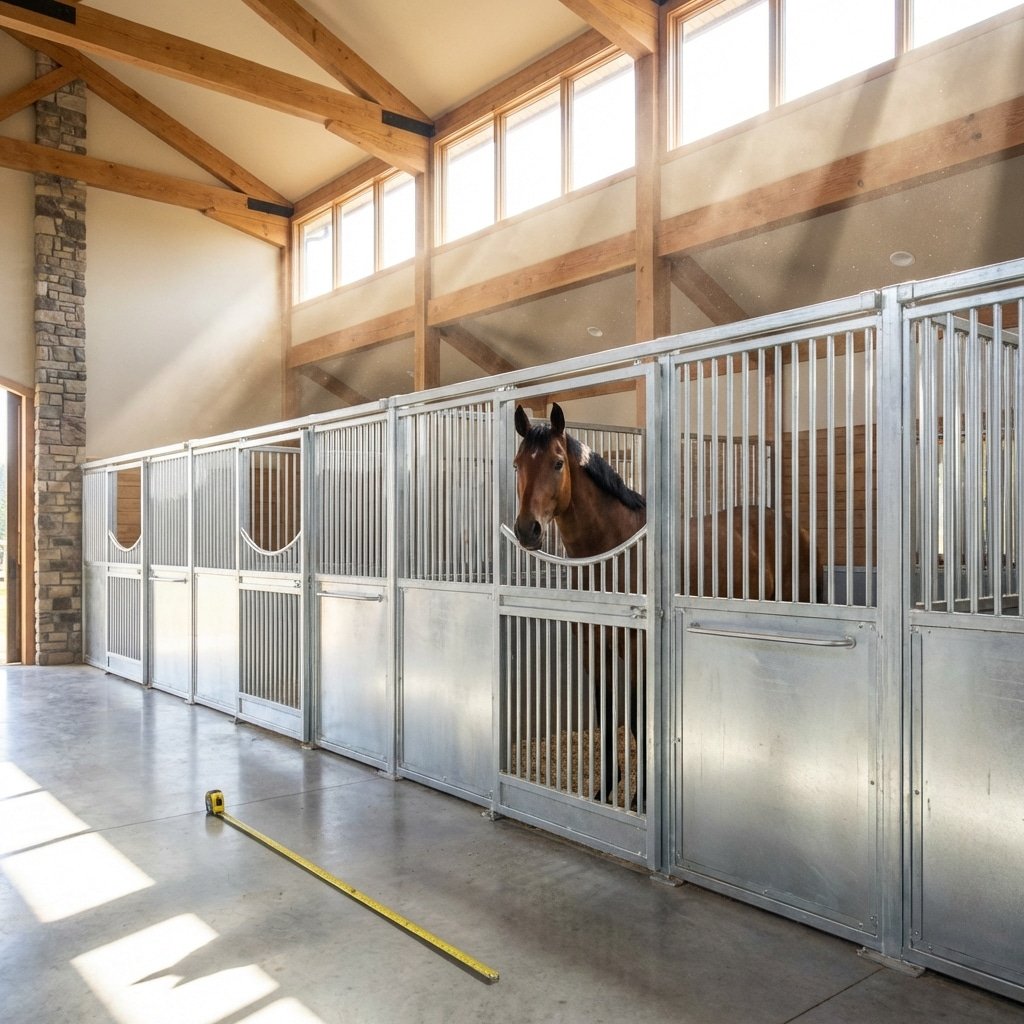
- Social (Animal Welfare & Safety): Our “Kick-Proof Guarantee” utilizes Q345 Low Alloy High Strength Steel and impact-absorbing HDPE infills to prevent shatter injuries. We also engineer “Cast-Proof” bottom gaps (approx. 50mm) to ensure horses cannot get legs trapped while rolling.
- Governance (Quality & Logistics): Manufacturing under ISO 9001 ensures full traceability of materials. Additionally, our flat-pack logistics system maximizes shipping container density (30-45 sets per 40HQ), significantly reducing the carbon emissions per unit compared to fully welded competitors.
Moving Away from Old-Growth Timber (Oak/Pine)
Modern facilities are abandoning slow-growth timber for engineered bamboo, which offers superior hardness (>3000 lbf Janka) and rot resistance without the deforestation liability of oak.
The Environmental and Practical Limits of Softwood
For decades, stable construction relied heavily on traditional timber, but the operational reality of these materials rarely matches the aesthetic appeal. Old-growth species like oak face agonizingly slow regeneration cycles. Waiting 50 to 100 years for a tree to mature makes it an increasingly scarce and expensive resource for large-scale commercial projects. The math simply doesn’t work for sustainable, high-volume manufacturing.
On the lower end of the spectrum, softwoods like Pine present immediate durability issues. In an active stable environment, Pine lacks the necessary density to withstand daily abuse. It acts as a sponge for moisture, accelerating rot at the base of stalls, and is soft enough that horses frequently “crib” or chew through the wood, creating jagged edges and compromising structural integrity. We are seeing a decisive market shift away from these natural timbers toward certified, fast-growing resources that deliver structural consistency without the maintenance headaches.
High-Density Bamboo: The Engineered Successor to Oak
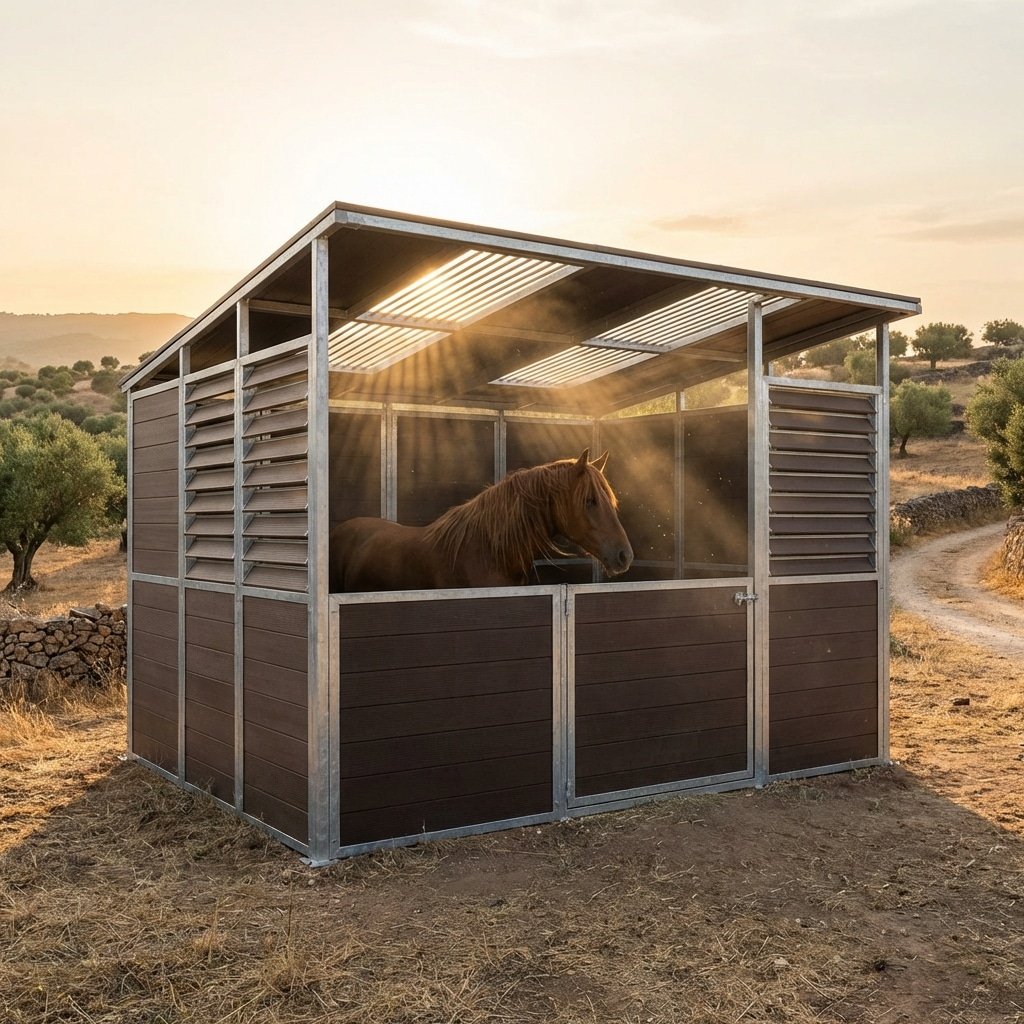
At DB Stable, we have transitioned to High Density Strand Woven Bamboo as our primary infill for professional-grade stalls. This is not the hollow bamboo found in landscaping; it is a heavily engineered material where bamboo fibers are compressed under extreme pressure with resin. The result is a board that is technically superior to natural hardwood in almost every metric relevant to equestrian safety.
- Extreme Hardness: With a Janka Hardness rating exceeding 3000 lbf, our bamboo is three times harder than traditional Red Oak. It is effectively “kick-proof” and impossible for horses to chew.
- Résistance à l'humidité : Unlike natural timber which swells and warps, the engineered strand-woven process creates a dense, mold-and-rot-resistant board ideally suited for wet stable conditions.
- Rapid Renewability: Bamboo reaches maturity in 3-5 years compared to decades for hardwoods, aligning with modern ESG requirements for sustainable sourcing.
This shift allows facility managers to maintain the classic, warm aesthetic of wood while utilizing a material that behaves with the durability of a composite. It eliminates the cycle of replacing chewed or rotted pine boards every few years.
Premium Galvanized Stables: 20-Year Rust Protection
Top Factories Embracing Sustainable Materials
ESG has shifted from optional compliance to a strategic necessity. Major facilities now prioritize circular economy models, utilizing materials like bamboo and recyclable steel to secure competitive advantages in a regulated market.
| Manufacturing Sector | Key Sustainable Material Strategy | Primary ESG Driver |
|---|---|---|
| Electronics & Tech | Digital Twins & AI Analytics | Lifecycle Decarbonization Tracking |
| Consumer Goods (FMCG) | Recycled Packaging & Circular Loops | Scope 3 Emission Reduction |
| Q235B Recyclable Steel | Embodied Carbon Reduction | |
| Furniture & Construction | High-Density Bamboo & Certified Timber | Ecosystem Preservation |
Siemens Electronics Works Chengdu
Leading industrial facilities like Siemens are moving beyond simple material swaps to integrate technology as a core sustainability enabler. The focus here is on “Digital Twins” and AI-driven analytics. By creating virtual replicas of physical production lines, factories can monitor lifecycle decarbonization in real-time. This approach reduces material waste by predicting exact quantities needed before production begins, eliminating the over-ordering that plagues traditional manufacturing. The global market for these Virtual Design & Construction (VDC) tools is expanding rapidly, driven by their ability to reduce defects and optimize energy usage.
Lego Factory Binh Duong
Facilities targeting carbon-neutral status are aggressively testing alternative materials to replace fossil-fuel-based plastics. The industry is seeing a pivot toward bio-based composites and engineered materials that align with circular economy principles. For factories operating at this scale, the priority is minimizing operational energy through on-site renewables—such as solar panels—while ensuring the structural materials of the factory itself meet strict embodied carbon limits. This aligns with the broader market trend where clients now explicitly demand carbon budgets during the design phase.
Procter & Gamble Taicang Facility
FMCG giants face significant pressure to manage “Scope 3” emissions—those generated across the entire supply chain. The Taicang facility model represents a shift toward supply chain transparency. Digital transformation tools are now essential for tracking emissions visibility, a challenge that 70% of manufacturers still struggle with. By implementing intelligent logistics and optimizing packaging materials for recyclability, these facilities aim to decouple growth from their carbon footprint, treating energy choices as pragmatic financial decisions rather than just ideological positions.
Unilever Global Facilities
Unilever’s approach highlights the integration of circular economy models into factory operations. Rather than the traditional linear “take-make-dispose” model, these facilities emphasize material recovery and waste reduction. This includes the use of sustainable construction materials for facility expansions and the implementation of water stewardship programs. The goal is to unlock cost efficiencies while meeting investor demands for transparent ESG reporting, effectively future-proofing operations against tightening environmental regulations.
Schneider Electric
As a leader in energy management, Schneider’s facilities demonstrate the impact of smart infrastructure. The core strategy involves treating the factory as a grid-interactive asset. By utilizing advanced sensors and IoT technologies, these plants optimize energy consumption in real-time, significantly reducing the operational carbon footprint. This aligns with the 2026 outlook where energy efficiency is no longer optional but a strategic competitive necessity. Companies integrating these ESG principles into core operations are better positioned to attract talent and secure green financing.
IKEA Zbąszynek Factory
IKEA’s manufacturing ethos directly supports the shift away from old-growth timber toward rapidly renewable alternatives like Bamboo. Unlike oak or pine, which take decades to mature, bamboo reaches harvest maturity in just 3-5 years. In our own manufacturing at DB Stable, we utilize High Density Strand Woven Bamboo for this exact reason—it offers a Janka hardness rating over 3000 lbf (3x harder than oak) while serving as a high-yield carbon sink. By processing bamboo into strand-woven products, factories can achieve negative carbon footprints over the product’s life cycle, sequestering carbon in durable goods rather than releasing it into the atmosphere.
Tesla Gigafactory Shanghai
Tesla’s rapid factory expansion relies heavily on Prefabricated Steel Structures, specifically using materials like Q235B Structural Steel. This material choice is deliberate for large-scale industrial projects due to its sustainability profile:
- 100% Recyclability: Steel can be re-smelted indefinitely without losing strength, creating a closed-loop material cycle.
- Waste Reduction: Prefabricated steel components are manufactured to exact specifications off-site, minimizing construction waste and transport emissions.
- Longevity: Properly treated steel (Hot-Dip Galvanized) offers a lifespan of 30-50 years, reducing the need for frequent renovations.
Nestlé Facilities
For food and beverage leaders, the focus extends to Regenerative Agriculture and responsible sourcing of raw materials. However, regarding their physical infrastructure, these facilities are increasingly subject to regulatory mandates requiring strict operational energy standards. The trend is moving toward “Climate-responsive design,” where factory architecture is oriented to capture natural light and ventilation, reducing mechanical dependency. This holistic approach ensures that the facility itself contributes to the company’s net-zero targets rather than being a liability.
Strand-Woven Bamboo: A High-Yield Carbon Sink
Moso bamboo plantations sequester up to 306 tonnes of carbon per hectare over 60 years, creating a material three times harder than oak while actively reversing emissions.
Biological Carbon Capture Efficiency
Bamboo operates differently from traditional timber. Because it is a grass, it regenerates annually rather than on a multi-decade cycle. A single hectare of Moso bamboo sequesters approximately 306 tonnes of carbon over a 60-year period. This biological efficiency outperforms Chinese fir and pine plantations by significant margins, making it one of the most effective terrestrial carbon capture systems available.
The harvesting method itself supports this ecosystem. When we harvest timber, the tree dies, and the soil releases stored carbon. When we harvest bamboo, the root system remains intact. This rhizome network holds the soil together, preventing erosion and maintaining continuous biomass accumulation without the need for replanting.
Locking Carbon into High-Density Boards
Raw bamboo is just the starting point. To create a viable structural component for our Professional Series stables, we process the fibers into strand-woven boards. This manufacturing step compresses the fibers under extreme pressure, increasing the density to approximately 900 kg/m³. This effectively locks the sequestered carbon into a durable industrial product rather than allowing it to decay.
- Janka Hardness: > 3000 lbf (Three times harder than Red Oak).
- Tensile Strength: 28,000 kgf/in² (Exceeding structural steel at 23,000 kgf/in²).
- Board Thickness: 28mm to 38mm options available for high-impact resistance.
- Carbon Impact: Maintains a negative carbon footprint throughout the product lifecycle.
This engineered density does more than store carbon; it solves the primary weakness of natural bamboo. By compressing the strands, we eliminate the air pockets where mold and rot typically thrive, creating a board that withstands the humid, ammonia-rich environment of a horse stable.
Q235B Steel: The 100% Recyclable Framework
Q235B steel is a low-carbon structural material equivalent to ASTM A36. Its primary advantage is 100% recyclability, allowing the framework to be melted down and repurposed without material degradation.
Material Properties Supporting the Circular Economy
We choose Q235B steel for its ability to maintain structural integrity throughout multiple lifecycles. Unlike composite materials or treated wood—which frequently end up in landfills due to chemical contaminants—Q235B retains its full chemical and mechanical properties even after repeated re-smelting.
This capability directly supports circular economy principles. By specifying a material that allows for indefinite recycling, we significantly reduce the carbon footprint compared to single-use construction materials. Current steel production already utilizes approximately 70% recycled content, which minimizes the extraction of new raw iron ore and closes the loop on material waste.
Engineering Safety with Q235B 14-Gauge Frameworks
DB Stable utilizes Q235B (equivalent to ASTM A36) in 50mm x 50mm RHS profiles to ensure high-impact resistance. While some manufacturers cut costs with lighter materials, we strictly adhere to a 14-Gauge (2.0mm) minimum wall thickness. This specification prevents the structural bending and deformation often seen in lighter, cheaper steel grades.
The metallurgy of Q235B offers a critical safety advantage in equestrian environments: high ductility. The material absorbs the kinetic energy from a horse kick without suffering brittle fracture. A harder, more brittle steel grade might crack under impact, creating sharp edges that pose a severe injury risk to the animal. Q235B absorbs the blow, maintaining both safety and structural stability.
Réflexions finales
Opting for cheap, pre-galvanized stalls invites rust and pathogen risks that threaten the viability of major equestrian events. Our ISO 1461 Hot-Dip Galvanized frames and non-porous HDPE infills provide the only sterile, zero-maintenance defense against disease transmission. This investment safeguards both animal welfare and your reputation as a premier facility manager.
Secure your supply chain with a flat-pack logistics system that fits 30–45 sets per container, drastically lowering your landed cost. Contact our engineering team today to configure a trial order that meets strict ESG and biosecurity standards. Don’t compromise on safety; verify our quality firsthand.

 French
  English
  Spanish
  Arabic
  German
0 commentaires