


Failure to secure Bottom Door Guides turns a functional stable into a structural liability. A loose door creates a pendulum effect, transforming the bottom edge into a guillotine trap that leads to catastrophic limb injuries and significant veterinary costs.
We analyze the mechanical intervention required to eliminate this risk using the Cast-Proof design standard. By anchoring Q345B steel components to maintain a strict 50mm gap, you ensure the barrier absorbs impact energy without yielding.
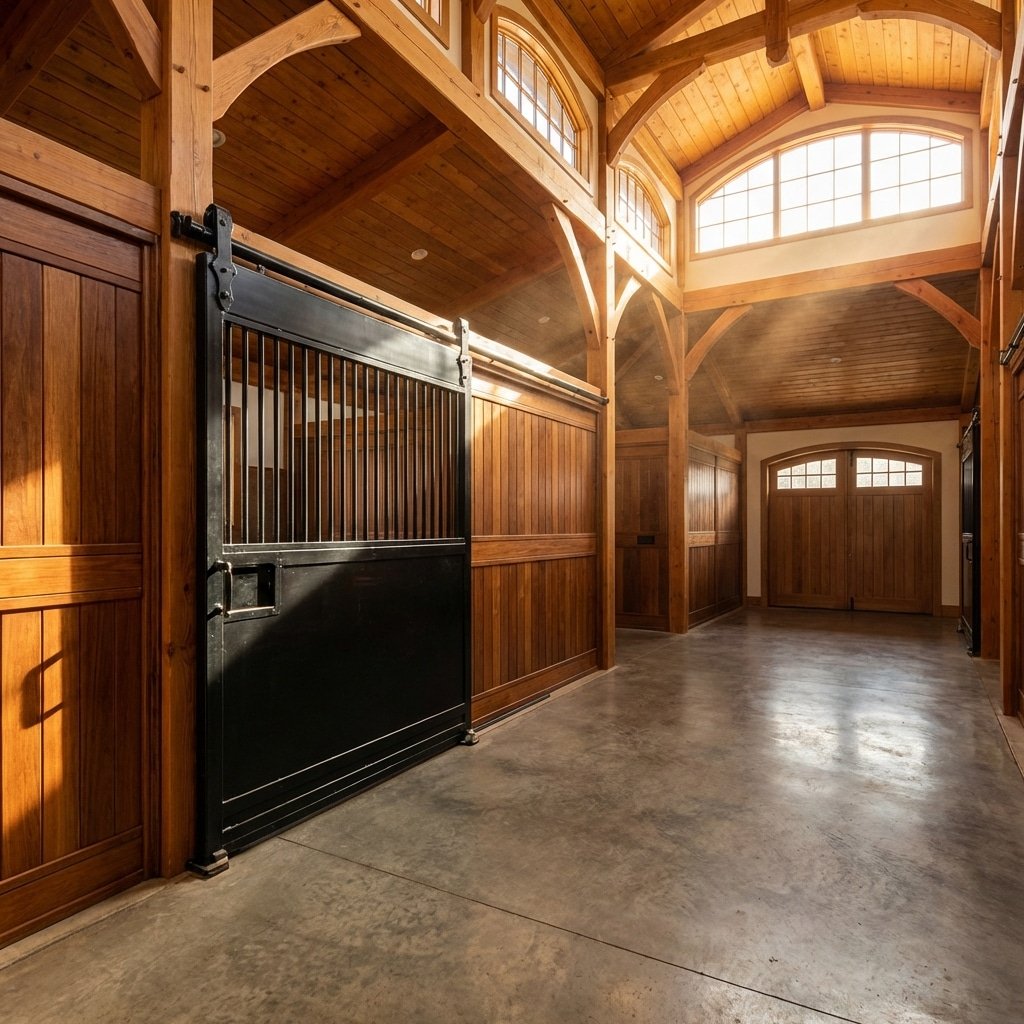
The “Kick-Out” Hazard of Unsecured Sliding Doors
The “Kick-Out” hazard occurs when a horse strikes an unanchored door bottom. The door swings outward like a pendulum, creating a trap where legs can slip through and break.
The “Pendulum Effect”: Mechanics of Displacement
Top-hung sliding doors are engineered for longitudinal movement along a track, not for resisting lateral impact. When a horse kicks the bottom of a door that lacks a secure floor guide, the laws of physics take over. The overhead track acts as a fulcrum, and the door panel becomes a free-swinging weight.
This displacement creates a catastrophic failure chain:
- Lateral Force: A specific strike pushes the bottom of the door outward, away from the stable wall.
- Derailment: As the door swings to an angle greater than 15 degrees, the top rollers often jump the track completely.
- The Trap Zone: The swing creates a temporary triangular gap between the door frame and the wall.
The real danger arises when gravity brings the 450kg door back to its original position. If a horse’s leg slipped into that gap during the “outward” swing, the returning door acts like a guillotine or crusher against the animal’s limb.
The “Cast-Proof” Standard: Preventing Limb Entrapment
To eliminate this risk, we engineer every DB Stable system with a “Cast-Proof Design.” This approach assumes that horses will kick, roll, and apply pressure to the door bottom. We treat the floor guide not just as a tracking mechanism, but as a primary structural anchor.
Our safety protocols require specific mechanical interventions:
- Strict Gap Control: We maintain a maximum 50mm clearance between the floor and the door frame. This prevents a hoof from sliding underneath even if the horse is cast (rolling) against the door.
- Q345B Steel Anchoring: We secure the bottom frame using high-strength Q345B steel guides bolted directly to the concrete. This absorbs the kinetic energy of a kick without bending.
- Impact Absorption: By locking the bottom edge, we force the door’s steel frame to absorb the blow rather than yielding to it.
A secure bottom anchor does more than guide the door; it ensures the barrier remains impenetrable, keeping the animal safely contained regardless of the force applied from inside the stall.

What is a Bottom Stay Roller (Door Guide)?
A bottom stay roller is a floor-mounted anchor that eliminates the “pendulum effect” in sliding doors, ensuring alignment and preventing heavy animals from pushing the door outward.
A bottom stay roller is a critical floor-mounted hardware component designed to secure the bottom edge of a sliding stable door. While the top track carries the weight, the bottom roller dictates the safety and stability of the entire system. Without this component, a top-hung door is essentially a free-swinging heavy object that poses significant risks to both the handler and the horse.
How the Roller Stabilizes Sliding Systems
In a professional equestrian environment, the guide serves a mechanical function beyond simple alignment. It acts as the primary counter-force against lateral pressure.
- Directional Guidance: It keeps the heavy door panel aligned parallel to the stable front during operation, preventing it from scraping against the return panel or jamming.
- Wobble Elimination: It physically prevents the “pendulum effect,” where the door swings outward away from the wall. This is common in cheaper systems that lack proper floor anchoring.
- Load Management: By restricting lateral movement, the roller reduces side-to-side stress on the top-hung rollers (trolleys). This significantly extends the lifespan of the overhead track system.
The “Cast-Proof” Design Standard
At DB Stable, we do not view the bottom guide as optional hardware. It is integral to our “Cast-Proof” safety standard, directly impacting animal welfare. A loose door is a trap waiting to happen.
- Defined Gap Limit: We install the roller to maintain a strict bottom gap of approximately 50mm. This specific clearance prevents hoof entrapment if a horse paws at the door.
- Anti-Cast Function: Horses often roll in their stalls. A secure bottom roller ensures the door panel cannot swing out, preventing a rolling horse from getting a leg stuck under a loose door.
- Kick-Proof Stability: The roller works in tandem with our Q235B (or Q345B for cold climates) steel frames. If a horse kicks the door from the inside, the roller acts as a rigid stop, ensuring the door cannot be dislodged from its track.
Custom Stables Engineered for Extreme Climates
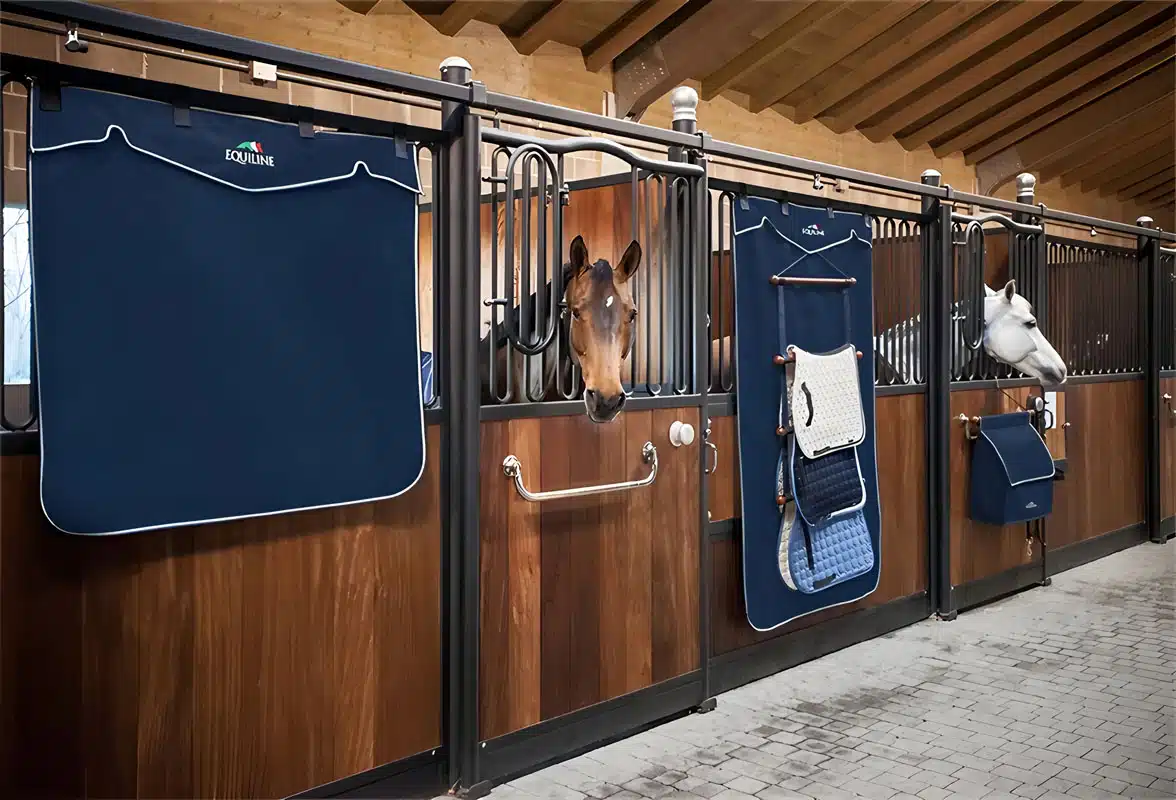
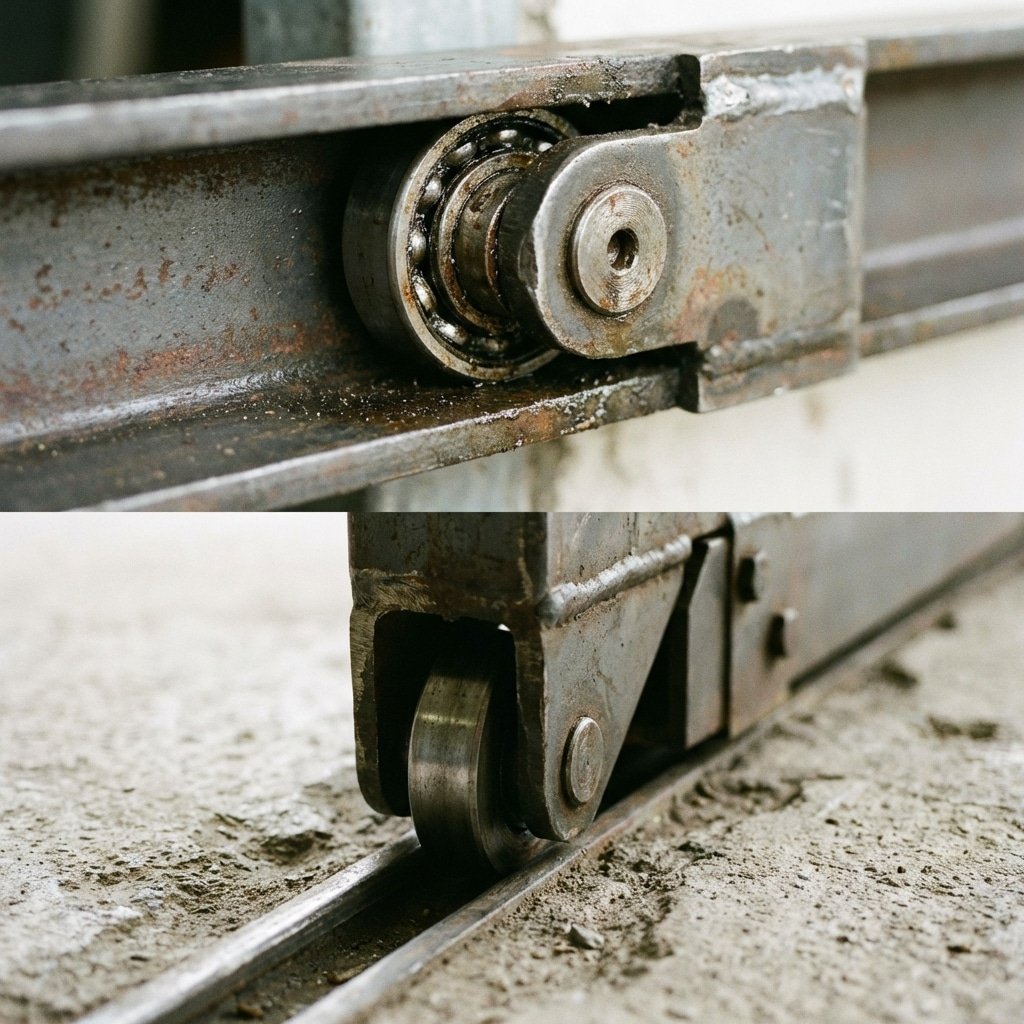
Installing the Guide on Concrete vs Dirt Aisles
For concrete, bolt directly into the slab using 304 Stainless hardware. For dirt, you must pour a localized concrete footer to maintain structural integrity and the “Kick-Proof” guarantee.
| Type de surface | Anchoring Method | Hardware Spec | Critical Step |
|---|---|---|---|
| Concrete Slab | Expansion Bolt | Acier inoxydable 304 | Friction fit into slab |
| Dirt / Gravel | Concrete Footer | Acier inoxydable 304 | Pour 200mm depth footer |
Concrete Surfaces: The Expansion Bolt Standard
Installing on a cured concrete slab is the most secure method for creating a “Kick-Proof” barrier. The goal here is to use the immense weight and structural density of the slab itself to prevent the door from swinging outward under impact.
- Hardware Selection: We strictly supply 304 Stainless Steel Anchor Bolts with every kit. Standard galvanized or zinc-plated bolts will corrode rapidly at the floor level due to constant exposure to equine urine and wash-down water.
- Drilling Precision: You must use a masonry bit that matches the anchor diameter exactly. A loose hole relies only on the bolt’s expansion, which can fail under the lateral stress of a horse kicking the door. A tight friction fit is non-negotiable.
- Structural Bond: By anchoring deep into the slab, the guide becomes an extension of the building’s foundation. This prevents the “Kick-Out” hazard where a horse could force the bottom of the door away from the wall.
Dirt & Gravel Aisles: The Concrete Footer Requirement
A common mistake in soft-ground stables is attempting to secure the guide with long spikes, rebar, or screw-in earth anchors. These methods are dangerous. A 500kg horse leaning or kicking against the door will easily displace a dirt-anchored guide, allowing the door to swing free and potentially injure the animal.
- The “Kick-Proof” Void: Installing directly into dirt invalidates our structural guarantee. The guide requires a rigid substrate to function correctly.
- Footer Installation: Dig a localized hole approximately 200mm deep and 200mm wide at the specific location of the door opening. Fill this void with concrete to create a dedicated footer.
- Final Mounting: Once the footer cures, drill and mount the guide using the standard concrete method. This ensures the door remains aligned and secure, regardless of the surrounding floor material.
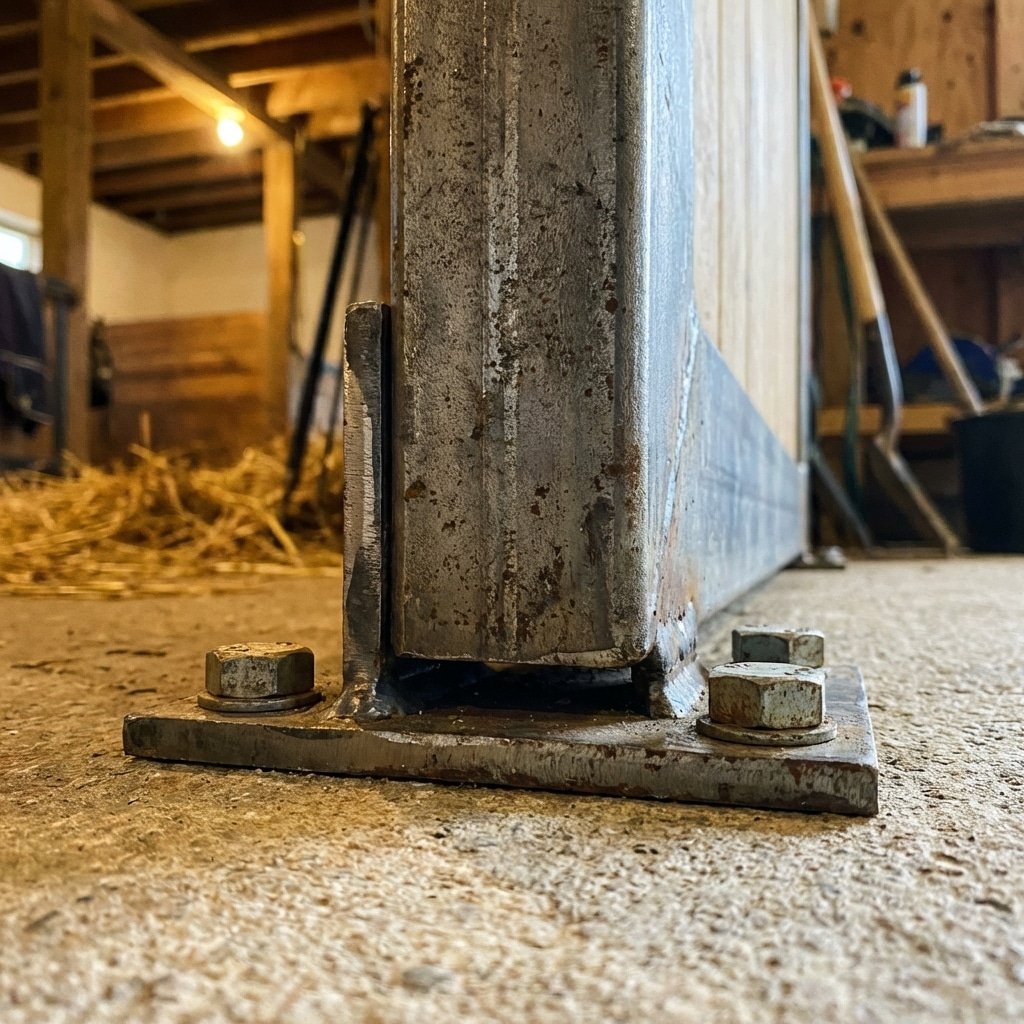
DB’s Heavy-Duty Stainless Steel Floor Guides
DB Stable utilizes adjustable 304-grade stainless steel guides to resist stable ammonia. They accommodate 28mm–40mm infills, ensuring smooth operation and preventing lateral door sway.
304 Grade Stainless Steel for Corrosion Resistance
In a commercial stable environment, standard powder-coated carbon steel hardware is a liability. The combination of high moisture levels and ammonia from horse urine creates a highly corrosive atmosphere that rapidly degrades inferior metals. Once the protective coating on a carbon steel guide chips—often from a hoof strike—rust spreads immediately, seizing the roller and damaging the door.
We eliminate this failure point by standardizing Acier inoxydable 304 for all floor guides, matching the specifications of our complete Hardware Kit. This material choice provides intrinsic resistance to acid and ammonia without relying on surface coatings. For distributors, this means fewer warranty claims regarding seized doors or rusted floor components.
- Material Composition: 100% 304 Grade Stainless Steel (No plated carbon steel).
- Environment Suitability: Engineered specifically for high-ammonia wet zones.
- Longevity: Outlasts powder-coated alternatives by significantly extending the service life of the sliding system.
Adjustable Fit for 28mm to 40mm Infill Profiles
A secure bottom guide is critical for preventing “kick-out,” where a horse forces the door outward from the bottom. Our guides feature an adjustable roller mechanism that accommodates the full spectrum of DB Stable infill options. This versatility allows a single hardware SKU to service multiple product lines, simplifying inventory for our dealers.
The adjustment range covers everything from our standard 28mm HDPE planks used in the Economy Series to the thicker 38mm Bamboo and 40mm profiles found in the Royal Series. Proper adjustment eliminates lateral wobble, ensuring the door glides linearly without rattling against the frame. Furthermore, the design prioritizes a low profile to minimize tripping hazards in the aisle, adhering to our “Cast-Proof” safety standards.
- Range Compatibility: Fits 28mm HDPE, 32mm/38mm Bamboo, and 40mm Royal Series profiles.
- Safety Design: Flush-mount, rounded edges prevent hoof injuries if stepped on.
- Mechanical Stability: Prevents door derailment from lateral force or animal impact.
Questions fréquemment posées
Why is a bottom guide mandatory for horse stall sliding doors?
A bottom guide is not optional hardware; it is a structural necessity for safety. It anchors the bottom of the door frame to the ground. Without this anchor point, a horse leaning or kicking against the door creates a “kick-out” effect, swinging the door outward like a pendulum. This force creates enough leverage to derail the overhead rollers, potentially causing the heavy steel door to fall on the animal or handler.
Can I install a floor guide on a dirt or gravel aisle?
You cannot anchor structural guides directly into loose soil or gravel. The movement of the door will eventually loosen the screws, rendering the guide useless. For dirt aisles, you must install a localized solid foundation. We recommend burying a pressure-treated 4×4 timber block flush with the ground or pouring a small concrete footer. This provides the necessary bite for the heavy-duty stainless steel anchor bolts included in our hardware kit.
Will the floor guide create a tripping hazard for my horses?
If installed correctly, there is zero tripping hazard. The guide sits in the “overlap zone”—the specific area where the door covers the opening regardless of whether it is fully open or closed. The hardware remains tucked inside the door’s bottom channel or behind the post, leaving the actual walkthrough clear of obstructions. If a guide is in the walkway, the installation is incorrect.
Do I need to grease the bottom guide?
No, and you should actively avoid doing so. In a stable environment, grease acts as a magnet for sawdust, dirt, and horse hair. This mixture turns into a grinding paste that jams the door and wears down the components. DB Stable uses 304 Stainless Steel guides that are naturally smooth and corrosion-resistant. Regular sweeping to remove debris is the only maintenance required.
Réflexions finales
Ignoring proper floor anchoring invites liability and warranty claims when a horse inevitably tests the door’s structural limits. Our “Cast-Proof” 304 Stainless Steel guides eliminate the “pendulum effect” and resist the ammonia corrosion that destroys standard carbon steel hardware. By standardizing these safety protocols, you protect your inventory from failure and your dealership from reputation damage.
Do not risk your margin on unproven components that rust or bend under pressure. Request a hardware sample kit to physically inspect the steel grade and adjustable fitment before you stock your warehouse. Contact our engineering team now to integrate these safety specs into your next container order.


 French
  English
  Spanish
  Arabic
  German
0 commentaires