


Equipping facilities in Germany for large Warmbloods requires engineering that exceeds standard 2.2m limitations. Athletic breeds like Hannoverians generate massive kinetic force, making standard Q235B steel a significant liability for professional yards where injury risks directly impact profitability.
This brief examines why 2.4m partitions and Q345B Low Alloy High Strength Steel are the mandatory baseline for housing dressage prospects. We detail how 50mm cast-proof mesh dividers and hot-dip galvanization after fabrication reduce long-term maintenance overhead while strictly enforcing safety standards.
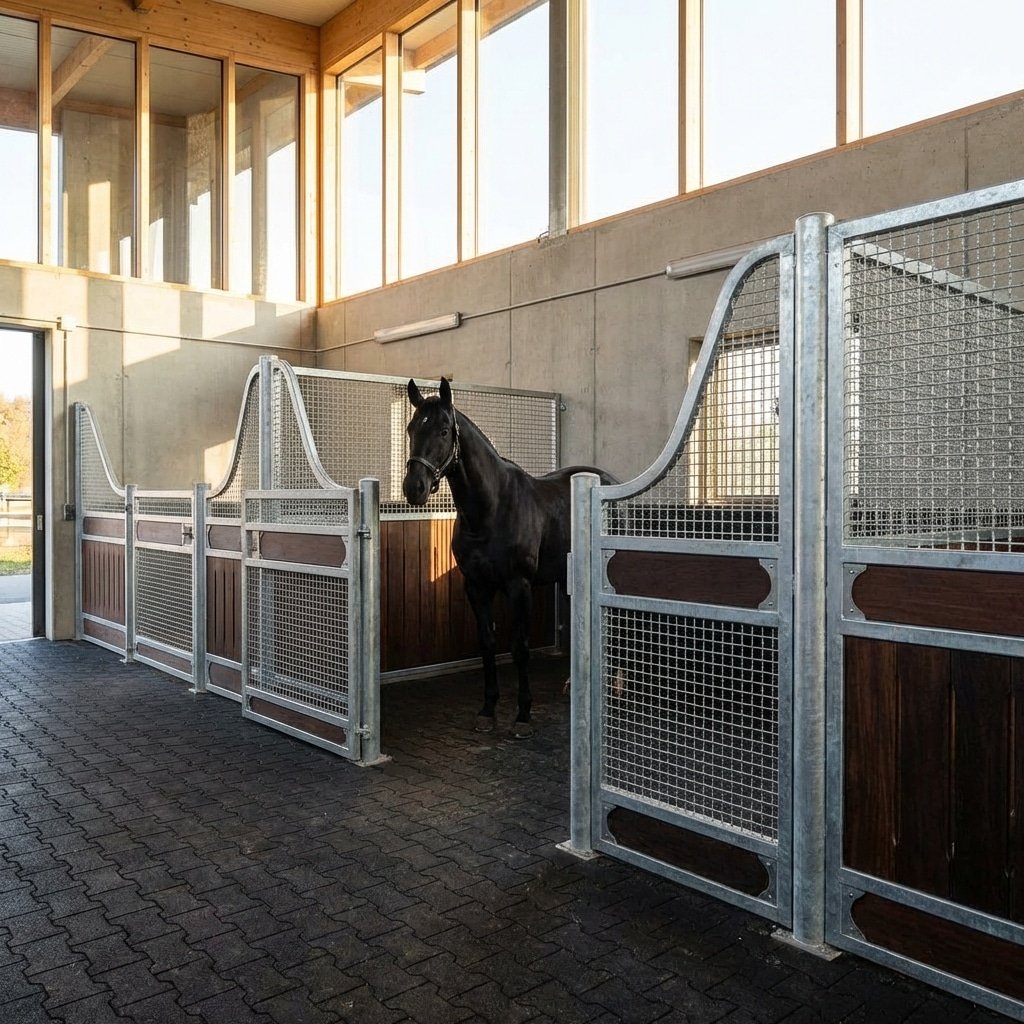
The Physical Demands of Housing Hannoverians and Holsteiners
Hannoverians and Holsteiners require expanded 12’x12′ footprints. We mandate cast-proof bottom gaps (approx. 50mm) and heavy-duty steel to manage the kinetic energy of these 17-hand athletes.
Spatial Requirements for 17-Hand Athletes
Standard 10’x10′ (3.0m x 3.0m) stalls are a liability for German Warmbloods. A typical Holsteiner stands between 16 and 17 hands with a deep barrel and broad chest. Confining this mass in a standard box restricts natural movement and significantly increases the risk of impact injuries or stress-induced behaviors like cribbing.
We enforce a minimum footprint of 12’x12′ (3.6m x 3.6m) for these breeds. This dimension allows the horse to lie down and turn safely without rubbing against partition walls. For larger breeding stallions or 17+ hand dressage prospects, extending to 12’x14′ prevents the animal from feeling claustrophobic and ensures they can fully extend during rest periods without hitting the structure.
Preventing Injury with Cast-Proof Design
Large horses generate massive force when rolling, and they are prone to “casting”—getting stuck against a wall with no leverage to stand up. A critical engineering failure in cheap stabling is a bottom gap (clearance between the floor and the bottom rail) that is too high, often exceeding 100mm. This creates a trap where a struggling horse can slide a hoof underneath the partition, leading to catastrophic leg injuries.
To mitigate this, DB Stable partitions feature a strict “Cast-Proof Design” with a minimal bottom gap of approximately 50mm. This precision tolerance ensures that even if a Hannoverian casts against the wall, their hoof will deflect off the bottom rail rather than sliding underneath. This design choice prioritizes animal safety over the easier manufacturing tolerances used by budget competitors.
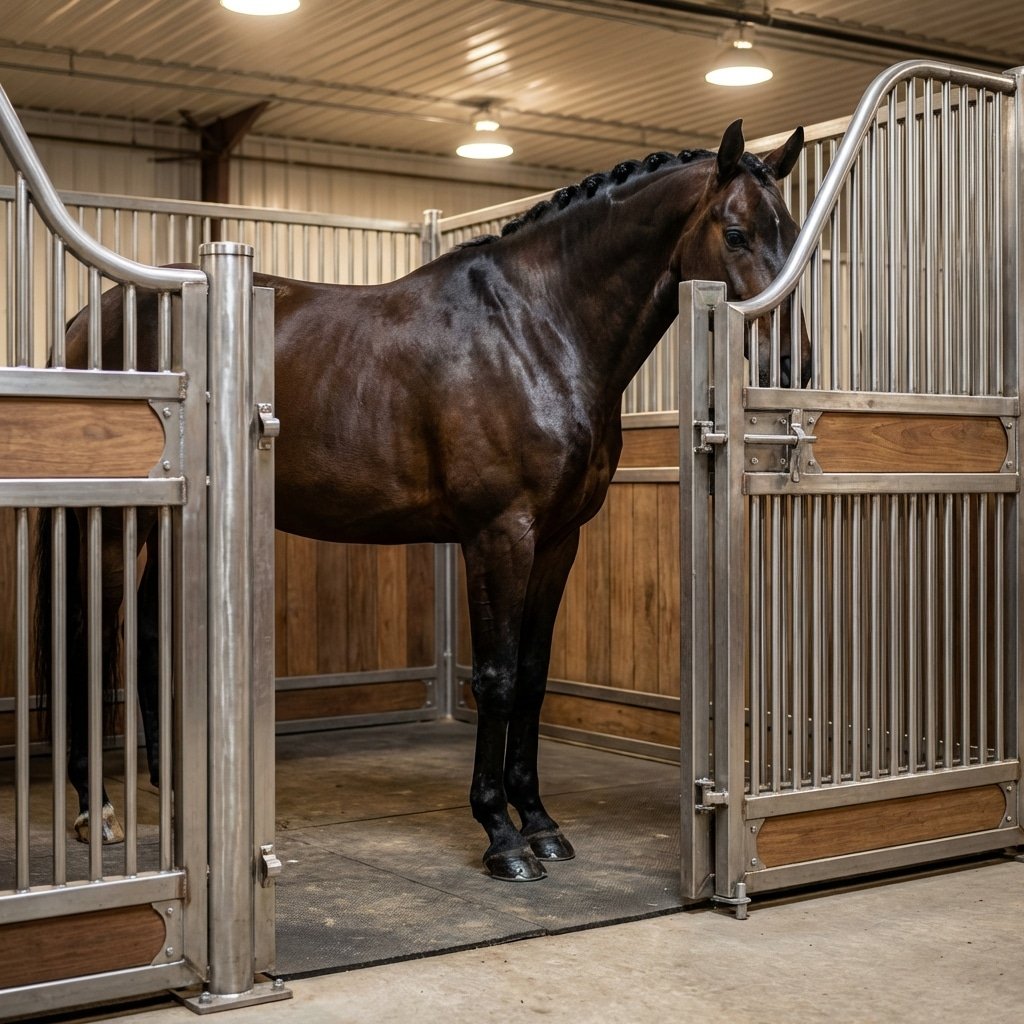
Height Matters: Upgrading to 2.4m Tall Horse Stall Fronts
Standard 2.2m stalls often fail to contain athletic Warmbloods. Upgrading to 2.4m prevents catastrophic injury from rearing and requires heavy-duty 14-gauge framing to maintain rigidity.
Safety Dynamics: Why 2.4m is the European Standard
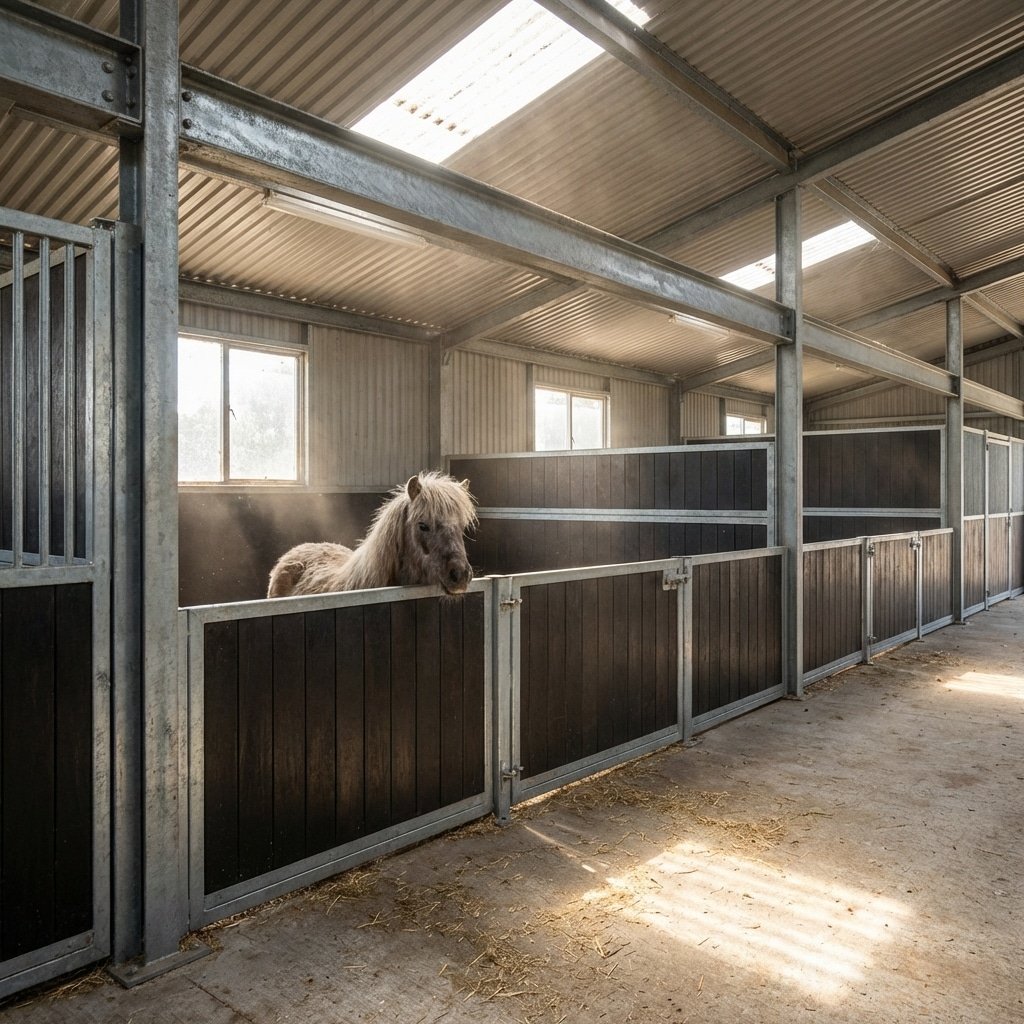
If you are housing athletic breeds like Hanoverians or Holsteiners, the standard 2.2m (7.2ft) stall front is a liability. These horses often stand 17 hands or taller, meaning their head and neck naturally extend well above standard partitions. When a horse rears due to isolation anxiety or feeding aggression, a lower front allows them to hook their front hooves over the top rail. This specific scenario is a leading cause of career-ending tendon lacerations and jaw fractures.
Moving to a 2.4m (7.87ft) height changes the geometry of the stall. It physically blocks the trajectory of a rearing horse, forcing them to deflect back down rather than getting hung up on the steel. This height allows facilities to maintain the benefits of open-top ventilation—crucial for respiratory health—while strictly limiting physical interaction between aggressive neighbors. You get airflow without the vet bills.
Reinforced Framework: Supporting Extra Height with 14-Gauge Steel
Adding 20cm to a stall front creates significant leverage issues if the steel isn’t up to spec. Taller panels built with standard 1.6mm tubing will suffer from “wobble” and flex when a 600kg animal leans against them. To support the increased dead weight of 2.4m Bamboo or HDPE infill, we alter the engineering standards completely.
- 14-Gauge Thickness: We strictly use steel with a wall thickness of 2.0mm – 2.5mm. Thinner profiles cannot handle the torque of a taller door system.
- 50mm x 50mm RHS Profile: This heavy-duty profile provides the structural backbone necessary to prevent bowing under impact.
- Hot-Dip Galvanization After Fabrication: Taller frames have more surface area exposed to ammonia. We weld the black steel first, then dip the entire unit to achieve a zinc coating average of >70 microns, ensuring rust protection even at the weld points.
Premium Stables Engineered for Extreme Durability
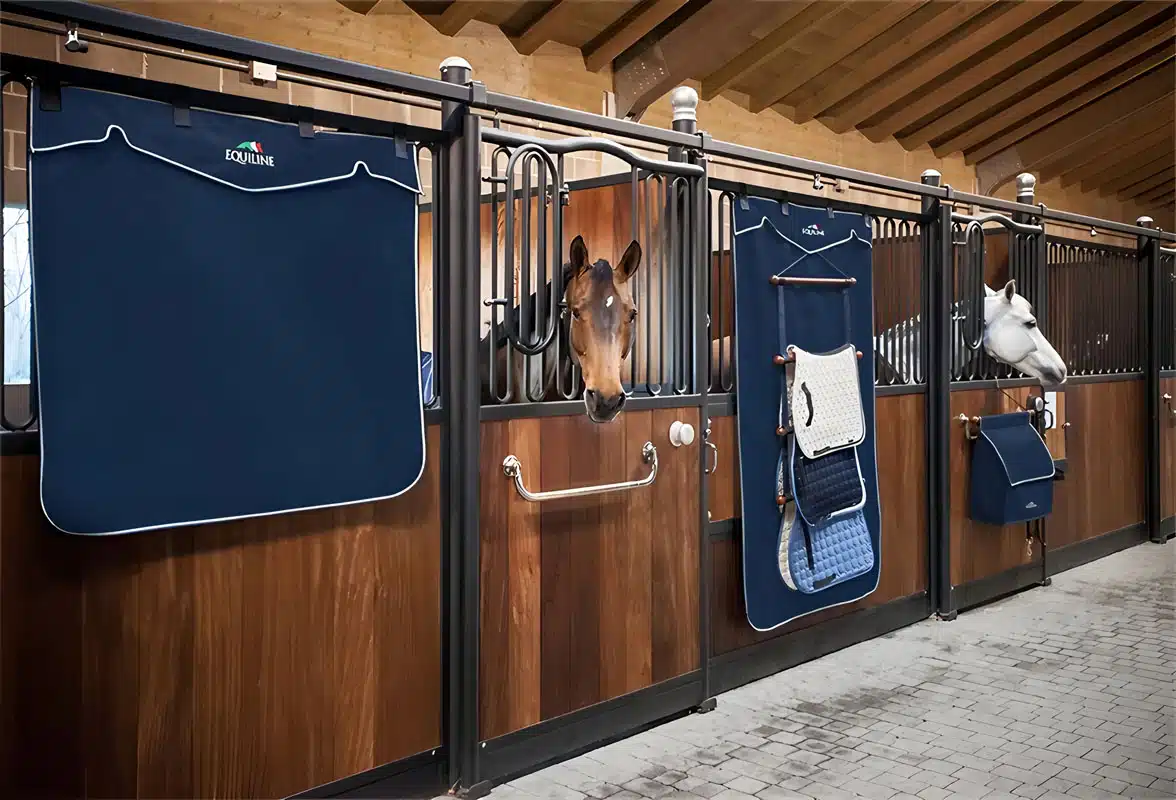
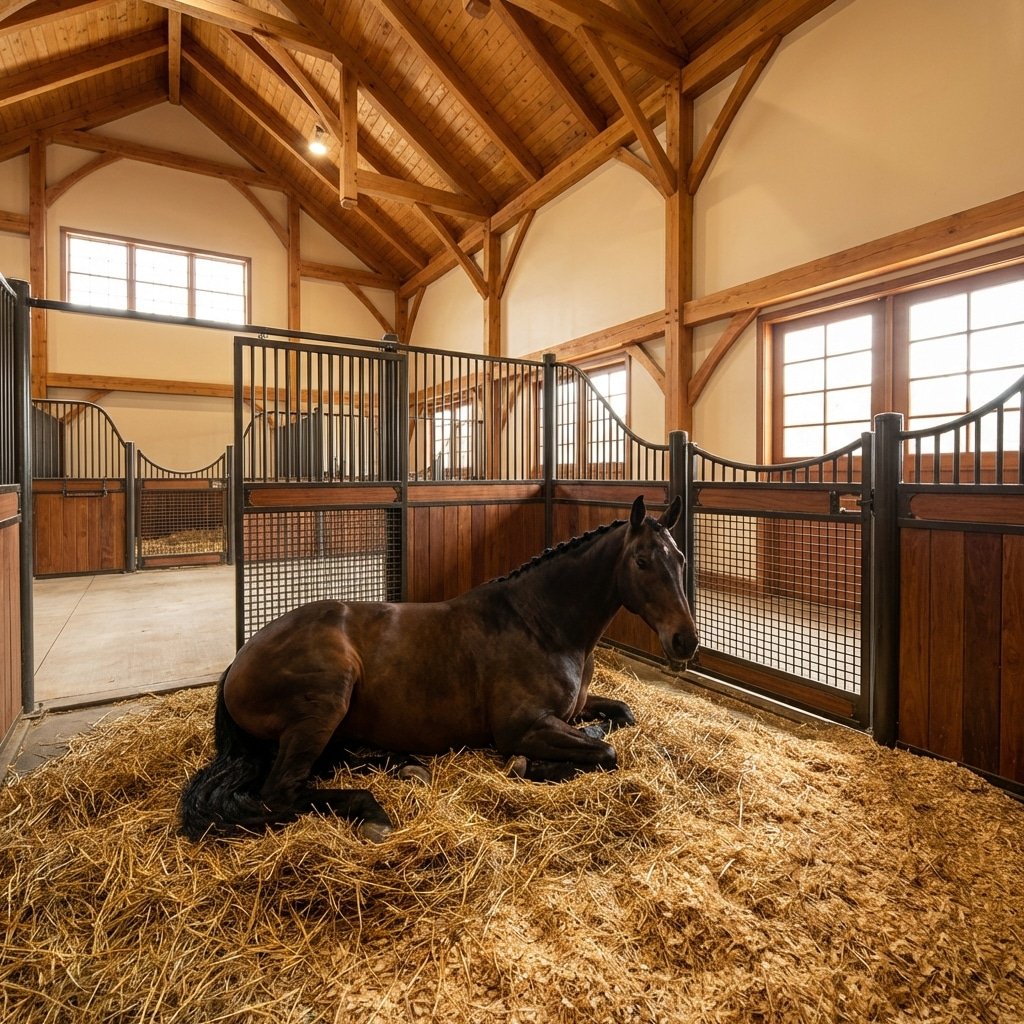
Q345B Steel: The Only Choice for Warmblood Impact
Q345B steel delivers 345 MPa yield strength and superior cold-weather toughness, making it the mandatory specification for safely containing high-mass Warmblood breeds.
The Kinetic Force of Warmblood Kicks
Housing large German breeds like Hannoverians and Holsteiners presents a physics problem that standard steel cannot solve. These horses possess significantly greater muscle mass and kick velocity than light riding breeds. When a 1,400-pound Warmblood kicks a stable front, the kinetic energy transfer often exceeds the plastic limit of standard Q235B (ASTM A36) steel.
Standard steel handles this stress by suffering plastic deformation. The bars bend permanently under impact. While the steel might not snap immediately, a deformed bar creates a widening gap in the grill. This structural failure introduces a critical safety hazard: a panic situation where a hoof slides through the bent bars and becomes trapped. We engineer our systems to prevent this deformation entirely.
Q345B Specifications: Yield Strength and Cold-Climate Resilience
We strictly utilize Q345B Low Alloy High Strength Steel for our “Professional Series” stables to address these high-impact loads. This material upgrade changes the mechanical properties of the stall front fundamentally compared to generic market options.
- Yield Strength: Q345B offers a yield strength of 345 MPa (equivalent to ASTM Grade 50), roughly 45% stronger than the standard 235 MPa found in common carbon steel.
- Kick-Proof Guarantee: This increased tensile strength ensures the steel absorbs high-kinetic impacts without permanent bending or structural failure.
- Cold Weather Toughness: Standard steel becomes brittle and prone to snapping in freezing temperatures. Q345B maintains high impact toughness in sub-zero conditions, preventing dangerous brittle fractures during winter.
Mesh Horse Stall Dividers: Airflow Meets Ultimate Strength
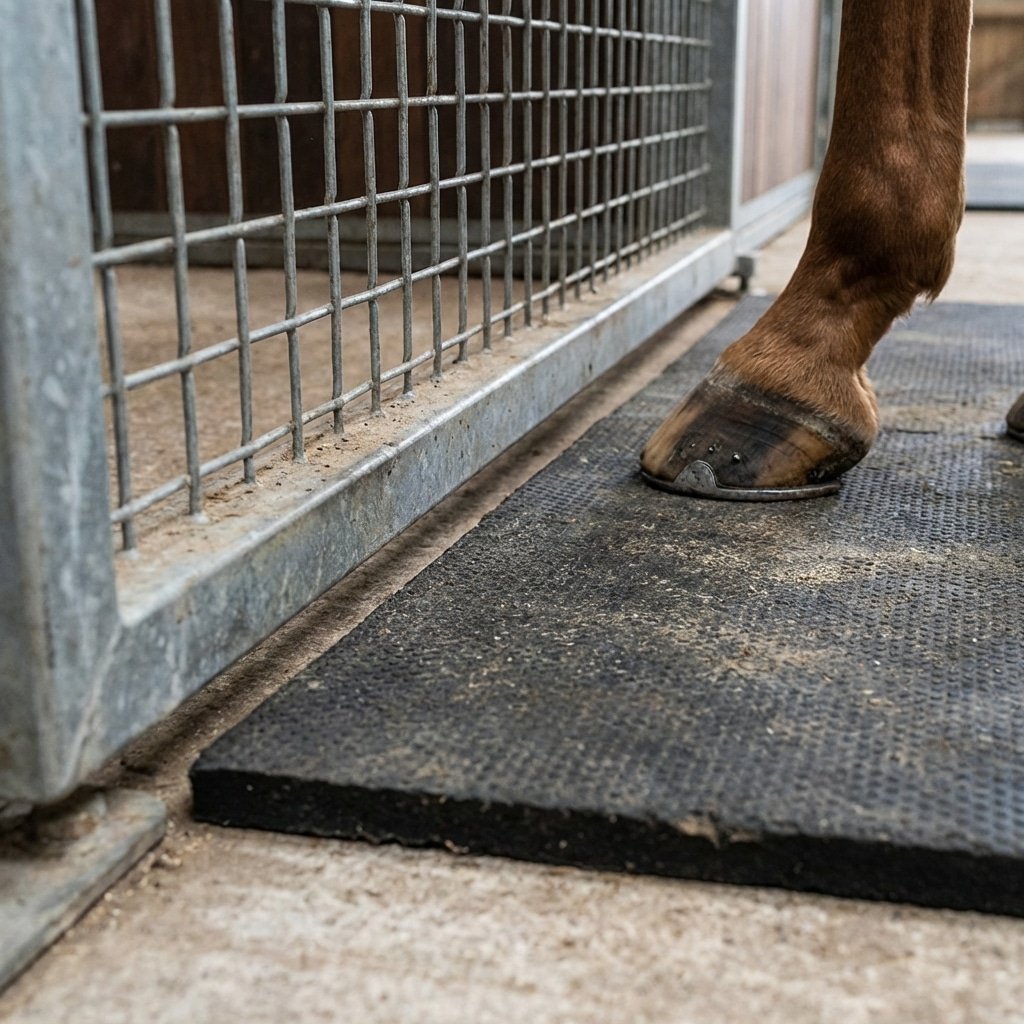
Mesh dividers utilize a hybrid design—solid bottom for safety, wire top for ventilation—to promote the “stack effect,” clearing ammonia and reducing respiratory stress without sacrificing containment.
| Fonctionnalité | Technical Specification | Operational Benefit |
|---|---|---|
| Grid Spacing | 50mm (Cast-Proof Standard) | Prevents hoof entrapment during rolling. |
| Steel Grade | Q235B or Q345B (Cold Climate) | Withstands high-impact kicks without brittle fracture. |
| Protection | Hot-Dip Galv (ISO 1461) | Prevents rust on wire welds for 20+ years. |
| Ventilation | Open Upper Wire Grid | Enables “Stack Effect” to clear ammonia. |
Optimizing Airflow and Herd Socialization
Standard solid walls create dead air pockets where ammonia and dust settle. This creates a challenging environment for equine respiratory systems. We engineer mesh dividers to solve this by facilitating “Stack Effect Ventilation.” As heat rises from the horse’s body, the open grid allows it to escape vertically, pulling fresh air in from the aisle. This continuous circulation drastically reduces the pathogen load in the stall.
- Clears Airborne Ammonia: Prevents gas buildup at the horse’s breathing level, reducing long-term respiratory risks.
- Lowers Isolation Stress: Visual access to neighbors reduces vices like cribbing and weaving caused by solitary confinement.
- Hybrid Design Logic: The solid bottom ensures privacy during feeding, while the mesh top encourages natural herd interaction.
Structural Integrity and Cast-Proof Grid Spacing
Safety in a mesh divider comes down to grid spacing and weld strength. A gap wider than 2 inches (50mm) is a liability; a horse rolling against the partition can easily trap a hoof, leading to panic and catastrophic injury. Our “Cast-Proof Design” strictly adheres to a 50mm grid spacing to eliminate this risk. We pair this with heavy structural steel to ensure the divider holds fast against the weight of a warmblood.
- Cast-Proof Spacing: 50mm grid prevents hooves from slipping through wires during rolling or kicking.
- High-Strength Steel: Frames utilize Q235B or Q345B (Cold Climate) steel, offering superior impact toughness compared to standard commercial tubing.
- ISO 1461 Galvanization: We Hot-Dip Galvanize after fabrication. This seals every wire weld against rust, unlike competitors who weld pre-galvanized wire that corrodes at the joints.
- Heavy-Duty Infill: The lower section accommodates 28mm-32mm HDPE or High-Density Bamboo, creating a kick-proof barrier.
Precision CNC Bolting for Rattle-Free Stalls
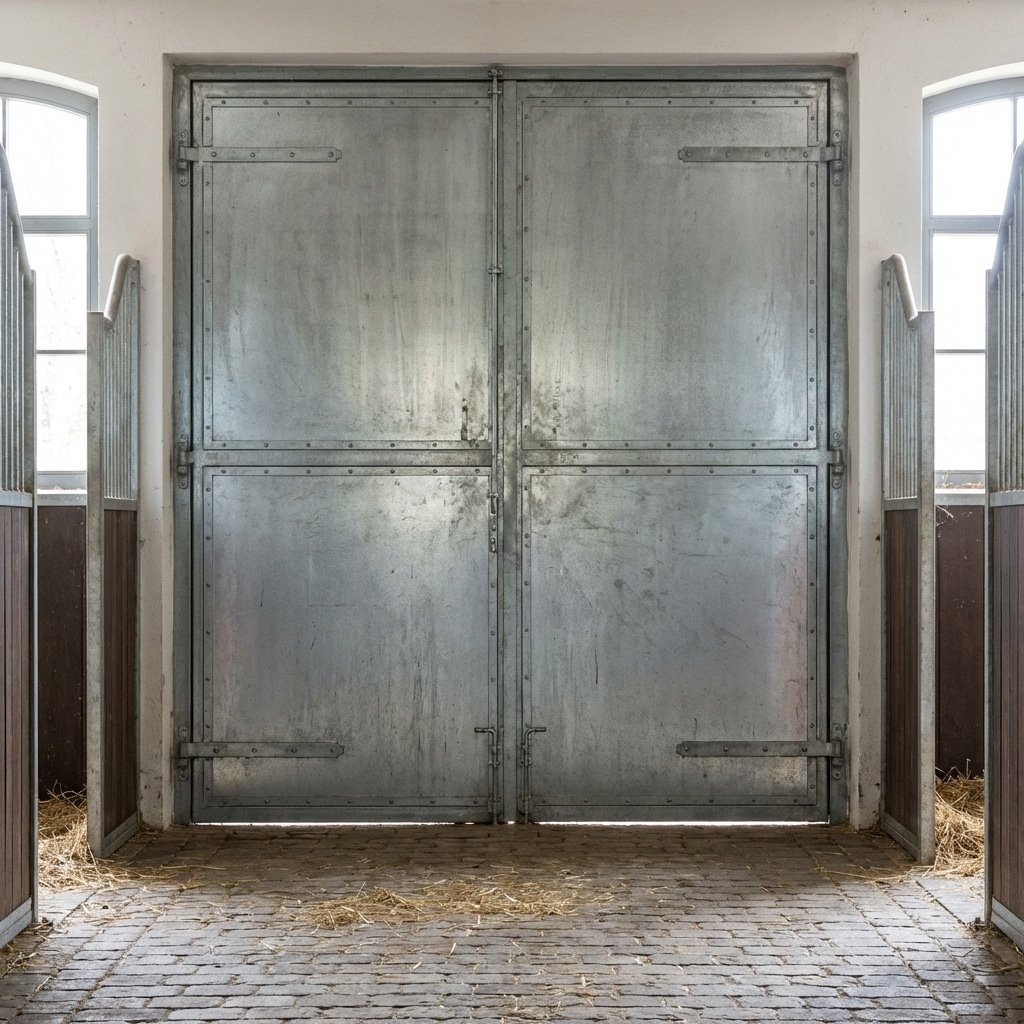
Rattle-free stalls rely on precision CNC machining to ensure exact bolt hole alignment, eliminating the structural gaps that cause vibration noise.
Eliminating Vibration with Tight-Tolerance Engineering
Most rattling in horse stalls comes from poor alignment during fabrication. If bolt holes are manually drilled or punched with low precision, the resulting gaps create “play” in the joint. This allows metal-on-metal movement every time a horse shifts weight or rubs against the wall. We solve this by using CNC machining for all connection points, ensuring every bolt hole aligns perfectly with its mating part.
Tight tolerances act as the primary defense against the continuous vibration caused by active horses. When a 1,200 lb warmblood kicks a stall wall, a loose connection amplifies the sound and stress on the frame. A precision-fit connection absorbs that energy silently. A rattle-free environment reduces stress for sensitive horses and serves as an immediate indicator that the structure remains secure and uncompromised.
304 Stainless Steel Fastening Specifications
Precision engineering fails if the hardware degrades. Standard steel bolts often corrode at the threads within the first few years, losing their grip and allowing the frame to loosen. To prevent this, DB Stable mandates a specific hardware protocol derived directly from our internal specifications.
- Complete 304 Stainless Steel Kit: We supply every stall with 304-grade anchor bolts, connectors, and screws to resist rust-induced loosening.
- Thread Integrity: Unlike galvanized fasteners that can strip their coating during assembly, stainless steel maintains constant tension and thread integrity over decades.
- Rigid Assembly: This hardware works in tandem with our hot-dip galvanized connection pins to create a rigid, maintenance-free assembly that resists vibration.
Questions fréquemment posées
What is the recommended stall size for large Warmbloods?
Standard 12’x12′ (3.6m) stalls are often insufficient for breeds like Hannoverians or Holsteiners. For these larger horses (17+ hands), we recommend a minimum footprint of 12’x14′ (3.6m x 4.0m) or 14’x14′ (4.0m x 4.0m). This extra space prevents the horse from becoming cast when rolling and reduces behavioral stress caused by confinement.
Why do you suggest 2.4m (8ft) high stall fronts instead of the standard 2.2m?
While 2.2m is common, it poses a risk for athletic Warmbloods that may rear up. A 2.4m (approx. 8ft) front ensures that even if a horse rears, they cannot get their front legs over the top rail, preventing catastrophic injuries. This height aligns with stricter European safety standards for large breeds.
Why is Q345B steel better than standard steel for horse stables?
Q345B is a low-alloy high-strength steel with superior impact toughness compared to standard Q235 (ASTM A36). It is critical for cold climates and heavy-duty use because it resists brittle fracture when kicked. If a powerful horse kicks a standard steel frame in freezing temperatures, it might snap; Q345B absorbs the energy and bends rather than breaking.
Are mesh dividers a good alternative to vertical bars?
Mesh dividers are excellent for socialization and ventilation. Unlike bars, which horses can sometimes bite or grab, heavy-duty wire mesh prevents muzzle contact while allowing full airflow. This design is increasingly popular for reducing anxiety in stabled horses, though traditional facilities may still prefer the aesthetic of vertical bars.
Can the stable fronts be customized to fit an existing barn structure?
Yes. Most renovation projects require specific dimensions to fit between existing support columns. Manufacturers typically offer custom widths (e.g., 3.2m or 3.8m) and can adjust door placements to accommodate the layout of your aisle or water system. Precise measurements are required to ensure the flat-pack systems install smoothly.
Réflexions finales
Standard stabling is a liability when housing high-value Hanoverians; their mass demands the superior yield strength of Q345B steel. Our “Professional Series” eliminates the risk of structural failure and injury with strict 2.4m height and cast-proof mesh tolerances. Your facility’s reputation depends on installing hardware that withstands the daily impact of 17-hand athletes.
Verify this durability before you commit to a full project. We invite you to request our technical data pack to review how our Flat-Pack logistics reduce freight costs while maintaining heavy-duty specs. Contact our engineering team now to secure a production slot tailored to your exact aisle requirements.

 French
  English
  Spanish
  Arabic
  German
0 commentaires