


Stocking the right Emergency Boards determines if a midnight stall failure ends in a quick fix or a career-ending veterinary injury. Standard pine lumber shatters under 500kg kick impacts, creating jagged projectiles that cause deep septic lacerations and expensive downtime for high-value animals.
This guide evaluates replacing shattered timber with 32mm shock-absorbing HDPE or High-Density Bamboo rated over 3000 lbf Janka hardness. We detail the DB U-Channel slide-swap methodology that allows staff to replace damaged infill in under ten minutes without compromising the ISO 1461 galvanized protection.
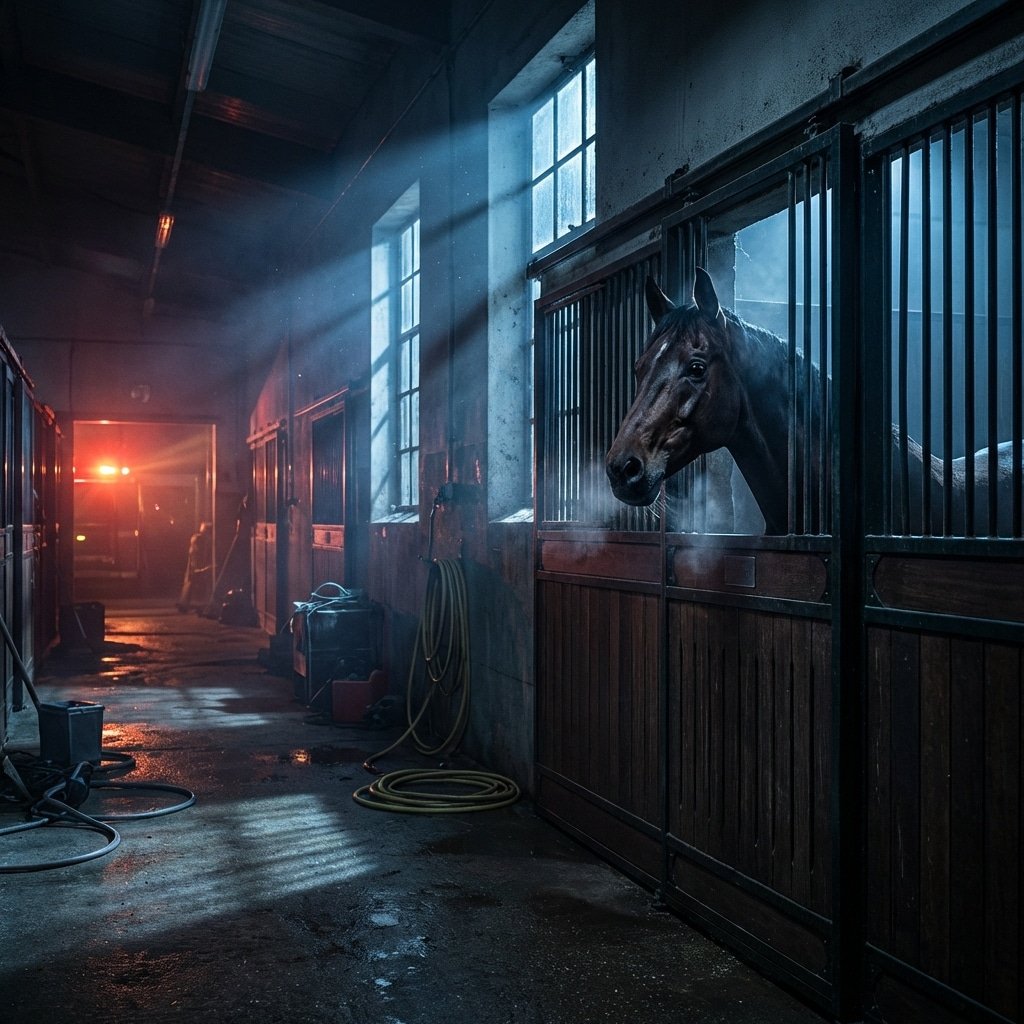
The Midnight Kicking Fit: A Shattered Pine Board
Standard pine boards shatter under kick impact, creating dangerous splinters. We replace softwood with shock-absorbing HDPE or high-density bamboo to eliminate injury risks.
Why Softwood Splinters Under Impact
Standard pine lumber lacks the Janka hardness required to withstand a direct kick from a 500kg horse. It presents a serious safety hazard because it does not fail cleanly. When pine breaks, it creates jagged, sharp splinters that result in deep leg lacerations and expensive veterinary bills. Natural knots in the timber also create unpredictable weak points that snap easily under sudden pressure, compromising the containment of the animal.
The Fix: 32mm Impact-Absorbing HDPE
DB Stable eliminates the risk of shattering by replacing softwood with engineered materials designed for kinetic absorption. We provide a “Kick-Proof Guarantee” that ensures the structural integrity of the wall even during aggressive behavior.
- HDPE Infill (28mm-32mm): We utilize UV-stabilized High-Density Polyethylene that absorbs impact energy through slight flexion rather than shattering, offering a zero-maintenance solution.
- High Density Bamboo: For clients requiring a wood aesthetic, we install Strand Woven Bamboo with a Janka hardness > 3000 lbf, making it three times harder than Oak and resistant to rot.
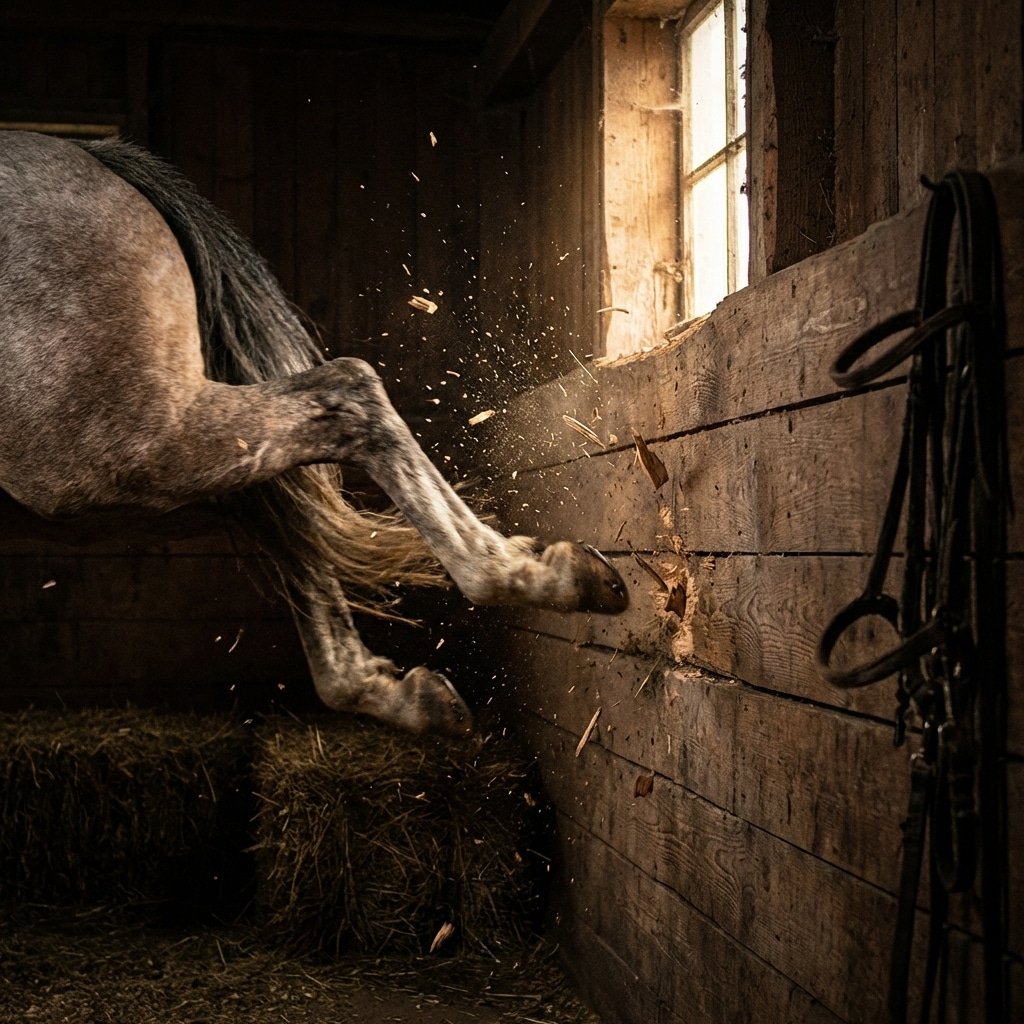
The Laceration Danger of Exposed Splinters
Shattered softwood creates projectile splinters that cause deep septic infections in horses. High-density bamboo (Janka > 3000lbf) absorbs impact without fracturing, eliminating this laceration hazard.
Deep Tissue Infection and Abscess Risks
Standard softwood boards, particularly pine, do not just break under impact; they shatter. When a horse kicks through a standard stall board, the wood fractures into long, sharp projectiles. These splinters act as dirty needles, driving surface bacteria and debris deep into the muscle tissue. The immediate mechanical damage is severe, but the secondary medical complications are often costlier and more dangerous for the animal.
- Foreign Body Retention: The skin over a puncture wound often heals rapidly, trapping microscopic wood fragments inside. These undetectable splinters cause chronic granuloma formation as the body attempts to wall off the foreign material.
- Anaerobic Infection: Deep tissue wounds create ideal environments for anaerobic bacteria. This rapidly escalates into localized abscesses that require veterinary surgical drainage and prolonged antibiotic courses.
- Septic Complications: If a splinter penetrates near a joint capsule or tendon sheath, the infection can migrate, leading to septic arthritis or tenosynovitis, conditions that frequently end athletic careers.
The 3000lbf Janka Hardness Safety Standard
We eliminated the risk of shattering boards by changing the material density. DB Stable utilizes High Density Strand Woven Bamboo, engineered specifically to withstand the force of a direct kick without failing catastrophically. The core metric here is the Janka Hardness rating, which measures the resistance of wood to denting and wear.
Standard Oak, often considered a “hard” wood in stable construction, has a Janka rating of approximately 1,360 lbf. Our strand woven bamboo rates over 3,000 lbf. This material is compressed under extreme pressure, creating a board that is three times harder than Oak and significantly denser than any softwood.
- Impact Absorption: Under heavy impact, this high-density material may dent, but it does not shatter into jagged shards.
- Fiber Integrity: The strand woven structure binds fibers tightly, preventing the creation of the long, sharp splinters common in pine or plywood failures.
- Kick-Proof Resilience: By exceeding the 3000 lbf threshold, the boards act as a safety barrier rather than a potential hazard, maintaining structural integrity even in high-anxiety equine environments.
Premium Modular Stables Built For Longevity

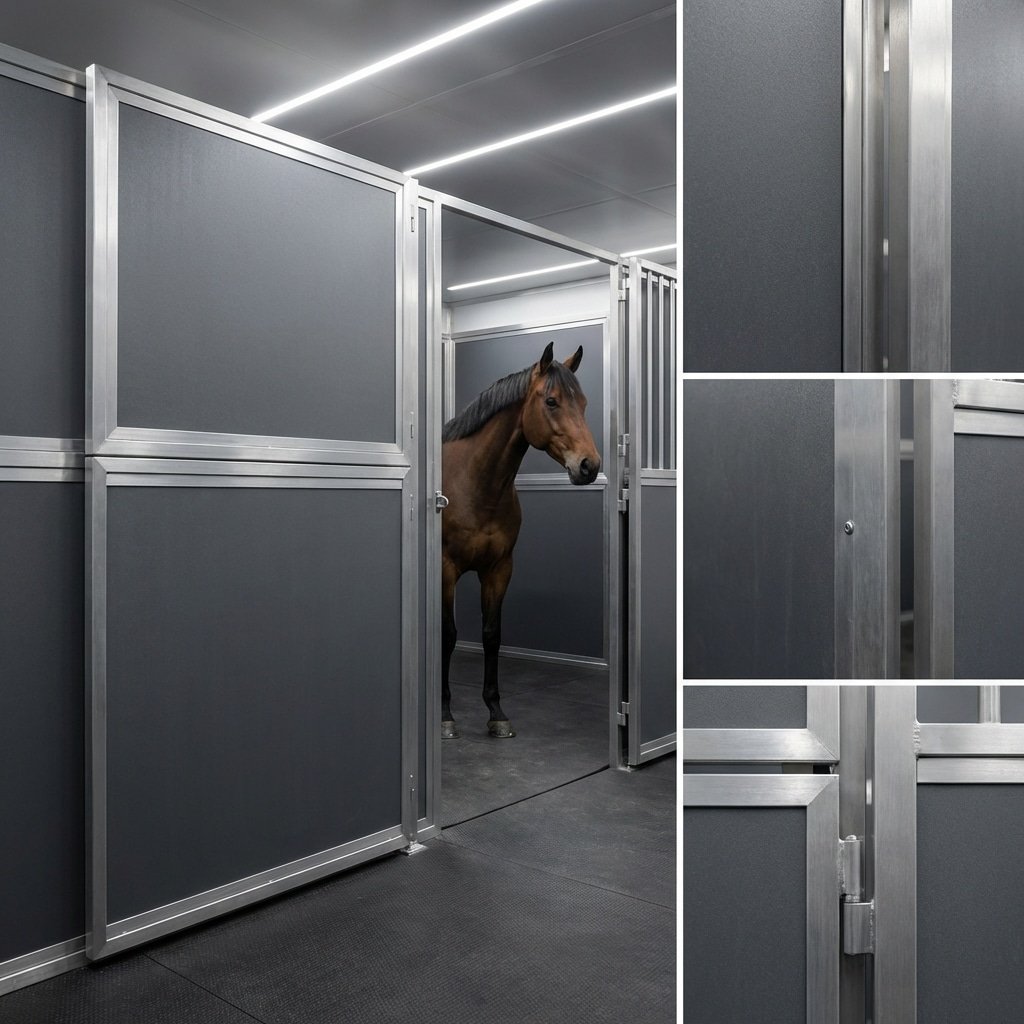
The Welded Stall Nightmare: Requiring a Grinder to Fix
Fixed welded stalls force you to bring angle grinders into a barn full of fuel, creating fire risks and stripping the protective zinc coating you paid for.
The Fire Hazard of Grinding Near Flammable Bedding
When a fully welded stall component fails, you cannot simply unbolt and replace it like a modular system. You have to cut the damaged steel out. This brings heavy industrial machinery directly into a stable environment designed for organic life, not hot work. Using an angle grinder to remove a failed weld shoots a stream of high-heat sparks into an area typically filled with straw, sawdust, and hay. This turns a simple repair into a serious fire safety protocol.
- Ignition Risk: Sparks from grinding can smolder in bedding for hours before igniting, requiring a mandatory fire watch long after the contractor leaves.
- Animal Stress: The screaming noise and vibration of on-site grinding terrify horses. You often must evacuate the entire stable block, disrupting operations.
- Extended Downtime: A repair that should take 20 minutes becomes a 6-8 hour ordeal involving evacuation, cooling periods, and safety checks.
Stripping the ISO 1461 Galvanized Armor
The most expensive part of a quality stall is the galvanisation à chaud. At DB Stable, we adhere to BS EN ISO 1461, ensuring a zinc coating that averages over 85 microns. On-site welding repairs actively destroy this investment. To get a clean weld, the contractor must grind away this protective layer down to bare metal. Once the repair is done, that specific spot becomes the weak link where rust begins immediately.
- Zinc Removal: Grinding mechanically strips the 85-micron metallurgical bond that factory galvanization provides.
- Inferior Patching: Field-applied “cold galv” sprays are just paint. They lack the self-healing cathodic protection of true hot-dip zinc and fail quickly in ammonia-rich stable environments.
- Structural Warping: The intense, localized heat from welding distorts the steel frame. This frequently misaligns door latches and partition connectors, ruining the smooth operation of the stall.
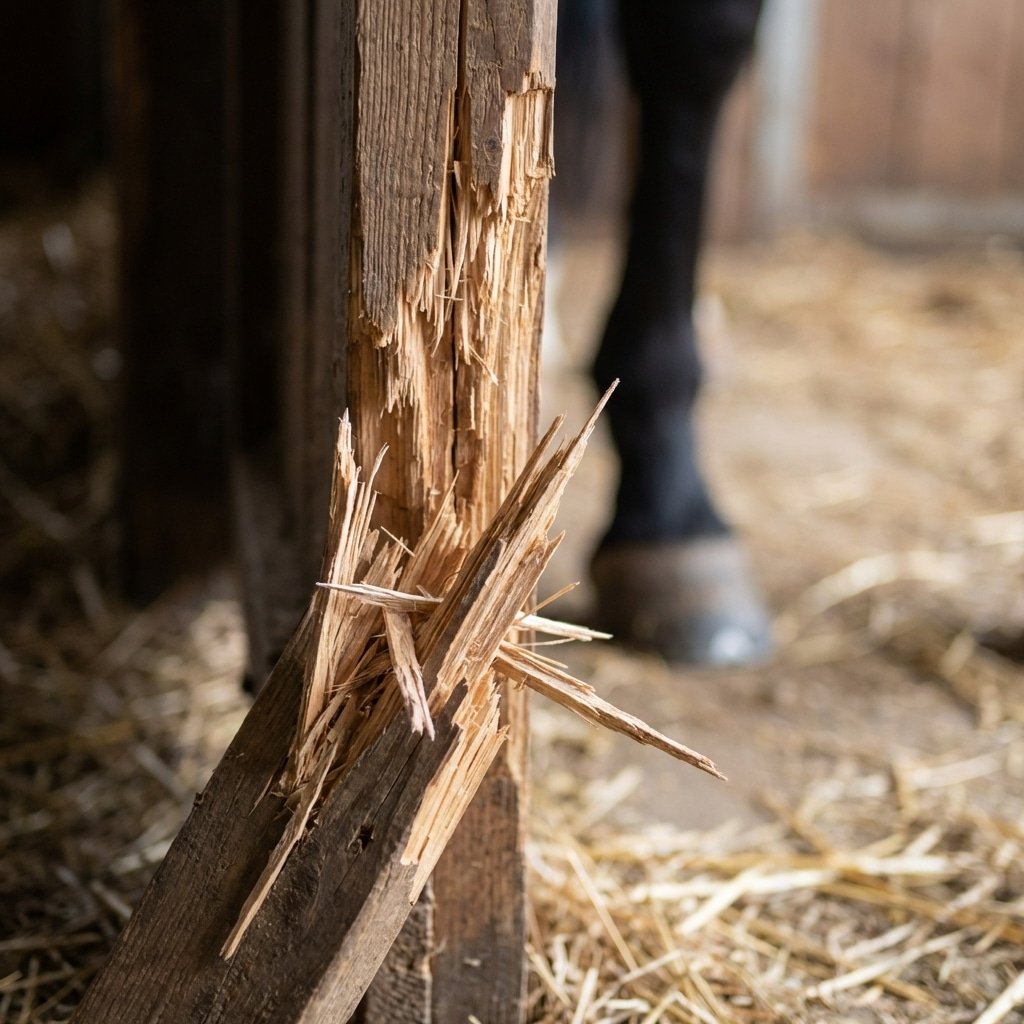
The DB U-Channel Fix: Slide Out, Slide In
The DB U-Channel system eliminates welded board fixation, allowing operators to swap damaged planks in minutes via a gravity-fed track, removing the need for angle grinders or welding equipment.
| Comparison Metric | Traditional Welded Stalls | DB U-Channel System |
|---|---|---|
| Board Fixation | Permanently welded tabs or drilled bolts | Floating gravity fit (Slide-in) |
| Replacement Method | Cut, Grind, Re-weld, Re-paint | Uncap, Slide Out, Slide In |
| Time per Board | 1-2 Hours (plus cooling time) | Under 10 Minutes |
| Rust Risk | High (Welds burn off zinc protection) | None (Hot-Dip Galvanized After Fabrication) |
The Precision U-Channel Framework
Most manufacturers weld mounting tabs directly onto the frame to hold boards in place. While cheap to produce, this creates a rigid structure that transfers 100% of the impact energy from a horse kick directly into the steel welds, often causing fractures. We engineer a dedicated U-Channel system using Q235B Structural Steel profiles. This channel acts as a vertical guide, holding the infill planks securely through friction and gravity rather than permanent mechanical fixation.
The design specifically accommodates 28mm-32mm infill materials, whether you choose our high-density bamboo or impact-absorbing HDPE. A critical advantage here is corrosion resistance. In standard fabrication, welding a channel creates a “dead zone” inside the U-shape where paint cannot reach. Urine and wash-down water get trapped here, eating the steel from the inside out. Because we utilize Hot-Dip Galvanization After Fabrication, the molten zinc flows freely into the channel, coating the interior surfaces completely. This ensures the track holding your boards lasts as long as the rest of the stable.
Rapid Repair: The “Slide-Swap” Methodology
The operational nightmare of a broken stable board usually involves an angle grinder, a fire watch permit, and a welder. If a horse kicks through a board in a traditional stall, you have to cut the metal tabs holding it, remove the debris, insert a new board, and weld the tabs back shut. This damages the zinc coating, requiring cold spray repairs that inevitably fail.
Our U-Channel design changes this to a tool-free maintenance task. The system features a removable top cap on the vertical channel. To replace a board:
- Step 1: Unscrew the top cap or release the top track guide.
- Step 2: Slide the planks vertically up and out of the channel until the damaged board is removed.
- Step 3: Drop the new board in and slide the stack back down.
- Step 4: Re-secure the cap.
The entire process takes under 10 minutes and requires no heavy machinery. This supports our “Zero Maintenance” philosophy: even when severe impact damage occurs, the structural integrity of the steel frame remains untouched, and the repair is a simple logistical task rather than a construction project.
Questions fréquemment posées
How do I fix a stable board that a horse has kicked out?
First, remove the damaged wood and clear any debris from the track. Inspect the metal U-channel or track; if the horse’s impact bent the steel, use a hammer and a wood buffer block to straighten it back into alignment. Slide in a replacement board and consider reinforcing it by driving self-tapping screws through the metal channel into the board to prevent it from sliding out again.
What is the best material to replace broken pine boards with?
Softwood pine often splinters under impact, creating dangerous sharp edges. We recommend replacing broken boards with 28mm HDPE (High-Density Polyethylene) ou High-Density Bamboo. HDPE is a shock-absorbing material that flexes rather than breaks, making it a “Kick-Proof” option that eliminates the risk of lacerations.
How do I repair scratches on the galvanized steel frame?
If installation or an accident causes deep scratches on the frame, use a Cold Galvanizing Spray (included in our installation kits) to seal the exposed steel. Clean the area thoroughly to remove dust or grease, then apply the spray to restore the protective zinc layer and prevent rust formation.
Can I reinforce my existing stable walls against heavy kickers?
Yes. Beyond upgrading the board material, you can install wall stiffeners or additional vertical bracing bars halfway along the wall span. Ensure your U-channels are made of at least 14-gauge (2.0mm) steel; thinner tracks often bend open under pressure, allowing boards to pop out regardless of their strength.
Réflexions finales
Relying on standard softwood and welded frames turns a minor board break into a major medical and fire safety crisis. Upgrading to our 32mm impact-absorbing HDPE and ISO 1461 hot-dip galvanized steel transforms volatile maintenance into a simple, tool-free task. Your facility’s operational continuity depends on eliminating these structural liabilities before they injure a client’s horse.
Do not wait for a midnight emergency to reassess your stable’s safety standards. Contact our engineering team today to configure a flat-pack trial order that proves our “Kick-Proof” durability firsthand. We provide direct factory pricing to ensure your safety upgrades protect both your horses and your bottom line.

 French
  English
  Spanish
  Arabic
  German
0 commentaires