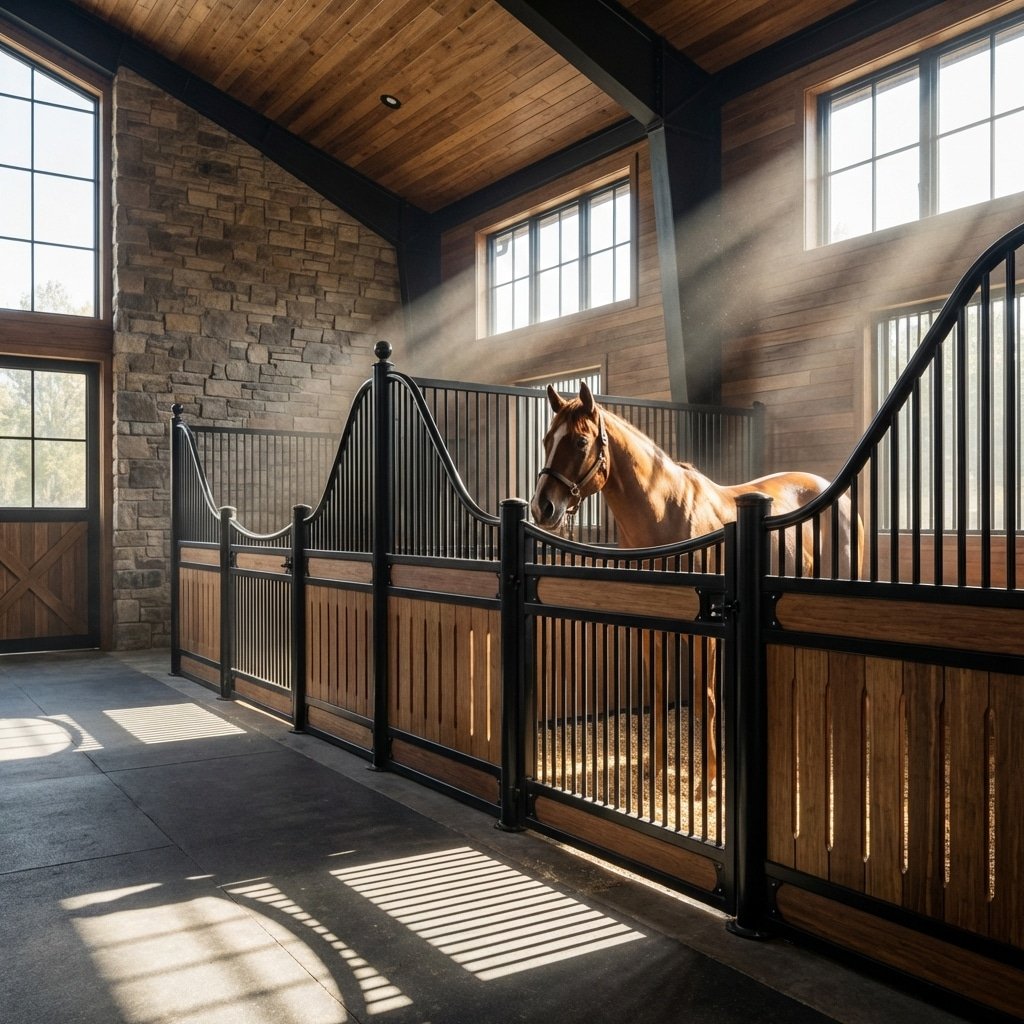
par Frank | Fév 25, 2026 | Horse Fence Panels
Calculating the safe Panel Weight Lift for a horse stall is a matter of physics rather than convenience. A 12ft front must exceed 200lbs to absorb the kinetic energy of a kick, yet many builders compromise safety for easier handling. Installing lightweight aluminum or...
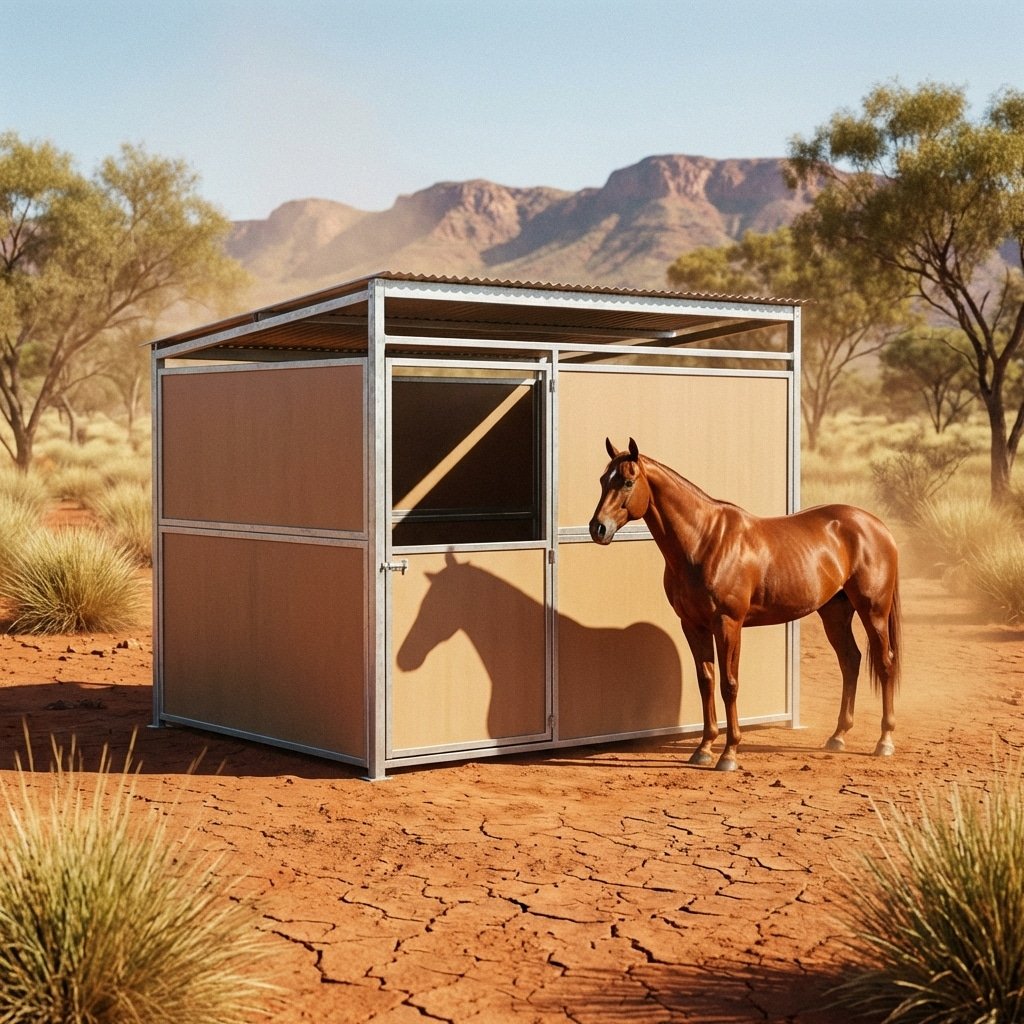
par Frank | Fév 22, 2026 | Horse Fence Panels
Deploying portable horse stables in Australia demands materials that withstand 40°C heat and aggressive subterranean termites. Standard timber splits under these conditions, forcing facility managers to absorb high replacement costs and safety liabilities within...

par Frank | Fév 21, 2026 | Horse Fence Panels
Managing Auto-Waterer Floods requires more than just a sump pump; it demands infrastructure that survives submersion. When a float valve jams, standard pine or plywood stall fronts absorb moisture immediately, leading to irreversible warping and dangerous mold growth....
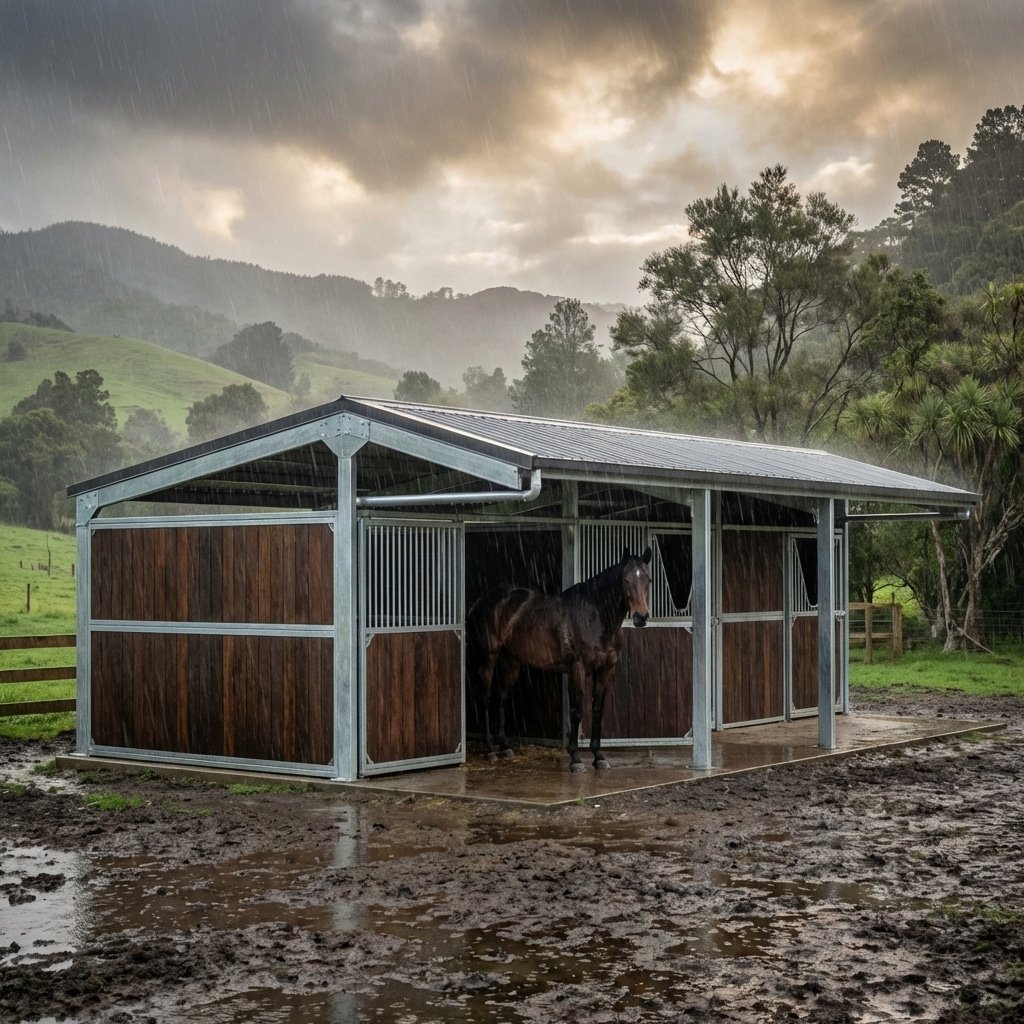
par Frank | Fév 21, 2026 | Horse Fence Panels
Constructing stables in New Zealand requires specific defense against the acidic mud poultices that dissolve standard steel finishes. Relying on traditional timber or pre-galvanized tubes accelerates depreciation through rot and red rust, often forcing facility...
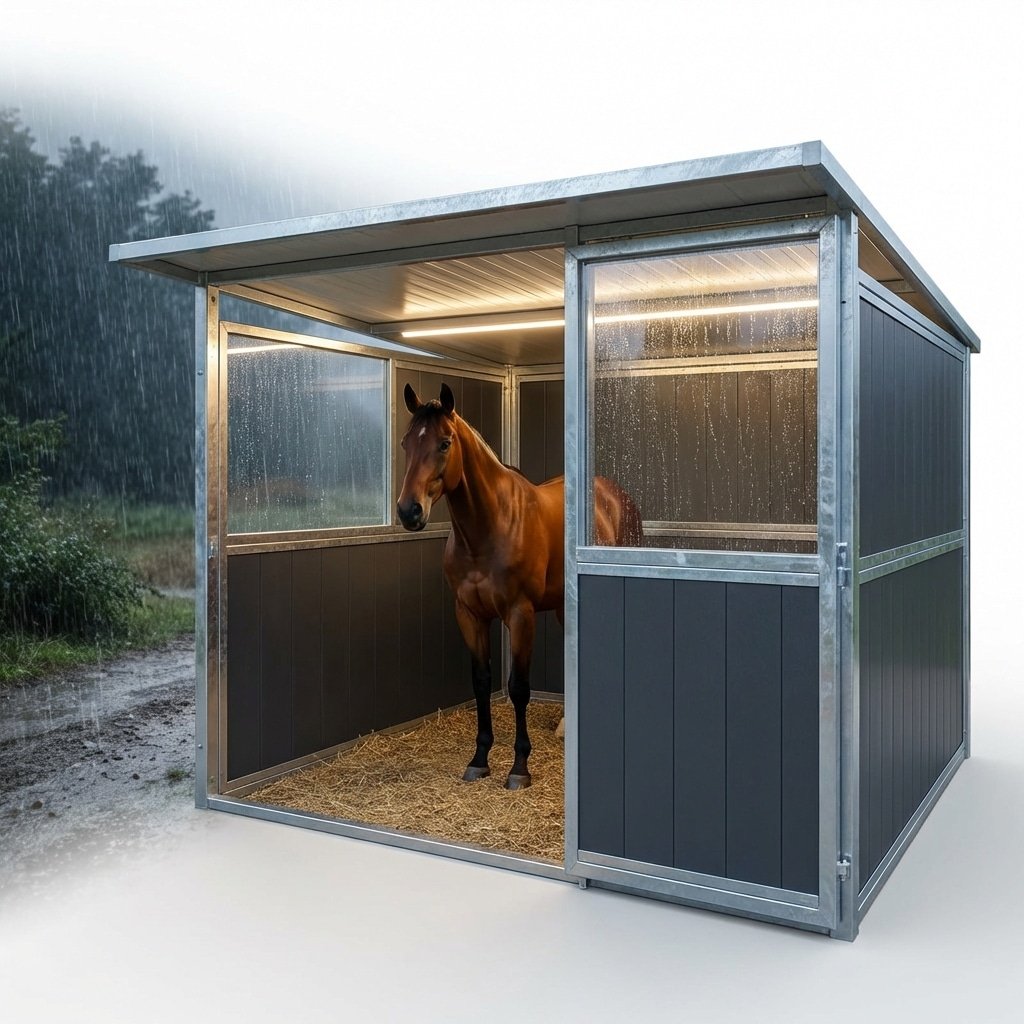
par Frank | Fév 16, 2026 | Horse Fence Panels
Improperly designed Slanted Rain Shelters turn open-front barns into wind tunnels that destroy up to 50% of your bedding inventory. This moisture ingress forces facility managers to constantly replace expensive shavings and exposes standard pre-galvanized frames to...
par Frank | Fév 8, 2026 | Horse Fence Panels
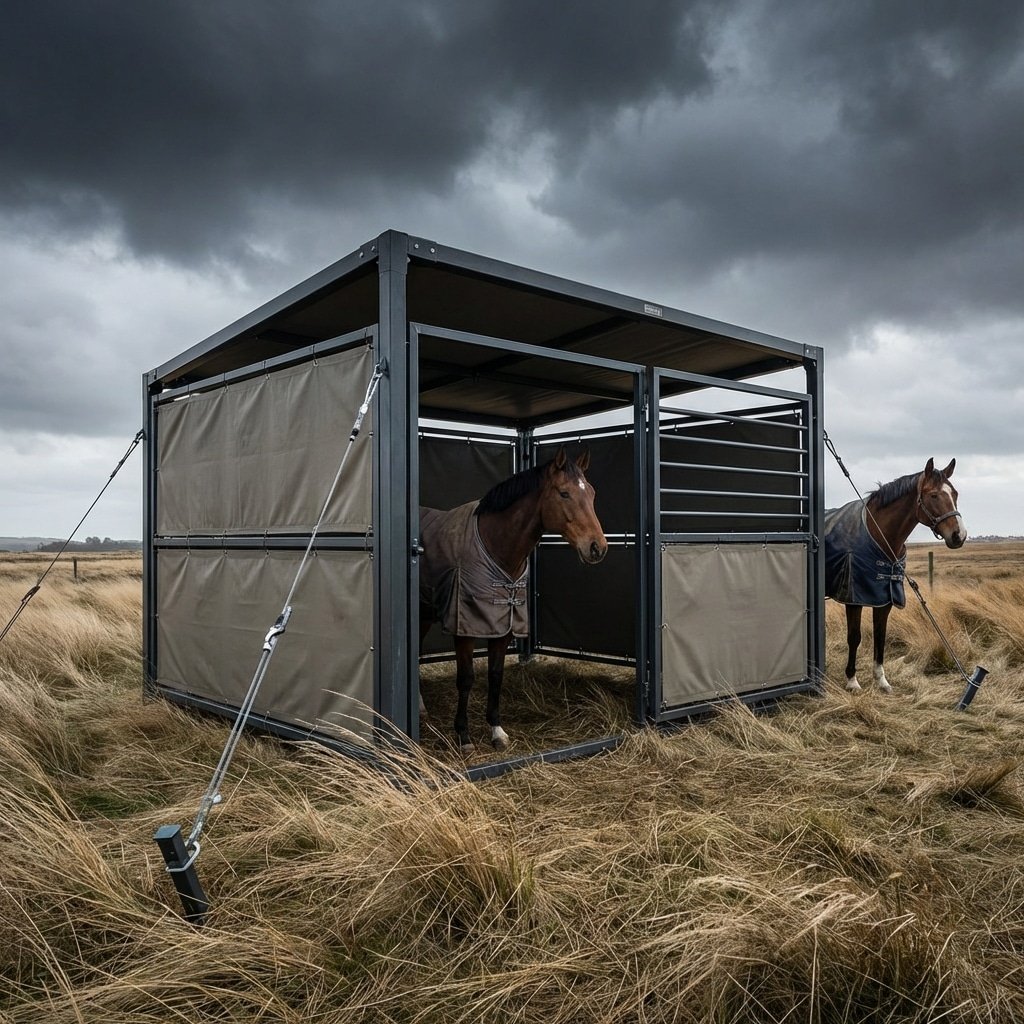
Deploying portable shelters in a High Wind Paddock demands rigorous engineering to prevent costly structural failures. Relying on lightweight friction-based mounts often turns assets into projectiles, exposing operators to significant insurance claims and negligence...


 French
  English
  Spanish
  Arabic
  German