


Therapeutic Riding facility design requires more than aesthetic appeal; it demands rigorous adherence to ADA safety protocols to prevent costly liability claims. Standard stable systems often fail to accommodate the necessary 60-inch turning circles and zero-threshold entries required for wheelchair accessibility, forcing operators into expensive retrofits immediately after construction.
This guide benchmarks manufacturers against the Kick-Proof Guarantee and ISO 1461 galvanization standards essential for high-traffic non-profits. We analyze structural integrity based on Q345B steel frameworks and cast-proof bottom gaps to help you secure a manufacturing partner that balances strict safety compliance with long-term operational durability.
Designing Stables for Wheelchair Accessibility (ADA)
Comparaison rapide
| Standard Name | Focus Area | Key Requirements | Verdict |
|---|---|---|---|
| Access & Circulation | Site Planning & Routes | ADA Compliance, Mobility Safety | Ensures safe passage for standard wheelchairs and prevents hazardous inclines. |
| Mounting & Dismounting Spaces | Spatial Layout | Rider Transfer, Turning Radius | Allows full independence for riders during transfers. |
| Surface & Environmental Standards | Material Selection | Traction, Fall Prevention | Reduces slip hazards for both horses and humans. |
| Signage & Entry | Accessibility Hardware | Independent Access, User Guidance | Empowers users with limited hand dexterity. |
Access & Circulation
Establishes **essential baseline safety** for wheelchair users by regulating route widths and prohibiting hazardous slope gradients.
This design standard mandates accessible routes with a minimum width of 36 inches, though narrowing to 32 inches is permitted at specific pinch points. It strictly enforces running slopes not exceeding a 1:20 ratio to ensure users can navigate the stable terrain without excessive physical strain.
To accommodate elevation changes safely, ramps equipped with handrails are mandatory for any rise greater than 0.5 inches. Implementing these specifications eliminates common barriers found in agricultural environments.
📊 At a Glance:
- 📍 Location: Site Planning & Routes
- 🏭 Core Strength: ADA Compliance, Mobility Safety
- 🌍 Key Markets: Therapeutic Riding Centers
Why We Picked This:
| ✅ The Wins | ⚠️ Trade-offs |
|---|---|
|
|
Mounting & Dismounting Spaces
**Essential for independence**, these dimensions guarantee that riders using power chairs can maneuver safely in tight operational zones without assistance.
This standard mandates a 36×48 inch minimum clear space for wheelchairs alongside a 60-inch diameter turning circle. Adhering to these measurements prevents bottlenecks in high-traffic stable areas.
These dimensions are critical for mounting blocks, therapy spaces, and tack rooms to ensure maneuverability. Without this spatial allowance, standard mobility devices cannot rotate effectively, creating safety hazards.
📊 At a Glance:
- 📍 Location: Spatial Layout
- 🏭 Core Strength: Rider Transfer, Turning Radius
- 🌍 Key Markets: Equine Assisted Therapy
Why We Picked Them:
| ✅ The Wins | ⚠️ Trade-offs |
|---|---|
|
|
Surface & Environmental Standards
Prioritizes **stable, slip-resistant surfaces** to facilitate wheelchair mobility without compromising equine safety.
Surfaces must be designed to be stable, firm, and slip-resistant. This dual-purpose configuration is vital to facilitate smooth wheelchair mobility while ensuring horses maintain secure footing in shared spaces.
Vertical spatial planning is equally critical, requiring a minimum clearance of 80 inches along all paths. This specification prevents head-level obstructions for mounted riders or equipment transport.
📊 At a Glance:
- 📍 Location: Material Selection
- 🏭 Core Strength: Traction, Fall Prevention
- 🌍 Key Markets: Safety Infrastructure
Why We Picked Them:
| ✅ The Wins | ⚠️ Trade-offs |
|---|---|
|
|
Signage & Entry
Ensures **independent entry** through wide clearances and grab-free hardware mechanics.
Entrances must feature minimum 32-inch clear openings to accommodate standard wheelchair dimensions comfortably. This ensures that the primary threshold to the facility does not become an immediate barrier to entry.
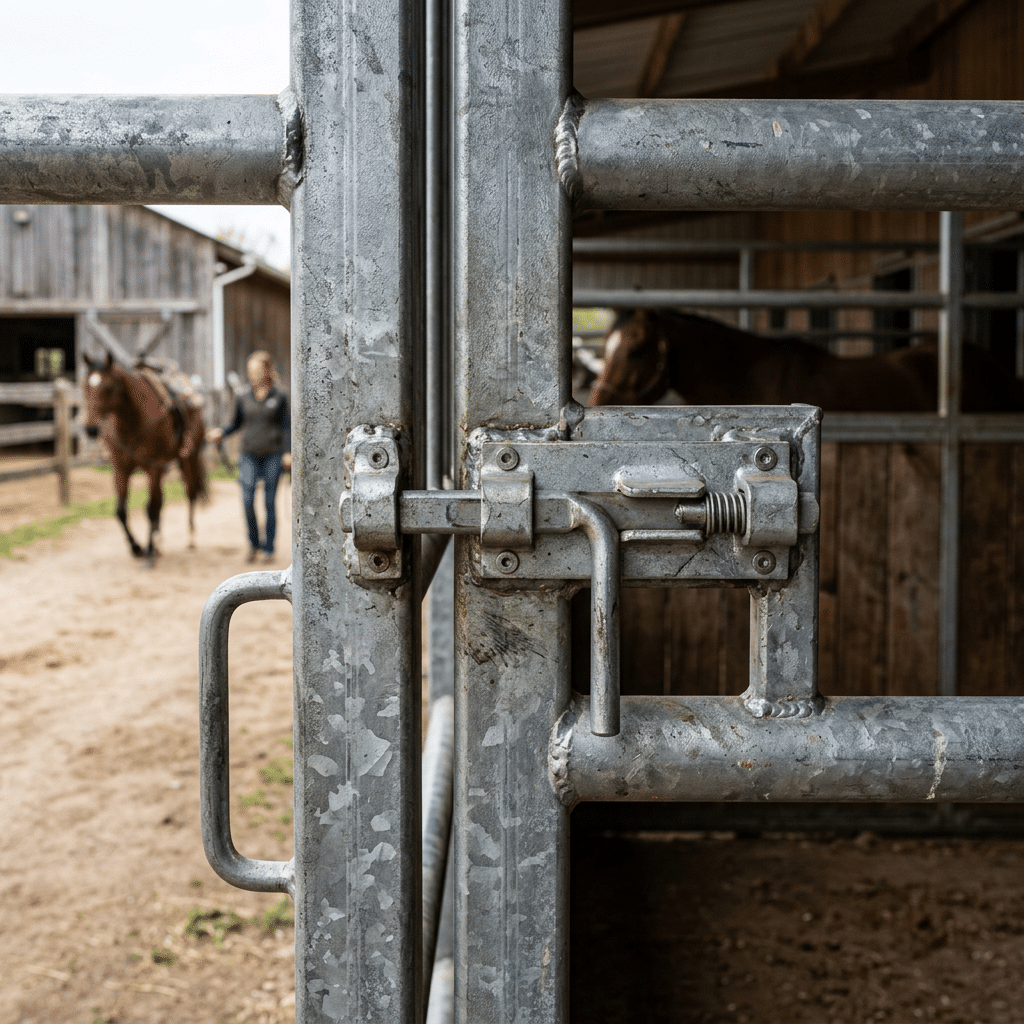
Door hardware requires strict selection; it must be operable with one hand without tight grasping, pinching, or twisting. This standard is critical for empowering riders with limited hand dexterity to navigate the stable autonomously.
📊 At a Glance:
- 📍 Focus Area: Accessibility Hardware
- 🏭 Core Function: Independent Access, User Guidance
- 🌍 Application: Facility Access
Why We Picked Them:
| ✅ The Wins | ⚠️ Trade-offs |
|---|---|
|
|
Factory-Direct Stables Engineered for Extreme Climates

Designing Stables for Wheelchair Accessibility (ADA)
Designing accessible equestrian facilities requires integrating specific spatial dimensions—such as 60-inch turning circles—with high-strength materials that ensure safety for riders with limited mobility. We engineer our stable systems to meet these precise ADA clearances while utilizing impact-absorbing materials like HDPE to create a secure environment for therapeutic programs.
Defining ADA Compliant Circulation Paths
According to ADA Standards for Accessible Design, stable aisles and routes must maintain a minimum clear width of 36 inches (915 mm). While this meets the legal requirement, we recommend wider clearances to ensure safe interaction between horses and wheelchairs. To accommodate wheelchair maneuverability, facility layouts must include 60-inch (1525 mm) diameter turning circles or T-shaped turnaround spaces at key aisle intersections and grooming bays.
Achieving these spatial requirements often demands flexible manufacturing. As an OEM manufacturer, DB Stable customizes the length of our Hot-Dip Galvanized Partitions (typically 3.0m – 4.0m) to ensure these specific turning radii fit within your floor plan. Additionally, vertical clearance along pedestrian paths should be at least 80 inches. Our standard Série professionnelle stall fronts easily accommodate this height with their robust 50mm x 50mm RHS framework, ensuring structural stability without obstructing overhead movement.
Structural Requirements for Mounting and Therapy Zones
Therapeutic riding centers require dedicated mounting spaces with a footprint of at least 36 inches (915 mm) wide by 48 inches (1220 mm) deep to allow safe wheelchair positioning. We utilize Q345B Low Alloy High Strength Steel for structural posts in these therapy zones. This material choice provides superior rigidity compared to standard steel, supporting auxiliary mounting equipment or grab bars without flexing.
Entryways present another critical compliance point. Door openings must provide a minimum clear width of 32 inches (815 mm). Our sliding stable doors typically offer openings exceeding 1200mm, significantly surpassing ADA minimums to allow easy entry for wheelchairs alongside handlers. For maximum safety in these sensitive areas, we install HDPE infill. This material prevents splintering and absorbs impact, offering a “Kick-Proof” and injury-resistant environment essential for both therapy horses and riders.
The Aisle Experience: Wide Sliding Doors vs. Swing Doors
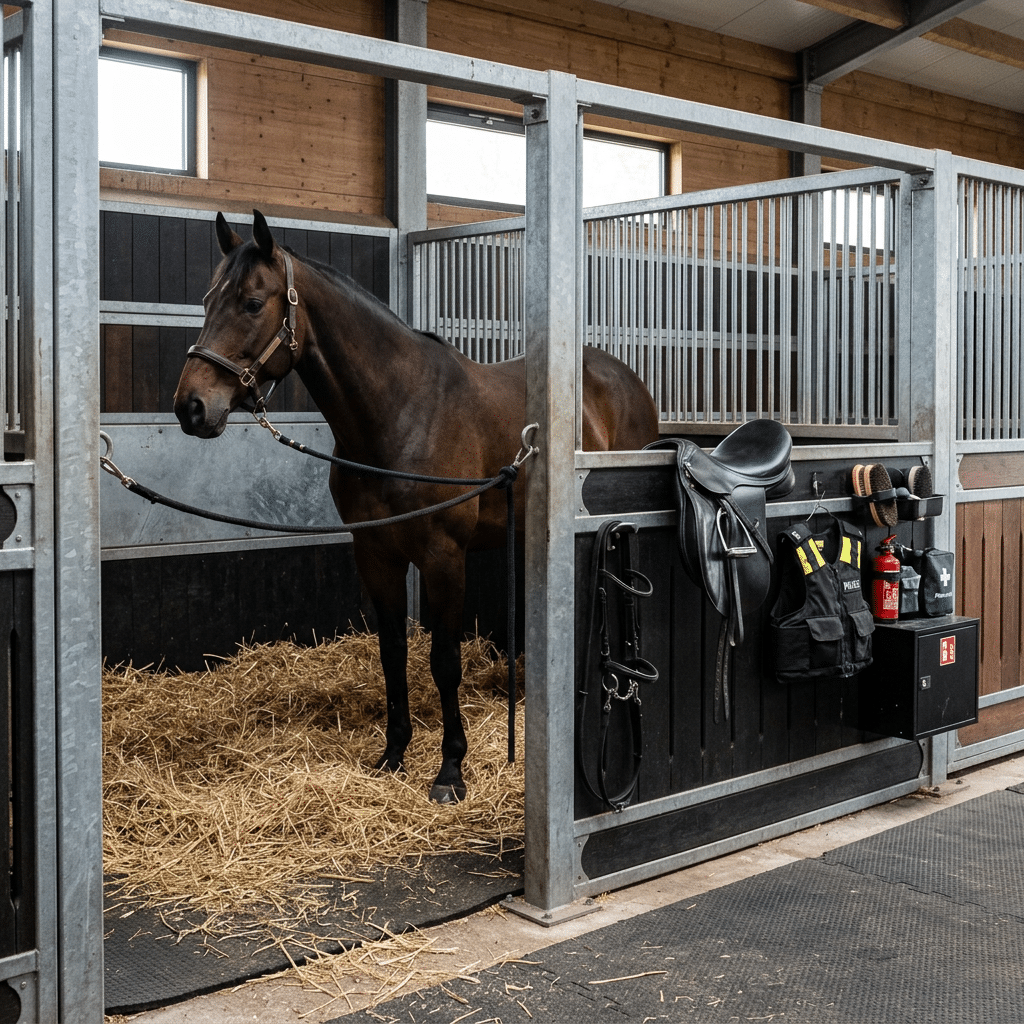
The choice between sliding and swinging stable fronts acts as the foundation of your facility’s operational flow. While sliding systems maximize usable aisle space and enhance safety in high-traffic or therapeutic environments, hinged options provide the unrestricted vertical and horizontal clearance required for specialized veterinary and foaling applications.
Sliding Systems: Optimizing Aisle Flow and Handler Safety
Sliding doors move horizontally along an overhead track, eliminating the need for swing radius clearance. This design pr
eserves valuable aisle width, which is essential for facilities accommodating wheelchair maneuverability or frequent machinery traffic. By keeping the aisle clear, we ensure that airflow remains unobstructed, supporting the “stack effect ventilation” crucial for equine respiratory health.
Safety remains our primary engineering focus. The linear motion of a sliding door prevents it from catching the wind or swinging unexpectedly into the path of a horse, significantly reducing spook risks in therapeutic environments. Our Série professionnelle features a hidden track system designed for effortless, one-handed operation, ensuring handlers can keep firm control of the lead rope at all times while securing the stall.
To guarantee longevity, we engineer these systems with Q345B structural steel. This material choice provides superior impact resistance, ensuring the door remains secure and functional even if a horse kicks the panel, adhering to our internal “Kick-Proof Guarantee.”
Hinged Options: Maximum Clearance for Veterinary Access
Swing doors offer a distinct advantage for specific use cases: a fully unobstructed opening. Without overhead tracks or bottom guides, these doors facilitate the movement of bulky veterinary equipment, therapeutic lifts, or large bedding machinery into the stall.
Facilities choosing this style must account for the door’s swing path. We typically recommend aisles wider than 3.6 meters (12 feet) to maintain safe passage when stalls are open. This layout ensures that a swinging door does not impede the flow of other horses or staff moving through the barn.
Structural integrity is critical for hinged designs, where weight distribution can lead to sagging over time. DB Stable fabricates these units using Galvanisation à chaud après fabrication. By welding the black steel first and then dipping the entire door, we coat every joint and hinge in over 85 microns of zinc. This prevents the rust and mechanical failure common in standard painted frames, making this style a reliable choice for dedicated veterinary treatment stalls or isolation units.
Zero-Threshold Floors: Eliminating Trip Hazards
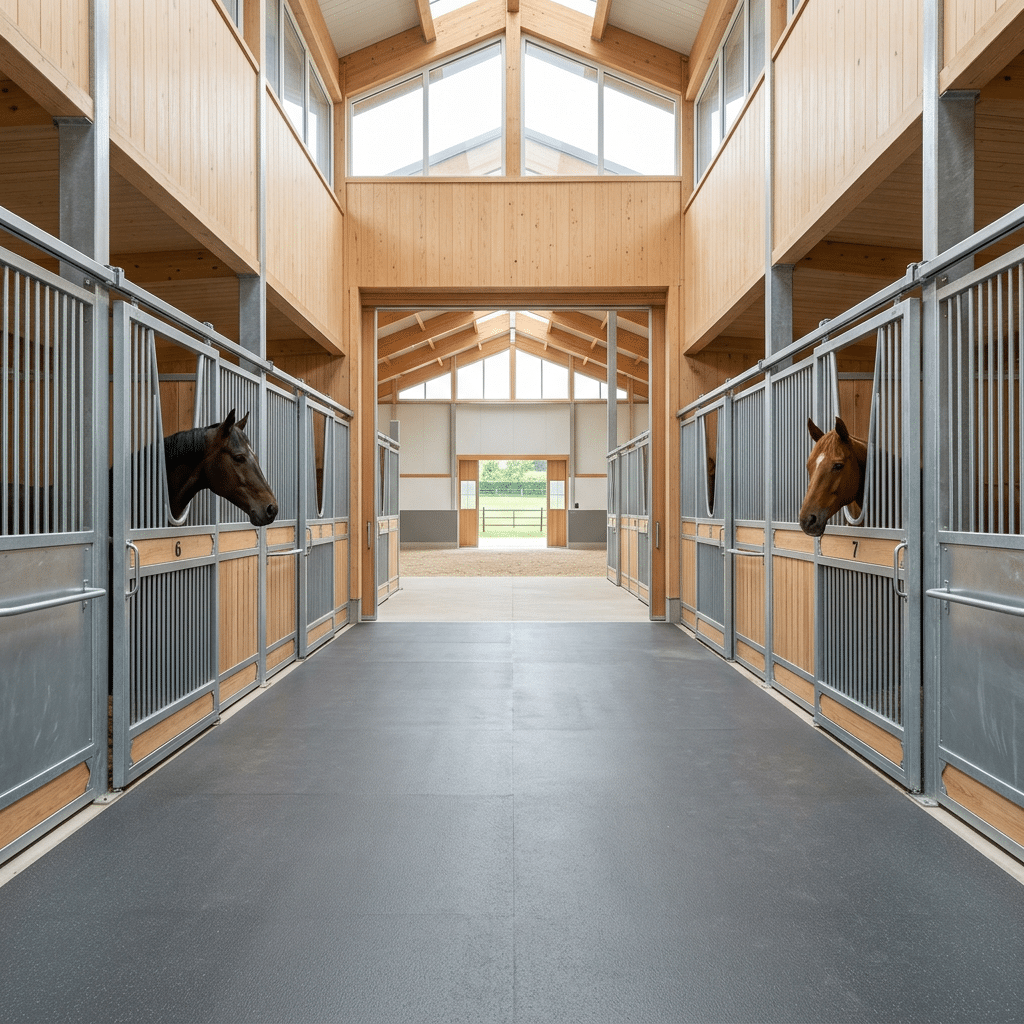
Establishing a truly accessible facility requires eliminating vertical barriers that impede wheelchair users and create trip hazards for horses. By integrating top-hung door systems with flush flooring transitions, we create a seamless environment that supports independent navigation for adaptive riders while maintaining rigorous equine safety standards.
Creating Seamless Ground Transitions
To facilitate smooth wheelchair movement and reduce physical strain for riders with limited mobility, aisles and stall entries should be designed with level concrete or rubber brick surfaces. We advise removing all raised thresholds between distinct zones, such as the transition from the barn aisle to the tack room or stall interior. This allows riders to navigate the facility independently without requiring assistance to overcome physical obstacles.
Where structural elevation changes are unavoidable due to drainage or site topography, we recommend installing fixed ramps with gentle gradients. These reduce the energy required for manual wheelchair users to move between areas. Furthermore, when selecting traction mats, opt for thin, high-density options rather than thick, plush alternatives. High-density mats are less likely to curl at the edges, preventing them from becoming dangerous obstacles for both crutches and hooves.
Optimizing Door Hardware for Floor Safety
Traditional stable doors often rely on floor-mounted guide tracks, which pose significant tripping risks for adaptive riders and interrupt the smooth surface required for wheelchairs. We solve this by utilizing top-hung sliding door mechanisms, such as our **Professional Series** hidden track system. This design eliminates the need for a bottom threshold track entirely, keeping the floor surface uninterrupted and safe for all users.
Safety at the ground level extends to the gap between the door and the floor. We maintain a strict **”Cast-Proof” bottom gap of approximately 50mm**. This specific clearance is engineered to prevent a rolling horse from getting a leg trapped while still being low enough to discourage hoof entrapment. Additionally, we secure all ground-level connections, such as door guides, with **304 Stainless Steel anchor bolts**. This prevents the formation of rust at the base, which can create rough, hazardous edges that might injure a horse’s lower leg or snag a rider’s clothing.
DB’s Smooth-Glide Enclosed Track System
The Smooth-Glide system solves the mechanical failures common in traditional open-track barns by utilizing a fully enclosed Q345B steel header. This design shields the roller mechanism from bedding and debris to ensure frictionless, one-handed operation essential for therapeutic centers, while our Hot-Dip Galvanization After Fabrication process guarantees the internal track remains rust-free for the lifespan of the facility.
Engineering for Accessibility and Ease of Use
We engineered the Smooth-Glide system to address the primary frustration of facility managers: jammed doors. By nesting the roller mechanism inside a heavy-duty Q345B steel header, we effectively seal the operating components against the dust, bedding, and hay that cause traditional open tracks to seize up over time. This protection ensures the door glides effortlessly, requiring minimal physical force to oper
ate.
This low-resistance design is particularly valuable for therapeutic riding centers and high-traffic riding schools. It allows staff, volunteers, or riders with limited mobility to open and close stall fronts safely with just one hand. The enclosed carriage system maintains consistent vertical alignment, preventing the “sticky” spots and derailment risks often found in older stable doors, ensuring reliable motion regardless of weather conditions or temperature shifts.
Safety Protocols: Anti-Derailment and Rust Protection
Safety in a busy aisleway is non-negotiable. Unlike exposed rail systems that can be dislodged by a frightened animal, our enclosed track eliminates the risk of doors derailing if a horse kicks the stall front. This “Kick-Proof” engineering provides a critical safety layer for professional facilities where client safety and liability reduction are top priorities.
To protect your investment, the entire track assembly undergoes our standard Hot-Dip Galvanization process according to BS EN ISO 1461. We dip the steel après fabrication, ensuring that even the internal track surfaces receive a zinc coating exceeding 85 microns. This protects the hidden mechanisms from the humidity and ammonia inherent in stable environments, preventing the internal rust that creates friction in competitor products. This system is a core feature of our DB Professional Series, designed to withstand the heavy usage of commercial equestrian clubs while maintaining our operational standards for decades.
Réflexions finales
Compromising on structural integrity in therapeutic environments invites liability risks you cannot afford. We mandate Q345B Low Alloy High Strength Steel et Galvanisation à chaud après fabrication to ensure your facility remains safe, rust-free, and “Kick-Proof” for decades. Securing your reputation starts with specifying materials that exceed basic ADA minimums.
True accessibility requires precision, not guesswork. Challenge our engineering team to customize our Série professionnelle sliding systems to fit your exact floor plan and mobility requirements. Contact us today to request a technical specification guide or discuss a pilot installation for your center.
Questions fréquemment posées
How to design an ADA compliant horse barn?
We recommend prioritizing level, zero-threshold flooring and extra-wide aisles to accommodate mobility devices. In our engineering experience, integrating sliding doors with low-profile tracks and ensuring latches are placed at accessible heights creates a safer, more inclusive environment for riders with diverse needs. Our Professional Series utilizes a hidden track system that minimizes floor obstructions, aligning perfectly with these accessibility goals.
Minimum door width for wheelchair access in barns?
While standard ADA guidelines require a minimum clear width of 36 inches, we strongly advise designing stable door openings at least 48 inches (4 feet) wide. This extra clearance ensures safe, comfortable maneuvering for wheelchairs alongside horses, preventing accidents in tight spaces. Our standard sliding fronts are designed to maximize this opening width without compromising structural integrity.
Best stable doors for therapeutic riding centers?
Sliding doors are the superior choice as they eliminate the hazard of doors swinging into aisles, which blocks pathways for side-walkers and mobility aids. We specifically recommend our Professional Series with the Hidden Track System, which prevents debris buildup and ensures smooth, low-effort operation suitable for volunteers or riders with limited strength. Additionally, the open top grill design promotes stack effect ventilation, improving air quality for respiratory health.
Are sliding stall doors easier to open?
Yes, provided they use a high-quality track system. Our stables utilize a specialized enclosed overhead track with heavy-duty rollers, ensuring the door glides effortlessly. Unlike hinged doors that fight gravity, wind, or bedding obstructions, a well-engineered sliding door requires minimal force to operate, making it ideal for busy barns or therapeutic centers where ease of use is critical.
PATH Intl barn safety standards?
PATH International emphasizes hazard-free environments. Our manufacturing aligns with these strict safety standards by using Hot-Dip Galvanization After Fabrication to eliminate sharp welds (burrs) and ensuring “Cast-Proof” bottom gaps of approximately 50mm. This careful engineering prevents leg entrapment and protects both the therapy horse and the rider from potential injury caused by inferior manufacturing.

 French
  English
  Spanish
  Arabic
  German
0 commentaires